• Link to X
  • Link to Facebook
  • Link to Instagram
  • Link to TikTok
  • Link to Youtube
  • About
    • About Us
      • President
      • Board of Directors
      • Board of Advisors
      • Financials
      • Our Methodology
      • Success Tracker
      • Contact
  • Act Now
    • 30 Ways to Help
      • Email Congress
      • Call Congress
      • Volunteer
      • Courses & Certificates
      • Be a Donor
    • Internships
      • In-Office Internships
      • Remote Internships
    • Legislation
      • Politics 101
  • The Blog
  • The Podcast
  • Magazine
  • Donate
  • Click to open the search input field Click to open the search input field Search
  • Menu Menu

Tag Archive for: UNDP

Posts

Aid, Global Poverty

The U.N. and Distribution of International Aid Funds

Distribution of International Aid Funds
Established during the 1940s, the United Nations has been responsible for the distribution of international aid funds for decades. As the need for aid increased, the U.N. developed programs to assist in the way they distribute aid across countries in need.

United Nations Refugee Agency

There are four subdivisions, or entities, within the U.N. that regulate the distribution of international aid funds. Following the mission of the U.N., the subdivision, United Nations Refugee Agency (UNHCR), focuses on the well-being of persons identifying as refugees, returnees, stateless people, internally displaced or asylum-seekers. The goal of this subdivision is to ensure the safety and security of those seeking refuge. International aid in this department helps stabilize and rebuild the lives of people forced from the place they call home.

UNICEF and the World Food Programme

There are two entities whose focus is centered around the welfare and well-being of children. History has shown that children displaced by poverty, war, famine or other uncontrollable circumstances, often fare the worst. The United Nations Children’s Fund (UNICEF) and the World Food Programme (WFP) center their international aid efforts around providing food and other services for children and families unable to secure resources in traditional ways. UNICEF helps secure medical resources for countries where hospitals have been destroyed and which have insufficient resources and manpower or where hospitals and medical centers are too far from underserved communities.

UNICEF, however, distributes more than just medical resources. Last year, UNICEF offered mental and psychosocial services to thousands of Rohingya refugee children in Bangladesh.

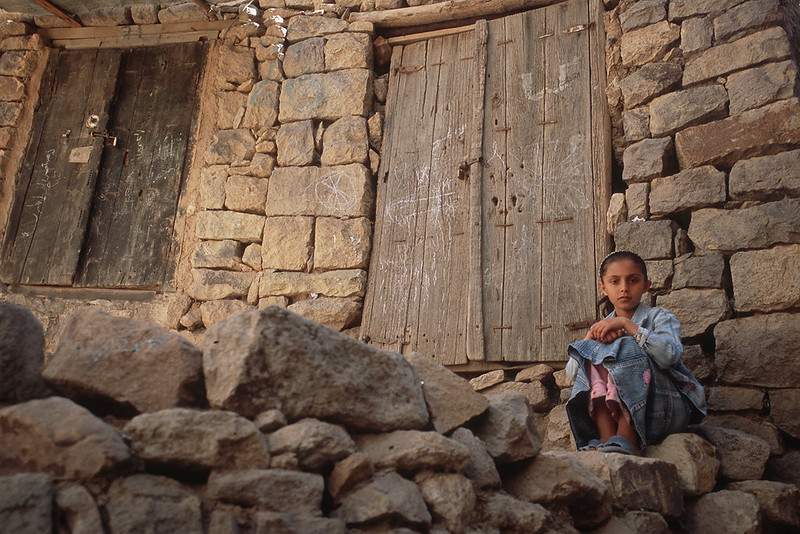
The war-torn country of Yemen illustrates the need for the distribution of international aid to fund programs like WFP. Due to the war, men find it challenging to find work, which makes it difficult for fathers to provide for their children. Without food and proper nourishment, death is often the bleak future for young children, as was the case for a young boy named Mohamed in Hajjah. Shortly after being photographed, he passed away due to malnourishment. WFP works diligently to provide children around the world with food so that stories like Mohamed’s are anomalies, not the norm.

The United Nations Development Programme

The United Nations Development Programme (UNDP) is the fourth entity which provides strategies and plans to help implement sustainable change. This subdivision acts as an accountability partner for countries across the world, to ensure that governments are actively participating in the rebuilding and stabilizing efforts being produced through the U.N. The UNDP currently has a strategic plan in action supporting government partnerships with businesses. This three-part plan encourages economy growth within underprivileged communities.

Over 70 years later, the U.N. continues to handle the distribution of international aid funds by helping citizens, families, communities and countries across the globe.

– Christina Taylor
Photo: Flickr

March 30, 2019
https://borgenproject.org/wp-content/uploads/borgen-project-logo.svg 0 0 Borgen Project https://borgenproject.org/wp-content/uploads/borgen-project-logo.svg Borgen Project2019-03-30 09:53:192021-12-10 11:31:26The U.N. and Distribution of International Aid Funds
Extreme Poverty, Food Security

Top 10 Facts About Poverty in Palestine

Top 10 Poverty in Palestine
Palestine, a country consisting of Gaza and the West Bank, faces ongoing conflict with Israel, political instability and resource insecurity. While the historical and political situation in Palestine is complex and difficult to explain, here are the top 10 facts about poverty in Palestine in order to provide a clearer picture of the country’s situation.

Top 10 Facts About Poverty in Palestine

  1. Poverty is widespread and severe in Palestine. The Palestine Central Bureau of Statistics found that 29.2% of Palestinian individuals lived in poverty in 2017 and 16.8% of Palestinians were living in deep poverty. Individuals that live below the poverty line are unable to acquire the necessities of food, clothing and shelter.
  2. Poverty is particularly acute in Gaza and Palestine’s refugee camps. While the 13.9% poverty rate in West Bank is alarming, more than half of the individuals in Gaza and 45.4% of individuals in refugee camps live in poverty. Additionally, 33.8% of Gazans and 29.3% of those in Palestinian refugee camps live below the deep poverty line. More than 1.5 million individuals, displaced due to the 1948 Arab-Israeli war, 1967 Six-Day War and Israeli occupation, live in Palestine refugee camps in Lebanon, Jordan, the Syrian Arab Republic, the Gaza Strip and the West Bank.
  3. Poverty in Palestine is on the rise. Palestine’s poverty level increased by 13.2% from 2011 to 2017. In the next two years, the World Bank has predicted a decline in real per capita income and an increase in unemployment, given that the current scenario of Israeli restrictions and the internal divide between the West Bank and Gaza persists.
  4. Unemployment is alarmingly high. Unemployment in Palestine reached 27% in 2017, with unemployment in West Bank at 18% and Gaza at 44%. In fact, Gaza had the third-highest unemployment rate in the world in 2017. The actual rate of unemployment in the West Bank and Gaza is higher than reported as these rates do not account for those who have dropped out of the labor market. Israeli settlements and import restrictions led to increased unemployment by damaging the Palestinian economy through increased production costs and decreased land and resources available for production.
  5. Foreign aid has played a large role in reducing poverty in Palestine. According to the Palestine Central Bureau of Statistics, public aid has reduced the poverty percentage by 11.5%, with deep poverty reduced by 20%. International aid, with the U.S. and U.K. as leading donors, is critical for the Palestinian economy. The West Bank’s economy is fully dependent on aid and 80% of Gazans rely on humanitarian aid for survival.
  6. Just under a quarter of all Palestinians are food insecure. Many Palestinians lack the resources to put substantial meals on the table. Food insecurity poses a threat with 32.7% of Palestinians or 1.5 million people that are food insecure. In Gaza, this figure jumps to 68.5%.
  7. Water quality is low, particularly in Gaza. Water experts have agreed that 97% of the water in Gaza is polluted. Dangerous diseases such as diarrhea which now affects 80% of children under the age of 3 have become more widespread as a result.
  8. Some Israeli policies hinder Palestine’s economic growth. A 12-year blockade of the Gaza strip, a separation wall in the West Bank and time-consuming checkpoints are all Israeli policies that harm Palestine’s economy. Israeli land restrictions in the West Bank lower Palestine’s GDP by $3.4 billion a year, or 35% of Palestine’s economy, by restricting Palestinian access to agricultural and resource-rich land.
  9. Gaza is currently facing an electricity crisis. The 2 million Palestinian residents of Gaza receive electricity for no more than eight hours each day. According to the United Nations Office for the Coordination of Humanitarian Affairs, for the past decade, Gaza has suffered from a chronic electricity deficit or a situation where the demand for electricity far exceeds the supply. The shortage of electricity has decreased the availability of water, sanitation and health services, along with undermining Gaza’s fragile economy, particularly the agriculture and manufacturing sectors.
  10. Many organizations are working persistently to alleviate poverty in Palestine. One of those organizations is the United Nations Development Programme (UNDP) which gives support to the most vulnerable communities through sustainable economic empowerment approaches that decrease dependency on aid. An example of a UNDP project is the Deprived Families Economic Empowerment Programme, a project that aims to graduate impoverished families from being recipients of humanitarian assistance to being economically self-sufficient by providing services specific to their needs. The financial services provided through this program generated 23,000 paid and sustainable jobs and 9,560 family-owned enterprises.

Looking Ahead

These top 10 facts about poverty in Palestine are just snippets of the complex picture of political, historical and economic factors that influence the Palestinian standard of living. There is no magic bullet solution to poverty in any country, but a combination of international support and political collaboration has the potential to greatly improve the lives of many Palestinians.

– Carolina Sherwood Bigelow
Photo: Pixabay

March 7, 2019
https://borgenproject.org/wp-content/uploads/borgen-project-logo.svg 0 0 Kim Thelwell https://borgenproject.org/wp-content/uploads/borgen-project-logo.svg Kim Thelwell2019-03-07 13:30:212024-05-29 22:58:19Top 10 Facts About Poverty in Palestine
Global Poverty, Life Expectancy

Top 10 Facts About Life Expectancy in Uzbekistan

top ten facts about life expectancy in Uzbekistan
The top 10 facts about life expectancy in Uzbekistan reflect the many changes that the nation has endured since gaining its independence from the Soviet Union in the early 1990s. An evolving healthcare system, which now technically includes primary care for all, still struggles to meet the needs of the country’s poorest inhabitants.

Top 10 Facts About Life Expectancy in Uzbekistan

  1. The average Uzbek person has a life expectancy of approximately 66 to 72 years. However, the last 9 of those years are typically not spent in good health. When one accounts for the years lived in failing health, it changes the picture considerably.  It is an unfortunate fact that for too many Uzbek people, their final years are characterized by pain and sickness, most often due to heart disease and respiratory infections.
  2. Uzbek women, on average, live about 5 years longer than their male counterparts. Maternal mortality is at a 20 year low, down from 380 deaths for every 697,000 births in 1990, to 240 deaths for every 667,000 births in 2015. Prenatal care is also on the rise in Uzbekistan, up from just less than 95 percent in 1996 to more than 99 percent in 2015.
  3. The top 10 facts about life expectancy in Uzbekistan cannot exclude the leading cause of death, which is cardiovascular disease.  In Uzbekistan, where many traditional dishes are laden with bread and meat, the dietary risk is the number one cause of heart disease. Stress is another mitigating factor, unsurprising because in Uzbekistan the norm is to work 6 days a week.
  4. The Uzbek people are suffering from the adverse effects of polluted water. It is due to the prevalence of water-borne diseases and an overall scarcity of drinkable water. More than 30 percent of households lack drinkable water, thanks to an infrastructure that cannot properly purify drinking water or treat sewage.
  5. The good news is that Uzbekistan is now one of the 7 countries participating in a pilot program with the UNDP, called “Piloting Climate Change Adaptation to Protect Human Health in Uzbekistan.” The mission of this project is to provide medical personnel and the greater population with the information and tools to reduce the negative impact of climate factors on the health of the Uzbek population. The success of this project will be tracked by the decline of intestinal, respiratory and cardiovascular illnesses connected to climate.
  6. Another one of the top 10 facts about life expectancy in Uzbekistan is that many people in the country do not earn enough to access healthcare and fitness centers which would keep them healthy. Having financial resources makes it possible to buy healthy foods, pay for medical services and engage in activities that are optimal for a long and healthy life. A monthly gym membership in Uzbekistan is the equivalent of 20 American dollars, a considerable sum when the average Uzbek citizen earns only about $124 a month.
  7. The World Health Organization estimates that a typical 20-minute medical visit cost about 8 American dollars in 2005. While all citizens ostensibly have access to primary and emergency healthcare regardless of their ability to pay, the resources of the public sector are severely limited and medical personnel often prioritize patients who can pay for private care, often informally with cash or a bartering of services.
  8. Uzbekistan became independent of the Soviet Union in 1991, relinquishing a great deal of financial assistance. This has resulted in hospitals having fewer beds to spare and a decline in the number of doctors per population. The decline has been from nearly 350 physicians for every 100,000 population in 1990 to fewer than 250 in 2012.
  9. Out of a population of approximately 32 million, an estimated 52,000 people in Uzbekistan are living with HIV. The number has increased sharply in the last 30 years, which is attributed to the new mandatory reporting system and increased drug use. There are state-funded facilities dedicated to servicing HIV/AIDS patients in Uzbekistan, and outpatient pharmaceuticals are covered by the state, but there is still a tremendous stigma attached to an HIV diagnosis, which hampers treatment.
  10. Climate change has already impacted life expectancy in Uzbekistan.  An increase in dust storms has caused serious health issues for people exposed to an excess of dust particles, especially in the region of Karakalpakstan, which has an approximate population of 1.8 million.

The Uzbekistan government is working toward reinforcing the country’s preparedness for climate issues. It is doing this with the support of The Green Climate Fund (GCF). GCF, which is a United Nations Development Programme (UNDP) project, is focused on accessing funds for climate financing and increasing private engagement. These recent strides demonstrate that Uzbekistan is well on its way to improving the stations of its individual citizens and the health of the nation as a whole.

– Raquel Ramos
Photo: Flickr

February 17, 2019
https://borgenproject.org/wp-content/uploads/borgen-project-logo.svg 0 0 Kim Thelwell https://borgenproject.org/wp-content/uploads/borgen-project-logo.svg Kim Thelwell2019-02-17 07:30:022024-05-29 22:58:00Top 10 Facts About Life Expectancy in Uzbekistan
Food & Hunger, Hunger

Top 10 Facts About Hunger in Eritrea

Top 10 Facts About Hunger in Eritrea
Eritrea is located at the Horn of Africa in the Sahel Desert that is dominated by arid and semi-arid climatic conditions. The country is, therefore, vulnerable to adverse effects of climate variability, recurring droughts and environmental degradation. The World Bank estimates that 69 percent of Eritrea’s population lives below the poverty line. The economy is largely based on subsistence agriculture, with 80 percent of the population depending on farming and pastoralism.

Eritrea has no free press and political repression of the opposition is rampant. After a severe drought in the Horn of Africa in 2015, president of the country, Isaias Afwerki, polemicized that the country had magically evaded the drought, denying a food crisis. A 2016 U.N. report documents that the president rejected U.N. food aid during the 2015 drought.

The proceeding 10 facts about hunger in Eritrea provide a snapshot of the political climate in the country that ousted humanitarian aid agencies over the last decade, while hunger persisted. The facts also highlight advances in sustainable agriculture and projects that have increased food security.

Top 10 Facts About Hunger in Eritrea

  1. Since gaining independence in 1993, Eritrea has had tense relations with humanitarian agencies. In July 2005, the country asked the USAID to terminate its operations and leave the country. It continued expelling other international organizations from working within the country in 2006.
  2. Beginning in 2000, Mercy Corps carried out more than $40 million worth of assistance that alleviated hunger until they closed their operations at the request of the Government of Eritrea in June 2006.
  3. According to the BBC report in 2011, emaciated Eritreans were crossing the heavily militarised border at the rate of almost 900 people a month, despite official denial of food crisis by President Afwerki.
  4. In 2013, according to the Food and Agriculture Organization (FAO), over 60 percent of the Eritrean population was reported to be undernourished in the period between 2011 and 2013.
  5. Eritrea currently meets only a third of its estimated food and the other two-third needs are being met by international food aid programs.
  6. Data from the Nutrition Sentinel Site Surveillance system indicate an increase in malnutrition rates since 2015 in four out of six regions of the country, and projections estimate that 23,000 children under the age of 5 will need treatment for severe acute malnutrition in 2018.
  7. In May 2018, the Government of Eritrea donated 40,000 tons of food to South Sudan. The country has already pledged 50,000 tons of food aid for the people of South Sudan in 2017.
  8. The United Nations Development Programme (UNDP) aimed to increase collaboration with Eritrea to promote sustainability and food security. There has been a success with projects that aim to increase sustainable agriculture in Eritrea, specifically in the small village of Keih-Kor. With the help of the UNDP, the village was able to regain the use of 45 hectares of farmland.
  9. In the Central Region, UNDP helped build three micro-dams in the Gala-Hefhi sub-region. Over 1,200 villagers benefitted from the dam constructed in Lamza Village, with improved food security and stronger productivity.
  10. In 2018, UNICEF treated 15,000 children under the age of 5 that had severe acute malnutrition and 40,000 children under the age of 5 with minor acute malnutrition, provided 477,000 children aged 6 to 59 months with vitamin A supplementation and 70,000 children aged 6 to 59 months. Pregnant and lactating women also benefited from supplementary feeding.

Eritrea gained its independence from Ethiopia in 1993. Five years later, the war between the two countries broke out and lasted from May 1998 to June 2000. The conflict saw hundreds of millions of dollars diverted from development aid to arms procurement.

In July 2018, Eritrea signed a historic peace agreement with Ethiopia. Four months following these good measures of social reunification in the Horn of Africa, the United Nations Security Council unanimously lifted international sanctions against Eritrea that have been imposed continuously since 2009. The measures were based on concerns that the Eritrean government was funding and arming the Somali extremist group, Al-Shabaab.

The 10 facts about hunger in Eritrea provide hope that hunger may turn around in the Horn of Africa due to Eritrea’s reconciliation with its neighbors, as the reconciliation could also mean a more open attitude towards humanitarian agencies. There is evidence that suggests that Eritrea could also be a friend in alleviating hunger in the future, across other nations in the Horn of Africa.

– Sasha Kramer
Photo: Flickr

January 5, 2019
https://borgenproject.org/wp-content/uploads/borgen-project-logo.svg 0 0 Kim Thelwell https://borgenproject.org/wp-content/uploads/borgen-project-logo.svg Kim Thelwell2019-01-05 13:29:072024-05-29 22:57:36Top 10 Facts About Hunger in Eritrea
Global Poverty

Change of the Century: Girls’ Education in Micronesia

Girls' Education in Micronesia

Located in the northern region of Oceania, the Federated States of Micronesia is comprised of the island country, Nauru, and four prominent island states: the Marshall Islands, the Gilbert Islands, the Caroline Islands and the Mariana Islands. Modern education in the islands has grown leaps and bounds from its initial introduction via Japan during World War I, especially once the region became Americanized at the conclusion of World War II. With this American aid, the development of girls’ education in Micronesia began to grow swiftly and has continued ever since.

Millenium Development Goals (MDGs)

According to a status report released by the United Nations Development Programme in 2010, the gap between male and female enrollment in Micronesian schools began to close after signing the Millennium Declaration. In 2009, the ratio of girls to boys in primary education was 0.96, compared to the ratio of 0.92 in 1994. In the same year, the ratio of girls to boys in secondary education was 1.02, and the ratio of girls to boys enrolled in the College of Micronesia was 1.14.

Despite this improvement, girls still scored lower than their male peers, though not by much. The same study shows that in the 2008-2009 school year, while boys garnered an average 65 percent test score, girls scored an average of 61 percent, pegging the overall test score at 62 percent.

Chuuk Women’s Council

Chuuk, one of the four Federated States of Micronesia, had become home to many different non-governmental organizations all throughout the 1980s. In 1984, these organizations began to congregate; by 1993, they had totally coalesced to create bigger waves and to form what is known as the Chuuk Women’s Council (CWC).

Currently, the council is spearheaded by Christina “Kiki” Sinnett. In an Office of Minority Health blog post, Sinnett wrote, “The biggest challenge for women in Chuuk is access to education. Unfortunately, in many Chuukese households, girls are overlooked by parents when it comes to education decisions, meaning that they may do whatever it takes to educate their sons, often at the expense of their daughters’ education.”

She further elucidates that many programs the CWC offers are engineered for disenfranchised women who never got the chance to complete their schooling.

Although Chuuk has the highest student populous of all the Micronesian states, the mean amount of time a Micronesian adult spends in school 9.7 years; the United States’ mean amount time spent in school, however, is 12.9 years. This contrast means that while education globally falls short, girls’ education in Micronesia is utterly abysmal.

Promoting Female Wellness

The CWC doesn’t restrict itself to traditional educational lessons. The Shinobu M. Poll Memorial Center triples as a rendezvous for the council’s annual conferences, an educational domain and a wellness center for women. Within the premises, cancer screenings are performed, a dialogue regarding reproduction/reproductive safety is alive, and the doors to HIV tests are open.

In their Healthy Lifestyles Program, the CWC combats tuberculosis as multidrug-resistant tuberculosis promotes abstinence — Chuuk has the highest teen pregnancy rate of all the federated states. The organization also provides reading material for those in need of health-related education.

Another major staple of the CWC is advocacy work, especially regarding violence surrounding women. The establishment lobbied heavily for the age of consent to be legally altered from 13 years old to 18 years old within the nation’s regions.

With much work still left to do and many left uneducated on the harsh realities women face daily in the Federal States of Micronesia, the CWC also stands for “community policing” in their areas. Community policing is, essentially, the spreading of information and reporting of sexual misconduct to expel ignorance and miseducation from the community.

Girls’ Education In Micronesia

Sinnett, who succeeded her mother (the memorial center’s namesake) as CWC president, grew up an active fly on the wall of the nursing lifestyle. “I got to watch her go to work every day,” Sinnet told the Rural Health Information Hub, speaking of her late mother, “care for others, and be a valuable member of our local community.”

This conduct acted as a catalyst for her to become involved herself, and push to ameliorate girls’ education in Micronesia.

– Jordan De La Fuente
Photo: Flickr

September 9, 2018
https://borgenproject.org/wp-content/uploads/borgen-project-logo.svg 0 0 Kim Thelwell https://borgenproject.org/wp-content/uploads/borgen-project-logo.svg Kim Thelwell2018-09-09 01:30:382024-05-29 22:53:27Change of the Century: Girls’ Education in Micronesia
Global Poverty, Poverty Reduction

Unlocking Legal Aid in Egypt Changes Lives

UNDP Provides Legal Aid in Egypt for Impoverished and Illiterate
For those who are poor or illiterate, understanding and using legal services is often difficult and preventative from obtaining justice. Since 2008, the United Nations Development Programme (UNDP) has worked with the Ministry of Justice to provide free legal aid in Egypt for the impoverished and illiterate, establishing 35 Legal Aid Offices as of 2016.

Free Legal Aid in Egypt

This project focuses on disputes in family courts and handles cases that do not require an attorney. Without this help, those who are impoverished generally cannot afford legal services and the illiterate do not have the skills to successfully fill out the required paperwork. These two populations often intersect, as the poor are more likely to be illiterate.

Financed by UNDP and Swedish International Development Agency (SIDA), over 50,000 cases in Egypt have now been assisted by free Legal Aid Offices.

The project also trains staff, holds roundtables for family court judges and assists with digitizing family court records. Approximately 17 training sessions and workshops for family court judges have been organized, reaching over 500 judges and legal aid employees.

Dispute Settlement offices have been upgraded as well, and employees have received training on dispute settlement skills, child rights and personal status laws. Additionally, efforts have been made to influence lawmakers to amend laws that would make the processing of cases more efficient and lead to cases being resolved more quickly.

New Goals, New Connections

Beginning in 2013, new goals were added to the project after an evaluation by an independent consultant of the free legal aid in Egypt. These goals include:

  • Developing adequate training programming
  • Improving court and case management
  • Modernizing hotlines in order to get feedback
  • Increasing dissemination of legal information
  • Designing outreach programs for both literate and illiterate women

The Ministry of Justice is working to establish a central electronic database of court decisions to link electronically to Egypt’s national bank. This connection would make payments awarded by the courts easier to collect.

In December 2014, UNDP, the Egyptian Ministry of Justice, the National Center for Judicial Studies, and the French Cultural Center in Egypt organized a workshop for legal aid employees. This workshop was “to strengthen participants’ knowledge of French legal framework for family mediation and introduce practical tools for mediation based on international best practices and relevance to local family courts.”

Legal Aid in Egypt Empowers Egyptian Women

Approximately one million cases are filed in Egyptian family courts each year, and 80 percent of those are brought by women. Therefore, the UNDP’s legal aid in Egypt is often for women in desperate need of legal services. In fact, over 70 percent of the 50,000 cases handled by the project were filed by women.

Without this support, women — particularly poor and illiterate women — often do not have the resources to settle marital or family disputes. Male family members or spouses can often get away with violent behavior or criminal acts if the woman they’ve harmed is barred from legal aid by a system not amenable to vulnerable populations.

Incidents of Personal Distress

For example, “Yasmin” is an Egyptian woman who faced legal difficulties after her ex-husband kidnapped her oldest daughter. She went to the court on multiple occasions, unable to find a resolution to this problem. However, with the free legal services provided by UNDP, Yasmin was finally able to file her claim in the family court system.

Another woman, Omaima Abdel Khaleq, utilized free legal aid in Egypt to file a domestic violence case against her husband. She explains, “The legal aid office made me aware of what exactly I should do instead of being lost among lawyers.”

Situations like these are not uncommon for women, and the project’s Legal Aid Offices help women complete the required paperwork, as well as provide legal advice about their rights and claims.

Helping the Impoverished and Illiterate

If an individual is illiterate, they are far less likely to be knowledgeable about the laws that protect them (or the person they wish to file a claim against). Without the help of an oftentimes unaffordable attorney or legal services, these people will not be able to access the information they need to correctly file a claim and obtain justice.

Project manager Gihane El Batouty states, “We are helping people themselves — and women themselves — with their legal rights.” UNDP wants to continue to grow this project, as it has become essential to helping the impoverished and illiterate, many of whom are women, access legal aid in Egypt.

Across the globe, UNDP supports similar initiatives in 54 other countries. This support reflects the organization’s commitment to making legal services available to vulnerable populations.

– Sara Olk
Photo: Flickr

August 28, 2018
https://borgenproject.org/wp-content/uploads/borgen-project-logo.svg 0 0 Borgen Project https://borgenproject.org/wp-content/uploads/borgen-project-logo.svg Borgen Project2018-08-28 01:30:102024-05-29 22:52:55Unlocking Legal Aid in Egypt Changes Lives
Global Poverty, Poverty Reduction

Poverty in Tibet is Currently a Geopolitical Conundrum

poverty in Tibet

Despite political tensions, Tibet has seen marked improvements in everyday life for its average citizens. The central government in Beijing and other nations may have ulterior motives behind their funding, but the result is the same: a more prosperous Tibet. Aid is flowing in from the Chinese government, the United Nations Development Project (UNDP) and Nepal, to name a few.

According to the regional authority, over the course of the past five years, over 530,000 people have escaped poverty in Tibet. It comes as no surprise that with a falling poverty rate, there is a rise in registered capital. Currently, the number stands at over $162 billion, a 39.4 percent increase from the previous year.

Tibetan Politics: A Delicate Situation

Tibet and China have been in a tense struggle over Tibet’s autonomy since the 1950s. Many Tibetans wish for independence, and in the past, the Chinese government has acted forcefully.

The most notable example of this is the situation with the current Dalai Lama who has been living in exile in India since the Tibetan Rebellion. Despite the Dalai Lama’s tension with Beijing, it seems even he believes that remaining with China is in Tibet’s best interest. Couple that with the many development projects China has enacted in Tibet, and it appears that their relationship is looking up.

China Tries to Tackle Poverty in Tibet

The government in Beijing gives the impression that its best path to quieting Tibetan independence talks is to tackle the region’s poverty problem. One such project that China has funded is in Amdo County, where once-nomadic herders who lived in adobe huts are now receiving homes paid for by the government with a market rate of approximately $47,000.

The Shopko family, one of the recipients of these homes, have gone on the record to express their heartfelt thanks for their new home. Their old hut sat at 16,000 feet with no heating or roads to connect them to the nearby villages.

To help with the move, the Chinese government is giving migrants jobs at local tourism centers, hotels and car washes. It follows up on this guarantee with monthly bonuses for locals who manage and protect the essential grasslands, as well as 5,000 yuan a year to residents who enroll in university.

While the Shopkos serve as an ideal for how the government attempts to tackle poverty in Tibet, the program has only reached 121 families so far, but in the previous five years, the government has spent more than $9 billion to try to alleviate poverty in Tibet. Seemingly, Beijing is looking for answers to its political issues.

Foreign Aid to Tibet

Foreign countries are investing in Tibet as well. The Nepalese government has been distancing itself from its neighbor, India, in favor of China. This political posturing could be for a host of reasons; however, the projects Nepal is planning in Tibet are apolitical for the Tibetan people.

Gobinda Karkee is a Nepalese diplomat who oversees development projects with China. The most famous of these is the Friendship Bridge, which was renovated in 2016. The plans are not all symbolic, though. By 2020, Nepal plans on finishing a rail network that will connect with Tibet and lessen its reliance on using Indian ports. The $226 million project is jointly funded by Nepal and China. Along this rail line will be multiple trading points and border checks. The two nations hope the plan will boost the local economy and help rebuild much of the infrastructure that was destroyed in the 2015 earthquake.

Poverty in Tibet has often gone unnoticed in the media because when the region is in the news, it is being celebrated for its rich culture and history. The UNDP sought to take advantage of this by building tourism infrastructure in rural areas, which in turn provides higher paying jobs for the impoverished people in the Tibetan Steppe.

Much like the Chinese government’s program, UNDP has put a heavy focus on preserving the local ecology and economy. The bulk of the project focuses on Old Lhasa City. The city is famous for its courtyards, which UNDP is mapping, landscaping and organizing the foundation of to make Lhasa a tourist destination. Old Lhasa has become an exemplary case of the economic and cultural benefits of the UNDP program.

Tibet rests in a political hotbed in South Asia, and the effects of the decisions made by its neighbors can have unintended consequences on the proud region. Throughout the religious and diplomatic dilemmas, poverty in Tibet has long been a debilitating issue. Thanks to organizations like the UNDP, this problem is now being dealt with and has already improved the lives of half a million people.

– David Jaques

Photo: Flickr

March 28, 2018
https://borgenproject.org/wp-content/uploads/borgen-project-logo.svg 0 0 Borgen Project https://borgenproject.org/wp-content/uploads/borgen-project-logo.svg Borgen Project2018-03-28 01:30:402024-05-29 22:39:57Poverty in Tibet is Currently a Geopolitical Conundrum
Development, Foreign Aid, Humanitarian Aid

Paving the Way: New Models of Development in Somalia

The debate over the efficacy of humanitarian aid in impoverished countries has been a hot topic in recent years. Some people believe that humanitarian aid breeds dependence, while others argue that it can exploit some of the most vulnerable people in impoverished countries. To provide better and longer-lasting aid, the U.N., the U.N.’s International Children’s Emergency Fund and the World Health Organization, among others, are taking a new approach to humanitarian aid. The new method, dubbed “A New Way of Working,” combines the short-term aid for emergency relief with long-term development efforts. The organizations are testing this model for development in Somalia, one of the more embattled nations on Earth.

Finding a Solution

Whether it’s disaster relief or funding for infrastructure projects, foreign aid does help people who need it. Despite the horror stories in the news concerning corruption, mishandled aid only accounts for an estimated 9 percent. Not perfect, but not as bad as some purport.

Many issues still plague not only the development in Somalia but in humanitarian aid and global investment around the world. One reason is modern humanitarian assistance finds its roots as a disaster response mechanism, whether it’s man-made or natural, and funds need to be spent within 18 months. Conversely, developmental aid sprung up as a result of colonialism and seeks long-term solutions such as education and agriculture, with funding plans structured in three to five years cycles. So, the projects needed to accomplish these varying goals are often very different.

Development in Somalia: A Guide for Others

Somalia is a country recovering from a two-decade civil war and a 2011 drought that killed over 260,000 people. With the government declaring 2017’s drought another national emergency, aid organizations realized a different approach was necessary.

In January 2018, the U.N.’s Office for the Coordination of Humanitarian Affairs (OCHA) and the U.N.’s Development Program (UNDP) set out to provide immediate assistance to those in desperate need of water. It also tried to identify the root of the emergency and establish projects that will allow everyday people to tackle the problem on their own when the next drought inevitably comes along.

While this sounds great in theory, there needs to be a practical element for improving development in Somalia. The current drought has lasted three growing seasons and is killing crops and livestock at alarming rates, which precipitates into a nationwide famine. In response, the OCHA-UNDP project built a sand dam in Bandarbeyla.

This dam allowed farmers to maintain their livestock, a vital resource for the agricultural economy in Somalia. Farmers say they can now save up the money they used to have to spend on water. Finally, these aid groups no longer have to focus solely on subsistence and can invest their energy and resources on education and security projects that will make Somalia stronger and more stable as it progresses as a nation.

Where Will It Be Seen Next?

The success of this project for development in Somalia is giving hope for other nations dealing with similar environmental and security-related emergencies.

  • South Sudan:
    The world’s youngest nation has over 1 million people at risk of famine. Luckily, the massive humanitarian response has kept the situation from getting worse.
  • Nigeria (Northeast region):
    Due to the Boko Haram insurgency, more than 5 million people need housing and food assistance.
  • Yemen:
    A brutal civil war has left more than 75 percent of the population in need of humanitarian aid.

These three nations face similar problems to Somalia in that they endure a vicious cycle of drought and insecurity. The UNDP and other organizations are hoping to implement strategies similar to what is occurring in Somalia with the goal that “A New Way of Working” will allow these countries to flourish on their own.

– David Jaques

Photo: Flickr

March 13, 2018
https://borgenproject.org/wp-content/uploads/borgen-project-logo.svg 0 0 Borgen Project https://borgenproject.org/wp-content/uploads/borgen-project-logo.svg Borgen Project2018-03-13 07:30:062024-12-13 17:58:38Paving the Way: New Models of Development in Somalia
Global Poverty

Poverty in Abkhazia and South Ossetia Needs Improvement

OssetiaDiscussing poverty in Georgia is difficult to do without also acknowledging the sensitive subjects of Abkhazia and South Ossetia. There is extensive debate over how best to describe these regions, but they are described as anything from disputed territories to de facto Russian client states propped up and recognized by few other than Russia itself. As such, poverty in Abkhazia and South Ossetia comes with its own special set of circumstances.

The collapse of the Soviet Union was a major turning point in the history of this part of the world and it has left lingering trauma in the region. Abkhazia and South Ossetia were relatively well-off parts of the Soviet Union, but following its collapse, they both saw their populations and their standards of living decline. The effect of this collapse is lingering poverty in Abkhazia and South Ossetia such that a majority of residents view the dissolution of the USSR in a negative light.

The current political situation in both of these territories is far from stable, even after nearly two decades of violence, suspected ethnic cleansing and political turmoil. This presents a unique set of obstacles for addressing poverty in Abkhazia and South Ossetia, particularly in Abkhazia.

Most residents of Abkhazia, regardless of ethnic group, seem to favor total independence with the exception of ethnic Armenians, who support integration into the Russian Federation. If anything, however, Russian influence is strongly cemented into the Abkhaz political sphere, which means that any changes in the status of Abkhazia will lean heavily toward deeper integration with Russia.

South Ossetia is also finding itself pulled more and more into Moscow’s orbit. However, this is less of a problem than in Abkhazia as an overwhelming majority of its ethnically homogenous population is in favor of joining the Russian Federation.

The international community continues to debate whether and how to handle this political situation, but few are confident that a solution will be reached anytime soon. Meanwhile, however, poverty in Abkhazia and South Ossetia remains a problem and residents are finding that few in the midst of this great power struggle are attentive to their real and pressing needs.

Abkhazia and South Ossetia face particular challenges when dealing with poverty because of their disputed political status. It is difficult for them to access international markets, but Abkhaz and Ossetian products do not necessarily fare well in Russian markets. It is also worth noting that Georgia also suffers as a result; it has lost access to Russian markets as a result of this political dispute, where prior to the conflict 70 percent of its trade volume was with Russia. The complicated political situation makes it difficult for aid to reach these regions and hinders efforts to collect accurate data.

The 2014 Winter Olympics were a beacon of hope to relieve poverty in Abkhazia and South Ossetia. The goal was for tourism to nearby Sochi to help shine a light on these locales and promote tourism there as well. However, this ended when Russia, prioritizing security above all else, closed the Abkhazian and South Ossetian borders.

That being said, there are a number of actors trying to improve the situation and promote economic development in this troubled region. The UNDP in Georgia has made combating poverty, and specifically youth unemployment, a key feature of its work. Promoting youth employment is key because it not only promotes economic growth, but can also discourage young people from becoming involved in political violence.

While Abkhazia and South Ossetia face many challenges that will not abate any time soon, efforts are being made to work around the political situation to bring real change to the lives of the people in these regions. Abkhazia and South Ossetia are just two reminders that even in seemingly intractable conflicts, poverty reduction is still critically important and can make a huge difference.

– Michaela Downey

Photo: Flickr

March 7, 2018
https://borgenproject.org/wp-content/uploads/borgen-project-logo.svg 0 0 Borgen Project https://borgenproject.org/wp-content/uploads/borgen-project-logo.svg Borgen Project2018-03-07 01:30:502024-05-29 22:39:42Poverty in Abkhazia and South Ossetia Needs Improvement
Global Poverty

Plans to Improve Sustainable Agriculture in Turkmenistan

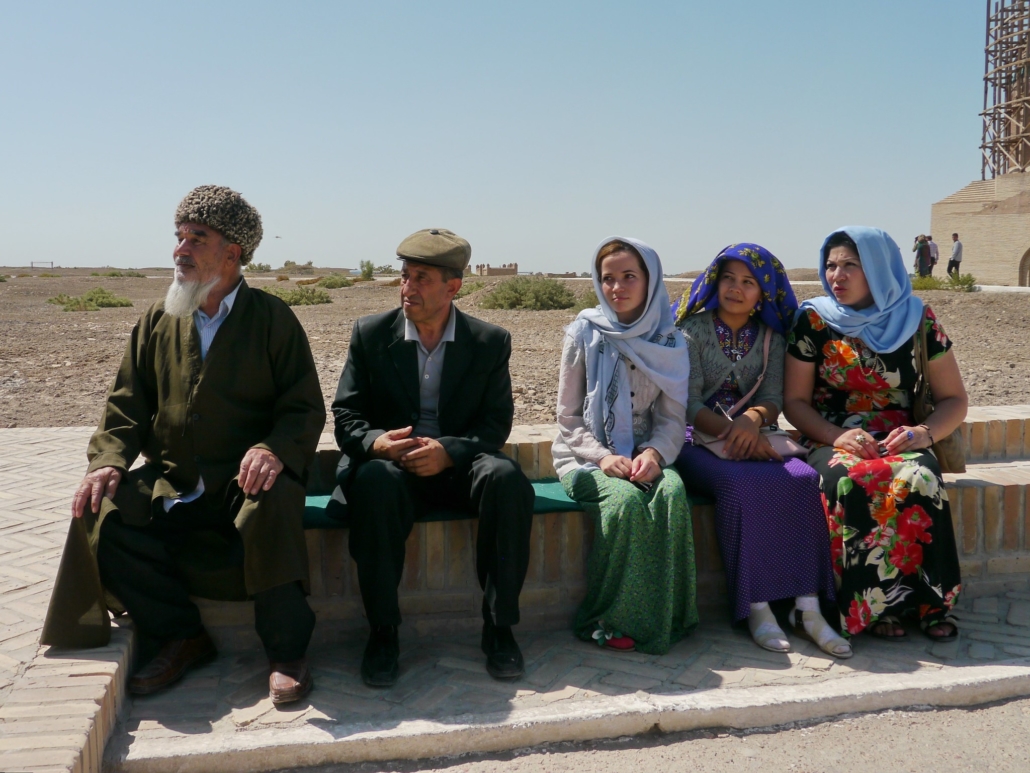
Plans to Improve Sustainable Agriculture in Turkmenistan Sustainable agriculture in Turkmenistan has been difficult to implement due to a lack of resources and an effective way of maintaining agricultural plans. Improvements to the country’s agricultural systems are currently being discussed by activists and governments across the globe.

The United States Agency for International Development (USAID) cites lack of management and effective irrigation systems as barriers to the implementation of sustainable agriculture practices. To address these barriers, aid organizations will not only need an effective irrigation plan in a country where, according to USAID, 80 percent of land is classified as desert, but will need to outline a sound managerial plan for maintaining it.

According to Support for Further Sustainable Agriculture and Rural Development in Turkmenistan (SARD III), the European Union has drawn plans for a four-year project. This complex initiative to improve sustainable agriculture in Turkmenistan required presentations in addition to a lengthy outline. In addition to government plans, aid organizations have chosen to address the issue through education and new technology.

Last fall, a partnership between The United Nations Development Program (UNDP), the Global Environment Facility and the Ministry of Agriculture and Water Economy of Turkmenistan resolved to construct a water pipeline to assist with the issue of sustainable agriculture. According to UNDP, a seminar was given in Ashgabat to outline the plan for the pipeline, explain its success in the past and discuss the importance of daily water conservation practices.

Education about effective agricultural methods has been adopted by other agencies as well. In a statement on the USAID Turkmenistan website, the organization claims to “…prioritize greenhouse horticulture, helping high-value fruit and vegetable growers, processors and marketing specialists connect with local and international markets.” Although the actions and projects by aid organizations as well as plans for improvement are important, aid organizations also emphasize education and explain ways people can make a difference in their everyday lives.

Although activists are doing what they can to address their concerns about sustainable agriculture in Turkmenistan, citizens also consider agriculture a priority and referenced agriculture in a 2015 UNICEF report about goals for the future. Aid organizations and volunteers aim to make sustainability projects a priority and to make sustainability plans a reality.

– Gabriella Evans

Photo: Flickr

February 23, 2018
https://borgenproject.org/wp-content/uploads/borgen-project-logo.svg 0 0 Borgen Project https://borgenproject.org/wp-content/uploads/borgen-project-logo.svg Borgen Project2018-02-23 07:30:562024-06-05 23:55:39Plans to Improve Sustainable Agriculture in Turkmenistan
Page 12 of 16«‹1011121314›»

Get Smarter

  • Global Poverty 101
  • Global Poverty… The Good News
  • Global Poverty & U.S. Jobs
  • Global Poverty and National Security
  • Innovative Solutions to Poverty
  • Global Poverty & Aid FAQ’s
Search Search

Take Action

  • Call Congress
  • Email Congress
  • Donate
  • 30 Ways to Help
  • Volunteer Ops
  • Internships
  • Courses & Certificates
  • The Podcast
Borgen Project

“The Borgen Project is an incredible nonprofit organization that is addressing poverty and hunger and working towards ending them.”

-The Huffington Post

Inside The Borgen Project

  • Contact
  • About
  • Financials
  • President
  • Board of Directors
  • Board of Advisors

International Links

  • UK Email Parliament
  • UK Donate
  • Canada Email Parliament

Get Smarter

  • Global Poverty 101
  • Global Poverty… The Good News
  • Global Poverty & U.S. Jobs
  • Global Poverty and National Security
  • Innovative Solutions to Poverty
  • Global Poverty & Aid FAQ’s

Ways to Help

  • Call Congress
  • Email Congress
  • Donate
  • 30 Ways to Help
  • Volunteer Ops
  • Internships
  • Courses & Certificates
  • The Podcast
Scroll to top Scroll to top Scroll to top