• Link to X
  • Link to Facebook
  • Link to Instagram
  • Link to TikTok
  • Link to Youtube
  • About
    • About Us
      • President
      • Board of Directors
      • Board of Advisors
      • Financials
      • Our Methodology
      • Success Tracker
      • Contact
  • Act Now
    • 30 Ways to Help
      • Email Congress
      • Call Congress
      • Volunteer
      • Courses & Certificates
      • Be a Donor
    • Internships
      • In-Office Internships
      • Remote Internships
    • Legislation
      • Politics 101
  • The Blog
  • The Podcast
  • Magazine
  • Donate
  • Click to open the search input field Click to open the search input field Search
  • Menu Menu

Tag Archive for: Human Trafficking

Posts

Global Poverty

Baby Renting and Other Trends in Child Trafficking

Child Panhandling Greece
Last November, NBC New York investigated a group of women who appeared to be working in syndicate using children to panhandle on the streets of New York. Though they turned out not to be homeless, they were still using toddler-aged children to appeal to strangers for money. When offered food and shelter by well-meaning individuals, they would turn them down.

While panhandling with children is termed a misdemeanor in the state of New York, there are plenty of people in urban areas who are all too willing to exploit children in similar, yet far more sinister ways.

In broken English, an anonymous writer explained that there are actually networks of women who are controlled by crime rings. They sit on the street with unknown infants that have been drugged into unconsciousness with vodka or heroin to make them sleep. Said children are either ‘borrowed’ from unfit parents or outright kidnapped.

The most repulsive aspect of this story, if it is to be believed, is that children often die from overdoses. In these cases the street ‘mothers’ have to hold the corpse all day in order to collect money on the streets of the unnamed city until the end of their shifts.

An anonymous commenter on the story claims to have seen this phenomenon in action in Uganda, while another corroborates it with accounts of trafficked infants and children in China.

According to Polaris, human trafficking takes on many other forms besides panhandling. It happens both in third world countries and in the United States and often disguises itself under the façades of spas, restaurants, carnivals and other small businesses.

Approximately 20.9 million people have been trafficked both domestically and abroad. Among the most vulnerable groups are children, migrants, troubled minors and victims of social stigmatization, sexual assault, domestic violence or war.

The traffickers recruit by promising victims lucrative jobs, novel opportunities and even romantic relationships. Once they are firmly in hand, the perpetrators flip the switch, employing psychologically coercive and damaging tactics such as threats, lies, physical force and emotional manipulation.

Children in particular are prone to the tactics employed by traffickers because their frontal lobes do not fully mature until around the age of 25. The frontal lobe is responsible for conscious reasoning and decision making.

They become especially vulnerable when they run away from home and are exploring unfamiliar territory. Under these circumstances, minors are more likely to rely on the kindness of strangers, in these instances to their grave detriment.

In the worst case scenarios, the traffickers turn out to be pimps who force their female victims into prostitution. Often, they wait near truck stops and gas stations for their next clients to drive up before knocking on their doors.

Despicable as the pimps may be, however, they are working off what is ultimately a profitable business model. It is profitable because the people who pay for the sexual favors and services of slaves are either ignorant or choosing to rationalize their decisions. It’s time to stop being part of the epidemic of human rights violations. Wake up, read up, call up and stop the spread of evil.

– Leah Zazofsky

Sources: CNN,  Opposing Views,  Polaris
Photo: Smug Mug

April 9, 2015
https://borgenproject.org/wp-content/uploads/borgen-project-logo.svg 0 0 Borgen Project https://borgenproject.org/wp-content/uploads/borgen-project-logo.svg Borgen Project2015-04-09 04:00:242024-06-05 01:58:27Baby Renting and Other Trends in Child Trafficking
Extreme Poverty, Human Trafficking, Slavery

Causes of Human Trafficking

human trafficking

There are numerous causes of human trafficking, but the root of most causes is money. Reaping approximately $150 billion and victimizing close to 27 million people, human trafficking is the fastest-growing illicit industry in the world. It includes sex trafficking, child sex trafficking, forced labor, debt bondage, domestic servitude, forced child labor and the unlawful recruitment of soldiers. The common factor lurking behind the different causes of human trafficking is the victim’s vulnerability to exploitation.

Characterized by low costs and high returns, human trafficking is an extremely lucrative enterprise. Harvard’s Siddharth Kara discovered that the cost of today’s slaves is, on average, $420 and modern slaves can generate more than 500 percent in annual return on investment. In comparison, the cost of slaves in 1850, after adjusting for inflation, was between $9,500 and $11,000. During the time, the return on investment from a slave was significantly lower, around 15 to 20 percent in annual return on investment. Furthermore, traffickers face low risks, although more governments around the world are actively penalizing human traffickers, and have a steady stream of vulnerable people to exploit.


Poverty & Causes of Human Trafficking


Although the world successfully reduced global poverty by 35 percent in the past 27 years, 767 million people still live in poverty and make up a portion of the pool of those vulnerable to human trafficking. The structural causes of human trafficking are poverty, lawlessness, social instability, military conflict, natural disasters, weak law enforcement and racial and gender biases. These structural causes represent the broader, necessary requirement for human trafficking to thrive: vulnerability.

Many times, poor families will give their children away to traffickers posing as agents promising their children better lives. Refugee camps are prime locations for this kind of exploitation. Where displaced people lack many forms of proper care, shrewd traffickers build relationships with corrupt officials and freely prey on the weak.

In a more recent example, migrants who cross the Sahara to escape war and terrorism are often captured by traffickers in northern parts of Africa. The International Organization for Migration reported that many of these migrants are falsely promised jobs and then are sold publicly in Libyan slave markets. Many do not make it to Europe.

Human trafficking can happen anywhere, as long as the environment contains vulnerable conditions. The New York Times estimates that one-fifth of homeless youth are victims of human trafficking in the U.S. and Canada. In West Africa, traffickers pose as teachers and enslave optimistic students to become beggars. In 2015, the Associated Press discovered that young migrants and impoverished Thais were forced to catch seafood that later ended up in the world’s seafood supply, including on the shelves of America’s major retailers and supermarkets. Thai agents recruited children and the disabled, some of the most marginalized and vulnerable groups in the world.

Today, many countries are collaborating together to reduce the causes of human trafficking. The U.S. State Department Trafficking-in-Persons Report is the world’s most comprehensive resource on anti-trafficking efforts, including 188 countries and territories. Countries that fail to meet the report’s minimum requirements fall to tier three status, which can result in sanctions on the country. In 2016, Thailand was recognized for making significant strides in eliminating human trafficking.

Locally, ordinary people and nonprofits are continually impacting their communities. Nonprofits, such as Mango House in Chiang Mai, Thailand or FOREFRONT in India, continue to address these structural issues that breed vulnerability.

– Andy Jung
Photo: Flickr

January 27, 2015
https://borgenproject.org/wp-content/uploads/borgen-project-logo.svg 0 0 Borgen Project https://borgenproject.org/wp-content/uploads/borgen-project-logo.svg Borgen Project2015-01-27 16:00:142024-05-27 09:23:12Causes of Human Trafficking
Activism, Development, Human Trafficking

Human Trafficking in Bangkok

Human Trafficking in Bangkok
According to the U.N. Office on Drugs and Crime, Thailand is a “top destination for victims of human trafficking.” The majority of Thailand’s trafficking victims are voluntary economic migrants from countries like Myanmar, Laos, Cambodia and China. They come only for the promise of a good job.

Without documentation, knowledge of Thailand or understanding of its language, they are vulnerable to traffickers. For the same reasons, it is nearly impossible for them to escape. Many are trapped in Thailand’s bustling capital of Bangkok, famous for its rich history, stunning architecture and thriving sex tourism industry.

Operation Graceland began with a tip-off by an Uzbek woman trafficked into prostitution at Bangkok’s Grace Hotel and desperate to return home. What followed was a police raid, the holding of 19 women and an investigation of all involved. In the end, only two of the detainees admitted to being trafficked. They identified their abusive ‘manager’ amongst the group, but after receiving word that their families had been threatened, they spoke favorably of her in court. She was released.

In 2002, there were an estimated 200,000 sex workers in Bangkok and the trade has grown. It is a lucrative job: women and men from poor families earn money to support their relatives, finance future aspirations or live a life of previously unknown affluence.

Though many are forced by circumstance, involvement in the sex industry is considered voluntary. Because there are so many willing sex workers in Bangkok, it is difficult to identify victims of trafficking. Officers are being trained to recognize trafficked workers. Do they work excessive hours? Do they have documentation? Are they of age?

But even if they manage a rescue, it is difficult to convict the perpetrators. Gangs threaten those rescued and their families, warning them against speaking out. Some victims hope that, by cooperating with their captors, they will be released with a small share of their earnings, all of which typically go to their slavers. Still others are undocumented migrants, who fear legal retribution for involving themselves in any legal affair.

In any case, testifying is risky, since many prosecutors base their arguments entirely on hearsay and the victim’s statements. Slavers are often released and the case against them deemed unsubstantial.

The prevalence of trafficking in Thailand and the legal support for victims have not improved enough for international recognition. In June, the United States dropped Thailand from tier two to tier three on the 2014
Trafficking in Persons report.

But the Thai government is making headway. In 2013, the number of trafficking cases investigated was double that of 2012. Nearly 750 victims received some form of assistance from the Thai government: most were referred to one of nine shelters run by the Ministry of Social Development and Human Security. Thousands of public officers were trained on new anti-trafficking laws; ideally, they will offer victims the legal support they need and give them hope of a life once again in freedom.

-Olivia Kostreva

Sources: Bangkok Post, Time, UNIAP
Photo: Laura Leigh Parker

August 22, 2014
https://borgenproject.org/wp-content/uploads/borgen-project-logo.svg 0 0 Borgen Project https://borgenproject.org/wp-content/uploads/borgen-project-logo.svg Borgen Project2014-08-22 12:01:472024-06-05 01:58:06Human Trafficking in Bangkok
Advocacy, Development, Human Trafficking

3 Anti-Trafficking Organizations

Countless organizations around the world, big and small, conduct efforts to combat human trafficking in all of its forms. Here are three anti-trafficking organizations trying to make a difference and give hope to the millions of victims and survivors of this heinous transnational crime.

1) Anti-Slavery International

Based in the United Kingdom, Anti-Slavery International has been working to combat slavery since 1839 and this year is celebrating its 175th anniversary. Originally called the Anti-Slavery Society, it focused on emancipating slaves in the British colonies, Americas and the Caribbean in order to bring an end to the Transatlantic Slave trade.

Anti-Slavery International continues to combat modern slavery through advocacy, public outreach, education and its many campaigns. Some of its current campaigns include projects to combat trafficked labor in the Thai fishing industry, pass legislation that seeks to protect domestic workers around the world, end the chocolate industry’s role in child trafficking in the Ivory Coast and eradicate forced labor in the cotton industry of Uzbekistan.

Successes from its campaign activities include the passage of an International Labor Organization Convention on Domestic Labor, a European Union Human Trafficking Directive and the establishment of legislation criminalizing the use of forced labor as a form of trafficking in the U.K.

2) International Justice Mission

The main purpose of the International Justice Mission is to protect those in poverty from fear of violence which they are disproportionately subjected to due to a lack of legal protections throughout many justice systems in the developing world.

IJM works to protect the poor from violent people through partnerships with local authorities who help carry out four projects: rescuing victims, bringing criminals to justice, restoring survivors and strengthening justice systems. IJM’s method works as a three-phase program called Justice System Transformation.

The first phase focuses on the victims of trafficking: IJM works with local actors to rescue and restore victims of trafficking while at the same time bringing to justice those who perpetrate the crime. The second phase focuses on working with local actors to reform justice institutions so that they better address human trafficking and other forms of violent crime related to slavery. The third and final phase involves monitoring operations to support the continuation of just responses to slavery related crimes in countries with newly reformed justice systems.

3) Love146

The foundation of Love146 begins with a heart-wrenching story about the co-founders’ journey to Thailand and the child slavery they saw undercover in a brothel. The campaign is named after one particular girl they witnessed in the brothel, numbered 146, who refused to give up the fight against the crimes being committed against her.

Love146’s main focus is to combat the trafficking and exploitation of children. Their mission statement explains, “We believe in the power of Love and its ability to affect sustainable change. Love is the foundation of our motivation.” Their love and human compassion approach is composed of four interconnected programs.

The first program, which focuses on caring for survivors, involves the operation of safe houses in regions where child trafficking is prevalent within which victims can fully recover and reintegrate into society as healthy and prosperous adults.

The second program consists of prevention education programs which seek to educate children in at-risk areas about trafficking operations, how to spot traffickers and what to do to avoid being caught up in and how to report human trafficking rings.

The third program revolves around training professionals who frequently work with children, such as teachers, in learning how to spot trafficking victims, how to report these crimes and how to help victims who they may come into contact with.

The last program is an advocacy effort to empower those who fight against human trafficking through greater coordination and organization in order to more effectively combat the highly organized criminal trafficking network.

– Erin Sullivan

Sources: Love146 1, Love146 2, Love146 3, Love146 4, Love146 5, Love146 6, International Justice Mission 1, International Justice Mission 2, International Justice Mission 3, Anti-Slavery International 1, Anti-Slavery International 2, Anti-Slavery International 3, Anti-Slavery International 4
Photo: LoveGreater

August 7, 2014
https://borgenproject.org/wp-content/uploads/borgen-project-logo.svg 0 0 Borgen Project https://borgenproject.org/wp-content/uploads/borgen-project-logo.svg Borgen Project2014-08-07 13:11:412024-05-27 09:20:483 Anti-Trafficking Organizations
Global Poverty

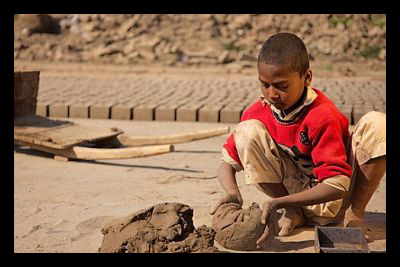
Pakistani Kiln Worker: Labor Till Death

Pakistani Kiln Worker
For Pakistani kiln worker, Amna Bhatti, the only escape from debt is death. Bhatti explains to the Washington Post, “We are poor, and we will always stay poor. When you enter this road, the only way out of it is death.” Many other Pakistani kiln workers face a similar reality.

According to the U.N., 21 percent of the population of Pakistan lives below the poverty line and some are left with no choice but to take out loans in exchange for labor. These loans can have very high interest rates, creating a cycle of bonded labor.

Workers labor in the hot sun to pay off their debt and, many times, their family’s debt, which can be passed down through the generations. Although this practice of paying off loans through labor has been outlawed by the Pakistani government since 1992, actual enforcement of the law is not practiced.

Most of the time, work is done for far less than minimum wage since employers regularly do not keep records and authorities have limited resources to oversee the industry. According to Kahlid Mahmoud, the director of the Labour Education Foundation located in Lahore, no more than a dozen kiln factories in Punjab, Pakistan pay the country’s minimum wage of $7.50 per 1000 bricks.

Actual pay can amount to as little as $1.25 cents a day. Workers are not excluded because of age either.

Child labor in Pakistan encompasses over 12 million children according to the International Labour Organization. Two million of these children work up to 14-hour days in the brickmaking industry. According to the Maplecroft risk analysis firm Pakistan places sixth in their list of 10 countries with the worst rankings for child labour. Many times these children work side by side with their parents.

Pakistan has also been ranked by the 2013 Global Slavery index as having “the third highest prevalence of modern-day slavery.” Female kiln workers are among the worst treated. Zakaria Nutkani of Action Aid explains, “Female workers have virtually no rights, as most of them do not even possess a national identity card, which is a basic document to prove a person’s existence in government records.” Nutkani explains further that female workers are often the lowest paid and face never-ending work because of additional responsibilities maintaining their households.

Cases of sexual abuse of women and children are common. Ghulam Fatima of the human rights advocacy group Bonded Labour Liberation Front explains that workers face extreme repercussions for refusing to work.

These repercussions can include murder or being sold to human traffickers. The punishments can even extend beyond the individual and to their families. Kiln worker Naser explains to CNN about his work conditions simply stating, “He beats me up if the work doesn’t get done.”

Options of escaping bonded labor are rare or non-existent. Bonded laborer Muhammad Mansha sold his kidney to buy his children out of their family’s debt.

Poverty allows conditions such as these to continue to thrive. It greatly limits the options and opportunities people could otherwise have access to. For these Pakistani kiln workers, this is their reality and they know it all too well.

– Christopher Kolezynski

Sources: Al Jazeera, The Washington Post, United Nations Development Programme in Pakistan, CNN World

July 28, 2014
https://borgenproject.org/wp-content/uploads/borgen-project-logo.svg 0 0 Borgen Project https://borgenproject.org/wp-content/uploads/borgen-project-logo.svg Borgen Project2014-07-28 11:02:152024-12-13 17:51:01Pakistani Kiln Worker: Labor Till Death
Child Soldiers, Children, War and Violence

10 Facts about Child Soldiers

child soldier facts -borgen project
When the word “soldier” comes to mind many people think of a strong heroic adult who is fighting for their country. Many people think of a soldier as a person who has voluntarily put their life at risk once again for their country. But many people when they hear the word “soldier” do not think of children. When people hear the words “kids or children” they often think of a young person in school who enjoys playing. People most often think of a child as a young person with few responsibilities and very little stress. But for millions of children around the world this is not the case, many of them are recruited by governments to fight in wars. They are called child soldiers.

Top 10 Facts about Child Soldiers:

  1. Child soldiers are children under the age of 18 who are recruited by armed groups who use children as shields, cooks, suicide bombers, fighters, spies, messengers and/or for sexual purposes.
  2. Some children are under the age of 10 when they are forced to serve.
  3. Children who are forced to serve as soldiers most likely are displaced, poor, have little access to education or live in war zones.
  4. Some children willingly volunteer themselves as child soldiers because they believe it will give them a form of income and/or security.
  5. 10 to 30 percent of kid soldiers are girls. They are used for fighting and are especially vulnerable to sexual violence they are also given to commanders as wives.
  6. The following countries have reported use of child soldiers since 2011: Afghanistan, Colombia, India, Iraq, Israel, Libya, Mali, Pakistan, Thailand, Sudan, Syria, Yemen and more.
  7. In 2007 there were between 7,000 to 10,000 child soldiers in combat although there was a government agreement in the District of Chad to demobilize the recruitment of child soldiers.
  8. Since there have been many technological advances in the making of war weapons they have been made real easy to use, which has contributed to the increase in child soldiers.
  9. Some child soldiers are forced to act violently against their families and communities to make sure they do not return home.
  10. Since 2001 child soldiers have been recruited in 21 armed conflicts all around the world.

Children’s childhoods and human rights are taken away once they are recruited to become child soldiers. Many of them are brainwashed to think it is okay to be serving in war zones at such a young age and often end up having psychological problems.

— Priscilla Rodarte

Sources: Human Rights Watch, Amnesty International, Do Something
Photo: IB Times


z1


July 11, 2014
https://borgenproject.org/wp-content/uploads/borgen-project-logo.svg 0 0 Borgen Project https://borgenproject.org/wp-content/uploads/borgen-project-logo.svg Borgen Project2014-07-11 09:21:322024-12-13 17:50:2410 Facts about Child Soldiers
Activism, Gender Equality, Global Poverty, Human Trafficking, Slavery, Women and Female Empowerment

Violence against Women in Latin America

Over the past decade, Latin America’s economy has improved due to the rising quantity of exports. At the same time, rapid growth of urban centers has created socioeconomic problems like an increase in prostitution and sex trafficking. One of the consequences of the urbanization of Latin America is a rapid increase in population, which in turn results in a larger number of unemployment and homelessness. The high population outnumbers the amount of jobs available for people, especially women. The consequence is that more women living in these urban slums resorting to commercial sex work. These women then become vulnerable to diseases and to violent environments.​

In Brazil, over 40,000 women have murdered for simply being women in the past 10 years. And Honduras is labeled one of the most dangerous places to live for a woman. There, the violent killings of women there have tripled. Unfortunately, only 5 percent of these crimes have been investigated and the murderers prosecuted.

Columbia is facing significant gender-based violence because of military conflict within the country. Women are often attacked who take part in activism to encourage political and social reforms for more representation and rights.

The third most violent place in the world for women is Guatemala. The county ordered a new law to prevent violence against women in 2008, making it the first Latin American country to do so. Yet since the law was implemented, not much has been done to support the new reforms. Women continue to have problems finding prosecution for the culprits.

Not only does violence cost the lives of hundreds of thousands of women in Latin America, but it decreases the region’s social and economic development. The killings are preventing these women from contributing to the economic growth of the country. Seven Latin America countries rank in the top 10 countries in the world for most domestic violence against women.

One answer to this matter is the program U.N. Women, which helps to strengthen the representation of women in government and politics. New policies are developed for women’s economic development; particularly, women in isolated and rural regions in Latin America. These policies aim to create equal and fair workplaces for all women who are seeking or already have employment and to create job opportunities.

UN Women is helping to end gender based violence against women in Latin America by creating services for victims and survivors. This will help by implementing laws to protect women and provide justice for those in need.

— Rachel Cannon

Sources: CSIS, UN Women 1, UN Women 2
Photo: UN Women

June 6, 2014
https://borgenproject.org/wp-content/uploads/borgen-project-logo.svg 0 0 Borgen Project https://borgenproject.org/wp-content/uploads/borgen-project-logo.svg Borgen Project2014-06-06 12:18:292024-05-26 23:35:38Violence against Women in Latin America
Activism, Children, Global Poverty, Human Trafficking, Women

Gender-based Inequality in Nepal

Gender Based Inequality in Nepal
As more Nepalese men leave their homeland in search of employment, the women—especially in rural areas—have begun to take a larger role in society. Even with these new-found responsibilities, the women of Nepal remain trapped in the cycle of poverty and gender-based inequality that has plagued the country for generations. In Nepal, a woman can run a farm yet have no access to the profits the land yields.

Nepal’s economy relies largely on foreign aid, and despite the tremendous progress since the 1990s, 40 percent of the population continues to live below the poverty line. That number declined by 11 percent overall since the mid-90’s, but this still leaves one third of all Nepalese children living under such conditions.

Unemployment leads thousands of Nepalese to migrate to neighboring India in search of a way to provide for their families. Unfortunately, the open border allowing this migration also renders human trafficking, for both sexual and hard-labor purposes, much easier. The trafficking of an estimated 200,000 Nepalese women has filled brothels across India. Someone known to the family often tricks the victims with the promise of a well-paying job. In other cases, women are simply kidnapped and smuggled across the Nepalese border into India. Low-paid border police are easily bribed—an issue activist groups currently target with practical training for the police regarding how to spot a victim of trafficking.

Abuse also follows women who migrate willingly to countries like Lebanon. Under the Kafala system, one employer receives the work permits, meaning women who dare leave an abusive employer risk deportation. Because legal employment pays little, if any, wages, many Nepalese migrants turn to the illegal informal sector. The Nepalese government has reacted with heavy restrictions on women’s travel and migration to the country.

Evidence suggests that the expansion of women’s rights can relieve a country from poverty sooner. Yet, historically, gender inequality has been ingrained in Nepalese society. Chhaupadi, the practice of forcing a women in menstruation or having recently given birth to live apart from the family until the bleeding ends, is still practiced throughout the western and central regions of Nepal. Within the Nepalese family unit, women cannot live individually, which incapacitates victims of domestic abuse who might otherwise leave. Few women report abuse or trafficking to police.

The future of the Nepalese women requires addressing the two main factors of her suffering: economic and gender-based inequality. Microloans offered to rural women proves to be one method to fight the temptation of falsely-alluring jobs abroad. Survivors of trafficking have also received such loans. In 2007, the Nepalese government enacted the Human Trafficking and Transportation Act, but without proper implementation, the Act fails to serve its purpose. The issue demands further international attention, and increased financial independence for women in Nepal.

– Erica Lignell

Sources: The Economist, Unicef, BBC News, FORBES, The Guardian, AlJazeera, The New York Times, The New York Times(2)
Photo: Google Images

May 20, 2014
https://borgenproject.org/wp-content/uploads/borgen-project-logo.svg 0 0 Borgen Project https://borgenproject.org/wp-content/uploads/borgen-project-logo.svg Borgen Project2014-05-20 04:00:412024-12-13 17:53:52Gender-based Inequality in Nepal
Global Poverty, Human Rights, Human Trafficking

20 Ways to Fight Human Trafficking

​
Human trafficking is not only a human security issue, but the fight against human trafficking is also one of the most important human rights causes of our generation. Global poverty is a direct link to the increase in human trafficking making the reduction of global poverty a goal in the near future to save the lives of thousands of young girls and boys within the next decade. Discussed below are the best practices that can be used to fight against human trafficking.


Solutions to Human Trafficking: 20 Ways to Fight


1. Look for red flags that may indicate human trafficking. For example, be aware of situations that can help identify potential trafficking victims. Also, check for human trafficking awareness groups around the community for more information.
2. For the United States, the National Human Trafficking Resource Center can be contacted at 1-888-373-7888 while on a global scale, Polaris can be reached at (888) 373-7888. Both are available twenty four hours a day and can provide a service officer which can provide and receive information regarding suspicious activity which may relate to human trafficking in the area.
3. Be aware of companies and products that may be involved with child labor. The department of labor provides a list of companies that do and do not utilize these practices.
4. Include human trafficking into the professional realm. Specifically, at conferences and within training manuals that relate to this discussion. Help people understand the severity of the issue.
5. Seek out anti-trafficking organizations or create a startup organization geared toward spreading awareness and ways to prevent these acts from occurring.
6. Find the local, state and federal government representatives and inform them about how to combat human trafficking in the community, and also ask what they are doing to address human trafficking in your area and at the global perspective.
7. Distribute public awareness materials available from the Department of Health and Human Services or the Department of Homeland Security around the community, local schools and universities.
8. Volunteer with local outreach or global outreach groups to help fight human trafficking.
9. Donate to an approved anti-trafficking group locally or globally.
10. Start a fundraiser to help provide assistance in the community as well as across the globe.
11. Host events to discuss, show films or do anything related to raising awareness of human trafficking. Promote this locally and collect donations to help fight for the cause.
12. Bring awareness to schools and universities. Encourage information to be provided in the curriculums and in the classrooms. Evoke emotion from students and share with them the steps to help fight for the end of human trafficking.
13. Utilize Google alerts to keep you up to date on current involvements with human trafficking.
14. Write letters to magazines, newspapers and even blogs to bring awareness to these issues.
15. Start a petition against human trafficking or sign a petition to support anti-human trafficking.
16. If you own a business, provide internships for students relating to these efforts or provide job skills to traffic survivors.
17. University students and high school students can take action at their school or on their campus. Students can raise awareness about these issues and create clubs and organizations to gain momentum to fight human trafficking.
18. Join a task force initiative for law enforcement officials.
19. Provide medical assistance at low cost to those who have survived human trafficking.
20. Help survivors gain access to legal assistance, so survivors can fight back as well.

– Rachel Cannon


Sources: U.S. State Department, Polaris Project
Photo: List DOSE

April 17, 2014
https://borgenproject.org/wp-content/uploads/borgen-project-logo.svg 0 0 Borgen Project https://borgenproject.org/wp-content/uploads/borgen-project-logo.svg Borgen Project2014-04-17 11:35:012024-05-26 23:27:2720 Ways to Fight Human Trafficking
Human Rights, Human Trafficking, Slavery

Modern Slavery in Hong Kong

slavery_hong_kong
Modern slavery is a different institution from the historical examples of slavery that we learn about in textbooks. In the 21st century, slavery is illegal in the majority of the world. The Universal Declaration of Human Rights in 1948 declared, “all human beings are born free and equal in dignity and rights” and “no one shall be held in slavery or servitude, slavery and the slave trade shall be prohibited in all their forms.”

Individuals who become modern human trafficking victims are often coerced, tricked or seized from their homes and forcibly exploited. They are trafficked through both underground and legitimate pathways, making their way across borders and oceans. This is not an issue confined to poorer, developing countries. Human trafficking victims enter Western countries such as the United States and the United Kingdom in large numbers.

The International Labor Organization estimates that in 2013, around 21 million people were smuggled around the world, with 11.7 million individuals in Asia. “There are 1.1 million new victims a year, which is 3,000 victims a day, 125 per hour.”

Hong Kong is China’s richest and most developed city. Hong Kong has the world’s ninth largest trading economy, with a gross domestic product of $261 billion. However, Hong Kong also has the largest income gap between its citizens of any developed country. Towering shining skyscrapers share the corner with decrepit apartment buildings falling apart from the weight of the families crammed within its walls.


Facts on Modern Slavery


The U.S. State Department report on Trafficking in Persons (TIP) for 2013 describes Hong Kong as both a destination and a transit area for men, women and children, from countries like Cambodia, Thailand, China, India, Vietnam, Philippines and Nepal, who are coerced into sex slavery and forced labor. Many migrant workers are also subjected to indentured servitude, with little pay and subjected to violence, harsh conditions, and little opportunity for escape.

Hong Kong officials did not recognize its human trafficking problem as a serious concern until 2013. But once the Hong Kong government acknowledged its problem, it could begin to document, collect statistics and analyze human trafficking within its city and create solutions. The TIP report labels Hong Kong as Tier 2; “the city is not in compliance, but the government is making significant efforts to improve.”

Under Hong Kong law, human trafficking is narrowly defined as individuals crossing the border for prostitution. The Hong Kong Department Justice is making positive strides to amend its Prosecution Code to include human exploitation cases. Most human trafficking cases go un-prosecuted and unpunished. The city’s strict immigration laws have driven human trafficking underground, making it extremely difficult to enforce. The majority of its victims will not escape and receive justice without the support of its government and law enforcement.

– Sarah Yan

Sources: South China Morning Post, UN, The Borgen Project
Photo: Impunity Watch

April 5, 2014
https://borgenproject.org/wp-content/uploads/borgen-project-logo.svg 0 0 Borgen Project https://borgenproject.org/wp-content/uploads/borgen-project-logo.svg Borgen Project2014-04-05 04:00:512024-05-26 23:24:19Modern Slavery in Hong Kong
Page 6 of 8«‹45678›»

Get Smarter

  • Global Poverty 101
  • Global Poverty… The Good News
  • Global Poverty & U.S. Jobs
  • Global Poverty and National Security
  • Innovative Solutions to Poverty
  • Global Poverty & Aid FAQ’s
Search Search

Take Action

  • Call Congress
  • Email Congress
  • Donate
  • 30 Ways to Help
  • Volunteer Ops
  • Internships
  • Courses & Certificates
  • The Podcast
Borgen Project

“The Borgen Project is an incredible nonprofit organization that is addressing poverty and hunger and working towards ending them.”

-The Huffington Post

Inside The Borgen Project

  • Contact
  • About
  • Financials
  • President
  • Board of Directors
  • Board of Advisors

International Links

  • UK Email Parliament
  • UK Donate
  • Canada Email Parliament

Get Smarter

  • Global Poverty 101
  • Global Poverty… The Good News
  • Global Poverty & U.S. Jobs
  • Global Poverty and National Security
  • Innovative Solutions to Poverty
  • Global Poverty & Aid FAQ’s

Ways to Help

  • Call Congress
  • Email Congress
  • Donate
  • 30 Ways to Help
  • Volunteer Ops
  • Internships
  • Courses & Certificates
  • The Podcast
Scroll to top Scroll to top Scroll to top