• Link to X
  • Link to Facebook
  • Link to Instagram
  • Link to TikTok
  • Link to Youtube
  • About
    • About Us
      • President
      • Board of Directors
      • Board of Advisors
      • Financials
      • Our Methodology
      • Success Tracker
      • Contact
  • Act Now
    • 30 Ways to Help
      • Email Congress
      • Call Congress
      • Volunteer
      • Courses & Certificates
      • Be a Donor
    • Internships
      • In-Office Internships
      • Remote Internships
    • Legislation
      • Politics 101
  • The Blog
  • The Podcast
  • Magazine
  • Donate
  • Click to open the search input field Click to open the search input field Search
  • Menu Menu

Tag Archive for: Europe

Posts

Global Poverty, Politics

Four Facts about Poverty in Macedonia

Poverty in Macedonia
The small landlocked European country of Macedonia, located north of Greece, has only been officially declared an independent nation since 1991 after winning independence from Yugoslavia. During this short time, the population of Macedonia has struggled with the spread of poverty and remains among the ten poorest countries in Europe. Here are four facts about poverty in Macedonia:

  1. Nearly one-third of Macedonian citizens are poor. A calculated 30.4 percent of people in Macedonia live below the poverty line. Macedonia’s national population is just over two million people, which means a shocking 600,000 individuals are currently living below the poverty line. This is more than double the rate of poverty in the U.S., which measured at 13.5 percent in 2015.
  2. Political and ethnic tensions are contributing factors to the widespread poverty. Suspected government corruption in elections and ongoing prejudice between the Albanian and Macedonian populations prevent the stability necessary for economic improvement. As one Western diplomat claimed while choosing to remain anonymous, “When people have no money, they try to find someone to blame. In Macedonia’s case, ethnic groups blame each other for their misfortunes.”
  3. Unemployment is a major cause of poverty in Macedonia. The rate of unemployment in Macedonia was 23.4 percent in 2016, rendering one in four people unable to find work. The shift from a Yugoslavian command economy, in which the central government mandated many aspects of the market such as prices, incomes and investments, to the modern democratic economy, subject to volatile influences such as supply and demand, has left many citizens without job opportunities.
  4. Children may suffer the effects of poverty in Macedonia more than the adults. Even as progress is made to reduce the national poverty level, families with young children have far higher rates of poverty compared to the national average. According to a comprehensive study by UNICEF, the rates of poverty in Macedonia among households with children increased from 49.3 percent in 2002 to 66.6 percent in 2007. This is especially true among small-scale farmers in rural areas, who comprise 40 percent of the poor in Macedonia.

Future efforts to improve the economic standing of Macedonia will depend largely on expanding the job market and improving local infrastructure. Foreign investors may be able to solve both problems, especially from the United Kingdom and from Germany, as Macedonia continues to stabilize its new governmental structure and appeal to other European countries for support.

– Dan Krajewski

Photo: Flickr

March 12, 2017
https://borgenproject.org/wp-content/uploads/borgen-project-logo.svg 0 0 Borgen Project https://borgenproject.org/wp-content/uploads/borgen-project-logo.svg Borgen Project2017-03-12 01:30:462020-05-15 13:09:38Four Facts about Poverty in Macedonia
Global Poverty, Refugees

10 Facts About Spain Refugees

Spain Refugees
Despite having a history of being a welcoming and friendly culture, Spain does not have a very inviting asylum policy. Citizens are pushing their leaders to make Spain a viable location for refugees escaping war-torn countries. Here are 10 facts about Spain refugees.

  1. There were over one million sea arrivals to Europe for refugees in 2015 but only a few thousand went to Spain. There were 1.3 million asylum applications logged but only 13,000 in Madrid.
  2. In 2015, Prime Minister Mariano Rajoy issued a statement agreeing that Spain would take only 2,749 refugees. Rajoy believed that due to Spain’s current economic struggles, they could not support an influx of refugees. This number is “less than half of the quote requested by the EU.”
  3. Spanish citizens protested and pressured local governments to change this decision and Rajoy changed the refugee quota to 14,931 in addition to the 2,749.
  4. Even though Spain claimed to have accepted roughly 15,000 refugees over a six-month period in 2015 and 2016, Spain only accepted 18 people according to Spanish NGOs.
  5. In response to this, big cities like Barcelona and Madrid planned a countrywide network for citizens to register to have refugees to stay in their personal homes.
  6. Other cities have offered to join this network. Valencia, the island of Mallorca and the region of Castilla y Leon also pledged to work with local banks, public buildings and universities to receive housing for Spain’s refugees.
  7. Spain refugees see the country as a stepping stone to getting farther north in Europe. Many want to continue on to Germany.
  8. Spain refugees are placed in reception centers for six months. There they receive food, shelter, clothing, legal aid and counseling. “After six months, you don’t get anything. Spain simply throws you out into the street,” says Bashar Haousheh, a Syrian refugee in Spain.
  9. The percentage of Syrian refugees arriving in Spain was 44.2 percent in 2015, over triple that of the next largest nationality, Guinea (Conakry), at 13.6 percent.
  10. Madrid has pledged 10 million euros towards resettlement services. Madrid’s football team, Real Madrid, has pledged over one million euros and the use of its facilities to incoming refugees.

Even though Spain’s recent attempts at accepting refugees are lower than past years, and regardless of the government putting staunch regulations on incoming refugees, the regular citizens of Spain still want to give their assistance and try to make a difference.

– Karyn Adams

Photo: Flickr

March 12, 2017
https://borgenproject.org/wp-content/uploads/borgen-project-logo.svg 0 0 Borgen Project https://borgenproject.org/wp-content/uploads/borgen-project-logo.svg Borgen Project2017-03-12 01:30:002020-05-15 13:29:2410 Facts About Spain Refugees
Education

Four Facts About Education in Luxembourg


Although a small country, Luxembourg has become more independent with its resources in recent years. One of the most successful aspects of the nation is its education system. According to the Organization for Economic Co-operation and Development program (OECD), the quality of education in Luxembourg surpasses many other nations.

According to reports made in 2011, 77% of people in Luxembourg have at least an upper secondary education. This is equivalent to a high school education. The number exceeds the OECD average of only 75%. The younger generation is excelling even further, with 83% of 25-34 year-olds having completed a high school education.

Teachers are well-paid. Teachers in Luxembourg earn the highest out of all the countries that are a part of the OECD. Their starting salary is an average of 73,700 euros. More experienced teachers earn an average of 128,200 euros. Compared to the United States’ teachers’ starting salary of 43,324 dollars and maximum salary of 66,054 dollars, the salaries in Luxembourg are considerably higher. Teachers in Luxembourg are also young; half of primary and secondary school teachers are under the age of 40.

Education in Luxembourg is trilingual. The languages that are mandatory are Luxembourgish, German and French. Students first learn Luxembourgish and then in primary schools, they learn German as a second language. When students advance to secondary education, they learn French. English is also an option as well if students choose to learn it. As a result, students in Luxembourg learn more languages than other students around the world.

Before the University of Luxembourg was founded in 2003, there were no four-year universities in the country. Students who wanted to go to a university had to travel abroad to do so. Although the University of Luxembourg is fairly small, 55% of students are international and the university offers multilingual courses.

The educational system in Luxembourg is one of the most successful in the world, and for good reason. With well-paid teachers and multiple languages incorporated into the curriculum, there is a high standard for success.

– Emma Majewski

Photo: Flickr

March 6, 2017
https://borgenproject.org/wp-content/uploads/borgen-project-logo.svg 0 0 Borgen Project https://borgenproject.org/wp-content/uploads/borgen-project-logo.svg Borgen Project2017-03-06 01:30:472024-12-13 17:56:46Four Facts About Education in Luxembourg
Global Poverty, Refugees

Ten Facts About Somali Refugees

Somali Refugees
According to the United Nations High Commissioner for Refugees (UNHCR), Somalia “remains the epicenter of one of the world’s largest displacement crises.” Of the approximately 11 million people living in Somalia, well over one million are internally displaced while another one million Somalis are registered as refugees in the Horn of Africa and Yemen. Somali refugees have suffered the consequences of a “failed state,” enduring decades of political turmoil, severe drought and the presence of extremist groups.

Because Somalia is one of the countries specified in President Trump’s executive order regarding the immigration ban, it’s important to understand the implications of the country’s situation. Here are 10 facts about Somali refugees:

  1. Since 1991, when President Mohammed Siad Barre fled the country to make way for a power struggle between two warring clans, Somalia has lacked a stable government. Fighting among warlords and rebel groups has made it extremely difficult to restore peace in the country.
  2. It has been difficult to provide Somalia with the international aid that it needs. The country became so dangerous that the U.N. pulled its international aid workers from Somalia in 2001. In 2005, the U.N. World Food Program shipments to Somalia were stopped because they were being seized by rebel forces. Today, it is still difficult to ensure that aid shipments do not fall into the wrong hands.
  3. The total number of native-born Somalis living outside their country more than doubled between 1990 and 2015. The number increased from approximately 850,000 to two million.
  4. Today, there are close to 150,000 Somali immigrants and refugees living in the U.S., and under the Obama administration, nearly 43,000 Somali refugees came to the U.S.
  5. This decade, more than 260,000 people have died in Somalia as the result of severe drought, which has contributed to a lack of clean water and the disintegration of agriculture across the country. The U.N. Office for the Coordination of Humanitarian Affairs stated in a 2016 report that one in 12 Somalis struggles to meet their needs regarding food and water. The report also stated that approximately 305,000 children under the age of five were suffering from malnutrition.
  6. Somalia’s neighboring countries host the largest number of its refugees. According to data collected by the UNHCR, there are just under 330,000 Somali refugees registered in Kenya, 241,000 in Ethiopia and 255,000 in Yemen. Thousands more have found temporary living situations in Tanzania, Uganda, Djibouti and Eritrea.
  7. Dadaab, the largest refugee camp in the world, was home to more than half a million Somalis in 2015. The camp is located in northeastern Kenya and was initially set up as a temporary living situation for refugees fleeing conflict in Somalia and Sudan. Unfortunately for many, the camp has become more permanent. Refugees are often stuck in camps for several decades, unable to emigrate to another country or return to their own. Kenya now plans to close the camp as it has become a breeding ground for extremist groups.
  8. Islamist group Al-Shabaab has a strong presence in Somalia, initially gaining support by promising safety and security to citizens. Al-Shabaab’s credibility quickly declined due to violence and the denial of Western aid. Al-Shabaab’s presence in Somalia has contributed heavily to the refugee crisis, committing senseless acts of violence that contribute further to the chaos.
  9. According to the U.S. federal budget proposal for 2017, Somalia will receive $116.8 million in funding for security assistance and even less in humanitarian aid.
  10. Somali refugees around the world have been resettled and have succeeded in creating productive and successful lives in Western countries. Apart from the many Somalis living in the U.S., around 280,000 Somali immigrants live in European countries.

Somalia continues to be one of the most prominent sources of the world’s refugees, as it has been for several decades. The call for humanitarian assistance and the need for development in the country is at an all-time high, especially considering the possibility that, under the new administration, Somali refugees may not be allowed to enter the United States.

– Peyton Jacobsen

Photo: Flickr

February 22, 2017
https://borgenproject.org/wp-content/uploads/borgen-project-logo.svg 0 0 Borgen Project https://borgenproject.org/wp-content/uploads/borgen-project-logo.svg Borgen Project2017-02-22 01:30:512024-12-13 17:56:39Ten Facts About Somali Refugees
Global Poverty, Hunger

Five Efforts to Fight Hunger in Spain

Hunger in Spain
Shaken up by the global economic crisis and with one of the highest unemployment rates in Europe, Spain has many vulnerable people struggling with poverty and hunger. Fortunately, numerous efforts in the towns of Galdakao, El Prat and toward the nation as a whole have helped significantly in the fight against hunger in Spain.

  1. In 2013, the regional government distributed breakfast and snacks to more than 50,000 children at risk of nutritional deficiencies in Andalusia.
  2. In the town of Galdakao, locals installed a community fridge in 2015 where citizens, restaurants and supermarkets can leave leftover food, and anyone who wants it can get it. Paid for by the city, the fridge has helped to feed the hungry and also cut down on waste.
  3. Working closely with the Food and Agriculture Organization of the United Nations (FAO), Spain supports the Zero Hunger objective under the Hunger-Free Latin America and the Caribbean 2025 Initiative. A number of projects have been applied to food security governance, deepening the country’s commitment to eradicating hunger within a generation.
  4. Spain is listed as one of the five headquarters that make up Action Against Hunger International, a world leader in the fight against hunger for more than three decades, combating hunger in emergencies, conflicts, natural disasters and vulnerable areas where there is chronic food insecurity.
  5. The adoption of a new “gleaning” movement, which involves the harvesting of farmers’ unwanted crops, has assisted the disadvantaged, sending recovered foods to food banks. The El Punti Solidari food bank in the town of El Prat partnered up with Red Cross, Caritas and opened to 500 local users this year, making a big difference in the lives of families in need.

Despite the recent financial struggles and the growing problem of hunger in Spain, the country has found various methods to improve conditions for health and nutrition for its citizens.

– Mikaela Frigillana

Photo: Flickr

January 22, 2017
https://borgenproject.org/wp-content/uploads/borgen-project-logo.svg 0 0 Borgen Project https://borgenproject.org/wp-content/uploads/borgen-project-logo.svg Borgen Project2017-01-22 01:30:042024-12-13 17:56:30Five Efforts to Fight Hunger in Spain
Global Poverty, Human Rights, Refugees, Refugees and Displaced Persons

German Companies Give Refugees in Germany a Chance

Refugees in GermanyGerman chancellor Angela Merkel has made refugees in Germany a priority. As the Syrian refugee crisis unfolded, the chancellor decided on an open-door policy, which allowed over one million refugees to resettle in Germany. Recently, Merkel urged German corporations to integrate refugees into companies more quickly, arguing that refugee employment will support the German economy. And there is no shortage of refugees in Germany who are ready to work; the latest reports provided by the Federal Employment Agency state that 346,000 people with asylum status sought employment in the month of August alone.
Large German companies are hesitant to hire refugees for a myriad of reasons. Companies argue that they do not want to risk their productivity by employing refugees who don’t currently possess the necessary skills. Companies may also have qualms about the fact that many refugees have yet to become fluent in German, and that 80 percent of asylum seekers do not possess a primary- or secondary-level education.

Legal issues still remain, such as incomplete paperwork for asylum approval and a lack of proper identification for background checks. Merkel and some German companies, however, are working to make it easier for refugees to land jobs that not only provide income but also the skills necessary to be qualified contenders in the job market.

Despite the trepidation of some German companies towards refugee employment, many are using the influx of people to their advantage. Germany’s national rail carrier, Deutsche Bahn, announced that over the next two years it will create room for an additional 150 refugees in its qualification program, which includes German language courses. Deutsche Post currently employs more than 100 refugees, and national internet service provider Deutsche Telekom plans to hire 75 refugees through an apprenticeship program as well. Companies such as Mercedes, Siemens and Daimler have even created pre-training programs to prepare refugees for apprenticeships.

With the support of German companies, refugees in Germany can build better lives.

– Mariana Camacho

Photo: Flickr

October 4, 2016
https://borgenproject.org/wp-content/uploads/borgen-project-logo.svg 0 0 Borgen Project https://borgenproject.org/wp-content/uploads/borgen-project-logo.svg Borgen Project2016-10-04 01:30:352020-06-05 10:51:53German Companies Give Refugees in Germany a Chance
Aid, Refugees and Displaced Persons

Should We be Accepting Refugees in America?

Accepting_Refugees_in America
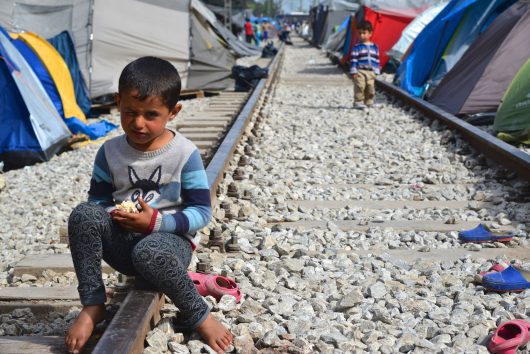
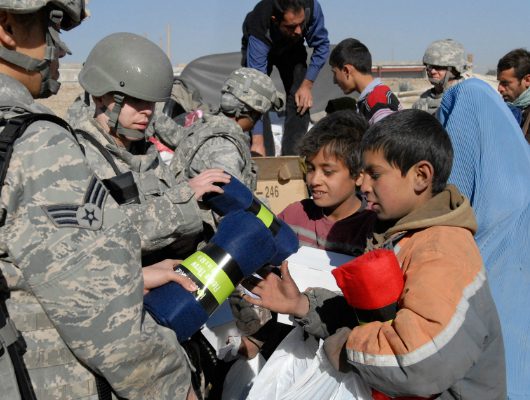
As Europe continues to struggle with a steady stream of refugees from Syria, Iraq and beyond, the United States is still debating a proper policy response to the crisis. It begs the question – what are the implications for accepting refugees in America on a large scale?

White House discussions regarding U.S. refugee policy have been held in recent weeks, but it still seems that the Obama administration is far from making a concrete decision.

President Obama has stated that the U.S. will accept around 10,000 Syrian refugees over the next year, but more longstanding U.S. involvement has yet to be confirmed.

In a recent op-ed for the New York Times, director of migration and refugee services of the United States Conference of Catholic Bishops William Canny laid out some key ways that genuine U.S. involvement could greatly aid Syrian refugees.

“In addition, the United States can resettle a much larger number of the 4 million Syrian refugees than the 1,600 we have to date,” Canny says. “The U.S. refugee program could absorb as many as 100,000 Syrian refugees if the political will to do so existed. Security checks are in place to ensure that those resettled are not a threat to us.”

According to the UN, 7.6 million Syrians have been internally displaced since the beginning of the conflict in 2011, and an additional 4.1 million have been displaced outside of the country altogether. The need for increased U.S. response is growing rapidly.

“A robust U.S. commitment to the resettlement of Syrian refugees would encourage other reluctant nations, especially those in Europe, to accept more and to keep their doors open until this horrific conflict can be ended,” Canny continues. “It also would show that the United States is not indifferent to human suffering and remains, as always, a beacon of hope to the world.”

– Alexander Jones

Sources: New York Times, US News, Washington Post
Photo: Google Images

September 20, 2015
https://borgenproject.org/wp-content/uploads/borgen-project-logo.svg 0 0 Borgen Project https://borgenproject.org/wp-content/uploads/borgen-project-logo.svg Borgen Project2015-09-20 14:17:122024-12-13 18:05:07Should We be Accepting Refugees in America?
Global Poverty

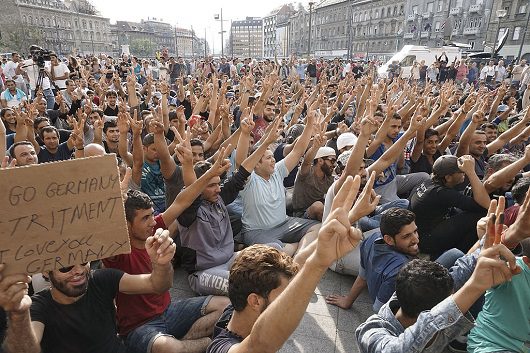
Europe Pushes for Improved Response to Migrant Crisis

Migrant Crisis
As the European Migrant Crisis intensifies, countries are more persistently urging the European Union (EU) to act. Top security officials representing France, Britain and Germany are pressing for better processing of migrants crossing over into southern Europe.

Since the start of the Syrian civil war in 2011, France, Germany and Britain have received a total of 920,000 asylum applications. Four years later, they are feeling the pressure to respond to these asylum seekers more than ever before. Unprecedented numbers of migrants are reaching EU borders, and the need for action is almost tangible.

Accordingly, the three countries are calling for reception centers to be set up in Italy and Greece in order to register new arrivals. The migrant centers would distinguish between genuine refugees and economic migrants. The refugees in need would be allowed to stay, and the economic migrants would be returned home.

The countries—Germany especially—are also asking the EU to release a list of “safe countries of origin,” which would theoretically allow asylum applications to be more quickly registered based off of specific nationalities. Such a list could also free up resources to help those most severely in need.

In a joint statement, the countries called on Luxembourg to convene an emergency meeting between the home and the interior ministers of each member state within the next two weeks. At this proposed meeting, proposals could be discussed and then later voted on at the next scheduled meeting in October.

Establishment of “hot spot” detention centers in Greece and Italy would be at the head of the emergency meeting’s agenda. Discussions would center on methods of ensuring that migrants are fingerprinted and registered in a timely manner, allowing authorities to distinguish those most severely in need of protection.

Angela Merkel, Germany Chancellor, made a statement calling on other member nations to follow Germany’s lead by taking in more asylum seekers. Germany has indeed played a leading role throughout the crisis, as evidenced by the country’s pledge to receive 800,000 migrants this year alone.

French Prime Minister Manuel Valls echoed Merkel’s message, explaining that migrants who “are fleeing war, persecution, torture, and oppression must be welcomed”. Unfortunately, leaders urging this type of progressive, inclusive message are facing intense opposition.

Theresa May, the British home secretary, recently said that the current levels of migration are unsustainable and that only European migrants with a job lined up for themselves should be allowed into the United Kingdom.

May argued that the migrant crisis puts pressure on infrastructure, like housing and transport, as well as public services like schools and hospitals. While her argument is not invalid, her attitude is certainly counterproductive in such a time of crisis.

It is true that intensified migration has put pressure on European infrastructure and public services, which is why every capable member state must work together to divide and conquer more efficiently. If every European nation were to take on the attitude of Mrs. May, the crisis would not only remain unsolved but would worsen.

At upcoming talks, all European participants must acknowledge this simple fact. Looking ahead, member states must assume positions of cooperation and humility. Developed nations need to collaboratively rise up to meet the challenge of the migrant crisis, and to address the needs of citizens fleeing war and persecution.

– Sarah Bernard

Sources: Haaretz, Breit Bart, Irish Times
Photo: Wikipedia

September 5, 2015
https://borgenproject.org/wp-content/uploads/borgen-project-logo.svg 0 0 Borgen Project https://borgenproject.org/wp-content/uploads/borgen-project-logo.svg Borgen Project2015-09-05 01:05:402020-07-02 13:12:42Europe Pushes for Improved Response to Migrant Crisis
Global Poverty, Health

Health Inequality in Europe

Health_inequalities_poverty
A new report from the European Union illuminates the staggering cost of untreated illness among Europe’s most poor. The report estimates that trillions of dollars a year are lost due to what it calls “health inequalities.”

As reported by The Guardian, the study shows that many avoidable costs are incurred as a result of sick individuals leaving the workforce due to illness or death. The loss of productivity alone may cause trillion dollar losses throughout the E.U.

Granted that these costs and conditions (along with other economic factors) vary widely from nation to nation in the E.U., the report signals a need for shared responsibility in dealing with public health.

From west to east, Europe has an obvious incline in disease and mortality. Many eastern European states report annual mortality rate that are nearly double that of the lowest western states. The fault line between the two halves of Europe appears to be primarily economic—a divide between rich and poor.

The report points to poverty as the central association to these varied health outcomes. The report claims to have “found many examples of associations between risk factors for health, including tobacco use and obesity, and socio-economic circumstances.”

A lack of education, employment, and social safety nets also help to account for a fairly substantial disparity between member states. The report, therefore, calls for broad, systemic changes for many nations. The solution has to be delivered on several fronts if the less fortunate states are to see positive change. Additionally, they are not likely to be able to accomplish these goals in the short term without significant aid from wealthier member states.

In the end, the report looks to put this issue in the public interest by appealing to economic consequences of allowing such inequality to exist. Further, it argues that these inequalities are mostly avoidable. In other words, something can be done on the part of member states to ensure the well being of the most poor.

– Chase Colton

Sources: The Guardian, EU
Photo: Shared Justice

February 9, 2014
https://borgenproject.org/wp-content/uploads/borgen-project-logo.svg 0 0 Borgen Project https://borgenproject.org/wp-content/uploads/borgen-project-logo.svg Borgen Project2014-02-09 19:49:102024-05-26 23:08:51Health Inequality in Europe
Development, Economy, Foreign Aid, Foreign Policy, Global Poverty

What is the OECD?

OECD_policies_
What is the OECD?

In short: OECD stands for Organization for Economic Co-operation and Development. It is an international economic organization whose mission is to “promote policies that will improve the economic and social well-being of people around the world.”

A little more detail: In the beginning, the OECD was actually named the OEEC – the Organization for European Economic Co-operation. It was founded in April of 1948, with 18 original European participants. The first and original principles of the OEEC were as follows: “Promote cooperation between participating countries and their national production programs for the reconstruction of Europe; Develop intra-European trade by reducing tariffs and other barriers to the expansion of trade; Study the feasibility of creating a customs union or free trade area; Study multi-lateralization of payments; and Achieve conditions for better utilization of labor.”

In 1961, the OEEC became the OECD, and membership was extended to non-European countries. Most OECD members are regarded as “developed countries” with a high human development index. To this day, according to Pierre Tristam at about.com, the OECD remains one of the most cited sources for “economic data and information” because the organization keeps vast databases and “conducts some of the world’s most authoritative analyses and studies on the world economy.”

The OECD said that it provides a forum in which countries can work together to “seek solutions to common problems.” The organization aims to identify good practices and to coordinate “domestic and international policies.” It is committed to democracy and a sustainable market economy. Some of these good practices include taxes and social security, leisure time, school systems and “pension systems” that look after country’s elderly citizens, since the OECD tries to look at issues “that directly affect the lives of ordinary people.”

Its reach extends to the environment, the economy and social issues. The OECD is committed to helping the lives of ordinary people, thus making life harder for those “whose actions undermine a fair and open society,” such as terrorists, unethical businessmen and tax evaders.

The OECD promotes policies designed:

“To achieve the highest sustainable economic growth and employment and a rising standard of living in Member countries, while maintaining financial stability, and thus to contribute to the development of the world economy; to contribute to sound economic expansion in Member as well as nonmember countries in the process of economic development; and to contribute to the expansion of world trade on a multilateral, nondiscriminatory basis in accordance with international obligations.”

As of 2013, the OECD has 34 active member countries, including the United States, and “is in accession talks with the Russian Federation.”

– Alycia Rock

Sources: OECD: About, OECD: Report 2013, Middle East About, OECD
Photo: CIB

October 4, 2013
https://borgenproject.org/wp-content/uploads/borgen-project-logo.svg 0 0 Borgen Project https://borgenproject.org/wp-content/uploads/borgen-project-logo.svg Borgen Project2013-10-04 20:31:102024-12-13 17:49:41What is the OECD?
Page 12 of 13«‹10111213›

Get Smarter

  • Global Poverty 101
  • Global Poverty… The Good News
  • Global Poverty & U.S. Jobs
  • Global Poverty and National Security
  • Innovative Solutions to Poverty
  • Global Poverty & Aid FAQ’s
Search Search

Take Action

  • Call Congress
  • Email Congress
  • Donate
  • 30 Ways to Help
  • Volunteer Ops
  • Internships
  • Courses & Certificates
  • The Podcast
Borgen Project

“The Borgen Project is an incredible nonprofit organization that is addressing poverty and hunger and working towards ending them.”

-The Huffington Post

Inside The Borgen Project

  • Contact
  • About
  • Financials
  • President
  • Board of Directors
  • Board of Advisors

International Links

  • UK Email Parliament
  • UK Donate
  • Canada Email Parliament

Get Smarter

  • Global Poverty 101
  • Global Poverty… The Good News
  • Global Poverty & U.S. Jobs
  • Global Poverty and National Security
  • Innovative Solutions to Poverty
  • Global Poverty & Aid FAQ’s

Ways to Help

  • Call Congress
  • Email Congress
  • Donate
  • 30 Ways to Help
  • Volunteer Ops
  • Internships
  • Courses & Certificates
  • The Podcast
Scroll to top Scroll to top Scroll to top