• Link to X
  • Link to Facebook
  • Link to Instagram
  • Link to TikTok
  • Link to Youtube
  • About
    • About Us
      • President
      • Board of Directors
      • Board of Advisors
      • Financials
      • Our Methodology
      • Success Tracker
      • Contact
  • Act Now
    • 30 Ways to Help
      • Email Congress
      • Call Congress
      • Volunteer
      • Courses & Certificates
      • Be a Donor
    • Internships
      • In-Office Internships
      • Remote Internships
    • Legislation
      • Politics 101
  • The Blog
  • The Podcast
  • Magazine
  • Donate
  • Click to open the search input field Click to open the search input field Search
  • Menu Menu

Tag Archive for: Europe

Posts

Children, Education, Human Rights

Child Labor in Europe Still Exists?

Rope isolated on white background
Many people today think that child labor in Europe must not exist anymore. For such a developed area of the world, dependency on children for work seems both outdated and absurd. However in reality, child labor still maintains a hold in Europe.

According to UNESCO, 29% of children from age 7 to 14 in the country Georgia are working. Similarly, in Albania, 19% of children of that age group work. Additionally, an estimated 1 million children are laborers in Russia. Even in Italy, 5.2% of children under the age of 16 are working. There are still millions of other unreported cases of child labor across the continent.

Many of these working children in Europe work highly dangerous jobs in agriculture, construction, or small factories. In Bulgaria, child labor is fairly common in the tobacco industry, some children working up to 10 hours a day. Reports from Moldova also reveal that school directors and agricultural farm cooperatives often sign contracts that require students to work for the harvest. Reports of long hours and hard work also come from children in Portugal and even the U.K.

Work in these industries often involves use of hazardous machinery and equipment, extremely heavy loads and dangerous chemicals. Moreover, like all working children across the world, such hard labor puts each of Europe’s working children in positions of abuse and exploitation. Particularly at risk are accompanied children of migrants from developing countries.

There is speculation that austerity policies in Europe have devastated living standards so much that child labor has returned in greater force. Countries badly affected by this economic downturn and austerity include Greece, Italy, and Portugal, amongst many others. A recent article in the French Newspaper Le Monde highlights the rise of child labor in Europe. The article uses an example of how thousands of children in the Italian region of Naples have quit school to find jobs in order to feed families. It cites reports from a local government that suggested that 54,000 children left education in the year between 2005 and 2009. Of these children, 38% were less than 13 years old.

The case of these Italian children leaving school points out the desperate plight of children affected by high rates of unemployment and economic difficulty. With austerity has come decreased access to welfare benefits for the poor. Thus children in poverty are required to work harder and at a younger age to support families. Moreover, child labor is not simply an Italian question. Child labor is a problem is that all of Europe must face in the advent of economic crises. Moreover, it is a cyclical problem.

The more children work at a younger age, the more unlikely that it is that they return to education systems, perpetuating the cycle of poverty. Child labor is real and it thrives even in the most unlikely places of Europe. Most importantly, it is an issue worth addressing by both governments and individuals alike.

– Grace Zhao

Sources: World Socialist Web Site, Human Rights Comment

 

Facts about Child Labor


August 29, 2013
https://borgenproject.org/wp-content/uploads/borgen-project-logo.svg 0 0 Borgen Project https://borgenproject.org/wp-content/uploads/borgen-project-logo.svg Borgen Project2013-08-29 19:45:502020-07-09 21:05:06Child Labor in Europe Still Exists?
Global Poverty

World Bank & Energy Efficiency

world_bank_energy
20% of the world’s population lives without access to electricity and nearly 40% depend on wood and other biomass for household fuel. Energy is essential for growing an economy and reducing poverty. The recent global initiative, Sustainable Energy for All, recognizes the importance of providing energy in developing countries. Energy is needed for business development, job creation, and income generation.

Over the last decade, the World Bank has committed more than $3 billion to Europe and Central Asia (ECA) to countries who face a potential energy crisis. This region is one of the most energy intensive regions in the world. Poorly constructed buildings throughout that provide low heating which increases energy consumption. The region accounts for 12% of global greenhouse gas (GHG) emissions, which is twice the amount is should contribute given its output.

The World Bank has already helped countries such as Belarus reduce its energy intensity by 60% and has saved Uzbekistan 50,000 MWhs of energy that would have otherwise been lost to inefficiency. The energy efficiency projects in the region over the past ten years have already saved an amount equal to the power generated in New Zealand in 2010.

Going forward countries will need to invest about $3.3 trillion over the next 20 years. While it may seem like a large amount, these energy efficiency projects pay off in the end. Cutting energy subsidies, protecting the poor and investing in energy efficiency could mean that nearly half the countries in ECA would gain more than 1 percent of its GDP back.

Over the next 20 years the World Bank along with ECA will focus on adopting more efficient technologies, increasing the energy efficiency of existing infrastructure, moderating demand for energy, and making cities more energy efficient. These initiatives will help the region by increasing their energy security, enhancing economic growth, and reducing the environmental and social impacts of the energy sector.

– Catherine Ulrich

Sources: World Bank, European Commission

August 6, 2013
https://borgenproject.org/wp-content/uploads/borgen-project-logo.svg 0 0 Borgen Project https://borgenproject.org/wp-content/uploads/borgen-project-logo.svg Borgen Project2013-08-06 06:45:232017-05-15 14:24:10World Bank & Energy Efficiency
Foreign Policy

What is the Bilderberg Group?

bilderberg-group
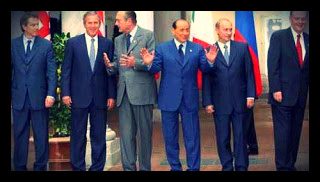
The Bilderberg Group is an annual conference designed to foster dialogue between Europe and North America. The group was started in 1954 when the first conference was held at the Bilderberg Hotel in Holland. The conference brings together 120-150 political leaders and experts from a variety of fields each year to discuss megatrends and major issues facing the world.

The Bilderberg conference provides an opportunity for informal, off-the-record conversation that is seldom possible in other venues. No official positions are required in the meetings. The conference provides attendees an agenda free, vote free setting where ideas are encouraged and participants have the opportunity to express their own opinions. No notes are taken, and no policy statements are issued before or after the conference.

Bilderberg is governed by a Steering Committee that elects a chairman who in turn is responsible for making suggestions and preparing the conference program with the Steering Committee.

Bilderberg grew out of the Cold War as a mechanism for European and North American communication, and today it remains a venue to discuss relevant and common problems facing the world. The group discusses matters surrounding trade, jobs, monetary policy, and international security. Dialogue between Europe and the United States is as important today as it was in the 1950’s.

The Bilderberg Group has received significant criticism over the years, however. Members of the media have labeled the conference as a “powerful global cabal” as each event is protected with heavy security and press is not allowed inside. Some conspiracy theorists have claimed the group runs the world. One prominent theory claims the group was responsible for the creation of the Euro, and that the group meets to select the winners and losers in the U.S presidential Elections, or at least the vice presidential pick.

Rumors like these persist in part because Bilderberg attendees are encouraged not to discuss the proceedings. However, to date there is no concrete evidence to suggest that the conference serves as anything more than an informal discussion of important problems and issues facing the world today.

-Caitlin Zusy
Sources Washington Post
Photo Unusual News

July 6, 2013
https://borgenproject.org/wp-content/uploads/borgen-project-logo.svg 0 0 Borgen Project https://borgenproject.org/wp-content/uploads/borgen-project-logo.svg Borgen Project2013-07-06 04:00:462024-12-13 17:49:26What is the Bilderberg Group?
Global Poverty

History of the World Bank

History of the World Bank

For those who think the history of international institutions is boring, it’s time to think again. The history of the World Bank is full of scandals, contentions, failures, and successes, all impacting millions of people. This is part one of a three-part blog about the history of the World Bank. Before discussing the contentions and failures in the next part, it is important to give a brief overview.

The 1944 establishment of the World Bank has its origins in the need for post-WWII reconstruction of Europe. Initially founded as the International Bank for Reconstruction and Development (IBRD), at the Bretton Woods Summit in New Hampshire, the purpose was post-war reconstruction and development. Initial projects ranged from industry to reconstruction of roads, bridges, and buildings.

A shift in focus came during the 1960s with re-energized focus on the world’s poorest and most vulnerable. The basic-needs approach to development is premised on human resilience and desire to contribute to growing societies. The World Bank’s focus on environmental issues in the 1970s reflected social movements at the time demanding higher accountability of human impact on the environment. The first World Development Report was published in 1978 reflecting a growing demand for transparency in the institution and publicly available data.

Through the 1980s, as international development as a whole was being disputed by practitioners, recipients, and academics, the World Bank was pulled in many different directions. The first was macroeconomic failures mandating debt rescheduling. Later that decade social, environmental, and civil concerns vocalized criticisms over the quality of the World Bank’s projects. An investigation panel was set-up, reports were written, and reform was made in the early 1990s.


History of the World Bank


Through the 1980s, 90s, and 2000s the World Bank sponsored programs and reforms in many industries and focused on all four of the established priorities: basic-needs of health, education and livelihoods; economic development through construction projects; improving the environment; and data collection and research.

The World Bank still builds infrastructure, but now has a more holistic approach. At conception, the IBRD was a homogeneous organization based solely in Washington DC. Now it is a complex bureaucracy with diverse professions and 40% of the staff based internationally. The five institutions that constitute the World Bank Group of today are IBRD, International Development Association, International Finance Corporation, Multilateral Investment Guarantee Agency, and International Center for Settlement of Investment Disputes.

The Bank’s performance—efficiency and efficacy—have generally improved and, according to the World Bank, clients are satisfied with the level of service, quality, and commitment. The Bank is an important actor in shaping global policy in the arenas of poverty reduction and disaster (both natural and man-made) recovery.

– Katherine Zobre

Source: World Bank
Photo: Bretton Woodsk

May 25, 2013
https://borgenproject.org/wp-content/uploads/borgen-project-logo.svg 0 0 Borgen Project https://borgenproject.org/wp-content/uploads/borgen-project-logo.svg Borgen Project2013-05-25 07:00:292024-05-24 23:51:14History of the World Bank
Global Poverty

UNDP Recognizes Recent Kazakhstan Growth

UNDP Recognizes Recent Kazakhstan Growth
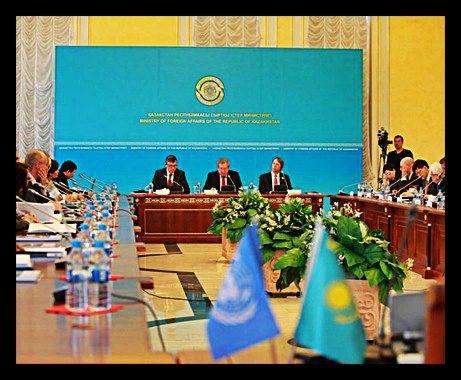
On Monday, a UNDP global report regional presentation was held in Astana at the Kazakh Foreign Ministry. The UNDP is a global development network that advocates giving people a better life through knowledge, experience, and resources. Its main focuses center around poverty alleviation, democratic governance, crisis prevention and recovery, and more.

During the presentation of the report, Adam Oliver, the director of the Bratislava regional center of the UNDP (United Nations Development Program), stated that Kazakhstan is ahead in human development in comparison to other Commonwealth of Independent States (CIS) countries and Europe. Oliver went on to add that Kazakhstan is a “transforming country” because it supports other neighboring countries’ economies as well as their own.

Amie Gaye, the chairperson of the UNDP Human Development Department suggested that Kazakhstan has shown “excellent results [in human development] during the last ten years and ranked 17th among 122 countries.” In addition, she also claims that the country is ahead of others in terms of the ratio between education and income levels. Hence, in 2012, it placed 69th out of 187 countries.

– Leen Abdallah 
Source: Azer News

April 18, 2013
https://borgenproject.org/wp-content/uploads/borgen-project-logo.svg 0 0 Borgen Project https://borgenproject.org/wp-content/uploads/borgen-project-logo.svg Borgen Project2013-04-18 09:14:432020-06-12 20:53:15UNDP Recognizes Recent Kazakhstan Growth
Page 13 of 13«‹111213

Get Smarter

  • Global Poverty 101
  • Global Poverty… The Good News
  • Global Poverty & U.S. Jobs
  • Global Poverty and National Security
  • Innovative Solutions to Poverty
  • Global Poverty & Aid FAQ’s
Search Search

Take Action

  • Call Congress
  • Email Congress
  • Donate
  • 30 Ways to Help
  • Volunteer Ops
  • Internships
  • Courses & Certificates
  • The Podcast
Borgen Project

“The Borgen Project is an incredible nonprofit organization that is addressing poverty and hunger and working towards ending them.”

-The Huffington Post

Inside The Borgen Project

  • Contact
  • About
  • Financials
  • President
  • Board of Directors
  • Board of Advisors

International Links

  • UK Email Parliament
  • UK Donate
  • Canada Email Parliament

Get Smarter

  • Global Poverty 101
  • Global Poverty… The Good News
  • Global Poverty & U.S. Jobs
  • Global Poverty and National Security
  • Innovative Solutions to Poverty
  • Global Poverty & Aid FAQ’s

Ways to Help

  • Call Congress
  • Email Congress
  • Donate
  • 30 Ways to Help
  • Volunteer Ops
  • Internships
  • Courses & Certificates
  • The Podcast
Scroll to top Scroll to top Scroll to top