• Link to X
  • Link to Facebook
  • Link to Instagram
  • Link to TikTok
  • Link to Youtube
  • About
    • About Us
      • President
      • Board of Directors
      • Board of Advisors
      • Financials
      • Our Methodology
      • Success Tracker
      • Contact
  • Act Now
    • 30 Ways to Help
      • Email Congress
      • Call Congress
      • Volunteer
      • Courses & Certificates
      • Be a Donor
    • Internships
      • In-Office Internships
      • Remote Internships
    • Legislation
      • Politics 101
  • The Blog
  • The Podcast
  • Magazine
  • Donate
  • Click to open the search input field Click to open the search input field Search
  • Menu Menu

Tag Archive for: Europe

Posts

Global Poverty, Hunger

Fighting Global Hunger in Sweden

Fighting Global Hunger in Sweden
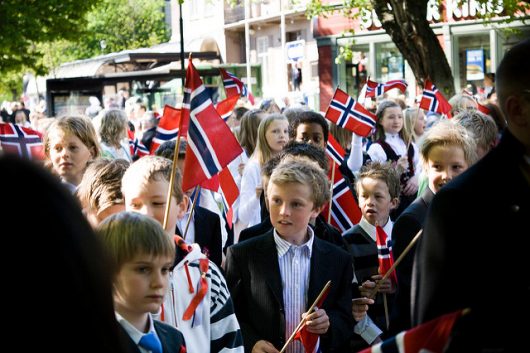
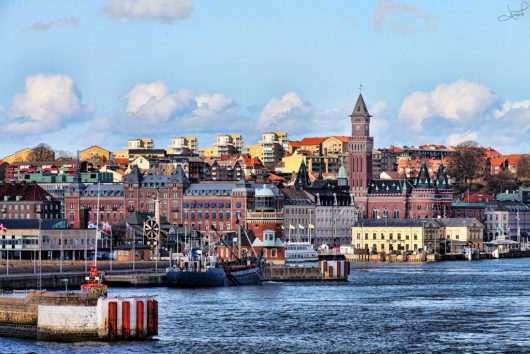
Sweden is a very fortunate country. Globally, Sweden ranks sixth, behind other Western European nations in keeping its citizens fed. There is virtually no hunger in Sweden, meaning it has very low levels of malnutrition and undernourishment as well as high access to safe, clean drinking water. Sweden, being so fortunate in its ability to maintain healthy citizens, has started The Hunger Project — a project designed to achieve a sustainable end to global hunger.

The Hunger Project was founded in 1977 in Sweden. It has become a global nonprofit dedicated to ending world hunger and poverty, declaring “our vision is a world where every woman, man and child leads a healthy, fulfilling life of self-reliance and dignity.” The Hunger Project now has many global allies, including in the United States. Some allied partners are Citi, the Ford Foundation, Ronald McDonald House Charities (RMHC) and the World Bank, to name a few.

Starting to fight global hunger in Sweden quickly moved the project to the areas of the world that needed the most help. The Hunger Project works in three main large areas: Africa, South Asia and Latin America. The Hunger Project uses three essential activities in order to carry out its mission. The first is mobilizing village clusters at the grassroots level to build self-reliance. The second is to empower women as key change agents. The third is to forge effective partnerships with local government.

The Hunger Project works in partnership with people in Africa, South Asia and Latin America in an effort to build “bottom-up” strategies. “At the heart of [their] methodology is our fundamental belief in people as the author of their own development.” The Hunger Project works with people fighting against hunger and poverty in an effort to create a self-sustainable lifestyle outside the hardships of hunger.

The Hunger Project programs reach 17.3 million people in 16,000 communities. The Hunger Project encourages local solutions and community-led results.

While there is not much hunger in Sweden, there is hunger worldwide, and Sweden is working with many other countries globally to help those in need. The Hunger Project believes that the end to world hunger can be achieved by 2030. By working hard and efficiently this goal can be realized.

– Karyn Adams

Photo: Flickr
May 7, 2017
https://borgenproject.org/wp-content/uploads/borgen-project-logo.svg 0 0 Borgen Project https://borgenproject.org/wp-content/uploads/borgen-project-logo.svg Borgen Project2017-05-07 01:30:022020-05-03 14:31:00Fighting Global Hunger in Sweden
Disease, Global Poverty

5 Facts About Top Diseases in Lithuania

5 Facts About Top Diseases in Lithuania
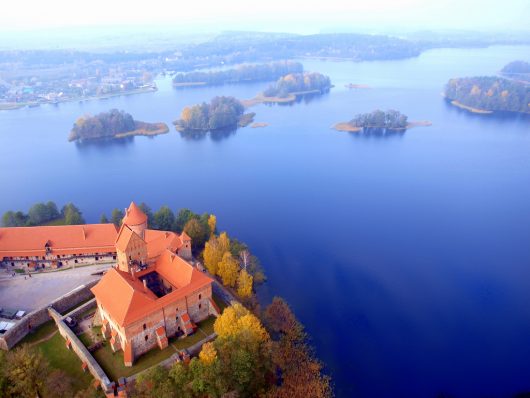
Lithuania is a fairly small European country with a population of about 2.8 million as of 2016. Despite its size, Lithuania still subject to several major infectious diseases. Since its 2008 financial crisis, Lithuania has recovered significantly and has become one of the fastest growing economies in the European Union. However, despite such impressive development in recent years, finding adequate treatments and solutions to the top diseases in Lithuania remains a challenge.

What are the top diseases in Lithuania?

  1. Tick-borne encephalitis (TBE) is a vector-borne disease involving the central nervous system, which is acquired through the bite of an infected arthropod. The disease often manifests as meningitis, encephalitis or meningoencephalitis.
  2. Meningococcal meningitis is a bacterial disease causing an inflammation of the lining of the brain and spinal cord. Bacteria are transmitted from person to person by respiratory droplets and close contact from crowded living conditions.
  3. According to the Global Burden of Disease Study 2010 (GBD 2010), ischemic heart disease, cerebrovascular disease and self-harm were the highest ranking causes of premature death in Lithuania in terms of the number of years of life lost (YLLs).
  4. The risk factors that account for top diseases in Lithuania are dietary risks, high blood pressure and alcohol use. The leading risk factors for children under five and adults aged 15-49 years were iron deficiencies and alcohol use in 2010.
  5. In a 2014 Country Profile conducted by the World Health Organization (WHO) on noncommunicable diseases, proportional mortality (percent of total deaths, all ages, both sexes) is divided as follows:
    – 54 percent cardiovascular diseases;
    – 20 percent cancers;
    – 12 percent other NCDs;
    – Eight percent injuries;
    – Three percent communicable, maternal, perinatal and nutritional conditions;
    – Two percent chronic respiratory diseases;
    – One percent diabetes.

Recognizing and understanding the state of people and society in Lithuania in regards to their health and well-being provides key insight into public health successes, as well as areas where additional assistance and improved conditions and resources are needed.

– Mikaela Frigillana

Photo: Flickr

May 6, 2017
https://borgenproject.org/wp-content/uploads/borgen-project-logo.svg 0 0 Borgen Project https://borgenproject.org/wp-content/uploads/borgen-project-logo.svg Borgen Project2017-05-06 01:30:152024-06-07 05:07:405 Facts About Top Diseases in Lithuania
Global Poverty, Hunger

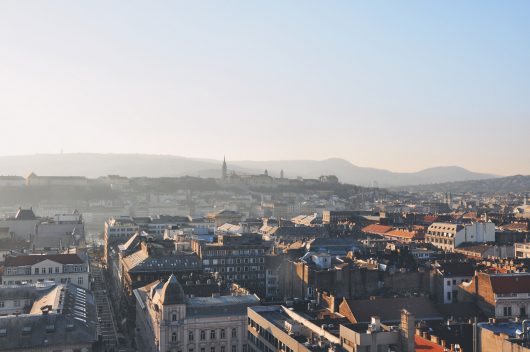
5 Facts About Hunger in Hungary

5 Facts About the Hunger in Hungary
While Hungary is a thriving country, the nation still struggles with feeding its people. Here are five facts about Hunger in Hungary.

5 Facts About Hunger in Hungary

  1. In Hungary, more than 40,000 children go without sufficient nourishment. For every 1,000 children, 6.1 die before their fifth birthday. Although the issue of hunger is indisputable, discussing the topic is considered taboo, and many fail to address it.
  2. Half a million children live in poverty in Hungary. There are three different types of hunger — children being unable to afford food is the first. Another kind of hunger is the lack of a quality diet. The third type of hunger occurs when the child is deprived of the proper nutrients while in the womb. This hunger occurs when the mother is not eating properly and healthily. Lack of nutrition for the mother and fetus can result in premature birth, and sometimes maternal mortality.
  3. According to the report of the Hungarian UNICEF Child Welfare Committee, the international deprivation index states that every other Hungarian child is deemed deprived.
  4.  More than half of Hungary’s area lies in the Great Plain. Although the soil is fertile, most of the region lacks adequate rainfall and is prone to drought, requiring extensive irrigation. Hungarians mainly harvest corn, wheat, sugar beets, potatoes and rye. The economy in Hungary is thriving, but the hunger in Hungary is still a large problem. The country exports most of its crops, when they could be used to feed the people at home. The rate of poverty among single-earner households was 10 percent in 2005. In 2014, it reached 25 percent.
  5. Fortunately, few children actually die of hunger in the country. The government provides cheap or free meals in nurseries, pre-schools and schools for 370,000 children in need. Hunger in Hungary is a problem that schools take very seriously, and administrations are sure that no child leaves school needing food.

Hungary is working to solve its hunger problem through schools, community programs and government involvement. The hunger in Hungary is making slow continuous progress, and the improvement shows considerable hope that the problem will be eradicated.

– Rilee Pickle

Photo: Flickr

May 5, 2017
https://borgenproject.org/wp-content/uploads/borgen-project-logo.svg 0 0 Borgen Project https://borgenproject.org/wp-content/uploads/borgen-project-logo.svg Borgen Project2017-05-05 01:30:342024-05-28 00:00:115 Facts About Hunger in Hungary
Global Poverty, Refugees

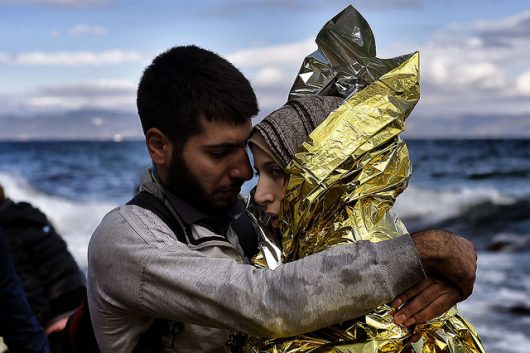
10 Facts About Refugees in the Netherlands


The Netherlands has various strategies in terms of accepting refugees. There is the Dutch Council for Refugees, which works to improve the lives of migrants in the country. Despite having an organized council, there are still problems that accompany taking in refugees and handling their living arrangements.

Close to 60,000 refugees were admitted into the Netherlands in 2015.

Refugees in the Netherlands are housed in former prisons. The country’s crime rate has dropped drastically over the last several years, causing many correctional facilities to close down. The Central Agency for the Reception of Asylum Seekers (COA) decided to use these empty prisons as temporary housing for refugees. Before they are granted asylum status, refugees are normally stuck in temporary housing for at least six months.

A report shows that the Netherlands approved 70 percent of refugee applications made in the first nine months of 2015. In comparison, EU approval averaged 47 percent.

There have been many difficult housing issues in small Dutch towns caused by an influx of refugees. Some refugees were housed in cramped cities or hastily built homes in the suburbs. Although many have been able to find temporary homes, there are many others who have struggled.

A group founded in 2012 called We Are Here helps refugees in the Netherlands find temporary shelter in unoccupied buildings in Amsterdam. The group has more than 200 members and helps those who have a hard time integrating into society.

Thankfully, there have been projects to help refugees in the Netherlands. For example, a project called A Home Away from Home allowed Dutch people to design temporary houses for refugees.

There has been some controversy regarding refugees in the Netherlands paying for their living situation. In total, refugees in the Netherlands have paid more than EUR 700,000 over the past four years. According to a regulation placed in 2008, working refugees have to pay 75 percent of their income toward food and housing.

Once they have been living in the Netherlands for six months, refugees are required to work at least 24 weeks per year.

Back in mid-2016, the Netherlands made an agreement with Germany. It pledged to return the last half of 900 refugees that were sent to the Netherlands after Germany could not grant them formal asylum.

The Dutch Council for Refugees works with 14,000 volunteers and a few hundred paid employees to support refugees with legal rights and the asylum process. The organization also used “NGO twinning projects,” which is a process used to facilitate work with other refugee-assisting organizations.

– Emma Majewski

Photo: Flickr

May 1, 2017
https://borgenproject.org/wp-content/uploads/borgen-project-logo.svg 0 0 Borgen Project https://borgenproject.org/wp-content/uploads/borgen-project-logo.svg Borgen Project2017-05-01 01:30:122024-05-27 23:59:4810 Facts About Refugees in the Netherlands
Disease, Global Poverty

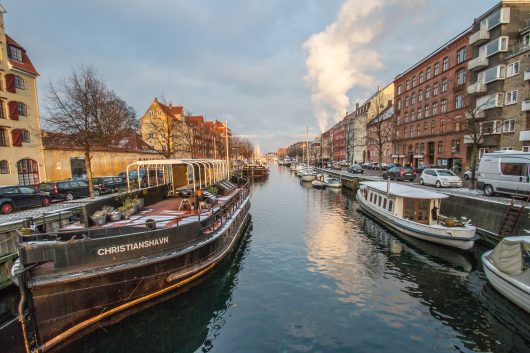
Cardiovascular Among Top Diseases in Denmark

Denmark's Top Diseases
Denmark, officially known as the Kingdom of Denmark, is a Scandinavian country in Europe. It is the southernmost and smallest of the Nordic Countries. About five million people inhabit Denmark. In 2015, Denmark’s life expectancy was at 80.6 percent. It ranked number 27 in world life expectancy. The top diseases in Denmark are primarily cardiovascular diseases.

The Danes suffer mainly from heart problems. In 2015, ischemic heart disease was at 19.2 percent. According to the WHO, cardiovascular disease is the cause of more than half of deaths across the European region. The contributing factor is poor health choices, for example, eating fatty foods and high consumption of alcohol and cigarettes.

However, in 2015, other diseases like cerebrovascular disease and various cancers were also prevalent.

Health problems that cause the most disabilities

In 2015, the health problems that cause the most disabilities were non-communicable diseases. Sense organ diseases, skin diseases, musculoskeletal conditions and diabetes are all significant contributors to disability in Denmark.

What risk factors drive the most death and disability combined?

In 2015, cigarettes, dietary risks and high systolic blood pressure were the leading causes of death. Cigarettes caused the most cardiovascular diseases as well as chronic respiratory diseases. Dietary risk causes mainly cardiovascular diseases and musculoskeletal disorders. High systolic blood pressure caused mainly cardiovascular diseases.

The small country has its own unique health problems. The top diseases in Denmark are primarily cardiovascular in nature. The main cause of these diseases include smoking tobacco and poor diet. On a positive note, deaths caused by cardiovascular disease have decreased by 70 percent since 1985. It is hopeful that through healthier lifestyle choices, the number of cardiovascular-related deaths will continue to drop.

– Solansh Moya

Photo: Flickr

April 27, 2017
https://borgenproject.org/wp-content/uploads/borgen-project-logo.svg 0 0 Borgen Project https://borgenproject.org/wp-content/uploads/borgen-project-logo.svg Borgen Project2017-04-27 01:30:352024-12-13 17:57:55Cardiovascular Among Top Diseases in Denmark
Children, Education, Global Poverty

Education in the Czech Republic

 Czech Republic
Compulsory education in the Czech Republic begins with primary school at age 6, continuing through middle and then secondary education, until ages 15-16. 

Six-year secondary schools are either general, preparing students for university education, or technical. Upper secondary education comprises four years (grades 10-13) and is not mandatory. Secondary vocational/technical education, which is more prevalent, provides an alternative to general upper secondary schools that prepare students for university study. In 2022, over 68% of students in upper secondary schools were in the vocational track, compared to the European Union average of 49%. 

Beyond secondary schooling, there are tertiary professional schools, universities offering degree programs at all levels and non-university institutions typically providing only bachelor’s programs. Charles University in Prague (aka University of Prague), founded in 1348, was the first university in Central Europe, and one of the oldest universities in the world in continuous operation. Its 17 faculties include law and medicine. 

SDG 4

The Czech Republic ranks 10th out of the 167 countries ranked on progress toward the U.N.’s Sustainable Development Goals.

On SDG 4, Quality Education, however, Czechia still faces significant challenges, with its score moderately improving but insufficient to meet the goal. Major challenges remain in mathematics, particularly the impact of socioeconomic status on performance. Trends are stagnating, and the share of underachievers in mathematics is actually worsening rather than improving.

Upper Secondary and Tertiary Education Attainment

The OECD reports (2024) that 80% of OECD countries prioritized upper secondary education (“high school” in some countries) for their young adults from 2016 to 2023. In the Czech Republic, the proportion of 24–34-year-olds without upper secondary education increased by 2% (to 8%) during that same period. However, this means that 92% of these young adults had successfully completed upper secondary school, which is better than the OECD average.

Attaining upper secondary education has a clear impact on employability. Only 60% of Czech youth without upper secondary education were employed, compared to 83% employment for those with upper secondary or post-secondary non-tertiary qualifications. The difference is even more striking for young women: 44% of young women without upper secondary education were employed as compared to 75% of the young men.

At the tertiary education level, attainment for young women in this same age group is considerably greater than for men, 41%, as compared to 27%. Yet employment rates for women with tertiary qualifications are just 66%, compared to 94% for men.

Spending on Higher Education

For 2021, the World Bank reported the Czech Republic’s educational expenditures to be 10.9% of government expenditures and 4.8% of its GDP. This compares to 13.8% and 3.8%, respectively, for the world (2022). 

In February 2023, the Czech Rectors Conference published its concern about a decline in funding for higher education institutions (HEIs), which “leads to a real brain drain from the HEIs environment in the Czech Republic.” The following September, the Council of Higher Education Institutions joined the Rectors Conference in a joint statement about the “unsatisfactory state of financing of public higher education in the Czech Republic,” pointing out that the Czech Republic was underfunded, especially in comparison to other OECD countries. 

Funding became an even more visible issue two months later, which saw demonstrations and a strike by multiple Czech tertiary faculties, claiming systemic underfunding of higher education, low wages and poor working conditions. 

For comparison, although the most recent available statistics are outdated, the World Bank reports that Czech tertiary expenditures as a % of total government expenditures on education were 13% (2016) as compared to 22% globally (2013). 

Higher Education: The Future

A year later, in the fall of 2024, the Czech Government’s draft budget for 2025 approved increased support for universities in the amount of CZK 1 billion ($47.4 million). 

In addition to increased funding, the Czech Republic is addressing higher education in its strategic planning for the future. This is enshrined in its Strategic Plan of the Ministry for Higher Education for the Period from 2021, developed within the framework of the priorities of the country’s Strategy for the Education Policy of the Czech Republic Up to 2030+. 

– Staff Reports

Photo: Flickr

April 26, 2017
https://borgenproject.org/wp-content/uploads/borgen-project-logo.svg 0 0 Borgen Project https://borgenproject.org/wp-content/uploads/borgen-project-logo.svg Borgen Project2017-04-26 01:30:542026-04-24 16:08:38Education in the Czech Republic
Global Poverty

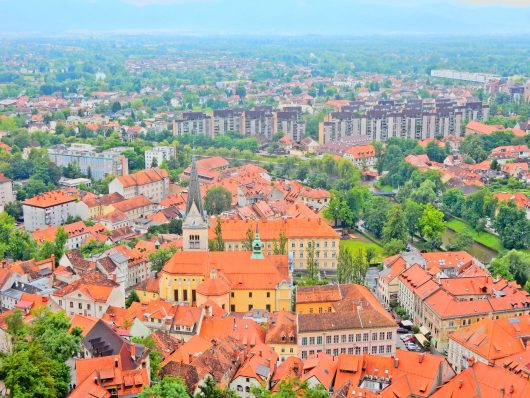
Poverty in Slovenia

Poverty in Slovenia
After a brief war in 1991, Slovenia earned its independence and subsequently joined the United Nations. This central European nation offers picturesque landscapes, meandering caves and a wealth of history. Despite its relative prosperity, there is significant risk of deprivation and poverty in Slovenia among its most vulnerable.

Assessing At-Risk Indicators

The number of people at risk of poverty or social exclusion (AROPE) is a statistic which refers to those materially deprived, at risk of poverty or residing in homes with low labor market involvement. It is a major indicator of the effectiveness of the EU 2020 Strategy on poverty reduction. One of the Europe 2020 objectives is to lift a minimum of 20 million people classified as AROPE out of that category.

In Slovenia, the 2015 AROPE was 19.2 percent versus 20.4 percent in 2014. The early 2000s saw a markedly lower rate of 17.6 percent. In 2015, the aggregate EU AROPE figure was 23.7 percent.

A 2004 article in the Slovenia Times argued this risk statistic carries enormous weight in discussions of poverty in Slovenia. According to Anja Ilc, the author of the piece, “While the level of poverty risk does not represent the number of poor people, it does show how many could become poor if they lost their jobs or fell ill. The group at greatest risk is single parent families.”

Furthermore, cultural beliefs and perceptions about laziness persist among Slovenians. Ilc wrote that “when portraying the true condition objectively, all viewpoints need to be taken into account. When researching poverty levels, a distinguishing factor should be the way people perceive it psychologically.”

Slovenia’s most recent AROPE rate for children, at 2.6 percent, is lower than the other EU member states. Despite this fact, in 2015, 5.8 percent (116,000 Slovenians) faced severe material deprivation while 7.4 percent (114,000 people) exhibited low levels of labor market activity.

Supporting Elderly Populations

According to the U.N. Office of the High Commissioner for Human Rights, “Slovenia has consistently demonstrated its commitment to the rights of older persons at the international level.”

However, poverty in Slovenia amongst its senior population, consisting of mostly women and marginalized minorities, is an area of grave concern. According to a 2016 Slovenia Working Report, 17.1 percent of the elderly are at risk for poverty. This number is more than three percent higher than the EU average.

To address this, a 2020 Strategy for Quality Aging, Solidarity and Coexistence of Generations in Slovenia has been implemented.

Despite many advancements, more reforms are needed to bolster human and social capital investments in the country. Moreover, additional data is needed to fully understand the social constructs, psychological elements and perceptual forces which affect poverty.

This includes more research studies and statistical analyses of the population; although such endeavors are difficult given the forces of social exclusion, prejudice and marginalization which prevent some members of the population from being sampled.

In May, the Statistical Office of the Republic of Slovenia is expected to release its 2016 Annual Report, containing new national statistics. Detailed data on income, poverty and social exclusion indicators are also anticipated over the summer. The more accurate the data collected, the better Slovenia will be in enacting an effective plan to extinguish poverty and health-related issues.

– JG Federman

Photo: Flickr

April 26, 2017
https://borgenproject.org/wp-content/uploads/borgen-project-logo.svg 0 0 Borgen Project https://borgenproject.org/wp-content/uploads/borgen-project-logo.svg Borgen Project2017-04-26 01:30:082024-05-28 00:00:02Poverty in Slovenia
Children, Education, Global Poverty

Education in Slovenia


Slovenia is a republic nestled near the Adriatic Sea and neighboring Italy, Hungary, Austria and Croatia. It has a population of two million and occupies an area of 7,287 square miles. The nation is known for its idyllic lakes, extensive caves, scenic mountains, iconic architecture and abundant history. Here are five facts about education in Slovenia.

Five Facts About Education in Slovenia

  1. Slovenian Perspectives: In 2011, the Organization for Economic Co-operation and Development (OECD) launched the Better Life Initiative to understand wellbeing within its member countries. It is composed of a report and online index which allows participants to rank their wellbeing across 11 dimensions. The findings of the 2016 Better Life Initiative show that education is the fourth most important topic to Slovenians, behind safety, health and the environment. Results were obtained from a voluntary online sample of 192 nationals. Slovenia has the lowest educational deprivation level among OECD members and its percentage of youth (15-19-year-olds) who are not employed or engaged in education/training activities (3.5 percent) is far below the 7.1 percent OECD average. Additionally, Slovenian students are less likely to repeat grades than those in other countries.The main interests of Slovenian volunteers are education and culture — with 30 percent of formal volunteers (age 15-plus) involved in those sectors. Individuals with high levels of education tend to volunteer.
  2. Primary Education: Primary education in Slovenia is compulsory under the nation’s constitution and paid for through public funds. It lasts nine years (students start at the age of six) and the school year runs from Sept. 1 to Aug. 31. According to the Slovenian Ministry of Education, Science, Culture and Sport (MoE), in the 2013/2014 school year, there were 780 public schools and four private institutions. The student-teacher ratio is reported to be 10.68:1 with a maximum class size of 28 pupils.
  3. Secondary Education: The upper secondary education system in Slovenia is centralized and students enroll at the age of 15. Students are able to focus on general education, vocational or technical programs of study, which may last from two to five years. The school year runs from Sept. 1 to June 24 and class size ranges from 17-30 students. According to the MoE, there were 132 secondary schools with 91,849 students during the 2007/2008 school year. The 2016 Better Life report states that 85.7 percent of Slovenia’s adult population has completed upper secondary school, which exceeds the OECD average (76.4 percent). In Western Slovenia, 90 percent of the labor force has completed upper secondary education compared to 86.2 percent in the eastern portion of the country.
  4. International Performance: According to the 2015 Program for International Student Assessment (PISA), Slovenia outperforms many nations including the United States. The nation also ranks higher than the OECD average on the exam. The 2015 Slovenian scores were 513, 505 and 510 for science, reading and math, respectively, compared to the OECD mean scores of 493, 493 and 490. Slovenian students are also less likely than their peers to skip school prior to the examination. This figure has dropped two percent since the 2012 PISA. In the United States, there was an increase of student truancy on the order of 16 percent since the 2012 PISA.
  5. Tertiary Education: Higher education in Slovenia includes private and public universities, technical colleges, art academies and professional colleges. Learning pathways fall under two general categories: short cycle (two years) vocational education and traditional higher education. According to one MoE report, there are 89 tertiary education institutions with 90,403 students. In 2004, there were 14,888 college graduates and 8,378 students were enrolled in postgraduate studies. With respect to universities, there are four institutions of higher learning: Ljubljana, Maribor, Primorska and Nova Gorica. The international Euro-Mediterranean University (EMUNI) also provides educational opportunities for students. The school year is based on a semester model and runs from October to September. The University of Ljubljana is known as one of the best global universities according to the Academic Ranking of World Universities (ARWU).

Overall, education in Slovenia continues to improve and students perform well across international benchmarks. However, the country’s higher education system — and vocational training frameworks — could be improved upon. This includes course selectivity, faculty workload rearrangements, research funding and departmental cooperation.

Moreover, the 2016 Slovenia Country Report outlines the diminished labor market returns of certain skills and baccalaureate programs based on intergenerational comparisons.

To address these concerns, and other emerging issues, the European Union has implemented the Europe 2020 strategy. Two key objectives of this initiative are to lower school dropout rates (the target is fewer than 10 percent) and to increase the proportion of higher education attainment amongst 30-34-year-olds by 40 percent.

Within the next few months, Europe 2020 updates are expected to be unveiled by Slovenian government on the Youth Employment Initiative, traineeship system, capacity building, long-term unemployment and other associated projects.

– JG Federman

Photo: Flickr

April 24, 2017
https://borgenproject.org/wp-content/uploads/borgen-project-logo.svg 0 0 Borgen Project https://borgenproject.org/wp-content/uploads/borgen-project-logo.svg Borgen Project2017-04-24 01:30:262024-12-13 17:57:54Education in Slovenia
Global Poverty, Hunger

Hunger in Norway


Norway is a highly developed country with flourishing technological advancements and a robust economy. According to current statistics, Norway is ranked number one in the top fifteen most developed countries in the world.

Norway has a human development index of 0.944 and the country’s economy is very diverse with a mix of natural resources and exports. The country has a strongly integrated welfare system that places it at the top of all other countries in the world.

Hunger in Norway is virtually nonexistent, and the country generally lends support and aid to other countries that experience hunger. Norway has recently doubled its allocations to hunger disasters in countries like Sudan, Yemen, Somalia and northeastern Nigeria.

Norway encourages humanitarian efforts for countries experiencing hunger, and due to the country’s position and lack of poverty, Norway closely monitors funds so that they can offer further support.

The Norwegian government, as well as non-government organizations and stakeholders, actively seek to assist countries by measuring levels of hunger and giving support to countries that need relief.

There is very little hunger in Norway due to the country having a strong welfare state, acting as a stabilizer to its economy by allowing individual autonomy.

This has made Norway a shining star that continues to offer hunger relief to the U.N., Red Cross and World Food Programme in the reduction of hunger and the eradication of poverty. These organizations have relied heavily on Norway to respond quickly to the needs of millions of people in need during times of conflict and natural disaster.

Since there is not hunger in Norway, the country is able to enjoy happiness while offering opportunities to partner with many organizations to follow their model of success. Norway is an example of a country without hunger that continues to guide other poor and developing countries.

– Rochelle R. Dean

Photo: Flickr

April 19, 2017
https://borgenproject.org/wp-content/uploads/borgen-project-logo.svg 0 0 Borgen Project https://borgenproject.org/wp-content/uploads/borgen-project-logo.svg Borgen Project2017-04-19 01:30:372024-05-27 23:59:56Hunger in Norway
Global Poverty, Hunger

Hunger in Hungary

Hunger in Hungary
Hungary is a landlocked nation snuggled among seven other countries in Eastern Europe. Its capital is Budapest, a tourist spot well-known for its luxurious bathhouses. Even amid all the luxury and tourism, Hungary struggles with poverty. While it is comical in English that the namesake of this nation sounds like hungry, hunger in Hungary is no laughing matter.

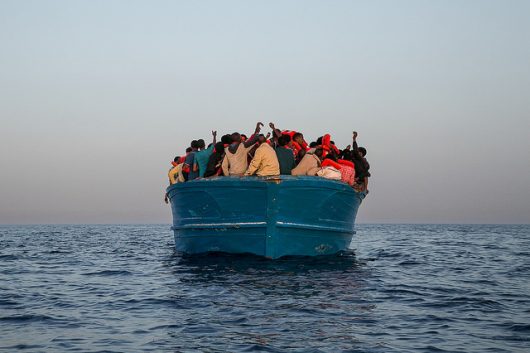
Half a million children in Hungary live in poverty and over 40,000 of them are starving. The government of Hungary provides cheap or free meals in nurseries and schools for 370,000 children. However, these government-sponsored meals are only provided on school days; many children go to sleep hungry on weekends and holidays.

According to the Children’s Nutrition Fund (CNF), “it is the mission of GYEA (CNF of Hungary) to provide children in need with food when school cafeterias are closed.” Ongoing programs like the Food Aid Program have distributed more than 50 million pounds of food for those in need over the past seven years. In addition to this program, parents of children in need can get involved in a sponsorship program called “Chin Up!” This program provides poor families with monthly allowances if they keep a diary for their sponsors and provide invoices proving that the money was spent on feeding the family.

These programs are fighting to stop hunger in Hungary, and yet there are still issues to overcome. According to the report of the Hungarian United Nations International Children’s Emergency (UNICEF) Child Welfare Committee, every other Hungarian child is deemed deprived. That’s one in two. The children denoted are those that “do not receive food at least three times a day, do not have new clothes, never get to go on holiday or for whom there is no place to study in their home.”

The Hungarian government thus needs to continue establishing appropriate policies in order to prevent poverty levels from increasing.

– Karyn Adams

Photo: Flickr
April 18, 2017
https://borgenproject.org/wp-content/uploads/borgen-project-logo.svg 0 0 Borgen Project https://borgenproject.org/wp-content/uploads/borgen-project-logo.svg Borgen Project2017-04-18 01:30:032020-05-06 14:38:38Hunger in Hungary
Page 10 of 13«‹89101112›»

Get Smarter

  • Global Poverty 101
  • Global Poverty… The Good News
  • Global Poverty & U.S. Jobs
  • Global Poverty and National Security
  • Innovative Solutions to Poverty
  • Global Poverty & Aid FAQ’s
Search Search

Take Action

  • Call Congress
  • Email Congress
  • Donate
  • 30 Ways to Help
  • Volunteer Ops
  • Internships
  • Courses & Certificates
  • The Podcast
Borgen Project

“The Borgen Project is an incredible nonprofit organization that is addressing poverty and hunger and working towards ending them.”

-The Huffington Post

Inside The Borgen Project

  • Contact
  • About
  • Financials
  • President
  • Board of Directors
  • Board of Advisors

International Links

  • UK Email Parliament
  • UK Donate
  • Canada Email Parliament

Get Smarter

  • Global Poverty 101
  • Global Poverty… The Good News
  • Global Poverty & U.S. Jobs
  • Global Poverty and National Security
  • Innovative Solutions to Poverty
  • Global Poverty & Aid FAQ’s

Ways to Help

  • Call Congress
  • Email Congress
  • Donate
  • 30 Ways to Help
  • Volunteer Ops
  • Internships
  • Courses & Certificates
  • The Podcast
Scroll to top Scroll to top Scroll to top