• Link to X
  • Link to Facebook
  • Link to Instagram
  • Link to TikTok
  • Link to Youtube
  • About
    • About Us
      • President
      • Board of Directors
      • Board of Advisors
      • Financials
      • Our Methodology
      • Success Tracker
      • Contact
  • Act Now
    • 30 Ways to Help
      • Email Congress
      • Call Congress
      • Volunteer
      • Courses & Certificates
      • Be a Donor
    • Internships
      • In-Office Internships
      • Remote Internships
    • Legislation
      • Politics 101
  • The Blog
  • The Podcast
  • Magazine
  • Donate
  • Click to open the search input field Click to open the search input field Search
  • Menu Menu

Tag Archive for: Education

Posts

Children, Education, Global Poverty

10 Facts About Children’s Education Worldwide


The Global Partnership for Education estimated that 264 million children were out of school during the 2015 school year. In low-to-middle-income countries around the world, one in four young people is illiterate. The quality of worldwide children’s education is not the only reason why 250 million kids either don’t make it past four years in school or have not learned basic math, reading or writing skills by grade four. So why aren’t children going to school?

  1. A country’s lack of funding for education contributes not only to the absence of actual schools and materials (400 million students worldwide do not have desks) but a low quantity and quality of teachers as well. Multiple education levels often make up one class, which impacts drop out rates and the overall quality of worldwide children’s education.
  2. Their families are poor. When a child’s parents are illiterate, unemployed or sick, all factors contributing to poverty, the risk of that child either dropping out of school or not going to school at all are doubled.
  3. Worldwide children’s education rates drop during times of war or conflict. According to UNICEF, about 48.5 million children do not attend school because they live in high conflict or war zones. In Syria, more than two million children are unable to attend school, with a quarter of schools no longer being used for educational purposes. About 50,000 education professionals have either fled the country or died in the fighting.
  4. Poor families often see no other option than to marry off their female children, a major cause of a lack of worldwide children’s education, particularly for girls. These victims of child marriage are restricted from education by immediate cultural obligations such as housework and pregnancy. A child with a literate mother is 50 percent more likely to live past five years old.
  5. School is too far away. Many children walk up to three hours to school each way. In an impoverished country where the children are hungry, disabled and responsible for working around the house, this is simply too much time to invest. Additionally, long and hazardous walks can be dangerous, especially for girls.
  6. There are 150 million disabled children around the world, with 80% in developing countries, and the rate is increasing. Nine out of 10 of these children are out of school. The reasons range from physical barriers to the negative attitudes of teachers to inadequate policies. ADD International based in the U.K. partners with and connects a network of disability activists around the world, providing tools, resources and support.
  7. They have to work. 11% of children are child-laborers, which comes to 168 million young people.
  8. They or their families are sick. Even in first-world countries, illness can be a huge barrier for worldwide children’s education. Developing countries have less accessible healthcare, making it more difficult to prevent and treat even the simplest conditions. When parents have access to healthcare, they have a higher chance of being able to work to provide for their families.
  9. They are female. Females account for 54% of the non-schooled population globally. This problem is particularly common in the Arab States and Asia, where cultural norms dictate a higher value in men than women. Especially for menstruating girls, a lack of bathroom privacy and sanitary supplies can lead to missing school. In Somalia, where 36% of girls go to school, the government implemented the Go To School initiative in order to give more girls access to education.
  10. They are hungry. According to the Global Citizen, “Being severely malnourished, to the point, it impacts on brain development, can be the same as losing four grades of schooling.” In developing countries, stunted children are 19% less likely to be able to read by age eight. This is a problem, as there are 171 million children stunted by age five in these countries.

From 2002 to 2014, the Global Partnership for Education helped 64 million children make it to primary school in its partner countries. The organization supports 65 developing countries to ensure that every child receives a quality basic education, prioritizing the poorest, most vulnerable and those living in countries affected by fragility and conflict.

The WE Movement partners with countries in Africa, Asia and Latin America to redesign villages that encourage sustainable community change. They build schools, educate teachers, deliver school supplies, build wells and water pumps, provide medical clinics and health training, assist with agriculture and food production and offer parents educational services.

Although there has been much progress in global education, the barriers holding children back from reaching their full potential through quality education still exist. When educated, young people are more likely to have the self-confidence and knowledge to better both their communities and their own livelihoods. Worldwide children’s education is an important tool in the overall reduction of global poverty.

– Katherine Gallagher

Photo: Flickr

July 15, 2017
https://borgenproject.org/wp-content/uploads/borgen-project-logo.svg 0 0 Borgen Project https://borgenproject.org/wp-content/uploads/borgen-project-logo.svg Borgen Project2017-07-15 01:30:042020-06-02 12:29:2410 Facts About Children’s Education Worldwide
Development, Education, Global Poverty

What Can Be Learned from Finland’s Education System


The best way to educate students is something that most countries strive to discover. While most are still searching for answers, Finland has seen dramatic progress in its education system within the recent years. The first realization came in 2000 when Finland’s school system was revealed to have the best readers in the world.

Then again in 2009, Finnish students ranked second in science, third in reading, and sixth in math, among a sample of about 500,000 students worldwide. Ever since these rankings were released, countries around the world have been trying to understand what it is that Finland does so well. Here are some of the unique traits of the Finnish education system:

  1. Delayed start: children in Finland do not start their schooling until age seven. Before the start of their formal education, children spend their time in daycare where they learn through more engaging forms such as play, singing, and games.
  2. Frequent breaks: the education system in Finland continues to highlight the importance of playtime throughout schooling. Children are required to spend 15 minutes outdoors every hour, no matter the weather conditions.
  3. Students do not take standardized tests: contrary to many other countries, the Finnish emphasize their dislike of standardized testing. The Finnish education system discourages any standardized testing before the age of 16.
  4. Teaching is a well-respected profession: becoming a teacher is a rigorous and competitive program in Finland. All teachers must go through a five-year master’s program that is highly selective, only accepting a few hundred of the thousands of students that apply.
  5. Uniformity across the country: Finland’s education systems all have the same goals for their students. Additionally, since their educators come from rigorous programs, all schools have equally qualified teachers. The Organization for Economic Co-operation and Development conducted a survey that ranked the differences between the strongest and weakest students as the smallest in the world.

Finland’s education system is very different from those around the world, and yet it is arguably the most successful. The country stresses the importance of play and teaching students to learn not only for the sake of a test but to be more knowledgeable people. Additionally, the teachers themselves know how important their jobs are and therefore dedicate many years of their lives to learning how to be the best educators they can be. For these reasons and more, Finland’s education system is one of the best in the world.

– Olivia Hayes

Photo: Flickr

July 13, 2017
https://borgenproject.org/wp-content/uploads/borgen-project-logo.svg 0 0 Borgen Project https://borgenproject.org/wp-content/uploads/borgen-project-logo.svg Borgen Project2017-07-13 01:30:512020-06-04 10:57:17What Can Be Learned from Finland’s Education System
Education, Global Poverty

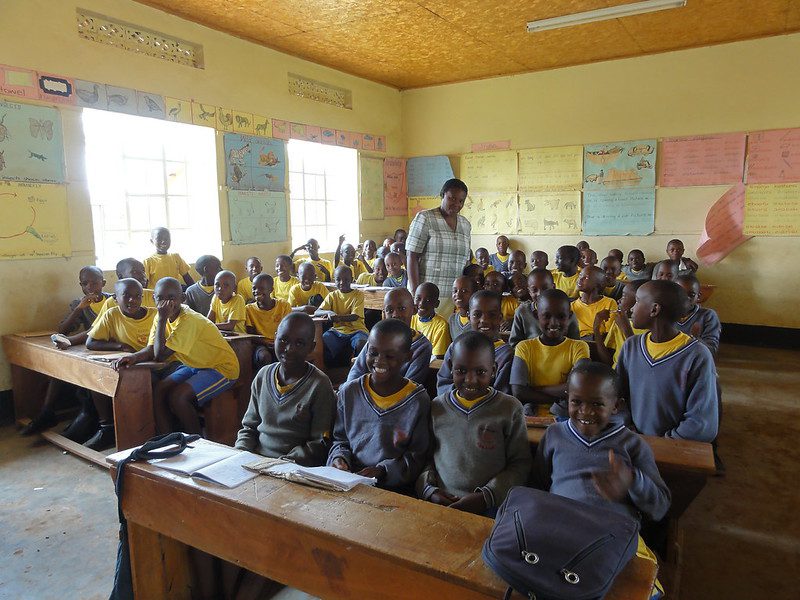
10 Important Facts to Know About Education in Uganda

Read more
July 10, 2017
https://borgenproject.org/wp-content/uploads/borgen-project-logo.svg 0 0 Borgen Project https://borgenproject.org/wp-content/uploads/borgen-project-logo.svg Borgen Project2017-07-10 01:30:192026-06-08 12:09:5210 Important Facts to Know About Education in Uganda
Education, Global Poverty

How the Educate! Program Improves Education in Uganda

Education in Uganda
For the last 15 years, the Educate! program has been turning education in Uganda on its head, teaching practical and entrepreneurial skills to break the cycle of poverty and youth unemployment. Currently partnered with more than 350 secondary schools in Uganda and 520 total schools across Africa, Educate! delivers experience-based education to help develop the next generation of community leaders and innovators.

With a growing population, 70 percent of which is young people under the age of 30, Uganda is in need of education reform. Although Uganda introduced free universal secondary schooling in 2011, the youth unemployment rate remains around 66 percent, and factors like attendance and education quality still raise questions. The Educate! program seeks to combat these problems by breaking students into smaller groups taught by mentors in the program, working together to build practical skills such as public speaking, personal savings and social responsibility.

Educate! was first founded in 2002 when U.S. students visited Uganda and were shocked by the number of children struggling to stay in school due to school fees and living and traveling conditions. Educate!’s founders saw the opportunity to turn classrooms into training grounds for students to learn to help themselves, and the organization has been growing and bringing in new teachers ever since.

Outside of the classroom, Educate! is innovating education in Uganda by encouraging interaction between schools with groups such as student business clubs. In these clubs, students utilize skills learned in the classrooms, forming enterprises to compete in the annual National Student Business Competition.

In the last decade, Educate!’s impact in Uganda has increased significantly. Since launching its first education programs in 2009 with seven mentors, Educate! has grown to 200 mentors impacting more than 14,000 students and expanding into other African countries such as Rwanda. By 2024, Educate! aims to reach a million students in Uganda and expand to reach millions more across Africa. Today, the organization reports a 105 percent increase in income among Educate! scholars after graduating high school and a 120 percent increase among female scholars.

The organization is also working with the Ugandan government to spread its mission beyond the scope of just mentors. By building curriculums together with the government and bringing its skills-based model to other schools, Educate! acts as a driving force giving education in Uganda a practical focus. Thanks to its work with the Ugandan government, 45 percent of Ugandan schools now have active student business clubs.

– Nicholas Dugan

Photo: Flickr

July 9, 2017
https://borgenproject.org/wp-content/uploads/borgen-project-logo.svg 0 0 Borgen Project https://borgenproject.org/wp-content/uploads/borgen-project-logo.svg Borgen Project2017-07-09 01:30:212024-12-13 17:58:19How the Educate! Program Improves Education in Uganda
Education, Global Poverty

Foreign Aid to Boost Quality Education in Lesotho


Geographically surrounded by the entire nation of South Africa, education in Lesotho, a mountainous country, has maintained an incredible track record. Boasting one of the highest adult literacy rates in all of Africa, Lesotho prides itself on its educational policies and opportunities.

Following the passage of the Education Act in 2010, education in Lesotho experienced tremendous success: by providing free, universal and compulsory education for students, the nation increased the rate of enrollment to 82 percent. In fact, of all the school-aged girls in the nation, 84 percent are enrolled in school.

Similar to many parts of the United States, Lesotho mandates a formal education structure that places students in primary school starting at the age of six. From there, students remain in primary school for seven years (from grades one through seven), enter lower secondary school from grades eight through 10, and complete their education with upper secondary school in grades 11 and 12.

Although the nation has made significant progress, organizations such as the Global Partnership for Education have been working to improve education in Lesotho. As of 2015, they helped reduce the student-to-teacher ratio in primary schools to 45:1 and purchased 1.1 million textbooks throughout the country. They also helped build, reform and furnish 143 classrooms.

In fact, with the World Bank Group’s approval of $25 million for education in Lesotho, leaders project that another 84,500 students will benefit. Lasting until 2021, the project will support teachers, improve student learning and retention and bolster institutional capacity. The project will also aim to reduce dropout rates in 300 of the lowest-performing schools, many of which are inaccessible and are located in poverty-stricken rural areas.

Higher education is also a priority in Lesotho. Through thirteen private and public institutions, including the National University of Lesotho, Lerotholi Polytechnic, Lesotho College of Education and the Limkokwing University of Creative Technology, Lesotho serves the needs of its students interested in pursuing higher education.

In Lesotho, women’s literacy rates remain incredibly high. Recent statistics suggest that, despite a high number of out-of-school girls, 95 percent of all Lesotho women are literate. This suggests that some success is emerging as a result of the educational policies put forward in Lesotho.

Although there remains room for improvement, as no system can ever truly be perfect, Lesotho has made incredible strides as a nation in prioritizing and developing their educational system. Through international support and continued relief efforts, the nation will inevitably reach their goal of providing education for all in the near future.

– Emily Chazen

Photo: Flickr

July 8, 2017
https://borgenproject.org/wp-content/uploads/borgen-project-logo.svg 0 0 Borgen Project https://borgenproject.org/wp-content/uploads/borgen-project-logo.svg Borgen Project2017-07-08 07:30:552024-06-12 07:49:31Foreign Aid to Boost Quality Education in Lesotho
Education, Global Poverty

10 Facts About Africa’s Education Crisis

10 Facts About Africa's Education Crisis
The right to primary education frames many international statements on human rights and education. While South Africa did achieve the Millennium Development Goal (MDG) of universal primary education ahead of the 2015 target year, it is unfathomable to think that 17 million of its school-aged children will never attend school. Africa’s struggling educational sector can be outlined in these 10 facts about Africa’s education crisis.

10 Facts About Africa’s Education Crisis

  1. There are 12 countries in Africa–namely Malawi, Zambia, Ivory Coast, Ghana, Benin, Nigeria, Chad, Ethiopia, Congo, South Africa, Namibia and Comoros–in which 30 percent or more of children do not meet a minimum standard of learning by grades four or five.
  2. In countries such as Ethiopia, Nigeria and Zambia, over half of in-school students are not learning basic skills by the end of primary school.
  3. A global competitiveness report released by World Economic Forum ranks South Africa last out of 140 countries in regards to the quality of education offered. This perception will severely impact the willingness of employers to create more jobs and invest in the country, thus plunging the South African economy further down.
  4. The fact that only 53 percent of year 12 students who sat for math exams in 2014 achieved above 30 percent, and only 35 percent achieved above 40 percent, shows the extent of the education crisis. One of the more disturbing statistics among these 10 facts about Africa’s education crisis is that 25 percent of South African schools do not even offer mathematics in grades 10 to 12.
  5. Despite being a middle-income country and having six percent of its GDP spent on education, South Africa’s performance in standardized tests is far below the average for African countries.
  6. Another major concern is the relation between the language of instruction and student performance. South Africa’s population speaks 11 languages, and students writing the examination in a language other than their mother tongue continue to experience great difficulty in interpreting questions and phrasing their responses.
  7. Teachers’ knowledge of English is poor, and, unless emphasis is laid on training and preparing teachers, the state of education will not improve. According to the World Bank, teacher absenteeism, neglect and lack of a working knowledge of the language may be blamed for poor student performance.
  8. In many countries within sub-Saharan Africa, educational disparities exist with respect to wealth, gender and social divisions. The degree of extreme educational poverty, which is defined by less than two years spent in school, is much higher among the poor. For instance, in Ethiopia, a staggering 68.3 percent of the poorest quintile of its population lives in educational poverty.
  9. According to Action Aid, the economic crisis has meant that around £2.9 billion is expected to be lost to education budgets for the sub-Saharan regions. It is not an overstatement to say that most rich countries have failed to keep their promises to help poor countries out of educational poverty. This is also attributed to the fact that both the International Monetary Fund and the World Bank have severely restricted funding to poor countries, thus reducing their chances of investing in education.
  10. Despite all these reasons, both internal and international politics play a major role to play in Africa’s educational crisis.

Education is probably the single most influential tool to ensure that poor countries have the resources to pull themselves out of poverty. While many historic, social, economic, political and international issues play an important role in Africa’s existing educational situation, one can only hope that these 10 facts about Africa’s education crisis will shed some light on the existing roadblocks that the continent faces in fighting its education poverty.

– Jagriti Misra

Photo: Flickr

July 8, 2017
https://borgenproject.org/wp-content/uploads/borgen-project-logo.svg 0 0 Borgen Project https://borgenproject.org/wp-content/uploads/borgen-project-logo.svg Borgen Project2017-07-08 01:30:542020-05-19 19:55:0610 Facts About Africa’s Education Crisis
Aid, Charity, Education, Food Aid, Global Poverty

How Sustainable is the McGovern-Dole Program?


The McGovern-Dole International Food for Education and Child Nutrition Program was established in 2000 by former Senators George McGovern and Robert Dole. It has fed millions of children all over the globe by way of school meals made from surplus U.S. agricultural products. In 2006, McGovern and Dole were awarded the World Food Prize for their work on the program. This award is seen as the “Nobel Prize for hunger.”

The program is credited with helping improve school attendance as well as feeding the hungry, as free school meals provide families with an extra incentive to send their children to school. This is especially the case for girls, as parents sometimes decide to keep them home from school to do housework.

McGovern-Dole has made recent news because the Trump administration’s 2018 budget outline proposes eliminating the program, citing that it “lacks evidence that it is being effectively implemented to reduce food insecurity.”

Forbes contributor Tim Worstall contends Trump’s claim that McGovern-Dole fails to reduce food insecurity is accurate. He points out that because McGovern-Dole consists only of food donations, it lacks sustainability, doing nothing to inject money into local economies or help farmers grow their crops. Although the program feeds people effectively, it is not a long-term solution to ending hunger locally.

This being said, McGovern-Dole does have sustainability measures in place, though they may not address food insecurity directly. The program is concerned with education. All meals through the program are offered through schools. This allows McGovern-Dole to track data such as the number of kids taking medication or learning to read at school. This helps other education-centered organizations focus their efforts. McGovern-Dole also implements teacher training, school infrastructure improvements and nutrition programs for pregnant women in the communities it serves.

Alternatives to direct food aid programs are not always reliable. The cash-based transfer, a form of assistance by which individuals in need receive bank transfers or vouchers to exchange for food at stores owned by the World Food Programme, is ineffective in communities with extremely unstable markets or bank services. Direct food aid like McGovern-Dole provides hungry individuals with food regardless of the state of the market in a community.

– Caroline Meyers

Photo: Flickr

July 7, 2017
https://borgenproject.org/wp-content/uploads/borgen-project-logo.svg 0 0 Borgen Project https://borgenproject.org/wp-content/uploads/borgen-project-logo.svg Borgen Project2017-07-07 07:30:122024-05-28 00:00:08How Sustainable is the McGovern-Dole Program?
Developing Countries, Education, Global Poverty, Refugees

10 Facts About the Education of Refugees


According to the Office of the U.N. High Commissioner for Refugees (UNHCR), more than half of reported refugees, 6.1 million people, are under the age of 18. Given this large youth population, the lack of education of refugees has become a significant roadblock for these children and adolescents’ future successes. Here are 10 facts about the education of refugees at present.

10 Facts About the Education of Refugees

  1. The UNHCR reported in 2016 that of the 6.1 million school-aged refugees, 3.7 million had no access to education. 1.75 million of these had not received a primary education, and 1.95 million had not received a secondary education.
  2. Comparing the education of refugees to the global average, refugees are reportedly five times less likely to attend school.
  3. The global average of children attending primary school is 91 percent, while the average for refugee children is 50 percent. Secondary school is even less likely for refugees, with an average of 22 percent attending, where the global average is 84 percent. Only one percent of refugees receive a college- or university-level education. This global average is 34 percent.
  4. The education of refugees became more difficult when the refugee population grew by 30 percent in 2014 and is predicted to continue growing. The UNHCR predicts the need for 12,000 additional classrooms and 20,000 additional teachers annually.
  5. Refugees are displaced from their home country for an average 20 years. Because this exceeds school-age and because the education of refugees is difficult, the potential for refugee children and adolescents to access education is minimal.
  6. Of the 3.7 million out-of-school refugees, more than half come from Chad, Jordan, Turkey, Ethiopia, Kenya, the Democratic Republic of the Congo and Lebanon.
  7. Long-term conflict tends to reverse positive trends in education. For example, 94 percent of Syrian children in 2009 received an education, but this number dropped to 60 percent in 2016.
  8. Progress has been made towards the education of refugees in Lebanon, Jordan, Egypt, Iraq and Turkey through an increase in encouraging school enrollment and reinforcing the “double-shift system.” This means that two groups of students receive schooling at different times with the same faculty. A lack of funding threatens this system’s future as the uneducated refugee population increases.
  9. The education of refugees is primarily covered by emergency funds rather than long-term programs. Given the current refugee crisis, sustainable funding is crucial for the education of refugees.
  10. There are a number of potential solutions to the refugee education crisis. The main three proposed solutions are accelerated education programs, online courses and expanding vocational training. Each of these is promising because they offer the flexibility that makes school attendance a realistic option.

Education has the potential to provide a safe haven for refugees and may even prevent future conflict, but the education of refugees will require systematic changes to become sustainably successful.

– Haley Hurtt

Photo: Flickr

July 7, 2017
https://borgenproject.org/wp-content/uploads/borgen-project-logo.svg 0 0 Borgen Project https://borgenproject.org/wp-content/uploads/borgen-project-logo.svg Borgen Project2017-07-07 01:30:412020-05-15 20:35:1010 Facts About the Education of Refugees
Education, Global Poverty, USAID, Women and Female Empowerment

Radio Used to Gain Support for Women’s Education in Malawi


The need for developing education in Malawi is continual. For example, in 2010, around 10 percent of primary aged children were not in school, and the primary school repetition rate reported in at 24 percent for boys and 29 percent for girls.

Girls in Malawi are exceptionally more vulnerable to a lack of education than boys. In fact, 32 percent of girls aged 14 to 17 are not in school compared to 23 percent of boys this age. Additionally, while 72 percent of boys 15 and older are literate, only 51 percent of women in this age group can read and write.

Part of this gap is caused by the high child marriage rate in Malawi, which is 11th highest in the world. UNICEF reports that approximately 50 percent of Malawian girls marry before they turn 18. Fortunately, this year the Malawian government moved to make marriage legal only after a woman is 18 years old.

Marshall Dyson, founder of the Girl Child Education Movement, is one of many Malawians who recognizes the need for resolution of the educational gender disparity. Dyson’s idea incorporated broadcasting an open discussion of child marriage and girls’ education over the radio. Both men and women of a variety of ages and backgrounds participated in the talk.

The discussion about girls’ education in Malawi broadcasted over Radio Islam, the only Islamic radio station in Malawi. Dyson strategically chose this platform since Muslims rested at risk of discrimination.

Dyson got his start in radio via an internship with Kumakomo Community Radio Station in Zimbabwe. There he served as the content manager of 12 volunteers.

The impact of this position is especially significant, considering that radio acts as the main source of news for most Malawians. According to USAID, the two-hour broadcast “was a collaboration across the YALI and Mandela Washington Fellows networks, and with Regional Leadership Center participants — young leaders between 18 and 35 enrolled in USAID-supported leadership training programs in sub-Saharan Africa.” Around three million people tuned in.

USAID states that “the Muslim Association of Malawi, who attended the event, agreed to open new offices in rural areas where communities can access up-to-date information about education and scholarship opportunities for girls.”

Education in Malawi still has much room for improvement, and humanitarians like Marshall Dyson act as major catalysts in that process. Through work such as his, Malawi is destined to achieve higher standards of education than ever before.

– Emma Tennyson

Photo: Flickr

July 6, 2017
https://borgenproject.org/wp-content/uploads/borgen-project-logo.svg 0 0 Borgen Project https://borgenproject.org/wp-content/uploads/borgen-project-logo.svg Borgen Project2017-07-06 01:30:352024-05-28 00:02:13Radio Used to Gain Support for Women’s Education in Malawi
Education, Global Poverty

Teachers Help Improve Education in Venezuela

After years of fighting to reform education in Venezuela at the primary and secondary levels, teachers in Venezuela finally received the pay they deserved.

This month, the government gave Venezuelan teachers  a 15 percent increase to their salaries, totaling a 345 percent increase since the start of 2017.

Following several negotiations between the Venezuelan president and the Venezuelan Teachers’ Federation (FMV), public school teachers were given proper wages for their work. The FMV leader stated that the wage increases acted as a “call for the defense of the right to education, from those who want to sabotage it for political reasons.”

In addition to the wage increase, the government set aside funds that would go toward paying pension benefits for 15,000 teachers.

The wage increase was intended to not only be an investment in the teachers but the education system itself. With these improved wages, now 96 percent of the Venezuelan population can read and write, making Venezuela one of the most literate countries in the world.

However, education in Venezuela didn’t always prosper. The country was previously overextended and underfunded, with about 20 percent of children lacking a formal education. The Ministry of Education of Venezuela and Venezuelan government collaborated to adapt the curriculum, expand compulsory education and upgrade teacher qualifications in order to address the problem of low enrollment.

As a result, the government established the Bolivarian University system in 2003, whose design encompassed democratizing access to higher education and creating the Bolivarian Missions Social Outreach program. The program focuses on literacy programs and university preparation programs.

Later in 2008, five years after President Chavez launched his outreach program that enrolled nearly 2.5 million children, education in Venezuela came to be considered among the highest in the region. The literacy rate rested around 93.8 percent for males and 93.1 percent for females.

Although the total literacy rate increased only by three percent since the initial wage increases, those increases have helped reform curriculum, teacher training and increased enrollment. These changes helped to significantly improve education in Venezuela overall.

– Amira Wynn

Photo: Flickr

July 5, 2017
https://borgenproject.org/wp-content/uploads/borgen-project-logo.svg 0 0 Borgen Project https://borgenproject.org/wp-content/uploads/borgen-project-logo.svg Borgen Project2017-07-05 01:30:122019-08-15 10:37:12Teachers Help Improve Education in Venezuela
Page 26 of 67«‹2425262728›»

Get Smarter

  • Global Poverty 101
  • Global Poverty… The Good News
  • Global Poverty & U.S. Jobs
  • Global Poverty and National Security
  • Innovative Solutions to Poverty
  • Global Poverty & Aid FAQ’s
Search Search

Take Action

  • Call Congress
  • Email Congress
  • Donate
  • 30 Ways to Help
  • Volunteer Ops
  • Internships
  • Courses & Certificates
  • The Podcast
Borgen Project

“The Borgen Project is an incredible nonprofit organization that is addressing poverty and hunger and working towards ending them.”

-The Huffington Post

Inside The Borgen Project

  • Contact
  • About
  • Financials
  • President
  • Board of Directors
  • Board of Advisors

International Links

  • UK Email Parliament
  • UK Donate
  • Canada Email Parliament

Get Smarter

  • Global Poverty 101
  • Global Poverty… The Good News
  • Global Poverty & U.S. Jobs
  • Global Poverty and National Security
  • Innovative Solutions to Poverty
  • Global Poverty & Aid FAQ’s

Ways to Help

  • Call Congress
  • Email Congress
  • Donate
  • 30 Ways to Help
  • Volunteer Ops
  • Internships
  • Courses & Certificates
  • The Podcast
Scroll to top Scroll to top Scroll to top