• Link to X
  • Link to Facebook
  • Link to Instagram
  • Link to TikTok
  • Link to Youtube
  • About
    • About Us
      • President
      • Board of Directors
      • Board of Advisors
      • Financials
      • Our Methodology
      • Success Tracker
      • Contact
  • Act Now
    • 30 Ways to Help
      • Email Congress
      • Call Congress
      • Volunteer
      • Courses & Certificates
      • Be a Donor
    • Internships
      • In-Office Internships
      • Remote Internships
    • Legislation
      • Politics 101
  • The Blog
  • The Podcast
  • Magazine
  • Donate
  • Click to open the search input field Click to open the search input field Search
  • Menu Menu

Tag Archive for: Economic Growth

Information and news about economic growth

Posts

Development

SoleRebels: Shoes With An Impact

soleRebels
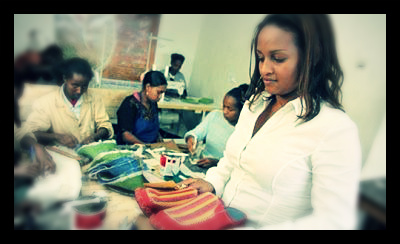
Recently profiled by both CNN and Forbes as an important businesswoman to watch, Bethlehem Tilahun Alemu is quite the success story. While growing up in the small Ethiopian town of Zenabwork, Alemu remembers waiting for a better life to develop for her friends and family, before realizing that she would have to create the reality that she wanted to see. And so, in 2004, she created soleRebels.

SoleRebels is a Fair Trade shoe company that harnesses the artisan skills and recycling habits inherent in Zenabwork’s culture. The company employs locals and pays four to five times the legal minimum wage and over three times the industry average, allowing workers to earn a respectable income and support their families. Workers are paid a straight wage without regard to individual quotas. Most workers live within walking distance of the factory, but transportation is provided for disabled workers who can’t make the trek. Workers and their families are also provided with complete medical coverage, including site visits by board-certified practitioners. Such site visits are especially important considering that competent doctors can be few and far between in Ethiopia.

The company’s original shoe design was based on the traditional selate and barabosso shoes made from recycled tires. In a poignant nod to Ethiopian history, these were the same shoes worn by rebel fighters who opposed colonization by westerners, and who helped make Ethiopia one of only two African countries never to be colonized. This is incredibly consistent with soleRebel’s mission, which is largely based on the need for more African start-up companies that fuel economic growth and independence, rather than NGOs and charity organizations that often do more harm than good.

Currently, their market has expanded considerably. The company now makes numerous different types of shoes, including tooTOOs (similar to TOMs), lace-ups, sandals, slip-ons and coZEEs (similar to UGGs). They even have a line of vegan footwear called b*knd. Their products are sold online and in 30 countries worldwide.

Although their production has increased substantially, almost all products are still made and sourced locally. For example, every piece of fabric used in the making of soleRebel’s shoes is hand-loomed using traditional eucalyptus looms. This process preserves an ancient craft, cuts down on electricity bills, produces absolutely no carbon output and creates beautifully unique fabrics. And the company still uses hand-cut recycled tires for the soles of every shoe, preserving tradition and saving the environment in one fell swoop.

SoleRebels is a great example of poverty fighting done right. This shoe company continues to empower countless numbers of people, who use their talents and preserve their traditions to stake their claim in the world market. Locally and fairly sourced products, combined with beautiful craftsmanship and entrepreneurial know-how, create some great-looking shoes that will leave you feeling even better.

– Katie Fullerton

Sources: soleRebels, Forbes, CNN
Photo: INSP

August 21, 2013
https://borgenproject.org/wp-content/uploads/borgen-project-logo.svg 0 0 Borgen Project https://borgenproject.org/wp-content/uploads/borgen-project-logo.svg Borgen Project2013-08-21 09:19:112017-03-20 13:04:03SoleRebels: Shoes With An Impact
Global Poverty

Poverty in Sub-Saharan Africa – The Full Story

Poverty in Sub-Saharan Africa
The World Bank estimates that more than 69 percent of the population of Sub-Saharan Africa lives on less than $2 per day, making it one of the poorest regions in the world. Though the region has experienced strong economic growth during the last two decades, poverty alleviation remains a pressing issue for African leaders.

The numbers appear promising. In its latest African Pulse analysis, the World Bank says that Sub-Saharan Africa’s economic growth should grow to more than 5 percent over the next three years. Foreign investment, rising commodity prices and global economic recovery will all contribute to the region’s rapid development.

Punam Chuhan-Pole, a lead economist in the Bank’s Africa department, said: “If properly harnessed to unleash their full potential, these trends hold the promise of more growth, much less poverty, and accelerating shared prosperity for African countries.”

But questions remain as to whether the region’s economic growth will help mitigate poverty. Statistically, economic growth does not automatically reduce poverty; many resource-rich countries, such as Gabon and Nigeria, have fared worse in terms of poverty reduction than neighboring nations with fewer resources. So, how can Sub-Saharan Africa convert economic gains into poverty reduction?

According the World Bank report, “Better governance will need to underpin efforts to make growth more poverty reducing.” Better governance means more efficient mineral and wealth management, agricultural development and methods for controlling urbanization. It must also include strategies to deal with the region’s growing income inequality, which likely stems from systemic government corruption and a weak middle class.

In 2010, six of the ten most inequitable countries in the world were in Sub-Saharan Africa. In Mozambique, the poorest 20 percent of the population earns 5 percent of total income while the richest 20 percent take home more than 50 percent. The World Bank points out that Mozambique’s oil and gas reserves will be huge economic drivers over the next few years, but, as it stands now, the neediest will benefit the least from any economic gains.

It is difficult to cast economic growth in a negative light. However, Sub-Saharan Africa’s recent expansion has done little to improve poverty and income inequality in the region. Without responsible government and a strong, participatory middle class, economic gains will continue to enrich a small segment of the population. The rest of the people will continue finding ways to subsist on $2 dollars a day.

– Daniel Bonasso

Sources: World Bank, UNDP, Overseas Development Institute

August 16, 2013
https://borgenproject.org/wp-content/uploads/borgen-project-logo.svg 0 0 Borgen Project https://borgenproject.org/wp-content/uploads/borgen-project-logo.svg Borgen Project2013-08-16 04:48:012024-06-04 02:43:58Poverty in Sub-Saharan Africa – The Full Story
Global Poverty

Poverty in Mexico

poverty-in-mexico
This July, Coneval, the Mexican government social development agency, reported that while the national poverty rate declined a measly .6 percent, an increase in the population meant a half million increase in the number of people living at or below the poverty line. The report revealed that 45.5 percent of Mexico’s citizens live in poverty. Coneval defines poverty as living on 2,329 pesos, the equivalent of $183, per month in the city and 1,490 pesos, or $117, in rural areas. It defines extreme poverty in the city at $88 per month and $62 per month in rural settings. As of 2012, almost 10 percent of the population of Mexico lives in extreme poverty, totaling 11.5 million people.

After the Coneval data was published, Mexican Finance Minister Luis Videgaray said, “The only feasible, permanent answer to reducing poverty in Mexico is through economic growth.”

President Enrique Peña Nieto echoed a similar sentiment, promising plans for modernizing existing assistance programs and creating new programs. While Mexico’s current government assistance program Oportunidades has been internationally recognized for its success, the program mainly offers monetary support and lacks focus in policies concerning income growth.

The National Bureau of Economic Research found suggestive evidence of a connection between globalization and poverty in Mexico. Because the country was so aggressive when they opened their economy completely in 1985, Mexico’s GDP has almost tripled. In 1980, five years before tariffs were cut and other trade restrictions removed, eleven percent of the GDP was from international trade. In 2002, it reached 32 percent.

A majority of Mexico’s poorest states are in the southern region of the country. The four poorest in the nation are Chiapas with 74 percent of its population living in poverty, Guerrero at 69 percent, Puebla at 64 percent and Oaxaca at 61 percent. All four states sit well above the national poverty percentage of 45.5 percent. In Oaxaca, Chiapas and Guerrero, 50 percent of the population lives on $62 or less a month.

Rural areas in Mexico are the areas that see the least amount of economic growth and development. This is also where 61 percent of the indigenous population lives in extreme poverty. Oportunidades focuses 99 percent of its services on rural or semi-urban areas. They are currently assisting 6.5 million families in a number of ways. Most benefits come in the form of cash deposits for the people who qualify for the program. A section of the program called Youth with Oportunidades gives economic incentives to students who graduate high school before they turn 22 years old. Because women head eight of every ten single-parent household in Mexico, Oportunidades also gives cash transfers to help pay for high-quality food for children.

The assistance that Oportunidades is offering those living in poverty benefits lives in the short run, but the global community hopes it will be a launching pad for greater economic growth in Mexico.

– Jordan Bradley

Sources: The Latin Times, World Bank, The National Bureau of Economic Research, Rural Poverty Portal, Mexidata Reuters
Photo: Allison Orthner

August 10, 2013
https://borgenproject.org/wp-content/uploads/borgen-project-logo.svg 0 0 Borgen Project https://borgenproject.org/wp-content/uploads/borgen-project-logo.svg Borgen Project2013-08-10 04:57:262016-02-16 11:54:48Poverty in Mexico
Global Poverty

Can Shea Butter Improve Fair Trade Protections?

shea_butter_women_farmers
Coffee, cocoa, and other major products have become the food faces of the fair trade market. Soon, shea butter may well be added to those ranks. But what does this mean for shea butter workers and farmers?

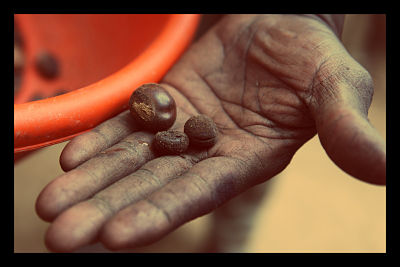
Grown in the Sahel region, farmers extract shea butter from a small almond like nut which grows on the karite tree. From South Sudan to the western shores of Senegal, shea butter extraction provides major labor employment opportunities for women.

Shea butter, used mostly in the cosmetic field, provides multiple dermatologic benefits. These include healing burns, ulcerated skins, stretch marks, and dryness by moisturizing the skin. Recently, the Shea Butter Trade Industry hosted its first conference in North America. The event allowed African producers to meet with L’Oreal, the Body Shop, and other cosmetic industry players. With an expanding demand for shea butter, the creamy exfoliant has potentially reached a level that allows African producers to negotiate fairer prices for their labor.

Currently, the extraction and production of shea butter employs millions of women on in Africa. To access the butter, the nut is crushed. It is then boiled, cleaned once more, packaged and sold in local markets or exported. Despite the individual preparation of shea nuts, women create cooperatives to sell their product in their local markets.

With a rise in demand for their product, many women have also found an increase in income. Empowering women both in their own household and community has given rise to shared decision-making in family and community structures. This sense of freedom through successful employment is set through a traditional service, and many daughters learn it from their mothers who pass down the craft.

But not only do prices and gender equality rise with demand, fair trade over the production market rises as well. As the popularity of shea butter and other new products have reached new levels, Fair trade organizations such as Fairtrade International, have set their efforts towards promoting fair prices that protect producers. “Fair trade addresses the injustices of conventional trade, which too often leave the poorest, weakest producers earning less than it costs them to grow their crops. It’s a bit like a national minimum wage for global trade. Not perfect… but a step in the right direction.” stated Harriet Lamb, CEO of Fairtrade International.

However, there are others that do not believe farmers and laborers benefit from fair trade, citing that there is little evidence of their benefit. Philip Booth, Editorial and Program Director at the Institute of Economic Affairs, contends that “no clear evidence has been produced to suggest that farmers themselves actually receive higher prices under fair trade. Fair trade may do some good in some circumstances, but it does not deserve the unique status it claims for itself.”

Despite a difficulty to decipher between marketing and real action, quantifiable claims made by companies such as L’Occitane, allow agencies to verify what companies claim. Unlike your average marketing attempts, L’Occitane’s claims have been analyzed and reported on by the United Nations Development Program (UNDP). The written report detailed L’Occitane’s collaboration with 15,000 rural women producers, paying $1.23 million in revenue each year to their shea butter laborers.

– Michael Carney

Sources: How We Made it in Africa, Alaffia
Photo: Tree Aid

August 6, 2013
https://borgenproject.org/wp-content/uploads/borgen-project-logo.svg 0 0 Borgen Project https://borgenproject.org/wp-content/uploads/borgen-project-logo.svg Borgen Project2013-08-06 04:58:322024-05-25 00:14:35Can Shea Butter Improve Fair Trade Protections?
Children, Global Poverty, Poverty Reduction

Poverty in Kosovo

Kosovo_poverty
Since the end of the war in 1999, the Republic of Kosovo has experienced consistent economic growth. Now a lower-middle-income country, it is one of only four countries in Europe that recorded positive growth rates during the economic crisis between 2008-2012, averaging about 4.5% each year. Despite its rapid growth, Kosovo continues to struggle with high rates of poverty and unemployment.

Joblessness is estimated to be at about 40% and remains a central economic-policy challenge. Youth and women are disproportionately affected by the difficult labor market conditions, creating an environment that undermines the country’s social fabric. Kosovo is one of the poorest countries in Europe with a per-capita gross domestic product (GDP) of about €2,700 and about one-third of the population living below the poverty line and approximately one-eighth living in extreme poverty.

Recent studies by UNICEF Kosovo showed that children are at higher risk of living in poverty in Kosovo compared to the general population. The greatest risk of poverty is for children who live in households with three or more children, children between 0 and 14 years of age, children of unemployed parents, children in households receiving social assistance, and children with low levels of education. Whereas, the risk of poverty is much lower for children in a household with at least one employed parent.

The European Union is mainstreaming an effort to fight child poverty by  recognizing the multi-dimensional nature of the issue. Child poverty and exclusion have high social and individual costs. Children in poverty are at high risks of low educational attainment, poor health, and an inability to find work later in life. Investing in children, therefore, is important not only for the well being of current children living in poverty, but also for the health, productivity, and engagement of future adult citizens.

Kosovo declared independence in 2008, however only 98 of a total 193 UN member states have recognized Kosovo’s independence. The lack of agreement remains a central obstacle to achieving the country’s goals for political integration and socio-economic development.

To help reverse joblessness and build a long-term economic growth plan, the World Bank, along with ten other donors, recently awarded Kosove 61 million Euros, mostly in the form of grant money. The Sustainable Employment Development Policy Program (SEDPP) funds were disbursed from the end of 2011 to the middle of 2012. The funds have supported reforms and improved transparency throughout many sectors in the country.

– Ali Warlich

Sources: World Bank, UNICEF, World Bank
Photo: SOS Children’s Villages

August 6, 2013
https://borgenproject.org/wp-content/uploads/borgen-project-logo.svg 0 0 Borgen Project https://borgenproject.org/wp-content/uploads/borgen-project-logo.svg Borgen Project2013-08-06 04:56:512024-05-25 00:14:33Poverty in Kosovo
Aid Effectiveness & Reform

Will Africa be Middle-Class by 2040?

middle-class-in-africa
The issue of Africa’s emerging economy has been a staple of global news for the past few years. Many realize now that political stability is starting to become common throughout many African nations, and economic stability is following suit. The recent case of Somalia is a good example. Somalia has had its first fair election since the start of its civil war and even established a new constitution. And now they are enjoying the benefits of an improving economy, particularly in the capital city of Mogadishu.

Carlos Lopes, the UN Under-Secretary-General and Executive Secretary of the Economic Commission for Africa (ECA), is one of the experts who is extremely optimistic about Africa’s economic future. He explains that African economies are gradually shifting from a reliance on the agricultural sector to a reliance on the industrial sector. He claims that the economic conditions are in place for most African countries to be middle income level by the year 2040.

Lopes argues that in the coming years, African nations should not have to rely as much on the export of soft commodities (e.g. cocoa, cotton, and sugar) to other countries, and that there will be a transformation into an industrialized economy. “Yes, we need to produce agricultural products big-time—but for Africa,” not for export to other countries, says Lopes.

We are already seeing signs of the growth of the middle class in Africa. Over the last decade, six of the world’s 10 fastest growing economies were African nations, and the World Bank even recently stated that about half of the countries in Africa had attained middle-class income status. Jacob Zuma, President of South Africa, recently argued that the emerging middle class and the youthful population are going to be game-changers in how Africa deals with economic issues in the future. Zuma noted that the expansion of the middle class is beneficial for Africa, because it means a growth in a population with skills to help manage the economy.

Regional executive for Starwood Hotels in Africa recently said that “Africa’s middle class is almost as large as the entire populations of Russia and Brazil combined.” At this rate, it seems that Lopes’ prediction of a complete middle-class transformation in Africa is not so far off.

– Sagar Desai

Sources: IOL South Africa, AllAfrica, HowWeMadeItInAfrica
Photo: Boing Boing

July 27, 2013
https://borgenproject.org/wp-content/uploads/borgen-project-logo.svg 0 0 Borgen Project https://borgenproject.org/wp-content/uploads/borgen-project-logo.svg Borgen Project2013-07-27 20:21:372016-02-16 11:54:23Will Africa be Middle-Class by 2040?
Global Poverty

Economic Growth in North Korea?

north_korea_growth
Relying on a significant amount of guesswork and speculation, the Bank of Korea, headquartered in Seoul, produces an annual report on the North Korean economy. Because North Korea does not release economic data, South Korea’s efforts rely on intelligence gathered by the National Intelligence Service and other institutions, and link that information on North Korea to South Korea’s own growth rates. All of this is in order to compare the growth rate of the two countries, and aid in calculating the cost of the distant goal of reunification of the two countries.

The report found that, surprisingly, economic growth in North Korea has actually expanded for the second year running. The economy grew by 1.3% last year, after a growth rate of 0.8% in 2011. While it is hardly an economic boom – and much of the growth is attributed to international donors and an influx of aid after Typhoon Bolaven in August 2012 – sustained growth is nevertheless significant for the beleaguered nation.

However, expected policy changes from a regime that has prioritized economic growth have so far failed to manifest. Thus, the growth has failed to make an impact on much of the North Korean population. Despite an estimated 3.9% growth last year in agriculture, 2.8 million North Koreans still require food aid as the country once again faces severe food shortages.

Per capita income in North Korea resta at about $1200, despite the recent growth. For perspective, per capita income in South Korea is nearly 20 times higher. One further problem with the North Korean economy that the distribution of wealth is not reflected in estimates of per capita income. Much of the wealth of North Korea is located in the capital city of Pyongyang, the one place in the country where reports of economic growth can be believed. And meanwhile, the wealth gap widens and economic growth continues to fail to reach the citizens who would benefit the most.

– David Wilson

Sources: Wall Street Journal Huffington Post
Sources: Global Grind

July 27, 2013
https://borgenproject.org/wp-content/uploads/borgen-project-logo.svg 0 0 Borgen Project https://borgenproject.org/wp-content/uploads/borgen-project-logo.svg Borgen Project2013-07-27 06:57:012017-10-31 09:43:34Economic Growth in North Korea?
Development, Food & Hunger

Why Are People in India Earning More and Eating Less?

Why Are People in India Earning More and Eating Less?

Dubbed by academics as India’s “calorie consumption puzzle,” the average person in India is making more money now than three decades ago yet the average person’s caloric intake has dropped dramatically. These results have most academics, sociologists and economists stumped. However, a handful of experts have ventured guesses as to why people in one of the world’s most populated nations are eating so much less.

One possibility is that people in India are spending their money on more expensive foods which are lower in calories instead of buying traditional dishes which are high in calories. These more expensive foods may be more appealing than the hum-drum everyday dishes that the people are accustomed to eating.

Another possibility is that India’s economy is becoming less focused on labor-intensive agricultural jobs which require many calories and gearing itself to low-intensity white-collar jobs which require fewer calories.

The final idea posited is by far the most chilling. Some academics believe that impoverished communities in India are consuming fewer calories because they simply do not have the money to spend on food. The Indian government does not provide much public assistance for impoverished Indian households for things such as schooling and healthcare. With a growing economy, India has a need for skilled labor. Since the schooling for this type of labor is expensive and left unprovisioned for by the government, it could be crippling many Indian families – the majority of which have not benefitted from the rising economy.

In their recent study “The Calorie Consumption Puzzle in India: An Empirical Investigation,” Deepanker Basu and Amit Basole propose that this last explanation to the puzzle is the most likely. If this is in fact the case, this type of malnutrition will work to perpetuate poverty in India.

The poverty that affects communities today leaves a lasting impact on future generations. The effects of malnutrition in children last throughout their lives and can be manifested as lower weight and height, a greater vulnerability to disease and infection, as well as mood swings and depression later on in life. Being raised malnourished is a key factor in prolonging poverty. An increased propensity for sickness and disease means fewer workdays. Emotional instability can mean a whole host of problems that will only add to the already difficult task of pulling a family out of poverty.

Although this task seems as difficult as it is complex, helping to resolve India’s “calorie consumption puzzle” may a huge step toward eliminating poverty in one of the most populated countries on Earth.

– Pete Grapentien

Source: International Business Times, Eatocracy, AAE
Photo: Chris Kemper

July 2, 2013
https://borgenproject.org/wp-content/uploads/borgen-project-logo.svg 0 0 Borgen Project https://borgenproject.org/wp-content/uploads/borgen-project-logo.svg Borgen Project2013-07-02 04:00:292024-05-24 23:56:49Why Are People in India Earning More and Eating Less?
Global Poverty

10 Facts About Poverty in Benin

benin_children_global_poverty_international_aid__optBenin is a small country in West Africa with a population of roughly 10 million people. Once the site of Dahomey, a West African kingdom that thrived because of its involvement in the slave trade, Benin has been stricken by widespread poverty since gaining independence from France in 1960. Though Benin has a relatively stable democratic government, it remains one of the poorest countries in Africa. Listed below are ten facts about poverty in Benin.

1. Almost 40 percent of Benin’s population lives below the poverty line.

2. Initiatives supported by the IMF and the World Bank have helped Benin’s economy to grow an average of 4.0 percent annually over the past ten years, raising its national per capita income to $780 in 2011.

3. Benin’s economy relies mostly on the cotton trade, and agriculture is the main source of income for 70 percent of the country’s workforce.

4. Benin’s economy is vulnerable not only because it is based primarily on agriculture but also because re-export trade with Nigeria makes up roughly 20 percent of its GDP.

5. There are an average of 58.54 deaths per 1,000 live births in Benin, giving it the 27th highest infant mortality rate in the world.

6. 44.1 percent of Benin’s population is fourteen years old or younger.

7.  The life expectancy in Benin is 56.5 years, shorter than the life expectancies of 165 other countries.

8. Benin ranks 166th on the UN’s Human Development Index out of the 187 countries and territories evaluated.

9. Benin’s hospitals provided .5 beds per 1,000 people in 2010.

10. Extreme poverty has caused human trafficking to increase in recent years. Children can be sold to rich families in neighboring countries for as little as $15.

– Katie Bandera

Sources: World Bank, UNDP, The World Factbook, ABC News
Photo: Voice of Russia

June 29, 2013
https://borgenproject.org/wp-content/uploads/borgen-project-logo.svg 0 0 Borgen Project https://borgenproject.org/wp-content/uploads/borgen-project-logo.svg Borgen Project2013-06-29 08:24:012024-06-05 01:53:3310 Facts About Poverty in Benin
Global Poverty

10 Things You Didn’t Know About Poverty in Rwanda

10 Things You Didn’t Know About Poverty in Rwanda
Rwanda has made vast improvements in reducing poverty in the past decade. Nevertheless, the majority of their population lives below the poverty line. Discussed below are the leading and somewhat surprising facts about poverty in Rwanda.


Top 10 Facts About Poverty in Rwanda


The Bad News

1.  57% of Rwandans live below the poverty line and 37% live in extreme poverty.

2. Rwanda is the most densely packed country in Africa. With an annual population growth rate of around 3%, the population will have an additional 12 million people by 2015.

3. The 1994 genocide, which killed about 1 million people, changed the demographic structure of the country. Women now account for 54% of the population, and women and orphans were left as the heads of many households.

4. 44% of Rwandan children suffer from stunting. This means that they are unable to grow to their full potential because of a lack of adequate nutrition.

5. Agriculture employs 80% of the labor force, but only accounts for a third of the country’s GDP. Nearly half of Rwandan agricultural households experience food insecurity.


…The Good News

6. At least 1 million Rwandans have been lifted out of poverty in the last five years. This has been attributed to an increase in agricultural incomes and income transfers.

7.  Between 2006-2011, Rwanda posted an average annual growth of real GDP of 8.4%. This was driven mainly by higher productivity in the agricultural and industrial sectors.

8. Since 2005 the mortality rate of children under 5 has been halved from 152 to 76 deaths per thousand.

9.  Immediately following the genocide, 100 percent of the government budget came from foreign aid. In 2011, the figure had fallen to 40%.

10. Participation in secondary schooling has doubled since 2006, and primary education has far exceeded the set target.

Rwanda still has a long way to go, but the recent successes provide hope for the 10 million people living within its borders. A combination of government programs, foreign aid, and a continued focus on agricultural production promises to bring more and more people out of poverty in Rwanda every day.

– Kathryn Cassibry

Sources: World Bank, Rural Poverty, Feed the Future, UNDP
Photo: The Telegraph

June 27, 2013
https://borgenproject.org/wp-content/uploads/borgen-project-logo.svg 0 0 Borgen Project https://borgenproject.org/wp-content/uploads/borgen-project-logo.svg Borgen Project2013-06-27 06:29:242024-12-13 17:49:2510 Things You Didn’t Know About Poverty in Rwanda
Page 42 of 44«‹4041424344›»

Get Smarter

  • Global Poverty 101
  • Global Poverty… The Good News
  • Global Poverty & U.S. Jobs
  • Global Poverty and National Security
  • Innovative Solutions to Poverty
  • Global Poverty & Aid FAQ’s
Search Search

Take Action

  • Call Congress
  • Email Congress
  • Donate
  • 30 Ways to Help
  • Volunteer Ops
  • Internships
  • Courses & Certificates
  • The Podcast
Borgen Project

“The Borgen Project is an incredible nonprofit organization that is addressing poverty and hunger and working towards ending them.”

-The Huffington Post

Inside The Borgen Project

  • Contact
  • About
  • Financials
  • President
  • Board of Directors
  • Board of Advisors

International Links

  • UK Email Parliament
  • UK Donate
  • Canada Email Parliament

Get Smarter

  • Global Poverty 101
  • Global Poverty… The Good News
  • Global Poverty & U.S. Jobs
  • Global Poverty and National Security
  • Innovative Solutions to Poverty
  • Global Poverty & Aid FAQ’s

Ways to Help

  • Call Congress
  • Email Congress
  • Donate
  • 30 Ways to Help
  • Volunteer Ops
  • Internships
  • Courses & Certificates
  • The Podcast
Scroll to top Scroll to top Scroll to top