• Link to X
  • Link to Facebook
  • Link to Instagram
  • Link to TikTok
  • Link to Youtube
  • About
    • About Us
      • President
      • Board of Directors
      • Board of Advisors
      • Financials
      • Our Methodology
      • Success Tracker
      • Contact
  • Act Now
    • 30 Ways to Help
      • Email Congress
      • Call Congress
      • Volunteer
      • Courses & Certificates
      • Be a Donor
    • Internships
      • In-Office Internships
      • Remote Internships
    • Legislation
      • Politics 101
  • The Blog
  • The Podcast
  • Magazine
  • Donate
  • Click to open the search input field Click to open the search input field Search
  • Menu Menu

Tag Archive for: Economic Growth

Information and news about economic growth

Posts

Children, Development, Education, Global Poverty

Rwanda and Microsoft Team Up to Improve Education

Microsoft and the Rwandan Ministry of Education are teaming up to bring a better learning experience to Rwandan children. Through its Partners in Learning Program, Microsoft hopes to increase information and communications technology (ICT) throughout the Rwandan school system. Both parties feel that improved ICT access will facilitate teaching and learning while also increasing the chances every child receives a quality education.

Microsoft’s Partners in Learning program seeks to improve the student and teacher experience through technology. The program has invested over $750 million throughout the world, helping 12 million educators in 134 countries. In sub-Saharan Africa alone, 13 million students  have received benefits due to Microsoft’s initiative.

On the other hand, Rwanda’s educational system is in desperate need of aid. Only 6% of primary schools and 18% of secondary schools are connected to the Internet. Additionally, the student-to-computer ratio in Rwandan secondary schools is a feeble 40-to-1. Without adequate resources, it is difficult for many of these children to receive the technological background that is needed to survive in the modern age.

Rwanda is a country with a tumultuous history.

It has experienced the worst genocide in modern history, when clashes in 1994 between the minority Tutsi population and the majority Hutus left up to a million Rwandans dead and eliminated approximately three-quarters of the Rwandan Tutsis. Since the tumultuous violence of the 1990s, Rwanda has been working to remake its image.

In fact, it has made substantial gains in bringing stability, and subsequently the country has experienced average growth of 7% to 8% since 2003.

Microsoft and Rwanda’s partnership goes along with the government’s desire to become a regional leader in information and communication technologies. It has taken steps, such as establishing a Specialized Economic Zone in Kigali, to attract further private investment in the area and help jump-start the economy.

Through increased investment, Rwandan hopes to build up its infrastructure and lower poverty.

Currently, 44.9% of its population, almost six million people, lives below the poverty line. Additionally, Rwanda suffers from energy shortages and a lack of adequate transportation linkages to other countries. Through efforts such as the Partners in Learning program with Microsoft, Rwanda is making the correct moves to attract private investment and improve both its economic potential and the lives of its people.

– Martin Levy

Sources: IT News Africa, CIA Factbook

March 12, 2014
https://borgenproject.org/wp-content/uploads/borgen-project-logo.svg 0 0 Borgen Project https://borgenproject.org/wp-content/uploads/borgen-project-logo.svg Borgen Project2014-03-12 07:39:242024-05-26 23:18:58Rwanda and Microsoft Team Up to Improve Education
Global Poverty

Brutal Poverty in Sierra Leone

Poverty in Sierra Leone is alive and well. Freetown, the capital and largest city in Sierra Leone, was founded in 1787. It was known as the “Province of Freedom” because it was a British crown colony and the principal base for the suppression of the slave trade. The Maroons were the original settlers, consisting of 1,200 newly freed slaves from Nova Scotia. In 1800, a rebellion of Jamaican slaves escaped and moved to Freetown.

The British Empire’s abolition of the Trans-Atlantic slave trade was mostly due to the efforts of William Wilberforce, Thomas Clarkson, Granville Sharpe and Lord Mansfield. They founded a naval base in Freetown in order to patrol against the illegal slave ships that still existed, fining every British ship found with a slave onboard.

Sierra Leone was officially named a crown colony in 1808. In 1833 British Parliament passed the Emancipation Act, which abolished slavery. As a result, over 50,000 freed slaves settled in Freetown by 1855. Their descendants, known as the Krios, now live in a multi-ethnic country. Krio is a widely spoken language throughout the country that some ethnic groups speak, though English is the official language.

Since Sierra Leone gained independence from the British in 1961, the country has experienced many economic, political and social challenges. A rebel group called the Revolutionary United Front plotted to overthrow the Joseph Momoh Government, causing a devastating civil war from 1991 to 2002.

The extreme brutality of this conflict caused over two million people to be displaced and resulted in more than 50,000 casualties. The war ended as a result of a U.N. peacekeeping and British military intervention. The country has made tremendous advancements in establishing a good government and keeping peace and security since the war ended.

Three years after the war ended, Sierra Leone was considered the poorest country in the world. Today, it is ranked at 177 out of 184 countries on the Human Development Index. This minor improvement is partly due to the assistance of international donors. Officials say Sierra Leone is on its way toward securing macroeconomic stability through democratization and stabilization, but large populations of youth who are former combatants are still unemployed, threatening the peace and stability of the country.

More than 60 percent of Sierra Leone’s population presently lives in poverty. Many people are living under the poverty line at less than $1.25 per day. The literacy rate is only 41 percent and 70 percent of young people in Sierra Leone are unemployed or underemployed as a result. The poorest people live in the Northern and Southern provinces of the country and consist mostly of landless people, particularly women in rural households.

The civil war and social unrest of previous years caused a severe economic decline that virtually destroyed the physical and social infrastructure of the country, leading to widespread poverty.  Sierra Leone’s development depends on consolidating peace, democracy and increasing its economic growth.

– Kenneth W. Kliesner

Sources: Global Finance, UNDP, Rural Poverty Portal
Photo: Justinsandefur.org

March 11, 2014
https://borgenproject.org/wp-content/uploads/borgen-project-logo.svg 0 0 Borgen Project https://borgenproject.org/wp-content/uploads/borgen-project-logo.svg Borgen Project2014-03-11 04:00:572024-05-26 23:16:38Brutal Poverty in Sierra Leone
Economy, Global Poverty

Akon Lighting Africa Project

akon_lighting_africa_project
Every day, 600 million Africans live in the dark with no access to electricity, which is making it difficult for students to read, clinics to properly store vaccines and businesses to operate outside of natural light hours.

The energy crisis in Africa, particularly in the Sub-Saharan countries, leaves many people in poverty. In a place where work stops when the sun goes down, it is hard to advance in the workplace, which is making employment opportunities scarce. And, when power is available, it is often unreliable and can cause power outages.

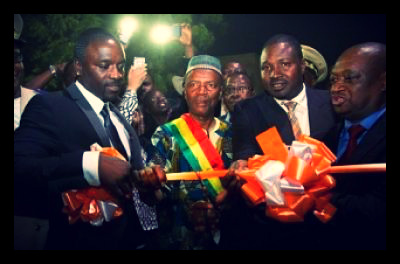
Senegalese pop-star Akon, in partnership with Give1 Project and Africa Development Solutions Global Corporation, aims to give electricity to one million households in nine West and Central African countries by the end of 2014.

The Akon Lighting Africa project involves installing solar equipment in rural households in Senegal, Mali, Guinea Conakry, Gambia, Burkina Faso, Equatorial Guinea, Gabon, Congo and the Ivory Coast.

Originally from Senegal, Akon, whose real name is Aliaune Badera Thiam, is on tour of the beneficiary countries to meet with presidents and leaders.

“We wanted to focus the project on rural areas because we often forget that our parents in these remote areas need electricity,” Akon was quoted saying after meeting Burkinabe President Blaise Campore.

The project also aims to improve education quality and sustainable infrastructure. Improved electricity would lengthen hours of education, allowing students the opportunity to succeed.

Akon was born in St. Louis to two musician parents; he spent much of his childhood in Senegal. Despite living in the United States, Akon keeps his homeland in the forefront of his business ventures.

He started a charity in Africa that aims to empower youth by promoting health and education. The Konfidence Foundation concentrates its efforts in Senegal and West Africa, but Akon hopes the foundation will serve as an international platform to empower individuals, communities and nations.

Akon Lighting Africa is the pop star’s most recent project that aims to help Sub-Saharan African countries become self-sufficient. The sustainable energy project has a mission to help the infrastructure, education and economy of the beneficiary countries.

– Haley Sklut

Sources:  Africa Review, World Bank, Konfidence
Photo: Trace

February 26, 2014
https://borgenproject.org/wp-content/uploads/borgen-project-logo.svg 0 0 Borgen Project https://borgenproject.org/wp-content/uploads/borgen-project-logo.svg Borgen Project2014-02-26 22:18:292024-06-05 01:57:12Akon Lighting Africa Project
Economy, Education, Global Poverty

Poverty and Violence in Honduras

Violence_Poverty_Exacerbate_Homelessness_Honduras
Birthplace of the term “banana republic” and victim of the brutal fruit companies-led coup, Honduras is among the countries with the lowest incomes in Latin America, poverty is very pronounced problem in this Central American nation. Despite an economic growth of around 3 percent per annum, the gross domestic product (GDP) per capita of the country remains stagnant.

This discrepancy could indicate that there is a widening disparity gap.

In fact, since the coup d’état in 2009, Honduras witnesses the most rapid rise in inequality in Latin America, a factor that contributes to prevailing climate of violence. Equally frustrating, the top 10 percent of the population also earns virtually all of the republic’s real income gains.

Furthermore, the 2009 coup d’état had increased the overall rates of poverty and extreme poverty. This climate of political crisis had reverted the economic advances that took place in the country. In addition, the government of President Porfirio Lobo, who came into power after the post-coup elections of 2010, had reduced social spending despite the boost in public spending.

It is estimated that 71 percent of the 8.3 million Hondurans live in poverty, a major problem that contributes to the frequent instances of violence that plague the nation. Because of this astronomic number of people living in poverty, a large sector of Honduras’ population is also deprived of education.

Only a lucky few can afford any education beyond sixth grade.

What’s more, Honduras has the highest rate of homicide in the world, with the average of 20 people murdered daily, 90 percent of whom are male victims. This frightening data stem from the burgeoning narcotic business, which has given rise to many organized crimes. This epidemic problem of homicides also takes away from the country’s meager income by necessitating the Honduran government to spend 10.5 percent of the national GDP in the combat of violence.

Due to Honduras’ constant history of political instability, there has always been very little opportunity for Honduras to develop democratic institutions to impose the rule of law. Instead, centuries of colonialism and decades of dictatorship have marginalized the poor, leaving them with minimal choices to make a living.

This scarcity of upward economic mobility and grinding poverty have driven many towards illicit ways of earning money.

In its attempt to encourage Honduras to alleviate poverty, the World Bank has suggested the country to support the stability and the growth of its macro-economy as well as to improve the quality of its education. But, these key options to improve the situation of the country are easier said (or suggested) than done. Development and democracy are not phenomena whose advent can be brought about at an instant.

Instead, they require years of institutional and systematic reforms for a society to have a functional democracy and a sustainable development.

 – Peewara Sapsuwan

Sources: El Pais Internacional, El Heraldo, El Heraldo, Los Angeles Times, World Bank, World Bank
Photo: Zimbio

February 24, 2014
https://borgenproject.org/wp-content/uploads/borgen-project-logo.svg 0 0 Borgen Project https://borgenproject.org/wp-content/uploads/borgen-project-logo.svg Borgen Project2014-02-24 12:53:402024-06-05 01:57:10Poverty and Violence in Honduras
Developing Countries, Development, Economy, Global Poverty

The Myth of Countries Being Doomed to Poverty

Myth_of_poverty_gates_foundation
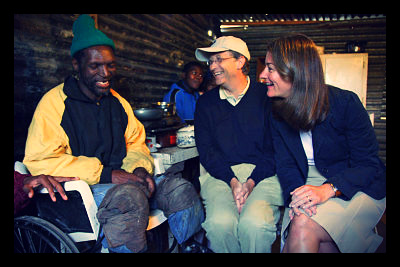
The Bill and Melinda Gates Foundation released its 2014 annual letter, which, rather than focusing on the foundation’s accomplishments over the past year or discussing its plans for the future, addressed three widely held beliefs regarding poverty.

The Foundation focused on eliminating these three myths: “Poor Countries are Doomed to Stay Poor,” “Foreign Aid is a Big Waste,” and “Saving Lives Leads to Overpopulation.” The letter deconstructs these myths, showing they are not only incorrect, but also highly detrimental to the progression of the fight against global poverty.

The idea that poor countries are trapped in a cycle of poverty is one held by people worldwide, especially those in the United States and other Western countries. While this belief that poor countries can never improve is deeply ingrained, it can be disproved through simple statistics.

In 1960, the majority of the global economy was focused in the West, with many of the countries across Asia, Africa, and Latin America counting as among the most impoverished in the world.

Today, many of the countries formerly considered irrevocably poor, such as Mexico, Turkey and Chile have rapidly growing and thriving economies and according to the Bill and Melinda Gates Foundation, “the percentage of very poor people has dropped by more than half since 1990.”

Many countries that were once viewed as “developing” such as China and India have come so far that it is difficult to continue viewing them as such, even for those who subscribe to the belief that poor countries are doomed to remain impoverished.

While people may find it easy to accept growth in countries in Asia as well as North and South America, they have a harder time believing that life in Africa will improve in the future.

The fallacy that the quality of life in African countries remains stagnant or decreases persists despite the fact that “7 of the 10 fastest-growing economies of the past half-decade are in Africa.”

In addition to growing economies, health care quality and availability both increasing throughout Africa. Since 1960, in spite of the AIDS epidemic, the life span of women in sub-Saharan Africa has increased by 39 percent from 41 years old to 57 years old. Education is improving as well, with over 75 percent of sub-Saharan children in school since 1970.

While not every impoverished country is experiencing drastic improvement, it is irrational to view all poor countries as the same. So long as there are not inherent geographical difficulties, such as those the landlocked countries in Africa face, or a government that impedes their growth, as is seen in North Korea, impoverished countries have the ability to improve exponentially.

Poverty will inevitably continue across the globe, but it will decrease significantly in scope and severity as it has done over the past several decades.

In addition to dissolving the misguided belief that poor countries will never improve, The Bill and Melinda Gates Foundation examines why this myth must be reevaluated. This misinformation harms the fight against global poverty because no one will support a cause they believe to be pointless.

– Cameron Barney

Sources: Gates Foundation, Forbes

February 10, 2014
https://borgenproject.org/wp-content/uploads/borgen-project-logo.svg 0 0 Borgen Project https://borgenproject.org/wp-content/uploads/borgen-project-logo.svg Borgen Project2014-02-10 04:00:302018-01-08 10:49:45The Myth of Countries Being Doomed to Poverty
Economy, Global Poverty

Poverty in Russia

Poverty_in_russia
As the adage goes, the poor stay poor while the rich get richer. For years, Russia has been regarded as a nation fraught with economic inequality- a land where the rich accrue more and more wealth each year while the poor descend further and further into squalor. Even in the advent of the burgeoning middle class, the growing disparity of wealth has contributed to a widening economic gap between Russia’s rich and poor residents.

Although an astounding 18 million Russians, or roughly 13 percent of the population, live below the official poverty line, having a collective income of $12.4 billion, the 97 wealthiest Russians jointly own $380 billion- nearly 31 times the collective income of the nation’s poorest individuals.

While $18 million residents grapple with the challenges of poverty, Vladimir Putin consistently vaunts the exclusive wealth of Russia. In a sense, Russia has exhibited economic growth. For instance, Moscow now houses more billionaires than New York City, the iconic American city that has long been esteemed as the metropolis of wealth and power of the Western World.

Although Putin boasts about the economic prosperity of the few wealthy elites, little effective action has been taken to curb the growing rates of poverty in Russia. For example, the estimated cost of living in Russia is approximately $210. However, the nation’s minimum wage is wholly insufficient at $155 per month.

Despite this harrowing fact, it appears that the 2014 Winter Olympic Games, set to be hosted in Sochi, has taken prominence over the rampant poverty in Russia. In 5a Akatsy Street, located in a neighborhood with deteriorating infrastructure, a brand-new multi-million dollar highway brazenly cuts through the surrounding poverty.

The glossy highway stands in salient contrast to the squalor of 5a Akatsy Street, a locale in which residents have barely sustained themselves without running water or a sewage system. While the Russian government sanctions the construction of stadiums and highways, the majority of Sochi residents live in dwindling, contaminated and neglected villages.

However, the juxtaposition of the ostentatious Olympic preparations in Sochi and the prevalence of squalor surrounding the slinky stadiums and magnificent mega-malls highlights a general trend that has been observed in Russian society, a dangerous trend in which in which the poor are vastly overlooked while the most wealthy are needlessly glamorized.

– Phoebe Pradhan

Sources: Telegraph, Forbes, TribLive
Photo:
AsiaOne

February 8, 2014
https://borgenproject.org/wp-content/uploads/borgen-project-logo.svg 0 0 Borgen Project https://borgenproject.org/wp-content/uploads/borgen-project-logo.svg Borgen Project2014-02-08 04:00:462024-12-13 17:49:28Poverty in Russia
Global Poverty, Technology

Tech Hub for Rwanda Startups

Tech Hub for Rwanda Startups
To make positive change in the world, we don’t just need tons of money, popularity or political influence, we need the right tools.

By getting the right people together in one place, specifically one that fosters intellectual development and creativity, we can make great things happen.

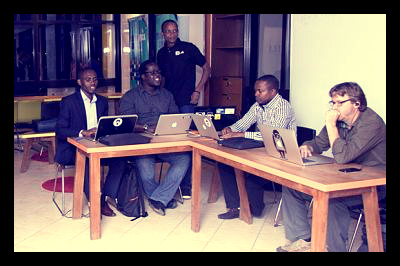
This is the belief of kLab, a tech hub in Rwanda where young people can bring their startup ideas and receive free Wi-Fi, workspace and mentorship from professors, business owners, and community leaders.

kLab – which stands for “knowledge lab” – has been operating for over a year and was officially launched in October 2013. The center is funded by the Rwanda private Sector Federation, the Rwanda Development Board and the Japan International Cooperation Agency.

“The knowledge lab is an innovation center where fresh and young graduates come to work on their projects, especially in the tech industry,” said Jovani Ntabgoba, kLab’s general manager, at the launch.

kLab currently offers the services of 21 different mentors to its over 80 tenants. The startups at the center range from online shopping websites to improved medical technology. The mentors offer these young people the ability to truly flesh out their ideas and turn them into much more.

“The culture is collaboration, but it’s not just collaboration; it’s positioning oneself at an age where you receive the best mentorship that you cannot find anywhere else in Rwanda,” Ntabgoba said. “At kLab we have all of the knowledge that is required for a tenant to develop their business.”

The power of this collaboration has led to the beginning of many bright futures for startups that focus on the vision of the country of Rwanda: to turn the nation into a knowledge-based economy. However, young Rwandans are challenged daily by a lack of skills due to the fact that the educational curriculum is not yet “innovation-oriented.”

One of the more recent kLab successes is GIRA ICT – a startup that combats a large roadblock to widespread internet usage in Africa: hardware prices. By partnering with big name manufacturers like Apple, Samsung, HP and Lenovo, GIRA ICT allows consumers to pay for their devices in monthly installments in order to increase hardware ownership across the country.

“We started as a group of five entrepreneurs, so we came into kLab and they gave us a free space to work in. We could enjoy internet… they provided us with mentors,” said project supervisor Alphonse Ruhigira.

GIRA ICT has also been collaborating with the government to supplement the One Laptop per Child program. Founded by Nadia Uwamahoro, this effort provides teachers with laptops that they can pay off over a span of four years. So far, this has helped about 100 teachers to attain laptops and the number is steadily increasing.

“It’s a brilliant innovation and she is doing brilliant business,” says Jean Philbert Nsengimana, Rwandan Minister for Youth and ICT of Uwamahoro. “She’s taken computers to places where they were seeing and touching them for the first time by lowering the affordability challenge.”

Through efforts such as GIRA ICT, kLab is pushing Rwanda towards its goal of becoming a middle-income country by the year 2020.

“I want you to understand the uniqueness of this kLab compared to many other iHubs in the region. The uniqueness of this one is that you are in this building and you are not alone in this building,” said Michael Bezy, associate director of Carnegie Mellon University in Rwanda, who works with kLab in order to provide mentorship to its tenants.

“You look at that and you say ‘I have entrepreneurs here, I have a world-class university, I have IT businesses and I have IT infrastructure.’ That looks to me like a mini Silicon Valley,” said Bezy.

– Samantha Davis

Sources: Wired, kLab, Wired
Photo: Wired

January 29, 2014
https://borgenproject.org/wp-content/uploads/borgen-project-logo.svg 0 0 Borgen Project https://borgenproject.org/wp-content/uploads/borgen-project-logo.svg Borgen Project2014-01-29 20:03:482020-07-02 12:31:42Tech Hub for Rwanda Startups
Developing Countries, Development

Kenya Launches Railway Project Funded by China

On Thursday, November 28, Kenya launched a multi billion-dollar railway project that will link the port city of Mombasa to the capital of Nairobi. The President of Kenya, Uhuru Kenyatta calls the project, “a historic milestone.” Kenyatta told the media, “The project will define my legacy as President of Kenya.” The railway was built by a Chinese state-owned firm called China Road and Bridge Corporation (CRBC), and is funded by the Chinese government. Completion of the first section is estimated within the year 2017.

This is certainly a big deal for Kenya, and for Africa. The current railway in Kenya was built back in the Colonial Era. This project is said to be the nation’s largest infrastructure venture since Kenya’s independence 50 years ago. The new railway comes with economic and China-Kenya relational benefits.

The new transportation addition will impact the people in the region tremendously. This first link of the project, Mombasa to Nairobi, will cut travel time from 15 hours to about 4 hours. Passenger trains will reach a maximum speed of 75 mph.

At the railway launch ceremony, President Kenyatta said, “What we are doing here today will most definitely transform… not only Kenya but the whole eastern African region…east Africa will become a competitive investment destination. A busy growing east Africa is good for us as a country.”

Chinese Ambassador to Kenya, Liu Guangyuan also spoke at the ceremony. He said the railway is a strategic endeavor for Kenya. He noted how railways have powered China’s economy for quite some time.

Deputy Director of the African Department at the International Monetary Fund in Washington, Roger Nord, also explained the impacts this project will have on the east African people. “From an economic point of view, this is quite beneficial, improving both access to global markets and boosting regional trade,” he said.

The railway has allowed a Kenya-China relationship to grow and look toward the future. In regard to the relationship, Guangyaun said, “Kenya is stepping forward…it will be a landmark project for Kenya and east Africa.” In reponse, President Kenyatta praised the Chinese for their support, and felt the Chinese are, “A true friend to Kenya.” Kenyatta pointed out how the Chinese are currently technological leaders when it comes to railway infrastructure. Kenyatta thoroughly thanks the Chinese leaders present at the launch ceremony.

– Laura Reinacher

Sources: FT, Aljazeera, BBC, Global Post
Photo: WUNRN

December 14, 2013
https://borgenproject.org/wp-content/uploads/borgen-project-logo.svg 0 0 Borgen Project https://borgenproject.org/wp-content/uploads/borgen-project-logo.svg Borgen Project2013-12-14 04:00:022024-05-25 00:39:09Kenya Launches Railway Project Funded by China
Development, Global Poverty

AMK Cambodia

amk_finance
Angkor Mikroheranhvatho (Kampuchea) Co. Ltd. (AMK) began as a part of Concern Worldwide; their initial work was with savings and credit in Cambodia. From the years of 1997 – 1998, this area of work was separated from their broad-spectrum focus in regards to community development programs.

The vision of this branch of the organization was long-term, a Cambodian society in which citizens would have “equal and sufficient economic and social opportunities to improve their standard of living, and where they could positively contribute to the overall development of the country.”

The section had grown significantly by the year 1999, having accumulated a value of about KHR 1,000 million (US $250,000). With this success in mind, Concern Worldwide began the process of making this division an independent legal entity.

In 2001, the name of the organization was set to Thaneakea Ponleu Thmey (TPT) and became an officially recognized Cambodian Microfinance Institution (MFI). As things progressed from 2002 to 2003, the organization finally gained its current title – AMK. It was now independent from Concern Worldwide.

Over the years, AMK has built itself up to be a highly successful organization with a large amount of growth and stability. AMK even weathered the global financial crisis of 2008. It is currently regarded as one of the leading financial institutions in Cambodia.

The staff of AMK keeps ethics high on the priority list. Their Code of Practice includes the following: inclusion of the poor, transparency and honesty in transactions, ethical and respectful behavior, avoidance of over-indebtedness, freedom of choice, reasonable and collaborative collection practices, accessible complaint and problem resolutions, and privacy of client data.

At this moment, AMK provides credit to over 250,000 Cambodian customers (over 2 percent of the entire population and 9 percent of the households in Cambodia). This large number gives AMK Cambodia the ability to exercise great influence over financial inclusion in the country.

Other information regarding the organization’s successes and current assets can be found at AMK Cambodia’s Highlights.

– Samantha Davis

Sources:  AMK Cambodia, Britannica
Photo: Oiko Credit

October 20, 2013
https://borgenproject.org/wp-content/uploads/borgen-project-logo.svg 0 0 Borgen Project https://borgenproject.org/wp-content/uploads/borgen-project-logo.svg Borgen Project2013-10-20 04:00:042024-05-25 00:27:03AMK Cambodia
Developing Countries, Development, Food & Hunger, Food Aid, Foreign Aid, Global Poverty, Poverty Reduction, USAID

US Foreign Aid to Africa: What We Give and Why

us_foreign_aid

In 2012, the United States provided nearly $12 billion in official development assistance (“ODA”) to African nations. The ODA is allocated to education, health, infrastructure and economic development programs in recipient countries. Currently, the United States allocates foreign aid to 47 African nations and USAID operates 27 missions on the continent.

US Foreign aid to Africa began in the 1960s as many African nations gained independence and the United States sought strategic alliances to counter the influence of the Soviet Union. With the exception of disaster and famine relief, most foreign aid to Africa began to decrease with the collapse of the Soviet Union.

In the 2000s, President Bush more than tripled aid to Africa by establishing programs such as the Child Survival and Health Programs Fund as well as the Global HIV/AIDS Initiative.

Though foreign aid programs are designed to assist recipient nations with development, they also benefit the United States in a number of ways.

First, these programs help build strategic alliances and foster support for democratic transitions. It also stimulates Africa’s growth and development, which provides opportunities for increased trade and direct investment in the continent’s emerging markets.

But for all the benefits, foreign aid to Africa has no shortage of detractors. Many critics point out that much of the money allocated to Africa never reaches the people who most need the assistance. “Eighty percent of U.S. aid to Africa is spent right here in America — on American contractors, American suppliers, and so forth,” said George Ayittey, president of the Free Africa Foundation.

In more corrupt nations, politicians and civic leaders are often charged with misappropriating funds designated for the people. Others critics claim that foreign aid to Africa simply does not work—after 50 years of assistance, Africa still confronts the same issues.

But even critics would have to agree on one crucial point: foreign aid is an integral part of U.S. foreign policy. In Africa, aid programs support a large framework of social and economic assistance for developing nations.

Critics are correct that American companies and corrupt politicians siphon a large portion of foreign aid. But aid to Africa has also done much to improve infrastructure, bolster economic development and improve health care conditions for millions of people on the continent.

– Danial Bonasso
Sources: Foreign Policy Initiative, Washington Post, NPR, One.org
Photo: James Bovard

August 21, 2013
https://borgenproject.org/wp-content/uploads/borgen-project-logo.svg 0 0 Borgen Project https://borgenproject.org/wp-content/uploads/borgen-project-logo.svg Borgen Project2013-08-21 11:44:212024-12-13 17:49:39US Foreign Aid to Africa: What We Give and Why
Page 41 of 44«‹3940414243›»

Get Smarter

  • Global Poverty 101
  • Global Poverty… The Good News
  • Global Poverty & U.S. Jobs
  • Global Poverty and National Security
  • Innovative Solutions to Poverty
  • Global Poverty & Aid FAQ’s
Search Search

Take Action

  • Call Congress
  • Email Congress
  • Donate
  • 30 Ways to Help
  • Volunteer Ops
  • Internships
  • Courses & Certificates
  • The Podcast
Borgen Project

“The Borgen Project is an incredible nonprofit organization that is addressing poverty and hunger and working towards ending them.”

-The Huffington Post

Inside The Borgen Project

  • Contact
  • About
  • Financials
  • President
  • Board of Directors
  • Board of Advisors

International Links

  • UK Email Parliament
  • UK Donate
  • Canada Email Parliament

Get Smarter

  • Global Poverty 101
  • Global Poverty… The Good News
  • Global Poverty & U.S. Jobs
  • Global Poverty and National Security
  • Innovative Solutions to Poverty
  • Global Poverty & Aid FAQ’s

Ways to Help

  • Call Congress
  • Email Congress
  • Donate
  • 30 Ways to Help
  • Volunteer Ops
  • Internships
  • Courses & Certificates
  • The Podcast
Scroll to top Scroll to top Scroll to top