• Link to X
  • Link to Facebook
  • Link to Instagram
  • Link to TikTok
  • Link to Youtube
  • About
    • About Us
      • President
      • Board of Directors
      • Board of Advisors
      • Financials
      • Our Methodology
      • Success Tracker
      • Contact
  • Act Now
    • 30 Ways to Help
      • Email Congress
      • Call Congress
      • Volunteer
      • Courses & Certificates
      • Be a Donor
    • Internships
      • In-Office Internships
      • Remote Internships
    • Legislation
      • Politics 101
  • The Blog
  • The Podcast
  • Magazine
  • Donate
  • Click to open the search input field Click to open the search input field Search
  • Menu Menu

Archive for category: Women’s Rights

Global Poverty, Women's Rights

Top 10 Facts About Living Conditions in Ukraine

10 facts Ukraine

Ukraine is a beautiful country nestled between Russia to the east and the European Union to the west. This precarious location has led to conflict and hardship for the people of Ukraine, but there are programs in place now to improve the lives of the citizens living in these conflicted regions. In order to evaluate the best course of action to better the lives of the Ukrainian people, it is important to understand these top 10 facts about living conditions in Ukraine.

Top 10 Facts About Living Conditions in Ukraine

  1. In 2014, the Euromaidan movement erupted in eastern Ukraine when President Viktor Yanukovych decided not to sign an agreement with the European Union, thus bringing Ukraine a step further away from joining the EU. Yanukovych was removed from the presidency in 2014, followed by political unrest, the annexation of Crimea by Russia in March 2014 and the outbreak of fighting between Ukrainian nationalists and Russian forces in the Donbass region of Ukraine. This conflict has resulted in more than 10,000 deaths.

  2. The conflict in Ukraine has resulted in 1.5 million internally displaced persons, according to the Ukrainian government. Despite this enormous challenge, the UNHCR is working to provide aid, including blankets, cooking supplies, clothing and other supplies to help these people survive the harsh winter. Understanding the top 10 facts about living conditions in Ukraine can help shed light on what more needs to be done to aid these displaced people.

  3. In the immediate aftermath of the conflict in eastern Ukraine, hunger and food shortages became pressing issues. The United Nations Food Programme responded by increasing its presence in Ukraine to provide food to the 190,000 people deemed vulnerable due to conflict or the inability to leave the conflict zone. The World Food Progamme has also provided food supplies to the region in case further violence and displacement ensue.

  4. The Roma minority in Ukraine are continuing to face discrimination without much aid from the government. This discrimination has culminated in violent attacks against Roma communities. For example, in April 2018, a nationalist group called C14 attacked a Roma community by throwing rocks, spraying pepper spray and tearing down tents. None of the members of C14 were arrested despite the fact that the group filmed their attack and posted it to the internet. Instead of punishing the group, the government awarded them with grants to hold “patriotic education” meetings in rent-free auditoriums. Further attacks continued, resulting in the murder of a Roma man and the robbing of 150 Roma families in Slovyansk.

  5. Anti-Semitism has become a devastating problem that is quite prevalent in Ukraine since the conflict with Russia began. After a Passover service in a synagogue in Donetsk, masked members of the Donetsk People’s Republic, a pro-Russian group that “claims to represent ethnic Russians in eastern Ukraine,” handed out leaflets to the members of the synagogue that read that all Jewish Ukrainians should register with the government, leave the country or pay a fine. When confronted about the issue, the Donetsk People’s Republic denied they were involved and in turn claimed the Ukrainian government was guilty of anti-Semitism.

  6. Unemployment in Ukraine decreased from 8.30 percent in the second quarter of 2018 to 8 percent by the third quarter; although, the rate did increase again up to 9.3 percent. Although the Ukrainian economy grew by 3 percent last year, which is positive, it should be growing at a rate closer to 5 or 6 percent annually. In fact, the Ukrainian finance minister stated that, at this current rate, it would take Ukraine up to 50 years to reach the economic growth of its neighbor, Poland.

  7. Gender equality has a ways to go in Ukraine in the political, economic and social spheres. The Global Gender Gap Report by the World Economic Forum ranks Ukraine at 64 in terms of women’s income, 22 in terms of women’s education and 119 in terms of political representation. Women make up 55 percent of the unemployed population in Ukraine. Women make up only 9.4 percent of the Ukrainian parliament. However, the Ukrainian government does recognize this issue and is taking steps to promote gender equality. There is a new state program to reduce the wage gap through efforts to increase the hiring of women in better-paying positions and “combating gender stereotypes about female and male professionals.” Equal pay will also be a focus in order to reduce the wage gap.

  8. One major issue around in Ukraine is child marriage. According to UNICEF, 9 percent of Ukrainian girls are married before the age of 18. The issue is more prevalent in poorer, rural areas of the country where 15 percent of women in poorer households were married before the age of 18 compared to 10 percent in the wealthier families in Ukraine. According to the organization Girls Not Brides, “Patriarchal attitudes still maintain that a Ukrainian woman’s main role is to be a wife and mother. Some young girls and families support early marriage as it leads to the ‘right path’ in life.” However, the government has recognized this issue and has signed several U.N. resolutions to eliminate child marriage.

  9. Education attendance rates are high in Ukraine, although there are several institutional issues. According to the World Bank, there is very little gender disparity in primary school attendance. In 2014, 92 percent of boys and 93 percent of girls attended primary school. However, the World Bank also reported that “unofficial payments are common in education. […] schools collect money from parents for classroom remodeling and flowers or gifts for teachers.” The Ukrainian government has taken steps to designate 7 percent of its annual GDP to improving education throughout the country.

  10. Despite the devastation the conflict in Ukraine has caused for citizens, there are NGOs in the region attempting to provide aid to those affected by the violence. Hope for Ukraine is an organization that delivers aid packages to the frontline in the Donbass region. It has volunteers visit wounded soldiers in hospitals and holds after-school English lessons for Ukrainian school children through its Children’s Rescue Center.

The issues in Ukraine will not be easily solved, but hopefully, these top 10 facts about living conditions in Ukraine highlight the successes that several organizations have brought about and what still needs to be done to improve the lives of Ukrainian citizens.

– Alina Patrick
Photo: Flickr
June 14, 2019
https://borgenproject.org/wp-content/uploads/borgen-project-logo.svg 0 0 Kim Thelwell https://borgenproject.org/wp-content/uploads/borgen-project-logo.svg Kim Thelwell2019-06-14 01:30:042024-06-04 01:08:32Top 10 Facts About Living Conditions in Ukraine
Global Poverty, Women and Female Empowerment, Women's Rights

Syria: Education in a Time of Strife

Read more
June 6, 2019
https://borgenproject.org/wp-content/uploads/borgen-project-logo.svg 0 0 Kim Thelwell https://borgenproject.org/wp-content/uploads/borgen-project-logo.svg Kim Thelwell2019-06-06 01:30:212026-05-21 12:19:00Syria: Education in a Time of Strife
Global Poverty, Women and Female Empowerment, Women's Rights

Advancing Women: What is the W-GDP?

What is the W-GDP
The limitations that women have to pursue economic advancement on the same playing field as men occur even at a young age. There are societal expectations, stereotypes and constraints that women face from when they are very young. These expectations do not cease to affect women in the pursuit of roles in higher-paying jobs around the globe. U.S. President Donald Trump launched the Women’s Global Development and Prosperity (W-GDP) Initiative in February 2019 in recognition of these issues and acknowledging related foundational constraints.

The W-GDP focuses on women prospering within the workforce, thriving in entrepreneurship and becoming established in the economy through the removal of legal barriers. These three pillars of the W-GDP recognize the untapped potential of women in the global economy. A unique team including the Secretaries of State, Treasury and Defense, a National Security Advisor and leaders of the World Bank, UNICEF and Walmart promote the W-GDP. This sheds light on the uniqueness and significance of this initiative.

Women Prospering in the Workforce

The focus on women prospering within the workforce pertains to efforts implemented toward the placement and elevation for women’s global workforce participation. The actions behind this pillar prioritize making provisions for women’s access to education and training and providing the support necessary to thrive economically. Women also do not receive equal access to digital services in comparison to men. This further limits women’s economic advancement considering these services may involve training, employment and financial services. Over 1.7 billion women do not own cell phones throughout developing countries. Further, the likelihood of women using mobile internet is 26 percent less than men. These components also restrain the equality of women in the workforce.

The time-consuming weight of care and labor that women endure also limits opportunity. More likely than men, women face unsalaried work such as family care, cleaning and retrieving clean water. These activities hinder women from receiving a quality education, training or essential skills. All of these components are essential in obtaining higher-paying substantial-growth positions in areas such as engineering, math or science.

So, what is the W-GDP? It is an initiative that acknowledges this crisis that is harming the global economy and has developed plans to invest in over 50 million women in developing countries. Estimates have determined that this initiative adds $28 trillion to global gross domestic product (GDP) when it has 100 percent participation from women in the workforce.

Women Thriving in Entrepreneurship

The W-GDP initiative helps women thrive in entrepreneurship by opening their access to capital, markets, networks and mentorship. The W-GDP is addressing this issue because it highlights another problematic area; women-owned businesses face inequality in systems developed in their countries that do not provide equal access to market information, personal services, networks and other means of expansion. About $300 billion represents the credit gap in women-owned small and medium-sized enterprises all around the world. Many countries with undeveloped financial structures are not treating these gray areas in the middle efficiently.

To change these circumstances, systemic reconstructions will provide short and long-term aid as solutions to these issues. Overall structural or institutional amendments make up the solution to combat the blockages women face regarding opportunities and system access.

Women Enabled in the Economy

The pillar of enabling women in the global economy focuses on the policies and laws that countries established that provided barriers to the financial progress of women. The trials women face in pursuing economic participation include the weight of unsalaried care, gender-based violence, lack of expenditure in their education, required spousal consent for employment and lawful blockades to specific careers. These lawful barriers include prohibiting or limiting their rights to assume, own property or have contracts through their name. To alleviate these limitations, the government, private sector and citizens of society must implement essential exerts of labor and force.

The W-DGP believes that investing in women can lead to positive outcomes. These outcomes are beneficial to all, including national security, peace, stability and local economy boosts from family investments. It is time to tap into the population that has the potential to bring upon these changes.

– Janiya Winchester
Photo: Wikimedia Commons

June 5, 2019
https://borgenproject.org/wp-content/uploads/borgen-project-logo.svg 0 0 Kim Thelwell https://borgenproject.org/wp-content/uploads/borgen-project-logo.svg Kim Thelwell2019-06-05 10:30:132024-05-29 23:13:51Advancing Women: What is the W-GDP?
Global Poverty, Health, Women's Rights

How Period Poverty May be Addressed Globally

Period Poverty
With pertinent issues like gender-based violence and discrimination coming to the forefront, period poverty is becoming a key aspect of fighting gender inequality globally. Period poverty, another key facet that one can classify as the feminization of poverty, is the inaccessibility and lack of adequate menstrual hygiene products and supplies for women and girls.

The Status Quo of Period Poverty

Even though period poverty is a significant issue to tackle, unlike other women’s issues and struggles, the stigma attached to period and menstruation remains a rather strong barrier to remediating the problem. In May 2018, the United Nations Population Fund (UNPF) reported on the menstrual stigma and taboo in East and Southern Africa, highlighting impacts like women’s health risks and human rights violations.

Among developing countries, in particular, the stigma against menstruation deeply entrenches in culture and religion as the taboo regarding periods has been a long-term stigma for many years. The patriarchal dominance that continues to exist among communities across the world is aggravating the problem further.

For example, countries like Nepal still practice Chhaupadi, which is a regressive yet common practice where women must confine themselves to a specific part of the house during their menstrual cycle. Furthermore, over 60 percent of teachers in Sri Lanka perceived menstrual blood as impure in some way. Women and girls in sub-Saharan African countries also face the impacts of this issue.

Impacts on Education

Most importantly, period poverty can be a major social impediment to girl’s education as young girls from poorer social-economic backgrounds often miss a lot of school as they face difficulties in coping with their cycle.

According to a 2014 study conducted by UNESCO, one in every 10 girls face menstrual problems and have to miss out on school. Often women and girls use mud, leaves, paper and animal skins to stem menstrual flow as resources are often scarce. In countries like Sri Lanka, pads and other sanitary products often receive a heavy tax, despite the fact that the taxation on menstrual products has decreased to around 63 percent in recent years.

Current Progress and Initiatives

Yet, more recently, in a revolutionary move, India’s Supreme Court was proud to declare a renouncement of the ban on menstruating women, citing not only its constitutional immorality but also the religious and social constraints it imposes on women. The announcement stated that the state had the duty to protect and safeguard the rights and freedoms of women.

Additionally, Alstons Marketing Company Limited (AMCO) recently embarked on the End Poverty Initiative to distribute over 115,000 pads to girls in Trinidad and Tobago. The Kenyan government is offering assistance to girls by subsiding menstrual hygiene products and removing the imposition of the VAT (Value Added Tax).

The U.K. has additionally launched a global fund to eliminate period poverty by the year 2050. The government is pledging over 2 million pounds to aid international organizations and assist in other global initiatives to tackle the stigma associated with menstruation and the period taboo.

As advocacy and awareness-building remain pivotal, May 28 is now Menstrual Hygiene Day. Globally, organizations like Period Equity are helping to bridge the gaps and make menstrual hygiene and care more affordable.

Community-based initiatives and grassroots activities may be a long-term solution to the problem. The provision of WASH services is also essential as it ensures greater menstrual hygiene and will eliminate health risks among communities by monitoring waste management systems and building functional toilets.

Preventing the debilitation of period poverty is of paramount importance for future social development and progress to improve the overall status of women. It will help solve other associated issues like girl’s education, mobility and health care and ensure greater participation of women in the economy and the workforce.

– Shivani Ekkanath
Photo: Flickr

June 2, 2019
https://borgenproject.org/wp-content/uploads/borgen-project-logo.svg 0 0 Kim Thelwell https://borgenproject.org/wp-content/uploads/borgen-project-logo.svg Kim Thelwell2019-06-02 13:53:172019-10-02 08:40:15How Period Poverty May be Addressed Globally
Global Poverty, Women and Female Empowerment, Women's Rights

Women in Government: Representation in Rwanda

Women’s Representation in RwandaRwanda has a higher percentage of representation of women in government than any country in the world. In 2017, there were 49 women in the lower house of parliament, which is more than half of its 80 seats, and 10 women in the upper house of parliament consisting of 26 seats. The high proportion of women in government came after the devastating Rwandan genocide of 1994, and the country has made significant strides since then.

A Shift in Gender Representation

The genocide in Rwanda marked a change in gender representation because, after the violence had subsided, 70 percent of the surviving population was women. This was a result of the practice of killing men and allowing women to survive as sex slaves during the genocide. However, it was not only the new gender disparity that caused an increase in women’s roles in government, but the country also introduced quotas requiring 30 percent of candidates for public office to be women.

It is important to note that the Rwandan government decided to increase the representation of women in government through candidate quotas in political parties rather than seat reservations in parliament. According to a study by Mala Htun published in Perspective on Politics, “Women and men belong to all political parties; members of ethnic groups, by contrast, frequently belong to one only.” By using quotas, the Rwandan government is acknowledging the bipartisan nature of women in government.

Therefore, the most efficient way to establish a higher representation of women in government is to promote their representation within political parties because they are a cross-cutting group, meaning that women have an active political presence across the political spectrum. This thoughtful approach to increasing women’s representation in the Rwandan government has resulted in record-breaking numbers of women becoming involved in political life in Rwanda and setting positive examples for young girls throughout the country.

The Difficulties Women in Government Face

The presence of women in such politically powerful positions in Rwanda has not come without difficulties. Many women face backlash from their families or husbands for sacrificing domestic work in order to become political leaders. In fact, Berthilde Muruta, Executive Secretary in the Rubavu District noted that “there are people who think that we come to meet men, or for other business, which makes it hard to be trusted by our husbands.” Additionally, female politicians in Rwanda are oftentimes not seen as equals to the men in similar positions.

According to Claudette Mukamana, a District Vice Mayor, “When people see you holding any of those [elected] positions as women, the very first question asked by everyone is: Will she be able to perform her duties? Is she capable of holding such a position?” Despite these difficulties, the presence of so many women in the Rwandan government has resulted in the passing of several key pieces of legislation to improve the lives of women and girls throughout the country.

These reforms include legislation to alter the Civil Code to allow women to have equal inheritance rights as men, equal pay, consequences for gender discrimination and harassment in the workplace and further prevention and consequences for violence against women and children. In addition, with 7 of the 14 supreme court justices in Rwanda now being women, new laws were passed requiring that both boys and girls must attend primary and secondary school.

Areas to Improve

A lot still needs to change in regards to the perception of women’s roles in society. Furthermore, there is still more progress to be made, especially in terms of violence against women. The Rwandan government performed a study that showed that two out of every five women ages 15 and older had been physically abused at least one time in their lives. As more women are elected to office, hopefully, more people will change their perspective in these areas and these statistics will represent that improvement.

The representation of women in the Rwandan government has led to significant advancements for the rights of women and girls throughout the country. Globally women only hold 21.9 percent of all elected seats in government. Promoting the equality of men and women in political positions in Rwanda and around the world is integral to solving many of the issues governments face. Although the system is not yet perfected, the world could learn a lot about the importance of women in government from Rwanda.

– Alina Patrick
Photo: Flickr
May 29, 2019
https://borgenproject.org/wp-content/uploads/borgen-project-logo.svg 0 0 Kim Thelwell https://borgenproject.org/wp-content/uploads/borgen-project-logo.svg Kim Thelwell2019-05-29 01:30:572019-05-29 04:00:18Women in Government: Representation in Rwanda
Global Poverty, Women's Rights

10 Facts About Gender Inequality

10 Facts About Gender Inequality
In our patriarchal society, many underserve and underappreciate women in several aspects of life. Gender inequality ranges from the gender-pay gap to genital mutilation, transcending geographical and cultural differences. These 10 facts about gender inequality display the overarching themes of inequalities that women face and cope with around the world.

10 Facts About Gender Inequality

  1. Lack of Basic Education: In 2014, 263 million children were not in school. At the primary level, 31 million girls did not attend school compared to 29 million boys. Poverty and family income are often driving factors in whether or not girls have the opportunity to attend school. Other factors such as violence, living in remote, inaccessible areas and child marriages can also heavily impact female retention in schools. Increasing female education level is imperative to the positive growth and development of an individual, a family and a country.
  2. The Prominence of Child Marriages: As of 2014, 700 million girls are coerced into marriage before the age of 18. If people force girls into marriage at an early age, they are more likely to drop out of school as well as get pregnant early, which can contribute to physical and mental health hazards. Girls Not Brides is an organization committed to resolving child marriages around the world by keeping governments accountable. It also implements new policies and programs and increases the visibility of the issue.
  3. Increased Pregnancy Complications: Pregnancy and childbirth complications increase as income decreases. Stressors such as financial instability or crowded, polluted living spaces make infant mortality two-thirds higher compared to a higher income area. In addition to infant mortality, half a million women and girls die from child deliveries and complications each year.
  4. Battling Menstruation Stigma: Menstruation is a hormone-based process that signals female fertility. However, in countries such as Venezuela and rural Ghana, communities ostracize girls and women during menstruation. In Venezuela, communities force menstruating women to sleep in huts and in Ghana, communities forbid women from making contact with men. Furthermore, in underprivileged areas, menstruating women often do not have access to sanitary napkins which can cause infections. However, Freedom4Girls, a charity dedicated to removing the stigma around menstruation, is taking action by providing environmentally-friendly, reusable hygiene products to women in poverty.
  5. Culture of Domestic Violence: Domestic violence occurs due to unequal power dynamics within a partnership with approximately 85 percent of domestic violence victims as women. The practice of a patriarchal culture empowers abuse and violence against women, leaving low-income women at a higher risk of staying in violent relationships.
  6. Underreporting of Sexual Assault and Rape: Rape is highly underreported and repeatedly under-prosecuted with one in five women experiencing unwanted sexual contact in their lives. The underreporting of these crimes is frequently the result of fear related to public shaming, officials doubting their situations and further harm from the perpetrator. Women who experienced rape may also experience short-term or long-term Post-Traumatic Stress Disorder, therefore, putting mental health at risk. Victims of rape or sexual assault may resort to RAINN, an organization committed to improving the criminal justice system for sexual assault cases, increasing visibility for sexual violence and providing victim-focused services.
  7. The Dominance of Females in Human Trafficking: Human trafficking encompasses the enslaving of humans into unwanted labor or sexual activity. In 2014, 80 percent of enslaved humans brought across international borders were women, funding a multi-billion dollar industry and remaining as one of the largest illicit crime operations. Because of the pervasiveness of human trafficking, a multitude of organizations around the world are working to end this issue including the Polaris Project in the United States, Prajwala in India and COSA in Thailand.
  8. Existence of Female Genital Mutilation: Cultures perform female genital mutilation due to a series of cultural ideals where the female body must remain pure and clean. For example, some cultures believe that female genital mutilation will ensure virginity and fidelity by removing the “unnecessary” areas that promote pleasure. As many as 200 million girls have undergone the practice in Africa, the Middle East and Asia. 28 Too Many works to terminate these practices in the countries of Africa through extensive global data research, policy changes and community engagement.
  9. Marginal Female Leadership Representation: In more privileged countries, the number of females in leadership roles is dramatically lower than male counterparts considering the same level of education. Women account for 52.5 percent of the college-educated workforce with 57 percent of undergraduate degrees and 59 percent of master degrees. For example, in the financial industry, 61 percent of accounts and auditors are women, however, only 12.5 percent of chief financial officers in Fortune 500 companies are women.
  10. Unequal Economic Participation: Society has historically ingrained the idea of unequal economic participation and the entire world demonstrates this. Multiple countries possess laws to make it difficult or impossible for women to own land. Even though females represent half of the world’s population, less than 20 percent of the land is owned by women. Owning land is important for female economic development such as improved access to loans as well as educational development. Landesa Center for Women’s Land Rights recognizes the benefits of land ownership and is devoted to reforming laws and policies and developing programs to include women’s land rights.

These 10 facts about gender inequality demonstrate how one aspect of female suppression could lead to another. For example, girls who do not have the privilege of receiving a basic education could become vulnerable to teenage pregnancies or child marriages, which could further lead to pregnancy complications and compromised wellbeing. Women constantly face unjust and unequal circumstances that suppress rights to their own bodies, property or financial stability. Although many organizations such as Girls Not Brides, Freedom4Girls and Polaris Project have successfully come together in an effort to counteract multiple harmful practices and beliefs, it is important to recognize inequalities in everyday life and break the cycle of female suppression.

– Angela Dong
Photo: Flickr

May 19, 2019
https://borgenproject.org/wp-content/uploads/borgen-project-logo.svg 0 0 Kim Thelwell https://borgenproject.org/wp-content/uploads/borgen-project-logo.svg Kim Thelwell2019-05-19 10:08:322024-05-29 23:00:2310 Facts About Gender Inequality
Activism, Global Poverty, Women and Female Empowerment, Women's Rights

5 Facts About Women’s Rights in Togo

5 Facts About Women’s Rights in Togo
Togo is a small country in West Africa. Like other developing countries, many people in Togo have made the realization that gender equality and women’s rights would lead to a thriving, more prosperous community. Although recognizing the issue is a crucial and necessary step, actions are needed to see real change. This article examines 5 facts about women’s rights in Togo.

5 Facts About Women’s Rights in Togo

  1. In 2007, Togo adopted a law that prohibits sexual assault, early and forced marriage, exploitation, female genital mutilation and sexual harassment. Yet, women are still lacking in information and education when it comes to their rights, which means marital rape and domestic violence are still common in Togo regardless of the law.
  2. There is a 10-day national conference held every year in Togo called the Women’s Wellness and Empowerment Conference (WWEC). The conference brings women leaders from across Togo together. The Peace Corps’ goal for the WWEC is to empower women, advocate gender equality and education and encourage the community to engage with one another.
  3. For women, there is a substantial drop in literacy rates from primary education (72 percent) to secondary education (14 percent). One of the reasons for this extremely high drop-out rate is because of early pregnancies. The high number of early pregnancies is because sex education, contraceptives and family-planning are all non-existent in Togo, making it extremely difficult for women to take charge of their bodies and futures.
  4. According to the World Bank’s country report, women lack economic opportunities and are rarely represented in high-level positions. This hurts society as a whole. The International Labour Organization stated that more female participation in the workforce would result in faster economic growth. Although there is a law in Togo that constitutes equal pay for equal work regardless of gender, women’s rights activist Berthe Adjoavi Tatey stated that this law is not acted upon. She claimed that women continue to have inadequate access to financial services. Sophie Ekue, a journalist in Togo said, “women are the belt that holds men’s trousers. And it is high time that this changes–for the benefit of the whole society.”
  5. Women are becoming more involved politically. As of 2010, nine members of the National Assembly and seven ministers in the Cabinet were women. In 2012, Togolese women organized a week-long “sex-strike.” The goal of the strike was to pressure President Faure Gnassingbe to resign. Women who wanted to take part in the strike were asked to withhold sex from their husbands. The goal was to convince men to also take action against the president. Togolese women have also led two naked protests. The first was following the sex-strike in August 2012, and the second was in September 2017. The goal of the protests was the same as the sex-strike: mobilize men against the president.

With the uprise of gender equality laws, female-led protests and national women’s conferences, Togo is looking toward a better future as far as gender equality and women’s rights are concerned. These 5 facts about women’s rights in Togo show there is still room to improve. It is essential that Togo continues to focus on advancements for women so there can be political, educational and financial equality between both genders in Togo, creating a strong flourishing community.

– Malena Larsen
Photo: Flickr

May 3, 2019
https://borgenproject.org/wp-content/uploads/borgen-project-logo.svg 0 0 Kim Thelwell https://borgenproject.org/wp-content/uploads/borgen-project-logo.svg Kim Thelwell2019-05-03 01:30:402024-12-13 18:01:455 Facts About Women’s Rights in Togo
Activism, Global Poverty, Water Sanitation, Women's Empowerment, Women's Rights

The 10 Best Humanitarian Quotes by Meghan Markle

Meghan MarkleMeghan Markle, now known as the Duchess of Sussex, began humanitarian work long before she joined the royal family. When she was 11 years old, she was so struck by a clearly sexist ad for dish soap that was targeting women, she wrote a letter to elected officials, to which she received a written response from Hillary Clinton. She has famously cited this story in her speech at the U.N. Women gathering in 2015 as the starting point to her activism. She utilized the fame she garnered from starring on the popular USA Network TV show “Suits” to increase her humanitarian efforts.
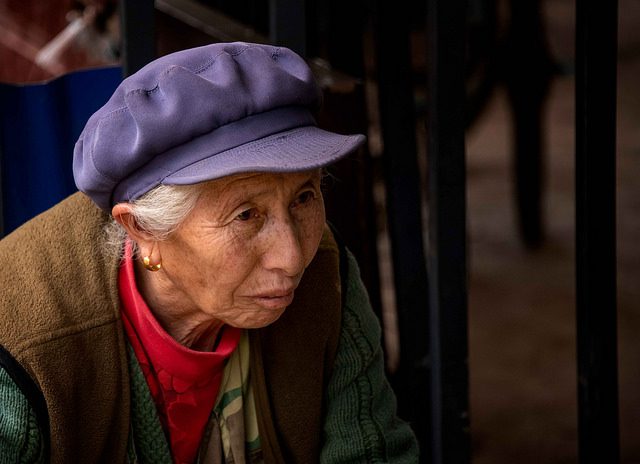
Since becoming Duchess of Sussex, she has traveled throughout the Commonwealth discussing humanitarian issues that affect the countries the royals represent. Here are the 10 best humanitarian quotes by Meghan Markle, Dutchess of Sussex.

The 10 Best Humanitarian Quotes by Meghan Markle

  1. “One hundred and thirteen million adolescent girls between the ages of 12-14 in India alone are at risk of dropping out of school because of the stigma surrounding menstrual health […] these factors perpetuate the cycle of poverty and stunt a young girl’s dream for a more prolific future.” In her 2016 visit to Delhi and Mumbai, India, Markle was prompted to write an open letter, featured in Time magazine, calling for action against menstrual stigmas that keep Indian girls from school and from being equal participants in society.
  2. “I think there’s a misconception that access to clean water is just about clean drinking water. Access to clean water in a community keeps young girls in school because they aren’t walking hours each day to source water for their families. It allows women to invest in their own businesses and community. It promotes grassroots leadership, and, of course, it reinforces the health and wellness of children and adults. Every single piece of it is so interconnected, and clean water, this one life source, is the key to it all.” Also in 2016, Markle traveled to Rwanda as a global ambassador with World Vision, a humanitarian agency who seeks to impact the lives of young children by eliminating the root causes of poverty. It is one of the largest international charity organizations for children.
  3. “Women’s suffrage is about feminism, but feminism is about fairness.” In celebration of the 125 year anniversary of women’s suffrage in New Zealand in late 2018, Markle gave a speech about feminism. New Zealand was the first country in the world to grant women’s suffrage. In her speech she also quoted suffragette Kate Sheppard, reiterating that “All that separates, whether race, class, creed or sex, is inhuman and must be overcome.”
  4. “Women don’t need to find their voice, they need to be empowered to use it and people need to be urged to listen.” In February 2018, in her first public appearance alongside Prince Harry, Kate and Prince William, Markle voiced her support of the #MeToo and Time’s Up movements, which focus on eliminating sexual misconduct against all people and supporting victims of assault while promoting gender equality across all industries.
  5. “Don’t give it five minutes if you’re not going to give it five years.” When delivering the keynote speech at the Create & Cultivate Conference in 2016, Markle brought to light the importance of prioritizing and making commitments. She demonstrated the importance of utilizing skills for long-term solutions and goals and to focus attention and energy only on things that can be cultivated and maintained in the long run. She also emphasized pursuing passions and planning on working towards it for years to come.
  6. “We just need to be kinder to ourselves. If we treated ourselves the way we treated our best friend, can you imagine how much better off we would be? … Yes, you can have questions and self-doubt, that’s going to come up, that’s human.” Markle puts the “human” in humanitarian. She shows it is important not only to show up for others but to show up for yourself in order to make a lasting impact and to be able to maintain your best self in the process.
  7. “With fame comes opportunity, but it also includes responsibility – to advocate and share, to focus less on glass slippers and more on pushing through glass ceilings. And, if I’m lucky enough, to inspire.” In an interview with Elle Magazine, Markle talked about the things that inspired her when she was young and her experiences going from working on a TV series to helping in Rwanda.
  8. “Everyone should be afforded the opportunity to receive the education they want, but more importantly the education they have the right to receive.” In October 2018 in Fiji, Markle gave a speech on the importance of women’s education and cited the ways scholarships and financial aid funded her education and how worthwhile it was for her as an adult.
  9. “Because when girls are given the right tools to succeed, they can create incredible futures, not only for themselves but also for those around them.” The trip to Fiji and Markle’s speech were used to announce two grants that were awarded to Fiji National University and the University of the South Pacific to provide workshops for the women faculty at the universities to allow more women to be a part of decision-making at the schools.
  10. “I am proud to be a woman and a feminist.” Markle began her speech at the U.N. on International Women’s Day 2015 with this line. It was the same speech where she told the story of her 11-year-old self prompting advertisers to change their sexist dish soap advertisement.

Meghan Markle started her activism at the early age of 11 and didn’t look back. Her career as a successful actress gave her the platform to share her causes with the rest of the world. Clearly, the Duchess of Sussex has been a humanitarian long before being thrust into the global stage, and the top 10 best humanitarian quotes by Meghan Markle prove it.

– Ava Gambero

Photo: Mark Tantrum

April 28, 2019
https://borgenproject.org/wp-content/uploads/borgen-project-logo.svg 0 0 Kim Thelwell https://borgenproject.org/wp-content/uploads/borgen-project-logo.svg Kim Thelwell2019-04-28 01:30:492024-12-13 18:01:45The 10 Best Humanitarian Quotes by Meghan Markle
Global Poverty, Women's Rights

Women’s Rights and Femicide in El Salvador

Femicide in El SalvadorEl Salvador is the smallest country in Central America with an estimated population of 6.2 million. However, this number is often fluctuating due to massive violence in the country. El Salvador has the world’s highest homicide rates and pervasive criminal gangs. One murder happens every two hours on average. In 2018, there were 3,340 documented murders and the country has an estimated murder rate of 51 per 100,000 inhabitants.

Women’s rights in the Central Americas and the Carribean have been slowly improving over the years. However, in El Salvador, women still lack basic rights and suffer from many violent crimes. With so many deaths, it comes as no surprise that El Salvador has the highest femicide rate in Latin America and the third highest in the world.

Femicide in El Salvador: The Facts

Femicide is the gender-based killing of women because of their gender. It is the leading cause of premature death for women globally. Femicide in El Salvador is a serious issue as one woman is murdered every 19 hours. In 2019, 76 femicides already occurred in El Salvador. The country has the third-highest rate in the world for the violent deaths of women. In 2016, 524 women were killed, a majority of them under 30 years of age. Within the first two months of 2018, 72 women were murdered.

High Femicide Rates But Low Convictions

Violent death isn’t the only threat to these women. Over a time span of ten months in 2017, there were nearly 2,000 reported sexual assaults in El Salvador. Around 80 percent of these victims were 17-years-old or younger. Femicide in El Salvador is not only overlooked by the world but by the Salvadoran government as well. Between 2013 and 2016, the Salvadoran government opened 662 femicide cases. Only 5 percent reached a conviction. Only one in ten of the murder cases where a woman is a victim of femicide results in a conviction.

Gangs Present Another Threat

Most of the violence against women in El Salvador is committed by various gangs residing in the country. According to the Salvadoran government, around 10 percent of people are in gangs and these gangs often see women as easy targets.

Agnes Callamard, the United Nations’ special rapporteur on extrajudicial killings, said in a CNN interview that women’s bodies are treated as “a territory for revenge and control.” Callamard explained that the gangs are male-dominated and girls and women are merely part of the territories they control.

Women’s trauma

Women in El Salvador who survive these brutal acts of physical and sexual abuse suffer from trauma and often have nowhere to turn for help. Many women even try to flee the country in an attempt to escape. However, those who are unsuccessful in their attempts risk being killed or tortured by their abusers back home for merely trying.

Thankfully, groups like the Organización De Mujeres Salvadoreñas Por La Paz (ORMUSA) work to end gender violence and femicide in El Salvador. ORMUSA believes that promoting equality by supporting the economic empowerment of women is the key to changing attitudes. ORMUSA even helped draft a law that came into effect in 2012 which puts femicide in the criminal category in El Salvador and establishing special provisions to protect women from gender-based violence.

With such high femicide rates, El Salvador remains the most dangerous country for women. Though groups and activists are trying to stop these violent acts, El Salvador still has a long way to go.

– Madeline Oden
Photo: Wikimedia Commons

April 18, 2019
https://borgenproject.org/wp-content/uploads/borgen-project-logo.svg 0 0 Kim Thelwell https://borgenproject.org/wp-content/uploads/borgen-project-logo.svg Kim Thelwell2019-04-18 01:30:242024-05-29 22:29:58Women’s Rights and Femicide in El Salvador
Global Poverty, Women, Women's Empowerment, Women's Rights

Fighting the Global ‘Burden’ of Widows in Poverty

Widows in Poverty
Widespread recognition has increased the benefits that empowering women can create for impoverished communities. Yet improved educational and business opportunities for women have neglected the world’s 258 million widows, 85 million in China and India alone. Advocates cite the baffling omission of widows’ welfare from the U.N.’s sustainable development goals (SDGs) as evidence of a critical blind spot in aid efforts. Widows are shown to suffer disproportionately in measurements of poverty, with a minimum of 38 million considered extremely impoverished in 2015. This poverty level is roughly 15 percent of widows compared to the 10 percent of the general worldwide population considered extremely poor by the World Bank in the same year.

This disparity is a result, in part, of the traditional practices of many cultures by which women continue to be seen solely as dependents of their fathers or husbands. Particularly in developing countries, a woman with neither is left with no support system. She becomes deemed a burden to society and, with no income to educate her children, contributes to continuing generations of poverty.

Treatment of Widows Around the World

Stigmas and traditional superstitions have a profound social and mental impact on women whose husbands have died. In many cultures, a widow is blamed for a husband’s death; in fact, many women face accusations of murder or neglect of their duties as wives. It is common for widows to be isolated and banned from participation in community activities and family events. In India, it is customary for widowed women to be prohibited from remarriage, with an appearance in public interpreted as ill-omens.

Human Rights Watch has identified common human rights violations against widows in Zimbabwe and other sub-Saharan countries. Some of the most widespread practices are the denial of inheritance, despite protected national and international laws, and ‘property grabbing’ in which a widow’s in-laws physically or verbally assault her in attempt to take her land for themselves.

Other customs termed ‘harmful practices’ by the U.N. include wife-inheritance, in which a woman is forced to marry her deceased husband’s relative, and ritual cleansing of widows through rape. In some cases, women have been forced to cleanse themselves by drinking water used to wash their husband’s corpse. All such practices run a serious risk of transmitting communicable disease, including HIV and Ebola.

Organizations Supporting Widows in Poverty

Aid organizations focusing on welfare for widows in poverty have expanded since 2000, but there remain only four main NGOs with the capacity to provide aid programs internationally:

  • The Loomba Foundation – When sexist stigmas in India isolated and shamed founder Lord Raj Loomba’s widowed mother without justification, he came to believe that the key to pulling widows out of poverty is gender equality. Since 1997, the Loomba Foundation has funded programs to educate widows and their children, promoted women’s empowerment in Africa and Asia and published the only comprehensive research on the experiences of widows in poverty.

  • Global Fund for Widows (GFW) – Acting as the financial base for partnerships with many smaller non-profits working in local communities, GFW has been working in Egypt, Tanzania, Nigeria, India and parts of Central America since 2008. GFW funds skills programs for widows, organizes employment opportunities and offers a Micro-Social Capital program that provides women with the means to start small businesses in their communities.

  • Women for Women International – Creating employment opportunities and economic independence is a small part of Women for Women’s approach to widows’ welfare. They work with women at local levels to educate them in political engagement with the belief that having confidence and a voice in their own affairs is the best long-term solution to the suffering of widows in poverty.

  • Widows’ Rights International (WRI) – WRI is an organization specializing in legal precedent for cases involving widows’ human rights. WRI works with the UNHRC, U.N. Committee on the Status of Women and national governments to create a policy for the benefit of poor widows and educate women about their rights. Their goal is to combat ignorance and therefore violations of human rights which they have condemned as “tantamount to torture.”

The ‘Widow Issue’

Data measuring the number of widows in extreme poverty, although limited and often unreliable, estimates a decrease of 22 percent between 2010 and 2015. Encouragement is visible in statements by former U.N. Secretary-General Ban Ki-Moon that presses U.N. member states to condemn harmful, traditional practices like widow-inheritance and burning in observance of International Widows Day (June 23rd).

Wider research is necessary to illuminate the extent and causes of widows’ suffering, but further efforts must target regions like South Asia, which report 50 percent of the world’s poor widows, as well as developed countries like Russia and the U.S., which in 2015 saw significant and as yet unexplained increases in the number of widows’ living in extreme poverty.

– Marissa Field
Photo: Flickr

April 1, 2019
https://borgenproject.org/wp-content/uploads/borgen-project-logo.svg 0 0 Borgen Project https://borgenproject.org/wp-content/uploads/borgen-project-logo.svg Borgen Project2019-04-01 10:26:022024-05-29 22:59:28Fighting the Global ‘Burden’ of Widows in Poverty
Page 33 of 41«‹3132333435›»

Get Smarter

  • Global Poverty 101
  • Global Poverty… The Good News
  • Global Poverty & U.S. Jobs
  • Global Poverty and National Security
  • Innovative Solutions to Poverty
  • Global Poverty & Aid FAQ’s
Search Search

Take Action

  • Call Congress
  • Email Congress
  • Donate
  • 30 Ways to Help
  • Volunteer Ops
  • Internships
  • Courses & Certificates
  • The Podcast
Borgen Project

“The Borgen Project is an incredible nonprofit organization that is addressing poverty and hunger and working towards ending them.”

-The Huffington Post

Inside The Borgen Project

  • Contact
  • About
  • Financials
  • President
  • Board of Directors
  • Board of Advisors

International Links

  • UK Email Parliament
  • UK Donate
  • Canada Email Parliament

Get Smarter

  • Global Poverty 101
  • Global Poverty… The Good News
  • Global Poverty & U.S. Jobs
  • Global Poverty and National Security
  • Innovative Solutions to Poverty
  • Global Poverty & Aid FAQ’s

Ways to Help

  • Call Congress
  • Email Congress
  • Donate
  • 30 Ways to Help
  • Volunteer Ops
  • Internships
  • Courses & Certificates
  • The Podcast
Scroll to top Scroll to top Scroll to top