• Link to X
  • Link to Facebook
  • Link to Instagram
  • Link to TikTok
  • Link to Youtube
  • About
    • About Us
      • President
      • Board of Directors
      • Board of Advisors
      • Financials
      • Our Methodology
      • Success Tracker
      • Contact
  • Act Now
    • 30 Ways to Help
      • Email Congress
      • Call Congress
      • Volunteer
      • Courses & Certificates
      • Be a Donor
    • Internships
      • In-Office Internships
      • Remote Internships
    • Legislation
      • Politics 101
  • The Blog
  • The Podcast
  • Magazine
  • Donate
  • Click to open the search input field Click to open the search input field Search
  • Menu Menu

Archive for category: Women and Female Empowerment

information and Stories about woman and female empowerment.

Development, Global Poverty, Women and Female Empowerment

VisionSpring Supports Women While Spreading Sight

VisionSpring Supports Women While Spreading SightFor every $5 donated to VisionSpring, a low-income adult gets their eye prescription, a pair of glasses expected to last two years, and an estimated 120 percent increase from their initial income directly due to the glasses. This organization’s strategy zeroes in on the local: optometrists; female vision entrepreneurs as saleswomen; wholesale partnerships with government agencies, local hospitals and NGOs; and corporate social responsibility projects with large businesses. VisionSpring supports women, local business and helps create sustainable supply chains in the countries it works in.

Jordan Kassalow is the founder and visionary behind this organization that has already generated over $1.2 billion of economic impact. In 2019, he published his book “Dare to Matter,” in which he describes his journey. Starting as a mediocre student due to a rare eye disease, he had a post-graduation epiphany that people’s lives have meaning through their work to make the world better. While on a volunteer medical mission in the Yucatán Peninsula, Jordan gave an extremely nearsighted child a pair of glasses – and his sight.

Seven years later, Dr. Kassalow founded what would become VisionSpring today, to return productivity and livelihoods to the 2.5 billion sight-impaired people in the world who lack glasses. From the beginning, the organization has sought to empower women in the communities where it works. The Borgen Project interviewed Dr. Kassalow about how VisionSpring supports women in its sight-focused mission.

When you first had people on the ground, how did you reach people – and specifically women – to let them know about the vision entrepreneur opportunity?

There are a few reasons why we select women. One was because there was a higher rate of unemployment or underemployment with women. So, they are a natural, existing workforce that was underutilized. That was the whole root of the idea, to create livelihoods for the women and sustain livelihoods for their customers. (Microcredit research) showed pretty clearly that when you gave women access to resources that a lot of virtuous things started happening in society: their fertility rates would go down, the health of their children would go up, their housing conditions would go up and so forth.

We partnered with microcredit organizations and eye hospitals (for more advanced cases and to) give some credibility to the women who worked for us. The microcredit organizations were already in the communities where we worked (and) had a whole list of good customers who had exhibited their capacity to pay back their loans. So, it was largely through local credit organizations that we started identifying women and continued to source people.

I read in your book about one vision entrepreneur, Rama Devi, who has her husband driving her on a motorcycle so she can reach more people. It seems to upset traditional gender roles and has vision entrepreneurs stepping out of their traditional jobs at home (and) making more money than their husbands. Did you ever see any conflict of interest or anything like that?

Particularly in that area of India where we were working which had a Muslim culture primarily. It was somewhat antithetical to the historical-cultural norms for women to take on these more entrepreneurial roles, so we lost some of our best salespeople. We found that women would come, educated, supported somewhat by their husbands and fathers-in-law. But there seemed to be almost an expectation that they wouldn’t succeed. So, they would let them (work) while the stakes were low. But for those who would start to succeed, and the money would start to flow in, we saw many cases where they had to withdraw from the program, not because of a lack of their interest, but because of pressure from their husbands or fathers or so forth. So, we definitely did experience that.

I wanted to ask how (the See to Learn) strategy of providing glasses to schoolkids differs from adults. What initially drew you to this sector of the population?

I’ve always looked at vision as an input to global development and human development. The two areas most impacted by poor vision are productivity in work and learning in school. When you start an organization that has basically no human and financial resources, it’s good to try to take the really big problem and break it down to its component parts and strategically start with the place (that) execution-wise is the simplest. So, we started with See to Earn because it only required four different prescriptions.

Now, in kids, there is no similar corollary to simple, ready-made non-prescription reading glasses. Each kid has their own unique kids’ glasses (and) unique prescription, so it gets more complicated and you need higher trained people.

What we do is training teachers to do the work of the vision entrepreneur. (They do) the vision acuity test and figure who can pass and fail. And kids who fail, which in India is usually about 10 percent, get seen by a team of (local) optometrists who come once all those kids are identified. We can make about 70 percent of those glasses on the spot and (the rest) we custom make in the lab.

You mention in a 2017 interview with Mary Magistad from PRI that you encountered the issue of girls thinking they are less marriageable if they wear glasses. How have you amended your practice to account for cultural differences in the different countries you’ve worked in?

The cultural context is very important in our local operations. Particularly with girls, we find that almost the parents look for an excuse to take them out of school. If they are nearsighted and not thriving in school, they’ll be pulled out of school more quickly than the boys will. That’s a huge injustice.

Studies have shown that girls in India believe that, if you wear glasses, you are less marriable. We recently did a film that tracks a girl through identifying that she can’t see all the way to getting glasses and using them in school. We are trying to normalize, if you will, glasses through this film. It’s meant to be used as part of the curriculum before the team of optometrists comes to the school.

Dr. Kassalow’s newest breakthrough was the founding of EYElliance, a multinational coalition working towards integrating innovations into public and private sectors of countries around the world. Currently, with more than 40 member organizations (including USAID), EYElliance is Dr. Kassalow’s next big step towards achieving his original goal: getting eyeglasses to everyone who needs them. Hopefully, Kassalow’s ongoing priority that VisionSpring supports women will demonstrate to other international aid organizations that women are the building blocks to international development.

– Daria Locher
Photo: Wikimedia

November 30, 2019
https://borgenproject.org/wp-content/uploads/borgen-project-logo.svg 0 0 Jennifer Philipp https://borgenproject.org/wp-content/uploads/borgen-project-logo.svg Jennifer Philipp2019-11-30 07:30:372024-05-29 23:13:13VisionSpring Supports Women While Spreading Sight
Global Poverty, Women

6 Facts About Breast Cancer in Senegal

Breast Cancer in Senegal
Breast cancer is the most common cancer in women worldwide—it affects 2.1 million women each year. According to the World Health Organization, breast cancer caused 15 percent of cancer-related deaths among women in 2018. While developed countries have higher rates of breast cancer, the disease is on the rise globally. Here are six facts about breast cancer in Senegal.

6 Facts About Breast Cancer in Senegal

  1. Breast Cancer Cases: The prevalence of breast cancer in Senegal is on the rise. A study by the Global Cancer Observatory in 2018 shows that the incidences of breast cancer reached 1,758 cases per year. This is in comparison to 869 cases in 2012. The disease ranks second in terms of new cases. In terms of mortality rate, it falls only behind cervical cancer.
  2. Chemotherapy Training: There is only one medical oncology specialist in Senegal. Therefore, general practitioners, as well as oncology surgeons, carry out chemotherapy. The government is working to improve on this by trying to ensure 50 percent of doctors undergo chemotherapy training by attending seminars as well as doing practical internships. The government also offers fellowships for people to fully specialize in medical oncology.
  3. Cancer Treatment: There is only one center dedicated to cancer in Senegal—the Joliot Curie Institute which is the cancer department of the Le Dantec Hospital. Most breast cancer patients receive treatment at the Hospital Center University Aristide Le Dantec which sees 350 new patients every year. Others attend the Principal Hospital, which is the second-largest university hospital in Dakar, or to smaller private centers and public hospitals. There is low accessibility for those in rural areas as these facilities congregate in Dakar and other major cities.
  4. Challenges: A challenge that people face when it comes to the treatment of breast cancer in Senegal includes late consultation, with most patients only finding out they have breast cancer when it is in the advanced stages. People might also face a lack of human resources and adequate equipment. Additionally, both the public and health care providers require further education on available treatments.
  5. Funding for Free Chemotherapy: The government of Senegal announced that it have set aside an estimated $1.6 billion to provide free chemotherapy in public hospitals for those with breast and cervical cancer starting in October 2019. By doing this, it is following in the footsteps of other African countries such as Rwanda, Namibia and Seychelles. While this is a positive step in the right direction to see the mortality rate drop, a challenge remains as women often require both radiotherapy and chemotherapy to control the spread of breast cancer.
  6. Benefits of Free Chemotherapy: The introduction of free chemotherapy treatment for patients of breast cancer in Senegal will surely help reduce the mortality rate as the high cost of treatment refrained patients. The expenses of breast cancer treatment were wholly the responsibility of the patients. While a few covered the expenses themselves, the families foot most expenses for a vast majority of patients. The high cost of treatment and debt faced that patients and their families faced meant that they typically did not attend follow-up treatment after the initial sessions.

Senegal is taking important steps to ensure that it improves the outcome and survival rates of those breast cancer affects. Beyond providing free treatment, there is an urgent need to ensure that the disease receives an early diagnosis. By providing education, free treatment and increasing the number of trained practitioners, the deaths that breast cancer causes in Senegal will hopefully decrease.

– Sophia Wanyonyi
Photo: Pixabay

November 4, 2019
https://borgenproject.org/wp-content/uploads/borgen-project-logo.svg 0 0 Lynsey Alexander https://borgenproject.org/wp-content/uploads/borgen-project-logo.svg Lynsey Alexander2019-11-04 01:30:152020-01-18 14:13:496 Facts About Breast Cancer in Senegal
Global Poverty, Nonprofit Organizations and NGOs, Women and Female Empowerment, Women's Empowerment, Women's Rights

5 Global Nonprofits That Empower Women

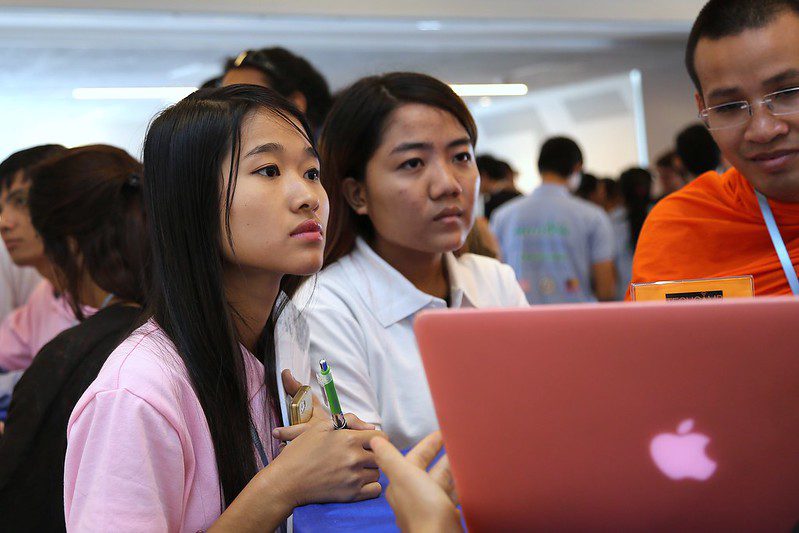
Nonprofits That Empower WomenToday, the fight for women’s rights continues to pick up steam. However, many women’s voices around the globe are still not being heard. Fortunately, more organizations are taking up the mantle to ensure that gender equality remains a top priority when it comes to global development. Here are five global nonprofits that empower women.
5 Global Nonprofits That Empower Women

  1. Women for Women International
    Women for Women International, or WfWI, is a nonprofit founded in 1993 working with women from impoverished and war-torn countries. It assisted more than 500,000 women since and is currently situated in Afghanistan, Northern Iraq, Kosovo, Bosnia and Herzegovina, South Sudan, Nigeria, Rwanda, Uganda and the Democratic Republic of the Congo. This nonprofit works to give women an opportunity to build a support network for each other and share their experiences while also teaching them new skills and resources to safeguard their futures. WfWI believes in empowering women in four different ways—economic empowerment, social empowerment, sustaining peace and responding to conflict. Outside of programs that relate directly to helping women, WfWI also focuses on “complementary programs” that center around men’s engagement in women’s rights issues, graduate support and community advocacy.
  2. The Malala Fund
    Malala and her father Ziauddin Yousafzai founded the Malala Fund in 2013 to give girls around the world an opportunity to receive a safe and quality education. The fund mainly focused its attention on countries where girls are least likely to have access to this kind of education, specifically in Afghanistan, Brazil, India, Lebanon, Nigeria, Pakistan and Turkey. This fund targets three specific areas when it comes to ensuring that girls have an opportunity to receive a quality education. These are (i) advocacy, specifically in holding leaders accountable, (ii) investing in educators and those who are also fighting for girls’ education and (iii) giving girls the opportunity to speak for themselves and allowing their voices to be heard.
  3. Global Fund for Women
    Founded in 1987, the Global Fund for Women strives for gender equality and advocates for the rights of women and girls across the globe. It mainly fights for reproductive rights for women, violence prevention and economic fairness. For the Global Fund, women and girls around the world should always feel “strong, safe, powerful and heard.” This group specifically partners with “women-led groups who are courageously fighting for justice in their own communities” which allows these organizations to tackle issues head on. Since its founding, it has worked in 175 countries and contributed to at least 5,000 organizations that have similar values as the Global Fund for Women.
  4. Pathfinder International
    Founded in 1957, Pathfinder International works to improve the sexual and reproductive health of people around the world. While it participates in all aspects of sexual and reproductive health, its main focus is pregnancies and making sure women are aware of all options available to them. Pathfinder International’s mission is to try to lower the rate of women dying from preventable complications with pregnancies, help those infected with HIV and promote proper sexual and reproductive health. It operates under the values of respect, courage, collaboration, innovation and integrity. Pathfinder International is located in 20 countries including the Democratic Republic of the Congo, Egypt and Mozambique.
  5. Madre
    Madre is a women’s rights organization that specifically works with smaller organizations fighting for women’s rights in war-torn nations. It focuses on three specific issues. These are gender violence, climate justice and “Just Peace,” which is meant to provide women with an opportunity to recover from the experiences they had and work toward a more peaceful world. In order to work with these three specific causes, Madre uses three strategies—grantmaking, capacity building and legal advocacy. These three strategies bring women into the conversation and allow them the opportunity to enact change, support one another and give them an opportunity to take part in policymaking. Some of the countries Madre reaches include Guatemala, Colombia, Haiti, Nicaragua, Syria, Iraq, Palestine and Kenya.

– Sydney Toy
Photo: Flickr

October 23, 2019
https://borgenproject.org/wp-content/uploads/borgen-project-logo.svg 0 0 Kim Thelwell https://borgenproject.org/wp-content/uploads/borgen-project-logo.svg Kim Thelwell2019-10-23 12:37:092024-05-29 23:12:405 Global Nonprofits That Empower Women
Global Poverty, Poverty, Poverty Reduction, Women & Children, Women and Female Empowerment, Women's Empowerment, Women's Rights

3 Programs Aiding Women in Vietnam

Programs Aiding Women in Vietnam

Too many Vietnamese women find themselves locked into a life of abuse and poverty, with no skills or access to education to become gainfully employed. One example lies in the story of Sung Thi Sy. Sy resides in the Sa Phin village in the Dong Van District of Vietnam. According to the Asia News Network, her family lived in severe poverty for much of her life and she constantly lived in fear of her husband who would regularly abuse her. She considered running away, but she was worried about providing for her two young children. However, thanks to the support of a locally-funded program, Sy and her children are now thriving. There are many other programs aiding women in Vietnam including the following.

3 Programs Aiding Women in Vietnam

  1. Education and Training: One of the most well-known organizations that work to solve this problem is the Vietnamese Women’s Union (VWU). Founded in 1930, the VWU originally found roles for women during the liberation of Vietnam from French colonialism. After the end of the Vietnam War in 1975, the VWU focused on helping women rebuild their lives by pulling them out of poverty and introducing them to the workforce. Today, the VWU has more than 19 million members that constantly work towards gender equality for Vietnamese women. The VWU offers loans to help poor Vietnamese women afford a higher education and training programs to provide the skills needed to find higher-paying careers.
  2. Agriculture: Women in the Dong Van district of Vietnam face a high risk of human trafficking and domestic violence and an unpredictable climate with barren land which makes farming a challenge. One of the programs aiding women in Vietnam with these struggles is the Lanh Trang (White Flax) Agricultural and Forestry Services Cooperative. Launched in 2017, the program works to provide vocational skills for disadvantaged women and invests in the necessary equipment to grow and harvest flax for the women in the Dong Van area. Since its inception, the Lanh Trang Cooperative has created stable jobs for 95 women, including Sung Thi Sy, all of whom live on a budget of around $170 to $260 per month.
  3. Entrepreneurship: The United Nations Development Programme launched an initiative dubbed the Economic Empowerment of Ethnic Minority Women via Application of 14.0 to aid women in Vietnam through entrepreneurship. This initiative creates an online platform in which Vietnamese women can learn modern financial solutions, take online courses on creating a business, obtain new technology for production and many more services.

Today, Sung Thi Sy has a job in the production of flaxseed products and brings home a consistent paycheck to feed her children and preserve the roof above their heads. Women like Sy are living proof that with enough funding, programs like these can promote tangible improvements in the fight against poverty and inequality in Vietnam.

– Charles Nettles
Photo: Flickr

October 22, 2019
https://borgenproject.org/wp-content/uploads/borgen-project-logo.svg 0 0 Lynsey Alexander https://borgenproject.org/wp-content/uploads/borgen-project-logo.svg Lynsey Alexander2019-10-22 01:30:132024-05-29 23:13:253 Programs Aiding Women in Vietnam
Developing Countries, Development, Global Poverty, Health, Women, Women & Children, Women and Female Empowerment

How People Are Fighting the Rape Epidemic in India

Rape Epidemic in India
The rape epidemic in India garnered international attention in 2012, when several men brutally raped and beat a woman, Nirbhaya, on a bus. The event immediately spread across the globe and sparked massive international outrage. This pushed the government to promise new laws. However, it did not make any tangible changes. A minor positive change was a social shift resulting in more women finding the strength to report cases of sexual assault. Perhaps the most gruesome fact from this brutal event is the regularity of gang-rape in India. Nirbhaya’s case, while one of the most horrifying stories of rape, is only one among thousands.

Solutions in Bangladesh

There is a precedent for solutions to these types of problems. One solution is for the law to change in a way that punishes those who physically or sexually abuse women. Bangladesh has effectively lowered its acids attacks on women to just 75 in 2014 whereas it was previously 492 cases in 2002. It accomplished this by mandating the death penalty as the crime for acid attacks. Since Bangladeshi men now fear the severe ramifications for an acid attack, they refrain from hurting women with this method. However, if Bangladesh and India enacted rigorous laws for all types of abuse on women, then at the very least, those particular men would not be able to abuse women at as drastic of a level as they are currently.

Snehalaya Provides Aid to Abused Women and Children

Women who suffer abuse can still have hope since many NGOs are actively working to support the victims and help them get back their dignity and return to a normal life. One example is Snehalaya, which provides a safe space for women and children who are suffering abuse, and helps over 15,000 people per year. Snehalaya strives to use “grassroots outreach and education” to lower the amount of domestic abuse and violence that occurs in India. Women who are victims of sexual abuse can count on Snehalaya to provide the proper support group to push them towards a normal life, which is even more important because sometimes a woman’s parents may not accept her after she has become a victim due to social stigma.

Another solution for the rape epidemic in India is women’s empowerment through properly educating women, which is what Sayfty strives to do. It strives to provide women the tools to be safe from acts of sexual violence and to teach women how to defend themselves. While the first solution provides a legal means for female empowerment and the second provides a way to help them after they become victims, Sayfty is essential because it empowers women to stand up for themselves while suffering abuse or at least provides them with knowledge of how to get away from predators and get help.

The efforts of millions of women who are finding the bravery to call out abusers are defeating the rape epidemic in India. The laws in India are slowly changing to match modern social attitudes. NGOs are empowering women to lead their own fight. Though change is slow, it is inevitable, and more women are getting the justice they deserve every day.

– Anish Kelkar
Photo: Flickr


October 20, 2019
https://borgenproject.org/wp-content/uploads/borgen-project-logo.svg 0 0 Jennifer Philipp https://borgenproject.org/wp-content/uploads/borgen-project-logo.svg Jennifer Philipp2019-10-20 17:11:142019-11-14 12:57:01How People Are Fighting the Rape Epidemic in India
Global Poverty, Women and Female Empowerment

Developing Women’s Digital Financial Inclusion

women's digital financial inclusionAcross the globe, digital finance services are empowering vulnerable communities to make responsible investments, save for the future and gain access to credit. Between 2011 and 2014, seven hundred million people in the developing world gained access to these services, allowing them to participate in formal economic decisions for the first time. Although there is a long journey ahead for women’s digital financial inclusion in the developing world, much is being done to help close the gap.

Barriers and Challenges

Despite rapid growth, there is still a significant deficit in women’s digital financial inclusion. According to the World Bank, there is a 9 percent disparity in financial inclusion between men and women in the developing world. This number has remained the same since 2011. The disparity is in large part born out of several social, economic and cultural barriers that hinder women in the developing world from gaining access to these kinds of services. Lower rates of mobile phone ownership and low rates of digital literacy among women are arguably the two most prominent barriers for women in the developing world.

A 2018 report recorded that women in low to middle-income countries are 10 percent less likely to own a mobile phone than their male counterparts. That 10 percent translates to around 184 million women without access to a mobile device and, therefore, digital financing services. Without this crucial link to a formal economy, women are excluded from credit approval and economic and political decision-making. They have little to no control over how their personal funds are spent.

In addition, an overall lack of digital literacy causes an assortment of issues for women’s inclusion in financial matters. According to the Alliance for Financial Inclusion (AFI), 75 percent of survey respondents classified a lack of digital literacy as a major barrier in women’s digital financial inclusion. Without knowledge of these innovative services, women in rural and impoverished regions are forced to resort to less trustworthy forms of investment and informal savings. These often yield large negative returns for participants. This method of financing makes the identification of these women extremely difficult. This leads to low loan approval and higher interest rates for those women who are lucky enough to get approved.

Nonprofits Commit to Closing the Gender Gap

Despite various challenges, much is being done to assist women in developing countries on their path to financial stability and independence. In 2014, AFI signed the Denarau Action Plan, which lays out a commitment to halve the financial gender gap by 2021. AFI isn’t alone in their pursuits either. The Bill and Melinda Gates Foundation recently launched an institutional gender strategy that will commit $170 million to the economic empowerment of women. Consultive Group to Assist the Poor (CGAP) also recently joined forces with 200 different organizations in similar pursuits.

The issue of women’s digital financial inclusion is gaining momentum globally. The world is starting to recognize just how much of a positive impact financial gender-equality will have on the global economy. AFI found that global gender-equality could unlock $12 trillion in incremental GDP by 2025 with a specific focus on digital finance services. Although progress is slow, women in developing nations are beginning to reap the benefits of financial inclusion on a more personal scale.

Digital financial services give these women the opportunity to gain financial independence, create and expand their businesses, plan for their families’ futures and make empowered decisions about how their funds will be spent. The world is recognizing women’s digital financial inclusion as a top priority and it is bursting into action to provide these women with financial independence, stability and empowerment.

– Ashlyn Jensen
Photo: Pixabay

October 20, 2019
https://borgenproject.org/wp-content/uploads/borgen-project-logo.svg 0 0 Kim Thelwell https://borgenproject.org/wp-content/uploads/borgen-project-logo.svg Kim Thelwell2019-10-20 01:30:402019-10-17 11:21:40Developing Women’s Digital Financial Inclusion
Global Poverty, Women

Poverty and PTSD

Poverty and PTSDCommonly associated with combat veterans, Post-traumatic stress disorder (PTSD) impacts more of the global population than maybe expected. Recent studies have found a link between poverty and PTSD that reveals that socioeconomic status contributes to the majority of anxiety disorders.

How Poverty Contributes to PTSD

Mental disorders manifest in distinct ways for many people. However, the common underlying origin of Post-traumatic stress syndrome (PTSD) remains a terrifying or traumatic life event. Living in poverty often means surviving daily in vulnerable conditions, and with financial instability that limits access to necessities such as food, shelter and water. The inability to pay for expenses starts to become emotionally and mentally taxing. Poverty acts as a traumatic experience in many people’s lives and even after graduating in class status, difficulty persists to enjoy day to day life.

Symptoms of PTSD can appear within months of the traumatic event and include:

  • Avoiding: Detaching from the traumatic event by avoiding triggers such as places, situations or people.
  • Reliving: Flashbacks and nightmares due to memories that force reliving the traumatic experience.
  • Increased Arousal: An increased blood pressure or heart rate accompanied by outbursts of anger and difficulties sleeping

Some people with PTSD may exhibit all these symptoms, while others exhibit just a few. The severity of PTSD also varies from person to person. PTSD can be broken down into subtypes such as:

  • Delayed on-set PTSD: This variation refers to when symptoms of the disorder develop many years after the traumatic event.
  • Complex PTSD: This type of PTSD usually surfaces after ongoing childhood physical or sexual abuse.
  • Birth Trauma: This type occurs after traumatic childbirth.

Women with PTSD

Research estimates that 284 million people globally suffer from anxiety disorders such as PTSD. About 63 percent of people that suffer from anxiety disorders are women. In addition, women living in poverty tend to face PTSD at higher levels than any other group within the general population. The relationship between poverty and PTSD embodies that of the domino effect. Poor women’s PTSD symptoms often worsen due to the fact that living in impoverished neighborhoods risk ongoing exposure to triggers of the traumatic incident. A study undertaken by the Social Cognitive Theory also reveals that most of the women living in poverty with PTSD share a history of domestic violence and lack social support.

Treatments

It can feel nearly impossible to live a normal life with PTSD. Luckily, effective treatments exist that minimize the symptoms of the disorder. One of the best treatments for PTSD is Psychotherapy. Psychotherapy allows PTSD victims to talk about their cognitive behavioral process to a mental health professional to reduce and change reactions to triggers. Another important tool for managing PTSD is having a strong support system. The help of friends and family means everything during a mental health crisis. A support system of others that have suffered from PTSD also helps signify that a person is not alone in the experiences of the mental disorder. There are also organizations such as the PTSD Alliance, who work to educate and empower people with PTSD psychologically, economically and emotionally to thrive beyond environmental barriers. The organization currently has five international partners that provide programs to help improve the lives of those living in poverty with PTSD.

Overall, poverty and PTSD remain two prominent issues impacting people on a global scale. The connection between poverty and PTSD only further emphasizes that the more work that is done to reduce global poverty also diminishes the mental health crisis.

– Nia Coleman
Photo: Wikimedia

October 8, 2019
https://borgenproject.org/wp-content/uploads/borgen-project-logo.svg 0 0 Kim Thelwell https://borgenproject.org/wp-content/uploads/borgen-project-logo.svg Kim Thelwell2019-10-08 06:37:362024-12-13 18:01:56Poverty and PTSD
Education, Global Poverty, Women and Female Empowerment

Empowering Women Through Local Libraries

Empowering Women Through Local Libraries
Digital literacy, career training and access to the internet are all becoming more commonplace throughout the developing world. While the majority of the population reaps the benefits of these programs, however, some certain groups, particularly women, are staggering behind. In order to combat this, various organizations have taken a unique and innovative approach in sharing these essential resources and empowering women through local libraries.

READ Centers in Nepal

In countries like Nepal, the men in women’s lives often control their level of education, knowledge of finance and mobility. These men expect women to ask permission to leave their own homes and women must always have male accompaniment when they do. This lack of personal freedom makes it hard for these women to know how to go about making their own decisions. Luckily, organizations like READ Global aim to circumvent such barriers with innovative programs with the hope of empowering women through local libraries.

READ Global, a nonprofit organization in South Asia, achieves this by creating safe centers for women through local libraries in Nepal. Known as READ Centers, these places not only provide free educational and financial programs, but they also provide a safe, public spot for women to gather and learn.

Livelihood skills training and other offered lessons enable women to pursue careers like beekeeping, sewing and vegetable farming. When women have the opportunity to earn and save for themselves, they become empowered to distribute their money in ways they see fit. A 2010 study indicated that the ability to earn their own income positively affects women’s autonomy and READ Centers programs have supported this finding.

Eighty-six percent of women who participated in the center’s skills-training programs reported that they were able to increase their income after taking the training classes. In the same survey, 73 percent of participants reported being able to buy their own food, 68 percent reported easier access to health care and an amazing 63 percent of all participants could afford to send their children off to school after completing one of the training programs. READ Centers are a striking model of empowering women through local libraries with innovative and affordable programs.

The National Library of Uganda (ICT) Project

A case study indicated that 83 percent of Ugandan women work in the farming and agricultural industry. This means that women alone contribute 70 to 75 percent of farm produce in the country. Since women are responsible for such a large chunk of the farming industry, it is quite alarming that most of these women have extremely limited access to modern farming resources. One library in Uganda saw the need for these resources and made empowering women through local libraries a top priority.

Kyangatto, a rural village in Uganda, serves as a hub for the farming community of the Nakaseke district. In this particular village, women carry the majority of the farming workload and must depend on traditional farming techniques. The women’s reliance on less effective farming methods stems from limited access to information about modern farming, plant and animal disease, and knowledge of market prices.

To combat this deficit in information, The NLU (National Library of Uganda) collaborated with the Nakaseke district’s multi-purpose community telecenter on a project that could provide proper resources and offer solutions for these challenges. In 2012, the partnering organizations launched The Electronic Information Empowering Women Farmers Service (EIFL). Through this service, women could participate in an information and communication course, which included computer/internet researching skills training, and a feature that sends farmers educational messages to mobile devices via SMS in various languages, including Luganda, a native language to a majority of participants.

The partner organizations also benefited greatly from a generous grant of $15,000 from the EIFL Public Library Innovation Programme. Through the grant, they were able to purchase four new computers and 15 mobile phones for trainees. Among other accomplishments, the program developed the first-ever women’s ICT training course in the Nakaseke district and trained 64 female farmers in digital literacy for the first time. The service has also expanded to Bulkalabi Primary School in Kyangatto, has successfully organized follow-up courses for 60 previous participants and recently registered 15 men in the program due to community demand.

While there is a lot of work necessary to improve life for women in the developing world, local libraries and the innovative programs they are launching have made a huge impact already. In fact, empowering women through local libraries has become a global trend that continues to grow.

– Ashlyn Jensen
Photo: Flickr

October 5, 2019
https://borgenproject.org/wp-content/uploads/borgen-project-logo.svg 0 0 Kim Thelwell https://borgenproject.org/wp-content/uploads/borgen-project-logo.svg Kim Thelwell2019-10-05 01:30:242019-10-01 06:02:26Empowering Women Through Local Libraries
Child Marriage, Global Poverty, Women and Female Empowerment

Ending Child Marriages

Ending Child MarriagesChild marriage is one of the biggest problems affecting young women in third world countries. Roughly 15 million girls under age 18 are married every year. That translates to around 41,000 girls every day. Child marriage affects young girls throughout third world countries by cutting off their access to education, harming their health and making them more susceptible to cases of domestic and sexual violence. Child marriage also puts a strain on a country’s economy and will end up costing them trillions of dollars over the next 10 years. Though the statistics appear devastating, several organizations are dedicated to ending child marriages in third world countries.

Africa, Asia and the Middle East have the highest percentages of child marriage. Research done by CARE, an organization fighting global poverty, provided the top 26 countries where girls under the age of 18 are more likely to get married rather than enroll in secondary school. The country with the lowest percentage of girls enrolled in secondary school is Niger with only 10 percent. However, 76 percent of girls in Niger are married before age 18. Other countries with significantly low enrollment rates include Somalia, Mozambique and Ethiopia.

Girls Not Brides

Girls Not Brides became an independent charity in 2013. It is an organization committed to ending child marriages. There are 1,300 civil organizations from 100 countries involved in the organization. The sole intention of Girls Not Brides is to end child marriage so girls can live a fulfilling and healthy life. Its main goal is to bring global attention to child marriage and support laws or programs that will protect girls worldwide from the dangers of child marriage.

Girls Not Brides also offers support to those who were already married all over the world. They believe that the minimum age for marriage should be 18 years old for both boys and girls. This is in accordance with the U.N. Convention on the Rights of the Child. Girls Not Brides aims to encourage an open dialogue about the dangers of child marriage, work with other organizations to end child marriage and help to introduce different policies and funding to end child marriage.

In 2016, Girls Not Brides published a strategy set on their plan to tackle child marriage from 2017 until 2020. The plan is an overarching blueprint of what the organization wants to do that is based on their successes in its 2014-2016 plan. Its number one goal is to work with governments to get child marriage legislation passed as well as bring it to the attention of lawmakers. Other goals include globalizing, engaging communities, increasing their funding and donations, using facts and evidence to further their claims about child marriage and setting up partnerships with other organizations.

Other Organizations Fighting Child Marriages

Even though Girls Not Brides is one of the only organization that is dedicated specifically to fighting child marriage, there are other organizations that have made ending child marriages a part of their mission. CARE focuses on ending global poverty through women’s empowerment. Breakthrough uses more artistic and creative means to fight for social justice, which includes children’s rights. Humanim is an NGO fighting for children’s rights and protections.

On a more local level, some organizations focus nationally. In Egypt, the Egyptian Foundation for the Advancement of Childhood Conditions works under the Childs Rights International Network to protect the basic human rights of children. Seya, in Yemen, is a children’s rights organization that puts protecting children as its most important mission. Vasavya Mahila Mandali, which is one of two organizations based in India that believes in empowering women and children.

Child marriage is a huge issue for girls and young women globally. It is one of the top three things holding girls back from obtaining an education and living their lives to the fullest potential. Child marriage violates a young girl’s autonomy and puts her in danger of being seriously injured or, at worst, killed. The existence of Girls Not Brides and the other organizations that are dedicated to ending child marriages and working to educate the public about it are making the world a better place for those who are at risk of becoming a child bride.

– Sydney Toy
Photo: Flickr

October 2, 2019
https://borgenproject.org/wp-content/uploads/borgen-project-logo.svg 0 0 Kim Thelwell https://borgenproject.org/wp-content/uploads/borgen-project-logo.svg Kim Thelwell2019-10-02 01:30:332024-05-29 23:13:00Ending Child Marriages
Global Poverty, Refugees, Women

Hiring Refugee Women Can Boost the Global GDP

Hiring Refugee Women Can Boost Global GDP
Women and girls make up about half of the refugee population worldwide, but less than half have a paid job. In some countries, such as Germany and Lebanon, females make up just 6 percent of the working world compared to the United States’ 40 percent. Even in the United States, the number is low. Many refugee women do not have paid work because they face violence and discrimination in workplaces, including sexual assault and exclusion. However, if accepted into the working world, hiring refugee women could boost the global GDP by $1.4 trillion.

How Hiring Refugee Women Could Boost the Global GDP

More workers mean more hands to create products. Companies can sell more if they produce more. The global GDP is an annual measurement of all the final goods sold worldwide. Statistically, only four out of 10 migrant women are getting paid to work compared to seven out of 10 men. As mentioned earlier, the gap in women workers is partly due to workplace discrimination and partly to pay gap. In places such as Turkey,  where the pay gap between women and men is highest, the difference in salaries is about 94 cents per dollar. In the United States, where the gap is lower, the difference is 29 cents per dollar. By increasing women’s pay and making workplaces more accessible, women could not only become more motivated to enter the field, but the hiring of refugee women could also boost the global GDP to a total of $2.5 trillion.

Effect of Businesses Hiring Refugee Women

The hiring of refugee women could have a positive impact on the economy and local businesses as well. In 2017, Starbucks Coffee pledged to hire around 10,000 refugees by 2022, which will help give more opportunities for refugee women to go out and seek work. With hiring refugee women, Starbucks hopes to help “a population who seeks a chance to rebuild their lives and have a fresh start.” By giving refugee women a paid job, they are able to start over and put the money towards their families. 

The Pay Gap Status

The way to help employ more refugee women would be to close the pay gap between men and women. Worldwide, only 63 percent of the wage gap has closed, meaning men are making more than women in over half of the world. This rate is highest in countries such as Germany, Lebanon and Jordan. By closing the pay gap, refugee women in these countries will have a steady income to support their families, and make them less dependent on aid from their governments.

Besides economic growth, refugee women can make improvements in society, as well as make personal improvements. In Baalbeck, Lebanon, a Syrian woman refugee named Bushra makes her living by fixing electronic devices. Not only does it bring in a source of income, but it is also making an impact on the world around her, “The role of an electrician is mostly for men,” Bushra says. “But it shouldn’t be exclusively for men. We can work even better than them.” Bushra is one of the few women in the village that has a paid job. She is using her skills to help improve the society around her, while still providing for her family.

Over half of the world’s refugee women do not hold a paying job. If brought into the working world, hiring refugee women can boost global GDP by $1.4 trillion, bringing the total to $2.5 trillion. There will not only be an economic increase but an increase in societal empowerment as well. By encouraging women to use the skills that they have, they will not only improve the production of goods but can use their skills to help others.

– Destinee Smethers
Photo: Flickr

September 27, 2019
https://borgenproject.org/wp-content/uploads/borgen-project-logo.svg 0 0 Jennifer Philipp https://borgenproject.org/wp-content/uploads/borgen-project-logo.svg Jennifer Philipp2019-09-27 07:30:302019-09-23 13:47:59Hiring Refugee Women Can Boost the Global GDP
Page 34 of 82«‹3233343536›»

Get Smarter

  • Global Poverty 101
  • Global Poverty… The Good News
  • Global Poverty & U.S. Jobs
  • Global Poverty and National Security
  • Innovative Solutions to Poverty
  • Global Poverty & Aid FAQ’s
Search Search

Take Action

  • Call Congress
  • Email Congress
  • Donate
  • 30 Ways to Help
  • Volunteer Ops
  • Internships
  • Courses & Certificates
  • The Podcast
Borgen Project

“The Borgen Project is an incredible nonprofit organization that is addressing poverty and hunger and working towards ending them.”

-The Huffington Post

Inside The Borgen Project

  • Contact
  • About
  • Financials
  • President
  • Board of Directors
  • Board of Advisors

International Links

  • UK Email Parliament
  • UK Donate
  • Canada Email Parliament

Get Smarter

  • Global Poverty 101
  • Global Poverty… The Good News
  • Global Poverty & U.S. Jobs
  • Global Poverty and National Security
  • Innovative Solutions to Poverty
  • Global Poverty & Aid FAQ’s

Ways to Help

  • Call Congress
  • Email Congress
  • Donate
  • 30 Ways to Help
  • Volunteer Ops
  • Internships
  • Courses & Certificates
  • The Podcast
Scroll to top Scroll to top Scroll to top
