• Link to X
  • Link to Facebook
  • Link to Instagram
  • Link to TikTok
  • Link to Youtube
  • About
    • About Us
      • President
      • Board of Directors
      • Board of Advisors
      • Financials
      • Our Methodology
      • Success Tracker
      • Contact
  • Act Now
    • 30 Ways to Help
      • Email Congress
      • Call Congress
      • Volunteer
      • Courses & Certificates
      • Be a Donor
    • Internships
      • In-Office Internships
      • Remote Internships
    • Legislation
      • Politics 101
  • The Blog
  • The Podcast
  • Magazine
  • Donate
  • Click to open the search input field Click to open the search input field Search
  • Menu Menu

Archive for category: Water

Water, Water Sanitation

Nine Facts About Water Quality in Papua New Guinea

10 Facts About Water Quality
As more than 80 percent of the population lives in remote areas with little to no modern facilities, Papua New Guinea struggles with poor water quality and a lack of awareness about basic human health necessities. With very little access to clean water, sanitation is poor and disease is rampant.

As access to safe water and sanitation are vital to the basic health needs, the population in this area is at risk. Poor hygiene leads to poor health and illnesses such as cholera and diarrhea, which kill people every day.

Here are nine facts about water quality in Papua New Guinea:

  1. Papua New Guinea has the poorest level of access to clean water in the world, with more than 60 percent of the population living without access to clean water.
  2. Since 1990, access to clean water has only gone up by six percent and improved sanitation coverage actually dropped by one percent.
  3. Of the 15 developing Pacific Island nations, Papua New Guinea has the lowest water and sanitation access indicators.
  4. The average cost of 50 liters of water (the minimum amount of water necessary for human sanitation and well-being) in Papua New Guinea’s capital is £1.84 per day, which is half the average daily salary (£3.61). The average cost of 50 liters of water in the U.K. is £0.07 per day.
  5. Approximately 4.8 million people in Papua New Guinea do not have access to clean water and 6.2 million people do not have a basic toilet.
  6. More than 200 children in Papua New Guinea die of diarrhea each year due to lack of sanitation and clean water.
  7. Because 85 percent of the population lives in rural areas, education about sanitation and the importance of clean water is scarce.
  8. According to Oxfam New Zealand, contaminated water in Papua New Guinea kills 368 people every six weeks.
  9. Papua New Guinea launched the National Water, Sanitation and Hygiene (WaSH) policy in 2015.

These nine facts about water quality in New Guinea reveal a serious issue that extends beyond just access to water. With little to no progress being made toward access to water and sanitation since 1990, Papua New Guinea must look to its foreign donors and its domestic leaders to address this issue.

– Tucker Hallowell

Photo: Flickr
September 17, 2017
https://borgenproject.org/wp-content/uploads/borgen-project-logo.svg 0 0 Borgen Project https://borgenproject.org/wp-content/uploads/borgen-project-logo.svg Borgen Project2017-09-17 04:30:572020-06-29 16:58:51Nine Facts About Water Quality in Papua New Guinea
Global Poverty, Water

The Drastic Impacts of Climate Change and Water Scarcity

Climate Change and Water Scarcity
It seems nearly impossible to understate the global importance of water. In the age of climate change, water scarcity is rising at levels predicted to impede sustainable development and slow progress against poverty for years ahead. However, better preparing for climate change and water scarcity can redirect water to a source of development.

As a result of interconnected issues pertaining to climate change, the world is expected to experience a 66 percent decrease in water availability by 2050. Ultimately, climate change negatively impacts every facet of the water cycle as it creates drought, uncertain weather patterns, increased natural disasters and other phenomena. Climate change is predicted to send new areas into drought and exacerbate already vulnerable areas. The greatest losses in water availability are likely for the Middle East, East Asia and much of Africa.

Climate change’s impact on water availability impedes food production, as seventy percent of global water use is devoted to agriculture. Without enough water to meet the rising demand for food, expected to be 60 percent higher than today by 2030, this spikes food prices and worsens food scarcity. For Sub Saharan Africa, food prices are expected to rise by 77 percent by 2080 as a result of climate change, compared to a worldwide average increase of 17 percent.

Water scarcity caused by climate change also wreaks havoc on economies, especially ones that are still developing. This is largely due to the fact that water is vital to sustaining development for health, incomes, properties and agriculture. These factors have the potential to generate economic downturn. Many regions that were already water-insecure face a six percent decline in GDP by 2050 as a result of climate change and water scarcity.

Ultimately, these interconnected issues can bring about conflict between nations over resources and water allocation. Water scarcity also spurs increased waves of migration to water-abundant locations. Most conflicts are expected in places with large social inequities, especially in the developing world.

Despite the fact that all people require water security, climate change and water scarcity especially impact low-income populations. Not only are developing nations most at risk of climate change, but insufficient resources make it difficult to cope with climate stressors. Poor water availability also exacerbates improper sanitation and safety in drinking water. This disproportionately threatens health and equality for marginalized populations.

But what can be done to impede the impact of climate change on water availability? The World Bank explains that ensuring water is used most efficiently is crucial to fighting water shortages, especially in dominant sectors such as agriculture. Meaningful changes are possible by drastically investing in climate-smart equipment and infrastructure around the world. These changes work to sustainably end pollution cycles while conserving resources.

Maybe most impactfully, changes in governmental policies are crucial; these can act as insurance plans against worsening climate stressors. World Bank President Jim Yong Kim explains that “countries can enact policies now that will help them manage water sustainably for the years ahead.”

Ultimately, making use of the world of available tools redirects water back to a potential for prosperity.  Richard Damania, an economist for the World Bank, explains that “by allocating even 25 percent of water to more highly-valued uses, losses decline dramatically and for some regions may even vanish.” Instead of seeing negative growth from lessened water, some economies can predict a six percent increase in GDP if they sustainably develop water usage.

Water is a tool for lifting people out poverty and lessening the global impacts of climate change if the world makes sufficient use of proper tools. And although the drastic progress against water scarcity still needed today may be costly, the World Bank epitomizes that when it comes to water, “the costs of inaction are far higher.”

– Cleo Krejci

Photo: Flickr

August 27, 2017
https://borgenproject.org/wp-content/uploads/borgen-project-logo.svg 0 0 Kim Thelwell https://borgenproject.org/wp-content/uploads/borgen-project-logo.svg Kim Thelwell2017-08-27 07:30:222024-05-28 00:15:22The Drastic Impacts of Climate Change and Water Scarcity
Global Poverty, Water

A Continued Water Shortage In Antigua & Barbuda

Water Shortage In Antigua & Barbuda

Caribbean countries have suffered in recent years from a prolonged drought, forcing them to implement new methods to control the use of water in their nations. One country in the Caribbean that has suffered from this prolonged drought is Antigua & Barbuda (A&B).

Despite the current situation, the future is starting to look up for the citizens of this country, as new programs have been started to address the issue of the continued water shortage in A&B.

The Plan:
One program the A&B government has implemented in the past few years has been the Antigua Public Utilities Authority (APUA). The goal of APUA is to act as a water rationing program to ensure that all citizens receive adequate amounts of water until the drought begins to go away.

However, as the drought continues, authorities involved with the APUA have struggled to find a solution to the water shortage in A&B. One authority stated in an interview that “as Antigua and Barbuda enter further into a drought, the APUA has seen a depletion of the surface water resources that it relies heavily on.”

The rate of water consumption in A&B has continued to put pressure on the APUA and their ability to provide adequate amounts of water for its citizens. A statement by the APUA reported that authorities told the public that they only had enough water left in their largest containment unit to get the country through the month of February, if they did not see an increase in rainfall.

The APUA has since tried to deal with the issue of the continued water shortage by only providing water at certain times during the day. Although APUA can provide its citizens with enough water to sustain themselves by using this strategy, this work cannot continue for much longer.

The Takeaway:
The issue of a water shortage in A&B is a matter that appears to have no clear solution. The drought continues to be problematic, and the APUA’s task of providing adequate water to all its citizens has not been so simple. The best thing one can do at this moment in time for the people of A&B would be to donate money to organizations or volunteer time to NGOs – which are working alongside APUA to address the issue of the water shortage.

Although the circumstances for those in A&B have been grim, there is hope for the future of these people. Continued effort from the APUA and NGOs should provide increasing relief to the citizens suffering from the effects of the drought.

– Nick Beauchamp
Photo: Flickr

August 25, 2017
https://borgenproject.org/wp-content/uploads/borgen-project-logo.svg 0 0 Borgen Project https://borgenproject.org/wp-content/uploads/borgen-project-logo.svg Borgen Project2017-08-25 01:30:502024-06-04 01:17:47A Continued Water Shortage In Antigua & Barbuda
Water

Water Quality in Vatican City

Water Quality in Vatican CityHome to the St. Peter’s Basilica, the Sistine Chapel and the Apostolic Chapel, Vatican City is one of the most sacred places in Christendom.
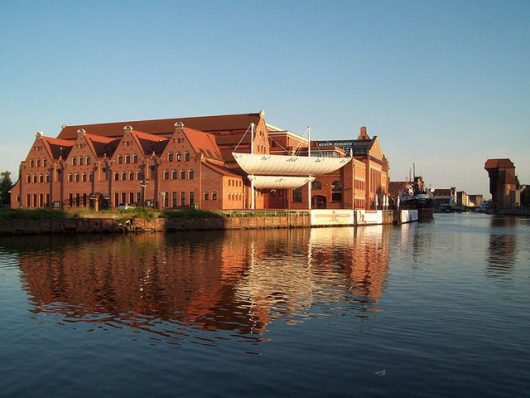
The sovereign city-state is contained within a walled enclave inside the city of Rome, giving it the distinction of being the world’s smallest country.

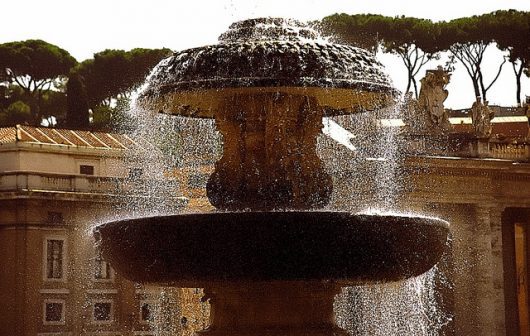
Main water resources in the city-state include the surface water from rivers and wetlands, groundwater from rocks and soil and treated government water supply. Water quality in Vatican City is good, thanks to the proliferation of drinking water fountains that take water directly from the mountains above the city.

Called “Nasoni” in Italian, the drinking water fountains in Rome are seen as inexpensive, environmentally-friendly options. The water is reportedly tested by the authorities about 250,000 times every year, ensuring that water quality in Vatican City is completely safe. Conveyed by an aqueduct to the drinking water fountains, an abundance of water means that a single family has more than 140 gallons to drink.

However, as recently as July 25, Vatican City decided to shut off all of its 100 decorative and drinking water fountains for conservation purposes because of a drought in Italy.

“The drought that is affecting the city of Rome and the surrounding areas of the capital has led the Holy See to take measures to save water,” the Vatican City’s website said. The statement also noted that the water-saving move was “in line with the teachings of Pope Francis.”

Pope Francis has repeatedly emphasized the issue of water security and water quality in Vatican City and around the world.

Earlier this year, the Pontifical Academy of Sciences of Vatican City and the Catedra Del Dialogo y La Cultura Del Encountro of Argentina convened a diverse panel of experts from all over the world in a conference titled, “Human Right to Water: An interdisciplinary focus and contributions on the central role of public policies in water and sanitation management.” Members explored solutions to the global water challenges, including how to make drinking water safe and accessible to the neediest of people and communities.

At the conference, Pope Francis highlighted the importance of water and noted an important distinction between providing life-giving water and water that is safe and of good quality. Noting that every day, thousands of children die due to water-related illnesses, he urged scientists, government leaders, businesspeople and politicians to foster a shared “culture of care and encounter” and hear “the cry of the earth for respect and responsible sharing in a treasure belonging to all.”

Furthermore, Pope Francis’ comprehensive encyclical, Laudato Si’ (On Care For Our Common Home), explains the Holy See’s views about the importance of good water quality: “In fact, access to safe drinking water is an essential, a fundamental and universal human right, because it determines the survival of people, and this is a requirement for the exercise of other human rights.”

As Italy struggles to respond to the drought crisis, both in and outside the Vatican City, Pope Francis has already inspired a global conversation centered on the values of the planet’s single most precious resource: water.

– Mohammed Khalid

Photo: Flickr

August 23, 2017
https://borgenproject.org/wp-content/uploads/borgen-project-logo.svg 0 0 Kim Thelwell https://borgenproject.org/wp-content/uploads/borgen-project-logo.svg Kim Thelwell2017-08-23 01:30:272024-05-28 00:15:55Water Quality in Vatican City
Global Poverty, Water

Conflicting Reports about the True Water Quality in Poland


The quality of water in Europe is often taken for granted by travelers, and there are some countries where it is best to stay on the safe side and use bottled water. Poland is one of many European countries with conflicting reports about tap water quality. Some sites such as TripAdvisor have multiple people vouching for the safety of the tap water, with some even saying that it tastes better than the water in many other European countries such as France and the U.K. Other travel sites have warnings about Polish tap water, claiming that it is unhealthy to drink and tastes horrible. For this reason, it can be difficult for travelers to understand the true water quality in Poland.

According to Poland’s Department of Economics and Management, about 60 percent of Poles are wary of the water quality before boiling it. They fear general pollution, and many are concerned that the smell and taste of the water, which is cited from mildly unsettling to disgusting, could be an indication of unhealthy drinking water. However, despite so many doubts from the locals, the government notes that more than 90 percent of the water in all areas meets the necessary health standards and is safe to drink, and any water that does fall below the safety line only barely fails to meet proper requirements. For the areas where the water quality is not up to the proper levels, water filters can easily improve the quality, both in terms of safety and taste.

Though the government assures that the water quality in Poland is safe to drink, many Poles and tourists use bottled water, especially mineral water, instead of tap water. Poland has a large bottled water industry, and some locals believe that this is one of the reasons that tap water is so distrusted. Since there is a great deal of advertising for natural mineral bottled water, it is easy to imagine why people would avoid the soft tap water in favor of the crisper bottled water.

However, in Poland and many other countries, more than 25 percent of bottled water is just treated tap water. Bottled water is often nothing more than expensive tap water run through a filter, something that can be done in any home for a much smaller cost than buying bottled water. Bottled water is also an environmental burden. The bottles are usually used once then thrown away.

Since the tap water is safe to drink, especially with a filter, it makes little sense to continue to rely on bottled water, especially when considering the economic and environmental costs of bottled water. Despite mixed reports, there is good water quality in Poland, so it is safe to go ahead and drink up.

– Rachael Lind

Photo: Flickr

August 18, 2017
https://borgenproject.org/wp-content/uploads/borgen-project-logo.svg 0 0 Borgen Project https://borgenproject.org/wp-content/uploads/borgen-project-logo.svg Borgen Project2017-08-18 07:30:362024-05-28 00:03:18Conflicting Reports about the True Water Quality in Poland
Global Poverty, Sanitation, Water

Water and Sanitation in Lesotho Delays Poverty Reduction

Water and Sanitation in LesothoLesotho is a small landlocked country surrounded by South Africa, located within the Orange River Basin. Water resources in Lesotho are abundant, but scarcity in supply is due to climate change and the Lesotho Highlands Water Project (LHWP).

Water resources in Lesotho include high levels of rainfall that collect and drain off into the major river systems of the Senqu (Orange), Mohokare (Caledon) and Makhaleng. Because these resources exceed the Basotho population’s current levels of use, the country exports water to South Africa and other neighboring countries.

Water is Lesotho’s main income generator, earning millions of dollars for the country each year though the LHWP. Despite Lesotho’s economic dependence on the richness of its water resources, the country faces some water-related challenges.

Nearly 25 percent of the population lacks access to safe drinking water. In 2016, 17 percent of households in Lesotho reported using unprotected water sources. Climate change and variable rain patterns lead to periods of chronic drought in Lesotho, resulting in water shortages and Basotho people needing to walk hours to collect water.

Even worse is the provision of sanitation in Lesotho, with 75 percent of people lacking access to adequate sanitation services. Without sanitation facilities, or access to working toilets or latrines, people’s only option is open defecation. Open defecation and the absence of washing facilities get associated with poor hygiene and an increased risk for diarrheal diseases.

Children under the age of five are the most vulnerable group.  Each year, 500 children under the age of five die from diarrheal diseases caused by unsafe and inadequate water and sanitation in Lesotho.

The inability to access to safe drinking water and sanitation in Lesotho has impinged upon human development and poverty reduction. The Metolong Dam Project plans to increase water accessibility in Lesotho by 2020. Until then, the Basotho population has to deal with the chronic drought conditions and the far-reaching negative consequences resource shortages have for national health and development.

– Gabrielle Doran

Photo: Flickr

August 17, 2017
https://borgenproject.org/wp-content/uploads/borgen-project-logo.svg 0 0 Borgen Project https://borgenproject.org/wp-content/uploads/borgen-project-logo.svg Borgen Project2017-08-17 07:30:232024-05-27 09:28:02Water and Sanitation in Lesotho Delays Poverty Reduction
Global Poverty, Water

Disparities in Water Quality in Gabon

Water resources in GabonWater quality in Gabon is abundant, but unevenly distributed and strained by high rates of urbanization. Gabon has one of the highest levels of water availability in the world, at 127,825 cubic meters per capita, per year.

Eighty-seven percent of Gabon’s 1.8 million people live in urban areas, such as Libreville and Port-Gentil. As the urban population increases, so does the demand for a fixed water supply. Gabon’s low capacity for drinking water production and lack of storage and maintenance facilities leads to frequent water shortages in Libreville and other urban areas.

Water quality in Gabon is different in urban and rural areas. In 2015, 92 percent of urban areas and 59 percent of rural areas had access to improved water resources. ‘Improved’ drinking sources include piped water on property and other improved sources of drinking water, according to the World Health Organization.

Despite its status as an upper middle-income country, 34 percent of the population lives in poverty. Rural, poverty stricken areas suffer deprivation from drinking water resources in Gabon, and 58 percent of the population does not have access to improved sanitation facilities. In 2015, sanitation rates in urban and rural areas were 43 and 32 percent, respectively.

Access to sanitation facilities is very low in Gabon. Inadequate wastewater and rainwater networks and deficient solid waste management explain the disparity.

Inadequate sewage and waste management led to negative health outcomes. Insufficient sanitation and lack of access to improved water sources are associated with the increased risk of neglected tropical diseases (NTDs), a class of infectious bacterial and parasitic diseases. In Gabon, a large proportion of the population is at risk of infection from soil-transmitted helminthiasis, lymphatic filariasis and schistosomiasis.

The infrastructure for drinking water and sanitation were identified as priority areas for reform in the Gabonese government’s 2016–2020 Country Strategy Paper. Long-term success for water and waste management requires understanding how wealth distribution and social gradients affect water quality in Gabon. The CSP addresses social and infrastructural issues and broadened the scope of the development plan. It plans to build a sustainable water and sanitation infrastructure.

– Gabrielle Doran

Photo: Flickr

August 14, 2017
https://borgenproject.org/wp-content/uploads/borgen-project-logo.svg 0 0 Borgen Project https://borgenproject.org/wp-content/uploads/borgen-project-logo.svg Borgen Project2017-08-14 07:30:122020-06-11 08:14:09Disparities in Water Quality in Gabon
Water

Water Quality in Taiwan and Water Shortages

Water Quality in TaiwanThe water quality in Taiwan is slightly below standard, and the region is plagued by water shortages. Here are some key pieces of information for understanding the state of the water quality in Taiwan.

According to an article in the Taipei Times, conserving water is a major challenge in Taiwan, especially with annual droughts, floods and limited rainfall. Data from the president’s office and the Water Resources Agency revealed that Taiwan residents typically use about 250 liters of water each day. Water companies and suppliers filter water from reservoirs to provide consumers with clean drinking water.

In order to provide the residents of Taiwan with clean drinking water, without implementing water rationing, the government could encourage rainwater collection and rainwater recycling systems, according to the article. Water rationing is a concern because it could lead to major economic losses in the country.

Water in Taiwan often contains significant levels of silt and needs to be filtered. In general, it is recommended that water in Taiwan be boiled before consumption. Many residents have water filters for their kitchen faucets or have invested in a water filtration system to improve the water quality in their homes. These appliances can improve both the taste and the health of the water.

According to the water board in Taipei, the water in Taipei is treated to be safe to drink. For tap water, the Taipei water department specifies that in respect to odor, water should be less than one threshold odor number (TON). A data collection in 2015 revealed that the water quality in Taiwan was at three TON.

Additionally, samples of water from Taiwan revealed higher than standard levels of turbidity and color. While the water quality in Taiwan needs to see improvements, the main threat to water in the region is a general shortage of it.

– Leah Potter

Photo: Flickr

August 7, 2017
https://borgenproject.org/wp-content/uploads/borgen-project-logo.svg 0 0 Borgen Project https://borgenproject.org/wp-content/uploads/borgen-project-logo.svg Borgen Project2017-08-07 01:30:492020-06-09 10:28:26Water Quality in Taiwan and Water Shortages
Global Poverty, Water

Toward a Better Life: Improving Water Quality in Cabo Verde

Water Quality in Cabo Verde
The Republic of Cabo Verde is a country comprised of 10 islands off the coast of West Africa. In 2012, the government planned to drastically increase its desalination system in order to improve water capacity and consumption and to meet the demands of the country’s rising tourism industry. Since this plan to improve water sanitation and availability of this country’s precious resource, water quality in Cabo Verde has improved in 2017, through government cooperation and local partnership.

Though Santiago, one of Cabo Verde’s islands, already had a desalination plant implemented, the government suggested at least eight more plants be installed in order to satisfy the resident and growing tourist populations. At the time of the government’s 2012 plan to invest in major water quality improvement, reports showed that with the island’s 500,000 citizens and the high volume of tourists, sources of water were already limited. Cabo Verde is a dry country and doesn’t receive much rain, so the country’s ministry of environment made it a goal to build a desalination plant for every island, as part of the National Directive Plan for Water.

The ministry hoped that over the next five years, 400 million euros, paired with a $66.2 million grant from the U.S. foreign aid agency, plus additional funding from the EU and the U.N., would significantly contribute to the country’s goal to have 50% of its energy supplied by renewable sources by the year 2020.

In March 2017, just five years since the start of the desalination and sanitation system implementation, Cabo Verde’s driest islands are seeing major victories, and some of the country’s most vulnerable populations are seeing the biggest difference. Santa Maria, a high-traffic tourist and travel location in Sal on Cape Verde, saw the inauguration of a 2010 Wastewater Treatment Plant. With the help of new management and a working operating system that connects to local sewage networks, the plant is now fully functioning.

The new system for delivering clean, available and affordable water will make lives on Cabo Verde a little easier. Most poor families can’t afford to access water through the island’s utility networks, and some are miles apart, making clean water retrieval hard on locals. Poor women spend the most time collecting water for each household, but some more rural areas of the country have very little access — a mere 16% of the country ever sees this water.

Because of improved water quality in Cabo Verde, residents are feeling confident about running their households, thanks to government funding and water treatment plants throughout the country. Some locals say having sanitary and accessible water is most important in keeping their families healthy.

Cabo Verde’s tourism economy is also expected to improve with efforts to keep sanitized water flowing. As the industry provides jobs for more than one-third of the population, it is vital that the Cabo Verde government keep water sanitation at its highest priority, so that cleaner beaches bring tourists back again and again.

The government plans to designate a water improvement sector fund specifically for the water treatment facilities, upon its success. With further plans like this, water quality in Cabo Verde will continue to show signs of improvement.

– Olivia Cyr

Photo: Flickr

August 7, 2017
https://borgenproject.org/wp-content/uploads/borgen-project-logo.svg 0 0 Kim Thelwell https://borgenproject.org/wp-content/uploads/borgen-project-logo.svg Kim Thelwell2017-08-07 01:30:002020-07-15 07:34:23Toward a Better Life: Improving Water Quality in Cabo Verde
Global Poverty, Sanitation, Water

Water and Sanitation in the Solomon Islands

Water and Sanitation in the Solomon IslandsNearly 70 percent of the population of the Solomon Islands lacks access to clean water and proper sanitation facilities. This archipelago comprises almost a thousand islands in the South Pacific Ocean and only has a population of 583,600.

There are disparities in access to water and sanitation in the Solomon Islands between urban and rural areas. Rural areas house 80 percent of the population (480,000), and there is a relative lack of water and sanitation services. In fact, nearly 70 percent of the population does not have access to appropriate sanitation services.

However, a study from 2007 concluded that 97 percent of urban areas compared to 65 percent of rural areas had access to clean water supply. A similar, but much greater disparity is present in access to sanitation facilities. In 2007, 98 percent of urban areas and 18 percent of rural areas had access to sanitation facilities.

The quality of the Solomon Islands’ urban water did not achieve The World Health Organization’s drinking water standards in 2007. Drinking water with unsafe levels of contamination has adverse effects on health and can cause diarrhea and other water-borne diseases. In 2002, diarrheal diseases accounted for seven percent of mortalities in the Solomon Islands.

In 2015, 93 percent of urban areas and 77 percent of rural areas gained access to improved water sources. This data indicates that the disparity in access to water between urban and rural areas has narrowed. Access to improved, private sanitation facilities in urban areas (72 percent) was disproportionately greater than access in rural areas (8 percent) in 2015.

Without sanitation facilities or access to working toilets or latrines, people’s only option is open defecation. Open defecation and the absence of washing facilities are associated with poor hygiene and an increased risk for skin and eye infections as well as mosquito-borne diseases, like malaria and dengue fever. A lack of private sanitation facilities is also linked to higher incidences of physical and sexual violence. When people—especially women—go outside to bathe and defecate, their vulnerability to violence increases.

A government initiative to improve hygiene, water and sanitation in the Solomon Islands is included in the Solomon Islands Red Cross Society Strategic Plan for 2017 to 2020. If the Red Cross Society Strategic Plan’s target of helping 200,000 people with water, hygiene and sanitation is reached, the results could improve health outcomes and the lives of people in the Solomon Islands.

– Gabrielle Doran

Photo: Flickr

August 6, 2017
https://borgenproject.org/wp-content/uploads/borgen-project-logo.svg 0 0 Borgen Project https://borgenproject.org/wp-content/uploads/borgen-project-logo.svg Borgen Project2017-08-06 01:30:502024-05-28 00:15:14Water and Sanitation in the Solomon Islands
Page 30 of 57«‹2829303132›»

Get Smarter

  • Global Poverty 101
  • Global Poverty… The Good News
  • Global Poverty & U.S. Jobs
  • Global Poverty and National Security
  • Innovative Solutions to Poverty
  • Global Poverty & Aid FAQ’s
Search Search

Take Action

  • Call Congress
  • Email Congress
  • Donate
  • 30 Ways to Help
  • Volunteer Ops
  • Internships
  • Courses & Certificates
  • The Podcast
Borgen Project

“The Borgen Project is an incredible nonprofit organization that is addressing poverty and hunger and working towards ending them.”

-The Huffington Post

Inside The Borgen Project

  • Contact
  • About
  • Financials
  • President
  • Board of Directors
  • Board of Advisors

International Links

  • UK Email Parliament
  • UK Donate
  • Canada Email Parliament

Get Smarter

  • Global Poverty 101
  • Global Poverty… The Good News
  • Global Poverty & U.S. Jobs
  • Global Poverty and National Security
  • Innovative Solutions to Poverty
  • Global Poverty & Aid FAQ’s

Ways to Help

  • Call Congress
  • Email Congress
  • Donate
  • 30 Ways to Help
  • Volunteer Ops
  • Internships
  • Courses & Certificates
  • The Podcast
Scroll to top Scroll to top Scroll to top