• Link to X
  • Link to Facebook
  • Link to Instagram
  • Link to TikTok
  • Link to Youtube
  • About
    • About Us
      • President
      • Board of Directors
      • Board of Advisors
      • Financials
      • Our Methodology
      • Success Tracker
      • Contact
  • Act Now
    • 30 Ways to Help
      • Email Congress
      • Call Congress
      • Volunteer
      • Courses & Certificates
      • Be a Donor
    • Internships
      • In-Office Internships
      • Remote Internships
    • Legislation
      • Politics 101
  • The Blog
  • The Podcast
  • Magazine
  • Donate
  • Click to open the search input field Click to open the search input field Search
  • Menu Menu

Archive for category: Water

Global Poverty, Water

Eight Facts About Water Quality in Kyrgyzstan

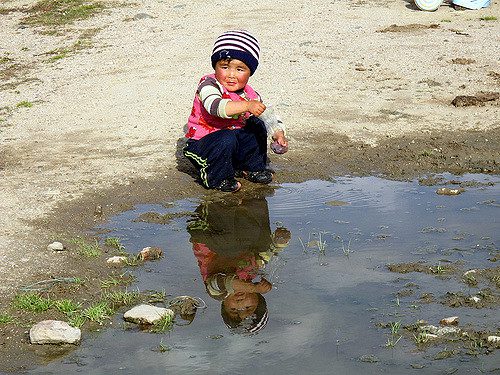
Water Quality in KyrgyzstanEighty-two percent of the world’s urban population has access to clean drinking water. This fact may sound impressive until it is juxtaposed with the 51 percent of the world’s rural population without the same benefit. In total, that’s 2.4 billion people without access to proper water sanitation. In Kyrgyzstan, a country in Central Asia, about 64 percent of the population lives in rural areas. Water quality in Kyrgyzstan is, therefore, a major threat to everyday life. Here are some facts about water quality in Kyrgyzstan:

  1. Of the 1,805 rural villages in Kyrgyzstan, 595 do not have access to centralized drinking water, and 390 have no water supply networks at all. Instead, people drink from open water sources.
  2. The 150,000 people in those 390 villages depend solely on aryk for drinking water supply. Aryk water is from open irrigation channels that are vulnerable to contamination from animals, debris and trash. Even something as simple as leaves falling into the aryk in autumn significantly increases the number of acute waterborne diseases.
  3. In villages without access to clean water, homes, schools and hospitals must all collect water in buckets. The water should be filtered through cheesecloth and then left overnight to let the dust settle to the bottom. Finally, the water should be boiled. Unfortunately, those without the time or patience to go through this process pay the unfair price for skipping steps.
  4. The poor water quality in Kyrgyzstan offers an ideal breeding ground for diseases. Consumption of contaminated water causes 24 percent of acute intestinal infections due to parasites and 86 percent of typhoid cases.
  5. The impacts of climate change also threaten the water quality in Kyrgyzstan. The average rise in temperature in Kyrgyzstan due to climate change is three times higher than the global average. This climate change can cause droughts and therefore, a lack of water for the population.
  6. Glaciers cover 4.2 percent of the land in Kyrgyzstan. Glaciers can often be a steady source of water. However, one impact of climate change is the transformation of glaciers into glacial lakes. The accumulation of such mass amounts of water in unprepared terrain leads to the threat of mudslides, landslides and floods, all of which threaten water supply and water quality in Kyrgyzstan.
  7. Thankfully, Kyrgyzstan’s government has taken notice of the water crisis in its abundant rural regions. In 2017, the government launched a new program to develop the water supply and sanitation sector. The program, called “Ala-Too bulagy,” allocated $51 million toward the program’s implementation in the areas of Osh, Chui, Issyk-Kul and Jalal-Abad.
  8. The World Bank has already promised to allocate $36 million to the “Ala-Too bulagy” program in its second stage beginning in 2018.

While the “Ala-Too bulagy” program holds much promise for the future of water quality in Kyrgyzstan, the situation in the country’s rural communities is much too dire to simply write off the issue as resolved. Further efforts to both increase water supply and sanitation services and decrease the effects of climate change are necessary to help Kyrgyzstan and the countless other nations affected by the global water crisis.

– Sophie Nunnally

Photo: Flickr
August 6, 2017
https://borgenproject.org/wp-content/uploads/borgen-project-logo.svg 0 0 Borgen Project https://borgenproject.org/wp-content/uploads/borgen-project-logo.svg Borgen Project2017-08-06 01:30:142024-05-28 00:15:15Eight Facts About Water Quality in Kyrgyzstan
Water

Good Water Quality in Palau May Be in Danger

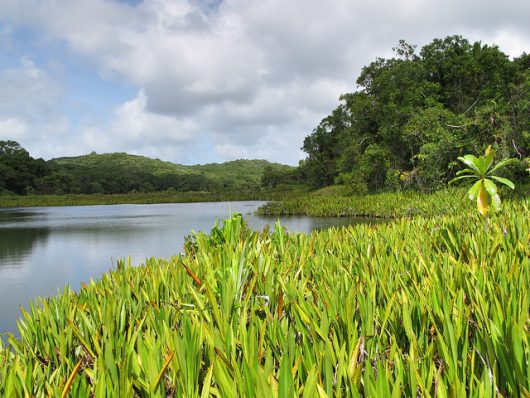
Water Quality in PalauThe Republic of Palau is part of the Micronesian region in the western Pacific Ocean. Consisting of a series of islands, Palau is about 458 square kilometers in total size with a population of 21,726. Palau is famous for its beautiful natural environment. Its coral reefs are known as one of the “Seven Underwater Wonders of the World.” The water quality in Palau is considered to be safe for its citizens. However, due to the development in Palau in the recent years and the lack of awareness of protecting drinking water sources, poor water quality may become a huge problem in the future.
Palau’s main water sources are the Ngerikiil River and the Ngerimel Dam. The Ngerikiil River is a freshwater stream that is widely used for residential and agricultural purposes. The Ngerimel Dam has a storage capacity of 20 million gallons of water. Both water sources are well-protected and minimal human activity exists in the watershed area. The Ngerkiil River produces one million gallons per day and the Ngerimel Dam produces three million gallons per day.

The water is fed into the Koror-Airal water treatment plant for use by three-fourths of the population of Palau. The water is collected in a chamber called the “wet well,” where minerals are added. Then the water is pumped into a series of clarifiers in order to remove suspended solids.

Palau’s surface water, groundwater and coastal water qualities are facing challenges from pollution. Sedimentation is the main source of pollution and lowers the quality of surface water. The sedimentation is caused by poor erosion controls, loss of riparian buffers, and poor land-use practices. The groundwater sources are polluted by poorly maintained septic tanks, leaching from nearby landfills and saltwater intrusion. Coastal water quality is affected by land-based pollution, as well as by gasoline and oil from outboard motors and ships. According to the Pacific Water Community, the water quality in Palau may also face challenges such as sewage, chemical pollution and oil spills due to future development on the larger islands.

According to studies by the Pacific Water Community, the water storage and treatment process also has hidden trouble. The drinking water is facing the threat of chemical contamination. The water storage and treatment facilities do not have enough funds to purchase relevant equipment or to carry out repairs and maintenance.

Palau’s government noticed some of the pollution and has started to reduce the causes. The government is trying to improve land-use management within the watershed and drainage around roads to reduce the pollution in the surface water. A better filtration system will be added to the water treatment process to remove suspended solids. To prevent the catchment being affected by human and animal contamination, the Palau government is trying to establish stringent catchment management plans. The water storage and treatment facilities will receive more funding in the near future for better equipment.

In conclusion, the water quality in Palau is not a problem so far. However, it will become a huge problem for Palau’s citizens in the future if the pollution continues. The water quality problem needs more attention from Palau’s government.

– Mike Liu

Photo: Flickr

August 5, 2017
https://borgenproject.org/wp-content/uploads/borgen-project-logo.svg 0 0 Borgen Project https://borgenproject.org/wp-content/uploads/borgen-project-logo.svg Borgen Project2017-08-05 07:30:122020-06-08 08:28:08Good Water Quality in Palau May Be in Danger
Water

Water Quality in Seychelles

Water Quality in Seychelles
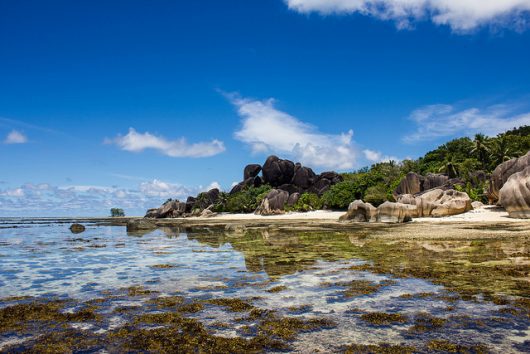
The Republic of Seychelles is an archipelago of 115 low-lying, granitic islands in the western Indian Ocean. This sovereign country is a popular holiday getaway for tourists wishing to lounge on its stunning beaches; discover its diverse ecological system; and visit ancient volcanos. Water quality in Seychelles remains a major issue, however.

Though the Republic’s 1993 Constitution defines access to potable water as a basic right to all Seychellois, water shortage and pollution is a defining factor of the archipelago.

While local tap water meets World Health Organization’s specifications, the Seychelles Islands official tourism website advises visitors to drink bottled water because the chlorinated tap water may not be safe to drink. Furthermore, because water quality in Seychelles is variable in undeveloped areas, it is recommended that tap water be boiled, filtered or chemically disinfected before consumption.

The islands’ groundwater resources are extremely limited, and the terrain makes it even harder to procure fresh water. Due to the country’s prevailing granitic landscape, water that is available is often too hard and salty to consume.

Of course, rapid change in weather and rainfall patterns is a global phenomenon and is not uncommon to Seychelles. Shifting weather patterns directly affect the water supply and reduce the precious steam flow, making it difficult for groundwater to recharge.

Most of the water in Seychelles comes from hills and streams from the mountainside, flowing more freely during monsoon and rain seasons. As a result of heavy rainfall, storm surge, flooding and poor sanitation, the presence of water-related bacterial infections—including Campylobacter jejuni, small strains of E.coli, cholera and other contaminants—in the country’s water supply can cause traveler’s diarrhea, a term used to describe gastrointestinal infections caused by ingesting bacteria, viruses and protozoa.

Four desalination plants compensate for the water shortage during drier seasons and produce potable water. They help enhance water reliability of the three main islands. The country is not only managing its scarce water resources, but it is also searching for more water. Of course, water quality in Seychelles remains an accompanying concern.

Options such as drilling for underground water are currently being explored to supplement the existing surface water (usually accumulating on slippery rock fissures if not running off to sea) and add to the water supply of dams and desalination plants.

In November 2009, the Seychelles National Climate Change Committee embarked on an ambitious vision to engage all levels of the Seychellois society in combating the potentially disastrous effects of climate change.

The committee recognized that water resources in islands as small as Seychelles were “likely to be seriously compromised”—both due to growing demand and climate change —and predicted that Seychelles would be facing “serious water shortages in the near future.”

This was despite the presence of extensive water distribution networks that served about 87% of the population with treated water. Furthermore, an increase in surface air temperatures would result in reduced streamflow due to water evaporation and further exacerbate the problem of water supply.

By 2030, the water demand on the main island of Mahé is expected to grow by 130%. Currently, Seychelles can only meet 60% of its residents’ water.

Earlier this month, a ban on manufacturing, distribution and commercial usage of common plastic items—such as Styrofoam containers, utensils and cups—went into effect in an attempt to make Seychelles cleaner and more beautiful.

The Environmental Protection Regulations of 2017 restrict the importation of certain types of plastic bags and authorize importation permits for biodegradable bags. Treatment of wastewater is being upgraded through renovations of existing sewerage pumping stations and construction of five new ones, with a Sanitation Master Plan currently in the works.

Furthermore, a new Center for Ocean Restoration, Awareness and Learning (CORAL) opened in May 2017 on the island of Praslin to study, brainstorm ideas and increase awareness of the ocean-conservation efforts by bringing scientists and students together from all over the world.

Seychelles is the smallest African state, with only about 84,000 people. Its sustainable tourism model remains an example for the rest of the world. As the archipelago comes to terms with its water shortage and pollution problems, reliable and sustainable water supply remains as essential as ever. If the water quality in Seychelles can be improved, the quality of life of residents and tourists—and their future generations—will only become better.

– Mohammed Khalid

Photo: Flickr

August 5, 2017
https://borgenproject.org/wp-content/uploads/borgen-project-logo.svg 0 0 Kim Thelwell https://borgenproject.org/wp-content/uploads/borgen-project-logo.svg Kim Thelwell2017-08-05 07:30:112024-05-28 00:15:12Water Quality in Seychelles
Global Poverty, Water

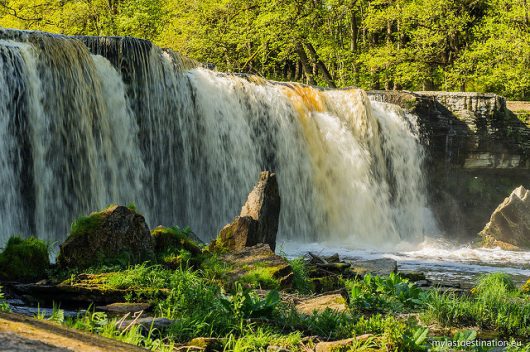
Water Quality in Estonia Threatened by Groundwater Pollutants

Water Quality in Estonia
While the water quality in Estonia is good when it comes to tap and bottled water, the quality of the country’s groundwater faces threats from pollutants.

Here are some key facts about the water quality in Estonia:

According to a 2014 study, researchers found that the average Estonian consumed 45 liters of bottled water each year.

Astrid Saava, an emeritus professor at the University of Tartu Department of Public Health, said that in Estonia, bottled water and tap water are fairly similar in respect to their quality.

“There is no significant difference between bottled drinking water and tap water in Estonia,” Saava said. “Both originate from underground water pumped through artesian wells. It’s just that the bottled water costs 500 to 1,000 times more.”

For this reason, Savaa added, it is often more cost-effective to forgo purchasing bottled water.

A slight taste difference between tap and bottled water might be observed in Tallinn, where tap water is sourced from Lake Ülemiste. Some have noted that water originating from the source may taste “inferior” to that of underground water in the region, according to the article.

Despite tap and bottled water being similar in quality in Estonia, for those living in the region it is recommended that they purchase bottled water if they think their countryside source may be polluted.

According to a study conducted by Tallinn University of Technology and the National Institute of Chemical Physics and Biophysics, surface waters are often subject to pollution. The study focused on drained peat areas, or swathes of organic wetlands, where there are significant stores of nitrogen.

In Estonia, eutrophication, or the presence of abnormally high concentrations of nutrients from watersheds, is one of the “most important problems for surface waters” in the region, according to the study.

Researchers found that past evaluations underestimated the impact of soil amelioration (supplements added to improve soil quality) on the intensive pollution of surface water. Previous evaluations attributed pollution and eutrophication to fertilizers and livestock in the area. According to the study, there is little evidence to back this theory.

In Estonia, the management of freshwater sources and their protection falls under the umbrella of the Ministry of the Environment, which coordinates the Decision-Making Environmental protection.

The country’s water department specifically overseas the condition and sustainable exploitation of the groundwater and other bodies of water in the region. Estonia’s water policy follows that of the European Union.

Estonia in particular enforces several legal provisions that support sustainable development, according to a release from the United Nations. Such policies focus on aspects such as the quality of the water in the river basins.

The water quality in Estonia near inland water bodies and coastal sea improved over the past ten years, according to the National Environmental Monitoring Programme.

Despite these improvements, rivers, like several that flow into the Gulf of Finland, are in need of improvement with respect to water quality.

– Leah Potter

Photo: Flickr

August 5, 2017
https://borgenproject.org/wp-content/uploads/borgen-project-logo.svg 0 0 Kim Thelwell https://borgenproject.org/wp-content/uploads/borgen-project-logo.svg Kim Thelwell2017-08-05 01:30:482024-05-28 00:15:06Water Quality in Estonia Threatened by Groundwater Pollutants
Global Poverty, Water

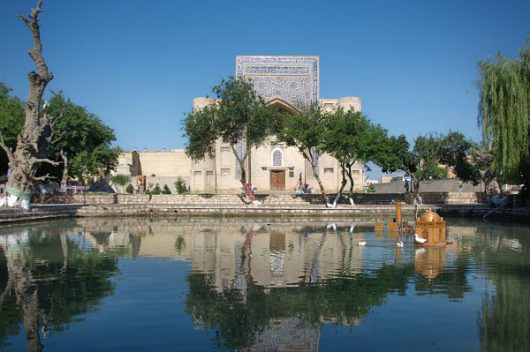
Water Quality in Uzbekistan Is Improving Gradually

Water Quality in Uzbekistan
As one of the largest countries in Central Asia with a population of 32 million, Uzbekistan is a regional economic and political leader. Recently, Uzbekistan has turned its attention to the pressing issues of environmental protection and water quality. In the last decade, water quality in Uzbekistan has been a main focus thanks to government and service providers’ efforts to expand and modernize the water sector across the country. Although access to an improved water source has declined by less than one percent, increased investment in water supply and sanitation has provided the foundation for reform in Uzbekistan.

Uzbekistan has amassed the largest borrowing portfolio for water projects of any Central Asian nation, including the Alat and Karakul Water Supply Project. Started in 2013 with financing from the World Bank, the project has improved quality and efficiency of water supply for more than 220,000 Uzbeks from the districts of Alat and Karakul in the Bukhara region. The World Bank has partnered with Uzbekistan since 1992, and its total commitments to the country exceed $1 billion.

The government has taken on these initiatives in response to the recent problems facing water quality in Uzbekistan, including water availability and pollution. More than half of Uzbekistani households do not connect to a piped water system; sewerage systems serve only 40% of the population. Much of the government’s efforts concentrate in the rural region of Karakalpakstan; it has some of the worst water quality in the country and has dealt with setbacks due to a uranium scare in 2008.

While the government-established State Committee for Environmental Protection has made limited efforts to curb water contamination in the last 15 years, nongovernmental organizations have spearheaded the effort to establish regulation to reduce harmful runoff and protect water resources.

Much of Uzbekistan’s economy relies on its environment, from its booming cotton industry to its oil and natural gas supplies. Environmental issues pose a threat to the country as a whole, with water availability as a top concern. Studies have shown that global warming may hit Central Asia the hardest in terms of temperature risings and potential drought. Uzbekistan must confront existing issues such as chemicals from cotton production contaminating freshwater, as well as future threats from climate change.

Though the government has acknowledged the extent of the country’s environmental problems, and the State Committee for Nature Protection has looked to contain environmental issues, grassroots organizations have called for the government to lay down further regulation and take more urgent action. Water quality in Uzbekistan has improved, but environmental issues threaten the country’s welfare if further action is not taken.

– Nicholas Dugan

Photo: Flickr

August 2, 2017
https://borgenproject.org/wp-content/uploads/borgen-project-logo.svg 0 0 Borgen Project https://borgenproject.org/wp-content/uploads/borgen-project-logo.svg Borgen Project2017-08-02 07:30:272024-05-28 00:03:33Water Quality in Uzbekistan Is Improving Gradually
Disease, Health, Water

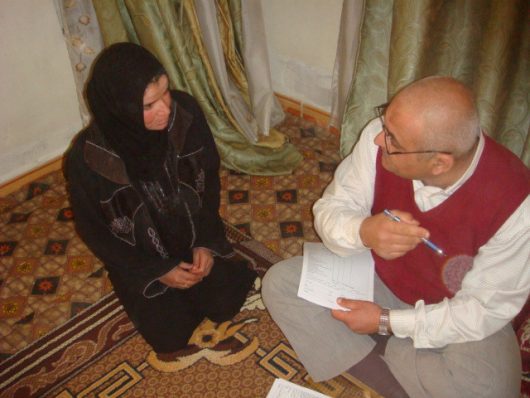
What are the Top Diseases in Iraq?

Top Diseases in Iraq
The people of Iraq face many obstacles to their safety. When discussing the middle eastern country, many focus on the physical threats of violence, terrorism and forceful opposition. Health is also a hazard. Diseases spread in many ways. Infection can be airborne, blood born or spread through food and water. Blood-borne diseases, such as Hepatitis A and B, are a risk in Iraq. The two main transmission types in Iraq are food or water-borne and vector-borne. Here are some of the top diseases in Iraq.

  1. Food or Waterborne
    Hepatitis A is spread through a fecal-oral path. This route of disease infection occurs when fecal matter from an infected person is in the food or water consumed by another person, thus infecting the recipient of the food or water. This is why sanitation is the best precaution other than immunization. The spread of this disease occurs because of poor sanitation in food preparation. The risk of infection is much higher in developing or poor countries due to a lack of proper sanitation, which is why Hepatitis A is one of the top diseases in Iraq.Another food or waterborne disease that contributes to the top diseases in Iraq is Typhoid fever. Typhoid is a bacterial disease that contributes very high fevers. Like Hepatitis A, this is spread through fecal-contaminated food or water. Typhoid fever has a higher mortality rate. If the disease is not treated, one in five do not survive.
  2. Vector-borne
    Vector-borne diseases are spread through animals, insects or parasites. One of the top diseases in Iraq is malaria. Malaria is spread by mosquito bites. The disease causes parasites to accumulate in the liver and attack red blood cells. This often leads to death from interrupted blood supply to vital organs.Another top disease in Iraq is yellow fever. This, again, is spread through the bite of a mosquito. Although the severity varies, there is a mortality rate of 20 percent.

These top diseases in Iraq are less common in developed countries, as there are vaccines available. The economic infrastructure in Iraq does not allow for many of its citizens’ access to such life-saving precautionary medication.

– Nate Harris

Photo: Flickr

August 1, 2017
https://borgenproject.org/wp-content/uploads/borgen-project-logo.svg 0 0 Kim Thelwell https://borgenproject.org/wp-content/uploads/borgen-project-logo.svg Kim Thelwell2017-08-01 01:30:452024-05-28 00:15:13What are the Top Diseases in Iraq?
Global Poverty, Water

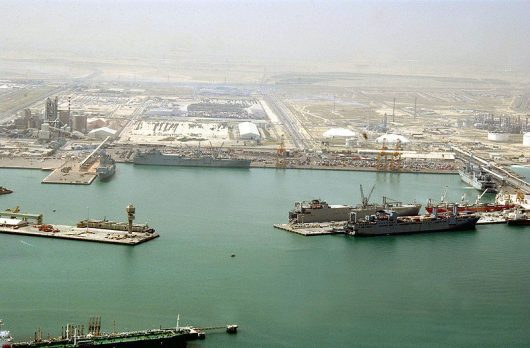
Water Quality in Kuwait One of the Best in the World

Water Quality in Kuwait
Despite sitting just off the coast of the Persian Gulf, most of Kuwait’s water resources come from groundwater. Although limited rainfall and hot summers in the desert country threaten water reserves in underground aquifers, by using a sophisticated desalinization process, water quality in Kuwait is one of the best.

With Kuwait’s main water supply coming from groundwater, it puts the country at an extremely high water risk: the country only experiences about 121mm of rainfall each year, and only a small percentage of that reaches aquifers. Because of this, the country relies heavily on its desalinated seawater and treated municipal wastewater.

Due to the high risk of contamination and harmful bacteria that harbors in wastewater, between 2005 and 2014, the Kuwaiti government invested approximately $5.2 billion in the water sector. Kuwait allocated around $3.4 billion to water treatments to guarantee adequate water quality in Kuwait.

To ensure that the distillation plants, constructed in 2013, would create enough clean water for the entire country, Khalid Al Barrak, the head of KISR’s Water Science Department, advised the country to monitor and cut down its level of water consumption. Barrak stated that “such a consumption level was irrational and that it was eroding the government’s efforts to prevent the ominous waste of the invaluable resource.”

Barrak’s claims could help protect not only the water quality in Kuwait, but also help preserve the limited natural freshwater resources available in a country, which was recently reported as the highest water consumer in the world. Additionally, cutting down consumption could save the country about $28 million annually.

By cutting down consumption and continuing the construction of desalination projects, the water quality in Kuwait will continue to see improvements and will provide more resources to people who live in the more arid desert areas of Kuwait.

– Amira Wynn

Photo: Flickr

July 28, 2017
https://borgenproject.org/wp-content/uploads/borgen-project-logo.svg 0 0 Borgen Project https://borgenproject.org/wp-content/uploads/borgen-project-logo.svg Borgen Project2017-07-28 07:30:442024-06-05 02:12:15Water Quality in Kuwait One of the Best in the World
Global Poverty, Water

Water Quality in Romania

Water Quality in Romania
Upon traveling to Romania, one will find that there are no significant health risks. At least, no more than “any other European country,” according to the Lonely Planet’s current health guide. In fact, the only water which travelers need to be wary of is collected water found in the country’s many mountainous areas, which make up 31% of Romania’s landscape.

However, despite being surrounded by water, water quality in Romania is still fairly poor, and Romania ranks 13th in Europe in terms of water resources. Many native Romanians living in rural areas still struggle with wastewater management, owing in large part to pollution from sudden economic development between the 1960s and 1980s.

The majority of Romania is in the Danube basin, with over a third of the Danube river’s length flowing through the country. As such, Romania relies heavily on water from the Danube, water that has had some inconsistent quality over the years.

Prior to the 1950s, water quality in Romania was fairly steady, with the Danube river providing a good source of clean, easily-accessible water. Beginning in the 1960s, however, large-scale economic and industrial growth led to widespread water pollution. The main form of pollution was agrochemical fertilizers, which released copious amounts of nitrogen and phosphorus into the water. This continued until roughly 1989 when new regulations to correct this problem were introduced, and development began to slow. Since then, water quality in Romania has increased significantly. However, it remains inferior to the quality present before this development.

In many areas of the country, groundwater still contains many nitrates, leaving 35% of the population without consistent access to public clean water and 47% without access to wastewater collection and treatment. Instead, many people in Romania simply opt to drink bottled water, as it’s cheap and available nearly everywhere in the country.

In Romania, it seems that to live in an urban, wealthier area means that the threat of unsafe water is relatively nonexistent. Meanwhile,  in poorer, rural areas, it is still a major concern. However, Romania does seem to be making some strides toward making water safe for all its citizens.

On March 22, 2008, the date which the United Nations has dubbed “World Water Day,” the Romanian government came together to organize conferences and discussion sessions and launched a campaign of social responsibility aimed at making clean water, which the UN names as a “fundamental human right,” available for all Romanians.

– Audrey Palzkill

Photo: Flickr

July 28, 2017
https://borgenproject.org/wp-content/uploads/borgen-project-logo.svg 0 0 Borgen Project https://borgenproject.org/wp-content/uploads/borgen-project-logo.svg Borgen Project2017-07-28 07:30:122024-05-28 00:03:27Water Quality in Romania
Global Poverty, Water

Water Quality in Senegal Sees Improvement

Water Quality in Senegal
Officials say that the water quality in Senegal, a country on the west side of Africa, is improving, compared to past studies that showed a lack of access to drinking water and higher levels of contaminants.

A 2015 World Bank report stated that, at the end of 2008, the access rate to drinking water in Senegal was at approximately 85% and would reach the target of 90% by 2015. These statistics come from data provided by the Millennium Drinking Water and Sanitation Program (PEPAM), which reveals slightly more optimistic numbers than that of the Joint Monitoring Programme (JMP). The JMP reported an access rate of 69% at the end of 2008 and attainment of 81% access rate in 2015.

Sanitation, however, remains the main concern for the water quality in Senegal. Estimates from PEPAM and JMP both show that access rates with respect to sanitation are lower than they should be, according to the World Bank’s report.

Access to drinking water in rural areas has seen improvement in recent years, and further data from PEPAM shows that targets will most likely exceed in this category. However, data from JMP suggests uncertainty in meeting targets regarding rural drinking water security. Regardless, improvements in this area are evident.

According to a report from the World Health Organization, the level of sanitation facility usage had improved by 52% by 2012. In addition, Senegal saw a 74% increase in the use of drinking water from improved sources, also in 2012.

The report also noted that Senegal’s government made commitments to 24 improvements for the country’s water quality. These were announced at the Sanitation and Water for All High-Level Meeting in 2014. The commitments included goals for sanitation and hygiene and included increasing financing for water quality and focusing on equity.

Past studies have shown that, in the spring of 2002, the Senegal River estuary contained high levels of bacteria. The water quality in Senegal has since seen improvements, and this area, in particular, has been found to have fewer contaminants.

The water quality in Senegal has seen several improvements over the past few years and will continue to benefit from future goals set by global organizations.

– Leah Potter

Photo: Flickr

July 26, 2017
https://borgenproject.org/wp-content/uploads/borgen-project-logo.svg 0 0 Borgen Project https://borgenproject.org/wp-content/uploads/borgen-project-logo.svg Borgen Project2017-07-26 01:30:372024-05-28 00:03:21Water Quality in Senegal Sees Improvement
Global Poverty, Water

New National Innovations: Water Quality in Singapore

Water Singapore
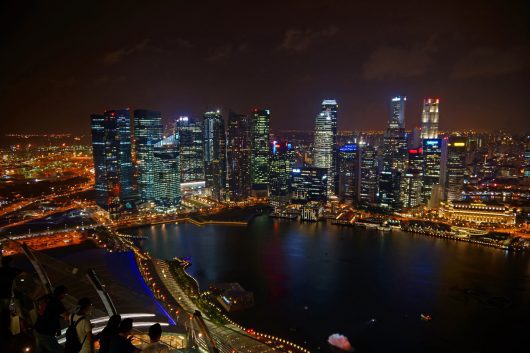
Singapore’s Public Utility Board (PUB) believes that it has an innovative answer as to how to improve water quality in Singapore.

PUB is responsible for the collection, production, distribution and reclamation of water in Singapore. For a country that, for a large amount of its lifetime, relied on importing water from Malaysia to moderate its water scarcity, water quality in Singapore is an important issue. Hence, the PUB’s mission to “ensure an efficient, adequate and sustainable supply of water” is quite a big deal.

The organization’s solution came the form of a project called the “Four National Taps,” comprised of imported water from Malaysia, local catchment, NEWater and desalinated water.

Understanding how these “taps” work is essential to understanding why the water quality in Singapore is now reported to be very good. The local catchment tap involves the collection of rainwater running through more than 8,000 kilometers (or 4,970.97 miles) of waterways to one of the 17 reservoirs located around the country.

Desalination is the process of removing salt from seawater. Singapore’s two desalination plants alone allow PUB to meet 25% of the nation’s water need. The NEWater tap includes the use of advanced technologies to treat used water so it may be used for drinking and industrial use– essentially recycling water. This tap has been proven to be both cost-effective and efficient and is used to supply 30% of the nation’s water demand; by 2060 it is expected to meet 55% of the nation’s demand.

The NEWater tap includes the use of advanced technologies to treat used water so it may be used for drinking and industrial use, essentially recycling water. This tap has been proven to be both cost-effective and efficient and is used to supply 30% of the nation’s water demand; by 2060 it is expected to meet 55% of the nation’s demand.

PUB takes water quality in Singapore very seriously, claiming that Singapore’s tap water is now “well within the World Health Organization drinking water guidelines and U.S. Environmental Public Health (Quality of Piped Drinking Water) Regulations.”

The drive for Singapore to have and maintain high-quality water is further illustrated through its initiation of several community-focused programs to educate citizens on the importance of the conversation and appreciation of water. Minister Vivian Balakrishnan stated: “Although we can be confident of meeting our water needs, let us remember that every drop of water is precious. Do continue to practice good water-saving habits and avoid unnecessary consumption. We can make every drop count.”

– Obinna Ikechukwu Iwuji

Photo: Flickr

July 23, 2017
https://borgenproject.org/wp-content/uploads/borgen-project-logo.svg 0 0 Borgen Project https://borgenproject.org/wp-content/uploads/borgen-project-logo.svg Borgen Project2017-07-23 07:30:162024-12-13 17:58:22New National Innovations: Water Quality in Singapore
Page 31 of 57«‹2930313233›»

Get Smarter

  • Global Poverty 101
  • Global Poverty… The Good News
  • Global Poverty & U.S. Jobs
  • Global Poverty and National Security
  • Innovative Solutions to Poverty
  • Global Poverty & Aid FAQ’s
Search Search

Take Action

  • Call Congress
  • Email Congress
  • Donate
  • 30 Ways to Help
  • Volunteer Ops
  • Internships
  • Courses & Certificates
  • The Podcast
Borgen Project

“The Borgen Project is an incredible nonprofit organization that is addressing poverty and hunger and working towards ending them.”

-The Huffington Post

Inside The Borgen Project

  • Contact
  • About
  • Financials
  • President
  • Board of Directors
  • Board of Advisors

International Links

  • UK Email Parliament
  • UK Donate
  • Canada Email Parliament

Get Smarter

  • Global Poverty 101
  • Global Poverty… The Good News
  • Global Poverty & U.S. Jobs
  • Global Poverty and National Security
  • Innovative Solutions to Poverty
  • Global Poverty & Aid FAQ’s

Ways to Help

  • Call Congress
  • Email Congress
  • Donate
  • 30 Ways to Help
  • Volunteer Ops
  • Internships
  • Courses & Certificates
  • The Podcast
Scroll to top Scroll to top Scroll to top