• Link to X
  • Link to Facebook
  • Link to Instagram
  • Link to TikTok
  • Link to Youtube
  • About
    • About Us
      • President
      • Board of Directors
      • Board of Advisors
      • Financials
      • Our Methodology
      • Success Tracker
      • Contact
  • Act Now
    • 30 Ways to Help
      • Email Congress
      • Call Congress
      • Volunteer
      • Courses & Certificates
      • Be a Donor
    • Internships
      • In-Office Internships
      • Remote Internships
    • Legislation
      • Politics 101
  • The Blog
  • The Podcast
  • Magazine
  • Donate
  • Click to open the search input field Click to open the search input field Search
  • Menu Menu

Archive for category: War and Violence

Information and news War and Violence

Developing Countries, Global Poverty, Human Rights, Inequality, War and Violence

Human Rights Abuses in Sri Lanka

human_rights_abuses_sri_lanka
After 25 years, the civil war that plagued Sri Lanka and claimed thousands of lives is finally finished. The war, between the Sri Lankan government forces and the Tamil Tigers separatist group, is estimated to have killed over 40,000 people in its final months.

The long war was between the Sri Lanka government and the Liberation Tigers of Tamil Eelam (LTTE,) or simply the Tamil Tigers. The LTTE desired an independent state for the Tamil minority in Sri Lanka.

The Tamils claim to have been victimized by the Sinhalese majority once the country became fully independent in 1948.

But, just because the war is finished, does not mean its opponents are any less quiet. In fact, many human rights groups are accusing the Sri Lankan government of destroying mass burial sites in order to cover its fingerprints on various human rights abuses.

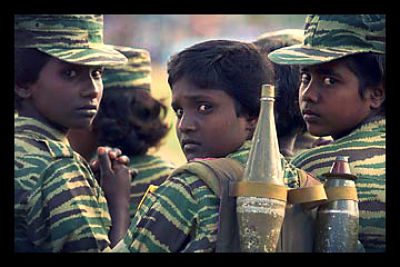
Australia’s Public Interest Advocacy Center detailed an in-depth report chronicling the various abuses perpetrated by both sides of the conflict. The Tamil Tigers have been accused of using civilians as human shields and recruiting child soldiers. While these violations are heinous, the report lays the majority of the blame at the feet of the Sri Lanka government forces.

A United Nations report shows the majority of those 40,000 killed in the war’s final months can mostly be attributed to government action.

The team of investigators highlight the years 2008 and 2009, where the Sri Lankan government is accused of mass civilian bombardment. For example, in 2009, civilians were blocked by rebel fighters from leaving the war zone; the government shelled the entire area.

U.N. satellite images show the area the government shelled was occupied by up to 50,000 noncombatants. The government forces are also accused of purposefully targeting hospitals as well as blocking food and medicine to civilians and miscounting the number of civilians located in the war zone.

The abuses have been noted by the United States Government, resulting in intensified relations between the two countries. Recently, the U.S. has floated the idea of a third U.N. resolution against Sri Lanka. It responded by denying a visa request for a State Department official.

The government remains obstinate in the face of international pressure. Its President Mahinda Rajapaksa stated that it would be a “great crime” to accuse the government of war crimes. He went as far as to say that those bringing these allegations against the Sri Lankan government shows they are “opposed to peace.”

It is uncertain where these U.N. resolutions will lead or if they will be effective at all in finding justice for the many thousands that were needlessly slaughtered by their own government.

– Zack Lindberg

Sources: Al Jazeera, CFR, ABC News
Photo: The Telegraph
February 13, 2014
https://borgenproject.org/wp-content/uploads/borgen-project-logo.svg 0 0 Borgen Project https://borgenproject.org/wp-content/uploads/borgen-project-logo.svg Borgen Project2014-02-13 16:42:142024-12-13 17:50:03Human Rights Abuses in Sri Lanka
Technology, War and Violence

Covert Drone War Has Killed More Than 2,400

Drones_usa_covert_war
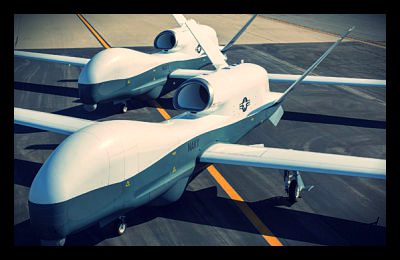
The Bureau of Investigative Journalism has released a comprehensive look at the United States’ drone program from 2009 to the present. Sketching its missteps and apparent successes, the United Kingdom-based nonprofit relates the story of the Barack Obama administration’s relationship with drones and brings clarity to an otherwise opaque issue.

Drone strikes began after 9/11, after the passage of the Authorization for Use of Military Force (AUMF.) This law enables the president to “take action to deter and prevent acts of international terrorism against the (U.S.).”

Since the act’s passage, both the George W. Bush and the Obama administrations have launched hundreds of attacks on foreign soil.

By their count, over 390 covert drone strikes have killed more than 2,400 people thus far since Obama took office. Targeting Yemen, Somalia and Pakistan. Both civilians and militants have been killed.

Barack Obama first made use of drones just three days after the start of his presidency. While initial reports deemed it a success, information gathered later indicated that at least nine civilians were killed in the strike while the one 14-year-old survivor was blinded.

Instead of hitting a Taliban hideout, as intended, the drone struck a family household, killing a tribal elder and members of his family.

Although Obama was reportedly dismayed by the news, he has continued using drone strikes in much greater excess than his predecessor, although with greater rates of accuracy.

Under Obama, drone strikes have killed “six times as many people” than under Bush, but the casualties per strike has dropped from eight to six. Similarly, the civilian deaths have decreased as well, from three casualties per strike for Bush and only 1.43 casualties for Obama.

Some argue that drones help more than hinder anti-terrorism campaigns. As one Air Force officer expressed in the New York Times, “using them to go after terrorists not only was ethically permissible but also might be ethically obligatory, because of their advantages in identifying targets and striking with precision.”

Beyond their perceived benefits, mistaken drone strikes still rattle those who consider them immoral. In 2006, CIA drones killed at least 68 children located in a madrassa, or religious school.

Last month, drones attacked a convoy escorting a bride to her wedding. The U.S. has yet to comment on an attack that killed more than 15 civilians.

In September 2013, a law professor’s study found strikes harm global security and encourage other states and terrorist organizations to likewise arm themselves with unmanned weapons. As interest and concern over drones grow and the debate over their moral and unethical merits rage, the U.S. will carefully need to consider the cost of its continued employment.

– Emily Bajet

Sources: The New York Times, Justice, The Bureau Investigates, GPO, The Guardian
Photo: RT

February 11, 2014
https://borgenproject.org/wp-content/uploads/borgen-project-logo.svg 0 0 Borgen Project https://borgenproject.org/wp-content/uploads/borgen-project-logo.svg Borgen Project2014-02-11 04:00:222024-05-26 23:08:35Covert Drone War Has Killed More Than 2,400
Children, Global Poverty, War and Violence, Women & Children

Protecting the Rights of Syrian Children

syrian_children
On January 22, the Geneva II Middle East Peace Conference opened in Montreux, Switzerland. One of the major focuses of the conference is an attempt to curb the civil war in Syria.

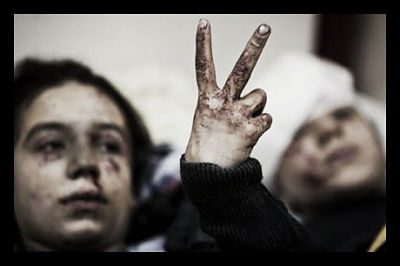
Since the beginning of Syria’s civil war in spring 2011, over 100,000 people have been killed. The Oxford Research Group posted an independent study estimating that 11,420 of civilian casualties, over 10 percent have been children.

While the majority of casualties have resulted from explosive weapons or Syrian army assaults on civilian neighborhoods, there have also been targeted attacks on children, with 112 recorded cases of torture leading to death.The situation for Syrian children is dire. In many cases, the children are forced to flee Syria as refugees. As refugees, the situation is not much better, with limited access to food and water.

World Vision has released its January report on the crisis in Syria focusing on bringing the conditions of the regions children to light. The report, “Stand With Me – Children’s Rights, Wronged” emphasizes the conditions in which Syrian children live and outlines what is needed to support them.

The report discusses the violations against Syrian children’s basic human rights. Affected children in Syria endure child labor at as young as 4 years old, with 10 percent of refugees replacing education with work.

This inability to access education is emphasized as one of the greatest misfortunes of the war. World Vision’s report explains how important it is to keep Syrian children in school not just to educate them, but also to keep them safe from dangerous situations on the streets and in the workplace.

Additionally, many Syrian children are being exploited to smuggle goods, perform sexual acts and to work and fight on the front lines of the civil war.

In addition to highlighting the conditions that Syrian children face, World Vision calls for three demands regarding the safety of these children to be met:

1. “All parties to the conflict to cease hostilities and come together to negotiate a peaceful resolution to the conflict, with support from the international community.

2. All parties to do everything within their power to respect and ensure the protection of children and their rights by immediately ceasing all violence, exploitation, and abuse against children.

3. Donors to meet the $1 billion call to fund education and child protection programming for children affected by the crisis…”

In light of the Geneva II Middle East Peace Conference, World Vision’s January report calls for action on the part of the global community in order to curtail further violence against the children of Syria.

– Cameron Barney

Sources: World Vision, NBC News, NPR, NPR, BBC
Photo: The Big Story

February 5, 2014
https://borgenproject.org/wp-content/uploads/borgen-project-logo.svg 0 0 Borgen Project https://borgenproject.org/wp-content/uploads/borgen-project-logo.svg Borgen Project2014-02-05 04:14:192024-05-26 23:08:32Protecting the Rights of Syrian Children
Human Rights, War and Violence

5 Genocides that Changed the World

holocaust_genocides
Throughout history, there has been a problem in classifying mass killings as genocides.  The term “genocide” carries a lot of weight because it implies that there was a deliberate extermination of a certain group of people.  Would natural disasters deliberately ignored by the government qualify as genocides?  Can colonization be considered a form of genocide?  Was the North Atlantic Slave Trade genocide?  Since the definition and characteristics of genocide are subjective, this post considers a broad definition of genocide, as in, organized mass murders that are politically, racially, religiously or ethnically fuelled.  The following list is by no means ranking the genocides in any terms, nor is this a comprehensive list of world genocides 

The Nazi Holocaust

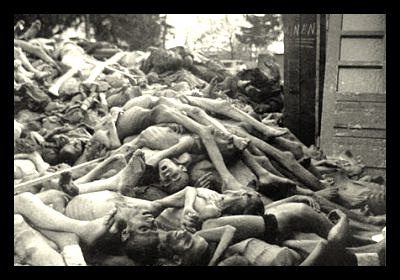
Nazi Germany, led by Hitler in the 1930s and 1940s, sought to exterminate the Jewish population.  The Jews were used as a scapegoat for Germany’s economic crisis.  Over the course of WWII, close to 8 million Jewish people were slaughtered by the Nazi regime.  Close to 2/3 of all Jews living in Europe were killed, including 1.1 million children.  Furthermore, some 300,000 members of the Jewish population in Eastern Europe were displaced.

Trans-Atlantic Slave Trade

The slave trade to North America killed many Africans as they were uprooted and shipped across the Atlantic.  Over 12 million Africans were transported to the Americas and sold into slavery from the 16th to the 19th century.  The trans-Atlantic slave trade is considered one of history’s greatest tragedies in terms of scale and duration.

Holodomor (Soviet famine of 1932-1933)

Often called the “Terror-Famine” in Ukraine, this genocide was responsible for the deaths of 2.5 to 7.5 million Ukrainians.  From 1932 to 1933, Stalin withheld aid, restricted migration and confiscated food from Ukrainian peasants.  Holodomor, essentially means “extermination by hunger.”  Scholars believe that Stalin was attempting to quell the Ukrainian nationalism that threatened the USSR’s hold over the country.  Due to shoddy record-keeping and government corruption, the details concerning this genocide are largely unknown.

China’s Great Leap Forward and the Cultural Revolution

China’s movement towards a utopian communist society from the 1940s to the 1970s failed miserably. Some 40-70 million people died due to starvation as well as the targeted killing of “rightists” and elites by the Red Guard, a communist youth organization that led the Cultural Revolution.  The promotion of a “class struggle” prompted young people to fight against society’s elites, such as professors, landowners and businessmen.

Pol Pot’s Cambodia

From 1975 to 1979, Pol Pot’s regime targeted intellectuals, foreigners and elites in an attempt to create an agrarian utopia reminiscent of Mao Zedong’s Cultural Revolution.  Over 2 million people were killed in a period of 4 years.  Any foreign economic or medical aid was suspended, media was censored, outside contact was forbidden and the country’s currency was eliminated.  People were forced to work all day in the fields, but were forbidden from eating the food they produced.  Those who were not targeted by the government often died of starvation or disease.

– Stephanie Lamm

Photo: Alan Hart
Sources:
Union County College, About.com, SlaveVoyages.org, UNESCO, The History Place

February 4, 2014
https://borgenproject.org/wp-content/uploads/borgen-project-logo.svg 0 0 Borgen Project https://borgenproject.org/wp-content/uploads/borgen-project-logo.svg Borgen Project2014-02-04 20:36:452024-06-04 03:01:145 Genocides that Changed the World
Global Poverty, War and Violence

Ukraine Protests Turn Violent

violence_protests_ukraine
Since November, Ukraine has been rocked by intense public protests over the government’s apparent rejection of the West in favor of closer ties to neighboring Russia. The protests have taken a violent turn as many demonstrators clashed with riot police over new anti-protest legislation that was recently passed this week.

The new legislation aims to quell the public’s right to protest against government officials. The specifics of the law ban the placement of tents, stages and loud speakers in public spaces.

The law also puts in place hefty jail sentences for those deemed to have played a part in “mass disorder.” Other points in the law state that wearing face masks or helmets is prohibited, threatening violators with long sentences.

Probably the law’s most egregious violation pertains to journalist’s ability to report on government officials. Any criticism of officials by the media is deemed illegal under the new legislation.

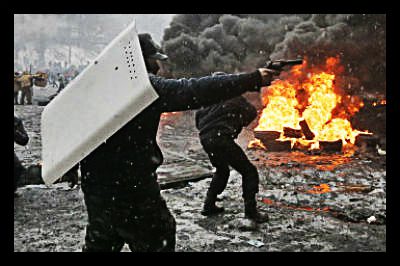
Tensions boiled over on Sunday as protesters resorted to violence against police forces. Demonstrators beat officers with sticks and attempted to turn over a bus blocking access to parliament. Fireworks and smoke bombs hurled through the air, injuring many.

A total of thirty police officers were injured during the protests. Later that night, police fired upon protesters with large water cannons in an attempt to disperse them.

A central figure in the middle of the public outrage over recent anti-western moves by the government is former professional boxer Vitaly Klitschko. He has made repeated calls for protests to remain peaceful despite the government overreach.

Recently, Klitschko was joined by his fiancé, American actress Hayden Panettiere, in a show of solidarity with the protesters.

Despite his efforts, Klistchko’s repeated calls for restraint fell on deaf ears, as tensions proved too much for many involved in the protests.

The country’s recent pivot away from a proposed joint economic partnership with the European Union toward Russia leads many to see Russia’s influence in the new anti-protest legislation. Heather McGill of Amnesty International reports the new law is almost an exact copy of existing Russian legislation that dealt a severe blow to the civil society in Russia.

The new economic partnership with Russia aims to reverse the decline of trade among the respective nations. Under the new deal, Russia will buy up $15 billion of Ukraine debt and cut natural gas prices.

The new prices will be slashed to $268.50 per 1,000 cubic meters of gas from $400.

The proposed partnership will reach across many economic sectors including industry, agriculture, defense, construction and transport.

This new partnership has created a split among the citizenry throughout Ukraine. The eastern section of the country desires increased relations with Russia, while the West favors closer ties with the E.U.

As Ukraine moves closer to Russia, many fear the nation will emulate the authoritarian tactics associated with the Russian government. The brazen passage of anti-protest legislation with complete disregard for the public’s disapproval is a clear sign Ukraine is moving in that direction.

– Zack Lindberg

Sources: CNN, Amnesty International, Reuters
Photo: TPM

February 4, 2014
https://borgenproject.org/wp-content/uploads/borgen-project-logo.svg 0 0 Borgen Project https://borgenproject.org/wp-content/uploads/borgen-project-logo.svg Borgen Project2014-02-04 04:00:582017-12-08 03:01:57Ukraine Protests Turn Violent
Children, Global Poverty, War and Violence

Child Soldiers Released in Myanmar

Child Soldiers Released in Myanmar
With over 400,000 soldiers serving in the national army of Myanmar (known as 
Tatmadaw Kyi), it’s nearly impossible to estimate the number of child soldiers hidden among the hundreds of base camps all over the country – nor is it easy to track down the ones that have been reported. In 2011 the International Labour Organization (ILO) reported that it had received 236 complaints of child soldier recruits, and that in response to these complaints 57 underage soldiers had been released.

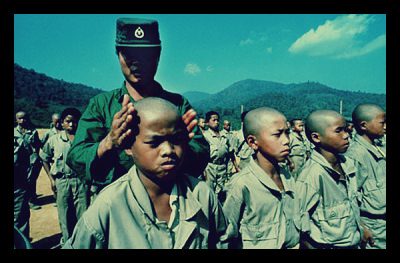
Children find their way into combat when they run out of other ways to feed themselves, when they are forced at gunpoint to accept a forged birth certificate and enlist, when they are dropped off by their families to be taught discipline, or when they volunteer for any number of nationalistic reasons. Regardless of how they get there, all are under violation of the UN’s Optional Protocol to the Convention on the Rights of the Child, which sets the minimum age of volunteering for armed combat at 18.

In June 2012, Myanmar’s Ministry of Defense signed a joint Action Plan with the UN that promised to work toward the release all of its soldiers and guards under 18, as well as prevent future underage recruits. The army also stated that they meant to assist the released children in attending school or finding civilian employment, as well as providing the necessities for their trip back home.

The plan was set to be implemented within the first 18 months of it being signed, and within that time, a total of 272 children, as well as adults who were recruited as children, have been released. Moreover, while the act is now due to be extended, representatives of the UN are planning to meet with armed groups across the country to discuss and encourage more releases.

As Human Rights Watch (HRW) representative Smith suggests, “The real test [of Myanmar’s dedication to eradicating underage soldiers] will be if the army is willing to give full access to the UN and hold soldiers and officers accountable for falsifying documents, and for other crimes related to the recruitment of child soldiers.”

Since the signing of the Action Plan on behalf of the Country Task Force on Monitoring and Reporting of grave violations of child rights in armed conflict (CTFMR), actions have been taken against 40 military officers and 229 military personnel for their role in the recruitment of underage soldiers.

While the UN praised this as a “historic step” toward ending the practice of using children in the military, Myanmar still employs more child soldiers than nearly any other country, and the work of eradicating all involvement of children in armed forces is far from over.

– Lydia Caswell
Sources: Australian Network News, Child Soldiers International, Eleven , GMA News , Irin News
Photo: AATOP

February 1, 2014
https://borgenproject.org/wp-content/uploads/borgen-project-logo.svg 0 0 Borgen Project https://borgenproject.org/wp-content/uploads/borgen-project-logo.svg Borgen Project2014-02-01 03:47:162020-07-02 12:23:06Child Soldiers Released in Myanmar
Global Poverty, War and Violence

Mass Killings in Bangui

Mass_Killings_Bangui_central_african_republic_car
In recent days the year-long struggle in the Central African Republic has been brought to the attention of the United Nations. On December 5, the UN Security Council voted unanimously for French and African forces to “take all necessary measures” in dealing with the conflict. On December 10, a UN spokesperson announced that “more than half a million” people had been “displaced within CAR since the crisis began in December 2012.”

Rebels in the Central African Republic began making assaults against the government in December 2012 before overthrowing former President Francois Bozize in March. Though there was hope that the new leader who was put in place could quell some of the violence in the area, in recent months the violence has escalated into near civil-war conditions.

As it happens, the violence in this region is felt most acutely by those living in the capital city, Bangui. It has been estimated by the UN High Commissioner for Refugees that over 100,000 people living in Bangui have been displaced in the last year. These refugees have been living in dirty camps that leave the people residing in them vulnerable to infections and disease.

On November 25, UN Deputy Secretary-General Jan Eliasson explained that an estimated 1 out of every 3 people from the population of 4.6 million are in need of food, protection, health care, water sanitation and shelter. The UN had previously put forward a $195 million appeal to help in the nation, but it has not even been half-funded as of that date.

Moreover, some of the worst violence in the region has occurred near the northern border with Chad, prompting worries that fighting will spill over into that country. The recent bouts between Christian and Muslims have also raised concerns, with French Foreign Minister Laurent Fabius saying that the country “was on the verge of genocide.”

Mass killings in Bangui have, furthermore, sparked these concerns with the various reports coming out this month.  According to a United Nations report, 450 people were massacred within city in 3 days, while others fled for the refugee camps. Given the hatred that has been fostered in the country, it may be some time before the situation could be settled.

France hopes that it can have a positive impact on this nation it once colonized. French and African Union troops have entered the Central African Republic since the UN Security Council voted to take action within the nation. The troops are working to disarm the various militia groups, with the hope that a stable government could be established.

Though Africa, as a continent, looks to be on the upswing, there are still terrible conflicts happening in the Central African Republic. These conflicts need to be noticed, and with the work that the UN is doing, more people are learning about the situation. With luck, a new year could bring new hope for this beleaguered nation.

– Eric Gustafsson

Sources: United Nations, New York Times, PBS
Photo: AFP

January 29, 2014
https://borgenproject.org/wp-content/uploads/borgen-project-logo.svg 0 0 Borgen Project https://borgenproject.org/wp-content/uploads/borgen-project-logo.svg Borgen Project2014-01-29 04:00:492024-06-11 02:16:20Mass Killings in Bangui
Global Poverty, War and Violence

Iran ‘Not Likely’ Asked to Syrian Peace Talks

iran_syria_peace_talks
A UN spokesperson has confirmed that Iran was not invited to the first round of the Syrian peace talks due to take place in Switzerland.  As it stands, invitations to participate in peace talks are usually extended by the initiating countries. In this case, Russia and the United States have remained at odds about Iran’s role in the talks.

Syria has been facing an increasingly bleak humanitarian crisis as the civil war between Syrian President Bashar al-Assad and rebel forces. Since the violent outbreak in 2011, more than 100,000 Syrian civilians have been killed while millions more have sought refuge in neighboring countries to escape the escalating violence and increasing poverty. With no end of the civil war in sight, neighboring countries have expressed their concerns about taking refugees without more aid from other countries or action taken to end the violence.

The ultimate goal the United States hopes to reach in the peace talks involves transitioning president Bashar al-Assad out of power. The plan doesn’t say that al-Assad must leave, something which must come as a relief since al-Assad stated that while he will send a representative to the talks, he will not voluntarily leave office.

As it is, though the UN Secretary-General Ban Ki-moon is actually in favor of inviting Iran to the first round, the United States chose to offer Iran a role in the less official ‘second round’ talks. Iran immediately rejected this offer saying that, “suggesting such an arrangement would not respect the country’s honor,” which makes sense since Iran is Syria’s neighbor and ally. However, according to US Secretary of State, John Kerry, Iran opposes the proposed plan of a transitional Syrian government.

All in all, UN officials are hopeful that issues involving Iran’s participation can be resolved in a preliminary meeting between the initiating countries. Secretary of State John Kerry and Russian Foreign Minister Sergey Lavrov are scheduled to meet on January 13.

– Colleen Eckvahl

Sources: Al Jazeera, Washington Post
Photo: Noisy Room

January 26, 2014
https://borgenproject.org/wp-content/uploads/borgen-project-logo.svg 0 0 Borgen Project https://borgenproject.org/wp-content/uploads/borgen-project-logo.svg Borgen Project2014-01-26 18:41:092024-12-13 17:49:55Iran ‘Not Likely’ Asked to Syrian Peace Talks
Global Poverty, Technology, War and Violence

Kalashnikov Regrets Destruction Caused by AK-47

child soldiers_ak-47
Last month Mikhail Kalashnikov passed away at the age of 94. The legacy he leaves behind centers around the Avtomat Kalashnikov 1947, better known by its abbreviation, AK-47.

On multiple occasions, Kalashnikov has been asked whether he lamented the destruction his weapon has caused throughout the decades. Time and time again he stated that he is not to blame for the death and destruction surrounding the AK-47, but rather it is the failure of politicians to reach peaceful solutions that should be held as culpable.

But, recently, a letter, Kalashnikov wrote shortly before his death, shows that he felt partly responsible for the millions of people killed by the AK-47. The letter was addressed to the head of the Russian Orthodox Church, Patriarch Kirill, asking if blood was on his hands.

“If my assault rifle took people’s lives, it means that I, Mikhail Kalashnikov,…am responsible for people’s deaths,” he wrote.

The Church responded, telling him that if the purpose behind the weapon’s creation was to protect the Motherland then it praises its creator and the soldiers that wield it.

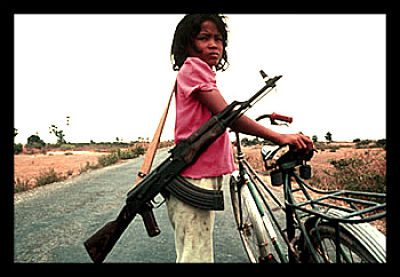
The AK-47 has become more than just a weapon; it has reached cult-like status across the world. From child soldiers living in conflict ridden Africa to American action moviegoers, millions of individuals recognize the weapon but few have stopped to contemplate its destructive legacy.

Part of the reason for its prevalence among rebels and insurgents is the gun’s uncanny ability to function in almost any environment; from desert sands to humid jungles. The gun’s minimalist design seems to be its biggest strength, allowing for durability and ease of use.

Its price also allows it to reach the hands of millions in poorer nations. In many cases it can be purchased for less than the price of a live chicken. Some estimates place the death toll caused by the AK-47 to be 250,000 per year — and rising.

If there’s a nation in conflict one would not have to look far to see AK’s being wielded by rebel factions and terrorist groups.

Part of the reason for its ubiquity has been linked to the former Soviet Union’s push to mass produce the weapon. It gave free licenses for production to “fraternal countries” such as Bulgaria, China, East Germany, Hungary, North Korea, Poland and Yugoslavia.

Unfortunately, once the Soviet Union collapsed many former bloc countries auctioned off their stockpiles. Many African countries jumped at the opportunity and purchased thousands of AKs. For the Middle East, many AK-47s were brought into the country by the invading Soviet forces in 1979. To counteract the Soviets, the CIA funneled hundreds of thousands of Chinese AKs to the mujaheddin rebels.

Finally, when the Soviets left Afghanistan, the arms stockpiles built up during the war did not. Furthermore, It did not take long for the “Kalashnikov culture” developed during the war to spill over into other neighboring nations.

Now, the weapon seems synonymous with western ideas concerning the Middle East. As such, Osama Bin Laden or Saddam Hussein wielding their AKs in front of supporters is the likely image many conjure.

Whether or not Mikhail Kalashnikov is responsible for the millions of deaths caused by his invention is a question that will linger for many. Created by a young engineer desiring to develop an efficient weapon to protect the men he served with, the destruction caused by the AK-47 can be typified by an old proverb: the path to hell is paved with good intentions.

– Zack Lindberg

Sources: Los Angeles Times, The Washington Post
Photo: School of Public Health

January 25, 2014
https://borgenproject.org/wp-content/uploads/borgen-project-logo.svg 0 0 Borgen Project https://borgenproject.org/wp-content/uploads/borgen-project-logo.svg Borgen Project2014-01-25 04:00:232024-12-13 17:49:55Kalashnikov Regrets Destruction Caused by AK-47
Global Poverty, Politics and Political Attention, War and Violence

Why the U.S. Doesn’t Pull All Troops from Afghanistan

troops_afghanistan
By the end of 2014, the United States is expected to have all of its troops withdrawn from Afghanistan after 13 years of occupation. Public opinion in the U.S. heavily favors troops leaving Afghanistan before the proposed deadline. A majority of Americans now believe that the initial occupation of Afghanistan in 2001 was a mistake.

U.S. President Barack Obama’s administration has stressed the importance of pulling out of Afghanistan for years, but now Obama is trying to land a deal with the Afghan Government that will allow several thousand military personnel, Special Forces troops, and CIA members to stay in the country through 2024. Why would the U.S. effectively ‘end the occupation of Afghanistan’ while leaving behind thousands of workers for the next 10 years? There are two possible explanations that could explain why the U.S. is opting to remain in the region and not just let the Afghan government completely take over.

First, the U.S. government fears that if they leave Afghanistan in the same way they left Iraq, the country could lose ground to al-Qaeda. The Iraqi government has already lost two cities that were considered major wins for the U.S. troops during the fighting in 2004, Fallujah and Ramadi. The U.S. pulled out of Iraq before reaching an agreement between both governments that was similar to what they are working on in Afghanistan. Not securing an agreement meant the U.S. had no control over the political development in Iraq. Al-Qaeda and groups affiliated with al-Qaeda have since begun gaining more ground in the western Anbar province.

Another reason that could be compelling the U.S. to maintain a presence in the region is because the only Middle Eastern Pentagon base is in Afghanistan. Afghanistan is a strategic geopolitical asset for the U.S. It borders Iran, China and Pakistan, so it sits in the center of an area of the world that the U.S has many vested interests. Maintaining top officials in the country can help influence U.S. interests throughout the region.

If the U.S. does not pull all of their officials from the region, there is a possibility of continuing a smaller scale occupation until 2024. On the other hand, if the U.S. completely leaves and al-Qaeda and other military groups regain control of the region, more problems could be created for the U.S. and for citizens of Afghanistan.

– Colleen Eckvahl

Sources: The Telegraph, Global Research
Photo: The Telegraph

January 24, 2014
https://borgenproject.org/wp-content/uploads/borgen-project-logo.svg 0 0 Borgen Project https://borgenproject.org/wp-content/uploads/borgen-project-logo.svg Borgen Project2014-01-24 13:20:022024-12-13 17:49:54Why the U.S. Doesn’t Pull All Troops from Afghanistan
Page 17 of 20«‹1516171819›»

Get Smarter

  • Global Poverty 101
  • Global Poverty… The Good News
  • Global Poverty & U.S. Jobs
  • Global Poverty and National Security
  • Innovative Solutions to Poverty
  • Global Poverty & Aid FAQ’s
Search Search

Take Action

  • Call Congress
  • Email Congress
  • Donate
  • 30 Ways to Help
  • Volunteer Ops
  • Internships
  • Courses & Certificates
  • The Podcast
Borgen Project

“The Borgen Project is an incredible nonprofit organization that is addressing poverty and hunger and working towards ending them.”

-The Huffington Post

Inside The Borgen Project

  • Contact
  • About
  • Financials
  • President
  • Board of Directors
  • Board of Advisors

International Links

  • UK Email Parliament
  • UK Donate
  • Canada Email Parliament

Get Smarter

  • Global Poverty 101
  • Global Poverty… The Good News
  • Global Poverty & U.S. Jobs
  • Global Poverty and National Security
  • Innovative Solutions to Poverty
  • Global Poverty & Aid FAQ’s

Ways to Help

  • Call Congress
  • Email Congress
  • Donate
  • 30 Ways to Help
  • Volunteer Ops
  • Internships
  • Courses & Certificates
  • The Podcast
Scroll to top Scroll to top Scroll to top