• Link to X
  • Link to Facebook
  • Link to Instagram
  • Link to TikTok
  • Link to Youtube
  • About
    • About Us
      • President
      • Board of Directors
      • Board of Advisors
      • Financials
      • Our Methodology
      • Success Tracker
      • Contact
  • Act Now
    • 30 Ways to Help
      • Email Congress
      • Call Congress
      • Volunteer
      • Courses & Certificates
      • Be a Donor
    • Internships
      • In-Office Internships
      • Remote Internships
    • Legislation
      • Politics 101
  • The Blog
  • The Podcast
  • Magazine
  • Donate
  • Click to open the search input field Click to open the search input field Search
  • Menu Menu

Archive for category: War and Violence

Information and news War and Violence

Global Poverty, Human Rights, Politics and Political Attention, War and Violence

U.S. Launches Internal Investigation into Drone Strike

yemen_missile_fragment_wedding_drone_strike_us_investigation
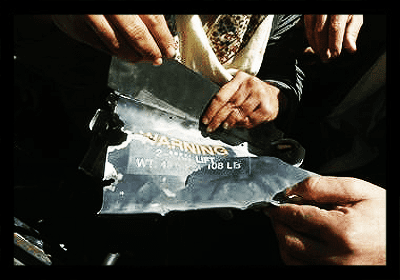
The United States government is launching an internal investigation into a December 12 drone strike in Yemen. The drone strike was meant for an al-Qaeda militant, but ended up hitting a wedding party, killing 12 civilians and leaving more injured. A local journalist soon after took images of the strike and turned them over to a human rights organization working in Yemen called Reprieve. That group then turned it over to NBC News, the resulting actions allowed many to say that the U.S. ‘turned a wedding into a funeral.’

The U.S. released a statement acknowledging the attack while also stating that officials are now reviewing what happened. This is one of the few times the U.S. government has mentioned or confirmed that a drone strike is being questioned. A U.S. official, after declining to give any sort of identification, stated that, “Given the claims of civilian causalities, we are reviewing it.”

Some are calling this a ‘wake up call’ that highlights the problems with the U.S. drone campaign. There are even reports that the target of the strike Shawqui Ali Ahmed al Badani, a mid-level militant, ended up escaping the attack. Others on the ground in Yemen said that Badani wasn’t even present at the time. Baraa Shiban, a human rights activist who was in the area at the time, said that he had not heard any reports that Badani was in the area. He explained that, “Badani was from a different region so he would have been a stranger in the region.” He, furthermore, added that he believes that the US acted on incorrect intelligence.

This drone strike has, moreover, garnered a strong reaction against the U.S. within Yemen. To illustrate this, the Yemen parliament passed a resolution that called for an end for all drone strikes in Yemen shortly after the wedding day drone strike. Official numbers provided by the U.S. government claim that they have carried out 59-69 drone strikes in Yemen, resulting in between 287-423 deaths, both civilian and militant. Though more strikes are suspected to have been carried out by the U.S., they have not been officially confirmed.

– Colleen Eckvahl
Sources: NBC, RT
Sources: Reprieve

January 24, 2014
https://borgenproject.org/wp-content/uploads/borgen-project-logo.svg 0 0 Borgen Project https://borgenproject.org/wp-content/uploads/borgen-project-logo.svg Borgen Project2014-01-24 12:02:052014-01-24 12:02:05U.S. Launches Internal Investigation into Drone Strike
Global Poverty, War and Violence

Fear of Genocide in Central African Republic

Genocide_in_Central_African_Republic
In the Central African Republic (CAR) broils a sectarian conflict that has left 210,000 fleeing its capital and over 500 dead. Violent clashes between Muslim and Christian militias in the nation’s capital of Bangui have world leaders scrambling to avoid a possible genocide in the strife-ridden country.

In fear of the mass killings, kidnappings and rapes ravaging the capital, hundreds of refugees have risked boat rides across a branch of the Congo River to escape the violence while 40,000 have decided to camp outside the French-controlled Bangui airport, a place of stability and safety for the displaced Africans.

Half a century’s worth of political chaos has left the land-locked country easy pickings for its current rebel terrorists.

After the CAR gained freedom from France in 1960, it remained under despotic rulers for three decades. In 1993, the country began its first civilian rule, which fell a decade later to a military coup led by then rebel Francois Bozize. He instated himself as president and ruled uninterrupted until the rebel coalition Seleka, meaning “alliance” in the Sango language, overran the capital in March and ousted him.

Since the most recent coup, the country has fallen even further into disorder, with the dissembled rebel and Christian militias fighting one another. The reappointed Prime Minister Nicolas Tiangaye, a former human rights lawyer, expressed dismay at the deterioration of his country.

“It’s anarchy, a nonstate,” said Tiangaye. “Looting, arson, rape, massacres of the civilian population—they are sowing terrorism.”

France sent 1,600 troops to support the African Union-led forces on the ground, with hopes that other United Nations forces will help to restore order to the area. A visit by Samantha Power, the American ambassador to the United Nations, to CAR has reinforced her opinion that further action is necessary.

“I come away from our time in CAR very concerned about the extent of the polarization, the tautness of the society and the temptation that families and communities that have been victimized have to take justice into their own hands,” said Power.

Power’s fears arise from concerns that the conditions in the CAR may engender genocide. With both Christians and Muslims facing casualties, a desire for revenge may drive civilians to join militias. The Security Council passed a resolution to send 6,000 African troops to help bolster the 1,600 French troops already stationed. Whether that will be enough to quell the rebels, CAR refugees can only wait and see.

– Emily Bajet

Sources: Al Jazeera, Al Jazeera, BBC, BBC, New York Times, New York Times, New York Times, New York Times
Photo: The Washington Post

January 14, 2014
https://borgenproject.org/wp-content/uploads/borgen-project-logo.svg 0 0 Borgen Project https://borgenproject.org/wp-content/uploads/borgen-project-logo.svg Borgen Project2014-01-14 21:48:342024-12-13 17:49:53Fear of Genocide in Central African Republic
Global Poverty, War and Violence

Peace in Myanmar Threatened

peace_in_myanmar_threatened
In recent years, Myanmar has achieved a relative state of peace. The first civilian administration in 50 years has been marked by an array of golf courses, updated infrastructure, overall poverty reduction, and ethnic diversity.

Nearly twelve ethnic groups inhabit Myanmar, each with its own militia. Contrary to the suggestion of added security, the atmosphere is tense with potential violence between the various groups and drug operations in the region.

Opium production in the region has experienced an annual increase with a 26% increase between 2012 and 2013 alone. But eradication has proven impossible as each ethnic group maintains its own agenda and interest. While flare-ups between groups has decreased in the region, violence continues to erupt sporadically.

In addition, the illegal industry continues to gain profit as poor rural citizens lack means of legal financial gain. The majority of inhabitants on the country’s borders live on farms, earning income through opium cultivation. Government assistance in education and healthcare are lacking, inciting organizations like UNICEF to establish programs in the region.

Since declaring independence in 1948, Myanmar has benefited from UNICEF sponsored programs involving healthcare, nutrition, sanitation, education, and other child centered programs. The past five decades have seen increased enrollment in primary schools, longer life expediency from HIV infected women and children, an increase in literacy rates and a decrease in media censorship.

Despite the continued aid, the majority of its inhabitants continue to live in poverty in the new democratic state. Nearly 70% of rural inhabitants live in poverty while an estimated 26% of city dwellers struggle financially. Only 26% of the 59.1 million inhabitants have access to electricity, leaving many to rely on firewood.

But hope is not lost. The government hopes to reach a cease fire agreement between ethnic groups. Officials hope that peace will bring long term stability to the region and cooperation to all groups involved. With the participation of all parties, the administration aims to reach a general consensus on the future of the country and its people.

– Jasmine D. Smith

Sources: New York Times, UNICEF, UNDP
Photo: Girl Serves World

January 14, 2014
https://borgenproject.org/wp-content/uploads/borgen-project-logo.svg 0 0 Borgen Project https://borgenproject.org/wp-content/uploads/borgen-project-logo.svg Borgen Project2014-01-14 18:30:302024-05-26 23:02:37Peace in Myanmar Threatened
Activism, Advocacy, Global Poverty, Health, Inequality, War and Violence

Ethnic Tension Within Inner Mongolia

mongolia
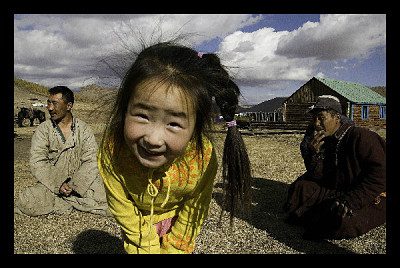
It is no secret that the concerns and rights of ethnic minorities in China fall to the wayside in favor of the Han, the ethnicity with the majority in the country. Inner Mongolia serves as an example of the cultural and economic strife caused by marginalizing one group over another. The result is what the Mongol minority believes is outright economic exclusion and the watering down of their culture.

One of the key issues within the region is the migration of the indigenous nomads from their native grasslands to the cities. The Chinese government waves off the migration as a move into modernity for the nomads. A removal from what Chinese authorities refer to as a “backward” culture, but as Nick Holdstock of the U.K. Independent points out, the natives have no say whatsoever when it comes to moving to the cities. This outflow of ethnic Mongolians to urban centers has raised fears among Mongolians that their culture, language and lifestyle are being threatened.

Another point of tension lies in the regional mining of rare-earth metals. Various mining companies have entered the region to take advantage of the lucrative prospects, especially since the value of these metals is demonstrated in their ubiquity among high-tech electronics. However, the mining has been accompanied by a degradation of the surrounding environment as well as the health of the nomads.

For example, the town of Baotou, a major mining hub, has seen its groundwater polluted to toxic levels, their crops ruined and much of their livestock destroyed. Moreover, the use of underground water sources, essential to the removal of impurities from the coal, has lessened the water available to crops and livestock. Many farmers, unable to deal with destruction of their livelihood, have moved away. The Guardian points out that the population within the surrounding villages of the Baotou plants has decreased dramatically. Those that have remained in the area are plagued by severe illness.

All of these factors have coalesced, creating serious economic problems for the ethnic minority. Environmental devastation of their grasslands has degraded some of the main forms of their economic livelihood; the mining industry in the region tends to hire workers from other provinces, excluding the nomads from many of the economic benefits the industry might bring.  Furthermore, those who have migrated to urban areas have discovered cultural barriers to finding gainful employment, namely an inability to speak passable Mandarin.

Tensions have, moreover, reached the point of violence in some instances. In 2011, a herder was killed by a passing coal truck when he attempted to prevent coal trucks from crossing into his land during his protest against the mining industry. Several days later another protester was killed by a forklift driver. Tensions finally boiled over and several thousand Mongolians went out to voice their opposition toward the mining activities.

Unfortunately, the case of Inner Mongolia is a harsh reminder among ethnic minorities in China of their second-class citizen status. Perhaps in time, the Chinese government will listen to the voices of protest among the disenfranchised minority groups that populate many rural areas throughout China. Until then, Mongolians and other ethnicities face major economic and cultural challenges.

– Zack Lindberg

Sources: The Independent, The Guardian
Fabio Ghioni

January 4, 2014
https://borgenproject.org/wp-content/uploads/borgen-project-logo.svg 0 0 Borgen Project https://borgenproject.org/wp-content/uploads/borgen-project-logo.svg Borgen Project2014-01-04 12:23:512016-02-06 08:44:53Ethnic Tension Within Inner Mongolia
Global Poverty, Health, War and Violence

Drones Impact on Mental Health in Pakistan

The United States has waged a drone campaign in Pakistan since the early 2000’s. The Waziristan region in northern Pakistan has been a specific target due to the major presence of the Taliban in the area. The Bureau of Investigative Journalism in London released a report indicating that drone strikes carried out by the U.S. have killed 3,581 people since 2004. That number includes 884 civilians and 197 children. Unsurprisingly, this has led to a rise in mental health issues.

The Huffington Post reported a story of a man who lost nine friends and relatives in one attack in 2009. While Mohammed Fahim was in another room, a drone hit his house, killing everyone else instantly. Fahim insists that his family had no ties to Islamist militancy, but instead that this was an attack that went astray.

Residents in Waziristan complain of living in a constant fear of drones, specifically citing the buzzing sound they emit when they fly overhead. This fear is leading to a rise in depression, anxiety, and in some cases psychotic episodes. Doctor Muktar ul-Haq is the head of psychiatry at a government hospital in the city of Peshawar. He told a story of a man who had a full blown psychotic episode after he found a SIM card outside of his house. A common rumor in Pakistan is that SIM cards emit signals to drones, guiding their attack. Haq said when the man was admitted he was “aggressive and paranoid.”

The social problems that plague Pakistan, such as poverty, Taliban violence, and unemployment, contribute to the rise in depression and anxiety. With all of these other problems, mental health falls to the bottom of the list. There are no official statistics about the rise in mental health issues, but some psychiatrists treating people in the region estimate that rates psychological illnesses have risen three fold.

– Colleen Eckvahl

Sources: Huffington Post, The Atlantic
Photo: CS Monitor

December 31, 2013
https://borgenproject.org/wp-content/uploads/borgen-project-logo.svg 0 0 Borgen Project https://borgenproject.org/wp-content/uploads/borgen-project-logo.svg Borgen Project2013-12-31 04:00:532024-05-26 23:00:46Drones Impact on Mental Health in Pakistan
Global Poverty, War and Violence

10 Great Quotes About the Poverty of War

War seems endemic to civilization, and in Syria, Iraq, Afghanistan, Nigeria and other places around the world people are fighting right now for some of the same basic reasons they have for millennia. Access to resources often determines the victors in any struggle, but both sides must face deprivations during any prolonged conflict and those hardships tend to be what most observers remember most vividly. Most of humanity’s greatest minds have witnessed war from one vantage or another and few have ever had any accolades to laud on the subject but many have had something to say. Here are a few thoughts from some great thinkers, most who witnessed war in the modern era.

1. “Probably, no nation is rich enough to pay for both war and civilization. We must make our choice; we cannot have both.” ~Abraham Flexner, American educator

2. “When the rich wage war it’s the poor who die.”~Jean-Paul Sartre, French philosopher from his play Le diable et le bon dieu

3. “Every gun that is made, every warship launched, every rocket fired signifies in the final sense, a theft from those who hunger and are not fed, those who are cold and are not clothed. This world in arms is not spending money alone. It is spending the sweat of its laborers, the genius of its scientists, the hopes of its children. This is not a way of life at all in any true sense.” ~Dwight D. Eisenhower delivered this message as part of a speech on peace during his presidency

4. “No matter what political reasons are given for war, the underlying reason is always economic.” ~A. J. P. Taylor, British historian and broadcaster

5. “The 1st panacea of a mismanaged nation is inflation of the currency; the 2nd is war. Both bring a temporary prosperity; a permanent ruin.” ~Ernest Hemingway, American writer and world traveler

6. “There is no instance of a country having benefited from prolonged warfare.” ~Sun Tzu, from The Art of War

7. “The basic problems facing the world today are not susceptible to a military solution.” ~John F. Kennedy said this in a speech during a West Point graduation

8. “How is it possible to have a civil war?” ~George Carlin, American comedian

9. “Even the most piddling life is of momentous consequence to its owner.” ~James Wolcott, current American journalist and writer

10. “Wars are poor chisels for carving out peaceful tomorrows.” ~Martin Luther King Jr. said this when speaking of the horrors of the Vietnam War

– Tyson Watkins

Sources: AAVW, IAS, Antiwar, Brainy Quote, Goodreads, EdChange, The Borgen Project Magazine
Photo: The Guardian

December 26, 2013
https://borgenproject.org/wp-content/uploads/borgen-project-logo.svg 0 0 Borgen Project https://borgenproject.org/wp-content/uploads/borgen-project-logo.svg Borgen Project2013-12-26 04:00:252024-05-25 00:38:3810 Great Quotes About the Poverty of War
Politics and Political Attention, War and Violence

Digging Up the Truth, Yasser Arafat

As the President of the Palestinian National Authority, Yasser Arafat dedicated his life to combating Israel for the sake of his nation’s right to self-determination. After decades of activism and leadership, Arafat’s life came to an end on November 11, 2004 after having suffered from a mysterious month-long illness. More puzzling than the onset of Arafat’s undetermined illness was his unexpected death.

Since Arafat had died while undergoing treatment in a French military hospital, no autopsy had been carried out immediately after his death. Under French law only his wife, Shuha, had the legal authority to request an autopsy at that time. Due to the absence of an autopsy, in the years since Arafat’s passing, a spectrum of rumors ranging from HIV to poisoning have been circulated. However, after years of speculation, Arafat’s body was exhumed for an autopsy in 2012.

To the dismay of many, even the autopsy of Arafat yielded inconclusive results. After separate laboratory testing conducted by Al Jareeza, France, and Russia, each result yielded inconsistent findings. According to Russia, an insufficient amount of polonium-210 was found in the remains of Arafat in order to conclusively declare poisoning as the cause of death. However, Al Jareeza ardently maintains the conviction that Arafat had indeed succumbed to poisoning by polonium-210. On the other hand, France stands a slightly neutral stance by concluding that while unusually high levels of polonium had been discovered in Arafat’s system, the cause of death was most likely natural causes in conjunction with a generalized infection.

Although the results and interpretation of Arafat’s autopsy are inconclusive, the staggering price of his exhumation is less bewildering. No official statements regarding the cost of the former Palestinian leader’s exhumation has been issued yet. However, according to The Guardian, a typical exhumation in the UK is priced at approximately £5,000 or $6, 867.

Under the assumption that a family of four needs $146 per week to purchase adequate and healthy groceries, the cost of exhuming Arafat could have bought a family of four living in the United States groceries for 46 weeks. Furthermore, since 50 percent of the world’s population subsides on less than $2.50 a day, Arafat’s exhumation could have also enabled an individual living in a non-industrialized nation to secure shelter, food, and clothing for almost 2,747 days, or roughly 7.5 years.

Although uncovering the truth behind Yasser Arafat’s death holds momentous political implications for Palestine and its international relations, the cost of the exhumation also has enormous political merit- we live in an age in which digging up the past is given more  care than shaping the immediate future. The cost of a single exhumation could also have been utilized to allow an impoverished child to see his or her 7th birthday.

– Phoebe Pradhan

Sources: The Spectator, The Guardian 1, 2, USA Today, World Bank
Photo: The Times

December 25, 2013
https://borgenproject.org/wp-content/uploads/borgen-project-logo.svg 0 0 Borgen Project https://borgenproject.org/wp-content/uploads/borgen-project-logo.svg Borgen Project2013-12-25 04:00:542024-05-26 22:59:56Digging Up the Truth, Yasser Arafat
War and Violence

Brooklyn Museum Shows Faces of War

war_photography_brooklyn
The newest collection at the Brooklyn Museum offers unapologetic effects of violence around the world in a new exhibit titled “WAR/PHOTOGRAPHY: Images of Armed Conflict and Its Aftermath.” The collection features works by 225 photographers from all walks of life including military members, commercial portraitists, journalists, amateurs and Pulitzer Prize winners.

Nearly 400 pieces are present in a variety of mediums such as prints, books, magazines, albums and photography equipment. The exhibit allows visitors to explore the evolving relationship between war and photography over the last 166 years.

Several iconic pieces are present including Joe Rosenthal’s famous photograph of solders holding up the American flag on the battlefield in Iwo Jima and Robert Clarks’s images of the destruction of the World Trade Center.

Unknown works like “Valentine with her daughters Amelie and Inez” offer new perspectives on continuing issues of violence. In the photo, Valentine stands in front of a house with two young girls, her arms wrapped around one.

The image depicts the struggles of Rwandan women during the early nineties, when instances of violence and rape swept the region. The two girls with Valentine are her daughters, one conceived through marriage, the other by rape.

Other images in the collection show the endurance of humanity in the face of endless violence such as Mark A. Grimshaw’s First Cut, which illustrates an American soldier cultivating a small patch of grass in the middle of the harsh Iraqi landscape.

Some works, on the other hand, are simply heartbreaking as in the case of W. Eugene Smith’s “Dying Infant Found by American Soldiers in Saipan,” June, 1944 depicting a soldier holding the baby in his arms as another soldier watches on.

Rather than a strictly historical account of past wars, the organizers of the exhibition aim to not only reflect the effects of violence in the world but also, explore the connection between violence and photography. The exhibit’s curator, Anne Tucker explains that despite the sheer volume of images and variety of locations, certain patterns are evident in the type of photographs produced from such occurrences.

Those interested in learning more about the collection can visit the Brooklyn Museum website or visit the exhibit in person until February 2.

– Jasmine D. Smith

Sources: The New York Times, Brooklyn Museum

December 13, 2013
https://borgenproject.org/wp-content/uploads/borgen-project-logo.svg 0 0 Borgen Project https://borgenproject.org/wp-content/uploads/borgen-project-logo.svg Borgen Project2013-12-13 00:14:352017-12-08 03:42:46Brooklyn Museum Shows Faces of War
Global Poverty, War and Violence, Women & Children

Ethnic Tension Stirs Violence in China’s Far West

Ethnic Tension Stirs Violence in China’s Far West
Xinjiang, China’s far-western region recently witnessed its first new case of violence since the riots that sprung up in June 2013. In the town of Selibuya, a mob bearing axes attacked a police station on Saturday, November 16. In total, 11 people were killed, nine of whom were a part of the mob, and two who were assisting the police.

Xinjiang is home to great ethnic tension, which has led to unpredictable bursts of violence throughout the year. Ethnic conflict exists between Muslim Uighur and Han Chinese communities. The ethnic conflict has created a great sense of instability and posed a major security threat to Chinese leaders.

Many Chinese are blaming the region’s unrest on the Uighur community–ethnic Uighur separatists who make up the minority in an otherwise Han Chinese region. Uighurs are widely known to practice Islam in China, something that is highly monitored by the authorities.

Some of the Uighurs who have carried out violent attacks in Xinjiang are believed to be tied to terrorist operations overseas. When interviewed, Uighurs deny such claims and instead argue against the growing disparities in class between their community and the dominant Han Chinese community.

The Uighur minority argue that the Mandarin-speaking Han Chinese receive many more jobs than them because they must face Mandarin language barriers, which often disqualifies them in the running for jobs. Uighur communities continue to grow upset, as economic development has led huge numbers of Han Chinese to areas traditionally occupied by Uighurs. The socioeconomic discrimination that the Uighur community feels, coupled with increasing ethnic tension between themselves and Han Chinese have created many violent uprisings over the years.

The first outbreak of violence this year occurred in June in Xinjiang’s city of Turpan when a mob wielding knives stormed police stations and a government building. The riot resulted in the death of 27 people, after rioters who stabbed civilians and lit police cars on fire were shot down by the police force. Although the origin of this riot was never confirmed, it is believed to have stemmed from the oppression and aggravation of the Uighur community by the Chinese government.

As an Islamic minority, Uighurs face pressure from many sides to conform to the dominant culture and give up certain practices like men growing beards and women wearing the veil. Ethnic division and violent turmoil will continue in Xinjiang as long as the tension between Uighur communities and the Han Chinese exist.

– Chante Owens

Sources: BBC News, The Wall Street Journal

December 6, 2013
https://borgenproject.org/wp-content/uploads/borgen-project-logo.svg 0 0 Borgen Project https://borgenproject.org/wp-content/uploads/borgen-project-logo.svg Borgen Project2013-12-06 04:00:172016-12-15 08:24:23Ethnic Tension Stirs Violence in China’s Far West
Activism, War and Violence

Ryan Gosling as an Advocate

The famous female-favorite movie star Ryan Gosling – notably known for films such as Drive and The Ides of March – is much more than just the typical Hollywood hunk. Over the past few years Gosling has proven to be quite a proactive and admirable advocate.

Gosling’s main advocacy passion is for animal rights: he has on numerous occasions spoken for maltreated farm animals. In the spring of this year, for instance, he learned of an atrocious practice about which he wrote a letter to People for the Ethical Treatment of Animals (PETA), urging them for immediate action. Apparently, farms across the nation would engage in extremely painful dehorning methods of cows. Using dangerous chemicals or simply amputating the appendages would leave a three-month healing time; only about a tenth of all farms use any kind of pain reliever for their animals. Ryan Gosling advocates that the simple solution here would be to breed hornless cows. The letter was publicized in its fullness on PETA’s website and quickly spread across the internet.

In 2011, Gosling appeared on the Jimmy Kimmel show raising another important issue: the war in Congo and how we are fueling it by buying products – everyday electronics – which contain minerals obtained there. Advocating for human rights, Gosling states, “We want our products conflict free.” The star personally visited Congo prior to his appearance on the show, meeting with various organizations and actively advocating against the war. He urges viewers of Jimmy Kimmel to do the same by supporting Raise Hope for Congo – a campaign geared against the ongoing conflict in eastern Congo.

In a separate letter to the Globe and Mail, Ryan Gosling advocates for maltreated pigs by drawing a parallel between them and his beloved dog, George. Intelligent and curiously close to humans in plentiful ways, pigs are being kept in solitary confinement for weeks by the pork industry, leading to the deterioration of both mind and muscle. Gosling means that he could never imagine doing that to his four-legged companion; actually, could any Canadian (or sensible person in general)?

Ryan Gosling as an advocate is a true knight in shining armor for the world of the weak and the voiceless. The characters he portrays in his films are often troubled yet highly likable. Using that same charisma outside of the big screen is Gosling’s advocacy wild card. Decidedly down-to-earth and concerned with making the world a better place, he manages to seamlessly intertwine his career with his passion for aiding those in need. Instead of putting on glamorous events or the likes, he often chooses the more subtle, yet efficient approach of going straight to the source. As individuals stumble upon these letters he’s taken the time to personally write, they may stop and think for an extra moment, and feel more motivated to act themselves. Because, let’s be frank: few can resist the inspiring, mysterious, yet heartwarming appeal of Ryan Gosling.

– Natalia Isaeva

Sources: IMDB, PETA, Ecorazzi, Raise Hope for Congo, Buzzfeed, The Globe and Mail
Photo: Mirror UK

December 2, 2013
https://borgenproject.org/wp-content/uploads/borgen-project-logo.svg 0 0 Borgen Project https://borgenproject.org/wp-content/uploads/borgen-project-logo.svg Borgen Project2013-12-02 04:23:102024-05-25 00:34:39Ryan Gosling as an Advocate
Page 18 of 20«‹1617181920›»

Get Smarter

  • Global Poverty 101
  • Global Poverty… The Good News
  • Global Poverty & U.S. Jobs
  • Global Poverty and National Security
  • Innovative Solutions to Poverty
  • Global Poverty & Aid FAQ’s
Search Search

Take Action

  • Call Congress
  • Email Congress
  • Donate
  • 30 Ways to Help
  • Volunteer Ops
  • Internships
  • Courses & Certificates
  • The Podcast
Borgen Project

“The Borgen Project is an incredible nonprofit organization that is addressing poverty and hunger and working towards ending them.”

-The Huffington Post

Inside The Borgen Project

  • Contact
  • About
  • Financials
  • President
  • Board of Directors
  • Board of Advisors

International Links

  • UK Email Parliament
  • UK Donate
  • Canada Email Parliament

Get Smarter

  • Global Poverty 101
  • Global Poverty… The Good News
  • Global Poverty & U.S. Jobs
  • Global Poverty and National Security
  • Innovative Solutions to Poverty
  • Global Poverty & Aid FAQ’s

Ways to Help

  • Call Congress
  • Email Congress
  • Donate
  • 30 Ways to Help
  • Volunteer Ops
  • Internships
  • Courses & Certificates
  • The Podcast
Scroll to top Scroll to top Scroll to top