• Link to X
  • Link to Facebook
  • Link to Instagram
  • Link to TikTok
  • Link to Youtube
  • About
    • About Us
      • President
      • Board of Directors
      • Board of Advisors
      • Financials
      • Our Methodology
      • Success Tracker
      • Contact
  • Act Now
    • 30 Ways to Help
      • Email Congress
      • Call Congress
      • Volunteer
      • Courses & Certificates
      • Be a Donor
    • Internships
      • In-Office Internships
      • Remote Internships
    • Legislation
      • Politics 101
  • The Blog
  • The Podcast
  • Magazine
  • Donate
  • Click to open the search input field Click to open the search input field Search
  • Menu Menu

Archive for category: War and Violence

Information and news War and Violence

Global Poverty, United Nations, War and Violence

Central African Republic Peacekeeping Efforts

With violence in the Central African Republic continuing, and complaints of little effectiveness towards the forces from the West coming in, the United Nations Security Council voted unanimously on April 10 to send in 12,000 peacekeeping troops.

Currently France is holding its 2,000 peacekeeping troops in the nation until the UN force is ready. The hope is that this influx will bring some stability to a struggling nation torn by religious and ethnic violence.

Help from neighboring African nations has been offered, and there are currently 5,000 African Union troops in the nation. However, troops from Chad were recalled earlier in April as reports spread that they were shooting civilians in the capital of Bangui.

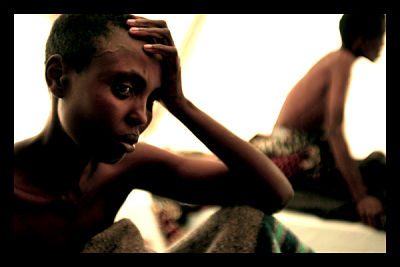
Reports like those of the Chadian peacekeepers are troubling and continue to raise questions over who incoming peacekeepers should support. When the efforts began at the end of 2013, the concern was over Muslim militia killing Christians in the region. However, once the peacekeepers came in, retaliatory killings by Christian “anti-balaka” militia resulted in migrations by Muslims and perilous refugee camps set up in the capital of Bangui.

To the credit of the United Nations, they appear to be taking a pro-active response to these complaints. The arrival of more troops meets a pressing need as there had been many complaints over the lack of troops and their reluctance to enter the more dangerous regions of the nation. Hopefully a troop influx will meet victims’ needs.

In the weeks before the vote by the UNSC violence appeared to be escalating in the region. In the days before the vote at least 30 people died in attacks by the anti-balaka militia. UN estimates that were published in the lead-up to the vote estimated that a quarter of the population was “in desperate need of aid.”

The violence in the Central African Republic has gotten little of the media attention that conflicts in Ukraine and Syria have gotten, yet it is a burgeoning problem in a region of growing importance. The peacekeeping announcement is a step in the right direction for the international community. Organizations like the Borgen Project advocate for assistance in regions of turmoil like the Central African Republic is currently dealing with.

While this mission may be meant to encourage peace in the region, it may be some time before that goal is achieved. The work in nations like the Democratic Republic of the Congo shows how difficult that peace efforts in out-of-the way posts are for the West. The efforts will be monitored and followed by the members of the Borgen Project, in the hope that the citizens of the CAR will live better lives soon.

-Eric Gustafsson

Sources: The Week, Reuters, New York Times
Photo: ISN

April 21, 2014
https://borgenproject.org/wp-content/uploads/borgen-project-logo.svg 0 0 Borgen Project https://borgenproject.org/wp-content/uploads/borgen-project-logo.svg Borgen Project2014-04-21 13:27:182024-05-26 23:27:12Central African Republic Peacekeeping Efforts
Global Poverty, War and Violence

Battle of Adwa

Africa was nonchalantly divided up by the Europeans in the late 19th century with little regard for the autonomy and self-government of their African counterparts. Consequently, the more commanding European nations hastily snatched up hefty swaths of terrain in Africa. Italy, on the other hand, had only recently unified in 1871, and was delayed from dynamically engaging in African colonization. Italy was politically and fiscally fragile in the 1890s, in contrast to the affluent and dominant realms of France and Britain, and had to abide by the political arrangement of Europe at the time. Their low standing on the geopolitical stage constrained them to acquire the territories that remained from the initial rush of colonization, or as it’s more prominently known as, the Scramble for Africa. The sole remaining sovereign nation in Africa in the 1890s was Abysinnia, or as it is recognized today, Ethiopia.

Ethiopia at the time was a “highly traditional empire-state” based on the religious ethos that the ruling Solomonic dynasty descended directly from biblical figure King Solomon and the Queen of Sheba. The legend dictates that King Solomon and the Queen of Sheba bore the child later known as King Menelik I in the 10th century B.C., who “became the founder of the ruling Ethiopian dynasty.”

In 1896, Italian envoys met with then-ruler of Ethiopia King Menelik II under the pretense of establishing closer ties between their nations. King Menelik and Italy came to an agreement and signed the Treaty of Wuchale. The Treaty of Wuchale was primarily based on the sale of land to the Italians so they could fashion an Italian colony in the region. It was an uncomplicated treaty to appease Italians desire of a colonial empire. A perilously damning concern arose after the treaties were signed. The Italians had secretly slipped in an addendum that legally bound Ethiopia to maintain all foreign relations through Italy, as well as turning Ethiopia into an Italian protectorate. The version of the treaty produced in Amharic did not include this, but rather affirmed Ethiopia’s presence as an autonomous kingdom, with the individual choice of using Italy to conduct foreign affairs any way they saw fit.

King Menelik condemned the Italians for their supposed deception, and asserted that the treaty was not valid nor recognized by his government. The Italians disagreed, asserting King Menelik was well aware of the context of their agreement, threatening military action to maintain their theoretical newly instituted hegemony over Ethiopia.

Italy, however, underestimated the resistance they would face from invading Ethiopia, only deploying “18,00 men armed with about 56 pieces of artillery.” During this period, European nations characteristically did not encounter effective opposition or non-cooperation from African nations when attempting to establish preeminence through military means. Europe’s military was technologically highly developed in comparison to numerous African nations, conceiving an ideal situation for European colonial aspirations.

Racial attitudes in that era earnestly promoted Africa’s cultural inferiority. The European doctrine of mission civilisatrice or civilizing mission was a prime characteristic of Europe’s approach to colonization. The Civilizing mission in essence gave European nations justification for colonization on the foundation that it was their duty to enlighten, educate and humanize the purpotedly benighted and barbaric people of the world. The doctrine propped up their rationalization for colonial capers, but was also a leading basis for Italy’s underestimation of Ethiopia’s ability.

Though Italian forces were better equipped than the Ethiopian forces, King Menelik managed to unite the populace under the banner of preserving their independence. Italy was taken aback by King Menelik and his wife Empress Taytu’s ability to amass of army of substantial size, with some reports insisting their forces ranged between 100,000 and 120,000. The battle occurred on March 1, 1896, and ended with Italian forces in full retreat within a few hours. Consequently, the Italian soldiers fleeing abandoned much of their military hardware, allowing for the coalition of Ethiopian forces to collect the remnants.

The Battle of Adwa was a devastating loss for Italy, and resulted in political discord in Italy. General Bartiera, General of the Italian Armed Forces who led the battle, was severely disciplined for his mis-steps. Italy was then forced to sign the Treaty of Addis Ababa which denoted Ethiopia’s complete autonomy from foreign rule.

The significance of the battle was far-reaching. The victory was seen as one of the major sparks of the Pan-African movement. Furthermore, African-American civil rights activist W.E.B Dubois contended the importance of the victory and “promulgating Ethiopia as an idea of global African unity.” Why was it significant though?

The Battle of Adwa was the sole victory Africa had against a European power, in a time when Africa was under complete control by Europe. Moreover, African-Americans saw the victory as justification for their own self-worth. The triumph was even considered one of the primary reasons for the “modern global rise of a Pan-African vision of freedom.” Abebe Hailu, of the Washington Informer argues that it helped rewrite how Africans were viewed internationally, and assisted in altering the ingrained representation that Africans were “no better than ‘savages.'”

-Joseph Abay

Sources: The Guardian, Washington Informer, BBC, New Vision, Tadias, Origins, Al Jazeera, New Pittsburg Courier
Photo: Willem Janszoon

April 1, 2014
https://borgenproject.org/wp-content/uploads/borgen-project-logo.svg 0 0 Borgen Project https://borgenproject.org/wp-content/uploads/borgen-project-logo.svg Borgen Project2014-04-01 04:00:522024-05-26 23:22:36Battle of Adwa
Foreign Aid, Global Poverty, War and Violence

Former Senator of Wisconsin Ends War in Congo

According to a Politico article, a former Wisconsin senator ended a war in the Democratic Republic of the Congo (DRC).

Russ Feingold, who lost his seat to Republican Ron Johnson in 2010, was appointed by John Kerry to help resolve a conflict involving the Congolese government and militia M23.

“Feingold’s assignment came just as a new group of rebels, trained and equipped by Rwanda, was gaining strength in the west and even threatening to take Kinshasa, the Congolese capital,” Politico reported.

The most important lesson behind the peace negotiations, Kerry told Feingold, is “that diplomacy works, and persistence pays off.”

Kerry became familiar with Feingold’s work ethic when they sat together for years on the Senate Foreign Relations Committee.

“Russ and I served together in the Senate for some 18 years,” Kerry said during a United States Department of State press announcement in June 2013. “I have a lot of respect for a lot of qualities of Russ–his intellect, his courage, his passion–but with respect to this mission, chief among those qualities that are important right now is his expertise on Africa.”

The situation in the DRC has caused much concern for the international community lately. The United Nations peacekeeping mission in the country has an annual cost of $1.5 billion and employs 20,000 troops. Moreover, a study by the American Journal of Public Health revealed that around 48 women are raped every hour throughout the country.

Human Rights Watch also released a report condemning the war crimes committed by Rwandan officials and General Bosco Ntaganda, the leader of M23.

“Field research conducted by (HRW) in the region in May 2012 revealed that Rwandan army officials have provided weapons, ammunition, and an estimated 200 to 300 recruits to support Ntaganda’s mutiny in Rutshuru territory, eastern Congo,” HRW said.

Although Feingold was able to defeat M23 with diplomacy, Politico argues that his next big challenge is to make governance in the DRC more effective.

“Only once it gained control over, and legitimacy in, eastern Congo could there be permanent peace,” said Politico. “Until then, it would remain a place where armed militias could gang-rape women and girls in farm fields, abduct boys and turn them into child soldiers, and burn entire villages to the ground.”

Due to its weak infrastructure and widespread poverty, the DRC still has a long way to go before getting rid of these problems. However, Feingold’s accomplishment in the region may potentially guide the country towards the right direction.

– Juan Campos

Sources: Human Rights Watch, Politico, U.S. Department of State
Photo: Pulitzer Center

March 23, 2014
https://borgenproject.org/wp-content/uploads/borgen-project-logo.svg 0 0 Borgen Project https://borgenproject.org/wp-content/uploads/borgen-project-logo.svg Borgen Project2014-03-23 04:00:052024-06-05 01:57:17Former Senator of Wisconsin Ends War in Congo
Global Poverty, War and Violence

Afghanistan: Past and Future

Afghanistan_economy Afghanistan is a nation with a turbulent history. It is a nation embattled as a result of the many conflicts that have transpired within its borders. In recent years, Afghanistan has sustained a steady disfiguration of its landscape as a result of the protracted War on Terror, along with the various terrorist activities in the nation which several militaries, the North American Treaty Organization (NATO) most notably among them, have sought to suppress. Before the War on Terror, Afghanistan started to incur devastating losses in a war with the Soviet Union from 1979 to 1989, during which over one million Afghanis were killed. Afghanistan was again challenged by a brutal civil war in the 1990s in which extensive violence led to more casualties and internally displaced persons. Conflict in Afghanistan has thus resulted in enduring regional instability over the past 35 years, much to the detriment of national infrastructure improvement. Consequently, economic development has been difficult to implement as well as sustain. Afghanistan performs poorly in many areas considered benchmarks of human development. On the actual human development index, Afghanistan ranks 172nd in the world out of the 187 countries that were surveyed. The performance of the nation’s economy is consistent with the assertions of its human development index ranking. The gross domestic product (GDP) per capita in Afghanistan is $1,399 and is ranked 161st in the world by the World Bank. The country’s literacy rate is also among the lowest in the world at 28.1%. In spite of Afghanistan’s persisting limitations, it has seen significant progress over the course of the past decade. Enrollment in Afghanistan’s schools has increased to nearly eight million from its 2002 total of just one million. Access to basic health resources increased from 9% to 60% between 2003 and 2012, and the number of healthcare facilities saw an increase of over 100% in the same period. Significant improvements were observed in the country’s energy infrastructure as well. Since 2004, the number of Afghani homes with access to grid power increased from 6% to 25%. As a result of investment in these areas, especially in the case of healthcare, both employment and the economy at-large have performed well and experienced steady growth. For the entirety of the War on Terror, total GDP exhibited average growth of 9.2% topping out at 11.8% in 2012 as a result of advantageous weather conditions and, as a result, a booming agricultural sector. The agricultural sector in Afghanistan, which constitutes over 70% of the country’s economy, has been aided by the administration of the World Bank’s National Solidarity Program. The National Solidarity Program has also led to the creation of 34,000 Community Development Councils. Many of these councils have garnered further investment from the World Bank totaling $1.12 billion, funding thousands of projects that these local collectives have sought to introduce. With the complete withdrawal of NATO security forces from Afghanistan set to take place in 2014, the economic outlook for the country is riddled with unresolved security concerns. Since 2001, the security apparatus in Afghanistan has been comprised almost exclusively of foreign troops, and their withdrawal is anticipated to have potentially severe implications for future development efforts. Contrastingly, in yet another period of war, Afghanistan has seen unprecedented growth of infrastructure considered necessary for poverty-reduction. In spite of security concerns that will likely take a long time to address, there is certainly cause to be optimistic about the progress that has been forged in Afghanistan since 2002. – Benjamin O’Brien Sources: Transparency International, World Bank Photo: Able2know
March 20, 2014
https://borgenproject.org/wp-content/uploads/borgen-project-logo.svg 0 0 Borgen Project https://borgenproject.org/wp-content/uploads/borgen-project-logo.svg Borgen Project2014-03-20 04:00:112024-05-26 23:19:11Afghanistan: Past and Future
Global Poverty, Politics and Political Attention, War and Violence

Kashmiri Students Arrested Over Cricket Match

Tension over Kashmir resurfaced in the form of a cricket match, as 67 students were charged with sedition after cheering on a Pakistani team at their university in Meerut, India on March 2. The Kashmiri students, who were attending the College of Swami Vivekan and Subharti University in India’s Uttar Pradesh region, faced life sentences before widespread outcry from other students across the country.

Protesters argued the seriousness of the sedition charges, which many did not feel their actions warranted, eventually succeeding in getting them dropped to a misdemeanor disturbance of public harmony. Prior to the charges being dropped, the students’ defense claimed that they never threatened to bring down the government nor tried to hurt India’s national integrity.

The case quickly gained national attention after the Opposition Peoples Democratic Party publicly demanded leniency and an apology from the University and state officials for their acts of “fascism.” Also, active in demonstrations were the Kashmir University Students Union as well as several chief officials from the northeastern regions of Uttar Pradesh and Jammu. The Pakistani Government who has offered to welcome their own universities to the students at hand.

Many critics feel as though the charges were motivated by ethnic and political discrimination, since the students committed no actual illegal act outside of rooting for the wrong team. The contentious Kashmir region has been the subject of controversy since it was divided between India and Pakistan in the 1947 partition and has prompted two Indo-Pakistani wars in the decades since.

According to the Student Union, the scenario “is nothing new, but a testimony to the fact that we have been in a perpetual state of war with India for the past 67 years.”

Since 1989, popular insurgency has been fighting for either Kashmiri independence or a complete merge with Pakistan. Sentiments of nationalism resonated in the arrested students’ actions, which reports say consisted of cheers of “Long live Pakistan” and “We want freedom.”

Vice chancellor of their university, Manzoor Ahmed, holds the students responsible and supports the sedition accusations, stating “You cannot pass judgments against your own national team. Their behavior was not conducive to peace on campus. It creates bad blood with the local boys.”

However, the students themselves claim the cheers were not political at all, but rather inspired by loyalty to their cricket team alone. Cricket is the national pastime of India, and has enjoyed popularity in South Asia due to the lingering legacy of British colonial rule. Cricket events, like the Asia Cup in which the two national teams were competing at the time of the arrests, are valued as one of the only spaces for tolerance and friendship between India and Pakistan, who both share a love of the game.

– Stefanie Doucette

Sources: Al Jazeera America, Times of India, New York Times
Photo: The Star

March 17, 2014
https://borgenproject.org/wp-content/uploads/borgen-project-logo.svg 0 0 Borgen Project https://borgenproject.org/wp-content/uploads/borgen-project-logo.svg Borgen Project2014-03-17 04:00:152024-06-05 01:57:16Kashmiri Students Arrested Over Cricket Match
War and Violence

Suicide of War Criminal

Steven Green, the first American soldier charged and convicted under the Military Extraterritorial Jurisdiction Act, died from attempting suicide at the Tucson federal maximum security prison in mid-February.

Green was serving multiple life sentences for the rape and murder of 14-year-old Abeer Qassim al-Janabi, the murder of her parents and young sister when he was stationed in Iraq in 2006. Along with four other soldiers, one of whom stood guard, Green sexually assaulted the teenager and then shot her parents, younger sister and eventually Abeer herself.

In an attempt to hide their crime, the soldiers burned her body and blamed the attack on Sunni insurgents, a lie which hid their actions until fellow Private Justin Watt informed a psychologist during health counseling session.While the other four soldiers directly involved in the crime, James Barker, Paul Cortez, Jesse Spielman and Bryan Howard received lengthy sentences in military prisons, most upwards of a century, Green’s sentencing was unique in the fact that the charge came after his honorable discharge from the military due to a diagnosed antisocial personality disorder.

Because of his discharge, prosecutors were able to charge him under a 2000 law that gave federal government jurisdiction to pursue criminal cases against United States citizens and soldiers for acts committed in foreign countries.

According to the Justice Department, the law allows prosecutors to establish Federal jurisdiction over offenses committed outside the United States by persons employed by or accompanying the Armed Forces, or by members of the Armed Forces who are released or separated from active duty prior to being identified and prosecution for the commission of such offenses.

While this law may provide some comfort to victims of the Armed Forces, it does little to address the conditions that may have spurned the crime in the first place.

At the time of the Qassim al-Janabi family murder, the American soldiers stationed near their home lived in a remote area known at the “Triangle of Death,” near Mahmudiha, so christened by U.S. servicemen because of the large number of American casualties.

During an interview with the Associate Press, Green expressed how the deaths of his comrades affected him and “messed me up real bad,” he said.

He dehumanized Iraqis to such a point that “[he] wasn’t thinking these people were humans.”

Green’s crime, conviction and death illustrate an ongoing problem experienced by organizations working abroad. While Green’s assault and killings occurred while employed as a U.S. military employee, his actions not only impact the military but also negatively impact other efforts made by humanitarian organizations operating internationally.

Past acts of military malfeasance have already maligned America’s reputation abroad, a recent example being the U.S.’ subterfuge involving an ersatz vaccination doctor in Pakistan. Under the guise of routine examinations and with the help of a local Pakistani doctor, military personnel verified Osama bin Laden’s whereabouts at the expense of future humanitarian efforts in the country.

Regardless of the merits of their operation, the military’s ruse has unquestionably gravely damaged America’s reputation in Pakistan. Now, World Health Organization vaccination teams increasingly face violent confrontations from Taliban insurgents. As one of the world’s most endemic regions to polio, stunted vaccinations may potentially lead to the virus’s resurgence around the globe.

Government inability to address these issues will lead to even greater repercussions for U.S. and many western-associated humanitarian organizations. While the Military Extradiction and Jurisdiction Act may provide additional security in holding ex-military personnel responsible for their crimes, it does little to address the issues that created, and lead to, his crimes in the first place. Instead of creating laws that punish violent behavior, programs and procedures should be established to prevent potential crimes committed abroad, thereby protecting possible victims and also ensuring that other humanitarian efforts may continue unimpeded.

– Emily Bajet

Sources: TIME, Los Angeles Times, United States Department of Justice
Photo: Nick Mooney

March 17, 2014
https://borgenproject.org/wp-content/uploads/borgen-project-logo.svg 0 0 Borgen Project https://borgenproject.org/wp-content/uploads/borgen-project-logo.svg Borgen Project2014-03-17 04:00:012024-05-26 23:15:33Suicide of War Criminal
Foreign Policy, Global Poverty, Government, War and Violence

Ben Affleck DRC Testimony

Ben Affleck
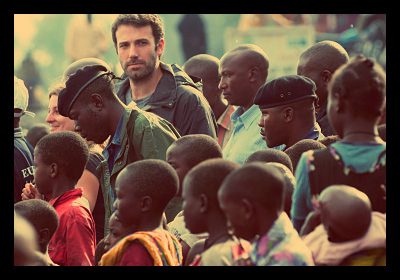
Ben Affleck, co-star of the upcoming film Superman vs. Batman, spent time in Washington, D.C. on February 26 discussing the situation in the Democratic Republic of the Congo (DRC). Using his celebrity and networking super powers,  Affleck has previously launched the Eastern Congo Initiative (ECI) in 2010 and has since helped raise awareness and generate public action against violence in the DRC.

While in D.C. Affleck testified in front of the Senate Foreign Relations Committee and Committee Chairman  Sen. Robert Menéndez (D-N.J.). He began his testimony by acknowledging the significant progress made in the last three months. He also thanked Congress, U.S. President Obama and the State Department for their roles in achieving the surrender of M23, the Congolese Revolutionary Army, which has been violently rebelling against the DRC government.

Affleck emphasized that though progress has been made, it is important to stay on track, and that deviating could risk losing the fruit of their hard diplomatic labor.  The ECI created five key points for Congress to ensure sustainable peace in the country:

  1. Urge U.S. Secretary of State John Kerry to ensure DRC special envoy Russell Feingold has the support needed to successfully achieve his mission
  2. Call on U.S. Embassador to the U.N. Samantha Power to support extending the intervention brigade past its March 31 expiration
  3. Foreign Relations committee hold an oversight hearing to consider a sunset to MONUSCO that compels the DRC to follow through and fully reform its security sector
  4. Have Obama directly engage with DRC President Joseph Kabila to encourage him to make good on his critical commitment to long-overdue security sector reforms by establishing a clearly defined road map
  5. Have the U.S. play a pivotal role and robustly participate in multilateral efforts to ensure that the Congolese holds free, fair and timely local and national elections that respect the Congolese constitution including strict observance of term limits
  6. Call upon USAID to scale up its economic development initiatives in Eastern Congo

Ultimately, the ECI believes the DRC can be revived through enhanced security on one side and injecting small amount of development aid throughout pockets of the community. This will allow the Congolese people to stand on their own and create a market economy, eventually joining the global market.

– Sunny Bhatt

Sources: YouTube, Eastern Congo Initiative
Photo: Ryot.org

March 6, 2014
https://borgenproject.org/wp-content/uploads/borgen-project-logo.svg 0 0 Borgen Project https://borgenproject.org/wp-content/uploads/borgen-project-logo.svg Borgen Project2014-03-06 04:00:132018-01-30 13:14:12Ben Affleck DRC Testimony
Developing Countries, Disease, Food & Hunger, Global Health, Health, Human Rights, Hunger, Inequality, Violence Against Women, War and Violence, Women, Women & Children

4 Issues Contributing to Malnutrition in the DRC

malnutrition

Kinshasa, DR Congo

The second largest country in Africa and is located in the middle of the continent. Since the 1990’s the country has been in a state of political unrest and civil war which is the cause of many of the other problems in the region, such as disease, food insecurity, human rights violations, and violence against women.

Here are four issues that contribute to nearly 6.3 million people remaining food insecure and over half of the children under the age of 5 classified as malnourished in the DR Congo:

  1. Political instability between the government and several militia and rebel groups. Peace talks have been ongoing since 2009 with little progress. Since 1998, 5.4 million people have been killed. Less than 10% were killed during the fighting, instead the majority have died from diseases and malnutrition.
  2. 2.7 million people are internally displaced within the DRC as a result of the civil war. 1.6 million are in the North and South Kivu region, where much of the heavy militia activity takes place. There are an additional 116,000 refugees from neighboring countries currently living in the DRC. The large number of displaced people and perpetual fighting in the country has led to a high rate of abuse and sexual assault of women and children. It is estimated that 400,000 women between 15 and 49 were raped between 2006 and 2007. This is the equivalent of 48 women being assaulted every hour.
  3. 3.71% of the population lives below the poverty line, meaning they live on less than two dollars per day.
  4. Rampant infectious diseases are common across the country such as Malaria, Dengue Fever, Typhoid Fever, and HIV/AIDS. The ministry of health said that Malaria was their number one disease concern and in 2011 alone there were 4,561,981 reported cases.

– Colleen Eckvahl 

Sources: The International Campaign to Stop Rape and Gender Violence in Conflict , WFP, WHO
Photo: This is Africa

February 26, 2014
https://borgenproject.org/wp-content/uploads/borgen-project-logo.svg 0 0 Borgen Project https://borgenproject.org/wp-content/uploads/borgen-project-logo.svg Borgen Project2014-02-26 22:20:252024-05-26 23:15:194 Issues Contributing to Malnutrition in the DRC
Human Rights, War and Violence, Women, Women & Children, Women and Female Empowerment

Holocaust and the Power of Memory

herz-sommer
At 110 years of age, Alice Herz-Sommer lived longer than most and had experienced something that a diminishing number of people living the world today may claim: surviving the Holocaust.

As the oldest known survivor of the Holocaust, for the past 70 years Herz-Sommer has served as a living reminder of the perils of hubris and inaction — specifically, for the nations who failed to act when reports of Adolf Hilter’s ethnic cleansing plans first came to light.

Alongside her husband and son, Herz-Sommer was imprisoned in 1943 at Theresiendstadt, a concentration camp in Terezin, Czech Republic. Two years later, she and her son were among those released from the camp after the Soviet army liberated the camp.

Of the estimated 140,000 sent there, fewer than 20,000 remained alive by the war’s end.

These numbers don’t inform the reader of Herz-Sommer’s accomplished piano skills nor do they tell us about Herz-Sommer staged concerts at the concentration camp, an activity that enlivened both herself and her fellow inmates.

We have all learned about World War II. We have studied how Adolf Hitler warred against the allied forces and nearly conquered Europe. We have listened to lectures about his efforts to cleanse his empire of Jews, homosexuals, the Roma and Sinti, the disabled, blacks, Jehovah’s Witnesses and other targeted groups.

Herz-Sommer’s reminded us of the human experience behind a man-made tragedy. History may be compressed into facts and statistics, but she, herself, could not.

Since WWII, more genocides have occurred, some more publicly than others. The Bosnian and Rwandan genocides occurred within the past 3o years while the more recent burning of Kiev, the ethnic cleansing of Muslims in the Central African Republic, and the millions of Syrian refugees fleeing the civil war, all illustrate conflicts plaguing the world today.

The death of one of the few remaining Holocaust survivors should serve as a stark warning that even the most horrific crimes against humanity will eventually fade away into the annals of history.

While the irreparable erosion of memory and experience is inevitable, preserving an international consciousness of these crimes is an inalienable human obligation. By doing so, such an effort will both memorialize the victims and survivors of the past and help to safeguard potential victims in the future.

 – Emily Bajet 

Sources: New York Times, oas.org, Al Jazeera
Photo: Daily Mail

February 26, 2014
https://borgenproject.org/wp-content/uploads/borgen-project-logo.svg 0 0 Borgen Project https://borgenproject.org/wp-content/uploads/borgen-project-logo.svg Borgen Project2014-02-26 22:19:172024-12-13 17:50:07Holocaust and the Power of Memory
Global Poverty, War and Violence

Temporary Ceasefire in Besieged Syrian City of Homs

Homs
A temporary pause in the fighting between the Syrian government and rebels allowed emergency personnel to evacuate 83 civilians from the embattled city of Homs on February 7, according to the United Nations.

The evacuation of the civilians  comes a day after the U.N. brokered a three day ceasefire,  under which women, children, the elderly and injured people will be allowed to leave Homs. That day, buses were allowed to enter Homs’ Old City, where as many as 2,500 people are believed to be trapped. The trapped residents have been unable to leave because they are caught in the fighting between the government and the insurgents battling Syrian President Bashar al-Assad’s regime.

The departing residents will be greeted at a U.N. welcome center and will then give the authorities the names of people who want to stay behind. The provision of the names of citizens who do not want to leave was a key demand of Syria’s government, which wants to learn the identities of the men who reside there, the Washington Post reported.

In addition to the evacuation of these noncombatants, aid will be allowed to enter Homs’ Old City, parts of which have besieged by government forces since June 2012.  Under the temporary ceasefire between the government and the rebels, medical aid and food should reach Homs on Saturday.

The three-day ceasefire covering Homs, which was one of the first cities to take up arms against Assad’s regime, comes nearly two weeks after United States and Russian-sponsored peace talks on ending Syria’s civil war opened in Switzerland. The talks, which began in the Swiss city of Montreux on January 22 before moving to Geneva on January 24, paused last Friday. The negotiations between Syria’s government and a western-backed opposition alliance known as National Coalition of Syrian Revolutionary and Opposition Forces are set to resume Monday in Geneva.

Assad’s government and the opposition had been expected to reach agreement early in the talks on localized ceasefires and on allowing humanitarian aid to be delivered to besieged areas, but the two sides were unable to even reach a deal on these issues.

The official agenda for the negotiations, known officially as Geneva II, is to reach agreement on the composition of a temporary government with full executive powers that would oversee Syria’s transition to democracy.  Syria’s government rejects the idea that goal of the talks is the establishment of a government that doesn’t include Assad, whose family has ruled Syria since 1971, while the opposition has insisted that any transitional government exclude the Syrian president and leading members of his regime.

Syria’s nearly three-year long civil war, which pits rebels largely drawn from Syria’s Sunni majority against a government controlled by the country’s minority Alawite sect and supported by Shia Iran, has stoked Sunni-Shia tensions across the Middle East, particularly in the sectarian tinder boxes of Iraq and Lebanon.

Shia Iran and its Lebanese proxy force Hezbollah have backed Assad, a longtime ally of both Tehran and Hezbollah, while Sunni gulf states and Turkey have supported the Sunni insurgents, buttressing the rebels through the provision of light weapons and cash.  Both sides seem to view the Syrian conflict as a proxy war between the Sunni and Shia branches of Islam.

– Eric Erdahl

Sources: BBC, BBC, Washington Post, New York Times
Sources: Elephant Journal

February 20, 2014
https://borgenproject.org/wp-content/uploads/borgen-project-logo.svg 0 0 Borgen Project https://borgenproject.org/wp-content/uploads/borgen-project-logo.svg Borgen Project2014-02-20 10:16:282024-12-13 17:50:03Temporary Ceasefire in Besieged Syrian City of Homs
Page 16 of 20«‹1415161718›»

Get Smarter

  • Global Poverty 101
  • Global Poverty… The Good News
  • Global Poverty & U.S. Jobs
  • Global Poverty and National Security
  • Innovative Solutions to Poverty
  • Global Poverty & Aid FAQ’s
Search Search

Take Action

  • Call Congress
  • Email Congress
  • Donate
  • 30 Ways to Help
  • Volunteer Ops
  • Internships
  • Courses & Certificates
  • The Podcast
Borgen Project

“The Borgen Project is an incredible nonprofit organization that is addressing poverty and hunger and working towards ending them.”

-The Huffington Post

Inside The Borgen Project

  • Contact
  • About
  • Financials
  • President
  • Board of Directors
  • Board of Advisors

International Links

  • UK Email Parliament
  • UK Donate
  • Canada Email Parliament

Get Smarter

  • Global Poverty 101
  • Global Poverty… The Good News
  • Global Poverty & U.S. Jobs
  • Global Poverty and National Security
  • Innovative Solutions to Poverty
  • Global Poverty & Aid FAQ’s

Ways to Help

  • Call Congress
  • Email Congress
  • Donate
  • 30 Ways to Help
  • Volunteer Ops
  • Internships
  • Courses & Certificates
  • The Podcast
Scroll to top Scroll to top Scroll to top