• Link to X
  • Link to Facebook
  • Link to Instagram
  • Link to TikTok
  • Link to Youtube
  • About
    • About Us
      • President
      • Board of Directors
      • Board of Advisors
      • Financials
      • Our Methodology
      • Success Tracker
      • Contact
  • Act Now
    • 30 Ways to Help
      • Email Congress
      • Call Congress
      • Volunteer
      • Courses & Certificates
      • Be a Donor
    • Internships
      • In-Office Internships
      • Remote Internships
    • Legislation
      • Politics 101
  • The Blog
  • The Podcast
  • Magazine
  • Donate
  • Click to open the search input field Click to open the search input field Search
  • Menu Menu

Archive for category: War and Violence

Information and news War and Violence

Inequality, War and Violence

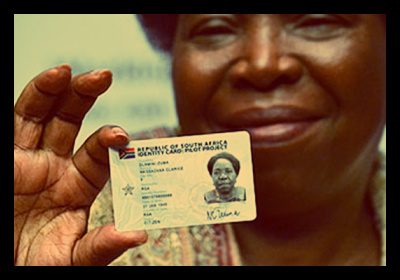
South Africa’s Transgender Community Denied Rights

south_africa_ID_card
For most people, it is difficult to imagine the immense significance of an identification card, as it seems to be a common part of daily life.  However, without one, essential tasks become impossible. Without an ID, an individual cannot apply for a job. An individual cannot access medical care or educational records. An individual cannot open a bank account, drive, travel, or vote.

In South Africa, the transgender community is keenly aware of the struggles involved in life without an appropriate source of identification. Those who display a different gender presentation from their originally assigned one are constantly humiliated and debased because of this exact discrepancy. Many even face verbal or physical abuse.

In light of this gross inequality, many transgender and inter-sex activists — both nationally and internationally — have campaigned the South African government to overturn their strict and inhumane laws regarding gender changes and identification cards. Before 2003, these aforementioned laws had made a legally recognized gender change in South Africa impossible. That year, Parliament passed “Act 49,” which elucidated the process in which one might legally be able to make such a change.

The act made a medical report mandatory for such a change, but did not require any sort of genital surgery, a process that remains precarious and unfeasible for many in the transgender community.  If the application were to be denied, the Act stipulated that written reasons needed to be provided, and even further, appeals would be possible.

However, in 2013, ten years after “Act 49” passed, little tangible progress has been made in providing proper identification for transgender and intersex individuals. These communities point to the continuing denial of safeguards provided by “Act 49.”

Applicants have waited years for responses from the application process, meanwhile facing the severe inequalities that exist for an individual lacking a tenable identification card. Upon inquiring in regards to their application status, many inter-sex and transgender individuals have faced endless hostilities. When denied, the sanctioned written response detailing the basis of the decision rarely comes.

The changes made to provide basic rights and human services to the transgender and inter-sex communities of South Africa have been legislatively approved. The political fight has ended.

However, in order to provide true equality for all of its citizens, the South African government must, by law, fulfill its promises.

– Anna Purcell

Sources: Human Rights Watch, Humanity in Action
Photo: My Broadband
October 12, 2013
https://borgenproject.org/wp-content/uploads/borgen-project-logo.svg 0 0 Borgen Project https://borgenproject.org/wp-content/uploads/borgen-project-logo.svg Borgen Project2013-10-12 22:21:132024-05-25 00:25:57South Africa’s Transgender Community Denied Rights
Global Poverty, War and Violence

The Location of Syria and Its Importance

The conflict that has ravaged Syria since March 15, 2011 has had worldwide ramifications. The civil war started as a response to the Arab Spring, government corruption, and the abuse of human rights. The government responded to this uprising with lethal force, and as of June 2013 the death toll has been suspected to surpass 100,000 casualties. By late April 2013, President Bashar al-Assad began launching full-scale military operations upon city enclosures, officially opening the country for civil war. The Middle Eastern country’s conflict could potentially rock the entire world, and for one seriously misunderstood fact: the location of the country.

The location of Syria holds significance not because of the country’s resources, but of the countries located around it. The Middle East is the oil production giant of the world, and is a sensitive spot for intervention. The location of Syria brings out legitimate reasons to be wary of intervention, as the civil war must be contained at all costs. The addition of a foreign power may allow the war to spill over into neighboring countries, inciting a deadly Middle Eastern war that would be devastating.

Not only is Syria close to the Middle Eastern oil titans, but the continent of Africa lays not far away. Africa is one of the most vulnerable places on earth, one rocked by poverty, hunger, and disease. The feeble economies of the poverty-stricken Africa could not take the outcome of a war spilling into its borders. Containing the war to the country of Syria is a precaution that must be taken carefully. If the conflict somehow spreads to Africa, the continent and its emerging countries will face the fallout of a war they had no stake in.

The majority of citizens in the United States do not support military intervention in Syria. Citizens do not want another drawn-out affair like the wars of the previous Bush administration. Whether military intervention is agreed upon or not, the effects of the decision upon Syria could be monumental. The civil war has reached a deadly number, as evidenced by the 100,000 casualties already listed. This number could exponentially increase, regardless of intervention. If the United States does intervene, it could potentially lose control of the situation, or allow the other Middle Eastern to beef up their weaponry with Western troops in such cl0se proximity. But by leaving the conflict to fester on its own, the United States takes any convincing power out of its hands. Not having a say in which way the conflict heads could be as potentially dangerous as being directly involved. By not intervening, the neighboring countries and poverty-racked Africa could be left in the fray.

The Syrian situation has become one of great interest. Understanding the location of the country, and what ramifications the location could have, is crucial to fully comprehending the condition. Not only will the war have complications upon the Syrian government, the neighboring countries and Africa could become involved. Stay tuned, because the land is hot with anger and strife, and only time will tell where these emotions will take the warring country.

– Zachary Wright

Sources: dailyprincetonian, Maps of World
Photo: Al Hdhod

October 3, 2013
https://borgenproject.org/wp-content/uploads/borgen-project-logo.svg 0 0 Borgen Project https://borgenproject.org/wp-content/uploads/borgen-project-logo.svg Borgen Project2013-10-03 13:54:022024-05-25 00:21:18The Location of Syria and Its Importance
Global Poverty, United Nations, War and Violence

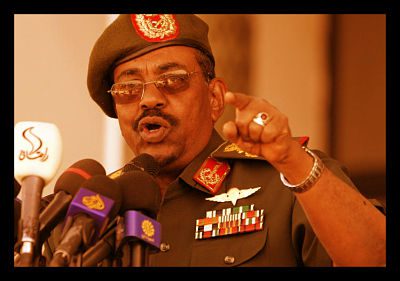
U.S. Denies Visa for Sudan President

Omar Al Bashir Denied US Visa UN General Assembly War Crimes ICC The Hague Genocide
As police cracked down on protests against the slashing of fuel subsidies in Sudan, which have resulted in at least 50 deaths, the country’s Foreign Affairs Minister Ali Ahmed Karti used the nation’s speech at the U.N. General Assembly to protest the U.S. decision to deny a visa to the country’s president, who faces international war crimes and genocide charges.

Despite an outstanding warrant for his arrest from the International Criminal Court, linked to the conflict in the Darfur region in which around 300,000 people have died since 2003, Sudan’s president Omar Hassan al-Bashir planned to attend the U.N. General Assembly this past week and had already booked a hotel in New York.

Ali Ahmed Karti called the alleged visa denial an “unjustified and unacceptable action,” while the U.S. ambassador to the U.N., Samantha Power, had called Bashir’s intention to travel to New York “deplorable, cynical and hugely inappropriate.”

The U.S. has never denied a visiting head of state who wants to speak at the United Nations entrance into the country. Under a treaty between the U.S. and the U.N., Washington is obligated to issue the visa as the world body’s host country. Despite this, the country had made it clear that it did not want al-Bashir to arrive in New York. Had he been granted entrance, al-Bashir would have been the first head of state to address the world body while facing international war crimes and genocide charges.

Meanwhile, in Sudan, protests broke out in Khartoum and other Sudanese cities over high fuel prices, while the country’s internet was cut off on the third day of protest. In an effort to turn a wave of popular anger into a full-fledged uprising against the 24-year rule of al-Bashir, 5,000 protesters demonstrated in some of the biggest protests in many years in the Khartoum area.

The country’s economy has worsened in the past few years, especially after southern Sudan seceded and took the country’s main oil-producing territory. Still, al-Bashir has managed to keep a grip on the regime, surviving armed rebellions, U.S. trade sanctions, an economic crisis, and an attempted coup last year. He also continues to enjoy support from the army, his ruling party, and wealthy Sudanese with wide-ranging business interests.

– Nayomi Chibana
Feature Writer

Sources: AP, Reuters, ABC News
Photo: The London Evening Post

October 2, 2013
https://borgenproject.org/wp-content/uploads/borgen-project-logo.svg 0 0 Borgen Project https://borgenproject.org/wp-content/uploads/borgen-project-logo.svg Borgen Project2013-10-02 21:15:352024-05-25 00:22:11U.S. Denies Visa for Sudan President
Economy, Global Poverty, Government, War and Violence

Poorest Country in the World: Democratic Republic of Congo

Poorest Country in the World Democratic Republic of Congo
You might be surprised to find that the United States isn’t the richest country in the world. Actually, that crown goes to Qatar who has recently jumped ranks to take first place. But what about the other side of the spectrum, the parts of the world struggling with devastating poverty? Well, on that end the Democratic Republic of Congo comes in first – or last, to be more accurate – as the poorest country in the world, with the lowest GDP per capita than any other country.


The Poorest Country in the World: The Democratic Republic of Congo


Determining a country’s rank in wealth isn’t the easiest of tasks when you sit down and think about the data and economics involved. However, a good indicator of a nation’s standard of living is the assessment of its GDP (gross domestic product) per capita, which is defined as the total value of all domestic goods and services that country produces annually, times its PPP or purchasing power parity. GDP per capita (PPP) isn’t a perfect shot because its purpose isn’t to calculate that kind of economic rank but it’s measured frequently, widely and consistently, allowing trends to become visible.

In 2010, GNI (gross national income) per capita replaced GDP in the calculation, but the list is the same between the two. Qatar was still first with about $100,000 GDP per capita (PPP) in 2012 just as it was on the GNI list and the Democratic Republic of Congo came in last at around $370 GDP per capita (PPP). The gap is massive.

Of the 40 poorest countries in the world, a solid 33 are in Sub-Saharan Africa. They include Zimbabwe, Burundi, Liberia, and Niger. Other parts of the world notoriously infamous for high poverty rates include Afghanistan, Haiti, and Nepal. But none of these places takes it quite as harshly as the Democratic Republic of Congo (not to be confused with the Republic of Congo) whose turbulent past and bloody wars have eclipsed the nation’s potential to thrive.

Since its independence in 1960 and once the most industrialized country in Africa, Congo has bled onto the ground because of its lack of infrastructure and the brutal impact of civil war. Disputes between Congo’s prominent rival groups, the Hutu and Tutsi, erupted after the Rwandan Genocide in which 500,000 people, mostly Tutsi, were victims of mass slaughter by the Hulus in the East African state of Rwanda.

The result was an exodus of over 2 million Rwandans fleeing to neighboring countries like the Democratic Republic of Congo, known in that time as Zaire. Most of the refugees were Hulus attempting to escape the Tutsi who had climbed to dominance at the end of the genocide. The Hulu refugee camps in Zaire, however, became politicized and militarized and when Tutsi rebels invaded Zaire to repatriate the refugees, the conflict escalated into the First Congo War in 1996.

The situation only grew worse and by 1998, the Second Congo War, which was sometimes called the “African world war” because it involved a total of nine African countries and twenty armed groups, devastated Zaire and laid waste to her population and economy. The political turmoil continues today despite intervention and peace attempts and is one of the world’s deadliest conflicts with a death toll of 5.4 million people.

More than almost 90 percent of the conflict’s victims, however, died due a lack of access to shelter, water, food and medicine – all severely aggravated by displaced and overcrowded populations living in unsanitary conditions. Not to mention, 47 percent of deaths were children under 5 and some 45,000 children continue to die each month.

The nation also faces the problem of human rights and the countless crimes against humanity because while many have returned home, an estimated 1.5 million are still displaced. DR Congo is also infamous and heavily criticized for its treatment of women. The east of the country has been described as the “rape capital of the world” and rates of sexual violence has been described as the worst in the world.

It doesn’t help that DR Congo is consistently poisoned by corruption and greed. While mining growth has somewhat boosted the country’s economy, the elite are said to syphon off revenue for their own personal gain due to the nation’s lack of strong central government. Conflicts over basic resources, access and control over rich minerals and oil, and political agendas are some of the many complex causes behind the Democratic Republic of Congo’s inability to rise among the ranks and take the title of the poorest country in the world.

–  Janki Kaswala

Sources: World Bank, Maps of World
Photo: The Telegraph

October 1, 2013
https://borgenproject.org/wp-content/uploads/borgen-project-logo.svg 0 0 Borgen Project https://borgenproject.org/wp-content/uploads/borgen-project-logo.svg Borgen Project2013-10-01 03:51:362024-12-13 17:49:40Poorest Country in the World: Democratic Republic of Congo
United Nations, War and Violence

UN Investigates the Alleged Use of Chemical Weapons in Syria

Chemical_Weapons_in_Syria
Earlier this week, an attack utilizing chemical weapons in Syria may have left 130 people dead. According to opposition groups, Assad’s government launched rockets with chemical warheads into Damascus suburbs on Wednesday. The government sent further warheads into the suburb on Thursday. Photographic evidence from Wednesday’s attack shows the telltale symptoms of the use of some toxic chemical: difficulty breathing, vomiting, constricted pupils, skin rashes and loose bowels. Western experts believe that sarin gas, an organophosphate agent, was used in the attack.

Secretary Ban Ki-Moon has urged an investigation into the attack, saying that there would be ‘serious consequences’ for those responsible. Ban urged the government to cooperate with the international body, saying,“The time has clearly come for the parties to stop shooting, and start talking. I am determined to do everything I can to assist the victims and move towards a political solution. That is the only way this crisis will be resolved.” Currently, a UN team is in Syria spending up to two weeks investigating the alleged use of chemical weapons by the government. The mandate granted the UN team access to only 3 of 13 sites identified as suspicious before the attack on Wednesday. Angela Kane, the top UN official on disarmament, is expected to arrive in Damascus on Sunday. Kane will push to give UN inspectors access to the affected region.

The Syrian government has not responded to UN requests. Thus far, Syria has not granted UN inspectors access to sites supposedly affected by chemical weapon. Russia, Syria’s arms supplier, said that it was the rebels, not the government, who were preventing UN inspectors from investigating the region. In response, Syrian rebels pledged to guarantee the safety of UN inspectors. Thus far, the rebels have been compliant with these investigations, even sending tissue and blood samples for further inspection.

The international community is conflicted over how to respond to these claims, if they are indeed true. France said that, if the allegations against the government prove to be true, the international community needs to respond with force. Similarly, Turkish Foreign Minister Ahmet Davutoglu said that a ‘red line’ had been crossed in Syria. Although Washington previously said that chemical weapon use was its ‘red line’ in Syria, the Obama administration stated that it was appalled by the allegation and no further plans of retaliation have been put forth. European officials say that there are options, but that they become limited without US support. Furthermore, there is little the international community can do without the support of the Security Council. Russia, Syria’s greatest ally to the Security Council at the moment, went so far as to suggest that the opposition had staged the attack.

According to Ki-Moon, “Our challenge remains: achieving a complete cessation of hostilities, delivering humanitarian assistance and getting the Government and the opposition to the negotiating table in Geneva as soon as possible.” The Joint Special Representative of the UN and League of Arab States for Syria Lakhdar Brahimi said that planning for the second Geneva conference is underway, but that it should take place in September. The last conference in Geneva was held in June with the United States and Russia present. The conference in September would hope to bring a political solution to the conflict. According to Brahimi, a solution is necessary because Syria is “without a doubt, the biggest threat to peace and security in the world today.”

– Kelsey Ziomek

Sources: UN, Al Jazeera, Reuters, Washington Post
Photo: Urban Times

August 30, 2013
https://borgenproject.org/wp-content/uploads/borgen-project-logo.svg 0 0 Borgen Project https://borgenproject.org/wp-content/uploads/borgen-project-logo.svg Borgen Project2013-08-30 12:16:582024-12-13 17:49:40UN Investigates the Alleged Use of Chemical Weapons in Syria
Global Poverty, Health, Nonprofit Organizations and NGOs, Sanitation, War and Violence, Water

Sanitation and Clean Water is an Issue In Liberia

In 2003, Liberia finally came out of a thirteen-year long civil war that ravaged the country and left the inhabitants riddled with poverty. Right after the end of the war, the unemployment rate was listed at 85 percent of the population. The populations in the slums skyrocketed and the people living there were left with little choice of where to obtain water or where to use the bathroom. During the war, rebels destroyed much, if not all, of the water and sanitation infrastructure the country once had. A decade later, much of the population is still impoverished and lacking access to the basic needs of potable water and a sanitary living area. In 2010, there were almost 4 million people living in Liberia, over 1 million of which were rural poor. However, there is a stress for clean water in slums, from where a number of people from rural areas fled to Monrovia during the fighting and violence in an attempt to find refuge. For every four people, there is one living without access to clean water and sanitation in Liberia, and for every five deaths in the country, one is a result of contaminated water sources. In fact, in 2012, the World Health Organization discovered that E. coli was present in 58 percent of the city’s water due to public defecation. This spreads illness such as diarrhea and perpetuates the issue, creating a cycle of illness through dirty water. Liberian president, Ellen Johnson Sirleaf, has pledged to double the amount of access to safe water in four years, but has clearly fallen short of this claim. Phillip Marcelo of Rhode Island’s Providence Journal is spending two weeks in Liberia this month to investigate what progress has been made since the end of the war and the installation of democracy within the country. He notes that at the entry to the slums at West Point Beach, there is a massive pile of trash marking the place. The defecation of children is all over the beach and people are being forced to buy their water from “distributors.” While adults have been banned from using the beach as a bathroom and there are pay toilets in the slum, there is often still no other option. Because of this, the spread of cholera is common along with other water-borne diseases. The government is opening up nine new toilets for the area, but the inhabitants are not sure a real difference can be made considering there are more than 50,000 people living the area. Aid groups are investing time and money into providing Liberia with better access to clean water, with the hope that this will cease to be an issue in the coming years, if not in time to meet the Millennium Development Goals. Non-profit organization Waves for Water has raised $15,100 towards the goal of $25,000 to help provide clean water filters for over 60,000 people living in poverty in Liberia. WaterAid, another NGO, also works in Liberia and happens to be an organization for which President Sirleaf is an ambassador. Last year, they were able to reach 17,000 people and provided them with clean water or sanitation facilities. Help for Liberians is out there and there are solutions to the present issues, but it will take a while to recover completely from the devastation of the war. Simply put, it is going to take plenty of hard work and a revamp of the entire infrastructure of the country in order to change the conditions of those living in the slums of Liberia. – Chelsea Evans Sources: Providence Journal, Rural Poverty Portal, Waves for Water, PBS, WaterAid Photo: Sanitations Update [hr top]

  • $30 billion per year is needed to end world hunger.

  • $660 billion per year is the amount Congress spends on Defense.


August 24, 2013
https://borgenproject.org/wp-content/uploads/borgen-project-logo.svg 0 0 Borgen Project https://borgenproject.org/wp-content/uploads/borgen-project-logo.svg Borgen Project2013-08-24 05:32:242016-02-16 11:55:06Sanitation and Clean Water is an Issue In Liberia
War and Violence

Seleka’s Reign in Central African Republic

Rebellion_Central_African_Republic
In December of 2012 a rebellion group formed under the name ‘Seleka’ marched through the Central African Republic, threatening to overthrow President François Bozizé for failing to follow through with the promises he made in 2007. Since then their reign has been one of terror and abduction, forcing people who are already living in the throes of poverty to adopt a life of fear and anticipation as well. Bozize has since been chased out of the country and the people of the Central African Republic are too afraid to take action against Seleka.

Translated the word Seleka simply means “coalition” in Sango. In January the group was estimated to have between 1,000 and 3,000 members. It is thought that they are made up of a collection of smaller groups allied together in opposition of the former president. However, government officials believe that the core of Seleka may be made up of a more varied cast of people, suggesting that the are harboring foreigners who wish to take control of the country’s mineral wealth. Some even believe that nationals from Chad, Nigeria, and Sudan are involved.

On March 24, 2013 Michel Djotodia marched into the capital Bangui with 5,000 Seleka fighters to seize control of the country. He immediately disbanded the parliament and suspended the constitution. And since then he and the Seleka fighters have waged a campaign of harassment and terror against the very people they claimed to protect. Unemployment has soared to 70% and the rebels take whatever they want, including computers used for education, solar panels, and even goats. Schools have shut down and electricity has become unavailable to the public.

Now the rebel group is no longer simply stealing from the people they claim to help, they are stealing the people as well. On a daily basis people disappear from their homes, schools, and the street itself. They are picked up by men in trucks and never seen again. If they are, they have been tortured or killed. The economy has collapsed entirely, most people are out of work, international aid workers have fled, and farmers are unable to tend to their fields because of all the violence. The country is on the verge of absolute disaster.

The self-proclaimed president of the country seems to be either unaware or uncaring of the reality of the situation. He is quoted in the New York Times as stating, “Peace has already returned to Bangui. When we came, it was like a miracle. It was God that willed it.” But the reality is that 173,000 people have been displaced from their homes since December. The Central African Republic has always been one of the poorest countries in the world and frequently fraught with conflict.

– Chelsea Evans

Sources: CNN, BBC, USA Today, New York Times
Photo: BBC

August 19, 2013
https://borgenproject.org/wp-content/uploads/borgen-project-logo.svg 0 0 Borgen Project https://borgenproject.org/wp-content/uploads/borgen-project-logo.svg Borgen Project2013-08-19 04:44:502024-06-04 01:17:31Seleka’s Reign in Central African Republic
Human Trafficking, War and Violence

Torture Camps in the Sinai Desert

Sinai_Desert_torture
Various Bedouin tribes have turned the Sinai Triangular Peninsula into a nightmare for Africa with their torture and human trafficking. The tribes profit through their kidnapping regime and ransom strategies, making millions of dollars in the process.

This kidnapping racket has existed for many years. Bedouin tribes snatch refugees during their flight from their home countries or while they are in refugee camps. Have left their homes to build a better life, the kidnapped victims largely originate from Eritrea, Somalia, Ethiopia, and Sudan, often on their way to Europe or Israel. There have been reports of bribed border-patrolmen who enable the kidnappings. The victims are next transported to Sinai, where they are tortured and held for ransom. Oftentimes, they are sold multiple times, passed from trader to trader with new ransoms each time. The ransom fees reach up to $50,000, an impossible amount for most African refugee families.

While held in the camps, sickening acts of torture take place. Various forms of physical torture, sexual torture, and starvation are among the most common. One means of transport involves placing the victims in metal shipping containers without ventilation or toilets. The Physicians for Human Rights director, Shahar Shoham, has reported over 1,300 individual incidents of torture in Sinai alone. However, Shoham reports the majority of torture cases go undocumented. Known torture methods include upside-down hanging, electric shocks, and pouring liquid plastic on them, sometimes while on the phone with their families in an attempt to scare their relatives into providing the ransom money.

According to the New York Times, abductors have captured over 7,000 refugees, with 4,000 of their victims dying durring imprisonment. Even if captives manage to escape or be released due to a paid ransom, their situation remains bleak. They are left to wander around the Israeli border and attempt to make the dangerous border-crossing. They must also avoid Israeli and Egyptian police, or risk being arrested or deported back to the countries they originally fled.

Even with all this information available, little is being done to address the problem. In fact, the problem is reported to be worsening. Friendly Bedouin tribes offer assistance to escaped torture camp victims, but do not have the political clout necessary to make any real change. Opponents of the torture camps fear a massive bloodshed if any attempts are made to stop the kidnapping heists. The Egyptian government has essentially turned a blind eye on this deadly region as well, leaving these victims on their own to fight for their rights.

– Allison Meade

Sources: CBN, Canada Free Press
Photo: Blogspot

August 18, 2013
https://borgenproject.org/wp-content/uploads/borgen-project-logo.svg 0 0 Borgen Project https://borgenproject.org/wp-content/uploads/borgen-project-logo.svg Borgen Project2013-08-18 09:00:432017-02-01 12:56:46Torture Camps in the Sinai Desert
Foreign Aid, Foreign Policy, War and Violence

Global Poverty and US Foreign Policy

us_foreign_policy

Defense, Diplomacy, and Development. These are the “three D’s” that the United States employs while dealing with other countries. While each brings a number of strengths and weaknesses, one must be the central focus of American foreign policy. This approach is development. By improving standards of living abroad, Americans not only improve the lives of others, but they improve their own lives. Through actions that work to increase development in foreign nations, the United States improves its national security, enhances its economy, improves the environment, and fulfills an ethical responsibility in working to eliminate poverty completely.

By ending global poverty, the United States enhances its national security. According to national security strategy documents employed by both the Bush and Obama administrations, the largest threats that the United States will be facing over the next two decades come “less from conquering states than from failing ones.” It is the failing states that likely lack the financial capital to construct sovereign governments or build strong economies. It is also within these fragile states that corruption and extremism can take hold due to a lack of effective governance. If left unchecked, these states can develop into a threat for other nations. By developing failed states into nations that can effectively rule over their own population and help foster construction of functional economies, the United States reduces the likelihood of having to deal with a conflict that emerged from a failed state’s internal disorder.

In addition to improving national security, ending global poverty improves the American economy. The United States has $500 billion invested in developing countries. Working to increase economic output in developing nations allows for higher returns on those investments while improving the standard of living for those who reside within those nations. As more people in the world earn higher wages, they can then afford to buy more expensive American goods. Ending global poverty, therefore, not only improves the lives of those abroad, but it also improves the lives of Americans.

Yet another advantage of ending global poverty is reducing the toll that humans put on the environment. In many impoverished areas, access to clean and green technologies is not economically feasible. Ending global poverty allows for improved access to these ecologically-friendly technologies. By enhancing standards of living, those living in developing nations are able to use cleaner technologies to fulfill their energy needs. These cleaner technologies can help reduce carbon emissions from developing nations, which improves the lives of everyone worldwide.

Finally, ending global poverty is an ethical action that the United States has the capability to accomplish. The United Nations has stated that extreme poverty can be eliminated completely by the year 2030. The United States, as the largest economic power in the world, can help contribute to this cause by aiding in the development process that needs to take place. By continuing to provide funds to developing nations, and by supporting economic growth in these areas, the United States can help make poverty history.

Ultimately, the goal of ending global poverty should be the primary focus of United States foreign policy. Working to end global poverty improves American national security by creating stability in foreign nations. It also improves the American economy by increasing the purchasing power of people abroad, providing them with the capability purchase American goods. Additionally, improved purchasing power provides people in foreign countries with improved access to cleaner technologies, which will help reduce the global impact of humans on the environment. And finally, working to end global poverty is an ethical action that the United States has the power to carry out. Improving standards of living abroad not only benefits Americans, but it benefits the entire globe. By working to end global hunger, the United States will help make poverty a thing of the past.

– Jordan Kline

Sources: Wilson Center, US News and World Report, The Guardian
Photo: Foreign Policy

August 14, 2013
https://borgenproject.org/wp-content/uploads/borgen-project-logo.svg 0 0 Borgen Project https://borgenproject.org/wp-content/uploads/borgen-project-logo.svg Borgen Project2013-08-14 09:00:412024-05-25 00:17:06Global Poverty and US Foreign Policy
Global Poverty, War and Violence

Venezuela’s Crime Rates Rise Due to Poverty

Crime_Venezuela_Poverty
Venezuela is a beautiful country known for its striking natural beauty and urbanized culture. Venezuela is also home to some of the world’s largest oil deposits, and houses large quantities of coal, iron, ore, bauxite, and gold. The country has experienced great wealth and prosperity as a result of its natural resources.

However, economic growth in Venezuela had disproportionately benefited some people more than others. A majority of Venezuela’s citizens live in impoverished areas and have not benefited from the oil wealth. Over 60% of the households in Venezuela are poor families, and the unemployment rate has only been increasing over the last few years. Sewage flows into the once beautiful Guaire River, which has led to its declining safety and toxicity. Streets are covered in trash, and citizens to not have enough clean water to bathe in regularly.

Venezuela has also been experiencing an increasing crime rates. Families such as the Olivero family, live in fear of the violence, for gangs and increasing violent crimes are growing in their home town of Caracas. Every night around six, the family gathers together in their home and locks the main entrance to their house. Their homes are not the most secure protection from the violence outside, for Mr. Olivero has stated to the Huffington Post that their neighbor’s roof was penetrated by a stray bullet recently.

For the Olivero family and many others, the violence does not seem to end. Venezuela’s homicide rate is the fifth highest homicide rate in the world and is 20 times higher than that of the United States. Unfortunately, RFI explains, crime within Venezuela continues as a result of the high poverty and lack of impunity, and will not come to an end until the country’s economy improves.

Venezuelan cities are also undergoing current food shortages, for store owners are unable to fill their shelves with basic goods. Anglys Bericote, a local, explains how private businesses hold on to the supplies and goods. Bericote also stated to the Huffington Post that her town has been so low on supplies, that she was unable to buy toothpaste or toilet paper for herself and her family.

Another local, Yaneth Solano, said she does not believe that the government will help the citizens of Venezuela with these current issues of violence or poverty. She believes that nothing can or will change Venezuela, for only God could help them now. As crime, food shortages, and littering continue within Venezuela, its citizens will not see improvement until the government places more focus on helping the impoverished improve their standard of living.

– Grace Elizabeth Beal

Sources: The Huffington Post, BBC, RFI

August 10, 2013
https://borgenproject.org/wp-content/uploads/borgen-project-logo.svg 0 0 Borgen Project https://borgenproject.org/wp-content/uploads/borgen-project-logo.svg Borgen Project2013-08-10 07:37:192024-05-25 00:15:37Venezuela’s Crime Rates Rise Due to Poverty
Page 19 of 20«‹17181920›

Get Smarter

  • Global Poverty 101
  • Global Poverty… The Good News
  • Global Poverty & U.S. Jobs
  • Global Poverty and National Security
  • Innovative Solutions to Poverty
  • Global Poverty & Aid FAQ’s
Search Search

Take Action

  • Call Congress
  • Email Congress
  • Donate
  • 30 Ways to Help
  • Volunteer Ops
  • Internships
  • Courses & Certificates
  • The Podcast
Borgen Project

“The Borgen Project is an incredible nonprofit organization that is addressing poverty and hunger and working towards ending them.”

-The Huffington Post

Inside The Borgen Project

  • Contact
  • About
  • Financials
  • President
  • Board of Directors
  • Board of Advisors

International Links

  • UK Email Parliament
  • UK Donate
  • Canada Email Parliament

Get Smarter

  • Global Poverty 101
  • Global Poverty… The Good News
  • Global Poverty & U.S. Jobs
  • Global Poverty and National Security
  • Innovative Solutions to Poverty
  • Global Poverty & Aid FAQ’s

Ways to Help

  • Call Congress
  • Email Congress
  • Donate
  • 30 Ways to Help
  • Volunteer Ops
  • Internships
  • Courses & Certificates
  • The Podcast
Scroll to top Scroll to top Scroll to top