• Link to X
  • Link to Facebook
  • Link to Instagram
  • Link to TikTok
  • Link to Youtube
  • About
    • About Us
      • President
      • Board of Directors
      • Board of Advisors
      • Financials
      • Our Methodology
      • Success Tracker
      • Contact
  • Act Now
    • 30 Ways to Help
      • Email Congress
      • Call Congress
      • Volunteer
      • Courses & Certificates
      • Be a Donor
    • Internships
      • In-Office Internships
      • Remote Internships
    • Legislation
      • Politics 101
  • The Blog
  • The Podcast
  • Magazine
  • Donate
  • Click to open the search input field Click to open the search input field Search
  • Menu Menu

Archive for category: Activism

Information and stories on social activism.

Activism, Human Rights

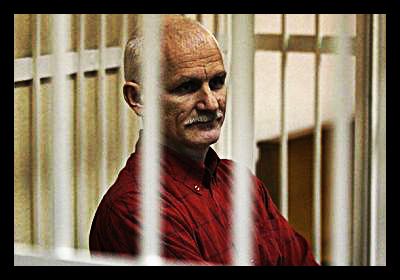
Ales Belyatsky Released from Prison Early

Ales_BelyatskyLeading Belarus human rights activist, Ales Belyatsky, was released early from prison this week after only serving three of a four-and-a-half year sentence for tax evasion. Belyatsky, who ran the rights group Vesna-96, was arrested for an alleged tax evasion after officials in Poland and Lithuania unwittingly supplied information regarding information in his bank accounts. Belarus, which imposes strict restrictions on the financing of NGOs, rules out virtually any financial help from abroad.

Yet Belyatsky, whose arrest was deemed “politically motivated,” never pleaded guilty for his alleged crimes, and attributed the funds in the bank account to years of supporting victims of human rights abuses in Belarus. In fact, there are at least seven other human rights activists in Belarus currently imprisoned, and while Belyatsky has been released early, many attribute his release to internal–and external–pressure toward the regime. The United States, among other countries, has commended Belyatsky’s release and urged Belarus to do the same for the rest of their prisoners.

Belyatsky claims he still feels part of the system, and while his release was unexpected, he has remained vigilant against the Belarusian regime. The regime, which has kept a tight authoritative control over the years, has consistently worked to eliminate human rights groups, squandering their political rights. While Belaytsky’s release may be seen from the West as a sign of improvement, those from the country fear this may be a political move to ensure a renewal of dialogue with the European Nation.

Despite his stint in prison, Belyatsky does not regret his activism. “I am not sorry for those three years spent in prison,” he said. “This is the price you pay for making Belarus a free and democratic country.” Belyatsky hopes other human rights prisoners, who often face extreme measures of psychological abuse under imprisonment, will be granted the right to follow suit.

– Nick Magnanti

Sources: KyivPost, Reuters, Charter97, Index on Censorship
Photo: Ozera

June 26, 2014
https://borgenproject.org/wp-content/uploads/borgen-project-logo.svg 0 0 Borgen Project https://borgenproject.org/wp-content/uploads/borgen-project-logo.svg Borgen Project2014-06-26 18:45:222024-06-05 01:57:36Ales Belyatsky Released from Prison Early
Activism, Advocacy, Children, Human Trafficking

UNICEF and the World Cup

This year, UNICEF has been utilizing the global platform that the 2014 World Cup provides as a method to boost advocacy.

While it is true that the competition brings people together and has many positive effects on the nations involved, the World Cup will unfortunately also result in the rise of more sinister practices.

For example, global sporting events like the World Cup almost always result in a significant boost in human trafficking.

Judy Harris Kluger, an affiliate of the nonprofit Sanctuary for Families, describes this phenomenon: “On the most basic level, any location that sees an exponential increase in large numbers of men traveling for entertainment will receive a proportion increase in those who purchase sex.”

In Brazil, where this year’s World Cup is being held, prostitution for those over 18 is legal. Unfortunately, many of the people on the streets selling sex are children, and UNICEF is trying to do something about it.

In order to combat child trafficking, UNICEF Brazil has created an app called Proteja Brasil that allows users to report incidences of exploitation or abuse. Witnesses can use the application to document the time, details and location of incidents. This information is sent directly to the authorities who can respond immediately.

In addition to reporting the exploitation of children, the app contains detailed information about exactly what constitutes child abuse, leaving users better educated and more able to protect youth from harm.

Despite the fact that the World Cup means remarkably high numbers of people will be exploited in sex trafficking, UNICEF still sees the tournament as having the potential to create positive change, saying, “The FIFA World Cup is not only a great sporting event, but a powerful opportunity to share messages about the profound and positive difference sport can make in the lives of children. It provides a chance to focus positive public attention on the special risks children face in host countries like Brazil and around the world and the special efforts we can take to protect them from those threats.”

Hopefully UNICEF’s efforts to protect children during this year’s World Cup will be effective. The tournament is essentially a massive world stage which the United Nations is trying to use to for good.

The U.N.’s Secretary-General Ban Ki-moon attended the first match of this year’s World Cup and released a statement that  highlights the tournament’s significance: “Sport has a unique ability to unite us, and to show us what we have in common…[The World Cup] is an occasion to celebrate the best values of sport: teamwork, fair play and mutual respect.”

— Emily Jablonski

Sources: Huffington Post, UN, UNICEF
Photo: UNICEF USA

June 24, 2014
https://borgenproject.org/wp-content/uploads/borgen-project-logo.svg 0 0 Borgen Project https://borgenproject.org/wp-content/uploads/borgen-project-logo.svg Borgen Project2014-06-24 04:56:442024-06-05 01:57:34UNICEF and the World Cup
Activism, Advocacy

Sala Negra: Investigating Violence in Central America

Salvadoran journalist Óscar Martínez is pushing the bounds of traditional media in a project called Sala Negra that seeks to shed light on violence and instability in Central America. His project is an offshoot of digital San Salvador-based media outlet El Faro (elfaro.net,) which claims to be the first exclusively online newspaper in Latin America.

Sala Negra has quickly become the center of investigative crime reporting in Central America. Martínez, the project’s director, says that the reality of Latin America is so complex that in order to get to the bottom of what is happening there, every rule of the traditional media must be broken.

The digital venture, which began in 2010, digs up information on violent events in the region in the hopes of reaching a more thorough understanding of why 2 million Central Americans leave their homes for the United States every year, crossing through Mexico’s treacherous territory and enduring countless other difficulties.

Sala Negra is staffed by five reporters, three photographers and one documentarian. Martínez jokes that the fast food industry would never approve of the project’s pace, as each member of the team works on only five in-depth reports each year. The site is driven by quality rather than quantity.

In 2013, Sala Negra released a book called “Crónicas Negras.” The publication is a compilation of 18 of the best investigative pieces from Sala Negra’s first year. Topics revolve around the gang activity, deportations and civil wars that have caused so much turmoil in modern-day Central America. It thoroughly examines the weak states and strong organized crime networks that cause havoc in the most violent countries in the region – El Salvador, Nicaragua, Honduras and Guatemala.

The strategy of Sala Negra is to move away from fast, sensational news and toward in-depth, investigative reporting. Martínez articulates that this kind of reporting is desperately needed in the region as profound, investigative journalism is extremely scarce, especially in Central America.

In the introduction to “Crónicas Negras,” Sala Negra admits that there are no reliable numbers for those killed in the everyday war being fought in Central America. There are no formal borders, nor does the war have a name. Yet, the text laments, it is the worst war because the people who fight in it have forgotten the value of life for being so in love with death.

Journalists like Martínez and his colleagues at Sala Negra embody honorable, responsible journalism. Their mission is to uncover the truth behind violence and migrant flows in and out of Central America in order to know how to move forward and bring a bit of justice to such a tumultuous area.

— Kayla Strickland

Sources: Sala Negra, El Faro
Photo: Starmedia

June 23, 2014
https://borgenproject.org/wp-content/uploads/borgen-project-logo.svg 0 0 Borgen Project https://borgenproject.org/wp-content/uploads/borgen-project-logo.svg Borgen Project2014-06-23 13:05:102024-05-26 23:48:38Sala Negra: Investigating Violence in Central America
Activism, Advocacy

Music’s All Stars Sing Away Child Labor

Right now more than 168 million children ages 5 to 18 are victims of child labor practices. Of these children, 85 million work in conditions that endanger their health and many are exploited in varying ways.

It is these shocking truths that have motivated the likes of Travis Barker, Pharrell Williams, Mike Einziger of Incubus and world-renowned composer Hans Zimmer, to collaborate on a song titled, “Til Everyone Can See.” The song features Minh Dang, a survivor of child trafficking.

The inspiration for the anti-child labor tune originated from their visit with the International Labour Organization. The ILO is the oldest agency of the United Nations, and their child labor program is the largest in the world. Following the visit, the artists joined the ILO campaign, Red Card to Child Labour.

The campaign’s use of the red card is intentional, as the timing of the campaign lines up with one of the most highly viewed sporting events in the world; the FIFA World Cup. This global symbol of a red card is known for being synonymous with the concepts of wrong and stop, making it an ideal symbol for the campaign.

The song was released on June 12 of this week, which is also the World Day Against Child Labor. The music, written by Einziger of Incubus and the violinist, Ann Marie Simpson, has a global vibe. However, this is not the first time musicians have used such songs to take a stand against child labor.

Similar musical initiatives include Global Music against Child Labor, through which musicians of all genres have dedicated events and concerts to the movement. The awareness these artists raise undoubtedly plays a key part in ending child labor practices.

As the heartfelt song declares “no one can be free when there is slavery…its time to do our part, give children of the world a brand new start.”

— Christopher Kolezynski

Sources: ILO, Look To The Stars, Music For Good, USA Today
Photo: Flickr

June 23, 2014
https://borgenproject.org/wp-content/uploads/borgen-project-logo.svg 0 0 Borgen Project https://borgenproject.org/wp-content/uploads/borgen-project-logo.svg Borgen Project2014-06-23 12:26:112024-06-04 03:01:20Music’s All Stars Sing Away Child Labor
Activism, Advocacy, Global Poverty, Poverty Reduction, Volunteer

5 Ways to Put Your Time Toward Change

In just one month in 2012, Americans spent a combined 230,060 years on social media according to the annual Nielsen Report. That’s about 6.5 hours per person, if every American used social media, and a whopping 121 billion minutes total. That was two years ago, and social media platforms and usage continue to grow.

That we have managed to collectively squeeze thousands of years worth of time out of just one month is amazing, a true feat that proves the potential for impact when an entire society chooses to dedicate time to one purpose. That this feat was accomplished in the name of liking, posting, commenting and pinning is disheartening. We can do better.

Imagine the improvements to our world if every American spent even half that time, about three hours every month, addressing global poverty issues and working toward solutions. We can no longer claim we don’t have time to make the world a better place.

Here are five ways to put your time toward change:

1. Take a free class on global issues (1-5 hours per week)

Educate yourself on the problems and solutions of global poverty! There are many free courses offered online by prestigious universities that focus on issues like global health and development. Auditing or taking a class for credit is a great way to learn about the current landscape of global poverty issues, and what we can do about them.

Check out sites like coursera.com and openculture.com to access free classes from top universities around the world. Many universities now offer free classes through their websites as well.

Multiply your impact: Take it one step further and share what you’ve learned with your friends, family and community. Give a talk at a local school, write an op-ed for your newspaper or hold a fundraiser. Most importantly, spread the good news; although it sounds too big to conquer, we CAN (and have) reduced global poverty rates.

2. Send a care package (1-2 hours to a weekend project)

Basic supplies can make all the difference. Consider the fact that women and girls around the world miss days of school and work because they lack access to feminine hygiene products/menstrual pads. These collective days of missed income and education add up to real economic losses, keeping women in the cycle of poverty. Girls are forced to use whatever they can find — newspapers, leaves, rocks — as sanitary supplies, and are sometimes exploited in exchange for hygiene.

Days for Girls distributes sustainable feminine hygiene kits made by individuals and groups in the U.S. to women and girls around the world. The website includes patterns, instructions and videos so that you can get involved and sew reusable pads for the organization to send. There is also information about joining a kit-sewing chapter near you and tips for starting your own, as well as ways to help if you can’t sew.

Imagine trying to run a school without chalkboards, books or pencils. Check out organizations like Books for Africa, International Book Project and Kids to Kids International to learn more about how to send books and supplies to schools and kids around the world.

Multiply your impact: Enlist the help of your team, group or classroom to hold book and school supply drives, and make care packages together. Gather your crafty friends and have a hygiene kit sewing party.

3. Contact Congress to secure support for essential poverty-reducing legislation (30 seconds to 2 minutes)

Getting in touch with your congressional leaders is surprisingly easy and highly effective. Because congressional leaders want to track what issues are important to constituents, their staffers tally every issue and bill the office receives calls, letters and emails about. Every contact you make counts (literally) and even one email means your issue or bill is on the leader’s radar.

The Borgen Project’s Action Center page lists current bills relevant to global poverty and includes links to send a formal email to congressional leaders for each. Just fill out your contact info once, and then click to send emails urging support for crucial legislation. Use the link at the bottom of the page to read more about each bill.

Click here to search congressional phone numbers by your zip code, and here for tips on making the call. It’s as easy as saying, “I’m a constituent and a Borgen Project supporter, calling to ask (leader name) to support the (Water for the World Act).”

And if you have more than two minutes to spare, you can write your own letter or email to Congress. Click here for tips and samples to get started!

Multiply your impact: Call weekly, and enlist friends and family members to do the same. Forward a link to the Action Center to your address book. Host a letter and/or email-writing party on your campus, with your friends or in your community.

4. Volunteer your time and skills to the cause

There are plenty of ways to impact global poverty without leaving your city. A quick Google or GuideStar search will return many volunteer opportunities and ways to get involved with international aid organizations based in your area. These groups need volunteers for everything from packing boxes of supplies for relief efforts, to helping organize runs, fundraisers and other community events, to representing the organization by tabling events.

Hands-on volunteer projects abroad are also great — if you possess the skills necessary to be successful. Consider your skill sets when choosing a project, and avoid things like signing up to build a school if you know nothing about bricklaying. Taking part in projects in which you can’t actually be helpful can do more harm than good. Instead, focus on what skills you have to offer and choose volunteer opportunities accordingly.

Multiply your impact: Ask staff to stay in touch about upcoming activities, and volunteer regularly. Bring friends and family along. Use social media to advertise any organization events or upcoming volunteer opportunities.

5. Write a check (30 seconds!)

There are many deserving organizations working on a host of issues related to global poverty. GuideStar is a great place to search for nonprofits of interest to you, or start right here and give to The Borgen Project! Donating is a quick and easy way to make a difference.

Multiply your impact: Sign up to give monthly. Practice deferring — writing a small donation check instead of that cup of coffee, movie or dinner out you could do without. Ask the company you work for to consider donating to The Borgen Project and other global poverty organizations.

— Sarah Morrison

Sources: Nielsen, The Borgen Project, BooksForAfrica, CongressMerge
Photo: Wallpapers Craft
June 20, 2014
https://borgenproject.org/wp-content/uploads/borgen-project-logo.svg 0 0 Borgen Project https://borgenproject.org/wp-content/uploads/borgen-project-logo.svg Borgen Project2014-06-20 10:03:272024-05-26 23:46:465 Ways to Put Your Time Toward Change
Activism, Advocacy, Global Poverty

The History of Advocacy

How long has advocacy been around, where did it start and where does the word advocate come from?

There isn’t a lot known about the history of advocacy programs or where advocacy began.

Advocacy has not always been considered “advocacy.”A long time ago, back when homo sapiens had barely begun to dominate planet earth, advocacy was considered common courtesy. People lived in large groups and helped each other out when they could.

However, as societies advanced and technology came into the picture, helping others seemed like it required a little too much effort. There is no set “first” advocacy program, but many advocacy programs claim to be the first of their kind.

However, perhaps one of the oldest advocacy programs still alive today is The Salvation Army. The Salvation Army began in 1852 just before The Red Cross, who is a close second and began its work in 1881.

Even before these two giant programs, there were orphanages and safe houses and programs to feed the hungry. Helping one another can be traced back to the very first animals.

Perhaps these earlier instances of advocacy are a little less “public support” and a little more “helping your fellow man,” but humans often learn from their surroundings.

According to the Oxford English dictionary the word advocate was first recorded in the English language in the 1300s as a noun. The word stemmed from the French word avocat and before that the Latin word advocatus.

Advocatus means to be called to or summoned, or more specifically to come to someone’s aid in the courtroom. This could mean the very first public advocacy program in the world involved the beginning of law and lawyers.

However, before lawyers there were churches that fed the hungry and protected the weak. There were armies who helped protect the city people from outside harm. There were people who gave the homeless shelter and the needy possessions and all of them called on others to do the same.

These actions were not considered advocacy the way we know it today. When they first started, these instances were just the act of standing up for someone who could not stand up for nor protect themselves. To speak for someone whose voice was being ignored or could not be heard.

In the beginning, advocacy was not something that had to be bought, bartered or begged for. It was something people did because it was what was right, not because they needed volunteer experience.

Over the years advocacy has morphed into something much different. Today, it is more organized to provide more aid to more people throughout the world that do not have anyone with enough power to provide and aid them nearby. Advocacy has become a global responsibility rather than a local one and needs more funding, more political support and more power to become something even greater.

Now, advocacy makes it everyone’s responsibility to rise to the needs of serious global issues and to help in any way they can.

– Cara Morgan

Sources: Grammaphobia, Oxford English Dictionary, The Free Dictionary, The Red Cross, The Salvation Army

June 20, 2014
https://borgenproject.org/wp-content/uploads/borgen-project-logo.svg 0 0 Borgen Project https://borgenproject.org/wp-content/uploads/borgen-project-logo.svg Borgen Project2014-06-20 09:46:202016-02-16 12:11:06The History of Advocacy
Activism, Advocacy, Charity, Global Poverty, Malnourishment

What is Poverty?

Before becoming an advocate to fight to end global poverty, you should understand what poverty actually is.

What is poverty? There are plenty of textbook and Google definitions for poverty.

Miriam-Webster defines poverty as “the state of being poor.” The definition works, but poverty is so much more than words on a page; it is a living, breathing problem that millions of people live with every single day.

Another dictionary definition for poverty is “the state of being inferior in quality or insufficient in amount.” When you think about that in terms of human life, it can sound clinical, cold or cruel to refer to other humans as “inferior” or “insufficient” simply because they are living in poverty.

The world works that way. Many people question those who live in poverty and how some of them have “nice” things when they can barely afford simple goods like food or clean water. Other people view impoverished people as dirty or beyond help.

Poverty is people who live on a dollar a day, people who can’t find shelter, people who are dying from curable diseases all because they can’t afford treatment. Poverty is the fear that you will not make it to the next day.

When people think of poverty, they often think about people in Africa or just people who don’t live in their immediate country. However, poverty, even extreme poverty, is not localized to just the African continent. There are people struggling, suffering and barely getting by everywhere.

In America, one in six people struggle to make ends meet; to have just enough food and health care to feed and take care of their families. Over 600,000 people in America alone suffer from extreme poverty; the lack of shelter, food, health care and income.

So, what is poverty, because poverty is more than being poor and it’s more than having nothing to your name. Poverty is being terrified of not being able to make it to the next day without having something else taken from you and not being able to do anything about it.

The image of poverty is often a cruel and unforgiving one, but there can also be hope in the people who hang on day after day.

These people are the reason for the fight to end global poverty. The fight is for the people who hang on to life and struggle for the chance to one day be free of their demons and for the people who couldn’t make it, so no one will ever have to feel like them again.

– Cara Morgan

Sources: Feeding America, Google Definitions, Merriam-Webster, New Nouveau
Photo: Productive Flourishing

June 13, 2014
https://borgenproject.org/wp-content/uploads/borgen-project-logo.svg 0 0 Borgen Project https://borgenproject.org/wp-content/uploads/borgen-project-logo.svg Borgen Project2014-06-13 13:20:102024-06-05 01:57:31What is Poverty?
Activism, Politics and Political Attention, Women and Female Empowerment

Remembering Yuri Kochiyama

Yuri Kochiyama, a prolific civil rights activist, died this past Sunday in Berkeley, Calif. at 93 years old. Known for her friendship with Malcolm X (she held him in her hands as he lay bleeding from gunshot wounds the night of his assassination,) Kochiyama was equally a revered activist in her own right. She, along with her husband, pushed for reparations and a government apology for the many Japanese-American internment camp victims under the Civil Liberties Act, and her legacy and determination has inspired a slew of young activists.

Kochiyama was born in San Pedro, Calif. to Japanese immigrants. After leading a figuratively normal teen life, it would not be until Pearl Harbor in 1941 that she would become involved in political issues after her father was taken into custody by the FBI. Like many other Japanese-Americans, Kochiyama and her family were just one of 120,000 Japanese-American victims who were unjustly sent to internment camps following the attack.

Kochiyama and her husband lived in the housing projects in New York City, where her African American and Puerto Rican neighbors inspired her to become involved in the Civil Rights Movement. Upon meeting Malcolm X, she reportedly challenged his harsh stance on integration — a move causing him to move away from the strict Nation of Islam viewpoint he preached to a more inclusive acceptance of all kinds of people. Upon Malcolm X’s death, Kochiyama continued to fight for the rights of those whose voices needed to be heard. She was constantly fighting.

Her home, which was the permanent “meeting place” for activists in the area, will be forever remembered by Kochiyama’s eldest daughter, Audee Kochiyama-Holman, who described her upbringing as a “24/7” movement. And that it was: until her death, Kochiyama continuously fought for the under-represented voice. Her activism against the discrimination of South Asians, Muslims, Arabs and Sikhs after 9/11 was just one example; her fight toward equality was all-inclusive.

Shailja Patel, poet and activist, is just one of many who remembers Kochiyama in this light. “She made us all larger, reminding us always to think globally and organize locally,” she says. “She emphasized that all struggles for justice are connected — and she lived that truth.”

– Nick Magnanti

Sources: Huffington Post, NPR, The New York Times
Photo: Casa Atabex Ache

June 13, 2014
https://borgenproject.org/wp-content/uploads/borgen-project-logo.svg 0 0 Borgen Project https://borgenproject.org/wp-content/uploads/borgen-project-logo.svg Borgen Project2014-06-13 04:20:342024-05-26 23:42:27Remembering Yuri Kochiyama
Activism, Women, Women and Female Empowerment

Iranian Journalist Masih Alinejad Slandered

Masih Alinejad is a prominent Iranian journalist and activist who is currently in the news regarding some unfortunate circumstances. Last week, the Iranian TV personality Vahid Yaminpour reported a fake story that Alinejad was raped while on drugs in London, where she is living in exile, and subsequently called her a whore on his Facebook page.

This type of slander is despicable and some of the worst that Alinejad has had to endure. As an outspoken activist against the Iranian government, she understands that “they want to keep journalists silent.” However, she goes on to further explain that even though she’s been attacked many times in the past, “this was the most fabricated, most disgusting news about me.”

In the face of such adversity it is important to give support to Alinejad. She believes the reason for the fake report is in retaliation to a Facebook page she created last month which has garnered almost 500,000 likes. The page is called My Stealthy Freedom, and its main purpose is for Iranian women to post pictures of themselves in public without wearing the hijab.

Iran has a 35-year old law that forces women to wear the hijab. Many women protest this law because it denies them their freedom. Hundreds of women from Iran have written to Alinejad so their pictures can be posted on her Facebook page.

One woman sent a picture of her throwing her hijab while in the street with an accompanying text saying, “what I want is freedom of choice, not a meter of cloth! I’ll remove this piece of cloth! Look! I am still a human!”

Alinejad’s personal favorite photo is of women wearing the hijab but holding a sign that says, “I support and wear hijab but I am against compulsory hijab.” Although the page is mostly in Arabic, some of the pictures are truly moving and beautiful.

Alinejad sees the hijab as a form of control by hardliners in her country. They use it to remove any possible power or participation in society for women. Since Iranian media is controlled by the government, they have an easy time of shaping the citizens’ perceptions. Those in power want to keep women wearing the hijab.

Alinejad believes the fake report about her is an attempt to discredit her and her My Stealthy Freedom campaign. Her campaign challenges those in power and the status quo in Iran. Specifically, it challenges the hijab and promotes women’s rights to more freedom. As evident by her favorite photo on her page, its not that she is against the hijab itself, but what it represents: male domination over women.

– Eleni Marino

Sources: Facebook, Time, ABC
Photo: WordPress

June 12, 2014
https://borgenproject.org/wp-content/uploads/borgen-project-logo.svg 0 0 Borgen Project https://borgenproject.org/wp-content/uploads/borgen-project-logo.svg Borgen Project2014-06-12 04:24:372024-12-13 17:50:18Iranian Journalist Masih Alinejad Slandered
Activism, Advocacy, Children, Nonprofit Organizations and NGOs

Save the Children

Save the Children helps children in over 120 countries, including the United States, gain access to health services and education while keeping them out of harm’s way. This organization was founded by Eglantyne Jebb in England in 1919. She aimed at helping children recover after World War I in central Europe. Eglantine dedicated her life to advancing human rights and the well-being of all children. Jebb believed that the world as a whole was entirely responsible for their welfare.

Eglantyne Jebb once said, “The only international language in the world is a child’s cry,”–words which have forever changed how the world views saving the children.

Save the Children’s theory of change creates noticeable impacts on children’s lives by investing in the impact of children by forming together to meet the demanding changes of the world we exist in. This notion is broken down into four pillars of impact.

The first pillar consists of being the voice for the world’s children. The focus is working toward policy reforms to help promote better child rights, particularly in areas of poverty. This will ensure that no child’s voice will go unheard.

The second pillar is the Save the Children foundation becomes the pioneer for innovation. This pillar will show the world that there is proof for solutions to helping these children and that it can be done.

The third pillar states that building partnerships and collaborating with other organizations of the same interest can help meet these goals faster by getting the word spread to a larger audience.

The fourth pillar is the final step. This is the achieved results of policy reforms and also the best patterns possible for implementing the right steps to follow through with, making life better for kids.

The Save the Children foundation has changed the lives of over 125 million people and this number continues to grow. An example of the success of the foundation is shown with children living in Kenya. The drought in Kenya has taken a toll on areas suffering from poverty because the land for livestock becomes unusable. This produced a regional wide shortage of milk, causing many of the children to become severely malnourished.

Save the Children has provided over 30,000 children and families with milk through their milk voucher program. A few months after the program began, children received over a 10 percent weight increase because of the program’s success.

Over the past several years, the Save the Children foundation has educated over 9 million children and will be continuing to do so in the future. Save the Children is working to ensure that children around the world survive threats like newborn complications, and preventable or treatable illnesses like malaria, through the use of vaccines. The Save the Children foundation aims to offer valuable evidence to increase government funding and influence global policies. Save the Children is working with governments, schools and nonprofit partners to improve the available access and the role of quality health and nutrition programs.

– Rachel Cannon

Sources: Charity Watch, Save the Children
Photo: Marketing Magazine

June 11, 2014
https://borgenproject.org/wp-content/uploads/borgen-project-logo.svg 0 0 Borgen Project https://borgenproject.org/wp-content/uploads/borgen-project-logo.svg Borgen Project2014-06-11 04:00:502024-05-26 23:41:18Save the Children
Page 37 of 56«‹3536373839›»

Get Smarter

  • Global Poverty 101
  • Global Poverty… The Good News
  • Global Poverty & U.S. Jobs
  • Global Poverty and National Security
  • Innovative Solutions to Poverty
  • Global Poverty & Aid FAQ’s
Search Search

Take Action

  • Call Congress
  • Email Congress
  • Donate
  • 30 Ways to Help
  • Volunteer Ops
  • Internships
  • Courses & Certificates
  • The Podcast
Borgen Project

“The Borgen Project is an incredible nonprofit organization that is addressing poverty and hunger and working towards ending them.”

-The Huffington Post

Inside The Borgen Project

  • Contact
  • About
  • Financials
  • President
  • Board of Directors
  • Board of Advisors

International Links

  • UK Email Parliament
  • UK Donate
  • Canada Email Parliament

Get Smarter

  • Global Poverty 101
  • Global Poverty… The Good News
  • Global Poverty & U.S. Jobs
  • Global Poverty and National Security
  • Innovative Solutions to Poverty
  • Global Poverty & Aid FAQ’s

Ways to Help

  • Call Congress
  • Email Congress
  • Donate
  • 30 Ways to Help
  • Volunteer Ops
  • Internships
  • Courses & Certificates
  • The Podcast
Scroll to top Scroll to top Scroll to top
