• Link to X
  • Link to Facebook
  • Link to Instagram
  • Link to TikTok
  • Link to Youtube
  • About
    • About Us
      • President
      • Board of Directors
      • Board of Advisors
      • Financials
      • Our Methodology
      • Success Tracker
      • Contact
  • Act Now
    • 30 Ways to Help
      • Email Congress
      • Call Congress
      • Volunteer
      • Courses & Certificates
      • Be a Donor
    • Internships
      • In-Office Internships
      • Remote Internships
    • Legislation
      • Politics 101
  • The Blog
  • The Podcast
  • Magazine
  • Donate
  • Click to open the search input field Click to open the search input field Search
  • Menu Menu

Archive for category: Activism

Information and stories on social activism.

Activism, Advocacy, Global Poverty

10 Quotes About Helping Others

Here is a list of 10 quotes about helping others, compiled by The Borgen Project:

1. “The purpose of life is not to be happy. It is to be useful, to be honorable, to be compassionate, to have it make some difference that you have lived and lived well.” – Ralph Waldo Emerson

2. “Those who are happiest are those who do the most for others.” – Booker T. Washington

3. “When we give cheerfully and accept gratefully, everyone is blessed.” – Maya Angelou

4. “Many small people, in many small places, do many small things, that can alter the face of the world.” – Unknown

5. “As you grow older, you will discover that you have two hands, one for helping yourself, the other for helping others.” – Audrey Hepburn

6. “No one is useless in this world who lightens the burdens of another.” – Charles Dickens

7. “Believe, when you are most unhappy, that there is something for you to do in the world. So long as you can sweeten another’s pain, life is not in vain.” – Helen Keller

8. “Everybody can be great. Because anybody can serve. You don’t have to have a college degree to serve. You don’t have to make your subject and your verb agree to serve…. You don’t have to know the second theory of thermodynamics in physics to serve. You only need a heart full of grace. A soul generated by love.” – Martin Luther King Jr.

9. “I know of no great men except those who have rendered great service to the human race.” – Voltaire

10. “No one has ever become poor by giving.” – Anne Frank

– Hannah Cleveland

Sources: GoodReads
Photo: The Motion Machine

July 22, 2014
https://borgenproject.org/wp-content/uploads/borgen-project-logo.svg 0 0 Borgen Project https://borgenproject.org/wp-content/uploads/borgen-project-logo.svg Borgen Project2014-07-22 10:17:092024-06-05 01:57:4710 Quotes About Helping Others
Activism, Human Rights, Politics and Political Attention

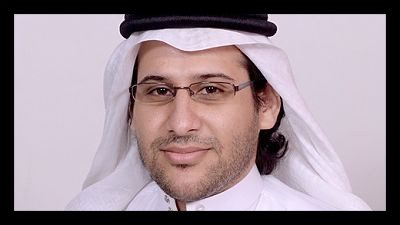
Saudi Activist Faces Jail Time for Inciting Freedom

Walid abu al-Khair, a well-known human rights lawyer and Saudi activist, has received a jail sentence for 15 years for undermining the state of Saudi Arabia and insulting its political system.

The Saudi activist’s charge stems from the apparent violation of a recent anti-terrorism law which prohibits any civil act that, “disturbs public order, shakes the security of society, or subjects its national unity to danger, or obstructs the primary system of rule or harms the reputation of the state.”

This is not the first time al-Khair has faced the threat of jail time. On multiple occasions, the Saudi activist has been sentenced to varying amounts of time, though it has never reached a degree as intense as that of this most recent conviction. In his statement, al-Khair declares that he will not appeal the sentence because he does not see the legitimacy of the claim, and therefore believes it will fall apart when it comes time to book him.

The international reaction to the jailing of such a prominent voice has been negative thus far, with the Saudi researcher for Human Rights Watch saying, “Walid Abu al-Khair’s harsh sentence shows that Saudi Arabia has no tolerance for those who speak out about human rights and political reform and it will go to any length to silence them.” Saudi Arabia’s reaction simply shows the rest of the closely watching world that freedom of speech is less than valued.

By showing dissent from the Saudi king, al-Khair put himself in the crosshairs of the government. The Saudi activist has brought international attention to Saudi Arabia and this action has upset the government to the point that they believe he has represented them falsely and in a harsh light.

This incarceration demonstrates Saudi Arabia’s fear of the people, and the movement they could start if enough voices show disagreement. Countries that strive for a democratic state should allow the citizens to voice concerns; however, it appears this is not the case in Saudi Arabia. With reason, multiple countries, including the United States, have shown concern for the blatant disregard of human rights in this ongoing debacle with al-Khair, and begin to question the stability of the country.

– Elena Lopez

Sources:

Sources: CNN, Reuters, Aljazeera
Photo: Gulf Center for Human Rights

July 18, 2014
https://borgenproject.org/wp-content/uploads/borgen-project-logo.svg 0 0 Borgen Project https://borgenproject.org/wp-content/uploads/borgen-project-logo.svg Borgen Project2014-07-18 17:38:412024-05-27 09:18:38Saudi Activist Faces Jail Time for Inciting Freedom
Activism, Education, Global Poverty

Jay-Z to Headline Global Citizen Festival

global citizen festival
Extreme poverty, defined as living on less than $1.25 per day, consumes 1.2 billion people of the world’s population. Fortunately, awareness of this problem is beginning to penetrate the mainstream and even many celebrities are starting to take action. Jay-Z, Carrie Underwood, Tiesto, and other well-known artists are set to headline the Global Citizen Festival on September 27th at Central Park in New York City. This festival is aimed to highlight the goal of ending extreme poverty by 2030.

In regards to the festival, Jay-Z stated, “Change only takes place when and where there is action. I’m joining the 2014 Global Citizen Festival because I believe through actions, whether it be by raising awareness, getting involved or educating ourselves, the goal to end extreme poverty by 2030 is possible.”

The Global Poverty Project has taken the initiative to create this festival not only to raise awareness about the issue, but also to increase the number of people participating in poverty-reduction efforts. In order to maximize attendance and participation in such efforts, 45,000 tickets will be distributed free of charge for participating in Global Citizen’s online platform.

Many may argue that a concert, even with such famous artists, will not do much to alleviate extreme poverty around the globe, but the statistics show otherwise. In the past two years of Global Citizen Festivals, with performances by John Mayer, Alicia Keys, The Foo Fighters, and Kings of Leon, actions taken by concert attendees generated $1.3 billion to put toward poverty reduction programs, as well as commitments from 35 world leaders to aid the poor. Although much more funding and aid is needed to eliminate extreme poverty, $1.3 billion has saved lives.

In terms of participation, exposure, and timing, the Global Citizen Festival has been very strategically organized. This festival is set up to reach the widest audience possible by having iconic artists from three completely different genres of music come together to perform at the same concert, attracting people from many different backgrounds. The festival has also established partnerships with mainstream media outlets, such as NBC and MSNBC in order to reach people on a national level as well.

September 27th is a very important date for the festival to be held because it coincides with the United Nations General Assembly, where leaders from all over the world will gather to discuss public policy and international affairs. The fact that this festival is on the same day will give added inspiration to these leaders to commit to providing even more funding from their nations for international aid development to reduce extreme global poverty.

Besides eliminating extreme poverty by 2030, the main goals of this years’ Global Citizen Festival include bringing vaccines to the world’s poor, expanding education to the 60 million adolescents who are not provided the opportunity to learn and increasing conditions of sanitation to prevent disease and other problems.

In the fight against global poverty, it is extremely helpful and important that celebrities like Jay-Z and Carrie Underwood use their spotlight of fame toward a worthy cause in order to raise awareness. The combination of high-profile figures, established media partnerships, and strategic methods of participation in poverty-reduction, has set this years’ Global Citizens Festival at an unprecedented reach.

– Lucas Vazquez
Sources: Inquisitr, Rolling Stone
Photo: radio.com

July 16, 2014
https://borgenproject.org/wp-content/uploads/borgen-project-logo.svg 0 0 Borgen Project https://borgenproject.org/wp-content/uploads/borgen-project-logo.svg Borgen Project2014-07-16 16:00:252024-05-27 09:18:38Jay-Z to Headline Global Citizen Festival
Activism, Advocacy

The Trade Justice Movement

Based in the United Kingdom, the Trade Justice Movement is a coalition of organizations, including trade unions, environmental and human rights campaigns, faith and consumer groups, aid agencies and fair trade organizations. Over 9 million people strong with 60 organizations, the coalition believes that everyone should be able to make a good living, feed their families and protect their environment. Simply put, they share a common goal: making international trade benefit the poor and the environment.

The Movement focuses its beliefs into three core modes of action. The first: ensure that governments in developing countries make the best choices in their efforts to reduce poverty and protect the environment. The second: bring an end to export-dumping that hurts the livelihoods of poor communities worldwide. The third: enact laws that stop companies from benefiting from the exploitation of people and the degradation of the environment.

The movement is governed by a board which is re-elected annually by Trade Justice members. Among the current board members is Penny Veness of Soroptimist International. It is a partner organization and one of many with extremely positive hopes for the world’s disadvantaged. It works toward a world in which women and girls can reach their full potential, make their aspirations reality and enjoy the right of an equal voice.

Over the past few weeks, the Trade Justice Movement has taken a stand against the Investor to State Dispute Mechanism, or ISDS. It’s a provision that gives companies disproportionate rights to sue governments at international tribunals. Currently, the European Union is considering the provision for the Transatlantic Trade and Investment Partnership, a new trade deal between the E.U. and United States.

The provision is already a highly-accessed component of the North American Free Trade Agreement, making Canada the country with the highest number of ISDS lawsuits in the world for a variety of different pieces of legislation, among which was an act to remove toxic chemicals from petrol. Another ISDS lawsuit pushed back against Canadian efforts to develop a solar panel industry and promote clean energy. The Trade Justice Movements has, in response to its possible inclusion in the Investment Partnership, called ISDS, “unnecessary, damaging and outdated.”

As the possible E.U.-U.S. agreement looms, the Trade Justice Movement will continue work to ensure that the exchange is a fair one for the world’s poorest and the environment that all of us need to survive.

– Rachel Davis

Sources: Trade Justice Movement 1, Trade Justice Movement 2, Soroptimist International, TSSA, Just Investment
Photo: Trade Justice Movement

July 16, 2014
https://borgenproject.org/wp-content/uploads/borgen-project-logo.svg 0 0 Borgen Project https://borgenproject.org/wp-content/uploads/borgen-project-logo.svg Borgen Project2014-07-16 14:58:402024-05-27 09:18:34The Trade Justice Movement
Activism, Advocacy, Global Poverty, Nonprofit Organizations and NGOs

How to Start a Nonprofit

Have you ever wondered what it takes to start a nonprofit? Extensive questioning and research are, unsurprisingly, pretty important, but such large steps can be daunting. Such steps can be intimidating, too; with a hasty research phase, a commendable mission may falter underneath shoddy business planning, or maybe a solid business plan is built only to support a redundant, unspectacular mission. The roads to failure are numerous.

This is not meant to disappoint anyone. Although failure is easy, scrupulous work and copious help make starting a nonprofit feasible. There are a myriad of nonprofits that role model this success story-The Borgen Project included. To help you begin thinking about starting a nonprofit (or simply to inform anyone interested in the nonprofit thought process), here is a compilation of imperative questions to aid you in your research, with a little Borgen flare.


Key Questions:


1. You’re not flying solo, are you?

The answer should be simple: no. It is unrealistic to rely on a single committed person (presumably yourself) to carry the nonprofit (to carry it very far, that is). Before any nonprofit takes flight, there must be a team (the more, the merrier) of enthusiastic and inspired people to propel the project forward. If your passion is contagious, you’re off to a good start.

2. What resources do you think you will need, and why are they important?

While starting a nonprofit, having a detailed business plan and outline is integral. It allows you to establish a few practical points, examining both the efficacy and the originality of your nonprofit before it’s too late to reverse a bad decision.

For example, if there are similar organizations to your proposed one, instead of forming another, try what is called “fiscal sponsorship.” This means that your initiative becomes umbrellaed by a larger veteran nonprofit. Basically, this tax-exempt organization serves as the recipient of charitable donations to your organization, which would not yet be recognized as tax-exempt. It allows your project to grow (maybe one day allowing it to branch off on its own) without competing with identical nonprofits.

The second, just as important, benefit of a thorough business plan is that it gives you a comprehensive (and requisite) understanding of fiscal resources. If this sounds boring, sorry, but, too bad. Although establishing your goals, structure, budget, marketing plan and resource development/fundraising aren’t flashy, they are all important. This gives you time to think about partnerships as well – they can keep your nonprofit alive.

The Borgen Project has teams dedicated to working the logistics of the nonprofit. Clint Borgen may be the face of the organization, but without fundraisers, organizers or even interns, The Borgen Project would not be very effective.

3. What’s that avalanche of paperwork doing over there, and who can I go to to get rid of it?

Paperwork can be both dull and frustrating, and filing to become a registered nonprofit is no different. It is necessary in order to secure recognition at the state level and to become tax-exempt at the federal level. If you do at any time need help finding your way through this process, go to both friends and professionals. Friends can be supportive and offer helpful advice, but ultimately you will want to consult experts before making any serious decisions. Finding lawyers who specialize in tax-exempt organizations or nonprofit law will, in all likelihood, prove to be a rewarding course of action.

– Adam Kaminski

Sources: Grant Space, National Council of Nonprofits, About.com
Photo: Mashable

July 15, 2014
https://borgenproject.org/wp-content/uploads/borgen-project-logo.svg 0 0 Borgen Project https://borgenproject.org/wp-content/uploads/borgen-project-logo.svg Borgen Project2014-07-15 04:00:242024-06-05 01:57:42How to Start a Nonprofit
Activism, Advocacy, Philanthropy

5 Tips for Success in Philanthropy

cost to end world hunger
Unfortunately, there is no secret code to guaranteeing success in philanthropy. However, the following is a list of five tips for success in philanthropy.

1) Foster honest relationships between the donor and grantee.

Philanthropy is simply the love of humanity. The definition does not include any notion of wealth. However, wealth is often necessary to fund philanthropic efforts, and often times this creates a strange relationship between the donor and grantee. Kevin Starr, the managing director of the Mulago Foundation, describes how an imbalance of this relationship is created as a result of the inevitable focus on money philanthropic work calls for. However, clearly identifying the causes both the donor and grantee advocate for allows opportunity for a true partnership to bloom.

2) Have a business-like approach to your organization.

While philanthropic work is fueled by compassion and will, running a philanthropic foundation requires shifting mindsets and treating the organization like a business. “Business is about getting stuff done,” says Starr. In the end, applying the disciplines and practices of running a business to philanthropic efforts will lead to successfully and efficiently making progress.

3) Treat your grantees like customers.

This advice is strongly advocated by David Peery, the managing direct of the Peery Foundation. The organization(s) that a philanthropic decides to support is essentially the group he is investing in. Much like businesses invest in entrepreneurs to gain wealth, organizations invest in social entrepreneurs to achieve a lasting, positive social impact. Businesses value honest feedback and intentional communication, and nurturing this type of relationship between a donor and grantee will form a strong and honest partnership.

4) Have an adaptive philanthropy, not a rigid strategy.

Setting a vision and establishing targets are both necessary and wise. Adaptive philanthropy has a clear mission, but does not restrict itself to inflexible multi-year plans. All philanthropic efforts are dynamic processes, and none are immune to the tremendous number of factors that can complicate them. Risks and uncertainty should be expected in the process.

5) Measure the impact of your philanthropic efforts.

In the early days of philanthropy, people donated chunks of money toward a cause without considering the impact. Donors did not require their grantees to evaluate the impact of their programs, and grantees did not know how or what to measure. However, it is imperative to quantify the impact of an organization’s efforts, so that one can determine whether their philanthropic endeavors are working and creating a positive influence. This is often done through rigorous program monitoring and evaluation. For example, The Bill and Melinda Gates Foundation has appointed Jodi Nelson as the Director of Strategy, Measurement and Evaluation (SME) to measure its impact and ensure that it is operating with maximum efficiency.

– Christina Cho 

Sources: Stanford Social Innovation Review, Bill and Melinda Gates Foundation, Stanford Social Innovation Review 2
Photo: Huffington Post

July 13, 2014
https://borgenproject.org/wp-content/uploads/borgen-project-logo.svg 0 0 Borgen Project https://borgenproject.org/wp-content/uploads/borgen-project-logo.svg Borgen Project2014-07-13 11:10:562024-06-11 00:12:485 Tips for Success in Philanthropy
Activism, Nonprofit Organizations and NGOs

Earthquake Protection by Build Change

Build Change, an international nonprofit organization, is working to “greatly reduce deaths, injuries and economic losses caused by housing collapses due to earthquakes in developing countries.” In short, it envisions a world where all homes are earthquake resistant, so that no one has to live in an unsafe environment and face the devastation of losing their entire home after an earthquake.

The organization was founded by Dr. Elizabeth Hausler, who holds a Ph.D. in civil engineering and is passionate about sustainable construction. Currently, the organization works in China, Colombia, Haiti, Indonesia and the Philippines, some of the most earthquake-prone regions in the world.

In the Sichuan Province of China, Build Change has constructed over 1,000 earthquake-resistant homes. The organization personalizes each design for the specific homeowners and also takes steps to ensure that locals are educated about what makes houses vulnerable so that disaster can be avoided.

Xiao Qianghui, a villager from Minle in the Sichuan province, attested to the positive change the organization can make. “I’m a bit surprised that Build Change would come here because Minle is such a remote village. Elizabeth [Hausler] is the first foreigner who has ever come to Minle. But, of course, I welcome Build Change’s suggestions and help. What they’re doing here is very good. Before Build Change came, I thought I’d be living in this tent for the rest of my life.”

In Haiti, disaster-safe construction is especially important as the country is still rebuilding from the overwhelmingly deadly 2010 earthquake. Over 2,500 builders in Haiti have been trained by Build Change to incorporate earthquake and hurricane-resistant techniques into local infrastructure.

Efforts are made to ensure that each home is built in the context of its location. Build Change has said, “Understanding local materials, tools, skills, cultural preferences and market forces is key to identifying small changes that can make a big difference in construction quality and safety.”

In addition to building disaster-resistant homes through its own programs, Build Change is making efforts to expand the availability of information about resistant construction methods. “Earthquake-resistant construction,” the organization has said, “will become common only if the right technology is locally available, widely known, and culturally accepted.”

Build Change has done significant work across the world disaster-proofing homes in developing countries and has undoubtedly saved families from experiencing the devastation of losing a home following an earthquake.

– Emily Jablonski

Sources: Build Change, Draper Richards Kaplan Foundation
Photo: Gizmodo

July 11, 2014
https://borgenproject.org/wp-content/uploads/borgen-project-logo.svg 0 0 Borgen Project https://borgenproject.org/wp-content/uploads/borgen-project-logo.svg Borgen Project2014-07-11 16:00:432024-05-27 09:18:17Earthquake Protection by Build Change
Activism, Global Poverty

5 Ways to Fight Poverty with Your Wedding

fight poverty
It’s summer. That means wedding season and wedding season means thousands of couples will be getting married across the country. If you, like them, are in love and about to walk down the aisle, here are five ways you can fight poverty with your wedding:

1. Forgo traditional gifts.

Use your big day to fight poverty by asking guests to donate money to advocacy organizations such as The Borgen Project. Follow these instructions on how to set up a page to donate your wedding. 

2. Register with fair trade companies.

If you are financially unable to forgo gifts, then make a fair trade registry and make sure your gifts have a purpose and are ethical. Companies such as Amani ya Juu, Serrv and Ten Thousand Villages offer registries you can use to support impoverished workers from Kenya to Guatemala to Vietnam.

3. Have a dollar dance.

In many cultures, the bride and groom traditionally have a dollar dance where they tell guests they can pay a dollar or two to dance briefly with the bride or groom. Pick a few fun songs and set up baskets on both sides of the dancefloor. Donate the money from your dance to your cause of choice.

4. Take a responsible, eco-friendly honeymoon.

Every time you travel, you have the opportunity to help the people around you. Take a honeymoon that not only makes memories for you and your spouse but also creates a better place for locals to live. Use websites, like Responsible Travel,to make sure you support conservationism and human rights while you “travel like a local.” Companies, like Tribes, plant trees on your behalf and guarantee living-wage incomes to local employees.

5. Give to charities instead of favors.

Instead of giving your guests personalized candles or bags of coffee, make donations in their names to The Borgen Project or nonprofits like it. Through Heifer International, you can donate shares of larger animals for $10 to $85 or flocks of chicks for $20. Your wedding could provide eggs from hundreds of chickens to impoverished families across the world.

– Sally Nelson

Sources: The Borgen Project, Amani, Serrv, Ten Thousand Villages, Responsible Travel, Tribes, Heifer International
Photo: Wikipedia

July 11, 2014
https://borgenproject.org/wp-content/uploads/borgen-project-logo.svg 0 0 Borgen Project https://borgenproject.org/wp-content/uploads/borgen-project-logo.svg Borgen Project2014-07-11 16:00:342017-11-30 10:57:065 Ways to Fight Poverty with Your Wedding
Activism

Saudi Arabia Sentences Activist

saudi arabia
On July 6, Judge Yusuf bin Gorm Allah Al-Ghamdi of the specialized terrorism court in Jeddah, Saudi Arabia sentenced human rights activist, Waleed Abu al-Khair to 15 years in prison following his remarks on social media and to the press.

Having convicted the well-known lawyer of six counts including “seeking to disarm the state legitimacy,” the Court also imposed a 15-year international travel ban post-release and ordered Abulkhair to disband his Monitor for Human Rights in Saudi Arabia and to pay the equivalent of a U.S.$53,000 fine. The activist refuses to sign or appeal the verdict as he will not recognize the legitimacy of the Court.

The Monitor – an organization he founded – issued a statement saying, “Waleed Abulkhair insists the illegitimacy of the court and assures this judge is not impartial. The Monitor for Human Rights in Saudi Arabia confirms that this is the price Abualkhais was expecting as a result of his defense of human rights and standing with the oppressed.” The Saudi Government has not registered the group nor licensed Abulkhair as a lawyer.

The U.S. State Department joined human rights groups in saying, “The United States is troubled…” with the verdict and that “We urge the Saudi government to respect international human rights norms…”

The Court convicted Abulkhair under the Laws for the Crimes of Terrorism and its Financing that came into force earlier this year, likely out of fear of the spread of the Arab Spring. Although King Abdullah continues to introduce civil law in his kingdom, critics suggest little has changed except now the monarchy has another tool with which to pursue its own interests. The monarchy has also sought to curb the threat of social media as a new outlet for dissent.

In 2011, the government jailed three Saudis for two weeks after they posted a video online showcasing poverty in Saudi Arabia. The oil-rich country closely regulates the figures on poverty and inequality within its borders, but an estimated two to four million of the country’s 28 million people live under the Saudi Arabian poverty line, and an estimated quarter of all Saudis meet the definition of “poor.”

While the government has invested in programs for the Saudi poor, the monarchy pockets millions of dollars each year. Saudi Arabia ranks 57 out of 187 on the Human Development Index, and its Gross National Income has decreased by 34 percent since 1980.

Abulkhair’s wife, Samar Badawi, told Amnesty International she was “honored to be the wife of this free and noble defender” who has been detained since April.

– Erica Lignell

Sources: Monitor for Human Rights in Saudi Arabia, U.S. Department of State, Human Rights Watch, New York Times, UNDP, The Guardian, Amnesty International
Photo: Alkhabar Now

July 11, 2014
https://borgenproject.org/wp-content/uploads/borgen-project-logo.svg 0 0 Borgen Project https://borgenproject.org/wp-content/uploads/borgen-project-logo.svg Borgen Project2014-07-11 16:00:302024-05-27 09:18:17Saudi Arabia Sentences Activist
Activism, Women & Children

MDGs Still Need Improvement

MDG
As the 2015 deadline for the Millennium Development Goals quickly approaches, the UN is encouraging governments around the world to intensify their efforts on the goals that have seen little or no progress since 2000. The main goals that still require significant attention are reducing maternal and child deaths and increasing access to improved sanitation facilities.

There have been several successes in these areas so far. In the past 20 years, the number of children dying before the age of five has dropped by nearly 50 percent. The global maternal mortality ratio has dropped by about 45 percent. It is estimated that 3.3 million deaths due to malaria have been prevented. Additionally, the goal of improving access to safe water globally has been met.

The 2014 report put out by the UN, which is based on data from 2010 to 2014, claims that many other goals are still attainable if current trends and efforts continue.

However, there are some goals that do not seem feasible any longer. Only half of pregnant women in developing countries are getting the appropriate number of prenatal checkups. Diarrhea and pneumonia are still prevalent in many countries and are the main causes of death in children under five. In the past four years, 162 million children were not receiving proper nutrition. Finally, sanitation facilities are not as available as they should be, even in middle-income countries; more than one billion people are still required to resort to open defecation.

Andy Haines, a public health expert and the London School of Hygiene & Tropical Medicine in the United Kingdom, said that the results of these goals are a “mixed picture of major advances towards some goals and worrying shortfalls in progress in the case of others.”

The Millennium Development Goals that are furthest from completion are the ones relating to women: gender equality and reducing maternal and child deaths. Last year, UNICEF claimed that at the current rate, the goal of reducing maternal and child deaths by two-thirds will not be achieved until 2028.

Seven out of the nine regions throughout the world that are participating in the MDG have not reached the goal of reducing maternal and child deaths. Three of them, Oceania, Southern Asia and Sub-Saharan Africa, are not expected to achieve this particular goal, and others may fall short as 2015 approaches.

UN Secretary General Ban Ki-moon recognizes the progress made thus far, but also the need for continued efforts. He said, “The concerted efforts of national governments, the international community, civil society and the private sector have helped expand hope and opportunity for people around the world. But more needs to be done to accelerate progress. We need bolder and focused action where significant gaps and disparities exist.”

By learning from the flaws of the Millennium Development Goals, the UN and fellow organizations have already begun work on the next set of goals called the Sustainable Development Goals. These goals will incorporate a wider span of topics that were not in the MDG, such as economic and environmental issues.

– Hannah Cleveland 

Sources: The Guardian, Science Development Network
Photo: Unicef

July 11, 2014
https://borgenproject.org/wp-content/uploads/borgen-project-logo.svg 0 0 Borgen Project https://borgenproject.org/wp-content/uploads/borgen-project-logo.svg Borgen Project2014-07-11 16:00:152024-05-27 09:18:18MDGs Still Need Improvement
Page 35 of 56«‹3334353637›»

Get Smarter

  • Global Poverty 101
  • Global Poverty… The Good News
  • Global Poverty & U.S. Jobs
  • Global Poverty and National Security
  • Innovative Solutions to Poverty
  • Global Poverty & Aid FAQ’s
Search Search

Take Action

  • Call Congress
  • Email Congress
  • Donate
  • 30 Ways to Help
  • Volunteer Ops
  • Internships
  • Courses & Certificates
  • The Podcast
Borgen Project

“The Borgen Project is an incredible nonprofit organization that is addressing poverty and hunger and working towards ending them.”

-The Huffington Post

Inside The Borgen Project

  • Contact
  • About
  • Financials
  • President
  • Board of Directors
  • Board of Advisors

International Links

  • UK Email Parliament
  • UK Donate
  • Canada Email Parliament

Get Smarter

  • Global Poverty 101
  • Global Poverty… The Good News
  • Global Poverty & U.S. Jobs
  • Global Poverty and National Security
  • Innovative Solutions to Poverty
  • Global Poverty & Aid FAQ’s

Ways to Help

  • Call Congress
  • Email Congress
  • Donate
  • 30 Ways to Help
  • Volunteer Ops
  • Internships
  • Courses & Certificates
  • The Podcast
Scroll to top Scroll to top Scroll to top