• Link to X
  • Link to Facebook
  • Link to Instagram
  • Link to TikTok
  • Link to Youtube
  • About
    • About Us
      • President
      • Board of Directors
      • Board of Advisors
      • Financials
      • Our Methodology
      • Success Tracker
      • Contact
  • Act Now
    • 30 Ways to Help
      • Email Congress
      • Call Congress
      • Volunteer
      • Courses & Certificates
      • Be a Donor
    • Internships
      • In-Office Internships
      • Remote Internships
    • Legislation
      • Politics 101
  • The Blog
  • The Podcast
  • Magazine
  • Donate
  • Click to open the search input field Click to open the search input field Search
  • Menu Menu

Archive for category: Activism

Information and stories on social activism.

Activism, Global Poverty, Nonprofit Organizations and NGOs

Cordes Foundation 101

In 2006, Ron Cordes and his family started to make some changes. First, Cordes sold his successful business, AssetMark Investment Services, to Genworth Financial. Then, after a short three-year stint as CEO of Genworth Wealth Management, Ron and Marty Cordes started giving back.

After $10 million in donations, Ron had begun devoting his time to the initiatives of the Cordes Foundation, and stayed on as co-chairman of Genworth. Marty had started devoting her time to the organizations that the Cordes Foundation supports — organizations that empower women and girls and promote global human rights.

Three key initiatives pave the way for the Cordes Foundation:

1.  Catalyzing new sources of capital for impact investments.

Cordes started building the foundations of this initiative when he co-founded ImpactAssets, a nonprofit that garners investment capital to achieve the greatest impact possible in various global environmental, social and financial issues. ImpactAssests has its own set of goals, which include creating positive social and environmental impacts that generate a return for investors.

2. Equipping the next generation of social entrepreneurs.

The Cordes Foundation does this by supporting the Global Center for Social Entrepreneurship. It is a university-based center where practice and training are offered to young social entrepreneurs. The center works to instill values of solution-mindedness and innovation in the coming generations.

3. Connect and support global leaders in social enterprise.

As co-chairs of the Opportunity Collaboration, Marty and Ron foster the sharing of innovation between a number of different parties like social entrepreneurs, impact investors and the public sector. The collaboration gets together annually in October, when 300 delegates gather to represent leaders from 30 countries. But the Cordes Foundation is certainly not alone. It serves as a great example of two recent trends that are quickly gaining speed.

Cordes has five pieces of advice for his daughter:

  • Seek Your Passion,
  • Do Your Best
  • Good Enough is Never Good Enough
  • No Excuses
  • Make a Difference

Cordes seems to be doing all of those things as he takes part in the wave of nonprofit family organizations that have the potential to leave a positive legacy across the world. These family nonprofits offer philanthropists a way to better control their giving, and just like Cordes, they work to leave their children and the next generation with values of generosity and compassion.

Cordes says “Since my early 40s, I had an itch that there was something else out there that I could be accomplishing and a greater purpose out that I could be achieving than running a successful business. The opportunity to sell the business gave me the resources so I could pursue that. I went from trying to build the best business in the world to building the best businesses for the world.”

Ron Cordes represents a great example of how the encore career later in life can be beneficial in the fight against global poverty, hunger and other humanitarian efforts.

– Rachel Davis

Sources: Forbes, New York Times
June 11, 2014
https://borgenproject.org/wp-content/uploads/borgen-project-logo.svg 0 0 Borgen Project https://borgenproject.org/wp-content/uploads/borgen-project-logo.svg Borgen Project2014-06-11 04:00:082024-05-26 23:42:12Cordes Foundation 101
Activism, Global Poverty

Brazilian Street Art Reveals Injustice, Calls for Change

Street art can be one of the strongest forms of protest. It has the power to reveal complex issues on any urban surface. It is not afraid to look at themes that are far from beautiful. It touches at the ugly and the unjust. It is omnipresent, shouting its message at passersby as they rush through the streets.

The graceless, ungainly entrance of FIFA’s 2014 World Cup and the 2016 Olympics into the daily fabric of impoverished Brazilians’ lives has projected, on an international scale, the deep-rooted inequalities ailing the giant South American nation. In this climate, several street artists’ images have emerged as honest, indignant reflections of the reality faced by the poorest Brazilians.

Paulo Ito

Paulo Ito’s wailing child with only a soccer ball to eat has quickly gone viral as an anti-FIFA icon since May 10, when the artist painted the image on the doors of a São Paulo schoolhouse. Ito consciously created the work in the Pompeia district, which is mostly a middle class area. In an interview with Slate, Ito discussed the thought that must go into the placement of street art. He initially wanted to create the mural outside of the Itaquerão Stadium that will hold 70,000 soccer fans at the World Cup opener in the second week of June. Yet Ito decided it is best to avoid placing charged images in poverty-stricken areas where people are already so intimately familiar with the reality he seeks to express in his art.

Ito’s piece critiques the state of Brazilian society. Funding for health care, public transportation and education have been crowded out by the billions of dollars the government in Brasilia is pouring into the two mega sporting events. An increase in transportation fares last year was met by massive protests throughout the country’s subways and bus stations. Many Brazilians are furious.

Ito, when asked about his painting, explained “people already have the feeling and that image condensed this feeling…The truth is there is so much wrong in Brazil that it is difficult to know where to start. I didn’t mean [to say] nobody is doing anything against poverty. But we need to show the world or ourselves that the situation is still not good.”

Haas&Hahn

Jeroen Koolhaas and Dre Urhahn (Haas&Hahn) of the Netherlands have been working on their Favela Painting project for close to 10 years. Their goal is to paint an entire favela in Rio de Janeiro in order to shift the discussion of Brazilian favelas from perceptions of danger, crime and poverty, to a discovery of vibrancy, culture and beauty.

The project’s focus, according to the organization’s website, is ”mobilizing people to transform their own communities into social art works of monumental size, to beautify and inspire, combat prejudice and attract positive attention, while offering opportunity and economic stimulus.”

Haas&Hahn began on-the-ground work on the massive project in early 2014. Their plan is to train and hire locals to help with the community project, make repairs to buildings in the favela and develop a local paint factory that will create even more jobs in a sustainable way.

From Paulo Ito to Haas&Hahn, artists are putting street art to good work in Brazil. Through their images they are bluntly pointing out the injustices plaguing Brazilian society and creatively seeking to make Brazil a better, brighter place.

– Kayla Strickland

Sources: Favela Painting, Policy Mic, Slate
Photo: The Slate

June 8, 2014
https://borgenproject.org/wp-content/uploads/borgen-project-logo.svg 0 0 Borgen Project https://borgenproject.org/wp-content/uploads/borgen-project-logo.svg Borgen Project2014-06-08 04:00:262024-05-26 23:38:14Brazilian Street Art Reveals Injustice, Calls for Change
Activism, Advocacy, Global Health, Global Poverty, Nonprofit Organizations and NGOs

How Do We End Global Poverty?

Putting an end to global poverty seems like a huge undertaking, but the world is making itself a better place every single day.

There is no one set way to end global poverty, and it definitely will not be happening overnight. However, so many people and organizations have already taken strides in order to make things better.

When many consider global poverty they think of commercials in which a man comes out and says, “With just a dollar a day you could save this young child’s life.” But global poverty is so much more than that.

There is a lot more work involved, for one, and there are a lot more people that need help. Those children in that commercial are just one facet of what global poverty really is.

So, how do we end global poverty? The answer is different for everyone. Perhaps, the question to ask is: “What am I good at?” and then find a way to turn talents into something that can be good for everyone around the world.

There are hundreds if not thousands of ways people, charities and politicians around the world are trying to help impoverished nations.

There are people who make billboards that can use humidity and rainwater to create freshwater for the surrounding people, or buildings that use special concrete to suck up air pollution, or even the smallest thing such as the “donate now” button from PayPal.

There are business tycoons that use impact investing to help companies that want to give lanterns to children in Africa so they can do their homework and learn by accelerating investments in the solar lighting industry.

In addition to impact investing, there are also businesses like Domino’s Pizza, Kentucky Fried Chicken and Wal-Mart that have expanded in the African Markets bringing jobs, food and have even created advocacy and buzz to help provide donations to the impoverished peoples near their companies.

There are numerous nonprofits and charities dedicated to advocacy, food collection, shoe donation, vaccine donation and more. Nothing But Nets is one that’s as simple as giving a family in Africa an insecticide-treated mosquito net to help prevent the spread of malaria. Even the smallest things can impact global poverty in a big way.

There are even charities like Girl Up, dedicated to simply telling young girls and boys they can get through it and become better. Global poverty can be impacted by something as simple as positive encouragement.

The question “How do we end global poverty?” may seem intimidating at first, but once you decide what you can do and see what everyone else is already doing, it seems a lot easier.

The goal of ending global poverty is attainable, all it takes is asking yourself two simple questions: “What am I good at?” and “How can it help end global poverty?”

– Cara Morgan

Sources: The Borgen Project, Girl Up, Nothing But Nets, Shot@Life, Wal-Mart
Photo: World Relief

June 7, 2014
https://borgenproject.org/wp-content/uploads/borgen-project-logo.svg 0 0 Borgen Project https://borgenproject.org/wp-content/uploads/borgen-project-logo.svg Borgen Project2014-06-07 16:00:052024-05-26 23:38:33How Do We End Global Poverty?
Activism, Advocacy, Economy, Food & Hunger, Food Aid, Foreign Aid

5 Facts About the Food for Peace Reform Act of 2014

Food for Peace Reform Act of 2014
On Tuesday, U.S. lawmakers introduced the Food for Peace Reform Act of 2014. U.S. Sen. Bob Corker, R-Tenn., and Sen. Chris Coons, D-Del., jointly introduced this legislation, which would end restrictions on international food aid programs.

“More than anything else, the mission of America’s food aid program is to save lives,” Coons said. “Our current system for acquiring and distributing food aid is inefficient and often hurts the very communities it is trying to help.”

1. Feed More People
The reformed food aid legislation would feed about 9 million people around the world.

2. Greater Efficiency
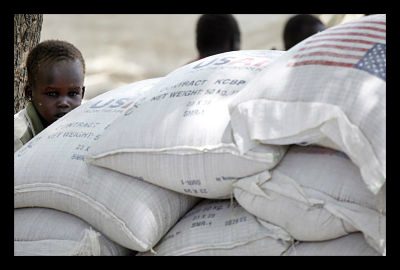
The legislation would make hundreds of millions of dollars more available per year. Currently, the food aid program has restrictions that require food to be produced in the United States rather than purchased locally. It costs more and takes months to reach people in disaster areas. It would also allow U.S. locally or regionally acquired commodities, cash transfers or vouchers to be used for aid.

3. Small Effect on U.S. Agriculture
U.S. food aid contributed merely 0.86 percent of total U.S. agricultural exports between 2002 and 2011 and just 1.41 percent of net farm income.

4. Let USAID Ship Food on Any Available Vessels
Currently, half of food aid must also be transported on U.S. vessels, which takes months and costs more. The cargo preference requirement means that aid is shipped at 46 percent higher than the market rate.

5. End Monetization
“Monetization” is a requirement that says 15 percent of all U.S. donated food must be sold first by aid organizations, which produces cash that funds development projects. Removing this would save 25 cents out of every taxpayer dollar, would feed 800,000 more people and make about $30 million per year more available. Many development supporters argue that monetization upsets local markets.

“At a time when our budget is strained and U.S. resources are limited, Congress needs to find ways to be more efficient and effective with every dollar,” Corker said.

– Colleen Moore

Sources: Reuters, Agri-Pulse
Photo: Africa Green Media

June 6, 2014
https://borgenproject.org/wp-content/uploads/borgen-project-logo.svg 0 0 Borgen Project https://borgenproject.org/wp-content/uploads/borgen-project-logo.svg Borgen Project2014-06-06 15:03:122024-12-13 17:50:185 Facts About the Food for Peace Reform Act of 2014
Activism, Disease, Health

Trash Selfies in Tunisia

The selfie took the world by storm, spreading like a virus across social media platforms. The term often carries a negative connotation in many contexts, reflecting a sense of heightened narcissism brought on by the digital age.

However, even viral trends like the selfie can be turned around and used for productive and positive reasons.

A new selfie phenomenon is catching on in Tunisia for a very unique reason. It involves citizens taking snapshots of themselves with piles of trash in the background with the fitting title, “trash selfie.”

About two months ago, Tunisians began taking the trash selfie and posting it to Facebook and Twitter, using the hashtag #SelfiePoubella (#trashselfie). The photos are aimed at raising awareness of the excessive garbage and pollution currently plaguing the country.

The revolution in Tunisia left much of the country destroyed and many areas have yet to see proper repair and reform. As the political system works to restore order, public services have fallen behind. People are simply throwing their trash on the streets on top of piles that remain untouched.

Many Tunisian neighborhoods are riddled with rubbish, raising several health concerns. Aside from the smell alone, mosquito infestations and unsanitary conditions raise the risk of disease. Pollution-related diseases, such as asthma, are also increasing in the area.

The government has failed to properly respond to the crisis up until now. Tunisians are taking the trash selfie to social media platforms as a way to galvanize government response. As a result, Prime Minister Mehdi Jomaa is currently working up a plan and intends to increase funding to the most problematic areas.

The waste treatment crisis is not limited to Tunisia alone, however. Trash in public areas has become a facet of life in much of the Middle East and North Africa region as the result of the Arab Spring.

The Arab Spring erupted in Tunisia in 2010 as a result of Twitter advocacy. The platform was critical to revolutionary communication throughout the conflict, as the entire world tuned in to a live-tweeted revolution. Social websites and mobile devices served as an effective way to voice the concerns of a people and push for political change.

Countries like Tunisia show the true potential of the Internet for uniting people over a cause they believe in. Middle Easterners have taken up a public voice on social platforms for real and necessary reform, and it seems they will continue to use it this way.

– Edward Heinrich

Sources: Green Prophet, Global Voices Online, PRI
Photo: Global Voices Online

June 6, 2014
https://borgenproject.org/wp-content/uploads/borgen-project-logo.svg 0 0 Borgen Project https://borgenproject.org/wp-content/uploads/borgen-project-logo.svg Borgen Project2014-06-06 13:01:122024-05-26 23:38:28Trash Selfies in Tunisia
Activism, Gender Equality, Global Poverty, Human Trafficking, Slavery, Women and Female Empowerment

Violence against Women in Latin America

Over the past decade, Latin America’s economy has improved due to the rising quantity of exports. At the same time, rapid growth of urban centers has created socioeconomic problems like an increase in prostitution and sex trafficking. One of the consequences of the urbanization of Latin America is a rapid increase in population, which in turn results in a larger number of unemployment and homelessness. The high population outnumbers the amount of jobs available for people, especially women. The consequence is that more women living in these urban slums resorting to commercial sex work. These women then become vulnerable to diseases and to violent environments.​

In Brazil, over 40,000 women have murdered for simply being women in the past 10 years. And Honduras is labeled one of the most dangerous places to live for a woman. There, the violent killings of women there have tripled. Unfortunately, only 5 percent of these crimes have been investigated and the murderers prosecuted.

Columbia is facing significant gender-based violence because of military conflict within the country. Women are often attacked who take part in activism to encourage political and social reforms for more representation and rights.

The third most violent place in the world for women is Guatemala. The county ordered a new law to prevent violence against women in 2008, making it the first Latin American country to do so. Yet since the law was implemented, not much has been done to support the new reforms. Women continue to have problems finding prosecution for the culprits.

Not only does violence cost the lives of hundreds of thousands of women in Latin America, but it decreases the region’s social and economic development. The killings are preventing these women from contributing to the economic growth of the country. Seven Latin America countries rank in the top 10 countries in the world for most domestic violence against women.

One answer to this matter is the program U.N. Women, which helps to strengthen the representation of women in government and politics. New policies are developed for women’s economic development; particularly, women in isolated and rural regions in Latin America. These policies aim to create equal and fair workplaces for all women who are seeking or already have employment and to create job opportunities.

UN Women is helping to end gender based violence against women in Latin America by creating services for victims and survivors. This will help by implementing laws to protect women and provide justice for those in need.

— Rachel Cannon

Sources: CSIS, UN Women 1, UN Women 2
Photo: UN Women

June 6, 2014
https://borgenproject.org/wp-content/uploads/borgen-project-logo.svg 0 0 Borgen Project https://borgenproject.org/wp-content/uploads/borgen-project-logo.svg Borgen Project2014-06-06 12:18:292024-05-26 23:35:38Violence against Women in Latin America
Activism, Advocacy

Hashtag Advocacy

When Justin Timberlake and Jimmy Fallon did a skit speaking only in hashtags, it became clear that the use of the hashtag had reached a unique place in our culture. Their skit, while satirical, also made it clear that hashtags have unique power in not only describing trends, but also in raising awareness around important issues.

The hashtag (#), which was first introduced in 2007, did not take long to become a mainstay in the Twitter world. The idea first originated with Chris Messina, who wondered if it would be useful to have a way for friends to organize their messages into meaningful groups.

Not long after, it became the leading way to describe emotions, world events, trends, activities and ideas through social media. And over time, as its presence has grown, so has the flexibility with which it is employed.

From the first true global usage in 2009, in the wake of the Iranian elections and the Occupy movements, to the more recent use in #BringBackOurGirls and #YesAllWomen, hashtag advocacy has emerged and has played a role in promoting awareness and giving people a chance to weigh in on larger conversations.

The largest use of hashtag advocacy began when Invisible Children raised awareness for the Kony 2012 Campaign – harnessing the power of social media to spread their message. The campaign quickly gained 2.4 million tweets with the “#Kony2012” tag in March alone of that year.

While the merits and ultimate effectiveness of the Kony campaign are debated and criticized, it is worth noting that the campaign led to a level of awareness about an issue not yet seen before. In fact, because of #Kony2012, the African Union sent a force of 5,000 – including 100 U.S. military advisors – to help end the surge of violence in Uganda at the time.

From the start, critics decried the use of the hashtag as “slacktivism,” the idea that by spreading a message, people could nominally support a cause without actually having to do any leg-work. Others have argued that using a hashtag to raise awareness is about as effective as writing a letter to Congress – which is to say, it isn’t.

However, employing a hashtag or writing to Congress does draw attention to important issues. Elected officials react to public opinion, and when the public is writing in about a topic frequently, they rightly determine that it is an issue that people care about.

As one of the newest forms of grassroots activism, hashtags have the ability to play an important role in advocacy, generating media coverage at no extra cost. While it is important to not overstate the importance of translating the hashtag usage into action, raising awareness about an issue is a useful way of spreading a message and employing the kind of diplomacy that often makes leaders think twice when they are making decisions – what affect the issue will have on their reputation.

The #BringBackOurGirls campaign has received its fair share of critics, but it has also brought the issue to the forefront of global discussion and has pressured the Nigerian government to act and accept assistance from other nations.

Just as the #YesAllWomen tag reached 1.2 million tweets in the span of four days, so can other tags be employed to raise issue awareness about development projects or the millennium development goals in fighting global poverty because ultimately, the more people who are able to be a part of the discussion, the greater the chance is that someone new will be moved to donate, to act, to volunteer or to dedicate themselves to the cause.

– Andrea Blinkhorn

Sources: Washington Post, Hashtags.org, The Guardian, Mashable
Photo: New Artist Model

June 6, 2014
https://borgenproject.org/wp-content/uploads/borgen-project-logo.svg 0 0 Borgen Project https://borgenproject.org/wp-content/uploads/borgen-project-logo.svg Borgen Project2014-06-06 04:00:242024-12-13 17:53:52Hashtag Advocacy
Activism, Advocacy, Hunger

Teens Participate in 30-Hour Famine To Fight Global Poverty

30_hour_famine
Contrary to popular belief, congressional leaders are only part of the key influence in making poverty a focus of U.S. foreign policy. Even though the 535 members of Congress in Washington D.C. representing voters are directly responsible for supporting or rejecting an issue or bill based on the voters’ opinions, all citizens are just as important in this process. Not only can they make their opinions known to the three members of Congress who represent them, but everyone, regardless of age, can make a difference by raising awareness in their community of a specific issue in order to bring about change.

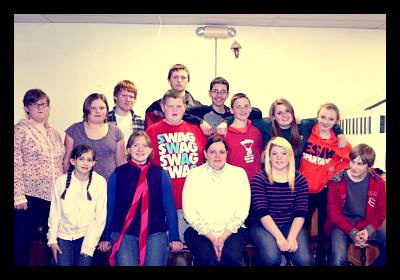
This is exactly what a group of seven teenagers proved when they fasted for 30 hours to raise money that would benefit the fight against world poverty. These members of the Allin Church Youth Group in Dedham, Mass. participated in the World Vision’s 30 Hour Famine from 12 p.m. on April 26 to 6 p.m. on April 27. It was during those 30 hours that these teenagers not only fasted, but also learned more about world hunger as they felt the hunger that millions experience every day.

Participating members of the Dedham community donated at least $1 to this youth group for every hour that they fasted, and all contributions were used to benefit the lives of children in the Philippines in association with World Vision. World Vision is a Christian organization working in nearly 100 countries to address the issues of poverty and injustice. According to 30 Hour Famine, hundreds of thousands of people participate in this event every year in the U.S. alone, and thousands more across the globe do the same to help feed poor children and their families in developing countries.

World Vision’s 30 Hour Famine provides people with the opportunity to understand the hunger that millions experience every day of their lives. According to World Vision, 870 million people are hungry worldwide, revealing that this injustice needs to be resolved. But the 30 Hour Famine is not the only thing World Vision does to address this issue. This organization also provides individuals the opportunity to sponsor a child to not only fight poverty, but to create a better world for that child.

This experience for the Allin Church Youth Group did not end after the 30 hours were up. These seven teenagers, along with the entire Allin Congregational Church, will have the opportunity to travel to the Philippines and personally assist the children there who benefited from their 30-hour fast. This inspirational group of teenagers proves that anyone, regardless of age or political standing, can join in the fight against poverty and hunger.

— Meghan Orner

Sources: 30 Hour Famine, World Vision, The Dedham Transcript
Photo: Delphi United Church

June 5, 2014
https://borgenproject.org/wp-content/uploads/borgen-project-logo.svg 0 0 Borgen Project https://borgenproject.org/wp-content/uploads/borgen-project-logo.svg Borgen Project2014-06-05 20:23:252024-05-26 23:40:06Teens Participate in 30-Hour Famine To Fight Global Poverty
Activism, Children, Global Poverty, Health, Women, Women & Children

Education and Menstruation in Uganda

Menstruation is a major reason for young girls in Uganda to miss school. Reasons for their absence stems from the stigma associated with “that time of the month,” a lack of sanitary napkins and the limited facilities available to students. Attending school while on their period forces girls to put their health at risk and chance being the subject of humiliation.

In an interview with a Guardian reporter, 16-year-old Lydia from Kampala, Uganda expressed why going to school during her period is difficult. She explained that some of the toilets did not have doors, so that if someone walked in, they would see her. Her school also has only four toilets for 2,000 students.  The toilets’ inability to flush or have water complicates the issue further, making menstruation in Uganda a problem in multiple ways.

In a recent study by SNV, officials report that girls miss between 8 to 24 days of school per year while menstruating.

Some girls attempt to prevent their clothing from being ruined by trying to absorb the blood with old cloth or old t-shirts, but these methods are not particularly successful. In another interview, Auma Milly commented that disposable pads are very expensive and are often not available in the more rural regions. Consequently, she felt embarrassed when she went to school and would soil her clothes so often that she chose not to attend.

In an attempt to address the problem regarding women’s sanitary needs, organizations including Save the Children, WaterAid, the Institute of Reproductive Health and local NGO Caritas Lira have begun to raise awareness and assist the cause.  Representatives from WaterAid commented on the importance of deconstructing the taboo regarding women’s health. The founder of 50 Cents. Period. described the battle as giving girls the basic right to hygiene. SNV and Caritas Lira have gone to schools in order to teach girls how to make reusable, affordable pads. Additionally, female Ugandan government officials have begun advocating for reduced taxes on sanitary napkins and improved facilities so that menstruation does not interfere with education.

– Jordyn Horowitz


Sources: The Guardian, The Guardian 2, UWASNET, 50 Cents Period, UWASNET, , SNV
Photo: A Global Village


June 5, 2014
https://borgenproject.org/wp-content/uploads/borgen-project-logo.svg 0 0 Borgen Project https://borgenproject.org/wp-content/uploads/borgen-project-logo.svg Borgen Project2014-06-05 20:14:442024-05-26 23:40:51Education and Menstruation in Uganda
Activism, Politics and Political Attention

25 Years after Tiananmen Square

The spring of 1989 saw one of the most sensitive moments of Chinese history unfold. Students began leading demonstrations in Beijing’s Tiananmen Square and experienced widespread support from surrounding residents. On June 4, Chinese troops armed with assault rifles attacked student demonstrators, killing anywhere from hundreds to thousands in a bloody crackdown. But in recent years, new stories of the events of Tiananmen Square have come to the surface, and they draw a more complex picture.

By June, student demonstrations in Tiananmen Square had entered month two. Chinese leaders were unsettled, and army commanders were called to pledge loyalty and commitment to the possibility of military force to crush student protest. Maj. Gen. Xu Qinxian refused to do so, and declined to lead troops into Beijing.

The protesters, Xu believed, were a political issue that required negotiation, not military force.

Xu’s defiance is just one example of a complicated and resistant military reaction to Tiananmen Square. One soldier of the 39th Group Army held genuine fears of having to fight Xu’s 38th Group Army as rumors of the general’s actions spread. But the commander of the 39th Group Army never even made his troops enter the square, faking communication problems. Another soldier, seventeen years old at the time of the crackdown, shared experiences of bonding between his unit, stationed in Tiananmen Square for days, and the students who had brought them there. Tears were shed upon the unit’s departure prior to the events of June 4, names and addresses exchanged.

Military documents prior to the crackdown speak just as loudly. A former Communist Party researcher reported that a petition existed at the time that was aimed at withdrawing troops from Tiananmen Square. It was signed by seven senior Chinese military officers, and sported language of service to the people: “The people’s military belongs to the people and cannot oppose the people.”

These stories tell a tale of Chinese soldiers largely unwilling to fire on a Chinese civilian population. They tell a story of Chinese government pressure met with Chinese military hesitance. But they are stories only rising to common knowledge outside of China.

A lot has changed for China in the 25 years since the crackdown: diplomatic isolation ended, China hosted the Olympics and the country made great strides in its space program. 1990 saw China’s first entrance into the stock market. Where products were hard to find for Chinese consumers before, they are now in abundance, and Chinese college graduates now compete for jobs they want instead of leaving college to be assigned a workplace.

The sensitive commemoration of Tiananmen Square, though, remains largely static. This year, celebrations included playing cards, show tunes and confetti.

The events are a representation of political activism buried. Activist groups make attempts each year to pay respect to those killed in the crackdown and call attention to the real events of the Tiananmen Square protests, like the stories of Maj. Gen. Xu that find life outside, but not inside, China. These attempts have yet to succeed.

This is not stopping anyone from trying to get the voices of the past heard. One activist group created a website this year called backtotiananmen.com. It asked simply for people to come to the square, gather and sing or hum a well-known song from the musical Les Miserables: “Do You Hear the People Sing?”

Wen Yunchao, one of the organizers of backtotiananmen.com, pointed out that simply coming to join the group, even without singing, would be a powerful way to commemorate those killed 25 years earlier.

Wen organized the group from New York City, spreading publicity by editing a leaked pornographic video to spread the message to gather and sing. While censored immediately, the video, Wen reported, was still downloaded thousands of times.

Another suggestion for activism was tossing white paper from the skyscrapers of Beijing in the hope that, perhaps, these small, raining scraps would remind China of the lives lost at Tiananmen Square many years ago now. Whatever the method, attempts at remembrance and knowledge are alive and well.

– Rachel Davis

Sources: The Economist, LA Times, New York Times, Reuters
Photo: CNN World

June 4, 2014
https://borgenproject.org/wp-content/uploads/borgen-project-logo.svg 0 0 Borgen Project https://borgenproject.org/wp-content/uploads/borgen-project-logo.svg Borgen Project2014-06-04 14:27:532024-05-26 23:41:4325 Years after Tiananmen Square
Page 38 of 56«‹3637383940›»

Get Smarter

  • Global Poverty 101
  • Global Poverty… The Good News
  • Global Poverty & U.S. Jobs
  • Global Poverty and National Security
  • Innovative Solutions to Poverty
  • Global Poverty & Aid FAQ’s
Search Search

Take Action

  • Call Congress
  • Email Congress
  • Donate
  • 30 Ways to Help
  • Volunteer Ops
  • Internships
  • Courses & Certificates
  • The Podcast
Borgen Project

“The Borgen Project is an incredible nonprofit organization that is addressing poverty and hunger and working towards ending them.”

-The Huffington Post

Inside The Borgen Project

  • Contact
  • About
  • Financials
  • President
  • Board of Directors
  • Board of Advisors

International Links

  • UK Email Parliament
  • UK Donate
  • Canada Email Parliament

Get Smarter

  • Global Poverty 101
  • Global Poverty… The Good News
  • Global Poverty & U.S. Jobs
  • Global Poverty and National Security
  • Innovative Solutions to Poverty
  • Global Poverty & Aid FAQ’s

Ways to Help

  • Call Congress
  • Email Congress
  • Donate
  • 30 Ways to Help
  • Volunteer Ops
  • Internships
  • Courses & Certificates
  • The Podcast
Scroll to top Scroll to top Scroll to top