• Link to X
  • Link to Facebook
  • Link to Instagram
  • Link to TikTok
  • Link to Youtube
  • About
    • About Us
      • President
      • Board of Directors
      • Board of Advisors
      • Financials
      • Our Methodology
      • Success Tracker
      • Contact
  • Act Now
    • 30 Ways to Help
      • Email Congress
      • Call Congress
      • Volunteer
      • Courses & Certificates
      • Be a Donor
    • Internships
      • In-Office Internships
      • Remote Internships
    • Legislation
      • Politics 101
  • The Blog
  • The Podcast
  • Magazine
  • Donate
  • Click to open the search input field Click to open the search input field Search
  • Menu Menu

Archive for category: Activism

Information and stories on social activism.

Activism, Advocacy, Global Poverty, Nonprofit Organizations and NGOs

Top 10 Global Poverty Nonprofits

Top 10 Global Poverty Nonprofits
Let’s begin with the obvious, all of us at The Borgen Project… are big fans of The Borgen Project. Our bias aside, below is a list of 10 of the top global poverty nonprofits and their commendable work.


Top Global Poverty Nonprofits


1. The Borgen Project – The Borgen Project has taken the plight of the world’s poor to the political level. With access to most members of Congress and an advocacy network of volunteers in every state, The Borgen Project is considered one of the most politically influential organizations fighting for the world’s poor.

2. ONE Campaign – ONE Campaign uses grassroots and advocacy to raise awareness and money to help put a stop to global poverty. They mainly focus their attention on those living in impoverished conditions in Africa.

3. Global Giving – Global Giving is a charity fundraising web site that gives nonprofits from anywhere in the world a chance to raise the money that they need to improve their communities. Since 2002, the project has raised $114,889,647 from 392,257 donors and has supported 10,252 projects.

4. UNICEF – UNICEF is one of the largest nonprofit organizations and it is dedicated to helping children in need. UNICEF does so much for children around the globe, all while promoting education for girls and better health for pregnant women.

5. Partners in Health – Partners in Health is another nonprofit much like Shot@Life, which is geared towards providing a better quality of living and preventing disease. Partners in Health partners with doctors and health institutions across the globe to provide much needed relief for people who would otherwise be unable to afford health care.

6. GiveWell – GiveWell is a combination of several top rated charities all over the world. Most, if not all, of these charities provide relief for impoverished people in every nation.

7. CARE – CARE wants to cut poverty off at its roots. This nonprofit provide tools for people who are at a higher risk of falling into poverty and they help them to be successful and rise above the poverty within their nations.

8. Life in Abundance – Life in Abundance is a Christian-run organization that mobilizes churches and missionaries alike to provide relief for those who are suffering. This nonprofit wants to provide a healthier lifestyle to those who are living in poverty.

9. International Rescue Committee – The International Rescue Committee responds to the world’s worst humanitarian crises and helps people to survive and rebuild their lives to prevent global poverty. The nonprofit was founded in 1933 due to a request from Albert Einstein himself. The IRC has since offered lifesaving care and life-changing assistance to refugees forced to flee from war or disaster.

10. Shot@Life – Shot@Life, while not primarily putting an end to global poverty, is trying to eradicate one facet of it. Shot@Life is a nonprofit that provides vaccinations for those less fortunate so they will not be plagued by preventable diseases.


Sources: About.com, CARE, GiveWell, Global Giving, International Rescue Committee, Life in Abundance, Partners in Health, Philanthropedia, The Borgen Project, UNICEF
Photo: The Guardian
July 11, 2014
https://borgenproject.org/wp-content/uploads/borgen-project-logo.svg 0 0 Borgen Project https://borgenproject.org/wp-content/uploads/borgen-project-logo.svg Borgen Project2014-07-11 10:19:542024-12-13 17:50:24Top 10 Global Poverty Nonprofits
Activism, Charity, Development

Which Countries Do The Most and Why?

Mankind has tendencies for both conflict and generosity. Simon Anholt conducted a study called the Nations Brand Index in 2005, on people’s perception of countries. Sampling and polling over seventy percent of the world’s population, Anholt began his search for the type of self-interest that would motivate countries to act on a global scale.

Anholt found that the image of a country is vitally important to its government’s survival, and that this image greatly affects the economic growth and stability of a country. The results that were collected were utilized to form the Nations Brand Index, that now consists of over 200 billion pieces of data on perceptions of countries across the world.

Anholt found that good countries, not necessarily wealthy or powerful ones, were the most appealing on a global scale. He summarizes his findings with these words, “in order to do well, you need to do good”.

From these findings, Anholt developed a second index called the Good Country Index, which measures how much a country contributes to the populations of other countries. The Good Country Index found that Ireland contributed the most to the world in terms of per head of population and per dollar of GDP. Finland came second in ranking, and the U.S. ranked 21st.

How does the U.S. move up in the rankings? We can start with increasing foreign aid, which is less than 1 percent of the federal budget. Per capita, the United States spends $80.37 towards development aid. The average American spends more per year on candy, alone. Ireland contributes 6.8 percent of income per individual, certainly a larger amount than the average Americans candy budget. This is what makes Ireland “good” and creates an image admired by other countries. In order to do well, America needs to do more good.

– Christopher Kolezynski

Sources: TED, Oxfam, The Borgen Project Nation Master
Photo: Kennedy Adventures

July 11, 2014
https://borgenproject.org/wp-content/uploads/borgen-project-logo.svg 0 0 Borgen Project https://borgenproject.org/wp-content/uploads/borgen-project-logo.svg Borgen Project2014-07-11 09:34:112024-05-27 09:18:13Which Countries Do The Most and Why?
Activism, Children, United Nations, USAID

Global March Against Child Labor: Continued Progress

Global March Against Child Labor
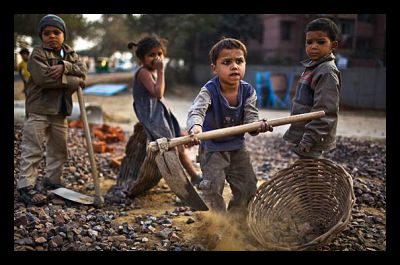
In 1998, a group of forward-thinking activists organized the Global March Against Child Labor. It took groups from over 100 countries to lead a march that crossed 103 countries and ended at the International Labour Organization (ILO) in June 1998, where activists from all over the world rallied to end child labor.

In response, the ILO began the World Day Against Child Labor in 2002. Every year on June 12, governments, citizens and civil societies gather to focus the world’s attention on child laborers and create campaigns to help them.

The movement has lofty ambitions but is still doing a great job of fulfilling them. Before the turn of the millennium, there were nearly 250 million children who were child slaves. The figure has now dropped almost 100 million and is estimated to be around 168 million.

Girls in particular have benefited from this as their numbers have dropped nearly 40 percent since then, while boys have dropped 25 percent. Despite this, some 88 million children still work in potentially fatal jobs.

Like many problems that need to be solved, one method employed in the reduction of child labor is simply raising awareness. The Global March Against Child Labor has proven to governments and civil societies around the world that this is something that needs to be stopped.

The U.S. Department of Labor has played a critical role in producing promotional documents and reports that have been quite successful in raising awareness of this terrible issue. Additionally, USAID acknowledged the power of video and strung together compelling footage in what eventually came to be a feature film about child labor, titled “Stolen Childhoods.”

USAID has played a big role as well in raising awareness. Through the Global Labor Program, USAID has helped workers in Liberia mobilize against employers and has ensured that any exploitative wage practices were discontinued. As children were typically employed in rubber plants in Liberia, USAID managed to ensure that children would not be separated from their parents if they worked, and also oversaw the building of a school on the plant. The employers agreed to pay the adults a living wage.

Another entity that is vital to ending child labor is business. Thanks to the Global March Against Child Labor and USAID’s awareness campaigns, a spotlight has been placed on businesses and their obligation to ensuring that children are not working.

The most prominent advocate of this is the program GoodWeave. This is a system by which companies in India can be certified to ensure that children are not used in the creation of rugs or carpets. Since its inception in 1995, GoodWeave has approved of over 11 million carpets. In that time, the number of children who work in carpet factories has dropped from 1 million to 250,000.

The Global March Against Child Labor was the beginning of a bold social movement, but now we must celebrate and continue its ongoing achievements.

– Andrew Rywak

Sources: USAID Blog, International Labour Organization, U.S. Department of Labor, Global March
Photo: List Top Tens

July 10, 2014
https://borgenproject.org/wp-content/uploads/borgen-project-logo.svg 0 0 Borgen Project https://borgenproject.org/wp-content/uploads/borgen-project-logo.svg Borgen Project2014-07-10 04:00:532024-12-13 17:50:24Global March Against Child Labor: Continued Progress
Activism, Human Rights, Women and Female Empowerment

Women in Syria

womin in syria
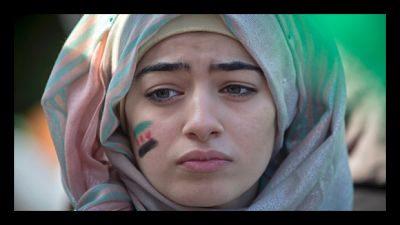
Human Rights Watch (HRW) has recently released a report titled “We are still here: Women on the front lines of Syria’s conflict,” which details the increasingly significant role women in Syria have been playing over the past three years during the vicious war as well as the additional obstacles that women must face.

Protests against the Syrian government began in 2011, and they quickly erupted into a deadly civil war, pitting antigovernment militias against government forces. According to the United Nations, the war has killed 150,000 people and displaced over nine million. As of June, half of the entire population of the country is currently in need of humanitarian aid.

The report released by HRW includes the stories of 17 different women who fled this destruction in Syria and are now refugees in the neighboring country of Turkey. “Their experiences reflect the various roles that women, particularly those opposed to the government or living in areas that came under government attack, have taken on as political activists, caregivers, humanitarians, and providers, as well as the particular ways in which conflict impacts women.”

Because many men have had to leave their homes due to “indiscriminate attacks, arbitrary detentions, enforced disappearances, or engagement in military operations,” women have become especially vulnerable, having less support in the case of an emergency, and having the additional responsibility of sole breadwinner.

Raids by armed forces and abductions, in which women are more highly targeted, become larger threats without this support. When women are abducted or arbitrarily detained, they are also disproportionately prone to receive abuse, including sexual assault and torture.

Some armed groups have explicitly targeted women in Syria, putting in place discriminatory policies that limit “women’s engagement in public life and ability to move freely” and “their access to education and employment.” In addition to fear of conflict, these types of overt restrictions severely limit women’s mobility.

However, many women are fighting back. Maha, a Syrian woman and founder of a peaceful activism organization, is continuing her organization’s civic work in Syria even though she fled the country after losing her husband to a government attack.

Maha is worried, however, that the work her organization and others like it are doing is being covered by the images of violence, saying, “On the news, you only see blood and destruction. You don’t see that behind it, there are civilian groups doing things peacefully.”

This HRW report has helped to shed light on the experiences Syrian women have had during this troubling conflict. They are at a disproportionately high risk to experience abuse and many have had to assume challenging and dangerous leadership roles.

“Recognizing women’s multiple and significant roles in the conflict,” the report noted, “and their experiences as both actors and victims, is critical to developing appropriate responses to women’s needs inside Syria and in refugee communities and to ensuring their ongoing and meaningful participation in determining Syria’s future.”

– Emily Jablonski

Sources: Al Jazeera America, Human Rights Watch
Photo: CTV News

July 8, 2014
https://borgenproject.org/wp-content/uploads/borgen-project-logo.svg 0 0 Borgen Project https://borgenproject.org/wp-content/uploads/borgen-project-logo.svg Borgen Project2014-07-08 19:04:432024-06-04 01:08:06Women in Syria
Activism, Aid Effectiveness & Reform

10 Facts About Humanitarian Aid

People talk about it all the time: should we be giving more, less, at all? To whom? When? But exactly how much do people really know about humanitarian aid? Here are 10 facts about humanitarian aid you should know:

1. How much?

It’s difficult to get an exact read on the amount of humanitarian aid given per year because there is no central reporting database and no organization has any obligation to share the amount of humanitarian aid they give. That said, a reasonable estimate for the amount of humanitarian aid given worldwide in 2013 was $22 billion.

2. Span

Humanitarian aid doesn’t just encompass international aid – it also accounts for domestic humanitarian spending.

3. What’s the difference?

Humanitarian aid is different from international aid in another way as well. For aid to be considered humanitarian, it must be allocated according to the principles of humanity, impartiality and neutrality. That is to say, humanitarian aid must be given to save life and prevent suffering considering only the need of the people affected and without supporting any political or military campaign. To put it simply, it’s giving for the good of giving.

4. When is it used?

Political instability in Central African Republic, South Sudan and Syria sent the amount of humanitarian aid given in 2013 to a record high. Humanitarian organizations respond not only to natural disasters and global health conditions but political unrest as well. Not only did government aid increase by nearly a quarter, but private donations increased significantly as well.

5. Is it enough?

It is estimated that one-third of all global need is still not being met.

6. What does it cover?

Responding to death and suffering is only one component of humanitarian aid. Another important part is preventing the situations that cause preventable death and human suffering. In fact, the U.N. recommends donors focus more aid on prevention, as it produces the greatest return on investment in terms of both saving money and reducing human suffering.

7. How much do we give?

Although the U.S. is the top national donor in terms donor in terms of raw dollars allocated to humanitarian aid ($4.7 billion in 2013), the percentage of its GDP it donates is among the lowest in the developed world. We can afford to give much more than we do.

8. Where does it go?

Despite overall increases in humanitarian aid during the past several years, nearly 25 percent of global humanitarian aid goes to just five causes, leaving many other important causes (such as refugees in Algeria) largely neglected.

9. What can it do?

Preserving human dignity is another central goal of humanitarian aid. It’s a hand up to fellow humans with the aim being that those people can eventually help themselves.

10. Is it effective?

Humanitarian aid is effective. For example, aid to West African countries experiencing drought in the last few years was effective in reducing the number of hungry individuals in the region. Though humanitarian aid may not initially be able to completely solve a problem, it is a proven way to improve lives.

– Elise L. Riley

Sources: Global Humanitarian Assistance, The Guardian
Photo: NYSED 

July 8, 2014
https://borgenproject.org/wp-content/uploads/borgen-project-logo.svg 0 0 Borgen Project https://borgenproject.org/wp-content/uploads/borgen-project-logo.svg Borgen Project2014-07-08 08:00:222024-06-04 01:03:1310 Facts About Humanitarian Aid
Activism, Development, Politics and Political Attention, Women and Female Empowerment

Ghana Drafts Affirmative Action Bill

Groups in Ghana are working to draft an affirmative action bill to put more women in government positions. The bill is aimed to help Ghana reach Millennium Development Goals by 2015. Although a draft has been submitted to the Attorney General, workshops are still being held to tweak the bill for Parliament.

A two-day validation workshop was being held in Koforidua, and 21 public servants and representatives of political parties worked, and continue to work, to improve the legislation. The bill is supported by the Ministry for Gender, Children and Social Protection.

Presently, only 10.9 percent of Parliament consists of female representatives. The affirmative action bill would call for quotas on women representatives. This is not the first time an African country has used this tactic to increase the amount of women in leadership positions.

Liberia recommended that political parties in the 2005 election choose 30 percent female nominees. While not law, the parties that did follow the recommendation had the largest numbers of women in the Legislature for that election. The Legislature consisted of 14 women out of 94 positions, but this number dropped to only nine when the quota was not enforced in 2011.

In Nigeria, the current administration has promised a 35 percent representation of women in government. This has yet to be reached, and at the national convention of the All Progressives Congress, only eight out of 46 positions on the national executive council fell to women. All of these positions involved the title of “women leader.”

Why do women leaders in these countries feel that affirmative action quotas are necessary to put more women in leadership roles?

Bernice Sam, a Ghanaian women’s activist, spoke at the national forum on gender equality and women’s rights, held by the Gender Studies and Human Rights Documentation Centre in Accra. She believes empowered women are necessary for growth, and that Ghana needs to work to empower women in these roles. She mentions the challenges faced by female politicians, despite legislation designed to allow them to run for office.

Women often do not have as much money as their male opponents, which is a major barrier. They also have higher levels of illiteracy, tied to less educational attainment and opportunity. Sam encourages all women to attain skills for civic leadership. These include public speaking, networking and the ability and confidence to motivate and mobilize others. To find this confidence, women also need more support from their spouses, along with faith in their own abilities.

They also just need knowledge. In Kenya, a large portion of women in rural areas do not know that the government requires 30 percent of all procurement in public service to be reserved for them. Rachel Ruto, the wife of the Deputy President of Kenya, called on women to pass along knowledge of their rights and powers to other women.

There is also an “old boys” network of political connections that impede women from entering the political sphere. Women tend to be ignored by incumbent male leadership.

Another issue is that women are required to balance their home and political lives. They are expected to take care of their families while also trying to run an underfunded, under-supported campaign.

Across Africa, there is a call for power structures to enable women to step into leadership positions. Simultaneously, there is a call for women to assert themselves into these positions. Despite these movements, parties are not encouraging women to run. Consequently, many women are taught that they are incompetent and unlikely to succeed in government.

Ghanaian leaders believe the affirmative action bill will provide a balance of allowing competent women to fill leadership positions, while  assuring others that  that they too can succeed. Minister of Gender, Children and Social Protection, Nana Oye Lithur, assures that the bill does not aim to make women compete with men, but to ensure they have equal opportunity to pursue positions.

To Lithur, the bill is designed to give women and other minorities in the country a voice. It works in tandem with legislation to ban early and forced marriage, witchcraft and genital mutilation to empower women in Ghana.

The bill aims to help women and therefore, the country.

-Monica Roth

Sources: Ghana Web 1, Ghana Web 2, Ghana Web 3, KBC, Leadership, All Africa
Photo: InformGhana

July 7, 2014
https://borgenproject.org/wp-content/uploads/borgen-project-logo.svg 0 0 Borgen Project https://borgenproject.org/wp-content/uploads/borgen-project-logo.svg Borgen Project2014-07-07 12:00:422024-06-04 01:17:37Ghana Drafts Affirmative Action Bill
Activism, Advocacy

How to Work for the Bill & Melinda Gates Foundation

If there is any one charity organization most people have heard of, it might very well be the Bill & Melinda Gates Foundation. Conceived in 2000, the B&MGF is widely considered one of the largest private foundations in the world. It is known for its robust endowment, its thorough transparency and its unwavering commitment to creating and sustaining a high quality of life in some of the world’s worst conditions, especially in Africa, the Middle East and India. Its celebrity-business-magnate-co-chair, Bill Gates, is pretty well known, too.

All of this makes for an attractive working environment; employees relentlessly fight against poverty and have the opportunity to work alongside driven and accomplished coworkers. These jobs, however, are difficult ones to land. Here is some advice geared toward the future Bill & Melinda Gates Foundation employee.

Know your potential position, inside and out

It is a good idea to familiarize yourself with the job’s perks – the designated quiet areas, the spacious atrium, the walls made of whiteboards and carefully crafted environment – but it is even more important to understand your place within the B&MGF process and why it is so critical. Whether you want a communications job advocating and publicizing policy or a vaccines job administering lifesaving shots in Africa, know why you would be integral to the larger picture. This deepened understanding will enable you to recognize the skills and passions you possess that are job-relevant. It will also test your commitment; are you really devoted to the B&MGF project, or do you just really like luxurious atriums? “Both” is an acceptable answer.

Don’t think of it as a nine to five gig

While there is a huge variety of workweek schedules among Bill & Melinda Gates Foundation jobs, it is best to partially ignore the logistics, placing extra emphasis on the organization’s humanitarian vision. There may be tasks to complete and mundane paperwork to file, but the fight against global inequality and extreme poverty is not something relegated to eight hours on weekdays. During “off-hours,” for example, problem solving, studying and teaching can be accomplished to fuel workday endeavors. Anyone dedicated enough to relieving global poverty to work tirelessly for the B&MGF might consider such activities perfectly typical anyway.

Know the issues

Working for the Bill and Melinda Gates Foundation requires that your passion for global poverty reduction has led you to a deep understanding of the issues. It takes accumulated knowledge and a commitment to continued learning.

“It is work that not only relies upon candidates with solid educations and related experience,” begins some advice found on the B&MGF website, “but also a rare dedication to the greater good that exceeds the importance of a specific title.” As is additionally noted on the site, one needs to demonstrate experience, discipline and humility before being seriously considered for the job. Fortunately for you, hanging around The Borgen Project, getting familiar with points of concern and topics of interest, is a great way to build the vocabulary and the mental framework necessary to talk fluently about global poverty and its eradication. You are already on your way.

— Adam Kaminski

Sources: Bill & Melinda Gates Foundation 1, Bill & Melinda Gates Foundation 2, Seattlepi
Photo: NBBJ

July 3, 2014
https://borgenproject.org/wp-content/uploads/borgen-project-logo.svg 0 0 Borgen Project https://borgenproject.org/wp-content/uploads/borgen-project-logo.svg Borgen Project2014-07-03 04:00:562024-06-05 01:57:36How to Work for the Bill & Melinda Gates Foundation
Activism, Advocacy, Aid Effectiveness & Reform, Nonprofit Organizations and NGOs

Aid Impact of Religious Organizations

For a long time faith-based organizations have played an important role in foreign aid. One of the great advantages brought by these organizations is their ability to connect their congregations in developing countries with their counterparts in industrialized nations. But is there really a difference between the contributions of secular versus religious organizations with regard to foreign aid?

Partnerships with faith-based organizations based in countries affected by poverty, natural disasters and other crises has been key in providing access for development agencies and NGOs in these countries. Some would even argue that without faith-based organizations the flow of aid would be halted to a minimum. This argument is supported by the notion that religious individuals or groups find it much easier to translate compassion into action.

However, this argument loses some of its strength if we consider aid not as a charity, but as an investment. What is more, there are certainly large secular organizations such as Doctors without Borders or Oxfam that have made a huge impact on poverty alleviation.

There is certainly a premise within religious indoctrination that drives to donate for charitable causes. It is even specifically included in the various religious customs and traditions. However, this does not necessarily mean that there would be no aid without faith-based organization.

According to Fiona Fox, founding director of the independent press office Science Media Centre, to improve people’s lives is as much the mission of science as it is of religion. There are countless individuals and groups who do not abide by any religion, and who work arduously to fight hunger and poverty.

In fact, an expanded definition of aid which includes the work of institutes such a the Welcome Trust and the Medical Research Centre dedicated to finding solutions to many health problems in the developing world shows that faith-based organizations do not stand alone in fighting the human plight.

It is difficult to support the idea that there would be no aid without religious organizations. However, it would also be unfair to assume that these organizations do not do their fair share of the work. In the end, it should not matter how much is contributed by a faith-based versus a secular organization, but taking note of the real impact and what kind of results are being generated by both.

– Sahar Abi Hassan

Sources: Center for American Progress, The Guardian 1, The Guardian 2
Photo: opbronx

July 1, 2014
https://borgenproject.org/wp-content/uploads/borgen-project-logo.svg 0 0 Borgen Project https://borgenproject.org/wp-content/uploads/borgen-project-logo.svg Borgen Project2014-07-01 14:17:112024-05-27 09:20:45Aid Impact of Religious Organizations
Activism, Women and Female Empowerment

The Fight for Feminism in China

Feminism in China
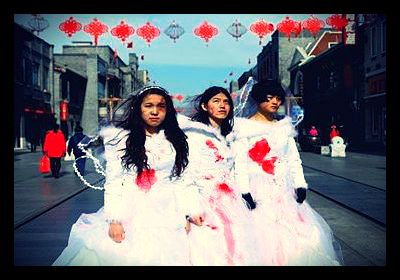
In an attempt to raise awareness about the overall inequality women in China face, various groups have been performing an assortment of “stunts” in the hopes to provoke a positive response in favor of feminism in China.

Within the past few years, displays have included women wearing wedding dresses covered in red in an effort to stand up to domestic violence, disapproving of the lack of female facilities by participating in “Occupy the Men’s Toilets” and shaving their heads to address the more demanding requirements women need to meet to attend college.

While feminism is not as widespread in China as some of these activists would like, it is by no means a new movement. In the 19th and 20th centuries, women such as Lin Zongsu fought for female suffrage and women such as Qiu Jin wrote and spoke out about the practice of footbinding and the limited education of young girls.

Li Mizai explains to a Guardian reporter that despite the plethora of past feminist figures the activists use for inspiration, “gender discrimination is getting worse.”

Only two women serve on the politiburo and “the proportion of women on the party’s 200-strong central committee has slipped to less than 5 percent, lower than in Mao’s day.” Less than a fifth of land use contacts are in or include the name of the wife, and in 2011 rights to marital property were legally reduced. Moreover, the percentage of urban working women has decreased from 77 percent to 61 percent in the past two decades.

Part of the discrimination starts at birth, and while the gender gap has decreased in the past two years, there are still 118 male births for every 100 female births.

Interviewee Xiao Men comments that although sex discrimination is illegal in the work place, companies are unlikely to receive legal punishment for such actions. She comments that “when women face discrimination they don’t fight against it because they weren’t raised this way, and even if they try to, they don’t know how to do it. I think all women know something’s wrong, but they don’t know what it is or why.”

Activists, however, have not been discouraged thus far, and keep advocating for women’s equality across the country by trying to make women recognize their right to advocate for themselves.

– Jordyn Horowitz

Sources: The Guardian 1, The Guardian 2, The Guardian 3, Wall Street Journal
Photo: Global Times

June 30, 2014
https://borgenproject.org/wp-content/uploads/borgen-project-logo.svg 0 0 Borgen Project https://borgenproject.org/wp-content/uploads/borgen-project-logo.svg Borgen Project2014-06-30 20:27:082016-12-15 08:06:36The Fight for Feminism in China
Activism

President Peres Hopes for Freedom for Pollard

In 1985, American analyst Jonathan Pollard was arrested for sending classified information to the Israeli government. He was given a life sentence, marking the first time in U.S. history that a life sentence was given for spying for an ally of the United States.

Now, Israeli President, Shimon Peres, is traveling to Washington, D.C. where the issue of Pollard’s release will be front and center. Officially, Peres is going to receive the Congressional Gold Medal as well as the 2014 Lantos Human Rights Prize. In addition, he has promised to meet with President Obama about the prospect of releasing Pollard, who has been imprisoned in America for nearly three decades.

One of the organizers of the movement to free Pollard, Efi Lahav, implored President Peres to lobby President Obama during his trip, stating that, “We believe your upcoming visit to the U.S. is the most serious opportunity yet to release Jonathan Pollard.”

Previous talks to release the convicted spy have fallen through at the last minute, and this trip may prove to be the final opportunity to strike a deal. Pollard is up for parole in 2015. His release could be part of a larger prisoner swap in which Palestinian prisoners would be released by Israel.

However, those talks fell short in the past. Instead of using Pollard as a bargaining chip, President Obama could also free him as a humanitarian gesture that would reaffirm ties with Israel. Whatever Obama decides, it is certain that the issue of Pollard’s release will be broached by Peres.

The day before Peres left for the U.S., he met with Pollard’s wife where he claimed that, “It is a national responsibility to work to free Pollard, I will speak to the President of the United States on behalf of the people of Israel. I intend to do this during my meetings in Congress and at the White House.”

On top of that, Peres will also deliver a speech to Congress, thus giving him another opportunity to exert influence in Washington.

While Peres will no doubt be pleased with his prestigious awards, the focus of the trip will certainly be Pollard.

Pollard was once a candidate for a CIA graduate fellowship, but was turned down due to a history of emotional instability and drug usage. He eventually landed a position as an analyst at the Navy’s Anti-terrorist Alert Center where Pollard had access to a wealth of classified intelligence information.

As a lifelong sympathizer of Israel who had dreams of eventually emigrating, he was easily talked into becoming an Israeli spy. In 1984, Pollard was contacted by a family friend in Israel who set up a meeting with his eventual handler. Shortly after, Pollard began handing over documents in bulk.

During the course of his 17-month spying career, Pollard leaked over 800 highly classified documents.

After a co-worker noticed Pollard accessing classified documents without authorization, the FBI became suspicious of Pollard. Spooked, Pollard attempted to seek refuge at the Israeli embassy in D.C., but he was turned away. He was arrested shortly after.

What happens next remains to be seen. Over the next few days, Pollard could be released in a deal that would help to deescalate the Israeli Palestinian conflict. President Obama could also opt for the humanitarian route and free Pollard with no strings attached. Whatever happens, Pollard’s usefulness as a bargaining chip is quickly running out, and President Peres’ trip to D.C. will likely be a decisive turning point on the matter.

While the official purpose of the visit is to honor Peres’ past accomplishments as a human rights leader, the true reason for the trip could have humanitarian implications that extend far into the future.

– Sam Hillestad

Sources: Jewish Press, CNN, USA Today, Jerusalem Post
Photo: The Algemeiner

June 30, 2014
https://borgenproject.org/wp-content/uploads/borgen-project-logo.svg 0 0 Borgen Project https://borgenproject.org/wp-content/uploads/borgen-project-logo.svg Borgen Project2014-06-30 20:24:012024-05-26 23:58:20President Peres Hopes for Freedom for Pollard
Page 36 of 56«‹3435363738›»

Get Smarter

  • Global Poverty 101
  • Global Poverty… The Good News
  • Global Poverty & U.S. Jobs
  • Global Poverty and National Security
  • Innovative Solutions to Poverty
  • Global Poverty & Aid FAQ’s
Search Search

Take Action

  • Call Congress
  • Email Congress
  • Donate
  • 30 Ways to Help
  • Volunteer Ops
  • Internships
  • Courses & Certificates
  • The Podcast
Borgen Project

“The Borgen Project is an incredible nonprofit organization that is addressing poverty and hunger and working towards ending them.”

-The Huffington Post

Inside The Borgen Project

  • Contact
  • About
  • Financials
  • President
  • Board of Directors
  • Board of Advisors

International Links

  • UK Email Parliament
  • UK Donate
  • Canada Email Parliament

Get Smarter

  • Global Poverty 101
  • Global Poverty… The Good News
  • Global Poverty & U.S. Jobs
  • Global Poverty and National Security
  • Innovative Solutions to Poverty
  • Global Poverty & Aid FAQ’s

Ways to Help

  • Call Congress
  • Email Congress
  • Donate
  • 30 Ways to Help
  • Volunteer Ops
  • Internships
  • Courses & Certificates
  • The Podcast
Scroll to top Scroll to top Scroll to top