• Link to X
  • Link to Facebook
  • Link to Instagram
  • Link to TikTok
  • Link to Youtube
  • About
    • About Us
      • President
      • Board of Directors
      • Board of Advisors
      • Financials
      • Our Methodology
      • Success Tracker
      • Contact
  • Act Now
    • 30 Ways to Help
      • Email Congress
      • Call Congress
      • Volunteer
      • Courses & Certificates
      • Be a Donor
    • Internships
      • In-Office Internships
      • Remote Internships
    • Legislation
      • Politics 101
  • The Blog
  • The Podcast
  • Magazine
  • Donate
  • Click to open the search input field Click to open the search input field Search
  • Menu Menu

Archive for category: Activism

Information and stories on social activism.

Activism, Gender Equality, Inequality

#YesAllWomen Dominates Twitter

In light of the recent Santa Barbara massacre, Twitter users have taken the web by storm through the #YesAllWomen hashtag. The result has been incredible: voices around the world have given personal (yet all-too universal) recollections of misogyny as it exists in their professional, social and familial lives. An example of social media’s power to do good in the world, the campaign is only growing as more than a million posts (and counting) have been spreading around the web.

Elliot Rodger killed six students from the University of California-Santa Barbara last week, and wounded 13 others. Just before the massacre, Rodger wrote a 140-page “manifesto” crippled with misogynistic remarks, claiming that he would take “retribution” for the crimes against him and would punish the world for those women who refused to sleep with him. The media frenzy that followed proved unique: the massacre and its aftermath was about more than just one mentally disturbed man exacting revenge. It is about a culture of misogyny and the detriment it can cause.

Today, more than 311 million working-age women live in countries where sexual harassment is not outlawed in the workplace. In many less-developed countries, a third of women are married or in a union by only 18. Around 60 percent of women have experienced physical or sexual violence at least once in their lifetime, and 2.6 billion women live in countries where rape within marriage is not outlawed.

These statistics are what the campaign #YesAllWomen stands for: across the world and in varying degrees, women are still treated as lesser citizens. #YesAllWomen works to teach that we have remained all-too blind, and it is doing so in strides.

Accessible to most of the world at any time or place, the campaign has brought a unique, understandable perspective of feminism to the most-reached platform in the world: the Internet. Yet despite the campaign’s current popularity, many wonder if it will do any good to solve the problem in the long run, comparing the campaign to short-lived, social media frenzies like #BringBackOurGirls (which has died down in response to the now popular #YesAllWomen.)

These social media phenomenons, some argue, do little to prevent or change the actual circumstances of the problem. Yet it can be argued that their real success is by infiltrating and educating by providing a much-needed lesson as to why misogyny is a serious problem we must work to fix. #YesAllWomen attempts to bridge this problematic gap.

– Nick Magnati

Sources: CNN, Chicago Tribune, UN Women, Foreign Policy
Photo: The Province

May 30, 2014
https://borgenproject.org/wp-content/uploads/borgen-project-logo.svg 0 0 Borgen Project https://borgenproject.org/wp-content/uploads/borgen-project-logo.svg Borgen Project2014-05-30 04:00:152024-05-26 23:37:40#YesAllWomen Dominates Twitter
Activism, Advocacy, Charity, Nonprofit Organizations and NGOs, Volunteer

Millennials Give Back

The image of the starving college student or struggling young adult seems to juxtapose the image of a citizen willing to give part of their hard-earned salary to nonprofit organizations. However, the Millennials (roughly described as those born between 1979 and 1994) are actually more willing to give to causes they believe in than you would think. Although only seven percent of adults believe that the younger generation is more generous than the previous ones, statistics have shown that Millennials have been unselfish in donating both their time and money.

In 2011, 75% of young people aged 20-35 donated monetarily, 63% donated their time and 70% raised money for nonprofit organizations. In 2012, this increased to 83% that donated financially to an organization while 52% were interested in monthly donating.

We ask ourselves though, what is the motivation driving the younger generation to give? According to a report composed by Achieve titled “The 2013 Millennial Impact Report,” the top four reasons are:

  • They are passionate about a cause or issue.
  • They feel like they can make a difference.
  •  Getting involved gives them an opportunity to connect and network with like-minded people.
  • They can utilize their professional skills and expertise to help others.

Although it was found that the younger generation give relatively small amounts, this can actually be positive because it means they are more concerned in seeing the efficacy of each dollar donated.

“If they can give, I can too!”

You’re absolutely right! There are so many ways to give back to organizations both in your community and internationally:

  • Make a list of causes you care about and set aside a predetermined amount per year you plan to donate.
  • Give clothes you haven’t worn in years or clothes you don’t need to charity.
  • Sell items you don’t use on EBay or host a yard sale and give the profits to a cause you care about.
  • Find volunteer opportunities near you. (Volunteermatch.org is a great place to start!)
  • If an organization doesn’t already exist for the cause you care about, create your own nonprofit.

The reasons to give are endless. Even donating a small amount can give you a sense of community when you see the collective efforts of your small donation combined with the donations of others all contributing to a larger cause. Donating any amount makes you more grateful for what you have, and you are given a sense of wealth by being able to share what little you have with others.

When you donate, it inspires those around you to donate, too. Create a movement among your friends to volunteer together, or pool your money for a cause you all care deeply about and see the effects of your efforts working to make the world a better place.

Whether it’s providing people in developing countries with water, donating to breast cancer research or volunteering at a local soup kitchen, get involved and know that even the smallest donation of time or money can help.

– Kimberly Tierney

Sources: Family Share, Huffington Post, Millennial Impact Report, Philanthropy, Stay Classy, USA Today, U.S. News, World Vision

Photo: Chillicothe

May 21, 2014
https://borgenproject.org/wp-content/uploads/borgen-project-logo.svg 0 0 Borgen Project https://borgenproject.org/wp-content/uploads/borgen-project-logo.svg Borgen Project2014-05-21 04:00:322024-06-05 01:57:26Millennials Give Back
Activism, Children, Global Poverty, Human Trafficking, Women

Gender-based Inequality in Nepal

Gender Based Inequality in Nepal
As more Nepalese men leave their homeland in search of employment, the women—especially in rural areas—have begun to take a larger role in society. Even with these new-found responsibilities, the women of Nepal remain trapped in the cycle of poverty and gender-based inequality that has plagued the country for generations. In Nepal, a woman can run a farm yet have no access to the profits the land yields.

Nepal’s economy relies largely on foreign aid, and despite the tremendous progress since the 1990s, 40 percent of the population continues to live below the poverty line. That number declined by 11 percent overall since the mid-90’s, but this still leaves one third of all Nepalese children living under such conditions.

Unemployment leads thousands of Nepalese to migrate to neighboring India in search of a way to provide for their families. Unfortunately, the open border allowing this migration also renders human trafficking, for both sexual and hard-labor purposes, much easier. The trafficking of an estimated 200,000 Nepalese women has filled brothels across India. Someone known to the family often tricks the victims with the promise of a well-paying job. In other cases, women are simply kidnapped and smuggled across the Nepalese border into India. Low-paid border police are easily bribed—an issue activist groups currently target with practical training for the police regarding how to spot a victim of trafficking.

Abuse also follows women who migrate willingly to countries like Lebanon. Under the Kafala system, one employer receives the work permits, meaning women who dare leave an abusive employer risk deportation. Because legal employment pays little, if any, wages, many Nepalese migrants turn to the illegal informal sector. The Nepalese government has reacted with heavy restrictions on women’s travel and migration to the country.

Evidence suggests that the expansion of women’s rights can relieve a country from poverty sooner. Yet, historically, gender inequality has been ingrained in Nepalese society. Chhaupadi, the practice of forcing a women in menstruation or having recently given birth to live apart from the family until the bleeding ends, is still practiced throughout the western and central regions of Nepal. Within the Nepalese family unit, women cannot live individually, which incapacitates victims of domestic abuse who might otherwise leave. Few women report abuse or trafficking to police.

The future of the Nepalese women requires addressing the two main factors of her suffering: economic and gender-based inequality. Microloans offered to rural women proves to be one method to fight the temptation of falsely-alluring jobs abroad. Survivors of trafficking have also received such loans. In 2007, the Nepalese government enacted the Human Trafficking and Transportation Act, but without proper implementation, the Act fails to serve its purpose. The issue demands further international attention, and increased financial independence for women in Nepal.

– Erica Lignell

Sources: The Economist, Unicef, BBC News, FORBES, The Guardian, AlJazeera, The New York Times, The New York Times(2)
Photo: Google Images

May 20, 2014
https://borgenproject.org/wp-content/uploads/borgen-project-logo.svg 0 0 Borgen Project https://borgenproject.org/wp-content/uploads/borgen-project-logo.svg Borgen Project2014-05-20 04:00:412024-12-13 17:53:52Gender-based Inequality in Nepal
Activism, Economy, Global Poverty

Deforestation and Economic Injustice in Haiti


Spring is upon us but in many places April showers don’t necessarily bring the hope of May flowers, instead they promise environmental disaster and damage to surrounding communities.


Every year, floods ravage Haiti’s countryside, injuring, displacing, and economically crippling many of its rural villages and townships. Rainfall, though necessary for agriculture in the hot Caribbean nation is more feared than it is welcomed these days. Due to widespread deforestation, the soil around riverbanks has eroded, the land has become arid, and there is nothing to anchor the foothills and prevent devastating mudslides.

Between 1954 and 1984 alone, nearly 90% of Haiti’s once abundant rainforests were depleted. An estimated 2% of what was once there remains today, and even that is at risk. Without tree cover or a natural means to replenish the soil with nutrients, the mountain region is now agriculturally useless, only perpetuating a cycle of poverty and harmful environmental practices.

Deforestation has been made significantly more prevalent by corrupt business practices and irresponsible regulations. Under the abusive dictatorships of Francois and Jean-Claude Duvalier, many Haitians was forced to rely on the production of charcoal for subsistence, turning to the harvesting and burning of trees to supplement widespread unemployment. Charcoal is now, unfortunately, one of Haiti’s most thriving markets.

Additionally, like other developing nations, economic instability and unaffordable trade options have forced millions of Haiti’s inhabitants to rely on this “woody biomass” for fuel.  More viable options of electricity, petroleum, and even kerosene, though also not earth friendly, are less encroaching on the communities themselves. However they are nearly unattainable in many areas.

In more recent years, illegal logging, price negotiations, structural trade agreements, and the seizure of property rights from outside actors has also contributed to an economic environment that leaves many Haitians without much choice but to contribute to cutting down the forests.

For example, Swine Flu paranoia in the 80’s essentially wiped out Haiti’s once successful pork market. This forced pork farmers to annihilate their own acclimatized pigs and replace them with the more delicate North American variety which was too expensive to keep. This paved the way for Reagan’s “American Plan” for the country, which implemented a weak export economy of cheaply and inhumanely manufactured goods. With such bleak options, charcoal and deforestation are increasingly chosen out of necessity.

Journalist and political analyst Amy Wilentz states, “You can read about deforestation and its affects in the books and pamphlets written by these experts, and then you can read about it in the faces and bodies of Haitian peasants…. The summation of a story of dry earth, of the need for sustenance and comfort, of crops that are impossible to raise, even with the hardest and most grueling work, of rain that never falls, of food that just isn’t there.”

People continue to fight back, such as Chavannes Jean-Baptiste, who is a renowned in the world of environmental activism for his work in Haiti. After receiving a formal education in agronomy, he went on to found the Peasant Movement of Papay (MPP) in 1973 with the expressed goal of establishing principles of sustainable agriculture. The Movement has been effective in the fight against deforestation and other contributions to soil erosion.

His life of activism has not been without contention though. Before winning the Goldman Environmental Prize in 2005, he suffered multiple assassination attempts, death threats, and periods of forced exile. His outspokenness regarding forest protection and his role in sparking political dissent made him highly targeted. Still, he leaves an unwavering legacy of land protection in a previously colonized nation, and the MPP continues to be a strong political force.

Deforestation’s effect has been horrible, for the people, the infrastructure, and the very landscape of Haiti, which has seen its fair share of economic and political storms over the past half century. However, scientific awareness, increased environmental consciousness, and a climate of political activism provide hope that Haiti’s rainy season will come to an end.

— Stefanie Doucette

Sources: The Energy Journal 1, The Energy Journal 2, The Ecological Society of America, The World Today, The Journal of Developing Areas, Nathan C. McClintock, The Rainy Season
Photo: 

May 15, 2014
https://borgenproject.org/wp-content/uploads/borgen-project-logo.svg 0 0 Borgen Project https://borgenproject.org/wp-content/uploads/borgen-project-logo.svg Borgen Project2014-05-15 04:00:532024-06-05 01:57:25Deforestation and Economic Injustice in Haiti
Activism, Advocacy, Children, Development

Top Celebrities at Milken Institute Global Conference

Philanthropist Michael Milken established the Milken Institute in 1990 with a focus on the interaction between education and job growth. The institute’s mission has expanded to include advancing economic and policy solutions to create jobs, widen access to capital and enhance health.

The institute has also expanded its reach. At this year’s Milken Institute Global Conference in Beverly Hills, guests included Matt Damon, will.i.am and Charlize Theron. The 17th annual conference attracted more than 3,500 entrepreneurs, executives, philanthropists, scientists and celebrities.

Co-founder of Water.org, Matt Damon, spoke about the water crisis, in which 780 million people in the world lack access to clean water. Damon and co-founder Gary White created the nonprofit organization to find new solutions, new financing models and real partnerships, with the vision of providing safe water and proper sanitation means for all. Water.org operates in Africa, South Asia and Central America.

Black Eyed Peas singer will.i.am spoke at the conference about his experience teaching disadvantaged children from his former neighborhood in Boyle Heights, Calif. He also spoke about entrepreneurship, presenting his wristwatch phone, which was an idea he designed and created with the help of an engineering team.

Charlize Theron, founder of Charlize Theron Africa Outreach Project, spoke at the conference about fighting AIDS in South Africa. Almost 6 million people in South Africa live with AIDS. Theron, a native of South Africa herself, established the project in 2007 to support African youth in the fight against HIV/AIDS. The youth of Africa are particularly vulnerable to HIV for many reasons including gender inequity, high crime rates, lack of cohesive family units, high incidence of rape, lack of information, chronic unemployment and lack of access to health services. The project focuses on community-based organizations and gives support in the form of grants, networking and building collaborative relationships based on trust and respect.

The Milken Institute Global Conference is organized into more than 160 panels that are grouped into 11 categories, including education, philanthropy, aging, health and environment. Next year’s conference will be held April 26-29.

– Haley Sklut

Sources: Forbes, Look to the Stars, Milken Institute, Water.org
Photo: Fulloma

May 14, 2014
https://borgenproject.org/wp-content/uploads/borgen-project-logo.svg 0 0 Borgen Project https://borgenproject.org/wp-content/uploads/borgen-project-logo.svg Borgen Project2014-05-14 04:00:212024-05-26 23:35:37Top Celebrities at Milken Institute Global Conference
Activism, Global Poverty, Government, Inequality

Rising Global Inequality

Global_Inequality_sucks
Everywhere one looks in the news media, the word inequality is beamed into television sets, either through the banter between detached pundits or through the bullhorns of activists storming littered streets.

Brought to the forefront of policy debates after the full force of the Great Recession was being felt, the rising, global inequality between the rich and the poor has stoked the powerful emotions of the disenfranchised.

And now, a French professor, Thomas Piketty, is ratcheting up the debate even further with a massive tome designed to showcase just how vast the gulf between rich and poor has become.

The book is called “Capital in the 21st Century” and in it Piketty attempts to address the reasons behind the trend of rising inequality throughout the world during the past decade.

And people’s ears are perking up; the book reached number one on Amazon.com shortly after its release.

Oxfam recently released a report detailing the harm global inequality is inflicting on the lives of the poor, as well as its effect on governance. Oxfam notes that 85 people in the world collectively own the same amount of wealth as the bottom half of the world’s population.

They note that stocks and corporate profits are continuously climbing, while wages have stagnated. And one of the most prominent concerns among the public is the over-representation of the wealthy’s concerns in governments around the world.

But has there been no progress? Has the state of those inhabiting the poorer regions of the world not changed at all? In reality, many things have changed for the better in the past several decades.

Between 1981 and 2008, the amount of people living on one dollar a day fell by 750 million. That is astronomical progress, but if one looks between countries rather than within, the inequality gap is as big as ever.

So what can be done? Many people have lost faith due to a perceived shift in political power away from the average voter and toward the wealthy and politically connected. Despite voters heading to the polls again and again, politicians routinely implement policies that do nothing to truly address rising inequality.

This happens despite the fact that most people agree great inequality is undesirable; most view its alleviation as a good thing, so long as the policies are sensible and do not harm the overall economy.

Many individuals complain of vast oligarchies setting policy against the average man, but fail to show up at the voting booth (a problem in America especially).

It’s more important to show support for policies and politicians that will actually implement effective and sensible policies to reduce inequality than to simply bemoan the current state of affairs.

Policies such as the expansion of the Earned Income Tax Credit in the United States, and increasing social spending in poor countries to actually reach those in need are just a couple things that can alleviate inequality.

The policies are there. It is simply up to the public to remain informed and active within their respective societies.

– Zachary Lindberg

Sources: Oxfam, The New Yorker, The Guardian
Photo: Salon

May 11, 2014
https://borgenproject.org/wp-content/uploads/borgen-project-logo.svg 0 0 Borgen Project https://borgenproject.org/wp-content/uploads/borgen-project-logo.svg Borgen Project2014-05-11 04:00:442017-03-20 14:07:26Rising Global Inequality
Activism, Development, Education, Nonprofit Organizations and NGOs

3 Innovative NGOs in Education


Education is one of the key weapons to combatting poverty around the 
world. Several non-governmental organizations (NGOs) have come up with unique programs and solutions to allow greater access to education in developing countries.

1. Barefoot College was founded in 1972 in India and works to build skills in rural villages. The founders of Barefoot College wanted to apply traditional knowledge to modern day problems by teaching locals specialized skills. They believe that literacy is learned in school, but education is gained from “family, culture, environment and personal experiences, and both are important for individual growth.” Their entire campus is powered by solar energy, teaching the local community about sustainable energy. Barefoot College teaches the local community about modern technologies and women’s empowerment, to help them grow as human beings.

2. Room to Read was founded in 2002 to increase literacy and gender equality in Africa and Asia. This organization aims to improve the habit of reading among elementary school children and increase the number of girls who stay in school beyond elementary school. It has become one of the most well known international education programs, with 50 chapters in 16 countries. The organization relies on a model that creates programs to support girls financially and mentally, building new schools and libraries, and providing books. Since 2002, Room to Read has encouraged around 7.8 million children to read more.

3. Tostan was founded in 1991 and is dedicated to community development education and ending female genital cutting. Located in 8 African countries, this organization combines education and development goals in a “three year nonformal education program.” Instead of conforming to a standardized model of development, local communities can create own programs that suit their own needs. A facilitator is appointed to live and work with each rural community for three years, teaching them human rights concepts, health habits, reading and mathematics, project management and income generation ideas. Out of the democratically elected 17 members Community Management Committee, who carry out development projects, women must hold 9 of the positions. This ensures that the women in their community have their voices and problems heard. Since 1991, over 200,000 individuals have directly participated in Tostan.

– Sarah Yan

Sources: International Relations Online, Tostan
Photo: Tostan

April 24, 2014
https://borgenproject.org/wp-content/uploads/borgen-project-logo.svg 0 0 Borgen Project https://borgenproject.org/wp-content/uploads/borgen-project-logo.svg Borgen Project2014-04-24 04:00:592024-05-26 23:27:573 Innovative NGOs in Education
Activism, Advocacy, Children, Education

7 Organizations Supporting Global Education

Each of the following organizations crosses borders and boundaries to bring quality education to every child. Many of them have lofty goals regarding global education, but many have earned a worldwide reputation for the work they have done to achieve these goals.

Association for Childhood Education International

The Association for Childhood Education International (ACEI) is a worldwide community of educators and advocates for education reform. Their mission is “to promote and support in the global community the optimal education, development and well-being of children.” To achieve this, they host the Global Summit on Childhood and the Institute for Global Education Diplomacy. The Summit invites professionals to gather and discuss issues facing children and the state of childhood, from education to health and well-being. Through the Institute, tentatively scheduled for 2015, ACEI brings together diplomats and professionals in education to find solutions to the problems preventing children from receiving a suitable education.

Education International

A coalition of 30 million professionals in education representing 400 organizations in 170 countries and territories comprises Education International. Their goal is to promote quality education, equity in society and the interests of other education employees. As part of their campaign, they combat racism and xenophobia that prevents children from receiving a quality education. They challenge various kinds of discrimination, including exclusion on the basis of gender, sexual orientation, socio-economic status, race and ethnic origin. They also reach out to other unions and global federations whose interests include furthering global education.

The Global Partnership for Education

The Global Partnership for Education (GPE) works in nearly 60 developing countries via a multilateral partnership that includes donor governments, international organizations and teachers. They hope to “galvanize and coordinate a global effort to deliver a good, quality education to all girls and boys, prioritizing the poorest and most vulnerable.” Along with their partners, they develop education strategies, promote collaboration in education, share solutions to challenges facing educators, finance the implementation of programs and monitor results and data to assess progress. Since its creation in 2002, the GPE states that they have aided in putting 22 million more children in school, increased literacy rates worldwide to 81 percent in 2010 and increased primary school completion to 75 percent in 2011. Since 2004 they have trained 300,000 teachers, built and equipped 53,000 classrooms and purchased and distributed 50 million textbooks.

Plan International

Founded more than 75 years ago, Plan International is one of the oldest and largest children’s development organizations in the world. Plan’s ideal world is one in which “all children realize their full potential in societies that respect people’s right and dignity.” They hope to gain lasting improvements in the quality of life of children in developing countries by uniting people across cultures. They aid deprived children, their families, and their communities by enabling them to meet their basic needs and building relationships to increase understanding amongst people of different cultures. In all of their endeavors, the rights of the world’s children take priority.

Save the Children

The goal of Save the Children is to promote global education and the rights of children around the world. To increase the quality of instruction and help ensure lasting education, Save the Children teaches effective teaching strategies to instructors and trains them to engage students. They coach parents and caregivers to help foster learning early on, and offer ways for parents to encourage schoolwork and continued learning outside of the classroom. They also hope to introduce children to artistic expression, encourage learning during and after crisis and invest in the health of children to ensure they don’t fall behind. In 2012, Save the Children reached 9 million children.

UNESCO

The United Nations Education, Scientific and Cultural Organization began in 1945 and is “committed to a holistic and humanistic vision of quality education worldwide, the realization of everyone’s right to education and the belief that education plays a fundamental role in human, social, and economic development.” Their mission is to aid in the building of peace, eradication of poverty and lasting development. They seek to achieve these goals and create an intercultural dialogue through global education. Their membership includes 204 countries, 9 of which are associate members.

UNICEF

Established in 1946, the United Nations International Children’s Emergency Fund imagines a world in which the rights of every child are recognized. Their goals include reducing inequities and discrimination, fulfilling global education goals such as the 2 Millennium Goals that focus on education, achieving gender equality and equity in education, ensuring that every child has the opportunity to learn and continuing education during and after a crisis.

– Kristen Bezner

Sources: Association for Childhood Education International, Education International, The Global Partnership for Education, Plan International, Save the Children, UNESCO, UNICEF
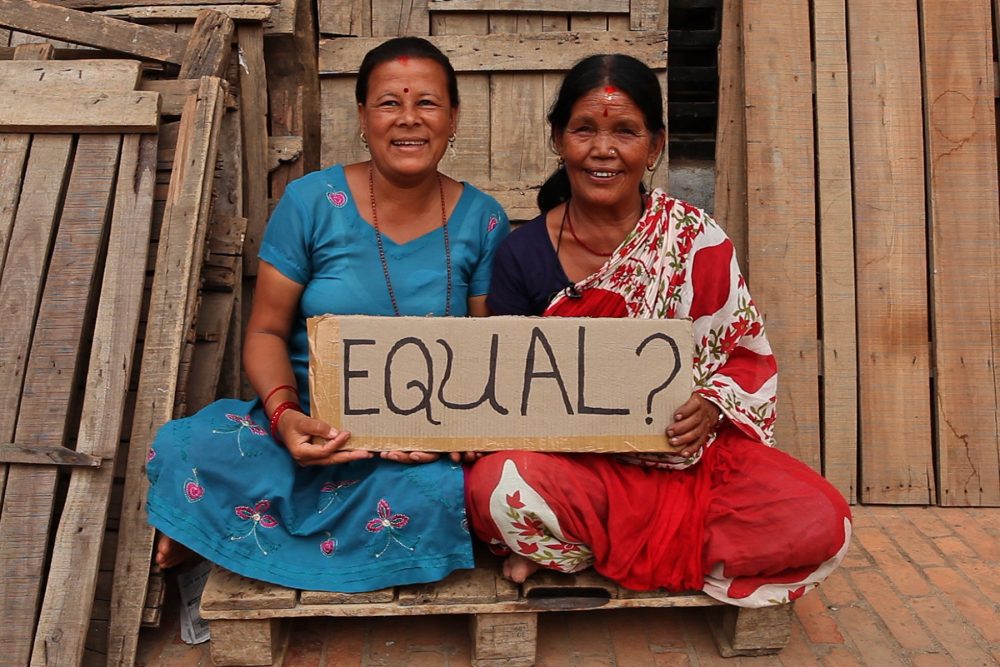
Photo: Global Partnership for Education

April 24, 2014
https://borgenproject.org/wp-content/uploads/borgen-project-logo.svg 0 0 Borgen Project https://borgenproject.org/wp-content/uploads/borgen-project-logo.svg Borgen Project2014-04-24 04:00:402024-12-13 17:50:097 Organizations Supporting Global Education
Activism, Aid Effectiveness & Reform, Developing Countries, Education, Foreign Aid, Global Poverty, United Nations

UNESCO Pushes for Millennial Education Goals

UNESCO_educational_goals_kids
Former UK Prime Minister Gordon Brown has been a major proponent for global education since his tenure ended. He has made a number of announcements and proclamations in favor of increasing global literacy, yet recently his proposals have gained more steam. The United Nations Educational Scientific and Cultural Organization (UNESCO) has agreed to follow through with Brown’s mission statement to put 57 million children in school worldwide by next year. This falls short of the Millennium Goals that were meant to be reached by 2015.

A report from January of 2014 brought on this concern towards the Millennial Education Goals. The UNESCO report said that the goals would not be met until 2086 under current projections. While striving towards these goals 70 years in advance may seem a little optimistic, the statistics used from 2011 showed a 50% drop in out-of-school children since the beginning of the new millennium. This gives hope for a renewed commitment to make an immediate impact.

The most recent statistics on the issue come from that 2011 study, but those numbers showed 123 million young adults (15-24) lacked basic reading and writing skills. The most progress for universal primary education has been in Southeast Asia, in South Korea, India and Vietnam. Afghanistan shows the most immediate promise for the future, even with troops potentially leaving the nation at the end of the year.

The nations struggling the most to achieve universal primary education are those of Western Africa. Senegal, Mauritania, Nigeria and a number of other sub-Saharan countries still lag behind most of the developed world. Particularly for women, there remain few options and little hope for advancement. West Africa will likely be where UNESCO efforts have to focus.

Gordon Brown, as the United Nation’s Special envoy for global education, called these struggles unacceptable. He said in a recent interview, “the inequality of opportunity that they face is unfair… we have seen the makings of a civil rights struggle amongst young people.” Brown hopes that drawing on grassroots campaigns for education around the world will help bring the world closer to universal primary education.

The fight to achieve universal primary education will take on multiple fronts and be supported by different leaders. Malala Yousafzai has become a global celebrity thanks to her courage in the face of opponents of this mission. Yousafzai and Brown have begun work in Lebanon to educate the thousands of school-age children living in Syrian refugee camps. Given the ongoing Syrian conflict it is unknown how long those kids will be living in the camps, and the need is there for education to prevent a “lost generation” of kids.

The Millennium education efforts may have missed their goals by a long shot. However, the emphasis that people like Brown and Yousafzai have placed on primary education brings hope for the near future. Organizations like The Borgen Project support this passion and hope it will be shared by more people around the world. The first step toward ending global poverty will be reaching children as early as possible, and universal primary education is a key method of doing so.

– Eric Gustafsson

Photo: Globalization101
Sources:
United Nations, PBS, BBC

April 15, 2014
https://borgenproject.org/wp-content/uploads/borgen-project-logo.svg 0 0 Borgen Project https://borgenproject.org/wp-content/uploads/borgen-project-logo.svg Borgen Project2014-04-15 01:15:522020-07-25 00:44:27UNESCO Pushes for Millennial Education Goals
Activism, Advocacy, Global Poverty

Does Raising Awareness Matter?

raise_awareness
When confronted with the horrific suffering and abuse that many of the world’s poor endure on a daily basis, one is likely to feel the urge to “do something.” For those of us who are not development professionals, one of the main options for “doing something” tends to be along the lines of advocacy and raising awareness – making sure our sphere of influence is aware of a specific injustice in the world. But does raising awareness matter, and does it really make a difference for the poor?

Patty Stonesifer, former President and CEO and current senior adviser for the Bill and Melinda Gates Foundation, thinks so. Stonesifer defines advocacy as, “efforts to bring about change through public awareness and activism and/or changes to public policy, public practice, or the law.” During her time as a top executive for the Bill and Melinda Gates Foundation, she saw that a shortage in the availability of game-changing solutions for disease and broken educational systems was not the problem. The problem was that these resources were not being purchased and delivered by donors and governments.

Why? A lack of advocacy. The people these services would benefit – the very young or very old or very sick – did not have the ability to help or advocate for themselves. The people most desperate for healthcare or education did not have the political influence to determine the services they would receive.

Sandy Stonesifer, an advocate for issues related to adolescent girls’ health, states that while not all advocacy organizations are effective, history has proven the massive effects that a group of committed advocates can have on policy – the NAACP, March of Dimes and the National Organization for Women, to name a few. She suggests doing research to determine the organizational capacity and cost effectiveness of individual advocacy organizations to make an informed decision about which organizations to support.

Advocacy certainly accomplishes more than just “making noise.” Advocacy changes government agendas and can raise funds for on-the-ground NGOs to carry out their humanitarian efforts. Addressing issues only by funding direct services overlooks the importance of growing a movement – a group of supporters that will provide financial resources and lobbying efforts, thereby carrying the movement beyond its start-up momentum.

While no injustice will be eliminated simply by raising awareness that it exists, people must be aware in order to take the first step of action.

– Madisson Barnett

Sources: All for One, AECF, Abolishion
Photo: Project Theureka

April 12, 2014
https://borgenproject.org/wp-content/uploads/borgen-project-logo.svg 0 0 Borgen Project https://borgenproject.org/wp-content/uploads/borgen-project-logo.svg Borgen Project2014-04-12 13:52:272016-02-16 12:09:55Does Raising Awareness Matter?
Page 39 of 56«‹3738394041›»

Get Smarter

  • Global Poverty 101
  • Global Poverty… The Good News
  • Global Poverty & U.S. Jobs
  • Global Poverty and National Security
  • Innovative Solutions to Poverty
  • Global Poverty & Aid FAQ’s
Search Search

Take Action

  • Call Congress
  • Email Congress
  • Donate
  • 30 Ways to Help
  • Volunteer Ops
  • Internships
  • Courses & Certificates
  • The Podcast
Borgen Project

“The Borgen Project is an incredible nonprofit organization that is addressing poverty and hunger and working towards ending them.”

-The Huffington Post

Inside The Borgen Project

  • Contact
  • About
  • Financials
  • President
  • Board of Directors
  • Board of Advisors

International Links

  • UK Email Parliament
  • UK Donate
  • Canada Email Parliament

Get Smarter

  • Global Poverty 101
  • Global Poverty… The Good News
  • Global Poverty & U.S. Jobs
  • Global Poverty and National Security
  • Innovative Solutions to Poverty
  • Global Poverty & Aid FAQ’s

Ways to Help

  • Call Congress
  • Email Congress
  • Donate
  • 30 Ways to Help
  • Volunteer Ops
  • Internships
  • Courses & Certificates
  • The Podcast
Scroll to top Scroll to top Scroll to top