• Link to X
  • Link to Facebook
  • Link to Instagram
  • Link to TikTok
  • Link to Youtube
  • About
    • About Us
      • President
      • Board of Directors
      • Board of Advisors
      • Financials
      • Our Methodology
      • Success Tracker
      • Contact
  • Act Now
    • 30 Ways to Help
      • Email Congress
      • Call Congress
      • Volunteer
      • Courses & Certificates
      • Be a Donor
    • Internships
      • In-Office Internships
      • Remote Internships
    • Legislation
      • Politics 101
  • The Blog
  • The Podcast
  • Magazine
  • Donate
  • Click to open the search input field Click to open the search input field Search
  • Menu Menu

Archive for category: Activism

Information and stories on social activism.

Activism

Post Nicaragua’s Sandinista Revolution

On July 19, Nicaragua’s ruling FSLN party, led by President Daniel Ortega, gathered at Plaza La Fe in the capital city of Managua to celebrate the 35th anniversary of the successful Sandinista Revolution and the fall of the Somoza dictatorship in 1979.

The Frente Sandinista de Liberación Nacional (Sandinista National Liberation Front), or FSLN, is today the leading social democratic party in Nicaragua. The political body, however, has its roots in a military movement that surfaced in 1962 to overthrow U.S.-backed dictator Anastasio Somoza DeBayle.

The Sandinistas took their name from General Augusto C. Sandino, a national hero who led an army of farmers and workers against an armed U.S. intervention in the late 1920s and early 30s. Sandino’s forces were able to outlast the U.S. Marines, but the general was betrayed and killed soon after in what he hoped would be a peace negotiation with Anastacio Somoza García, the military strongman left in charge by the Marines and the father of Anastasio Somoza DeBayle.

The Sandinistas and the FSLN are part of the leftist, anti-imperialist front in Latin America, which includes the likes of Fidel and Raul Castro in Cuba and Venezuela’s recently deceased Hugo Chavez. The Castro brothers sent their greetings to the Nicaraguan people on the revolution’s anniversary and lauded the country as “an irreversible stronghold of the anti-imperialist fight.”

Cuban Vice President Ramiro Valdes was present at the celebration in Managua, in the company of President Nicolas Maduro of Venezuela, President Salvador Sanchez Ceren of El Salvador and President Juan Orlando Hernandez of Honduras. The Guatemalan human rights activist and Nobel Peace Prize winner Rigoberta Menchu also attended the ceremony.

In a dramatic turn of events, the celebrations on July 19 ended in bloodshed as armed gangs claiming to be “contras,” the U.S. supported counterrevolutionary forces that took up arms against the Sandinista government after the 1979 revolution, ambushed bus caravans carrying party supporters home from the anniversary celebration.

Five people were killed and 25 wounded in two separate but seemingly coordinated attacks. FSLN officials have called the attacks “a terrorist act.” These troubling developments surrounding the Nicaraguan Revolution’s 35th anniversary reveal the heated political climate and rampant violence that still causes so much suffering in Nicaragua and throughout the Central American region.

– Kayla Strickland

Sources: Christian Science Monitor, ViaNica, La Prensa, Escambray
Photo: Counter PsyOps

July 30, 2014
https://borgenproject.org/wp-content/uploads/borgen-project-logo.svg 0 0 Borgen Project https://borgenproject.org/wp-content/uploads/borgen-project-logo.svg Borgen Project2014-07-30 17:50:582024-06-05 01:57:53Post Nicaragua’s Sandinista Revolution
Activism, Health, Nonprofit Organizations and NGOs

Soccer Star Creates Kanu Heart Foundation

Nwankwo Kanu is not only the former captain of the Nigerian national soccer team, but he also goes to a great length in doing charity work. Born in Nigeria, he started to show his soccer talent on the Dutch Ajax team by scoring 25 goals in 54 performances in his first year in Ajax. He also led the Nigerian team win the Olympic Gold Medal in 1996. He was named African Footballer of the Year in the same year. In his charity path, he launched Kanu Heart Foundation, which he claimed as his proudest achievement. At the same time, he is a UNICEF ambassador.

Just after winning the Olympics, he was diagnosed with a heart valve defect, underwent surgery and did not return to his career for almost a year. Because of his experience, he started his Kanu Heart Foundation to make sure children with heart problems are able to obtain heart surgeries, especially underprivileged children in Africa. Through this organization, hospitals provide surgical heart transplants, laser surgeries and more.

“These kids remind me of when I was growing up as a little boy,” Kanu said to BBC Sport. “There’s no amount of success on the football pitch that can give me more smiles than the numbers of lives I’ve touched.” He wants to put smiles on the face of every child who deserves the chance to pursue their dreams.

According to its official website, the Kanu Heart Foundation has undertaken 452 open heart surgeries since the foundation was first established in 2000. All sponsored surgeries are done in countries such as England, Israel, India and Sudan. The Cardiac Specialist Hospital will offer free surgeries for children from 1 to 12 years old and those for adults will be subsidized.

– Jing Xu

Sources: BBC News, Wikipedia, Kanu Heart Foundation 1, Kanu Heart Foundation 2
Photo: Connect Nigeria

July 30, 2014
https://borgenproject.org/wp-content/uploads/borgen-project-logo.svg 0 0 Borgen Project https://borgenproject.org/wp-content/uploads/borgen-project-logo.svg Borgen Project2014-07-30 08:58:432024-12-13 17:50:21Soccer Star Creates Kanu Heart Foundation
Activism, Nonprofit Organizations and NGOs, Poverty Reduction

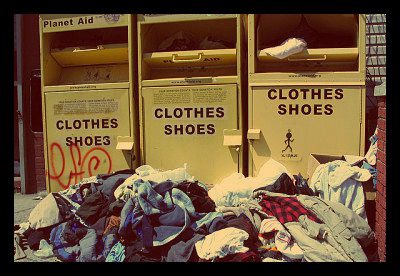
Planet Aid: Humanitarian Aid and Sustainability

planet_aid
What is yellow and found in most American cities? Planet Aid bins. Founded in Boston in 1977, Planet Aid was at first a small operation. Donations became so plentiful that the nonprofit had to upgrade its office space and nondescript drop boxes.

Planet Aid’s mission is to inspire people to “bring about worldwide and environmental progress.” The organization is part of the Humana People to People Federation, a source of resources for 32 aid groups working across the globe. Every year, about 12 million people are benefited by Federation projects.

Though Federation aid groups provide an array of services, Planet Aid focuses on collecting and recycling used clothing and supporting development projects.

Discarded clothing is reduced to two functions: sitting in a landfill and creating carbon emissions. About nine percent of American methane emissions are produced by landfills. Over eight percent of landfills are rubber, leather and textiles. Recycling clothes is a step toward reducing the nation’s carbon footprint, but it is also expensive.

Local governments are hesitant to cover the cost, and so Planet Aid steps in. Their bright yellow boxes are beacons of light for environmentally conscious old-jean-holding citizens everywhere. Once collected, some of the clothing is shipped off to domestic thrift stores.

Most, though, are taken to overseas buyers. Why sell overseas? The market is huge. Quality shirts, pants and shoes can be sold to someone in need for a couple dollars.

If people need them so badly, why sell? Because charity can wreak havoc on local economies. It’s better to stock a merchant’s shelves with affordable goods than to put him or her out of business.

Planet Aid revenues are invested in development projects that meet the goals of their mission: “strengthening communities,” “reducing poverty,” “increasing health awareness” and “promoting small enterprise,” among others.

The organization runs projects in 15 countries. So far, Planet Aid has taught 9,500 teachers in India and Africa. From 2010 to 2011 alone, it provided over 5.5 million dollars in micro-finance to Indian women. It raised HIV/AIDS awareness, established a club that teaches sustainable farming practices and founded several vocational schools.

Everything is funded by profits made from clothing and monetary donations. Through its work, Project Aid has shown that humanitarian aid and environmental sustainability are not conflicting interests.

– Olivia Kostreva

Sources: U.S. Environmental Protection Agency, Planet Aid 1, Planet Aid 2, Planet Aid 3
Photo: Bethesda 365

July 29, 2014
https://borgenproject.org/wp-content/uploads/borgen-project-logo.svg 0 0 Borgen Project https://borgenproject.org/wp-content/uploads/borgen-project-logo.svg Borgen Project2014-07-29 15:28:282024-05-27 09:19:07Planet Aid: Humanitarian Aid and Sustainability
Activism, Health, Nonprofit Organizations and NGOs

The Seva Foundation

Subas Maya Rai lives in a remote area of Nepal. A few years back she became blind from cataracts in both eyes, and from that point on lived life in a vulnerable and isolated darkness. Having to rely on her husband, she wanted to give up hope, and began waiting for death to take her.

Her husband began hearing news that a Seva-sponsored eye camp would be coming, and together, they made a four-day journey by foot to the camp. The surgery took two days, and after a few days, Subas removed her bandages and was finally able to see again.

Starting out as a gathering of friends and colleagues at the Waldenwoods Conference Center located near Ann Arbor Michigan, The Seva Foundation began as a group of people looking to be of service. The conference was comprised of health professionals and activists who were introduced to Dr. G Venkataswamy, a retired eye surgeon who dreamed of making cataract surgery ubiquitous. Seva was soon born, focused on restorative eyesight methods.

The vision of Seva comprises the promotion of a world of people who are healthy and autonomous.

The Seva Foundation is best known for eyesight restoration to more than 3.5 million people in need of vital eye care service.

They have operated in 20 countries including Bangladesh, sub-Saharan Africa, Cambodia, Nepal and Tibet, and have operated with Native Americans in the United States. They support community outreach to spread awareness of services available for proper eye care. With their Global Sight Initiative, the organization collaborates on an international level to increase the efficiency, effectiveness and sustainability of its 50 partner eye-care institutions around the world. Its methods, in turn, increase the overall productivity and quality of eye-care treatments.

Yet, performing eye surgery requires trained staff/volunteers and up-to-date equipment. In response to the needs of the poor, Seva brings its vision centers to local communities and trains ophthalmologists, ophthalmic assistants and community health workers to use specialized equipment in order to exercise quality care.

The ability to bring people together in service of others is an innate quality of this organization. It stands to serve those who are underserved, and shines a beacon to those stranded in the dark.

– Ashley Riley

Sources: Seva Foundation 1, Seva Foundation 2
Photo: SFGate

July 28, 2014
https://borgenproject.org/wp-content/uploads/borgen-project-logo.svg 0 0 Borgen Project https://borgenproject.org/wp-content/uploads/borgen-project-logo.svg Borgen Project2014-07-28 13:57:242024-06-05 01:57:51The Seva Foundation
Activism, Advocacy, Development

Success in the Fight Against Poverty

In the fight against something as daunting as extreme poverty, success often gets buried under all of the staggering statistics. Looking at how far the world has come in the fight against extreme poverty involves observing what has been done and what is possible in the coming years. This lens makes it clear that the humanitarian efforts of thousands of people have made a very clear difference in the lives of millions exposed to poverty.

In 1990, the global poverty rate was at 36 percent, which decreased to 18 percent in 2010. This fulfilled a Millennium Challenge Goal to cut the global poverty rate in half, and it did so five years ahead of schedule. The call to action outlined in the Millennium Challenge Goals has inspired many to rally around the cause and make improvements.

In addition to the poverty rate changing, the number of children who die from preventable diseases every year has decreased by 30 percent in the past 15 years, indicating an improvement in the standards of living for thousands of children.

Education in developing countries has seen improvement with higher annual enrollment rates, which will see more apparent return in the future when these children are more prepared and qualified to support their families and contribute to a more stable society.

The future of the fight against poverty smacks of success, given that the fight maintains momentum. Were progress to continue at the current rate, or better yet, speed up, the goal of lifting one billion people out of poverty could be met between 2025 and 2030. Bill Gates posited that there could be almost no impoverished countries by 2035.

There are various initiatives being developed by various humanitarian organizations that show promise of success. In December of 2013, 46 countries all over the world stepped up to accelerate the fight against extreme poverty by committing to a composite $52 billion donation over a period of three years that will go directly to the International Development Association, a fund established by the World Bank to support the world’s poorest.

The Bill & Melinda Gates Foundation, the Clinton Foundation, Warren Buffett, Feed the Future — the list of people and organizations willing to help is endless. And it couldn’t have come at a better time. In a world that is more technologically capable than ever with the resources necessary to feed the whole world and the money to establish stable communities around the world, the fight against extreme poverty is more manageable.

The fight is not over, nor will it be an easy fight to win. Worldwide, there are nearly 1 billion people who survive on $1.25 or less every day. Proportionally compared to the world population, we are facing a smaller fraction, but it is still an overwhelming number. Keeping in mind the progress of the past and the promise of the future, the world can continue to successfully fight against extreme poverty.

– Maggie Wagner

Sources: The World Bank, MSNBC, The World Bank, Mic.com
Photo: Konnect Africa

July 28, 2014
https://borgenproject.org/wp-content/uploads/borgen-project-logo.svg 0 0 Borgen Project https://borgenproject.org/wp-content/uploads/borgen-project-logo.svg Borgen Project2014-07-28 12:51:412024-12-13 17:51:02Success in the Fight Against Poverty
Activism, Advocacy

World Neighbors: Helping Communities

World Neighbors is an international non-profit organization working to improve the lives of people in struggling communities around the globe.

The organization was founded by Dr. John L. Peters, who was inspired to fight global poverty after experiencing it firsthand during his service in World War II.

Upon returning home in 1951, Dr. Peters created World Neighbors. In regards to a speech he gave at his local church after coming home, “I talked about the things I’d seen, but I spoke mostly about the things I felt: that the gulf between the rich and the wretched was intolerable; that we were brothers to, not keepers of, the world’s needy; that we must learn to do things with, not to – or even for – others; that they must share in electing priorities and procedures.”

To this day, the organization’s work is shaped around these principles. Before World Neighbors begins working with a community, the highest priority issues are determined by the community members rather than by the organization.

This ensures that each program is tailored to help whichever issues the community itself deems most important. The organization gives much importance to “listening to people, without predetermined ideas, to identify and address their needs, resulting in greater community involvement and long-lasting impact.”

Once the goals have been determined, the organization utilizes long-term development methods rather than short-term aid, taking a “big-picture, integrated approach focused on the entire community rather than on one issue.”

While multidimensional methods are stressed, World Neighbors divides its work into four different areas: hunger, poverty, disease and the environment. Within each category, the organization focuses on long-term solutions.

To combat hunger, World Neighbors educates communities about sustainable agriculture practices to help them gain more food security over time. In regards to the environment, the organization runs natural resource management programs, which ensure that the ecosystems rural communities survive on remain healthy and productive.

World Neighbors’ long-term initiatives, usually lasting between 8-12 years, focus on taking actions today that will create self-sufficient populations for tomorrow. In World Neighbors’ words, “We seek to strengthen local autonomy rather than create dependency.”

The organization is currently in eleven different countries, benefiting half a million people. Hopefully World Neighbors will continue to aid impoverished populations on a large scale over the coming years, as its long-term methods ensure that partner communities will continue to reap program benefits even after direct support has left, improving sustainability and the lives of struggling people around the globe.

– Emily Jablonski 

Sources: The World Bank, World Neighbors
Photo: Ionok

July 28, 2014
https://borgenproject.org/wp-content/uploads/borgen-project-logo.svg 0 0 Borgen Project https://borgenproject.org/wp-content/uploads/borgen-project-logo.svg Borgen Project2014-07-28 12:49:462024-05-27 09:19:00World Neighbors: Helping Communities
Activism, Advocacy, Global Poverty

How to Get Into Philanthropy

how_to_get_into_philanthropy
As defined by Merriam-Webster, philanthropy is the giving of money and time to help improve the lives of others. Despite the straightforward definition, philanthropy can relate to a broad range of actions, which is why a question many of us ask is how does one get into philanthropy?

When exploring this question, ask yourself, “What causes do I care about most?” With numerous organizations supporting a variety of causes, it can be difficult to choose among hundreds of philanthropic organizations.

As a result, many donors are strategic in their giving, meaning that they ensure that their donations will yield the best results coinciding with their beliefs. To help realize what causes you care most about, rank organizations according to the categories that they address, such as people, places, issues or philosophies.

Sites like CharityNavigator.org and GiveWell.org are helpful when researching and ranking organizations. Don’t be shocked if your rankings change over time. Like everything else, this is a learning process, so allow yourself some time to learn the best ways to donate.

Although monetary donations keep organizations working toward their specific cause, giving time is just as important as giving money. Organizations are always looking for volunteers and even full-time employees dedicated to the organization’s cause. The most popular position people typically apply for in a philanthropic organization is that of program staff member, whose main responsibility is grant-making; but there are so many more positions available that applicants may typically overlook.

Employment opportunities typically available at a philanthropic organization include: member of the foundation board, senior management, finance, programs, communications, administration/human resources, donor relations, research and grants management. All of these positions play a major role in an organization’s daily operations and in the achievement of its core mission.

An increasing amount of volunteers are serving the world’s poor in both the U.S. and foreign countries. Although the common perception of volunteers is that they are merely young and inexperienced college students or graduates volunteering to simply pass the time, volunteers are just as important and influential as employees. With the timing of assignments ranging from weeks to months to even years, volunteering can directly correspond with one’s schedule.

Volunteering has become more than just an easy way to assist international development efforts or humanitarian relief work; anyone can learn new skills and share their knowledge with others. With various opportunities available across the world, finding a volunteer position that is related to your interests or expertise is easy, thanks to sites like Volunteermatch.org and Idealist.org.

Even though philanthropy is commonly associated with donations, it goes beyond donating money. While considering how to get into philanthropy, remember that every action helps, whether you contribute your finances, time, or even your gifts and talents.

– Meghan Orner

Sources: Merriam-Webster, Philanthropy New York, Devex, Bridgespan
Photo: MillanCPA

July 28, 2014
https://borgenproject.org/wp-content/uploads/borgen-project-logo.svg 0 0 Borgen Project https://borgenproject.org/wp-content/uploads/borgen-project-logo.svg Borgen Project2014-07-28 10:36:122024-06-05 01:57:50How to Get Into Philanthropy
Activism, Education, Nonprofit Organizations and NGOs, Poverty Reduction

The Education Development Center

In the fight against global poverty, it is important to acknowledge some of the more successful combatants. The Education Development Center (EDC) is one of these. As a global nonprofit, it recognizes the correlation between the lack of education and increased global poverty and helps give those marginalized in the world — either due to poverty or war — the chance of leading a better life by means of education. As their website states, over 100 million children do not attend school, and it is this statistic that the EDC is fighting to combat and reduce.

With offices based in New York, Chicago, Washington, D.C. and Waltham, Mass., the Education Development Center commands a global staff of 1,350 members. It has over a $190 million budget and over 250 programs spread throughout 30 different countries and across all 50 U.S. states.

Through grants from both private foundations and federal agencies, the EDC creates and implements projects to improve educational and economic prospects of those worldwide. According to the EDC, these projects have ranged from “seed projects to large-scale national and international initiatives.”

Notable donors to the EDC include: the Ford Motor Company, the Bill & Melinda Gates Foundation, U.S. Agency for International Development, the U.S. Department of Education, UNESCO and the World Health Organization. Recently, the EDC has received three grants from the U.S. Department of Education, one for $3.5 million and two for almost $400,000 each, all meant for education development projects within the U.S.

Founded in 1958, the EDC’s first project was to design a new physics curriculum for American high school classrooms. This was partially a reaction to the Soviet Union’s new space program as well as a response to a perceived discrepancy between Soviet Union and American science educations.

Funded by the National Science Foundation, this project became highly successful, and the new curriculum was incorporated into roughly half of American high schools by the early 1960s.

Following the implementation of this first project in the United States, EDC soon began to establish a more global reach. In 1961 and 1966 it began work on advancing mathematics and science programs in Africa. These projects would eventually end up creating, as stated on EDC’s website, “the continent’s first indigenous education research and development organization, Science Education Programme for Africa.”

However, one of its most effective and interesting international projects is the Radio Education or Interactive Radio Instruction.

This radio program that began in 1985 (and still exists today) was funded by the U.S. Agency for International Development. It uses radios to educate large swaths of people, including adults and children from over 30 developing countries, that would otherwise be unable to receive a basic education, either because of war or poverty.

This dedication to improving the world and combating poverty through education has been sustained throughout the organization’s entire existence. As a result of projects from 1997-2007, for instance, student enrollment in Guinea has doubled.

More recently, the international work of the EDC has focused on reducing youth unemployment in both Rwanda and Macedonia. More vocational training centers, concentrated on teaching technical and interpersonal skills, are being created for these youths.

As 2015 draws near, so does the end of the Millennium Development Goals, eight goals signed in 2000 by 191 countries designed to drastically reduce global poverty. As the international community debates and draws up the next set of goals to target poverty, the EDC will be remembered and depended on for the continued positive change it has enacted since 1958.

– Albert Cavallaro 

Sources: EDC 1, EDC 2, EDC 3, EDC 4, EDC 5, IRIN
Photo: Sasaki

July 28, 2014
https://borgenproject.org/wp-content/uploads/borgen-project-logo.svg 0 0 Borgen Project https://borgenproject.org/wp-content/uploads/borgen-project-logo.svg Borgen Project2014-07-28 04:00:282024-06-05 01:57:49The Education Development Center
Activism, Health, Sanitation

UNICEF Campaign in Haiti

UNICEF and the Haitian government have combined forces to combat the cholera epidemic by providing access to safe drinking water and sanitation facilities in the rural areas of Haiti. This week they launched the National Sanitation Campaign, which will target 55 communities, 3.8 million people, 2,500 schools and 500 health centers.

Cholera has not been documented in Haiti for a century prior to its outbreak in 2010. Since then, the government has reported 703,000 suspected cases of cholera and 8,500 cholera-related deaths in Haiti.

In 2012, UN Secretary-General Ban Ki-moon launched an initiative for the elimination of cholera in Haiti and the Dominican Republic through prevention, treatment and education.

The UN’s efforts in fighting the epidemic have included establishing mobile teams for rapid health response, setting up 150 cholera treatment facilities and 700 water chlorination points and distributing buckets, water tanks and cholera kits to Haitian residents. International aid has contributed to reducing the toll of cholera: rates have declined 74 percent in the first five months of 2014 compared to the same time period last year and the fatality rate is below the World Health Organization’s one  percent goal.

Despite this progress, cholera still remains a global health emergency for the Haitian population, one that will only be resolved by keeping infected waste out of food and water. With lack of sanitation infrastructure and poor hygienic practices, cholera and other waterborne diseases which can lead to dehydration and death will remain a potential threat to Haitians, particularly those residing in rural communities.

According to UNICEF, less than one in two families have access to a safe, improved water source in rural areas of Haiti, compared with 77 percent in urban areas. In addition, only one in four families have access to functional toilets. Risks of cholera are increased by the environment and are even higher during the rainy season.

Edouard Beigbeder, the UNICEF representative in Haiti, claims that the partnership’s approach is to “address the root causes of the problem and offer sustainable solutions.” The National Sanitation Campaign involves the combination of community outreach and infrastructure building to provide working water points in at-risk communities and appropriate toilets for up to 90 percent of the population in areas where cholera is present. The current program aims to “stop the spread of cholera and cut the incidence of diarrhea by half within the next two years.”

Ki-moon called attention to the cholera epidemic in Haiti after departing on a “necessary pilgrimage” to Los Palmas and attending a local church service. He sought support for the $2.2 billion 10-year cholera elimination initiative of 2012, which struggled to raise an initial $400 million needed for the first two years. Ki-moon’s visit will hopefully reach donors who have previously been slow to respond to the campaign.

Some Haitians criticized Ki-moon’s visit, as the UN refused to accept responsibility for introducing the disease to Haiti. Past evidence suggests that Nepalese peacemakers stationed near a tributary of the Artibonite river had discharged raw sewage that carried a strain of cholera which sparked the outbreak. Now lawsuits are being filed demanding compensation for victims of the epidemic and affected families.

But UNICEF recognizes that it has a “moral duty” to end the world’s worst cholera epidemic. Major donors including the Canadian government and Japanese Agency for International Cooperation will facilitate the fulfillment of this goal. With new initiatives and a specific focus on sanitation systems and clean water, the National Sanitation Campaign aims to eradicate cholera from Haiti once and for all.

– Abby Bauer
Sources: UNICEF, United Nations News Centre, The Guardian, Global Research
Photo: UNICEF

July 24, 2014
https://borgenproject.org/wp-content/uploads/borgen-project-logo.svg 0 0 Borgen Project https://borgenproject.org/wp-content/uploads/borgen-project-logo.svg Borgen Project2014-07-24 14:32:002024-06-05 01:57:50UNICEF Campaign in Haiti
Activism, Education, Women and Female Empowerment

Julia Gillard & Female Education

Former Australian Prime Minister Julia Gillard is no stranger to education reform. Before her term of service from 2010 to 2013, Gillard was the minister of education in Australia. As prime minister, she drew upon her work experiences to improve many of Australia’s policies for the country’s educational system.

Having accepted the position of Board Chair for the Global Partnership for Education in February, Gillard has since expanded her desire to promote high quality education to countries across the globe.

One of Gillard’s primary focuses is female education. The global leader has voiced her concern with the lack of funding and attention that female education typically receives. As Board Chair, Gillard has set out to instill a greater sense of gender equality in discussions regarding educational aid.

Gillard received a great deal of press in 2012 when she became engaged in a heated debate with opposition leader Tony Abbot during a meeting of parliament about the concept of sexism. Julia Gillard accused Abbot of behaving and speaking in a misogynistic manner and highlighted the evils of sexism.

The video of her speech from parliament that day went viral, becoming an online symbol of female empowerment.

Today, Gillard is continuing her passion for gender equality by accepting a partnership with the United Nations Girls’ Education Initiative (UNGEI). At the GPE Replenishment Conference in June, Gillard opened the “Girls’ Education: Moving Beyond Access” session.

Gillard commented on the state of female global education saying, “There are more girls in school today, but there are still millions who are still not in school. There is a lot more that needs to be done.”

The session offered discussion on the most effective ways to respond to gender inequality in schools in the poorest areas of the world. The transition from primary to secondary education became a popular topic of conversation because so many girls drop out of school between the two levels.

The session also pinpointed the recent reasons behind female education’s success. For example, women are gaining land ownership rights more often in Nepal because daughters as well as sons can inherit family land now. Representatives from Nepal at the GPE conference believe that the opportunity to own land has affected female enrollment in schools because it has shifted the attitude toward women in the country.

Gillard advocates for complete equal access to education. As Board Chair for GPE, she leads initiatives to fund education for children with disabilities, children in rural and impoverished areas and girls dealing with oppression. Though female education is not her only focus, the fact that she, a prominent global symbol for both feminism and education reform, is leading these initiatives, seems like good news for the future of female education.

– Emily Walthouse

Sources: BBC, UNGEI, GPE, Huffington Post
Photo: Eight Women Around the World

July 22, 2014
https://borgenproject.org/wp-content/uploads/borgen-project-logo.svg 0 0 Borgen Project https://borgenproject.org/wp-content/uploads/borgen-project-logo.svg Borgen Project2014-07-22 16:00:492024-06-05 01:57:49Julia Gillard & Female Education
Page 34 of 56«‹3233343536›»

Get Smarter

  • Global Poverty 101
  • Global Poverty… The Good News
  • Global Poverty & U.S. Jobs
  • Global Poverty and National Security
  • Innovative Solutions to Poverty
  • Global Poverty & Aid FAQ’s
Search Search

Take Action

  • Call Congress
  • Email Congress
  • Donate
  • 30 Ways to Help
  • Volunteer Ops
  • Internships
  • Courses & Certificates
  • The Podcast
Borgen Project

“The Borgen Project is an incredible nonprofit organization that is addressing poverty and hunger and working towards ending them.”

-The Huffington Post

Inside The Borgen Project

  • Contact
  • About
  • Financials
  • President
  • Board of Directors
  • Board of Advisors

International Links

  • UK Email Parliament
  • UK Donate
  • Canada Email Parliament

Get Smarter

  • Global Poverty 101
  • Global Poverty… The Good News
  • Global Poverty & U.S. Jobs
  • Global Poverty and National Security
  • Innovative Solutions to Poverty
  • Global Poverty & Aid FAQ’s

Ways to Help

  • Call Congress
  • Email Congress
  • Donate
  • 30 Ways to Help
  • Volunteer Ops
  • Internships
  • Courses & Certificates
  • The Podcast
Scroll to top Scroll to top Scroll to top