• Link to X
  • Link to Facebook
  • Link to Instagram
  • Link to TikTok
  • Link to Youtube
  • About
    • About Us
      • President
      • Board of Directors
      • Board of Advisors
      • Financials
      • Our Methodology
      • Success Tracker
      • Contact
  • Act Now
    • 30 Ways to Help
      • Email Congress
      • Call Congress
      • Volunteer
      • Courses & Certificates
      • Be a Donor
    • Internships
      • In-Office Internships
      • Remote Internships
    • Legislation
      • Politics 101
  • The Blog
  • The Podcast
  • Magazine
  • Donate
  • Click to open the search input field Click to open the search input field Search
  • Menu Menu

Archive for category: Sanitation

Global Poverty, Human Rights, Sanitation

Moving Toward Better Human Rights in Gabon

Human Rights in Gabon
Human rights in Gabon, a country in Central Africa, are not as good as they should be. Even though Gabon is wealthier than many other African countries, human rights violations and poverty are issues the country still deals with.

The U.S. Department of State reports that prison conditions are the primary violation of human rights in Gabon. Overcrowding, substandard sanitation and ventilation, as well as poor food and healthcare quality, are all problems in Gabon prisons. Some people in holding were not allowed contact with lawyers or family for several days, even if he or she had not been charged, which violates Gabonese law.

The 2016 election led to several violations of human rights in Gabon. Many non-warranted arrests were made as a result of the controversial election. Labor unions, politicians and opinion leaders were arrested, and disappearances took place shortly before election day in August. Abusive behavior by prison guards toward detainees was commonly reported after the election, and somewhere between 20 and 50 civilians and protesters were killed by government workers.

Free speech and assembly took hits as well. Some publications in Gabon closed and were threatened by the Ministry of Communications for criticizing the government. Measures such as tear gas were used against activists during protests also.

Women work freely and are able to seek the position of their choosing, but must have their husbands’ consent before traveling. Rape often goes unreported due to unfortunate social stigmas, which may also hinder the LGBT community.

Yet, steps are being taken to improve the condition of human rights in Gabon, including expanding internet access. Since the election, Ali Bongo, the current president, took action toward reducing the government corruption that largely accumulated during the 42-year reign of his father Omar Bongo.

According to Freedom House, Bongo “eliminated ghost workers from the public payroll” and “formed the National Commission against Illegal Enrichment to combat corruption”. He also created a task force to address the millions of missing dollars from previous projects and to donate his portion of his father’s estate to the children of Gabon.

However, additional action will need to be taken to improve human rights in Gabon. It is currently ranked 99 out of 168 countries for government corruption. If Ali Bongo makes the improvement of human rights a priority, Gabon can rise above its current state.

– Emma Tennyson

Photo: Flickr
August 7, 2017
https://borgenproject.org/wp-content/uploads/borgen-project-logo.svg 0 0 Borgen Project https://borgenproject.org/wp-content/uploads/borgen-project-logo.svg Borgen Project2017-08-07 01:30:122024-05-28 00:15:08Moving Toward Better Human Rights in Gabon
Global Poverty, Sanitation, Water

Water and Sanitation in the Solomon Islands

Water and Sanitation in the Solomon IslandsNearly 70 percent of the population of the Solomon Islands lacks access to clean water and proper sanitation facilities. This archipelago comprises almost a thousand islands in the South Pacific Ocean and only has a population of 583,600.
There are disparities in access to water and sanitation in the Solomon Islands between urban and rural areas. Rural areas house 80 percent of the population (480,000), and there is a relative lack of water and sanitation services. In fact, nearly 70 percent of the population does not have access to appropriate sanitation services.

However, a study from 2007 concluded that 97 percent of urban areas compared to 65 percent of rural areas had access to clean water supply. A similar, but much greater disparity is present in access to sanitation facilities. In 2007, 98 percent of urban areas and 18 percent of rural areas had access to sanitation facilities.

The quality of the Solomon Islands’ urban water did not achieve The World Health Organization’s drinking water standards in 2007. Drinking water with unsafe levels of contamination has adverse effects on health and can cause diarrhea and other water-borne diseases. In 2002, diarrheal diseases accounted for seven percent of mortalities in the Solomon Islands.

In 2015, 93 percent of urban areas and 77 percent of rural areas gained access to improved water sources. This data indicates that the disparity in access to water between urban and rural areas has narrowed. Access to improved, private sanitation facilities in urban areas (72 percent) was disproportionately greater than access in rural areas (8 percent) in 2015.

Without sanitation facilities or access to working toilets or latrines, people’s only option is open defecation. Open defecation and the absence of washing facilities are associated with poor hygiene and an increased risk for skin and eye infections as well as mosquito-borne diseases, like malaria and dengue fever. A lack of private sanitation facilities is also linked to higher incidences of physical and sexual violence. When people—especially women—go outside to bathe and defecate, their vulnerability to violence increases.

A government initiative to improve hygiene, water and sanitation in the Solomon Islands is included in the Solomon Islands Red Cross Society Strategic Plan for 2017 to 2020. If the Red Cross Society Strategic Plan’s target of helping 200,000 people with water, hygiene and sanitation is reached, the results could improve health outcomes and the lives of people in the Solomon Islands.

– Gabrielle Doran

Photo: Flickr

August 6, 2017
https://borgenproject.org/wp-content/uploads/borgen-project-logo.svg 0 0 Borgen Project https://borgenproject.org/wp-content/uploads/borgen-project-logo.svg Borgen Project2017-08-06 01:30:502024-05-28 00:15:14Water and Sanitation in the Solomon Islands
Development, Food & Hunger, Global Poverty, Health, Sanitation, Slums

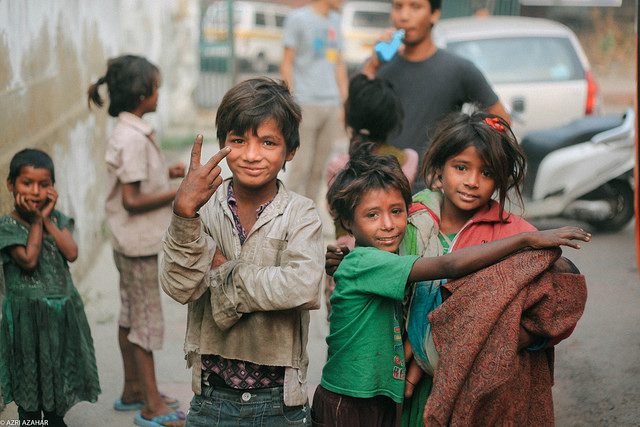
How India is Serving the Growing Delhi Slum Population


As the population in India continues to increase steadily, so does the number of people living in slums. The country’s 2011 census revealed that the slum population currently stands at 65 million people, up from 52 million in 2001. 2,613 of India’s 4,041 towns are classified as slums. In the territory of Delhi, where capital city New Delhi is located, 1.8 million of the 22 million residents live in 22 slums.

The India census defines the term “slum” as an area resided in yet unsuited for human habitation. These places are deemed unfit if they are a hazard to human health and safety due to lack of space, ventilation, cleanliness and other factors. These areas also lack hygienic drinking water facilities, functional bathroom areas and plumbing.

The Delhi slum population lives day-to-day without the basic amenities of electricity, plumbing and gas. Most of the residents are unemployed or daily wage workers, making less than the equivalent of one U.S. dollar a day.

In the 2011 census, slums are categorized in three different subgroups – notified, recognized and identified. Notified and recognized slums are legally established, while identified slums do not hold official slum status by the Indian government. The residents living in identified slums do not have access to legal protection and civic services.

Identified slums must have a population of at least 300 people with 60-70 tenements. Over one million of the growing Delhi slum population reside in identified slums and receive no aid from the government.

With the drastic population increase of the slums, the few resources these areas have are becoming even more depleted and run down.

However, not all of the census’ findings are negative. During the 10-year period under review, the Indian slum population grew at a rate slower than the general urban population. The average household size in slums is no larger than the average household size of urban areas. Slum literacy rate rose from 72.2 percent in 2001 to 77.7 percent in 2011. This is still below the overall Indian literacy rate of 84.1 percent.

WaterAid India is an organization that works to help some of the main issues the growing Delhi slum population is facing: lack of water, sanitation and hygiene, abbreviated as WASH. WaterAid aims to increase Delhi’s access to WASH through deliveries, supporting communities to manage and monitor their own services and advocating for improved WASH conditions from the government.

Asha is another organization seeking to aid Delhi’s slum residents. Asha provides many services for slum dwellers such as access to healthcare, financial services and education. They seek to meet basic environmental and healthcare needs of the population and empower and educate slum dwellers to change their own futures. These are just two of the many organizations seeking to improve the lives of the growing Delhi slum population.

– Hannah Kaiser

Photo: Flickr

June 24, 2017
https://borgenproject.org/wp-content/uploads/borgen-project-logo.svg 0 0 Borgen Project https://borgenproject.org/wp-content/uploads/borgen-project-logo.svg Borgen Project2017-06-24 07:30:292024-12-13 17:54:18How India is Serving the Growing Delhi Slum Population
Global Poverty, Sanitation, Water

Poverty and the Environment: Ways to Help the World’s Poor

Poverty and the Environment: 5 Ways Helping the World’s PoorAddressing issues that concern poverty and the environment are not mutually exclusive, since they both are pervasive human issues with distinctive causes and any number of solutions. Here are just a few ways helping the world’s poor helps our environment.
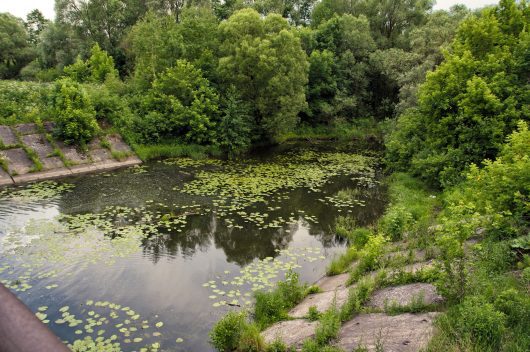
Solid Waste Management

Better solid waste management reduces air and water pollution caused by open burning and chemical seepage. Open burning in backyards or public spaces is a common method of waste disposal, particularly in developing nations. This is due to a lack of efficient disposal infrastructure. Open burning releases copious amounts of carbon monoxide and dioxide, carcinogens and other air pollutants detrimental to human and environmental health.

Improve Sanitation

Improved sanitation decreases chemical and waste runoff, reduces the risk of disease and creates a better environment for people, plants and animals.

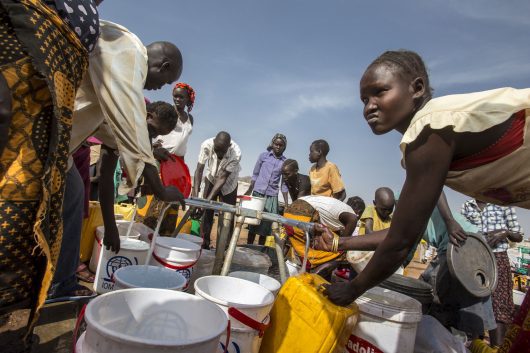
Adequate sanitation is essential to human health, but approximately 2.5 billion people still lack access to it. This is a problem because human waste often leaches into surrounding groundwater when it is not disposed of properly or latrine pits are unlined. Also, if the latrine is lined, when it is emptied, it remains common practice to simply dump its contents into the nearest body of water, or onto the ground. This poses great health risks in terms of disease epidemics, bacterial infection and water pollution.

Water Purification

Water purification helps alleviate water pollution and decrease the risk of bacteria harmful to the habitat and the people who inhabit it.

Nearly 85 percent of the world’s population lives in the driest parts of the planet and 783 million people lack access to a clean water source. Due to inadequate sanitation and practices like open burning, there is a far greater risk to the poorest, most rural segments of the population living in developing nations when it comes to disease outbreak and water contamination. However, water pollution does not just hurt people, it also hurts the plants and animals that draw their source of life from the same body of water. Water purification would decrease the risks to human and environmental health posed by chemical runoff, waste seepage and acid rain.

Ending Harmful Practices

Education spreads awareness that would help reduce the frequency of harmful practices such as open burning, slash-and-burn agriculture or overfishing.

Slash-and-burn agriculture is a common method of food production in which a patch of land is cleared of its forestation, after which the remaining vegetation is burned. This is an agricultural practice that accelerates deforestation. Meanwhile, overfishing hurts future fish populations making it harder to secure food in the future and damaging the marine ecosystem from which the fish came. Education is a simple method to help alleviate the problems that are posed by poverty and the environment by promoting conscientiousness and discouraging unsustainable practices such as these.

Caring about people entails caring about the environment in which they live. Helping one helps the other. Currently, many developing nations are forced to resort to practices that hurt the environment out of sheer necessity or lack of knowledge concerning their effects. Therefore, efforts to reduce problems surrounding poverty and the environment act cyclically to benefit each other.

– Jaime Viens

Photo: Flickr

April 30, 2017
https://borgenproject.org/wp-content/uploads/borgen-project-logo.svg 0 0 Borgen Project https://borgenproject.org/wp-content/uploads/borgen-project-logo.svg Borgen Project2017-04-30 01:30:482024-12-13 17:57:51Poverty and the Environment: Ways to Help the World’s Poor
Global Poverty, Sanitation, Water

Access to Clean Water and Sanitation Services in Burundi

Access to Clean Water and Sanitation Services in Burundi

In 2015, Burundi’s gross domestic product (GDP) per capita was the lowest in the world at 276 U.S. dollars, and its population density was one of the highest at 435 people per square kilometer of land area, according to The World Bank. As a result, everyday things such as access to clean water and sanitation services in Burundi can be a struggle for the people who live there.

Burundi is located in the Great Lakes Region of East Africa and has been called “the Heart of Africa” because of its geographic shape and location. Although landlocked, the country’s freshwater sources are plentiful. Nearly the entire western border of Burundi lies on the shores of Lake Tanganyika, and most of its northern side is bordered by the Kanyaru River. Other bodies of water there include the Malagarasi, Rusize and Ruvubu Rivers; and Cohaha and Rwero Lakes.

A 2010 Water and Sanitation Profile on Burundi from the United States Agency for International Development (USAID) reported that their renewable internal freshwater availability was equal to just under 330,000 gallons per person every year. With a number as large as this, how is it possible that access to clean water and sanitation services in Burundi is a struggle?

The Problems Facing Access to Clean Water and Sanitation Services in Burundi

Since 1962, four wars have taken place in Burundi, the results of which have directly impacted their water sector infrastructure. “Burundi’s water supply and sanitation (WSS), sector endured years of destruction brought on by sabotage and neglect during the civil war and its aftermath […] several kilometers of water pipes, connections and 80% of installed meters were destroyed,” according to USAID. This caused many people to use untreated water, which led to waterborne diseases, triggering higher mortality rates.

In 2000, world leaders adopted the U.N. Millennium Declaration along with seven goals, known as the Millennium Development Goals (MDG), which had targets for addressing extreme poverty. Goal number 7, target 10, was to “halve, by 2015, the proportion of people without sustainable access to safe water and basic sanitation.” USAID reported that in 2008, 72% of urban and rural populations in Burundi had access to drinking water, and 46% had access to sanitation services. There was significant improvement seen in the availability of sanitation services, with 1.2 million people gaining access since 1990.

Although Burundi was likely to meet the MDG, targeting sustainable access to drinking water, it was not expected to reach the “water and sanitation services in Burundi” target. However, the Government of Burundi was working to improve their WSS sector by creating new policies to increase coverage throughout the country, according to the USAID. Past and current donors contributing to the WSS sector include the African Development Bank (AfDB), the United Nations International Children’s Emergency Fund (UNICEF) and The World Bank.

– Kristin Westad

Photo: Flickr

December 20, 2016
https://borgenproject.org/wp-content/uploads/borgen-project-logo.svg 0 0 Borgen Project https://borgenproject.org/wp-content/uploads/borgen-project-logo.svg Borgen Project2016-12-20 01:30:182024-12-13 17:56:18Access to Clean Water and Sanitation Services in Burundi
Development, Global Poverty, Sanitation

How the Mobile for Development Utilities Program Works

Sanitation_mobile
Funded in 2013 by the U.K. Department for International Development, the Mobile for Development Utilities Program (M4D) makes basic utility services in impoverished areas accessible, affordable and reliable.

The M4D Utilities Program currently exists in 24 global markets, 15 of which are in Africa. It addresses Goal 6 (ensuring access to water and sanitation) and Goal 7 (ensuring affordable energy) of the 17 U.N. sustainable development goals.

The program improves access to water, sanitation and energy services through five channels: mobile infrastructure, sales and distribution, machine-to-machine connectivity, mobile payments and mobile services.

  • Mobile Infrastructure
    Infrastructure such as telecom towers supply service to surrounding communities. The development of these towers will give more people access to mobile networks and enable entrepreneurial phone charging services in remote areas. This ensures convenient, affordable energy to relevant areas, addressing Goal 7 of the U.N. Global Goals.
  • Sales and Distribution
    Focus on sales, distribution and branding can help Mobile Network Operators (MNOs) improve sales and reach underserved communities. Utility service providers and MNOs can work together and co-brand for efficiency, bringing energy, water and sanitation solutions to underserved areas. This addresses Goals 6 and 7 of the U.N. sustainable development goals.
  • Machine-to-Machine Connectivity
    Under the M4D Utilities Program, machine-to-machine connectivity will be more efficiently monitored, increasing technological reliability and allowing service providers and entrepreneurs insight into customer behavior. For example, service providers can collect bills online. However, according to a GSMA Mobile for Development Utilities Program report, machine-to-machine connectivity needs to be more reliable. Improving reliability addresses Goal 6 of the U.N. sustainable development goals, ensuring access to water and sanitation.
  • Mobile Payments
    Pay-as-you-go (PAYG) is a form of mobile payment that has had great success so far under the M4D Utilities Program. It simplifies payment methods for customers and creates a digital record of payments for those without payment history. So far, 650,000 mobile-connected pay-as-you-go solar home systems have been delivered worldwide. This addresses Global Goal 7, ensuring reliable energy, but according to the GSMA report mobile money will need to be even more accessible in order to help meet the U.N.’s sanitation requirements.
  • Mobile Services
    Mobile services such as voice commands, SMS and apps can be used to improve customer service and field operations as well as to optimize supply chains. Communities, agents and service providers alike can use these mobile services to form strong foundations of customer support. However, in order to meet U.N. sanitation goals, mobile services could also make an effort to unite stakeholders and align with the government on its sanitization-improving policies.

The M4D Utilities Program demonstrates that using mobile technology actually works. It has raised more than $58 million in private sector funding and has so far benefited more than 1.9 million people. For example, in 2013 the solar energy company Mobisol used its pay-as-you-go solar business to provide 250,000 people in Rwanda and elsewhere with clean solar energy to power their households.

Improving access to energy, water and sanitation will improve the health and education of people in impoverished places. The Mobile for Development Utilities Program can help bring us closer to the target of universal and equitable access to reliable and safe energy, water and sanitation by 2030.

– Liliana Rehorn

Photo: Flickr

November 28, 2016
https://borgenproject.org/wp-content/uploads/borgen-project-logo.svg 0 0 Borgen Project https://borgenproject.org/wp-content/uploads/borgen-project-logo.svg Borgen Project2016-11-28 01:30:352024-05-27 23:54:23How the Mobile for Development Utilities Program Works
Global Poverty, Sanitation, Water

Sanitation and Water for All: A Global Partnership

Sanitation and Water for All: A Global Partnership
Access to clean water is a basic human right. Sanitation and Water for All (SWA) is a partnership made up of over 150 country governments, research and learning institutions, external support agencies and civil society and private sector organizations that aims to drive political action that will contribute to accountability and the effective use of resources.

The organization aims to universally and permanently provide safe water and sanitation services across the globe. By fighting for secure and equitable access to clean water, SWA is motivating governments to prioritize this issue and strengthening legislative presences relating to clean water and sanitation.

SWA recognizes the failings of the global community in providing the world’s people with adequate sanitation facilities and access to clean water as well as the implications of these failings. Approximately 2.4 billion people live today without access to quality sanitation means, and 663 million still lack improved water sources.

Both children and adults die every day from diseases caused by unsafe water or lack of appropriate sanitation and hygiene. These diseases strain already ineffective health systems in vulnerable communities and take away from economic productivity. When women and girls are required to walk dozens of miles each week to obtain clean water, they effectively miss out on educational opportunities or chances to become involved in civil society.

The SWA was initially founded with the purpose of addressing water-related millennium development goals and aiding countries that were struggling to reach these goals. Now the partnership focuses on the sustainable development goals (SGDs) related to the WASH sector and is committed to playing a crucial role in reaching SDG targets.

The SWA identifies and outlines the issues involved with the inability to address the WASH (water, sanitation and hygiene) sector of policy. Investment in WASH often competes with the financial need to support health, education, infrastructure and other aspects of society.

Another issue is that while many countries have decided upon comprehensive plans relating to water and sanitation, they often lack the capacity to implement these plans in an influential way. This inability to successfully put plans into action can defer investors and political leaders from further contributing to the WASH-related legislature. On the other hand, many countries still lack the information and aid to even construct a plan to protect and improve water, sanitation and hygiene.

Through the alignment of donors behind transparent and accountable means of national planning, the harmonization of countries and organizations, mutual accountability and management of results, the SWA hopes to continuously advocate both domestically and internationally for people who lack clean water or sanitation.

Sanitation and Water for All aims to “turn the current situation around by creating a virtuous cycle of robust planning, institutional strengthening, better resources utilization and higher investment” that has the likelihood of creating an environment where everyone has access to clean water and effective sanitation measures.

– Peyton Jacobsen

Photo: Flickr

November 11, 2016
https://borgenproject.org/wp-content/uploads/borgen-project-logo.svg 0 0 Borgen Project https://borgenproject.org/wp-content/uploads/borgen-project-logo.svg Borgen Project2016-11-11 01:30:212024-05-27 23:54:13Sanitation and Water for All: A Global Partnership
Global Poverty, Sanitation, Sustainable Development Goals, Water

Water For People: Ending Water Scarcity Through Infrastructure

Ending Water ScarcityAn international organization believes in ending water scarcity in developing countries. Water For People is a non-profit that focuses on establishing proper infrastructure and sanitation to remedy the lack of clean water around the globe.
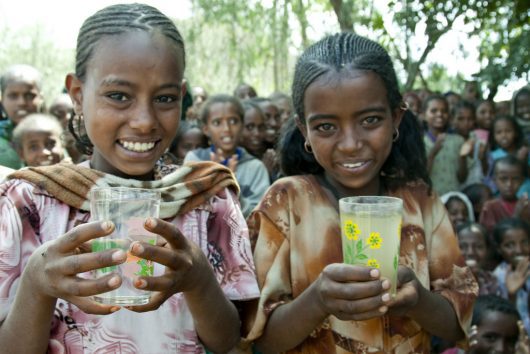
They are especially concerned with the impact water scarcity has on women and girls, who often bear the burden for water collection.

They work at the ground level to build trust within the community and by tailoring their solutions to the issues at hand. Local governments, community members and business owners are all required to co-invest, ensuring that all partners have an equal stake in the results. This collaboration allows for a better understanding of the abilities of a community to finance and maintain the projects for the future.

The U.N. states that more than 2 billion people are affected by water scarcity. That figure is expected to rise due to climate change. This is especially problematic for developing countries struggling with poverty.

According to Jim Yong Kim, president of the World Bank Group, “Economic growth in some regions could be cut by as much as six percent because of water scarcity alone.”

That is why one of the U.N.’s Sustainable Development Goals for 2030 includes improved access to clean water and sanitation. There are several targets for doing so, including moves to:

  1. End open defecation, which can threaten the viability of water resources;
  2. Improve water quality by reducing pollution, dumping and the release of hazardous materials;
  3. Protect and restore water-related ecosystems;
  4. Support the participation of local communities in improving water management;

This last target is where Water For People comes in. The organization, which was established by the American Water Works Association (AWWA) in 1991, has provided access to clean water in nine developing countries: Honduras, Guatemala, Nicaragua, Bolivia, Peru, Malawi, Rwanda, Uganda and India.

Sanjay Wijesekera, UNICEF’s global head of water, sanitation and hygiene put it simply: “No matter where you look, access to clean drinking water makes a difference in the lives of people.”

The fight for ending water scarcity is ongoing but there continues to be an increase in access to clean water thanks to Water For People.

– Sabrina Santos
Photo: Flickr

October 31, 2016
https://borgenproject.org/wp-content/uploads/borgen-project-logo.svg 0 0 Borgen Project https://borgenproject.org/wp-content/uploads/borgen-project-logo.svg Borgen Project2016-10-31 01:30:252024-12-13 17:55:51Water For People: Ending Water Scarcity Through Infrastructure
Sanitation, Water

Addressing Problems with Water Quality in Russia

Water Quality in Russia
During the final preparation stages for the 2014 Sochi Olympics, journalists covered the peculiar conditions of their and the athletes’ living quarters for the duration of the sporting event, including water quality in Russia.

A Chicago Tribune reporter posted a picture on social media of the warning near the sink of her hotel bathroom that read, “Do not use on your face because it contains something very dangerous.” Another reporter tweeted, “peach juice…oh wait, that’s water,” and many other reporters joined in on the spectacle.

However, what seemed entertaining for the press was and continues to be a harsh reality for Russians. Over 10 million people lack access to quality drinking water in Russia and 60 percent of the country’s population drinks water from contaminated wells.

Russian regulatory bodies report that between 35 percent and 60 percent of the country’s drinking water reserves do not meet sanitary standards. Forty percent of surface water and 17 percent of underground spring water are not safe enough to drink. Russian rivers and lakes contain pollution from agricultural and industrial waste in amounts that exceed all minimum standards.

The poor water quality in Russia is due to the “thousands of companies [that] have dumped dangerous chemicals into rivers and lakes, and these pollutants are inevitably absorbed into the human body through water and food,” according to Greenpeace. Waterborne illness as a result of such pollution behaviors contributes to the deaths of more than 3 million people every year — more deaths than those a war causes.

Greenpeace also reports that “companies are not adopting clean technologies, and the government is ineffectual when it comes to preventing criminals from poisoning the water.” However, many Russian companies have started to improve water quality, offering an increasing number of water purifying technologies.

Traditional water purification methods include ozonation, chlorination, UV treatment, ultrafiltration and electrolysis. The use of chlorine and ozone is dangerous because they are poisonous substances and the use of ultraviolet light is inefficient because it purifies water only near the source. Thus, the safest and most effective is electrolysis.

A team of former equipment suppliers to Russia’s largest energy company, Gazprom, and the Novosibirsk Institute of Mining have created and implemented a new water purification system called the Aquifer. The system uses electrolysis to kill bacteria and stirs the water intensively to give it more oxygen. Because the system has no moving parts, the Aquifer will improve the water quality in Russia while reducing energy consumption.

Experts predict that the demand for water supply will exceed the global supply by more than 50 percent by 2025 if there is no improvement in access to quality drinking water. Sustainable solutions like the Aquifer give hope to reversing the trend.

– Ashley Leon

Photo: Flickr

October 31, 2016
https://borgenproject.org/wp-content/uploads/borgen-project-logo.svg 0 0 Borgen Project https://borgenproject.org/wp-content/uploads/borgen-project-logo.svg Borgen Project2016-10-31 01:30:172024-12-13 17:55:53Addressing Problems with Water Quality in Russia
Education, Global Poverty, Sanitation

The Link Between Sanitation and Education for Girls

The Link Between Sanitation and Education for Girls
More than 50 percent of all primary schools in developing countries lack access to adequate water and sanitation facilities. On top of that, nearly two-thirds of all primary schools lack gender-specific toilets. These two statistics alone highlight why education for girls is an issue; young women all over the world are dropping out of school and missing educational opportunities due to sanitation options.

According to Sameer Pathak, a senior manager of communications for Coca-Cola India and the head of Support My Schools, “Lack of functional sanitation leads to accelerated dropout of girls. When girls enter puberty, it becomes an affront to their dignity to defecate in public. And one in five will drop out.”

This problem should be easy to fix; however, very few consider access to water and proper sanitation integral when addressing the low levels of education in the poorest parts of the world. Access to water or a proper toilet in schools can be the game-changing factor for a girl looking to complete even the most basic educational levels.

Girls who attend schools without water and sanitation facilities can miss up to 40 days of class due to menstruation in a single academic year. Forty days of missed school leaves them at a total disadvantage and hinders their ability to achieve their full potential scholastically and beyond.

India’s Prime Minister Narendra Modi made it clear in his Aug. 14, 2014, Independence Day address that all schools must have separate facilities for girls within the year.

Clean water, private toilets and good hygiene in schools constitute the greatest opportunity to bring about change and transformation for young girls and their right to a proper education.

Education for girls should not be hindered by toilets. “The most important impact of this is to actually bring the community together, to educate the public and teach the communities,” said Pathak.

– Keaton McCalla

Photo: Flickr

October 31, 2016
https://borgenproject.org/wp-content/uploads/borgen-project-logo.svg 0 0 Borgen Project https://borgenproject.org/wp-content/uploads/borgen-project-logo.svg Borgen Project2016-10-31 01:30:082024-05-27 23:53:54The Link Between Sanitation and Education for Girls
Page 22 of 29«‹2021222324›»

Get Smarter

  • Global Poverty 101
  • Global Poverty… The Good News
  • Global Poverty & U.S. Jobs
  • Global Poverty and National Security
  • Innovative Solutions to Poverty
  • Global Poverty & Aid FAQ’s
Search Search

Take Action

  • Call Congress
  • Email Congress
  • Donate
  • 30 Ways to Help
  • Volunteer Ops
  • Internships
  • Courses & Certificates
  • The Podcast
Borgen Project

“The Borgen Project is an incredible nonprofit organization that is addressing poverty and hunger and working towards ending them.”

-The Huffington Post

Inside The Borgen Project

  • Contact
  • About
  • Financials
  • President
  • Board of Directors
  • Board of Advisors

International Links

  • UK Email Parliament
  • UK Donate
  • Canada Email Parliament

Get Smarter

  • Global Poverty 101
  • Global Poverty… The Good News
  • Global Poverty & U.S. Jobs
  • Global Poverty and National Security
  • Innovative Solutions to Poverty
  • Global Poverty & Aid FAQ’s

Ways to Help

  • Call Congress
  • Email Congress
  • Donate
  • 30 Ways to Help
  • Volunteer Ops
  • Internships
  • Courses & Certificates
  • The Podcast
Scroll to top Scroll to top Scroll to top