• Link to X
  • Link to Facebook
  • Link to Instagram
  • Link to TikTok
  • Link to Youtube
  • About
    • About Us
      • President
      • Board of Directors
      • Board of Advisors
      • Financials
      • Our Methodology
      • Success Tracker
      • Contact
  • Act Now
    • 30 Ways to Help
      • Email Congress
      • Call Congress
      • Volunteer
      • Courses & Certificates
      • Be a Donor
    • Internships
      • In-Office Internships
      • Remote Internships
    • Legislation
      • Politics 101
  • The Blog
  • The Podcast
  • Magazine
  • Donate
  • Click to open the search input field Click to open the search input field Search
  • Menu Menu

Archive for category: Sanitation

Global Poverty, Sanitation

Improving Sanitation in Bihar

Bahir Sanitation Improvements Start with Altered Behavior
It takes 21 days to form a habit according to plastic surgeon Maxwell Maltz who coined the phrase. Although we would like to believe that a set time frame exists, it’s not possible that we should all be capable of fitting the mold of such a vague theory.

While we often consider willpower and the ability to create a positive environment as antidotes for whatever aspect of our lives we desire change, these changes may just be scraping the surface of a much larger problem.

Forming a new behavior may be less about implementing physical changes and more about addressing behavioral ones — especially for Indians adhering to the cultural patterns associated with open defecation within their communities.

Presently, with 60 percent of rural Indian people defecating in the open, the call for eradicating this practice throughout the entirety of the country is underway.

Many changes have been occurring, particularly in the Nadia district of West Bengal, where openly defecating in public has been banned by the district and enforced by the “Para Nazardari,” which translates to Neighborhood Monitoring Committee.

Here it is not uncommon to see members of this committee with a whistle at the ready, patrolling previously popular sites for the newly banned practice.

According to an article by the World Bank, the Nadia district is now the first open-defecation-free (ODF) district in West Bengal thanks to the synergy of an “intense behavior change campaign, leadership of the local government, and strong community monitoring.”

This is a great achievement that has occurred within just 18 months of the launch of the State’s Nirmal Bangla (Clean Bengal) Mission, which strives to create an ODF State by 2017. India’s Prime Minister foresees a future that is ODF in India through the country’s new flagship program, Swachh Bharat Mission – Grameen (Clean India Mission – Rural).

Improving sanitation practices would greatly boost the country’s economy, which loses about $53.8 billion a year to premature mortality, healthcare costs and health-related productivity losses.

The World Health Organization (WHO) reports that one in every 10 deaths can be attributed to poor sanitation and hygiene, with nearly 44 million children under five stunted.

Due to the successful implementation of programs within West Bengal, the World Bank has stationed a 32-member delegation in Bihar to work their magic. Learning from West Bengal, Bahir will also adopt a “collective behavioral change” rather than a “subsidy-driven toilet construction.”

The programs have realized that the areas which consider themselves ODF are more valuable than the number of toilets constructed themselves.

Addressing solutions for behavior change has been carried out through various campaigns that involved having religious speakers discuss the need for sanitation, doctors prescribing toilets as “the first medicine” and schools taking cleanliness oaths by encouraging good hygiene, such as the proper use of toilets and handwashing.

Villages have also adopted a communal approach in their aim for an ODF India. “Community volunteers mapped people’s habits and captured their attention through puppet shows, cycle rallies, sanitation quizzes, repurposed catchy tunes from popular film songs and hot air balloons with sanitation messages.

New toilet users formed a massive human chain stretching 122 km, signifying a change in the way people viewed open defecation,” says the World Bank.

Ultimately, by addressing behavioral changes regarding sanitation in Bihar and West Bengal, it may one day be possible for India to be declared an ODF country.

– Nikki Schaffer

Sources: WHO, World Bank, James Clear
Photo: Pixabay
October 4, 2015
https://borgenproject.org/wp-content/uploads/borgen-project-logo.svg 0 0 Borgen Project https://borgenproject.org/wp-content/uploads/borgen-project-logo.svg Borgen Project2015-10-04 08:06:262024-05-27 09:27:46Improving Sanitation in Bihar
Disease, Global Health, Global Poverty, Sanitation, Water

Trachoma in Ethiopia: What It Is and What Is Being Done

Trachoma_in_Ethiopia
Trachoma is an endemic disease in Oromia, the largest and most populous state of Ethiopia. The disease has caused an impairment of vision in 2.2 million people in the world as the leading infectious cause of blindness.

The combination of poor sanitation and minimal access to clean water increases the risk of infection and nearly 229 million people in the world live in high-risk areas. Women are more susceptible to infectious trachoma than men because of their higher exposure to young children who are typically the bearers of the disease.

Eighty percent of Ethiopians live in rural areas with poor sanitation and little access to clean water. Seventy-six million people in Ethiopia are at risk of contracting blinding trachoma and another 800,000 people are at risk of irreversible blindness if they do not receive surgery.

Ethiopia only has 120 ophthalmologists and the majority of them work in Addis Ababa. The country is ill-equipped to destroy the disease on its own although the surgical procedures are simple and quick.

The Fred Hollows Foundation is a non-governmental organization focused on eliminating preventable blindness. The organization’s work in Ethiopia is focused mainly on the implementation of the SAFE strategy recommended by the World Health Organization in Oromia’s 225 endemic districts.

SAFE is an acronym for Surgery, Antibiotics, Face-washing, and Environmental improvements. Changing the way people manage personal hygiene has been one of the ways they are trying to reduce the risks of trachoma.

The Fred Hollows Foundation and its partners treated 5,637,226 people with antibiotics and performed more than 7,000 lid surgeries in 2014 alone. They also trained 36 surgeons and 10 clinic support staff as well as supplied $126,747 worth of equipment used to treat trachoma in Ethiopia.

According to the Fred Hollows Foundation website, “What is needed [to eliminate trachoma in Ethiopia] is a significant scale-up of the SAFE strategy, including resources, expertise and commitment from regional and local governments and development organizations in the water, sanitation and hygiene sectors.”

– Iona Brannon

Sources: Al Jazeera, The Fred Hollows Foundation, World Health Organization
Photo: Flickr

October 4, 2015
https://borgenproject.org/wp-content/uploads/borgen-project-logo.svg 0 0 Borgen Project https://borgenproject.org/wp-content/uploads/borgen-project-logo.svg Borgen Project2015-10-04 07:21:502024-05-27 09:27:41Trachoma in Ethiopia: What It Is and What Is Being Done
Global Poverty, Sanitation, Women

Meet Flo

Meet Flo
When living in poverty, girls beginning the transition into puberty can face difficult challenges. Due to being unable to access affordable sanitary items, many young girls have to use reusable menstrual pads, and the process is often time-consuming and dangerously unsanitary. The lack of access to cheap and affordable sanitary products is a scary thought for many women, and for these young girls, it has consequences beyond hygiene.

In many countries with extreme poverty there are stigmas against puberty for women, and many young girls fear their menstrual cycle and will drop out of school in order to hide at home. The students from the Art Center College of Design created a solution to this problem.

Meet “Flo”, an invention that allows young women living in extreme poverty a multi-purpose device for more effectively dry, sanitary and discreetly concealed reusable menstrual pads. Flo was created by the James Dyson Foundation, which released a video explaining how the device makes periods safer and less disruptive to young women’s lives.

On the website, the James Dyson Foundation talks about what makes Flo so unique. A statement released states, “Girls will have access to dry, clean pads that can reduce illness and will be more comfortable, both physically and emotionally. Girls will be able to work around their menstrual cycle and be in control…By having control over their menstrual cycle, girls do not have to give up their dreams and can be empowered to pursue what they want to become.”

– Elizabeth Steadman

Sources: GOOD, Metro, James Dyson Award,
Photo: Flickr

October 2, 2015
https://borgenproject.org/wp-content/uploads/borgen-project-logo.svg 0 0 Borgen Project https://borgenproject.org/wp-content/uploads/borgen-project-logo.svg Borgen Project2015-10-02 08:32:182024-06-04 04:33:49Meet Flo
Global Health, Global Poverty, Sanitation

Global Alliance To Addressing Open Dumpsites

open dump site
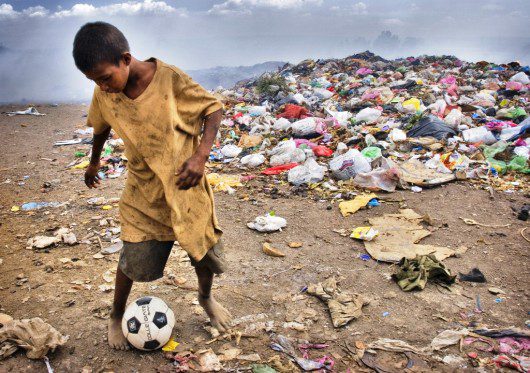
Due to a lack of investment in recycling infrastructure and an insufficiently trained workforce, most of the 42 million metric tons of e-waste generated in 2014 were discarded into open dumpsites.

This is according to the new report by the International Solid Waste Association (ISWA), “Waste health: The tragic case of dumpsites.”

The report, in which 373 toxic waste sites in India, Indonesia and the Philippines were analyzed, declared open dumpsites as a global health emergency affecting millions of people in developing countries who already lack sufficient sanitation infrastructure.

Results indicated that problems regarding open dump sites are still widespread in developing countries today, 40 years after such issues were originally developed.

On top of the existing concerns, the developing world is seeing an unparalleled rise in the unregulated dumping of discarded electronics and medical waste.

Overall, 40 percent of the world’s waste goes to open dumpsites, and the 50 largest sites affect 64 million people globally. The uncontrolled burning of the waste, which causes gases and toxins to be released into the air, is a substantial threat to human life.

Open dump sites also cause financial burdens, as their overall cost is in the tens of billions of dollars.

According to the report, almost nine million people are at risk of being exposed to lead, asbestos and other hazardous materials from the open dumpsites analyzed. Additionally, it was revealed that those open sites have a bigger impact on life expectancy than malaria.

Malaria causes a combined loss of 725,000 healthy years in India, Indonesia and the Philippines, whereas exposure to hazardous materials from open dumpsites is estimated to cause a loss of 829,000 healthy years.

As a result of the report, several officials called for a global alliance to address the problem of open dumpsites.

“The recommendations of this report are clear: the international community has an urgent task ahead in closing waste dumps globally, for the sake of populations affected by them because they live in or near them, but also because all the world’s people are breathing in the toxins released by burning on open dumps,” David Newman, the president of the ISWA, said in the foreword of the report.

– Matt Wotus

Sources: International Solid Waste Association, Resource Magazine,
Photo: care4kidsworldwide

October 1, 2015
https://borgenproject.org/wp-content/uploads/borgen-project-logo.svg 0 0 Kim Thelwell https://borgenproject.org/wp-content/uploads/borgen-project-logo.svg Kim Thelwell2015-10-01 09:45:312024-05-27 09:27:54Global Alliance To Addressing Open Dumpsites
Global Poverty, Sanitation, Water

Sanitary Improvements for Millions in Ethiopia

Ethiopians embrace sanitary improvements
Going to the bathroom: a subject that, as humans, we like to pretend doesn’t even happen most of the time. However, for rural Ethiopians living without the most basic sanitary structures, an initiative to improve latrine use was one which needed to happen.

In the village of Kurt Bahir, local carpenter Kefale Demelash used his skills to build a two-room latrine for public use within the village after becoming inspired to initiate sanitary improvements after a diarrhea outbreak plagued the area.

For this particular latrine, one side was designated for women and the other side for men. Smaller pits were also dug for children which would be safer than customary ones, encouraging the young to start the habit of using them early.

With just the establishment of this one latrine, others were motivated to create their own. Soon, with the help of Demelash, 126 latrines were created within Kurt Bahir, all meeting the international standards for improved sanitation. These new latrines would help reduce the risk of communicable diseases, which are commonly spread by unsafe sanitation practices.

Demelash was able to receive training as a village coordinator through the government’s Health Extension Program (HEP), which trains and deploys members into rural areas of the country to educate and promote sanitary practices.

Further progress in sanitation is also being made through the Water and Sanitation program (WSP), a five-year multi-donor partnership between the World Bank and the government.

The World Bank describes the program goals as “scaling up its capacity, improving sanitation and hygiene services and increasing access by the poor in 104 selected districts in Amhara, Oromia SNNP and Tigray regional states.”

Ethiopia has suffered through many different kinds of communicable diseases attributed to poor hygiene and sanitation. However, with the execution of the government’s Universal Access Plan (UAP), it is hoped that sanitation can be improved by 100 percent.

Currently, more than 7 million people have been educated on healthy sanitation practices by 1,782 trainers and implementers under the program. Prior to the program, open defecation was a recurring problem, but with the organization in full-swing, 52 percent of the kebeles (an administrative unit within Ethiopia) in the woreda (districts) are defecation free.

Taking a creative approach in the program’s expansion strategies, prizes were offered within villages. This was initiated by a local “savings mechanism” through the woreda, where the prize money was given to the best innovator, performer or implementer of an improved sanitation project.

With this strategy in mind, neighbors found inspiration in one another, which ultimately led to improvements across woredas.

The World Bank found “in Mecha and Medebayzana woredas, more than 55,000 households now have improved latrines, and communities have also started applying the sanitation lessons they learned in their daily lives, such as keeping their homes, compounds and communities clean, making themselves safer and healthier.”

– Nikki Schaffer

Sources: World Bank, We Are Water
Photo: Flickr

September 20, 2015
https://borgenproject.org/wp-content/uploads/borgen-project-logo.svg 0 0 Borgen Project https://borgenproject.org/wp-content/uploads/borgen-project-logo.svg Borgen Project2015-09-20 01:30:372020-06-25 10:33:20Sanitary Improvements for Millions in Ethiopia
Global Poverty, Sanitation

Portable, Rentable Toilets: An Innovative Solution to Ghana’s Sanitation Crisis

sanitation_crisis
Today, cities in Africa are rapidly urbanizing. The population is growing faster than infrastructure is being built, which causes a shortage of sewage and sanitation systems, especially in impoverished areas.

Over 2.6 billion people do not have access to sanitation. Every day, thousands of tons of feces are not disposed of properly, polluting water and spreading diseases among women and children.

Every year, 1.8 million people die from waterborne diarrheal diseases. Ninety percent of these deaths are children under five-years-old.

Clean Team Ghana has made it their mission to fix this sanitation crisis. The company has invented an inexpensive toilet service to help low-income citizens.

“People of all ages, regardless of circumstance, deserve the right to perform their necessary bodily functions in safety, without the risk of spreading or contracting disease. Our mission is to ensure as many people as possible can enjoy that right,” explains the company’s website.

Kumasi, where Clean Team Ghana has focused its efforts, is Ghana’s second-largest city; here, rapid urbanization and development issues are rampant. Unplanned slum areas do not have any type of sewer system. Half of the population of Kumasi uses public toilet blocks.

According to How We Made it in Africa, public toilet blocks are “often over-burdened, poorly maintained and unhygienic. Those that cannot brave the stench would prefer to do their business openly–or in packets that are then thrown into gutters, polluting water supplies and causing diseases such as cholera.”

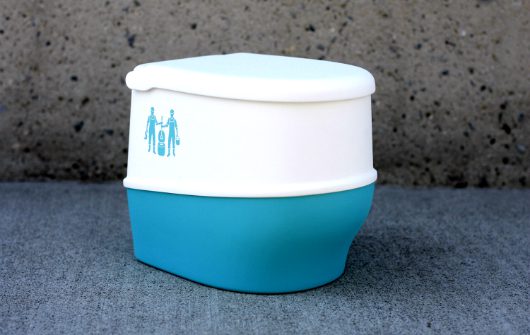
Families without proper sewage can rent out Clean Team Ghana’s portable toilets, which the company installs and treats three times per week, exchanging the used canister for a fresh one. The dirty canister is treated at a processing site and reused.

One toilet provides service to five to seven people, and only costs $2.50 to install. The service costs a family $8.90 a month for one toilet. Clean Team Ghana offers weekly payment services, as very few customers earn monthly salaries.

“Most of our customers are traders and earn daily sums of money, maybe even weekly sums. So we have account managers who visit these customers at least once a week so they can pay in bits,” said Clean Team Ghana CEO Abigail Aruna.

The toilets are odorless: the company uses chemicals to mask the smell. They do not require water or pipes, only some space.

So far, Clean Team Ghana has installed over 1,000 toilets across Kumasi. The company aims to install 1,500 more by the end of 2015. Clean Team Ghana markets their toilets by going door-to-door in settlements and explaining how the toilet works.

Aruna believes that in the next few years, Clean Team Ghana can install 10,000 toilets in Kumasi. Once they reach 10,000, the company plans to expand to other cities in Ghana.

“Research is ongoing around that. There are regional differences and we will take them into consideration before we expand. The situation in Kumasi is quite different from the situation in Accra or in Tamale, or in other towns,” explained Aruna.

Clean Team Ghana began when the nonprofit Water and Sanitation for the Urban Poor partnered with Unilever, a company that produces cleaning agents. IDEO.org designed the toilets, and at the beginning of 2012, the project was funded by the Stone Family Foundation and the Bill & Melinda Gates Foundation.

“Innovative ideas like ours are really necessary in Ghana and other African countries that cannot afford to put adequate sewage systems in place in their towns and cities. So I think the future of Clean Team Ghana and other sanitation companies is very bright–and is a way forward to solve the sanitation issues in Africa for now,” said Aruna.

– Margaret Anderson

Sources: How we made it in Africa, Clean Team Toilets
Photo: Core 77

August 7, 2015
https://borgenproject.org/wp-content/uploads/borgen-project-logo.svg 0 0 Borgen Project https://borgenproject.org/wp-content/uploads/borgen-project-logo.svg Borgen Project2015-08-07 09:28:092020-07-08 10:59:02Portable, Rentable Toilets: An Innovative Solution to Ghana’s Sanitation Crisis
Global Poverty, Sanitation, Water

Water in Rio May Pose Health Threat to Athletes

health_threat_to_athletesThe World Health Organization (WHO) is asking the International Olympic Committee to run new tests on the water in Rio de Janeiro. The request comes after an investigation by the Associated Press (AP), which determined the waterways still pose a health threat to athletes.
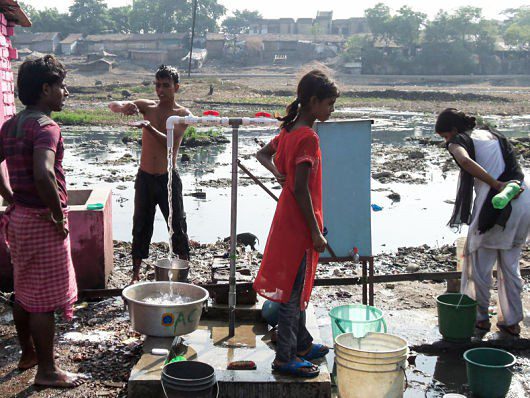
Previous evaluations of the water only checked for bacteria, not viruses, which is what WHO wants to change.

An AP investigation into Rio’s waterways found that pollution levels are still high in places where canoeists, sailors, swimmers and triathletes will compete in the 2016 Summer Olympics.

The AP reported that some athletes training in Rio have fallen ill with symptoms including fever, vomiting and diarrhea because of dangerous levels of viruses and bacteria in the waterways.

The results of the investigation are disappointing for Rio, as being chosen to host the Olympics was supposed to motivate the city to clean its waterways. A newly installed sewage system was thought to be able to handle 80 percent of raw sewage, but as of March, the treatment rate was only 49 percent.

Still, the results aren’t necessarily a surprise, as Rio mayor Eduardo Paes confirmed to Brazil’s SporTV in March that Guanabara Bay, the waterway that is supposed to host the sailing events, would not be clean by the time the games start.

The waterway has become a place where some of the untreated sewage from the city’s 12 million residents ends up.

Rodrigo de Freitas Lake in Central Rio, a second venue for rowing, canoeing, triathlon and open-water events, also poses a health threat to athletes, with tests showing high levels of viruses in the water.

In response to the results of the investigation, the world sailing governing body said it would conduct its own independent testing of Rio’s waterways.

– Matt Wotus

Sources: The Washington Post 1, The Washington Post 2, The Washington Post 3
Photo: The Guardian

August 5, 2015
https://borgenproject.org/wp-content/uploads/borgen-project-logo.svg 0 0 Borgen Project https://borgenproject.org/wp-content/uploads/borgen-project-logo.svg Borgen Project2015-08-05 01:32:422024-12-13 18:04:41Water in Rio May Pose Health Threat to Athletes
Global Poverty, Nonprofit Organizations and NGOs, Sanitation

Talking to a Member of Engineers Without Borders

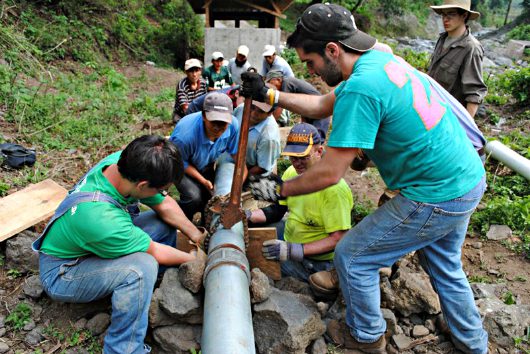
Engineers_without_BordersEngineers Without Borders (EWB) is an organization that works with communities to help them find an engineering solution that addresses their needs. Right now, there are about 15,000 volunteers working for EWB, and they work for long-term sustainability in developing areas. They travel to places where engineering projects are needed and institute solutions for the problems that people are facing.

A year after the project is complete, volunteers evaluate the impact of the project on the community. Years after that, a final team travels to the community to learn from their successes and see how they can improve.

The members of EWB are varied, and their volunteers include everyone from first-year engineering students to professionals. In order to learn more about EWB, I interviewed Anushka Rau, the President Elect of the EWB chapter at the California Institute of Technology:

1. What is Engineers Without Borders?

“As the EWB mission statement says, Engineers without Borders USA is an organization whose main goal is to partner with communities around the world and enable them to meet their basic human needs, as well as equipping project leaders to solve the world’s most pressing challenges.”

2. What is the impact of Engineers Without Borders?

“They build sustainable projects in developing communities. Right now, there are about 600 Engineers Without Borders projects around the world.”

3. Where does Engineers Without Borders work?

“We work in more than 40 countries. Some of the countries where EWB is working include Peru, Moldova, Macedonia, India, Nepal, Senegal and Rwanda.”

4. What is your chapter of Engineers Without Borders currently working on?

“My chapter of Engineers Without Borders is about to go to Ilam, Nepal to implement our design for a spring source protection system. Infant mortality is a huge problem in the region, and it’s often due to diarrheal diseases caused by poor water quality and sanitation. We surveyed the region and took water quality samples to determine which spring to protect, then made a design and a set of governing principles for it, working closely with the community on the latter. All EWB chapters partner with an NGO in the area, which lets them complete projects that actually fulfill a community’s most pressing needs.”

5. Why do you think Engineers Without Borders is not as well-known as its counterpart, Doctors Without Borders?

“Medicine has a more obvious impact for humanitarian organizations—many people wouldn’t consider engineering to directly help communities, but it’s actually very important.”

6. What do the global poor need the most in terms of engineering?

“I think the global poor need to be listened to by the engineers helping them and they need a sustainable solution to problems associated with their most basic needs. One of the best things about EWB is the partnership with local NGOs—this ensures that chapters can communicate with the community and build a project that matters to them and will have impact for years after the engineers leave.”

7. How can we help with Engineers Without Borders?

“You can donate to the organization EWB on their website. Most chapters also take donations on their personal websites. If you’re a professional engineer, you could look for a college chapter in your area to mentor, or a professional one to join.”

– Ashrita Rau

Sources: Engineers without Borders, CalTech
Photo: Elsevier

August 1, 2015
https://borgenproject.org/wp-content/uploads/borgen-project-logo.svg 0 0 Borgen Project https://borgenproject.org/wp-content/uploads/borgen-project-logo.svg Borgen Project2015-08-01 07:23:312024-12-13 17:52:11Talking to a Member of Engineers Without Borders
Global Poverty, Sanitation

Innovation Countdown 2030

Innovation_Countdown_2030

As many under-developed countries begin to enter the global market, the struggles their people face are becoming increasingly apparent. Luckily, an amazing NGO called Innovation Countdown 2030 is seeking to fund ideas today that may save the developing world tomorrow.

Innovation Countdown 2030 (IC2030) is an NGO that is mainly focused on advancing global health. In collaboration with PATH, one of the leading innovators in global health, IC2030 has created “a platform to identify, evaluate, and showcase high-impact technologies and interventions that can transform global health by 2030.” The ideas that they have supported include technologies that will add vitamins to rice, long-lasting injectable contraceptives, and devices that can help newborn baby’s breathe better. All of these ideas were the result of massive crowd-sourcing efforts and will inevitably help the world towards reaching the United Nations Sustainable Development Goals (SDGs). People from all over the world submitted their ideas and a panel of expert’s selected 30 innovations which they believed could feasibly change the world in the next 15 years.

For years, innovation has been focused on development. From new types of tractors all the way to robot vacuums, technology development has been focused on developing a better life for those living in developed countries. As the years have gone by, people have become increasingly aware of how reliant we are on one another and the importance of bringing up the developing world in order to benefit the whole world. We are living in a time where children still die from completely treatable diseases and malnourishment, but what if there was a way to provide a sustainable form of nourishment, and a reliable place of medicine? What if people no longer had to worry about basic survival and could instead focus on innovation of their own? This is the philosophy behind many development and global health NGOs, presumably including IC2030, and is one that can only lead to a more prosperous global community.

Much of IC2030’s work focuses on pregnant women and their newborn babies as in line with the SDGs. One invention in particular, a uterine balloon tampon, is predicted to save the lives of over 150,000 pregnant women. The idea was developed in the United States in Massachusetts General Hospital and essentially utilizes water pressure to prevent hemorrhaging in a mother who have just given birth. This device is made out of a simple condom and a catheter and can be filled with water to create pressure. It is low-cost and highly effective, making it an ideal candidate for IC2030’s top 30 devices.

Several of the innovations included on IC2030’s list have already been utilized in more rural areas of Africa and have already begun to save lives. The organization is being led by PATH and has received funding from the Bill & Melinda Gates Foundation, the U.S. Agency for International Development, as well as the Norwegian Agency for Development Cooperation.

Hopefully this organization gains more support, but so far it has succeeded in carrying out its goal of saving lives and promoting innovation throughout the world.

– Sumita Tellakat

Sources: IC2030, NPR
Photo: NPR

July 31, 2015
https://borgenproject.org/wp-content/uploads/borgen-project-logo.svg 0 0 Borgen Project https://borgenproject.org/wp-content/uploads/borgen-project-logo.svg Borgen Project2015-07-31 09:59:382020-07-06 12:32:25Innovation Countdown 2030
Education, Health, Sanitation, Women

Why Menstrual Hygiene Remains a Challenge in Nepal

Menstrual-Hygiene

Old taboos surrounding menstruation die hard in Nepal where, until 2005, Chhaupadi, the practice of ostracizing women and girls from their own homes during their periods, did not face a national ban.

The Nepalese Supreme Court declared Chhaupadi illegal in 2005. However, the practice still retains a foothold in the country’s western region and myths surrounding women’s natural cycles remain a national problem.

Chhaupadi, which is based upon the belief that menstruating women are toxic, prohibits menstruating women and girls from inhabiting any public space, socializing with others and using water sources that other people share.

According to the tradition, women and girls on their periods are also banned from sharing food or touching anyone. Rather than eating with their families, these “untouchables” must remain outside the house and keep their distance while a family member throws boiled rice to them, like they would to a dog.

The effects of Chhaupadi are extremely dehumanizing and psychologically stressful, with young girls told that they will bring bad luck on their families if they enter their own homes during menstruation. In communities where the tradition is still practiced, even women and girls who do not believe they are truly toxic fear disobeying the rules of Chhaupadi and incurring the anger of family or village elders.

In addition to being emotionally degrading, Chhaupadi also places women and girls at risk for rape, abduction, snakebites and animal attacks, as well as malnourishment. Forced to sleep in rickety huts without adequate insulation or ventilation, women and girls face illness exacerbated by the cold and unhygienic conditions or asphyxiation from improperly ventilated heat sources.

Even in regions where Chhaupadi is not practiced, taboos surrounding menstruation still affect Nepalese women and girls. The Nepali Times reports that today many households in Kathmandu still prohibit menstruating women from entering kitchens or temples, eating with the family and sleeping on their beds.

These practices condition women to view their bodies as unclean and to devalue themselves because they take the blame for any misfortune their families may experience. Chhaupadi’s legacy contributes to a wider disregard of women and girls that places them in danger.

A prime example comes in the wake of the recent earthquake that devastated Nepal. Although the refugees require many resources that aid organizations are working to meet, menstrual hygiene is far from the minds of most.

Female refugees have few sanitary resources. Some reuse the same menstrual products for days, washing them in unfiltered water sources in the same areas where refugees openly defecate.

“There are no proper toilet facilities or private spaces in the camps,” reported Dr. Hema Pradhan, consultant gynecologist and fistula surgeon at the Kathmandu Model Hospital. She called the sanitary practices in these camps “worrisome.”

Ursula Singh, a program officer for women’s rights NGO Loom Nepal, stated, “We went to the village of Kavre on the outskirts and saw some girls sitting huddled in tents, covered in blood.” Most girls, she elaborated, wait until dark to step outside and dispose of or attempt to sanitize menstrual products.

“We want them to at least practice hygienic disposal because they are in super exposed conditions and that puts them at a higher risk to contract diseases,” Singh said. However, the only hygienic means of disposing of sanitary napkins is often digging holes and burying them in the ground.

In a culture with superstitions such as the belief that any plant a menstruating woman touches will die, disposing of menstrual products and trying to manage period blood and symptoms in an area with as little shelter or privacy as a refugee camp must be a traumatic experience. Lingering stigmas place women under intense scrutiny and many would rather risk disease, injury or abuse than suffer negative social responses to their behavior while menstruating.

– Emma-Claire LaSaine

Sources: Time, Nepali Times, IRN News, Reuters, New York Times
Photo: Time

July 31, 2015
https://borgenproject.org/wp-content/uploads/borgen-project-logo.svg 0 0 Borgen Project https://borgenproject.org/wp-content/uploads/borgen-project-logo.svg Borgen Project2015-07-31 08:21:302024-05-27 09:26:12Why Menstrual Hygiene Remains a Challenge in Nepal
Page 24 of 29«‹2223242526›»

Get Smarter

  • Global Poverty 101
  • Global Poverty… The Good News
  • Global Poverty & U.S. Jobs
  • Global Poverty and National Security
  • Innovative Solutions to Poverty
  • Global Poverty & Aid FAQ’s
Search Search

Take Action

  • Call Congress
  • Email Congress
  • Donate
  • 30 Ways to Help
  • Volunteer Ops
  • Internships
  • Courses & Certificates
  • The Podcast
Borgen Project

“The Borgen Project is an incredible nonprofit organization that is addressing poverty and hunger and working towards ending them.”

-The Huffington Post

Inside The Borgen Project

  • Contact
  • About
  • Financials
  • President
  • Board of Directors
  • Board of Advisors

International Links

  • UK Email Parliament
  • UK Donate
  • Canada Email Parliament

Get Smarter

  • Global Poverty 101
  • Global Poverty… The Good News
  • Global Poverty & U.S. Jobs
  • Global Poverty and National Security
  • Innovative Solutions to Poverty
  • Global Poverty & Aid FAQ’s

Ways to Help

  • Call Congress
  • Email Congress
  • Donate
  • 30 Ways to Help
  • Volunteer Ops
  • Internships
  • Courses & Certificates
  • The Podcast
Scroll to top Scroll to top Scroll to top