• Link to X
  • Link to Facebook
  • Link to Instagram
  • Link to TikTok
  • Link to Youtube
  • About
    • About Us
      • President
      • Board of Directors
      • Board of Advisors
      • Financials
      • Our Methodology
      • Success Tracker
      • Contact
  • Act Now
    • 30 Ways to Help
      • Email Congress
      • Call Congress
      • Volunteer
      • Courses & Certificates
      • Be a Donor
    • Internships
      • In-Office Internships
      • Remote Internships
    • Legislation
      • Politics 101
  • The Blog
  • The Podcast
  • Magazine
  • Donate
  • Click to open the search input field Click to open the search input field Search
  • Menu Menu

Archive for category: Sanitation

Disease, Global Poverty, Health, Sanitation, Water

‘Neverthirst’ Projects: Enhancing Water Quality in Cambodia

Numerous 'Neverthirst' Projects Enhancing Water Quality in Cambodia
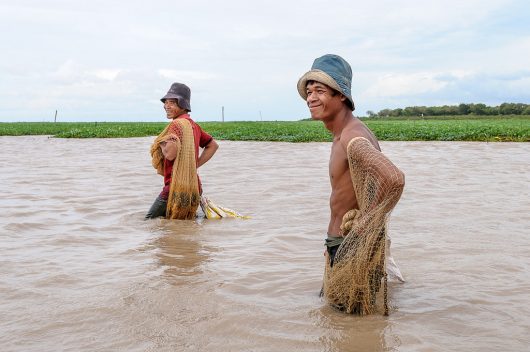
In many regions around the world, millions of people lack access to improved water sources and billions are without proper sanitation materials. In order to combat these harsh realities and situations, many organizations are focused on bringing clean water to those who need it. One of these groups is Neverthirst, an international nonprofit dedicated to providing clean and living water solutions throughout North Africa and Southern Asia. To accomplish this, the organization creates numerous projects, and currently, its focus is on the improvement of water quality in Cambodia.

Located in Southeast Asia, the country and its inhabitants are faced with a distressing problem. The issue of water quality in Cambodia is truly a serious one, but with the assistance of Neverthirst, water quality for all Cambodians can be enhanced. But what projects are being implemented, and how do they improve water quality in Cambodia?

Cambodia Biosand Filter and Latrine Project

The Cambodia Biosand Filter and Latrine Project addresses the issue that although many people have access to water, the quality of the water makes it unsafe and often unsuitable for necessary actions such as consumption.

Drinking unsafe and dirty water can potentially lead to devastating health problems, including diarrheal diseases. Diarrhea alone kills more than 800,000 children under five annually, or about 2,200 children every day. This initiative strives to slow the transmission and development of further diarrheal diseases, thus reducing the number of deaths in children under five in Cambodia.

Cambodia Well Project

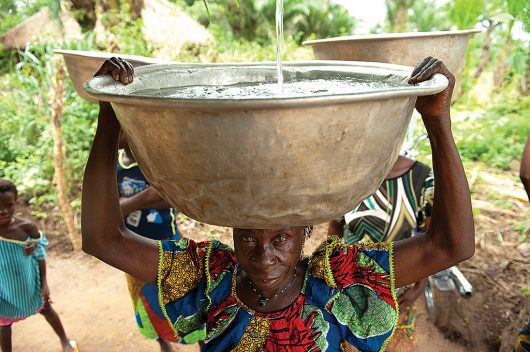
Some Cambodians have access to clean water, however, transporting water can be extremely difficult. Usable water is usually located a great distance from the community, making it nearly impossible to carry a significant amount of water per trip.

Through the Cambodia Well Project, Neverthirst hopes to improve accessibility and availability of clean water substantially by installing high-quality hand pumps that can last up to 10 years. In addition to the installation of hand pumps, the organization also gives the communities and villages further funds for any required repairing of the hand pump in the future and instructs users on how to maintain it over time.

The creation and use of these pumps will greatly increase the water quality in Cambodia that is received and utilized by the various communities.

Cambodia School Project

In the immense province of Mondulkiri, many schools and children don’t have access to safe drinking sources. For a portion of schools in the region, schools’ only source of water is a shallow well. Neverthirst, through both the Cambodia School Project and the School Rain Tank Project, is attempting to instill a two-step process that will greatly improve schools’ access to clean water.

First, the construction of a concrete rain tank will collect and provide water for an average of 250 students per school. After the completion of the rain tank, education on safe drinking water is next. Teaching children the importance of clean drinkable water is important to the prevention of future disease outbreaks.

Conclusion

Overall, Neverthirst has created a massive 5,537 projects, serving more than 390,000 people in a total of five countries. Currently, the organization has projects established in Sudan, South Sudan and India.

Each year, more than three million people die from water-related causes, including inadequate sanitation and poor hygiene. With the assistance of Neverthirst, countries, communities and villages like those in Colombia can be aided in its rebuilding efforts and enhance its water quality and safety.

Water quality in Cambodia is just one issue, and Neverthirst is dedicated to helping in all corners of the world.

– Jordan J. Phelan

Photo: Flickr
October 11, 2016
https://borgenproject.org/wp-content/uploads/borgen-project-logo.svg 0 0 Borgen Project https://borgenproject.org/wp-content/uploads/borgen-project-logo.svg Borgen Project2016-10-11 01:30:272024-05-27 23:53:46‘Neverthirst’ Projects: Enhancing Water Quality in Cambodia
Developing Countries, Sanitation

Education and Improving Sanitation in Developing Countries

Sanitation in Developing Countries
Sanitation in developing countries is a very pressing issue. Globally, almost 2.5 billion people live without proper sanitation and almost 1 billion of these people practice open defecation. Poor sanitation not only leads to the rapid spread of disease, but can also affect education and the environment.

Though improper sanitation affects both rural and urban communities, open defecation is more common in rural communities, often resulting from traditional beliefs or a lack of education.

While traditional beliefs are important, some beliefs can be damaging in terms of sanitation. For instance, some communities in Madagascar believe that using an outhouse can cause an expecting mother to lose her child. There is also a common belief that defecating in the ground is disrespectful to those who have died and been buried.

These myths create an environment where poor sanitation practices like open defecation are commonplace. Unfortunately, these practices can lead to contaminated food and water sources. Consuming contaminated food or water causes high rates of bacterial diarrhea, which is the second largest killer of children under the age of five in the world.

To fight the effects of beliefs that lead to poor sanitation in developing countries, education programs must be implemented. In fact, in addition to avoiding deaths due to diarrhea, communities benefit in multiple ways from hygiene and sanitation education.

According to the World Health Organization, when educated about the link between sanitation, hygiene, health and economic development, communities have a higher demand for improved sanitation facilities. Additionally, when children are not sick from consuming contaminated food or water, they are able to attend school more often and focus on their studies.

For children in developing countries, every moment of schooling can have a large impact. It has even been found that one additional year of schooling can increase a woman’s income potential by up to 20 percent in developing countries.

Yet in order for education effectively improve sanitation in developing countries, it must be implemented correctly. Education has the largest impact on children, and they can take hygiene practices home and show them to their family members. When children eventually grow up to be parents, they can raise their children with the hygiene practices instilled in them.

Education is even possible in illiterate communities. One organization offers sanitation education in the form of puppet shows.

Global sanitation has a lot of room for improvement, but by implementing simple yet effective hygiene and sanitation education programs, the world could take an important step forward in the fight against not only poor sanitation in developing countries, but global poverty as a whole as well.

– Weston Northrop

Photo: Flickr

September 26, 2016
https://borgenproject.org/wp-content/uploads/borgen-project-logo.svg 0 0 Borgen Project https://borgenproject.org/wp-content/uploads/borgen-project-logo.svg Borgen Project2016-09-26 01:30:492024-05-27 09:34:52Education and Improving Sanitation in Developing Countries
Sanitation, Water

WaterAid: Improving Water Quality in Pakistan

WaterAid
Safe water is essential to the survival of people across the world. Clean water is crucial — not only for drinking but cooking, washing and bathing as well. For these reasons, it is particularly essential for developing countries to have access to clean water.

Pakistan is a developing country with a population of more than 188 million people. Water quality in Pakistan is ranked 80 out of 122 nations. Nearly 16 million people in Pakistan do not have access to clean water and 68 million do not have access to adequate sanitation services.

The Pakistan Council of Research in Water Resources published its final report in 2007 on national water quality in Pakistan. The study examined the condition of 357 water samples from 23 major cities and 22 bodies of water. Water samples in every major city evaluated were declared unsafe.

Drinking contaminated water can result in numerous diseases including diarrhea, bacterial dysentery, cholera and typhoid. According to the World Health Organization (WHO), between 25 and 30 percent of all hospital admissions in Pakistan are related to waterborne bacteria and parasitic conditions.

It is estimated that 250,000 Pakistani children under the age of five die every year due to waterborne diseases. Diarrhea is the second highest cause of death among children ages 1 month to 5 years.

Poor water quality in Pakistan is primarily due to population growth, urbanization and political instability. Due to these challenges, Pakistan has experienced critical water shortages, droughts and flooding which have been steadily decreasing agricultural production.

However, international non-profit organizations like WaterAid are working to transform the lives of Pakistanis by providing them with access to safe water, sanitation and hygiene. Water quality in Pakistan has improved greatly within the past 10 years of WaterAid’s involvement in the country.

A few of the WaterAid projects in Pakistan include:

  • Improving WASH services in schools
  • Rainwater harvesting
  • Water services for poor urban communities
  • Improving urban sanitation

Between 2015 and 2016 alone, WaterAid reached 230,000 people in Pakistan with safe water and over 520,000 people with improved sanitation. According to the World Bank, the population of rural Pakistanis with access to improved water sources has increased to 90 percent.

Water quality in Pakistan is improving due to the efforts of organizations like WaterAid. WaterAid’s focus on innovative approaches, water monitoring and sustainability has saved the lives of thousands of Pakistanis.

– Kristyn Rohrer

Photo: Flickr

September 13, 2016
https://borgenproject.org/wp-content/uploads/borgen-project-logo.svg 0 0 Borgen Project https://borgenproject.org/wp-content/uploads/borgen-project-logo.svg Borgen Project2016-09-13 01:30:302024-05-27 09:34:54WaterAid: Improving Water Quality in Pakistan
Global Poverty, Health, Sanitation

Access to Private Toilets Improves Sanitation

India_toilet_health_water

For those living in developed countries, having access to private toilets is taken for granted. Having access to something as simple as private toilets changes lives drastically but about 2.3 billion people or a third of the world does not have access to them. This puts their health, education and safety at risk, as reported by The Huffington Post.

According to The Indian Express, approximately 60 percent of people in India do not have access to safe toilets. The people most affected by this are women and girls. They have no other choice but to relieve themselves outdoors. This puts them at a higher risk of getting assaulted or contracting diseases due to a lack of sanitation.

If private toilets exist in a community or neighborhood, they tend to be far and few between. More often than not, many schools in developing regions do not have sanitary facilities. When girls attending school don’t have access to sanitation, they have no privacy to deal with their needs and end up having to miss class when menstruating. This will often discourage girls from going to school at all, to avoid embarrassment and falling behind in school.

However, even if there is access to clean water and a private bathroom, many will continue to use the outdoors. According to The Guardian, particularly in India, many men still prefer to go outside to defecate, even if they have already installed a toilet at home. It gives them a moment of quiet as they survey their farmlands.

The results of using the outdoors as a toilet are negative. The practice continues to pollute already scarce water sources and to spread diseases such as cholera, tuberculosis, and diarrhea. Other health risks include malnutrition and childhood stunting, which impairs 161 million children every year, according to a report by the World Health Organization and UNICEF.

A study released by WaterAid states that nearly 40 percent of India’s children are stunted. Stunting can affect not only their lives but the country’s prosperity in the future. Also, diarrheal diseases kill 700,000 every year.

Despite various governments’ pledges to install toilets in every home, little has been done to improve education about the damages that unsanitary practices cause.

Prime Minister Modi of India has made the issue of sanitation a top priority. In 2014 Modi launched the Swachh Bharat Mission, which translates to Clean India. This project aims to ensure a toilet in every home by 2019 and to teach people about the long-term consequences of using proper sanitation. In order to provide everyone with access to toilets, India would have to build 100 million.

March 22 was United Nations World Toilet Day. There is the hope that the day will increase awareness and educate about the importance of access to toilets.

– Michelle Simon

Photo:  Flickr

April 16, 2016
https://borgenproject.org/wp-content/uploads/borgen-project-logo.svg 0 0 Borgen Project https://borgenproject.org/wp-content/uploads/borgen-project-logo.svg Borgen Project2016-04-16 01:30:292024-12-13 17:54:17Access to Private Toilets Improves Sanitation
Global Poverty, Sanitation

Sanitation as a Human Right: Recognized by UN

sanitation as a Human RightThe end of the year saw the recognition of sanitation as a human right, separate and distinct from other acknowledged human rights, by the United Nations General Assembly. The Assembly adopted a resolution early in December 2015, recognizing the distinct nature of sanitation as a human right. Previously the right of sanitation was linked to the right to safe drinking water. This combination right was only recognized by the U.N. in 2010.
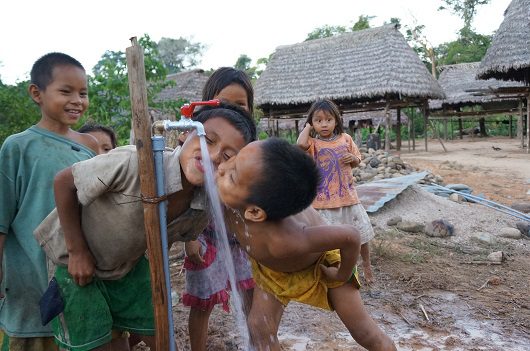
While both the rights continue to have a strong relation, Léo Heller, a U.N. Special Reporter focused on the human rights of safe drinking water and sanitation, said the split would help governments and non-governmental organizations to focus more specifically on what needs to be done. Having sanitation as a standalone right demonstrates that sanitation is not solely tied to water.

“It gives people a clearer perception of the right, strengthening their capacity to claim this right when the State fails to provide the services or when they are unsafe, unaffordable, inaccessible or with inadequate privacy,” said Heller.

The U.N. reports that more than 2.5 billion people worldwide, one-third of the total world population, live without access to proper toilets.

The World Health Organization (WHO) states that hygienic sanitation facilities are crucial for public health. With this in mind, the U.N. hopes that the effect of recognizing sanitation as a human right will curb a major source of deadly infections.

A recent U.N. study found that more than 443 million school days are lost every year due to sanitation and water-related issues. Inadequate sanitation facilities are a common barrier for school attendance, particularly for girls.

“It is hoped that this will have a direct impact on those women, children, people with disabilities and marginalized individuals and groups who currently lack access to sanitation . . . an opportunity to highlight their plight,” Mr. Heller said.

Heller continued saying, “The move to making sanitation its own human right means that we can directly address the particular human rights challenges associated with sanitation.”

Progress in sanitation is being made. According to the World Health Organization (WHO), in 2015, 68 percent of the world’s population had access to improved sanitation facilities including flush toilets and covered latrines, compared with 54 percent in 1990.

Despite reports like this, the 2015 Millennium Development Goal target to halve the proportion of the population without access to improved sanitation facilities was missed by almost 700 million people.

The worldwide provision of clean water and sanitation is the sixth of the 17 Sustainable Development Goals (SDGs) adopted by the U.N. in September. These goals are a part of the ambitious 2030 Agenda for Sustainable Development.

– Kara Buckley

Sources: UN, WHO
Photo: Wikipedia

January 22, 2016
https://borgenproject.org/wp-content/uploads/borgen-project-logo.svg 0 0 Borgen Project https://borgenproject.org/wp-content/uploads/borgen-project-logo.svg Borgen Project2016-01-22 01:30:282024-06-11 02:48:17Sanitation as a Human Right: Recognized by UN
Development, Global Poverty, Health, Sanitation, Water

Water, Sanitation and Hygiene: Better Nutrition for The Poor

sanitation_and_hygieneExtreme poverty makes access to clean water and nutritional food difficult for millions of people. Sanitation and hygiene also suffer as survival becomes the focus.
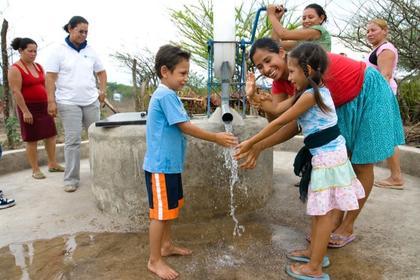
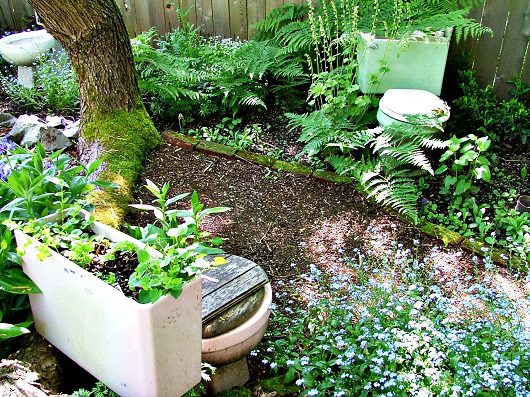
However, poor sanitation and hygiene often lead to diseases which cause diarrhea and fluid loss. These conditions can also result in malnutrition as more food is being expelled rather than processed and used. With a little help and knowledge, sanitation, hygiene and clean water can reverse the tide of disease and improve nutrition.

Take for example the situation in the Yarou Plateau village in Mali from the USAID blog:

“People used to use any open space for bathroom needs. Flies could easily find fecal matter lying around, and from there land on food, spreading diseases like diarrhea and intestinal worms. Fecal matter in open areas also contaminated the groundwater, which villagers use for drinking and preparing food. Diarrhea can worsen malnutrition, and the undernourished already have weakened immune systems — making them more susceptible to intestinal infections and more severe episodes of diarrhea.”

To combat the malnutrition these diseases cause, the World Health Organization has set some global targets for 2025:

  1. 40 percent reduction in the number of children under the age of five who have had their growth stunted
  2. 50 percent reduction in the number of women of a reproductive age who experience anemia
  3. 30 percent reduction in babies born with a low birth weight
  4. A halt in the increase of childhood obesity
  5. 50 percent increase in breastfeeding exclusivity during the first six months of a baby’s life

USAID says malnutrition “is an underlying factor in almost half of all child deaths” and also increases a child’s chance of dying from preventable illnesses such as pneumonia and diarrheal disease. These diseases cause anemia, loss of appetite and a decrease in the body’s ability to properly absorb nutrients.

Two years ago, conditions in the Yarou Plateau village changed for the better. The village has improved its sanitation by building more than 60 latrines and fixing ones they already had.

In addition to Yarou Plateau, more than 179 other villages have been able to improve sanitation and hygiene through support from USAID’s project WASHplus.

The program works not only to improve water, sanitation and hygiene but also to reduce “diarrheal diseases and malnutrition.” WASHplus introduces and promotes proper hand washing, water treatment and food preparation and storage.

Where proper sanitation and hygiene practices are initiated and properly implemented, the poor and those living in underdeveloped countries can avoid illness and get the nutrition they need to grow, thrive and break the cycle of poverty.

– Drusilla Gibbs

Sources: USAID, WHO
Photo: Flickr

December 5, 2015
https://borgenproject.org/wp-content/uploads/borgen-project-logo.svg 0 0 Borgen Project https://borgenproject.org/wp-content/uploads/borgen-project-logo.svg Borgen Project2015-12-05 01:30:502024-05-27 09:28:26Water, Sanitation and Hygiene: Better Nutrition for The Poor
Development, Global Health, Global Poverty, Sanitation

Water and Sanitation for Nicaraguans

Water and Sanitation for Nicaraguans


The Nicaraguan urban poor have a long-standing history of lacking access to basic services, such as water and sanitation. In the capital city, Managua, the Greater Managua Water and Sanitation Project (PRASMA) was devised to create new water and sanitation infrastructure throughout the city.

This includes a system of low-cost sewage networks designed to target the poor regions of Managua. Although the PRASMA was a solid start, city officials realized that more was needed if they hoped to achieve their goal of reaching universal piped water connectivity.

The Ministry of Finance and Public Credit (MHCP) reached out to the World Bank for funding to create the Nicaraguan Water and Sewerage Enterprise (ENACAL) in order to expand 15,798 water and 19,716 sewer connections to some of the poorest households.

Before ENACAL was launched, only 26.5 percent of households had access to piped water. Only 1.2 percent had in-house toilets. The majority of the population, more than 72 percent, used latrines. The remaining portion of the population concerned city officials the most, with more than 26 percent lacking access to any sanitation services.

Among the poorest neighborhoods, it was not uncommon to see raw sewage running down the streets. In other impoverished neighborhoods, even for those connected to piped-in water, service was less than reliable. Some households received water as infrequently as two hours per day.

Since collecting $20 million in credit and $20 million in grant money from the World Bank to get ENACAL operational, the project has improved service reliability for 161,896 Nicaraguans as well as increasing the overall financial sustainability of its operations.

The World Bank reported a little less than half of the money was used to expand and add additional infrastructure. The remainder of the funds were used to optimize technical efficiency and strengthen institutional activities.

Moving forward, ENACAL is developing the Master Plan for Operational Efficiency in Managua. This focuses on non-revenue water reduction and the optimization of energy efficiency.

With the assistance in the funding of $300 million from the World Bank and other international donors, continued improvements under the Program for Human Water and Sanitation will take place over the course of the next 15 years.

Thus far, ENACAL has benefited 62,295 residents and improved the percentage of households with access to water for 16 or more hours a day to 72 percent.

– Claire Colby

Sources: Central America Data, World Bank
Photo: University of Colorado Boulder

November 26, 2015
https://borgenproject.org/wp-content/uploads/borgen-project-logo.svg 0 0 Borgen Project https://borgenproject.org/wp-content/uploads/borgen-project-logo.svg Borgen Project2015-11-26 01:30:452024-12-13 18:05:26Water and Sanitation for Nicaraguans
Developing Countries, Global Poverty, Health, Sanitation, United Nations

UN World Toilet Day is Here!

UN_World_Toilet_Day_is_Here
The name might result in a few giggles, but the importance behind the U.N.’s World Toilet Day is no laughing matter.

The annual day of action was established in order to bring awareness to sanitation issues around the world. It is estimated that 2.4 billion people — or approximately one out of every three people in the world — still do not have access to adequate sanitation.

Furthermore, around 1 billion people are forced to practice open defecation, due to a widespread lack of toilets and proper sanitation in several developing countries.

Poor sanitation and open defecation pose obvious and significant health risks, spreading diseases such as diarrhea, cholera and dysentery. It is estimated that approximately 1,000 children under the age of five die every day due to diarrhea and chronic undernutrition attributed to poor sanitation and hygiene practices where they live.

The lack of public toilets is also linked to violence against women, as women are more at risk of sexual assault when they must venture out alone into secluded places after dark to relieve themselves.

Sanitation is often termed a “silent crisis” as it has evaded the extent of media coverage and awareness devoted toward other key development issues. World Toilet Day seeks to address this lack of attention and was established with the exact purpose of dispelling the taboos, disgust and discomfort associated with discussing and addressing global sanitation issues.

World Toilet Day was initially established by the World Toilet Organization, a group whose main mission is “raising a stink for sanitation” on the world stage. The Organization was founded in 2001 and held its first annual World Toilet Summit on Nov. 19 of that year.UN_World_Toilet_Day

Every year thereafter, the organization has been steadily working to disseminate information and create awareness for sanitation as a topic of conversation on the global development agenda. Jack Sim, a retired Singaporean businessman and founder of the World Toilet Organization, has been hailed for his efforts through the organization to help dispel the taboos associated with openly talking about toilets, sanitation and human waste.

In recognition of the need to emphasize global sanitation issues, the U.N. General Assembly passed the “Sanitation for All” resolution in 2013 designating Nov. 19 to be the official U.N. World Toilet Day. UN-Water has taken the lead in working with governments and stakeholders to expand World Toilet Day in scope and recognition.

The message behind World Toilet Day has found widespread support across the globe, especially within countries currently struggling with serious sanitation issues.

India is one such country, where Prime Minister Narendra Modi recently launched a campaign tackling sanitation issues. Accordingly, India has set an ambitious target to build enough toilets for more than 600 million people by 2019.

In the past, World Toilet Day has had a different focus every year. This year, the theme is “Sanitation and Nutrition,” particularly emphasizing the importance of toilets, clean water and proper hygiene in supporting nutrition and health.

The theme for 2014 was “Equality and Dignity” and in 2012 it was “I Give a Shit, Do You?” Every year, several communities around the world take part in World Toilet Day, hosting awareness and fundraising events in line with the theme, such as the “Urgent Run” marathon-style event.

World Toilet Day is certainly one of the more provocative commemorative days, and it has been an all-around success in using humor and light-heartedness to reframe how we discuss toilets and sanitation issues that still cause trouble for billions.

As the World Toilet Organization notes, “[Today] is the day to stand up (or sit down or squat if you prefer) to do something about it.”

– Jace White

Sources: The Guardian, Sustainable Sanitation Alliance, UN 1, UN 2, UN 3, UN 4, Voice of America, World Health Organization, World Toilet Organization 1, World Toilet Organization 2
Photo: Wikimedia, Flickr

November 19, 2015
https://borgenproject.org/wp-content/uploads/borgen-project-logo.svg 0 0 Borgen Project https://borgenproject.org/wp-content/uploads/borgen-project-logo.svg Borgen Project2015-11-19 01:52:082024-05-27 09:28:21UN World Toilet Day is Here!
Global Poverty, Nonprofit Organizations and NGOs, Sanitation, Water

FACE Africa Fights Poverty in Liberia through Education

FACE_africa

FACE Africa, a nonprofit created by Liberia native Saran Kaba Jones, works to end poverty by alleviating Liberia’s water crisis through educating future leaders.

The organization uses hands-on projects to implement water and sanitation facilities, as well as educate youth about proper health and hygiene rituals. Each year, 12,000 more people gain access to clean water, 25 communities are served and over 200,000 hours of productivity is saved.

Saran Kaba Jones left Liberia when she was eight years old to escape the civil war that killed thousands of people and left millions without a place to live. Jones returned to Liberia in 2008 with a plan to lift under-served communities out of poverty.

Originally, FACE stood for Fund a Child’s Education, but Jones and her colleagues soon realized that the lack of clean drinking water was the number one impediment to a child’s education.

Soon after, they switched gears and focused their efforts on increasing the amount of clean water and sanitation in Liberia and other countries in Sub-Saharan Africa.

FACE Africa uses local resources, materials and labor to come up with solutions for this global epidemic. Once these solutions have proven to be sustainable, FACE Africa transfers ownership of their solutions to locals in Liberia.

Some of their methods include building wells, creating systems to clean water and educating individuals on proper hygiene techniques.

FACE Africa differs from many nonprofits because they form lifelong partnerships with the communities they help. Their mission is to provide 100 percent water coverage to all of Sub-Saharan Africa.

This may require employees at FACE Africa to walk many miles to reach villages cut off from roads and to fetch sand and rocks to build sustainable wells, but the team still strives to incorporate better sanitation systems within remote villages.

Since 2009, FACE Africa has hosted the annual WASH (Water, Sanitation and Hygiene) Gala event. This year, the gala’s goal is to raise $300,000 in support of clean water in Africa.

The gala connects FACE Africa with people from around the world who pull together and combine their efforts to assist those facing challenges with water. FACE Africa continues to help Liberians gain access to clean water to this day.

Since its creation in 2010, FACE Africa has successfully launched multiple projects and has assisted many towns all across Liberia.

– Julia Hettiger

Sources: Face Africa, Black Enterprise, CNN
Photo: Pixabay

November 3, 2015
https://borgenproject.org/wp-content/uploads/borgen-project-logo.svg 0 0 Borgen Project https://borgenproject.org/wp-content/uploads/borgen-project-logo.svg Borgen Project2015-11-03 01:30:202024-12-13 18:05:19FACE Africa Fights Poverty in Liberia through Education
Global Poverty, Sanitation

Bringing Sanitation to the Impoverished Nile Delta

Nile Delta
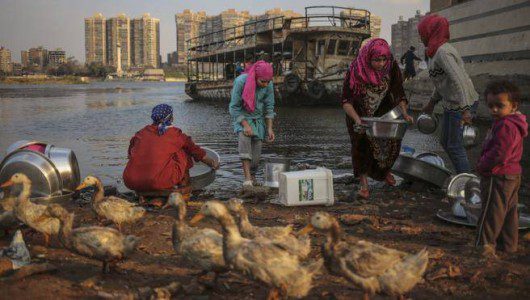
In rural Egypt, the freshwater of the Nile River is a life-giving resource and the main supplier of drinking water; but, due to pollution from human and animal waste, the river is also deadly.

Annually, 5 percent of Egyptian deaths are the result of water contamination and lack of sanitation, according to the World Health Organization (WHO).

Currently, there are as few as 500 rural waste treatment plants in operation throughout more than 5,500 rural villages, with only 37 percent of rural households being covered by a public sewage line.

This lack of sanitation infrastructure is a serious health risk to rural residents because of water contamination. Diarrhea, typhoid fever and E. coli are just a few of the life-threatening illnesses that result from inadequate waste treatment and storage.

In order to fight back against the mounting problem of untreated wastewater seeping or being dumped into the Nile, the World Bank has pledged $550 million to improve existing sanitation facilities in the rural Delta as well as create new sanitation systems throughout Daqahliya, Sharqiya and Beheira in Lower Egypt.

The Sustainable Rural Sanitation Services Program for Results, approved in July 2015 and set to end in October 2020, is designed to restructure the existing centralized system to create a decentralized system, giving local water and sanitation companies (WSCs) within the Nile Delta the ability to expand and cover larger areas while improving their service.

Through this decentralized approach, WSCs are able to generate more local jobs, improving not only the health of poor rural residents but also their economic standing.

Using a bottom-up business model, WSCs are held responsible through a performance-based capital grant (PBCGs) from the Central Government, ensuring empowered employment and quality service to their communities.

The Sustainable Rural Sanitation Services Program for Results is set to serve 769 villages in seven governorates that have a history of releasing untreated wastewater into tributaries of the Nile.

The program will benefit the health and socio-economic status of rural villages as well as aid in preserving the Nile, the largest source of Egyptian freshwater, constituting 98 percent of drinking water.

The program also protects against untreated human waste seeping into the groundwater, leaving impoverished Egyptians with contaminated drinking water. By the end of the five-year period, an estimated 800,000 poor Egyptians will have benefitted from the program.

– Claire Colby

Sources: American Institute of Science, World Bank 1, World Bank 2, WHO, International Water and Technology Conference
Photo: The Chronicle Herald

October 20, 2015
https://borgenproject.org/wp-content/uploads/borgen-project-logo.svg 0 0 Borgen Project https://borgenproject.org/wp-content/uploads/borgen-project-logo.svg Borgen Project2015-10-20 17:30:462024-12-13 18:05:16Bringing Sanitation to the Impoverished Nile Delta
Page 23 of 29«‹2122232425›»

Get Smarter

  • Global Poverty 101
  • Global Poverty… The Good News
  • Global Poverty & U.S. Jobs
  • Global Poverty and National Security
  • Innovative Solutions to Poverty
  • Global Poverty & Aid FAQ’s
Search Search

Take Action

  • Call Congress
  • Email Congress
  • Donate
  • 30 Ways to Help
  • Volunteer Ops
  • Internships
  • Courses & Certificates
  • The Podcast
Borgen Project

“The Borgen Project is an incredible nonprofit organization that is addressing poverty and hunger and working towards ending them.”

-The Huffington Post

Inside The Borgen Project

  • Contact
  • About
  • Financials
  • President
  • Board of Directors
  • Board of Advisors

International Links

  • UK Email Parliament
  • UK Donate
  • Canada Email Parliament

Get Smarter

  • Global Poverty 101
  • Global Poverty… The Good News
  • Global Poverty & U.S. Jobs
  • Global Poverty and National Security
  • Innovative Solutions to Poverty
  • Global Poverty & Aid FAQ’s

Ways to Help

  • Call Congress
  • Email Congress
  • Donate
  • 30 Ways to Help
  • Volunteer Ops
  • Internships
  • Courses & Certificates
  • The Podcast
Scroll to top Scroll to top Scroll to top