• Link to X
  • Link to Facebook
  • Link to Instagram
  • Link to TikTok
  • Link to Youtube
  • About
    • About Us
      • President
      • Board of Directors
      • Board of Advisors
      • Financials
      • Our Methodology
      • Success Tracker
      • Contact
  • Act Now
    • 30 Ways to Help
      • Email Congress
      • Call Congress
      • Volunteer
      • Courses & Certificates
      • Be a Donor
    • Internships
      • In-Office Internships
      • Remote Internships
    • Legislation
      • Politics 101
  • The Blog
  • The Podcast
  • Magazine
  • Donate
  • Click to open the search input field Click to open the search input field Search
  • Menu Menu

Archive for category: Refugees

Global Poverty, Nonprofit Organizations and NGOs, Refugees

TEDx Kakuma Breaks Down Barriers for Refugees

TEDx Kakuma
While the world sits in social turmoil determining how best to help refugees from countries such as Syria, TEDx is attempting to bring light where there is darkness. TED is a non-profit organization that works to share ideas with the masses, inspiring the individual to speak out and be heard.

TED has been prevalent in developed countries in North America and Europe since 1984; however, they have since expanded to include other nations from other continents. TEDx started in 2009 and is run independently. It reaches out to smaller communities around the world. While this expansion was sorely needed and widely welcomed, TEDx surpassed all former barriers by choosing to host TEDx Kakuma, a convention in a Kenyan refugee camp.

TEDx Kakuma

On June 9, 250 TEDx speakers spoke to a group of refugees that have found a temporary home in Kakuma, Kenya. The speakers presenting at the TEDx Kakuma conference included former refugees and scholars who have spent their life’s work studying developing countries, poverty and poverty reduction techniques.

By having these speakers physically come to the refugee camps, it not only provides the speakers with some firsthand experience and knowledge of the people and places they study but also provides the refugees with an opportunity to speak their truth and be heard. Collaboration and such a meeting of the minds is a strong and beneficial way to connect the world, showing us that whether we be the refugee or the TEDx Kakuma speaker, we work for betterment together.

Holding a TEDx within the refugee camp is essential to reminding refugees of something sorely and too often overlooked – their humanity. Speakers, such as athletes from The Refugee Olympic Team and others who grew up in refugee camps, provided the opportunity for hope to grow and for the refugees to be inspired.

Providing A Platform For Refugees

Many of the speakers at the TEDx Kakuma convention represented a program called the LuQuLuQu campaign, showing the strength of refugees all over the world. The program focuses on the displaced due to poverty, violence, war or oppression. The U.N. Refugee Agency, the founders of the campaign, work to protect the rights of those often ignored providing a voice when there often is none.

Providing this platform to refugees in the Kakuma camp allows hope to grow and to foster growth away from poverty and towards a better future. By introducing this campaign in a refugee camp instead of at a regular TED convention where only a few privileged individuals have access to it, TEDx Kakuma is working to end poverty and discrimination at the source rather than focusing on it from a distant perspective.

Refugee status cannot be solely attached to poverty within a nation; however, it can be linked as a common factor. When nations don’t work to provide protection for their citizens, more refugees are created and more poverty spreads into refugee camps. By providing TEDx in a refugee camp such as Kakuma, Kenya, TEDx is working to bring more minds into the poverty discussion. More importantly, TEDx is providing those who are struggling with the opportunity to be a part of the conversation, a factor sorely needed to end poverty.

– Kayleigh Mattoon
Photo: Flickr

August 5, 2018
https://borgenproject.org/wp-content/uploads/borgen-project-logo.svg 0 0 Borgen Project https://borgenproject.org/wp-content/uploads/borgen-project-logo.svg Borgen Project2018-08-05 15:16:312019-09-02 16:46:33TEDx Kakuma Breaks Down Barriers for Refugees
Humanitarian Aid, Refugees

Hope for the South Sudan Refugee Crisis

South Sudan Refugee Crisis

Founded in 2011, the young nation of South Sudan has been fraught with civil war for the past few years, resulting from the conflict between President Kiir and his former Vice President Machar. More than just a political struggle, the rift between Kiir and Machar is connected to ethnic tensions between the Dinka people and the Nuer people; Kiir belongs to the Dinka, and Machar to the Nuer. Ethnic tensions have long existed in the region, but the conflict between the two political officials has ignited these tensions, creating civil war.

The South Sudan Refugee Crisis

The violence created by these warring political leaders has forced civilians to flee the country to escape the bloodshed, resulting in the South Sudan refugee crisis. The number of refugees continues to skyrocket, with over two million refugees reported in 2017. The majority of these refugees are children, many of whom are malnourished and suffering physical and emotional trauma.

Many of these refugees have come to bordering Uganda, itself the site of recent conflict as Joseph Kony used guerilla warfare and child soldiers against the Ugandan government throughout the 1990’s. Former refugees of Uganda often found themselves in the region that is currently South Sudan.

Uganda’s Capacity for Refugees

Having driven Kony out of the country, Uganda not only welcomes the return of its people but is known for its welcoming refugee policy. The country has become a haven for victims of the South Sudan refugee crisis, hosting around a million refugees.

However, Uganda’s friendly refugee policy—which allows refugees the chance to own land and travel freely about the country—is taking a toll. As Uganda hosts more and more refugees, it faces overcrowding and an inability to quickly meet the demands of all the new people. The country’s refugee camp Bidi Bidi, home to over 270,000 people, is the largest refugee camp in the world. To avoid too much congestion at Bidi Bidi, other refugee camps are opening around the country, but the process of being welcomed in Uganda may take several days. This raises the question of Uganda’s limit as the civil war continues in its northern neighbor, South Sudan.

Hope for South Sudan’s Refugees

There is hope, however, for the victims of the South Sudan refugee crisis. As numbers increase in the refugee camps in Uganda and its eastern neighbor, Kenya, the EU has announced a €34 million aid package to help alleviate the burden of hosting the refugees. The majority of the money, following the majority of the refugees, will be headed to Uganda. The aid is meant to help the influx of new refugees from South Sudan, as well as incoming refugees from the Democratic Republic of the Congo. The EU’s assistance will also provide clean water, food and education for the large child population among the refugees.

Whether or not the large influx of refugees in Uganda will continue remains to be seen. On June 27, Kiir and Machar, the leaders of the civil war in South Sudan, agreed to a “permanent” cease-fire under the threat of U.N. sanctions and an arms embargo. If the cease-fire is not violated, the priority of the international community, as well as the South Sudanese government and the warring factions, will be to address the humanitarian crisis and provide aid for the displaced and starving civilians.

With an air of tepid optimism, the EU has also announced €45 million in aid for South Sudan to help the displaced people. This aid is designed to provide food, water and shelter for refugees, and to protect young women from gender-based violence. Should the cease-fire last, refugees will be allowed to return home after five years of conflict and violence, ending the strain on Uganda’s resources. Even if the cease-fire is broken, this moment of peace provides humanitarian aid workers a brief period to focus on civilians and alleviate some of the issues that have been plaguing South Sudan during the war.

– William Wilcox

Photo: Flickr

July 18, 2018
https://borgenproject.org/wp-content/uploads/borgen-project-logo.svg 0 0 Borgen Project https://borgenproject.org/wp-content/uploads/borgen-project-logo.svg Borgen Project2018-07-18 01:30:132024-12-13 17:58:51Hope for the South Sudan Refugee Crisis
Migration, Refugees

9 Facts About the World’s Refugee Crisis

Refugee CrisisOn June 20, the world stood in solidarity with migrants and asylum seekers in observation of World Refugee Day, a time to consider the refugee crisis.
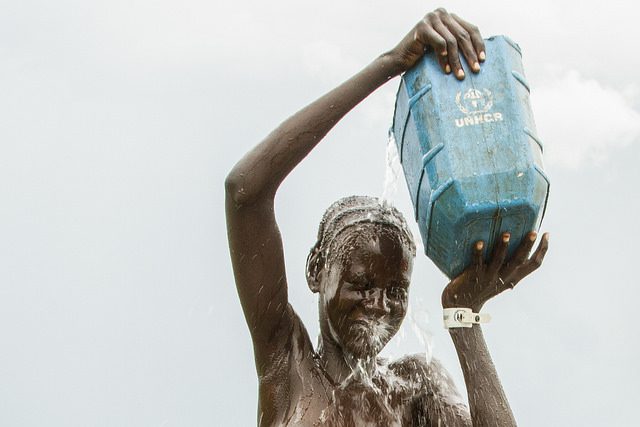
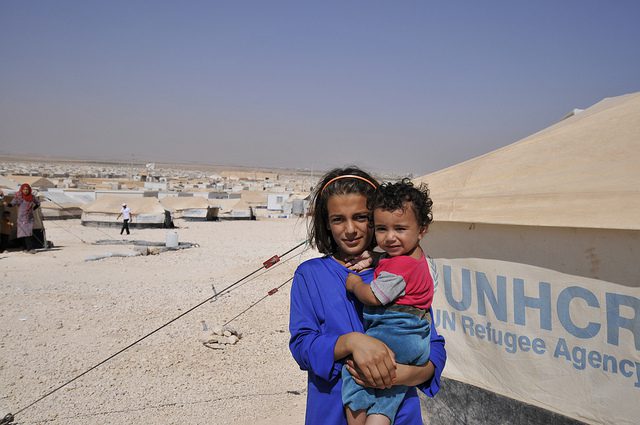
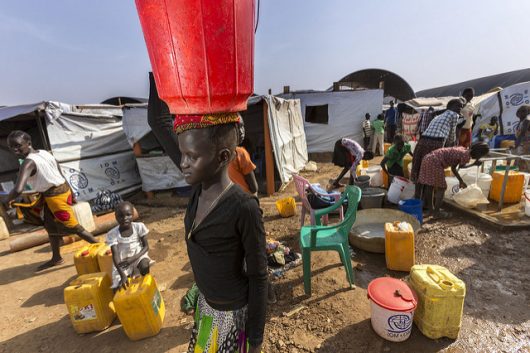
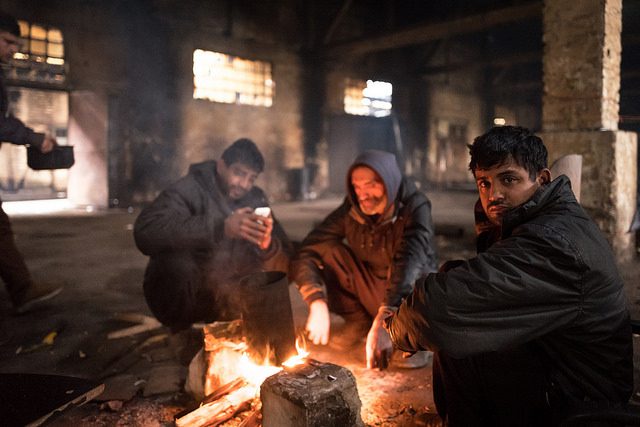
The occasion came at a pivotal time in the U.S, as public outcries about border practices separating families reached a high. This refugee crisis stems from the Trump administration’s use of separation as a deterrent for crossing the border in combination with the administration’s Zero Tolerance Policy, which requires immediate arrest for those crossing illegally. More than 2,300 kids have been separated from their families.

Nine facts about refugees

  1. More people have been forced to flee their homes due to conflict than at any other time since World War II. The world is facing the biggest refugee crisis to date.  At the end of 2017, 68.5 million people were forcibly displaced as a result of persecution on grounds of race, religion, political opinion and violence or conflict.
  1. Half of the refugees are under the age of 18. In some countries, including the U.S., migrant kids are even forced to represent themselves in a court of law.
  1. Under international law, refugees are not allowed to be forced back to their home countries. This law places an obligation for the state to not return a refugee to “the frontiers of territories where his life or freedom would be threatened on account of his race, religion, nationality or membership of a particular social group or political opinion.”
  1. Developing countries host 86 percent of the world’s refugees. The most popular host countries are Turkey, Pakistan, Lebanon, Iran and Ethiopia.
  1. More than half of the world’s refugees come from Syria, Afghanistan and Somalia. Approximately one in five displaced persons come from Syria, where conflict has created an intense refugee crisis.
  1. Saudi Arabia does not register migrants as international refugees. This may not seem like a big deal, but the policy forces migrants to go through the Saudi visa process, during which the government can deny visas and deport individuals. If the individuals were registered as refugees, it would be illegal for the Saudi government to deport them under international law.
  1. Australia’s military blocks refugees before they reach its shores. The practice is coined as Operation Sovereign Borders. Military officials patrol waters to intercept migrants and send them to India or Indonesia. If migrant boats make it to Australia, its passengers are not allowed to stay on the mainland while their asylum cases are processed. Instead, they are sent to processing centers on the island of Naura. Human Rights Watch has begun to shut down such facilities.
  1. In one French town, it is illegal to feed refugees. The northern regions of France used to be home to a refugee settlement called the Jungle, which served as a temporary camp for thousands of migrants seeking asylum across the English Channel in the U.K. In 2016, however, authorities closed the site due to health and terrorism concerns. To ensure the camp remain dismantled, the city’s mayor enacted decrees banning organizations from giving food to any migrants.
  1. Germany has welcomed asylum-seekers in a way to revitalize run-down towns. The German law guarantees the right to asylum for all persons who flee political persecution.  Additionally, any unaccompanied migrant under the age of 18 is provided with a legal guardian to act on his or her behalf and to help navigate the asylum process.

With numbers of refugees rising, the world is faced with a great task of amending practices and treating all persons with respect. Many point to dealing with the root issue of migration rather than adjusting policy and procedure. This view is misinformed, however, as intervention in the home country is often very difficult, controversial and unsuccessful. Instead, we ought to come together as cohabitants of the planet to bring about positive change surrounding this global refugee crisis.

– Jessie Serody
Photo: Flickr

July 11, 2018
https://borgenproject.org/wp-content/uploads/borgen-project-logo.svg 0 0 Borgen Project https://borgenproject.org/wp-content/uploads/borgen-project-logo.svg Borgen Project2018-07-11 01:30:412024-12-13 17:58:519 Facts About the World’s Refugee Crisis
Food Security, Global Poverty, Refugees

Humanity Helping Sudan Project & Refugees of South Sudan

refugees of South Sudan
On July 9, 2011, South Sudan was granted independence from Sudan and became the first African country to secede since Eritrea’s division from Ethiopia in 1993. This succession was the result of a 2005 peace deal that would end Africa’s longest-lasting civil war. As of December 2013, a civil war in South Sudan began when President Salva Kiir accused the previous vice-president, Riek Machar, of planning to overthrow him.

Violence and Insecurity in South Sudan

Once this accusation was made, Machar led a rebellion that took control of several towns and killed thousands. Those that were left in the midst of this civil war were forced to flee to surrounding nations for protection and aid.

In fact, the civil war has caused over 1.5 million South Sudanese to be displaced; in fact, approximately 63,000 people are forced to leave their homes per month. That being said, one of the largest problems South Sudan faces right now is food insecurity. According to World Food Programme statistics, 40 percent of the country’s population needs food assistance. Looking at the bigger picture, this can be credited to lack of land, resources and labor, as a majority of these assets go to defense systems.

The Humanity Helping Sudan Project

The Humanity Helping Sudan Project (HHSP) aims not only to raise awareness for the world refugee crisis but also to create and implement strategies for self-sufficiency and long-term sustainability. This includes, but is not limited to, access to clean water, small-scale farming and fishing and refugee education.

The founder, Manyang Reath Kher, a former refugee of the South Sudanese civil war, spent 13 years as a refugee in various camps between the borders of Sudan and Ethiopia. When he traveled to the United States, he began to raise awareness for the world refugee crisis, especially of the conditions of refugee camps.

HHSP is an organization that guides the refugees of South Sudan out of refugee camps and equips them with the necessary skills to rebuild their lives. For instance, refugees are given portions of land and taught how to farm crops, fish from the rivers and maintain livestock. In addition, this population is also encouraged to attend school to learn skills (including how to build wells and maintain irrigation systems) in hopes of self-sufficiency.

734 Coffee and Future Progress

On the other hand, 734 Coffee, also founded by Kher, aims to raise awareness of the faces and stories of the refugees of South Sudan that create its coffee by finding ways to display the commonly unnoticed refugee impact on its coffee.

When addressing those in poverty, it is important to remember poverty is not solely about money but is rather multi-layered with aspects such as food insecurity, homelessness and advocacy ability. HHSP conveys such facets by using several projects to help the refugees of South Sudan rebuild their lives. These people are given the skills necessary to become self- sufficient in both the short and long terms, and their inspiring and impactful stories now have more of a means to circulate the world as well.

– Jessica Ramtahal
Photo: Flickr

July 10, 2018
https://borgenproject.org/wp-content/uploads/borgen-project-logo.svg 0 0 Borgen Project https://borgenproject.org/wp-content/uploads/borgen-project-logo.svg Borgen Project2018-07-10 01:30:412019-09-25 12:08:23Humanity Helping Sudan Project & Refugees of South Sudan
Human Rights, Refugees, Refugees and Displaced Persons

A Way Forward: Alternatives to Refugee Camps

Alternatives to Refugee Camps
Refugees are a reoccurring topic in the global news cycle recently and yet their living situations are rarely understood. The common picture on the news of long lines at refugee camps is a sad one that illustrates the unfortunate conditions displaced people often live in. Fortunately, it does not need to be this way. According to the U.N.’s official policy, alternatives to refugee camps should be pursued whenever possible as they increase the freedom of their inhabitants, build a sustainable community and reduce costs.

The Problems with Camps

While camps are one of the first things that come to mind when talking about refugees, they are far from an ideal setting. The most glaring issue with camps is that they restrict the freedom of their residents. According to the United Nations High Commissioner for Refugees, the defining feature of a camp…”is some degree of limitation on the rights and freedoms of refugees…”. This usually refers to restrictions on things like moving around, starting businesses or even protection services.

While restricting the freedom of refugees is bad from a human rights perspective, it also has negative implications for the countries hosting them. A key failure of camps is the inability to create a community. This makes it difficult for refugees to reintegrate to either their host or home countries after they leave the camp.

Despite these problems, there are always going to be situations where camps are unavoidable. Thankfully, by finding alternatives, the U.N. and other organizations would be better equipped to make the few necessary camps as hospitable as possible.

A Way Forward Through Alternatives

In contrast to camps, the U.N. says alternatives “will be defined by the degree to which refugees are able to exercise their rights”. One common feature of alternatives is that they allow refugees to hold jobs and participate in the local economy. This allows refugees to have somewhat of a normal life while they are displaced and lets them live with dignity in a community.  Refugees also integrate better back into their home communities when they have greater freedoms while displaced.

A shining example of this is an alternative employed with Sudanese refugees living in Nigeria. The group of refugees came from a tribe of nomads. Having restricted movement in a camp would have been such a disruption for their way of life that it would have been hard for them to reintegrate into their communities. The UNHCR recognized this and set them up in a situation where they could continue to move nomadically with their livestock. Out of this situation, a community market formed organically, allowing the refugees to live richer lives and integrate back into their home easier.

Alternatives can also provide an answer to conflicts that arrive between host countries and refugees. The clash of cultures that often occurs can alienate refugees and disrupt the host country’s citizens. A camp only exacerbates this problem by further isolating each group without taking either’s concerns into account. A key focus for alternatives is to pay attention to everyone’s perspective. The Nigerian example illustrates this well since the nomadic culture of the refugees allows them to live peacefully rather than struggling against being kept in a camp.

Alternatives to refugee camps should be pursued whenever possible. Protecting the freedom of refugees is vital to maintaining their dignity and helping them reintegrate once they can go back to their homes. While some sort of camp will always be necessary, the worst parts of them can be avoided and alternatives offer a bright path forward.

– Jonathon Ayers
Photo: Flickr

July 7, 2018
https://borgenproject.org/wp-content/uploads/borgen-project-logo.svg 0 0 Borgen Project https://borgenproject.org/wp-content/uploads/borgen-project-logo.svg Borgen Project2018-07-07 13:37:222019-09-25 12:28:51A Way Forward: Alternatives to Refugee Camps
Advocacy, Refugees, Volunteer

Local and Global: UNHCR Works to Help Refugees and So Can You

help refugeesJune 20 marked the 18th anniversary of world refugee day. There are currently 68.5 million forcibly displaced people worldwide. Of those millions, 25.4 million people are classified as refugees.

World Refugee Day holds a long history of support for those in need. This day is celebrated in order to give all an opportunity to help refugees and to create a public awareness for millions of lives that are in need of saving.

Since the beginning of World Refugee Day in 2000, the refugee crisis has increased greatly. Growing from 12 million in 2000 to more than 20 million in 2018, refugees can be found seeking shelter in many countries.

The United Nations

The United Nations High Commissioner for Refugees has taken steps to fight the refugee crisis. The UNHCR provides assistance and support to refugees all over the world. Present in 128 countries and 478 locations around the world, the UNHCR is helping those wherever they can.

For example, in Ukraine, the UNHCR is working with the Ukrainian government to help strengthen the asylum system and gives medical, material and social assistance to those refugees and internally displaced people. In Ukraine, there are currently 1,800,000 people who are internally displaced and 3,253 refugees from other countries.

Along with working with the government and giving assistance to those in need, the UNHCR in Ukraine provided 843 homes with winter cash assistance in 2018.

Another recent effort presented by the UNHCR was their assistance in Montenegro. On April 3 the UNHCR paired with the Red Cross and opened the first Community Centre for persons seeking international protection.

Education

The UNHCR doesn’t only just provide physical materials and goods; they also are committed to bringing education to refugees all over the world.

By the end of 2016, the UNHCR had encouraged 64 out of 81 countries to put policies in place to support the inclusion of refugee children in the respective countries education system. After this push, more than 984,000 refugee children were enrolled in primary education.

Of that 984,000 refugee children, 250,000 were not attending school at the time.

How to Help

While the UNHCR is continually working to better the lives of refugees all over the world, there is still plenty of work that can be done on the individual level for refugees. Here are five ways that anyone can get involved no matter where they may be.

  1. Volunteer a skill: Having a specific skill or talent can be used for good to help refugees. Whether knowing how to budget extremely well or how to create a website, there are refugees in local communities who would appreciate learning a new talent or skill to help them with their future endeavors.
  2. Spread awareness: Hold fundraisers, raffles, yard sales or meetings to spread the word about the refugee crisis. There are some that may know there is a problem, but don’t know much more than that. By putting on events and spreading the word, education about this crisis will increase awareness.
  3. Call the House Representatives and the Senate: Calling local state representatives is a quick and easy way to let one’s voice be heard. Placing a call to a member of the House or Senate will let them know that this is an issue that you care about and want to address.
  4. Support business and organizations run by refugees: Moving to a new country and facing the economic challenges of that country can be one of the hardest things for refugees. Supporting their family can be difficult for refugees in a new country. Make an effort to buy from refugees to help them get started in a new place.
  5. Donate: Donating can be one of the easiest ways to help refugees in need. Donations can be for organizations that go out into the field and provide physical goods or they can be for organizations, like The Borgen Project, that push elected officials to support and pass laws to help those in need.

While the refugee crisis continues to grow, it is important to know that anyone can take part in getting laws passed to protect refugees or can offer kindness to those who are adjusting to drastic life changes.

– Victoria Fowler
Photo: Flickr

June 29, 2018
https://borgenproject.org/wp-content/uploads/borgen-project-logo.svg 0 0 Borgen Project https://borgenproject.org/wp-content/uploads/borgen-project-logo.svg Borgen Project2018-06-29 07:13:562024-05-29 22:42:55Local and Global: UNHCR Works to Help Refugees and So Can You
Refugees

Recent Genocides in Sudan and Myanmar Highlight Ongoing Issue

Recent Genocides
Genocide is defined as the deliberate killing of a large group of people, especially those of a particular ethnic group or nation. Recent genocides have occurred in Sudan against 
Darfur’s ethnic Fur, Massalit, and Zhagawa peoples and in Myanmar against its Rohingya minority.

Tensions Continue as a Result of Sudanese Genocides

Since gaining independence from the United Kingdom and Egypt in 1956, Sudan has struggled to find peace between its Muslim northern regions and its animist and Christian southern regions. Continuous conflict led to the creation of an autonomous South Sudan, but tensions persist. Civil wars in the region have taken an estimated 2.5 million lives and displaced approximately four million people.

Beside the warring north and south of Sudan, recent genocides have occurred in a western part of the nation known as Darfur. In February 2003, rebel groups led by predominantly by non-Arab Muslim sedentary tribes, including the Fur and Zaghawa, rose up against the Khartoum government due to unequal treatment and economic marginalization. In response, the government sent militias known as Janjaweed, which translates to “evil men on horseback,” whose duties were to carry out attacks on villages. The Janjaweed used slash and burn methods to decimate communities as well as injuring and murdering civilians and poisoning wells.

The Darfurian genocide was the first genocide of the 21st century and its unrest and violence have not yet ceased. As of 2016, more than 480,000 people have been murdered and more than 2.8 million people have been displaced. Many refugees have fled Sudan and some have been living in camps for more than 10 years.

Recent Genocides in Myanmar Draw Global Attention

Myanmar, the nation formerly known as Burma, lived under the governance of an oppressive military junta from 1962 to 2011. The government is now under civilian control, but the military continues to wield extensive power and commit human rights abuses. Its population is mostly Buddhist with large Christian and Muslim minorities.

Two-thirds of Myanmar’s people identify as Burmese or Bamar, but there are 135 ethnic minorities residing in the country. The Christian Karen people and the Muslim Rohingya people of Myanmar have faced long-standing systemic violence and oppression from the Buddhist government. Aid agencies estimate that 200,000 Karen have been driven from their homes in the decades of conflict and as recently as 2010 the government was still burning, shelling and abusively sweeping Karen villages.

The Rohingya Muslims have also had a long-standing history of genocide and statelessness. In 1982, the Burmese military stripped the Rohingya of their citizenship, claiming that they were Bengali despite their having lived in Burma’s Rakhine State for generations. This led to a mass migration of over 250,000 Rohingya people to Bangladesh in 1991 and 1992, but they were met with deportation once in Bangladesh and were forced to return to Burma.

The recent genocides of the Rohingya in Myanmar began in 2012 when political party officials, senior Buddhist monks and state security forces committed mass killings of men, women and children. The cleansing left 150,000 Rohingya homeless and more than 100,000 fled the country.

Even more recently, in August 2017, a small rebellion of Rohingya militants led to military retaliation against any and all Rohingya people. These attacks caused the largest refugee movement since the Rwandan genocide. More than 675,000 Rohingya fled the country within three months to seek safety in Bangladesh. As of January 2018, more than one million Rohingya refugees have been registered in Bangladesh.

Fulfilling the Promise to End Genocide Worldwide

Ethnic cleansing and genocide are not acts of the past. Religious and cultural minorities continue to face persecution and attempts at forced extinction. However, this does not mean that individuals elsewhere must simply be bystanders to such atrocities. Raising awareness about the genocides occurring in the world and donating time or money to organizations that work to end genocide can make an impact and ensure that the world does not turn a blind eye to those in danger.

The organization United to End Genocide states that one of the best ways for individuals to help prevent and stop genocide is to vote for representatives who support foreign aid and acknowledge global atrocities. Support representatives who make the end of genocide a priority.

– Carolina Sherwood Bigelow
Photo: Flickr

June 19, 2018
https://borgenproject.org/wp-content/uploads/borgen-project-logo.svg 0 0 Borgen Project https://borgenproject.org/wp-content/uploads/borgen-project-logo.svg Borgen Project2018-06-19 01:30:322024-06-05 02:12:18Recent Genocides in Sudan and Myanmar Highlight Ongoing Issue
Refugees, Women & Children

Pianoterra Puts Refugee Mothers and Children First

PianoterraIn Italian, “pianoterra” translates to “ground floor.” Pianoterra is also an organization based in Italy that is working to keep refugee mothers and children safe.

The Mission of Pianoterra

Pianoterra was founded by Alessia Bulgari, Flaminia Trapani and Ciro Nesci. According to the group’s website, “[the founders’] stories are intertwined by personal ties: Alessia and Flaminia are cousins, Flaminia and Ciro are husband and wife.”

The organization was founded in 2008 with the main goal of helping immigrant women get the necessary things to be able to prosper in Italy. When the organization began, 58 percent of the women seeking help from the organization was Italian while the other 50 percent was foreign. Today, 98 percent are foreign women.

Pianoterra’s Past Initiatives

Pianoterra has led several initiatives to improve the lives of refugee women and children. Two of these important projects include “Right to Feed – Support of Breastfeeding” and “From Mom to Mom.”

The project “Right to Feed – Support of Breastfeeding” began in January 2009. The project was aimed at mothers who were unable to breastfeed and did not have a sufficient amount of money to be able to feed their children. Pianoterra worked to “distribute free formula milk, according to pediatric prescriptions, and other basic necessities.”

With the “From Mom to Mom” initiative, Pianoterra helped mothers by collecting and distributing second-hand items for children. By collecting second-hand articles and connecting the women who donate with the women in need, mothers are “directly linked to a solidarity network of other women and mothers willing to support,” according to the organization’s website.

The Immigration Situation in Italy

Currently, immigration to Italy is occurring in large numbers. In 2018 alone, approximately 33,000 refugees have fled to Italy. However, the nation’s new interior minister has stated that “the country will no longer be ‘Europe’s refugee camp,’” according to TeleSur.

With the new government leaders in Italy, many refugees cannot count on staying in Italy. TeleSur reports that Italy’s “right-wing League stated that the vast majority of migrants in Italy have no right to refugee status, Italy cannot help them and by accepting low pay they worsen the working conditions of Italians.”

Although the Italian government is changing, there are still organizations working to help women and refugees prosper in the country. Pianoterra will continue to assist mothers in caring for their children and bettering their futures.

– Valeria Flores
Photo: Flickr

June 17, 2018
https://borgenproject.org/wp-content/uploads/borgen-project-logo.svg 0 0 Borgen Project https://borgenproject.org/wp-content/uploads/borgen-project-logo.svg Borgen Project2018-06-17 08:00:232024-05-29 22:42:47Pianoterra Puts Refugee Mothers and Children First
Human Rights, Humanitarian Aid, Refugees

How the Media Misrepresents the Refugee Crisis and Its Impacts

Media Misrepresents the Refugee Crisis
The European Refugee Crisis has become one of the most discussed and debated conflicts in international discourse and current affairs in the world today. Given its ubiquitous presence, the media also plays a crucial role in transcending awareness to the international community about key underlying global issues.

Power of the Media

However, the media misrepresents the refugee crisis due to (oftentimes) inadequate coverage. There is a strong correlation between media portrayal and the reception that ‘media bias’ can have on various audiences. This occurrence, as well as photographic evidence, can give rise to negative perceptions of the situations and news stories at hand.

A majority of the time, even the visual imagery of photography in the media can contribute to a warped, and sometimes over-exaggerated, view of the situation. On the other hand, some cases — such as the Mediterranean crisis in 2016 — a shocking image can become a very powerful and lasting symbol for the refugee crisis. In 2016, the limp body of Alan Kurdi, a 3 year-old Syrian, washed up onshore and became just that; his dead body caused a huge outcry and a great deal of global outrage.

The reaction to Kurdi is a direct example of the media’s scope, power and influence in global information. Moreover, the rather high incidence of “fake news” stories is also changing the tide of mainstream media coverage and giving rise to more inflammatory rhetoric, racism, controversy and division.

The Misrepresentation of the Refugee Crisis

The media misrepresents the refugee crisis also largely in reference to the growing skepticism associated with new immigrants crossing international borders. A number of media forums are often pervaded by hate speech and campaigns against refugees; such portrayals can give rise to increased hysteria and the spreading of misinformation.

The deficiencies in media coverage of the refugee crisis can often cause overly biased narratives that hinder efforts at raising awareness about key issues and shedding light on the unbiased truth. Given the often divisive nature of geopolitics, news stories are often written with the intention of covering international affairs. As a result, humanitarian concerns and concerns about human rights for refugees can also be quite politicized in nature and impact interpretations.

With the prominence and importance of these topics, though, media coverage should aim to not only cover these topics, but also shed light on positive stories associated with the refugee crisis. Sustainable news sources — objective and advocacy journalism and community media, for instance — can help counteract associations of overly negative images when the media misrepresents the refugee crisis.

Quest to Ensure Journalistic Integrity

Moreover, journalistic integrity must be maintained through free press. With more accurate representation in the media, immigrants and refugees can become more humanized and realistic in media coverage, and thereby demonstrate the more optimistic and “good news” side of reality.

Such accurate depictions will also benefit various key stakeholder groups involved in the refugee crisis — such as governments and international organizations. Positivity in the media could ensure greater ease in the provision of humanitarian and development aid and packages.

So there must be increased levels of inclusion and greater coverage of important stories to counter the media misrepresenting the refugee crisis. This change can help the international community take up a larger role in addressing large and pertinent issues, such as human rights.

– Shivani Ekkanath
Photo: Flickr

June 13, 2018
https://borgenproject.org/wp-content/uploads/borgen-project-logo.svg 0 0 Borgen Project https://borgenproject.org/wp-content/uploads/borgen-project-logo.svg Borgen Project2018-06-13 01:30:562019-10-12 11:32:02How the Media Misrepresents the Refugee Crisis and Its Impacts
Charity, Migration, Refugees

Rescuing Migrants Crossing the Mediterranean Sea

Rescuing Migrants Crossing the Mediterranean Sea
For thousands of years, the Mediterranean Sea has been a giver of life to those who settle near its shores. Today, the body of water is seen as a gateway to a better life for many migrants fleeing violence and poverty. But their journey does not end at the first sight of Mediterranean. It is estimated by The Mediterranean Situation, an organization which monitors migrant activity in the Mediterranean, that over 16,000 migrants have died or gone missing crossing the Mediterranean Sea between 2018 and 2014.

Migrants Crossing the Mediterranean Sea

Small overcrowded boats are often used by thugs and smugglers who charge over a thousand dollars per person for abusive transportation from Africa to Europe. These boats, piloted by unskilled captains, are not built for open water travel or to withstand the ever-changing weather of the Mediterranean Sea. This is why countries most affected by the smuggling activities are prioritizing the rescue of migrants crossing the Mediterranean Sea.

Rescuing migrants crossing the Mediterranean Sea is no easy task — especially if your nation is split by a power vacuum caused by a civil war. Libya is a popular starting point for many migrants who plan to cross over the sea to Italy. Aside from being geographically close to Italy, the Libyan government and its navy are underfunded and trained. This status makes it difficult to thoroughly patrol the north African nation’s coastline.

Italy has taken the brunt of migrants crossing the Mediterranean with nearly 120,000 migrants arriving to its borders in 2017, and almost 190,000 in 2016. The migrant crisis was one of the most important issues during the recent Italian election, which helped to bring a coalition government of two eurosceptic parties to power.

Governments and Charities

Rescuing migrants crossing the Mediterranean Sea is still important to Italy; in fact, $52 million has been pledged to increase Libya’s capacity to combat human smuggling through 2020.

State governments are not the only actors attempting to rescue migrants crossing the Mediterranean Sea. Charities, such as the Spanish Proactiva Open Arms, patrol the Mediterranean Sea searching for migrants in need of rescue. Indeed, Proactiva Open Arms’ mission in the  Mediterranean has saved over 26,000 lives. Due to the organization’s claims that migrants undergo human-rights abuses when returned to Libya, Proactiva Open Arms often brings rescued migrants to shore in Europe.

According to international maritime law, all vessels, private or otherwise, must rescue those in need. The vessel’s origin does not mean that the rescued people are now the responsibility of its national origin; but where the rescued people are put ashore does. This has put Proactiva Open Arms in conflict with the Italian government.

Rescue Efforts and Proactiva Open Arms

When Proactiva Open Arms volunteers and their boat brought migrants to Italy in April 2017, the volunteers were arrested and their boat impounded. The Italian government sought to press charges against the volunteers for bringing the migrants to Italy and not back to Libya, but a Sicilian judge disagreed. The judge agreed with the Proactiva Open Arms volunteers who claimed that Lyiba does not have the proper resources to help the migrants and that they would face abuse as a consequence.

Rescuing migrants in the Mediterranean is a messy business. Countries such as Italy do not want to see people die at sea at the hands of neglectful smugglers, but they also have trouble dealing with the influx of migrants at home. Charities want to help people who are taken advantage of and help them to a better life; but oftentimes these organizations are not always supported. This difficult task does not seem to let up any time soon, and could possibly get worse.

A combined effort is needed to protect people. More should be done to lessen the need for people to flee from their homes, and governments need to step up to protect the human rights of those in need — especially to save helpless children at sea.

– Nick DeMarco
Photo: Flickr

June 5, 2018
https://borgenproject.org/wp-content/uploads/borgen-project-logo.svg 0 0 Borgen Project https://borgenproject.org/wp-content/uploads/borgen-project-logo.svg Borgen Project2018-06-05 01:30:522019-10-13 17:51:58Rescuing Migrants Crossing the Mediterranean Sea
Page 28 of 53«‹2627282930›»

Get Smarter

  • Global Poverty 101
  • Global Poverty… The Good News
  • Global Poverty & U.S. Jobs
  • Global Poverty and National Security
  • Innovative Solutions to Poverty
  • Global Poverty & Aid FAQ’s
Search Search

Take Action

  • Call Congress
  • Email Congress
  • Donate
  • 30 Ways to Help
  • Volunteer Ops
  • Internships
  • Courses & Certificates
  • The Podcast
Borgen Project

“The Borgen Project is an incredible nonprofit organization that is addressing poverty and hunger and working towards ending them.”

-The Huffington Post

Inside The Borgen Project

  • Contact
  • About
  • Financials
  • President
  • Board of Directors
  • Board of Advisors

International Links

  • UK Email Parliament
  • UK Donate
  • Canada Email Parliament

Get Smarter

  • Global Poverty 101
  • Global Poverty… The Good News
  • Global Poverty & U.S. Jobs
  • Global Poverty and National Security
  • Innovative Solutions to Poverty
  • Global Poverty & Aid FAQ’s

Ways to Help

  • Call Congress
  • Email Congress
  • Donate
  • 30 Ways to Help
  • Volunteer Ops
  • Internships
  • Courses & Certificates
  • The Podcast
Scroll to top Scroll to top Scroll to top