• Link to X
  • Link to Facebook
  • Link to Instagram
  • Link to TikTok
  • Link to Youtube
  • About
    • About Us
      • President
      • Board of Directors
      • Board of Advisors
      • Financials
      • Our Methodology
      • Success Tracker
      • Contact
  • Act Now
    • 30 Ways to Help
      • Email Congress
      • Call Congress
      • Volunteer
      • Courses & Certificates
      • Be a Donor
    • Internships
      • In-Office Internships
      • Remote Internships
    • Legislation
      • Politics 101
  • The Blog
  • The Podcast
  • Magazine
  • Donate
  • Click to open the search input field Click to open the search input field Search
  • Menu Menu

Archive for category: Poverty

Clean Water Access, Food & Hunger, Global Health, Global Poverty, Poverty

9 Facts About Poverty In Eritrea

Facts about Poverty in Eritrea
Eritrea is a small northeastern country in Africa, surrounded by the larger Somalia, Ethiopia and Sudan. It is home to more than 6.1 million individuals, of which, about 53% were in poverty as of 2008. Eritrea’s harsh history coupled with its low rates of development has contributed to the poor economic conditions that oppress so many. This article will provide nine facts about poverty in Eritrea which will give reason to the concerns that international organizations have raised.

9 Facts About Poverty in Eritrea

  1. A tumultuous history with Ethiopia: After a 30-year war with Ethiopia, Eritrea finally gained independence in 1991. It was not until 1993, however, that this separation became legitimate. Eritrean citizens historically experienced neglect under Ethiopian rule. Many experienced deprivation of their nation’s resources and abandonment on the pathway to development.
  2. Cultural superstitions prevent sanitary practices: According to UNICEF, persistent cultural beliefs hinder many Eritreans from collecting clean water, washing their hands and disposing of animal products properly. Many believe that evil spirits attach themselves to certain animal parts while other customs prohibit the use of latrines during certain hours of the day.
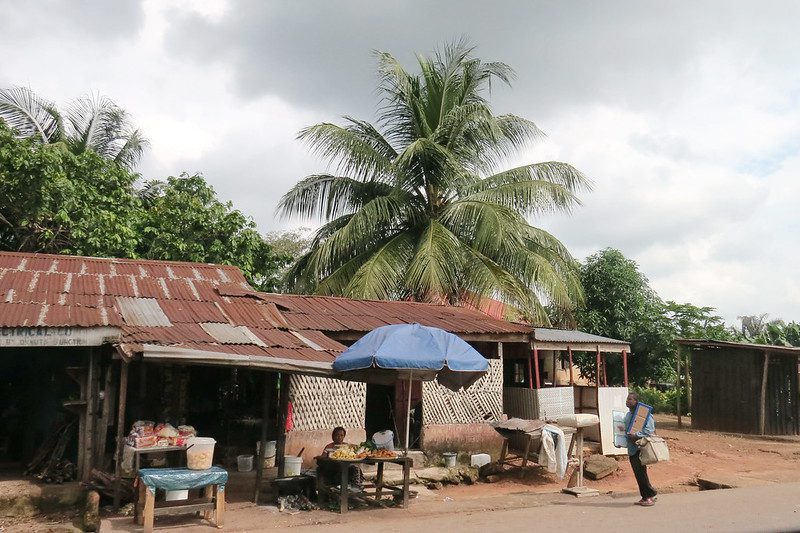
  3. Limited access to clean water for rural Eritreans: Very few villages in rural Eritrea have access to clean water. In fact, as of 2015, only 48.6% of the rural population had access to improved water sources compared to 93.1% in urban areas. As a result, many Eritreans drink from the same water source as animals. In addition, many communities do not have a local latrine due to a lack of financial resources. Sewage systems also contaminate water sources that would otherwise be feasible options. These issues can lead to numerous diseases such as schistosomiasis, giardiasis and diarrhea.
  4. Challenges in agriculture: While nearly 80% of the Eritrean population works in agriculture, this sector only makes up about 13% of the nation’s GDP. Landscapes in Eritrea are naturally rocky and dry. This makes farming a difficult task even in the best weather conditions. During the most fruitful periods, domestic agriculture production still only feeds 60% to 70% of the population.
  5. Susceptibility to drought: When drought does strike northeast Africa, Eritrea is one of the countries that experiences the greatest blow. Months can pass in the Horn of Africa without rainfall and these episodes are frequent and recurrent. This results in food shortages and increased rates of malnourishment among children. Statistics show that malnutrition has been increasing throughout Eritrea as nearly 22,700 children under the age of 5 suffer from the condition. Plans have already emerged as an acknowledgment of the crisis, one being the African Development Bank’s Drought Resilience and Sustainable Livelihood Programme for 2015-2021. For this, the Eritrean government has agreed to reserve $17 million to administer solutions for drought effects in rural communities.
  6. Many children are out of school: Public education in Eritrea is inconsistent across the nation. Children living in rural areas or with nomadic families do not have access to quality education like those living in urban regions. Overall, 27.7% of Eritrean children do not attend school.
  7. Low HDI: Recently, GDP in Eritrea has been growing. One can attribute this to the recent cultivation of the Bisha mine, which has contributed a considerable amount of zinc, gold and copper to the international economy. Even so, Eritrea’s Human Development Index is only at 0.351. The country is far behind other sub-Saharan nations, whose average is 0.475.
  8. Violence at the southern border: The central government has created large holes in the federal deficit in its preoccupation with Ethiopia. While the countries officially separated in 1993, discontent with the line of demarcation has left them in a state of “no war, no peace.” The Eritrean government sees the stalemate with Ethiopia as a primary concern, and the military forces needed to guard their territory has occupied most of the nation’s resources.
  9. High rates of migration: These realities listed above have encouraged much of the Eritrean population to flee the country. Eritrea is the African country with the highest number of migrants. Furthermore, the journey to Europe is a dangerous one, as the pathway through the central Mediterranean is highly laborious.

Looking Ahead

These facts about poverty in Eritrea show that while poverty in Eritrea has been an ongoing challenge, efforts are under way to provide aid to the country’s people. Hopefully, the work of the African Development Bank’s Drought Resilience and Sustainable Livelihood Programme will help alleviate hunger and malnutrition in Eritrean communities.

– Annie O’Connell
Photo: Flickr
October 7, 2019
https://borgenproject.org/wp-content/uploads/borgen-project-logo.svg 0 0 Kim Thelwell https://borgenproject.org/wp-content/uploads/borgen-project-logo.svg Kim Thelwell2019-10-07 01:30:582024-05-29 23:13:079 Facts About Poverty In Eritrea
Economy, Global Poverty, Inequality, Poverty

The ERGP and Economic Growth in Nigeria

Economic Growth in Nigeria
Nigeria, a country located on the western coast of Africa, makes up to 47 percent of the population of Africa. With the rising amount of people surrounding the area, there has been a vast amount of poverty overtaking the country. Recently, the economic growth of Nigeria has risen due to many factors such as its production of oil. However, no matter how much the economy grows, poverty continues to rise as well due to the inequality between the poor and rich.

Economic Growth

In 2018, the oil and gas sector allowed the economic growth in Nigeria to grow 1.9 percent higher than the previous year when it only grew to 0.8 percent. Although that is where more of the growth is, the oil sector does not have physical bodies working to ensure that the industry continues to grow. This leaves no growth in the stock of jobs, leaving the unemployment rate to rise to 2.7 percent since the end of 2017. Many hope that the new Economic Recovery and Growth Plan (ERGP) will promote economic resilience and strengthen growth.

ERGP

ERGP projects that there will a growth rate of 4.5 percent in 2019, but within the first quarter, there was only a growth of 2.01 percent. Charles Robertson, the global head of the research at Renaissance Captial, believes that ERGP’s 4.5 percent target was not unrealistic, especially since Nigeria was unable to meet those projections. Because most of the country’s economic growth comes from oil, there have not been many other non-oil jobs that have made a lot of profit.

The plan not only focuses on the rate of economic growth but also makes predictions that the unemployment rate will decrease to 12.9 percent. With the lack of available jobs, there has been little to no change in this rate as well. Many of the individuals that do have jobs, however, are earning up to $1.25 or less per day, which is not enough to pay for one household.

Inequality

As the economic growth in Nigeria grows, so does the gap between the poor and the rich. With the poor as the bottom 23 percent, the gap between the two has widened to 16 percent. A lot of the high-paying jobs are looking for people that have received high-quality degrees. If one does not have the money to pay for a good education, then they automatically miss out on the job opportunities that are out there. This means, that the children that come from rich families are the only ones that will be able to get the best jobs in the market.

The current government has been running a cash transfer program that provides 5,000 nairas to each household per month, which is approximately $14. This amount is not enough to relieve any household expenses because “less than 1 percent of poor people are benefiting.” Without any increase in money for each household, one cannot do much to decrease poverty.

Although there is economic growth in Nigeria, poverty is still on the rise. Many countries have faced this problem with trying to break the balance between the two and found it has not helped to decrease poverty as much. Hopefully, as the ERGP continues, it will help make changes.

– Emilia Rivera
Photo: Flickr

October 6, 2019
https://borgenproject.org/wp-content/uploads/borgen-project-logo.svg 0 0 Kim Thelwell https://borgenproject.org/wp-content/uploads/borgen-project-logo.svg Kim Thelwell2019-10-06 01:30:372019-12-16 12:31:58The ERGP and Economic Growth in Nigeria
Global Poverty, Poverty

The Link Between Deforestation and Poverty

Deforestation and Poverty
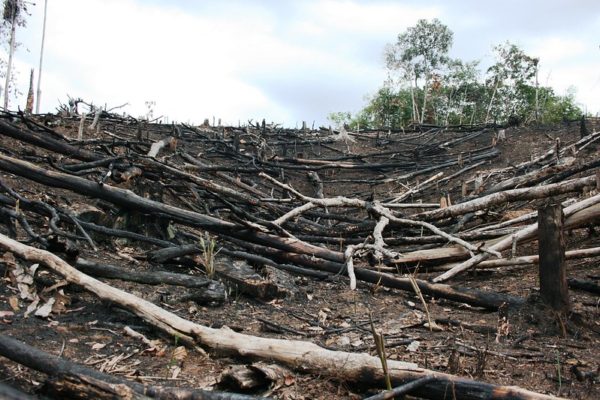
Deforestation throughout the world has been increasing over the past decades. Forests contribute to 90 percent of the livelihood of those that live in extreme poverty. Once people cut down and remove these resources, it takes years to replace them, which puts people deeper into poverty. Deforestation and poverty connect because of what the forest can provide for people living in poverty.

Reasons for Deforestation

There are several reasons that deforestation is so much a part of developing nations. One of the most prominent reasons is logging or cutting down trees for processing. While logging does provide temporary relief from poverty once loggers cut down the trees, it takes years for them to grow back.

Indonesia has the worst problem with illegal logging with 80 percent of its logging exports being illegal. Agriculture is necessary for a country to become self-sufficient and rely on itself to feed its people. Hence, to clear land for crops, farmers cut down large sections of forests. Indonesia also has the worst problem with clearing forest for agriculture; the country states that it is necessary to make way for the trees for palm oil, one of its major exports, in order to reduce poverty.

In Brazil, clearing forests to make way for grazing livestock is the reason for deforestation. Brazil is a top beef exporter having exported over $5 billion worth of beef in 2018 and beef is a significant contributor to its economy.

The Benefits and Harm of Deforestation

The three countries that have the most deforestation are Brazil, Peru and Bolivia. These countries all have access to the Amazon rainforest and they use its resources to help alleviate the strain of poverty. Deforestation has devastated all three of these countries, as each has cut down millions of acres of rainforest.

Since 1978, Brazilian loggers, cattle rangers and farmers have cut down 289,000 square miles of rainforest. One of Brazil’s top crops is soybeans that farmers use to feed its growing cattle population. Massive sections of forest require cutting to make way for both soybean production and cattle and this impacts the indigenous people of Brazil the most. Their entire livelihood is dependent on the forest and when the trees disappear, they suffer extreme poverty.

Peru has recently increased its efforts to control deforestation due to mining. Gold is a large part of the economy of Peru along with logging. These efforts have worked for the people of Peru who were able to cut their poverty rate from 48.5 percent to 25.8 percent in less than 10 years. However, experts believe that this relief, while significant, could only be temporary because the rate of deforestation will have a profound impact on climate change that will, in turn, harm the forests and economy of the country.

The GDP per capita of Bolivia is currently at $2559.51. This makes it one of the poorest countries in the western hemisphere. To help the poor people of the country, the government has doubled the amount of deforestation that occurs in the country to make way for cattle, agriculture and infrastructure.

With the increase of deforestation, the benefits can seem like relief for those that are deeply immersed in poverty. While these countries’ removal of whole forests can help those living in poor conditions, the help is only temporary and in the long run can harm their well being as much as help. Deforestation and poverty are linked and to save the forests, it is essential to help those living in and around the forests.

– Samuel Bostwick
Photo: Flickr

October 5, 2019
https://borgenproject.org/wp-content/uploads/borgen-project-logo.svg 0 0 Kim Thelwell https://borgenproject.org/wp-content/uploads/borgen-project-logo.svg Kim Thelwell2019-10-05 01:20:382019-11-19 12:05:52The Link Between Deforestation and Poverty
Advocacy, Developing Countries, Development, Global Poverty, Poverty, Poverty Reduction

Natural Disasters Shape Global Poverty

Natural Disasters Shaping Global Poverty
When people discuss the causes of global poverty, natural disasters do not often come up, but there is a correlation between natural disasters and global poverty. This may be due to the fact that natural disasters tend to be completely out of human control, while human choice and behavior can either cause or greatly reduce other factors that contribute to poverty. However, natural disasters shape global poverty through post-disaster destruction and economic and societal instability. Geographical location and weather patterns, as well as vulnerability to natural disasters, are immensely pertinent to a society’s poverty rate.

The Danger of Natural Disasters

According to the World Bank, natural disasters force over 26 million people across the globe into poverty annually and cost the global economy around $520 billion every year. These disasters also reinforce the cyclical nature of poverty; they ruin progress that countries have made to reduce poverty and leave impoverished people completely vulnerable due to their inability to cope and recover after the calamity. The five countries with the highest Climate Risk Index ratings from 1998 to 2017 all have national poverty rates above 20 percent. Honduras and Haiti rank two and four on this index, respectively and are great examples of how natural disasters shape global poverty.

Hurricane Mitch

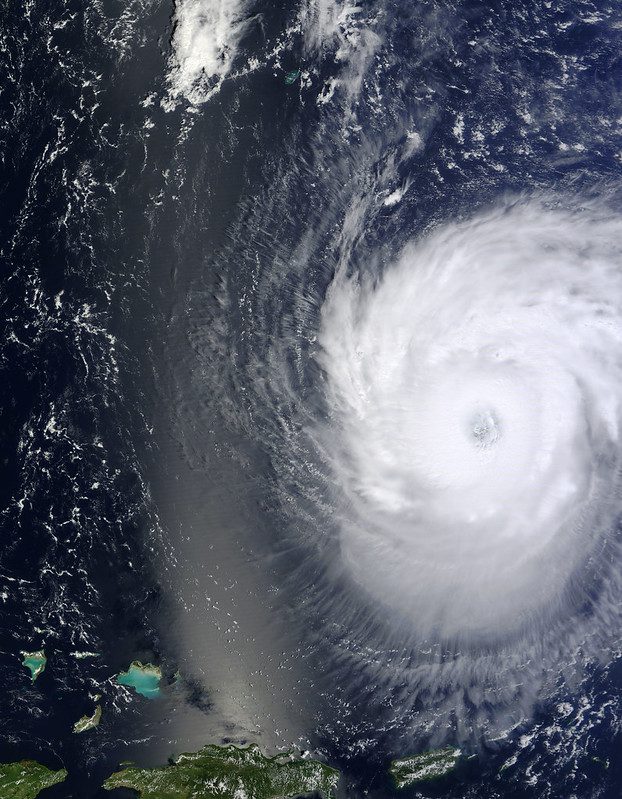
According to a Penn State University report, Honduras lost $3.8 billion after Hurricane Mitch in 1998. The agricultural economic sector dropped by 7 percent as both domestic and cash crops disappeared. According to Honduras Compassion Partners, the agriculture sector has dropped by almost 33 percent over the last 20 years. Adequate sanitation and clean water were rarities and are still not too ideal levels. The health and education system took a $33 million hit. Penn State University also reported that societal instability increased after the storm. The country saw a surge in gender inequality and sexual and domestic violence after the hurricane. Extreme weather is so influential to poverty rates because its devastation is multifaceted. Like in Honduras, natural disasters simultaneously strip individual necessities like food, shelter, security and sanitation and weaken socioeconomic resilience, that is, the ability for society as a whole to recover after a catastrophe.

Haiti

Another example is Haiti. The 2010 earthquake that ravaged the island nation cost the economy around $7.8 billion. The natural disaster affected all facets of life. A Global Foundation for Disaster Reduction and Recovery report revealed just how vast the consequences of a disaster like this can be:

  • Social sectors like water, food, sanitation, health and education suffered $553.3 million in economic loss.
  • Infrastructure sectors like housing, food, energy and transportation suffered close to $1.3 billion in economic loss.
  • Production sectors like agriculture, industry, retail and finance suffered $933.3 million in economic loss.

These figures do not even include the cost of damages, which more than double the total expense. Almost a decade later, partially due to more natural disasters, Haiti is still recovering from the earthquake. These calamities bombard all of the indicators of poverty and all of the variables that have the potential to lift an individual and a society out of poverty (i.e. food security, capital, sanitation, education, health care) in one fell swoop. The post-disaster consequences underpin the cyclical complexion of poverty. This is how natural disasters shape global poverty.

Direct Relief

Direct Relief is a non-governmental organization that provides relief from natural disasters in over 80 countries in Asia, Africa, South America, Central America, North America and Europe. To date, Direct Relief has provided $747,210,716 in international aid, given 160,038,758 doses of medicine and provided 3,531,448 pounds of medical supplies to victims of natural disasters. The organization distributes products such as emergency medical packs, cholera treatment kits, oral rehydration salts and hurricane prep packs. It also employs a hurricane prep map to supply aid to the affected countries. Direct Relief has been the largest provider of aid to Haiti since the 2010 earthquake.

Natural disasters and global poverty have a close relationship. The ability for one extreme weather event to negatively influence all of the factors that decide poverty makes it much more difficult for countries prone to these storms to end the cycle of poverty. More research and development on disaster preparedness and recovery are necessary to allow countries the opportunity to break the feedback loop. These disasters are stymying poverty reduction efforts in countries like Honduras, Haiti and even now in Zimbabwe which is suffering from severe drought. Response and preparation to natural disasters and climate tendencies need to be a higher priority in the strategy of mitigating global poverty.

– Zach Brown
Photo: Flickr


October 4, 2019
https://borgenproject.org/wp-content/uploads/borgen-project-logo.svg 0 0 Kim Thelwell https://borgenproject.org/wp-content/uploads/borgen-project-logo.svg Kim Thelwell2019-10-04 09:13:172024-06-05 01:28:28Natural Disasters Shape Global Poverty
Development, Education, Global Poverty, Government, Poverty, Technology

Eradicating Poverty Through ICTs

Eradicating Poverty Through ICTs
Internet and Communication Technologies (ICT) are social networking websites, instant messaging programs, cell phones and other technologies that allow people to communicate quickly and globally. Information emanates through these technologies allowing developing countries to step into the digital world. Eradicating poverty through ICTs now seems plausible as citizens include themselves in new economic and coordinated opportunities.

ICTs’ Range of Impact

In the Asia-Pacific, governments utilize ICTs to expand markets and introduce services. They have adapted to using e-commerce, supporting businesses that allow more people to become engaged with the government and programs. New strategies constantly emerge as Asian-Pacific authorities and organizations address poverty.

Bangladesh

The United Nations Development Programme (UNDP) provides solutions globally for poverty and these differ depending on the country. In Bangladesh, the UNDP pushed an initiative called the Access to Information Act or the a2i. The main focus of this act is to offer citizens the right to public information, allowing multiple interpretations for data such as records. By implementing this act, Bangladesh has reduced the costs of access to health and education information services. The amount of time it took for residents to receive information on their phones or computers dropped by 85 percent and the cost dropped by 63 percent. Digitization of rural areas has saved the local residents half a billion dollars.

Vietnam

The UNDP focuses on e-government policies. According to the United Nations, e-government encompasses the delivery and exchange of information between government and citizens. Vietnam now supports online businesses and allows people to pay taxes over the computer. Services, as an effect, run more efficiently and people have more ready access to transfers or deposits. The number of internet broadband subscribers reached 11.5 million and many expect it to grow 9 percent annually along with 47.2 million on cellular data due to the rapid growth of applications. ICTs affect the way the country runs as well; towns have adopted ICTs, using them in creative ways to provide water and electricity.

Taiwan

Recently, Taiwan has grown into a major manufacturer of ICTs, leading to the export of its products. The Cloud Computing Association of Taiwan (CCAT) devotes itself to making the country an exporter of cloud software. At home, these developed cloud systems save service providers 50 percent, avoiding the need to purchase from overseas. The country’s National Communications Commission proposes to provide all of its citizens with ICTs. It appoints companies to offer universal broadband access to mountain villages, projected to make Taiwan the first country with complete internet coverage. Rural peoples have access to data, and the government offers programs to teach rural residents how to properly use technologies, adapting more to the digital age, helping the goal of eradicating poverty through ICTs.

How ICTs Affect Poverty in the Long Run

The UNDP believes that ICTs should create a direct change in the economy and welfare of various nations. However, failure to address the issue to all people in a country, globally too, creates a gap between those accustomed to technology and those who are not. To continue on the path of eradicating poverty through ICTs, governments must continue to pledge support and work with organizations. The countries above benefit by having their governments providing opportunities to learn new technology as well as adapting technology for other everyday services.

– Daniel Bertetti
Photo: Flickr

October 2, 2019
https://borgenproject.org/wp-content/uploads/borgen-project-logo.svg 0 0 Kim Thelwell https://borgenproject.org/wp-content/uploads/borgen-project-logo.svg Kim Thelwell2019-10-02 11:21:402024-05-29 23:13:05Eradicating Poverty Through ICTs
Advocacy, Developing Countries, Development, Global Poverty, Poverty, Poverty Reduction

ADB Helps Pakistan to Fight Poverty

ADB Helps Pakistan to Fight Poverty

The Asian Development Bank (ADB) helps Pakistan to fight poverty by pledging  $10 billion to Pakistan over the next 5 years for the purpose of infrastructure development, with the goal of improving important economic sectors that could revitalize regional trade. Two central areas of investment for the ADB will be water resource development and transportation infrastructure. Transportation infrastructure is an especially important focus area, as it undergirds the possibility of developing trade in other sectors of Pakistan’s economy. Water resource development will be crucial in continuing to sustain the agriculture sector and in ensuring that citizens have access to water. Here are some ways ADB helps Pakistan to fight poverty by addressing some major issues.

Trade and Transportation

While trade and poverty may appear to be separate, the economic growth prospects offered by expanding trade programs often spill over to effect poverty reduction. The positive gains in GDP growth result in increased capital coming into a country, which creates more opportunities for employment and access to markets. Since 2001, consistent yearly GDP growth in Pakistan, ranging from 1.7 percent to 7.5 percent has come alongside a 24.7 percent reduction in the number of Pakistanis living in extreme (less than $1.90 a day) poverty.

However, the poor transit system could have negative effects on the future of economic growth in Pakistan. Most of the nation’s railway system is over 100 years old and was built during the British colonial period. This has severely hampered the possibility of ramping up trade and industrial production, as only 4 percent of commerce can be shipped via rail. This has had a while GDP growth has been consistent, the share of growth caused by trade has declined, as the service industry, at 58.6 percent of GDP and agriculture sector at 24 percent both outpace the contributions of industrial production, which has declined from 22 percent of GDP to 19.3 percent. Moreover, the ADB estimates that 2 percent of GDP is lost annually due to poor transportation infrastructure.

In response to this, the ADB has announced plans to invest in providing more locomotives, increasing the overall prospects for shipping capabilities by rail, and has also invested in updating railway lines, as well as improving north-south highways for travel via motor vehicles.

Water Resource Development

Water resource development is another way ADB helps Pakistan fight poverty. This is not to suggest that agriculture is unimportant, as in some cases, agricultural development is integral to the maintenance of local economic growth, offering a means of mitigating the worst impacts of poverty. This is especially true of Balochistan, a province that faces severe water scarcity, impacting both the living standards of the population and the local economy. Agricultural production requires massive levels of water to operate successfully, and with 60 percent of the population employed in agriculture, the impact of water scarcity on poverty is compounded by pressing economic concerns.

As a result of water scarcity in Quetta, the provincial headquarters of Balochistan, many tube-wells were installed in order to redirect water from rural areas to provide water to the urban areas. This program has produced a massive strain on the population of Balochistan, eliminating access for water for both drinking and for use in agricultural production, with poor water resource management producing a scenario in which one portion of the population is only able to access the water by depriving another.

However, the ADB is seeking to combat this water scarcity by protecting watersheds and building 276 kilometers of new irrigation channels, to support agricultural production. Watersheds will prevent soil erosion, and increase water storage capabilities in the region, while irrigation channels will assist in combating the scarcity brought on by tube-wells. Beyond its use for irrigation, these programs will also be important for developing methods of helping increase access to water in the region, which some estimate could have a profound impact on increasing women’s access to water.

Conclusion

Water scarcity and poor transportation infrastructure have hindered effective economic development in Pakistan, limiting the prospects for sustainable economic growth and poverty reduction. The influx of capital offered by expanding networks for regional trade promises to offer new avenues for employment and sustainable income for Pakistanis living in poverty. Water resource management will provide new avenues for managing agricultural development, ensuring stable irrigation routes and providing overall water security.

– Alexander Sherman
Photo: Flickr

October 1, 2019
https://borgenproject.org/wp-content/uploads/borgen-project-logo.svg 0 0 Kim Thelwell https://borgenproject.org/wp-content/uploads/borgen-project-logo.svg Kim Thelwell2019-10-01 12:22:432024-05-29 23:12:40ADB Helps Pakistan to Fight Poverty
Developing Countries, Development, Global Poverty, Poverty, Poverty Reduction

How Plastic Bank is Tackling Global Poverty

Plastic BankThere are more microplastics in the ocean than there are stars in the Milky Way galaxy and the majority of this plastic waste comes from areas of extreme poverty, where recycling is simply not an option. Because a garbage truck’s worth of plastic is dumped into the ocean every minute, David Katz and Shaun Frankson were compelled to create the organization known as Plastic Bank. During a TED talk, Katz explains that the solution to this problem is to “turn off the tap,” since ridding the oceans of plastic waste may be futile. Thus, the organization was launched with two goals in mind: stopping the flow of plastic waste into the ocean, while simultaneously alleviating global poverty.

What is the Plastic Bank?

The Vancouver-based Plastic Bank, launched in 2013, is predicated around the idea of turning plastic waste into digital currency in impoverished communities. This gives plastic too much value to be simply dumped into the ocean. The organization touts the mantra, “Plastic is a resource — not waste.”

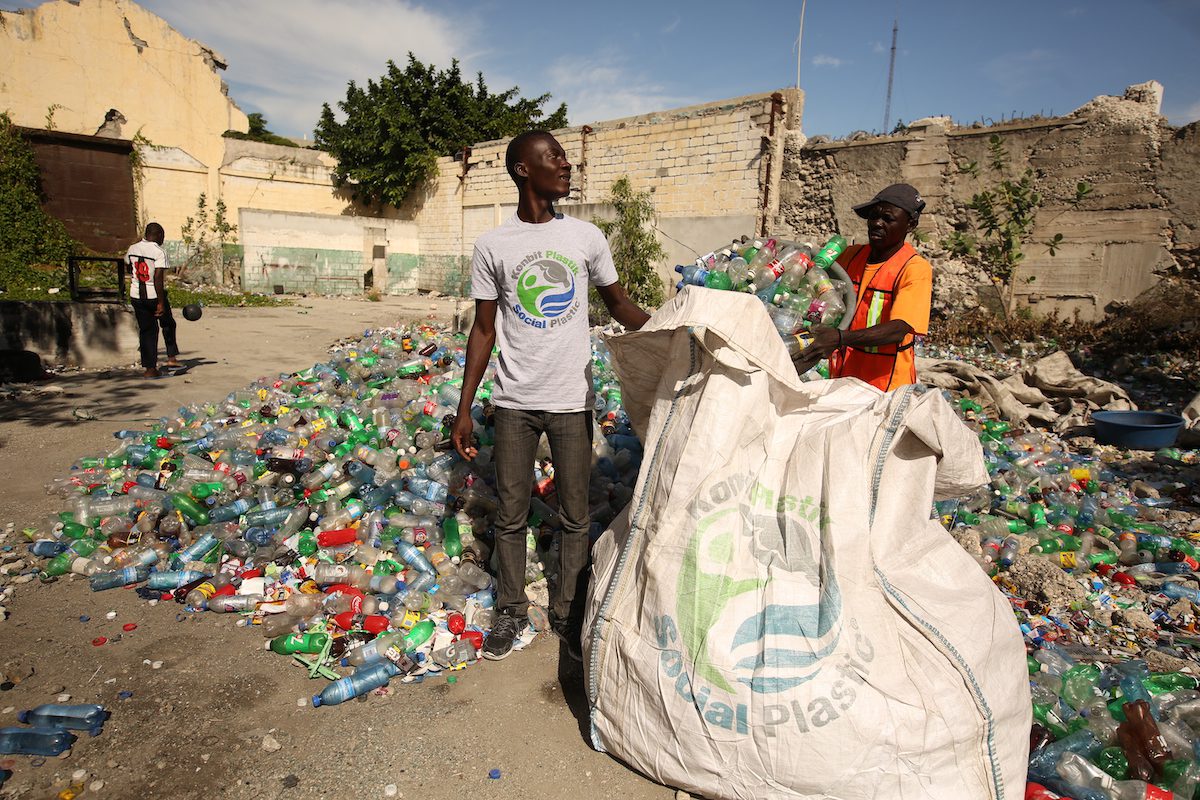
At numerous locally-run Plastic Bank locations, individuals turn in plastic they have collected from within their communities. In Haiti, more than 40 recycling centers have been established and plastic collectors earn as high as $5 per day in a country where the average citizen lives on $2 a day, according to the World Bank. Since 2015, the first Plastic Bank center opened in Haiti has collected an amount of plastic equivalent to more than 100 million plastic bottles.

The plastic is weighed and assigned a value, which is then deposited into an online account that can be accessed via a smartphone application. According to Frankson, 50 percent of people in Haiti have a smartphone that can run the app and those who do not can use plastic to buy a phone. The app uses blockchain technology on IBM’s LinuxONE servers, meaning that all transactions are tracked and free of any danger involved in a cash-based system, such as robbery or forgery. At Plastic Bank stores, individuals can use their credits to buy necessities such as water, food, sustainable cooking fuel, high-efficiency stoves and even medical insurance, school tuition, solar-powered smartphone charging and Wi-Fi access.

Another innovation is the app’s banking features. Utilizing the same blockchain technology to create a secure “hyper ledger,” users can build credit over time and eventually earn low-interest loans. Before this feature, this was a very uncommon opportunity in countries like Haiti since many citizens do not qualify for bank accounts.

The Advent of Social Plastic

Once the plastic is collected at recycling centers, it is cleaned, crushed into pellets and sold as what the organization calls Social Plastic, or a form of plastic that is more socially responsible. Social Plastic is purchased by companies and multinational corporations such as German Henkel, Shell, IBM and Marks & Spencer and is used directly in the manufacturing of their goods. According to Katz, Social Plastic is a “globally recognized currency“ that “alleviates poverty and cleans the environment at the same time.”

The Future of Plastic Bank

Currently, Plastic Bank is expanding operations to over two dozen countries and developing the app further, including IBM visual recognition technology to help users identify the value of certain plastics, like a barcode scanner in a store. Plastic Bank expects to entice major corporations such as Coca-Cola, PepsiCo and Colgate-Palmolive to join the initiative. Plastic Bank currently operates in the Philippines, Haiti and Indonesia and is projected to have 530 locations by the end of 2019.

– Adam Bentz
Photo: Flickr

October 1, 2019
https://borgenproject.org/wp-content/uploads/borgen-project-logo.svg 0 0 Jennifer Philipp https://borgenproject.org/wp-content/uploads/borgen-project-logo.svg Jennifer Philipp2019-10-01 01:30:562019-10-10 10:13:42How Plastic Bank is Tackling Global Poverty
Developing Countries, Global Poverty, Poverty, Poverty Reduction

What is the International Poverty Level?

Poverty Level
The word poverty is common in discussions of politics, global issues, health and education around the world. Although many organizations are working to put an end to poverty, the general public often has many questions surrounding this prevalent topic. What does it mean to be in poverty and what is the poverty level?

The most recent poverty level set in 2015 stated that an adult making less than $1.90 a day is in poverty. People could questions surrounding the poverty level from a variety of perspectives. Politicians often use it around the globe to allot aid and develop economic policy, but mathematicians can also use it to compare the rates of poverty among countries and solution-oriented NGOs can use it to understand the root causes of poverty. In today’s era, one hefty debate revolves around the impacts of globalization on poverty-ridden countries. This is just one context in which the poverty level is a useful tool in decision making and analysis.

Who Determines the Poverty Level?

The World Bank sets the international poverty line and it fluctuates over time based on how the cost of living changes around the world. To calculate a shared poverty level internationally, the World Bank takes the poverty threshold from each country and converts it into a common currency. It does this using Purchasing Power Parity (PPP), which creates equilibrium among currencies so that the same basket of goods in two different countries will receive the same pricing in each country. PPP is an economic theory that allows the World Bank to put each country’s income and consumption data in globally-comparable terms to ensure that the same quantity of goods and services receive equitable pricing across countries.

Why is it Important to Measure Poverty Levels?

Developed nations, such as the U.K., debate the costs of living and raises in income. In low-income countries, analyzing poverty levels is important for targeting development initiatives and evaluating economic progress over time. For instance, The Rural Support Programmes in Pakistan work to identify needs in rural communities and improve the delivery of basic goods and services in these areas. These programs use poverty levels to evaluate their work and support development initiatives in the area.

Who Lives in Poverty?

The U.N. estimates more than 700 million people live in extreme poverty around the world, struggling to fulfill the basic necessities of life. About 70 percent of these people live in Southern Asia and sub-Saharan Africa, however, these issues affect developed countries as well. Estimates determine that there are 30 million children growing up near or below the poverty line in the world’s richest countries.

What are the Causes of Poverty?

The causes of poverty are diverse and far-reaching, but they often include unemployment, social exclusion, conflict, natural disasters, disease and other phenomena that prevent them from accessing the resources they need to be productive and make a living.

With an estimated four million people living in extreme poverty, the Democratic Republic of the Congo currently has one of the highest poverty rates in the world. Although the country has access to many natural resources, political unrest has plagued it in recent years. The Democratic Republic of Congo has suffered through continual corruption of political officials that has stifled development so that it remains nearly impossible to easily access or extract any of the country’s natural resources. Therefore, it remains difficult to make a living, or even have access to the basic necessities of food and water.

Despite the dismal numbers, some organizations are making huge strides in overcoming global poverty. Organizations like Oxfam International have made it their objective to reduce worldwide poverty. Working in over 90 countries and directly reaching millions of people each year, Oxfam primarily tackles issues of inequality and discrimination. It also provides direct aid in times of crisis and educates the world’s poor in an effort to impact the root causes of poverty at the political level.

Groups like Oxfam often utilize the international poverty level to assess and direct their efforts. Unfortunately, there is no magic solution to such a widespread problem. In order to solve the issue, though, everyone must first understand its causes. By implementing the poverty level system, the world should be on the right track to eradicate extreme poverty.

– GiGi Hogan
Photo: Flickr

September 30, 2019
https://borgenproject.org/wp-content/uploads/borgen-project-logo.svg 0 0 Kim Thelwell https://borgenproject.org/wp-content/uploads/borgen-project-logo.svg Kim Thelwell2019-09-30 07:30:212024-05-29 23:10:40What is the International Poverty Level?
Extreme Poverty, Global Health, Global Poverty, Health, Malaria, Poverty

A Look at Efforts to Address Health Care in Ghana

Health Care in Ghana

The West African nation of Ghana is a vibrant country filled with natural beauty and rich culture. However, like many of its neighbors in sub-Saharan Africa, Ghana suffers from a high poverty rate and lack of access to adequate health care. In fact, according to the Ghana Statistical Service, 23 percent of the total population lives in poverty and approximately 2.4 million Ghanaians are living in “extreme poverty.” That being said, many organizations and groups — both national and global — are working to improve health care in Ghana.

Malaria in Ghana

A disease transmitted through the bites of infected mosquitoes, malaria is a common concern throughout much of West Africa, including Ghana where it is the number one cause of death. In fact, according to the WHO’s most recent World Malaria Report, nearly 4.4 million confirmed malaria cases were reported in Ghana in 2018 — accounting for approximately 15 percent of the country’s total population.

All that in mind, many NGOs, as well as international government leaders, have taken up the mantle to eliminate malaria in Ghana. This includes leadership from the United States under the President’s Malaria Initiative or PMI which lays out comprehensive plans for Ghana to achieve its goal of successfully combating malaria.

With a proposed FY 2019 budget of $26 million, the PMI will ramp up its malaria control interventions including the distribution of vital commodities to the most at-risk citizens. For instance, the PMI aims to ensure that intermittent preventative treatment of pregnant women (IPTp) is more readily accessible for Ghanaian women. Progress has been made, too, as net use of IPTp by pregnant Ghanaian women has risen from 43 percent to 50 percent since 2016. This is just one example of the many ways in which PMI is positively contributing to the reduction and elimination of malaria in Ghana.

National Health Care System

National leaders are also doing their part to positively impact health care in Ghana. In 2003, the government made a huge step toward universal health coverage for its citizens by launching the National Health Insurance Scheme (NHIS). As of 2017, the percentage of the population enrolled in the scheme declined to 35 percent from 41 percent two years prior. However, 73 percent of those enrolled renewed their membership and “persons below the age of 18 years and the informal sector workers had significantly higher numbers of enrolment than any other member group,” according to the Global Health Research and Policy.

It is difficult to truly understand Ghana’s health issues without considering firsthand perspectives. In an interview with The Borgen Project, Dr. Enoch Darko, an emergency medicine physician who graduated from the University of Ghana Medical School, commented on some of the health issues that have plagued Ghana in recent decades. “A lot of problems that most third world countries, including Ghana, deal with are parasitic diseases such as malaria and gastroenteritis. Though health issues like diabetes and hypertension still remain in countries around the world, and even the United States, the difference is that some diseases that have been eradicated in Western countries still remain in countries like Ghana,” Darko said. “Many people in Ghana simply do not see a doctor for routine checkups like in the United States. Rather, most people will only go to see a doctor when they are feeling sick. As a result, lesser symptoms may go unchecked, thus contributing to the prevalence and spread of disease and infection. Combined with the fact that many Ghanaians in rural communities may not have sufficient money to afford treatment or medicine, this becomes a cycle for poor or sick Ghanaians.”

That said, it is hoped that with continued support from international players as well as government intervention, the country can continue to make strides in addressing health care for its citizens.

– Ethan Marchetti
Photo: Flickr


September 30, 2019
https://borgenproject.org/wp-content/uploads/borgen-project-logo.svg 0 0 Kim Thelwell https://borgenproject.org/wp-content/uploads/borgen-project-logo.svg Kim Thelwell2019-09-30 01:30:172024-05-29 23:13:02A Look at Efforts to Address Health Care in Ghana
Poverty

The Venezuelan Crisis and How the US is Reacting

Venezuelan Crisis
For decades Venezuela’s government and economy have struggled significantly. Entering Venezuela into a search engine will generate links to a multitude of foundations attempting to relieve the Venezuelan Crisis. What is the Venezuelan Crisis and how is the U.S. reacting?

The South American country’s history is full of political and social inequity. Venezuelan leadership has been rocky at best since Simon Bolivar led the country to independence more than 200 years ago. Despite his original constitutional implementations of extremely strict rules such as capital punishment for any public officer guilty of stealing 10 pesos or more from the government, the country quickly fell into corruption.

History of Corruption

The disorder apparent in Venezuela’s contemporary governmental and social climates stems from centuries ago when inefficient leadership set the precedent. The country did not institute a democratic election until 1945. That is more than 130 years after its founding and establishment of the civilian government. Turmoil ensued as Marcos Perez Jimenez, a military figure, overthrew the first elected President Romulo Gallegos within eight months. Admiral Wolfgang Larrazabel, in turn, ousted Jiminez and leftist Romulo Betancourt subsequently took power. This period of rapid regime change defined by government instability and disorganization instilled a distrust that still resonates in the hearts of Venezuelans today.

The trend of unreliable leaders continued until the late 1960s and 1970s when a beacon of light emerged. This age saw much-needed transparency in public assets, contrasting with previous leaders who were heavily corrupt. During this time, other South American countries even began to restructure their governments after the Venezuelan model. However, Venezuela lived this era of tranquility for only a short time because of one man: President Jaime Lusinchi.

Lusinchi served as President from 1984 to 1994. Even in the era of Nicolas Maduro, he stands as the epitome of Venezuelan corruption. In his 10 years as the country’s leader, a corrupt security exchange program stole an alleged $36 billion from the government. Additionally, many accused Lusinchi of stealing from the National Horse Racing Institute to promote the campaign of his successor, Carlos Andres Perez.

Venezuela’s economy functions almost solely on oil exports. The volatility of international oil demands, a market characterized by consistent inconsistency, historically parallels with the state of the Venezuelan market. A booming oil stock in an oil-dependent country naturally creates extraordinary temptation, a temptation that Lusinchi gravely fell into.

Making the national situation worse, the money Lusinchi stole from the government came from a temporary oil surge. Therefore, when oil prices normalized, the economy faced a much more difficult catching up than it would have otherwise.

For many Venezuelans, Lusinchi reopened recent wounds concerning government distrust. This fueled a wave of anger that the famous populist Hugo Chavez harnessed. Lower-class Venezuelans blamed government corruption and greed of the elite for the country’s extreme economic and social issues. The support of this large base played an important role in electing Chavez as President in 1998.

Today’s Dictatorship

To understand the current state of affairs under Maduro, it is vital to understand Chavez’s impact on the Venezuelan Crisis. Chavez’s policies raised (and still raise) enormous controversy as he led using traditionally socialist policies. Under these policies, Venezuela saw a 50 percent reduction in poverty and a dramatic reduction in the unemployment rate.

These policies were only achievable because of a 2004 soar in oil prices in the middle of Chavez’s presidency. His excessive spending on categories like food subsidies, education and health care was only possible through this boom. To get the Venezuelan people to reelect him, Chavez did not scale back these programs to match declining oil prices and set up his country to fail.

In 2014 Venezuelan oil prices crashed, leaving the economy in shambles as Chavez’s programs quickly racked up an enormous deficit. This also started the massive inflation of the Venezuelan bolivar that the country still struggles with today. Following Chavez’s death, Nicolas Maduro gained power in 2014, taking on the responsibility for the economy and deficit. Maduro failed to diversify the oil-rigged economy. This caused the petrostate to fall back into extreme poverty, currently wielding a poverty rate of around 90 percent, double what it was in 2014.

The Council on Foreign Relations quotes Venezuela as “the archetype of a failed petrostate,” describing it as a sufferer of the infamous Dutch disease. The transition to this began back in 1976 when then-President, Carlos Andres Perez, nationalized the oil industry creating the state-owned ‘Petroleos de Venezuela (PDVSA). Chavez’s mismanagement of this company led it to render weak profits. Internal issues such as insider business practices and drug-trafficking also littered the business with corruption. Chavez then sanctioned a series of other national businesses and foreign-owned assets tilting the country towards extreme socialism.

This progression of increased nationalization slowly opened the doors for Maduro to initiate authoritative rule. He abused this power in multiple facets which had devastating consequences on the well-being of the country and its people.

Early in his rule, Maduro placed his supporters in the Venezuelan Supreme Court and replaced the National Assembly with his own Constituent Assembly. Through this cunning, undemocratic move, he essentially eliminated all political opposition and erased any check on his power. This allowed him to pass extremely contentious policy such as the abuse of food importation. Because of Maduro’s extremely poor operation of a socialist economy, hyperbolic inflation rates currently plague the country. While the political elites operate on a 10:1 rate, the rest of the country uses around a 12,000:1.

To make matters worse, Maduro delegated food commerce to the military which has access to the significantly decreased exchange rate. To make enormous profits, it buys food at the 10:1 rate and then sells it domestically at a 12:000:1 rate. The 2017 statistic shows that Venezuelans lost an average of 27 pounds, highlighting the horror of Maduro’s corruption.

What is the US’s position in all of this?

As expected, the U.S. with its long history of an anti-socialist stance disapproves greatly of the Maduro suppressive regime. There is historical friction between the two, which emerged again during Chavez’s time in a battle between capitalist and socialist ideals.

After Maduro’s reelection, the Trump administration grew furious and decided to use aid as a tool against the dictator. In an act of defiance against the U.S., Maduro rejected all supplies from the capitalist power. The U.S. decided to use this move to its advantage, pledging to send copious amounts of humanitarian aid and urging Venezuela’s officials to defy their President’s orders.

As Dylan Baddour states in his article for The Atlantic, “Those who support the mission say that soldiers will be motivated by the impact Venezuela’s crisis is having on their families to switch sides and affect a peaceful transfer of power.” However, not everyone supports this mission because of the U.S.’s bittersweet past regarding Latin American intervention.

Citizens in countries like Chile, Nicaragua and Panama certainly are in living memory of times when American involvement only made matters worse. But as Baddour writes, in a situation as dire as Venezuela’s during the Venezuelan Crisis, “the world’s most powerful country showing up at Venezuela’s border with truckloads of food and medicine is much better than what it has done in the past.”

There is, of course, a concern that Venezuela could transform into the next Syria — where the majority of the population suffers because of one belligerent leader. But if the U.S. takes a proper humanitarian route with its aid, unlike previous attempts, it could do more help than harm. Hopefully, Venezuela will accept aid and transfer power peacefully and efficiently to someone that does not endorse such heinous policies. Until then, the U.S. simply providing its current amount of humanitarian aid is a positive step in the right direction to relive some of the effects of the Venezuelan Crisis.

– Liam Manion
Photo: Flickr

September 28, 2019
https://borgenproject.org/wp-content/uploads/borgen-project-logo.svg 0 0 Jennifer Philipp https://borgenproject.org/wp-content/uploads/borgen-project-logo.svg Jennifer Philipp2019-09-28 19:28:412019-12-16 14:53:43The Venezuelan Crisis and How the US is Reacting
Page 23 of 27«‹2122232425›»

Get Smarter

  • Global Poverty 101
  • Global Poverty… The Good News
  • Global Poverty & U.S. Jobs
  • Global Poverty and National Security
  • Innovative Solutions to Poverty
  • Global Poverty & Aid FAQ’s
Search Search

Take Action

  • Call Congress
  • Email Congress
  • Donate
  • 30 Ways to Help
  • Volunteer Ops
  • Internships
  • Courses & Certificates
  • The Podcast
Borgen Project

“The Borgen Project is an incredible nonprofit organization that is addressing poverty and hunger and working towards ending them.”

-The Huffington Post

Inside The Borgen Project

  • Contact
  • About
  • Financials
  • President
  • Board of Directors
  • Board of Advisors

International Links

  • UK Email Parliament
  • UK Donate
  • Canada Email Parliament

Get Smarter

  • Global Poverty 101
  • Global Poverty… The Good News
  • Global Poverty & U.S. Jobs
  • Global Poverty and National Security
  • Innovative Solutions to Poverty
  • Global Poverty & Aid FAQ’s

Ways to Help

  • Call Congress
  • Email Congress
  • Donate
  • 30 Ways to Help
  • Volunteer Ops
  • Internships
  • Courses & Certificates
  • The Podcast
Scroll to top Scroll to top Scroll to top