• Link to X
  • Link to Facebook
  • Link to Instagram
  • Link to TikTok
  • Link to Youtube
  • About
    • About Us
      • President
      • Board of Directors
      • Board of Advisors
      • Financials
      • Our Methodology
      • Success Tracker
      • Contact
  • Act Now
    • 30 Ways to Help
      • Email Congress
      • Call Congress
      • Volunteer
      • Courses & Certificates
      • Be a Donor
    • Internships
      • In-Office Internships
      • Remote Internships
    • Legislation
      • Politics 101
  • The Blog
  • The Podcast
  • Magazine
  • Donate
  • Click to open the search input field Click to open the search input field Search
  • Menu Menu

Archive for category: Poverty Reduction

Information and stories about poverty reduction.

Global Poverty, Poverty, Poverty Reduction

The Reduction of Poverty in Calgary

Calgary Reduces Poverty in 2020
Over the last 6 years, poverty in Calgary reduced. From 2015 to 2017, the rate dropped from 9.8 percent to 6.9 percent in 2019. Vibrant Communities Calgary (VCC), a nonprofit organization, has advocated for communities under the poverty line since 2005. Delving into its own independent research, the results have improved with the assistance of Enough for All (E4A). This is a city-based poverty reduction strategy where its citizens, people in business, educators and government officials come together to discuss ways to solve this issue in their community. Back when it started in 2013, many community organizations and government officials made progress regardless of status.

Enough For All

The provincial government introduced the Alberta Child Benefit, which increased and indexed income support programs to the cost of living. Meanwhile, the federal government released Canada’s first national poverty reduction strategy. Most recently, E4A has already made an impact through its partnerships in over fifteen community service areas where poverty has decreased. Some have stated that the ongoing vision of this strategy has shown progress as “a community where there is enough for all,” hence the name of the project. The mission is to resume its goodwill by creating opportunities to align and leverage the work of hundreds of organizations and thousands of its Calgary’s citizens to reduce poverty in the city. It has a target of reducing Calgary’s 2015 poverty level by 30 percent by 2023. This is one of the plans that the city of Calgary intends to use to reduce poverty in the year 2020.

Market Basket Measure

When applying the Market Basket Measure to the incidence of low income in Calgary, there has been a decrease in the city’s poverty situation. It is unclear if this qualifies as a downward trend. Market Basket Measure is a measure of low-income based on the cost of a specific basket of goods and services representing a modest, basic standard of living. This includes the costs of food, clothing, footwear, transportation and shelter among other expenses for families made up of two adults ages 25 to 49 and two children ages 9 to 13. A working group of federal, provincial and territorial officials included its definition of disposable income, led by Human Resources and Skills Development Canada (HRSDC) between 1997 and 1999.

Calgary’s City Council and the United Way of Calgary adopted this program unanimously, as well as the area’s Board of Directors back in 2013. Vibrant Communities Calgary received the steward of the strategy, acting as a backbone organization to guide the implementation of the strategy while the community acts to make helpful changes within the city. In the last five years, Calgary has experienced an increase in unemployment and an economic slump, despite the addition of 7,000 more jobs in Calgary. Despite the unemployment rate at 7.2 percent in Cowtown, it has improved steadily.

Poverty in Other Areas of Canada

Canada has an official poverty line. With the release of the Canadian Poverty Reduction Strategy, Opportunity for All, the federal government has announced that the Market Basket Measure will be the single measure for measuring and reporting on income poverty moving forward. The establishment of a single poverty line should create alignment across municipalities, provinces and territories.

The minimum wage is infinitely closer to the living wage. The gap between Calgary’s living wage of $16.45 per hour and the provincial minimum wage of $15.00 per hour is at a historical low of only 8 percent. Social assistance incomes continue to fall short of the poverty line. Despite a recent increase, benefit levels for income support are still about 50 percent of the poverty line.

Poverty in Alberta

The province of Alberta collectively has a poverty rate of 5 percent among children, cutting the rate in half from 2015 to 2017. In the same time frame, there were 622,000 children living below that line. This is a 2 percent drop with an 8.2 percent decrease within the past decade overall. Dating back to 2007, there were more than 1.1 million children living under the line. The major reason for this improvement is due to the Canada Child Benefit (CCB), as well as the Alberta Child Benefit. The CCB gives tax-free monthly payments to eligible families to help with the cost of raising children under 18 years of age. Additional perks include child disability benefits for children with physical and developmental disabilities. This is another way that poverty in Calgary is reducing in 2020 while helping the province do so entirely.

As for the Alberta Child Benefit (ACB), there is an increase in income support programs that aid the cost of living, community hubs and a national poverty reduction strategy involving the city. While the city is planning to further improve its unemployment rate, government officials and community organizers have developed another program. Poverty continues to be the day-to-day reality of more than 120,000 Calgarians within the province. The ACB is a tax-free amount that goes to families with children under 18 years of age with a yearly salary below $43,295. There is no income requirement, which is similar to the Alberta Family Employment Tax Credit, a tax-free amount that goes to families that have a working income and children under 18 years of age.

With the number of plans put in use, along with an outpouring of support within the community, Calgary has made headway in giving its citizens a chance to hope for a better outcome of its future. These ideas have shown that one of Canada’s most populous and prosperous cities can improve as poverty in Calgary continues to reduce.

– Tom Cintula
Photo: Flickr

March 14, 2020
https://borgenproject.org/wp-content/uploads/borgen-project-logo.svg 0 0 Lynsey Alexander https://borgenproject.org/wp-content/uploads/borgen-project-logo.svg Lynsey Alexander2020-03-14 11:55:192024-05-29 23:15:25The Reduction of Poverty in Calgary
Global Poverty, Poverty, Poverty Reduction

How China Reduced its Poverty

China Reduced its Poverty
China reduced its poverty from 97 percent in 1978 to 1.7 percent in late 2018. In the late 1970s, China began focusing on poverty reduction and economic development. Through various economic efforts, China became market-oriented to decrease poverty, which subsequently grew the private sector, created modern banks, reformed the agricultural industry, developed the stock market and spurred foreign trade and investment. China aims to reduce poverty rates to 0 percent in 2020, which is in line with the U.N. Sustainable Development Goal of eliminating global poverty.

China’s Alleviation Method

The International Poverty Reduction Center in China reported lifting more than 850 million of its people out of poverty from 1981 to 2013. During that time period, extreme poverty decreased from 88 percent to 1.85 percent. To achieve a 0 percent poverty rate, China is using extensive expertise in helping Chinese nationals who reside in poorer regions. The current poverty rate of 1.7 percent primarily encompasses those in poor rural regions. 

Similar to the approach that China took in the 1970s and 1980s, it aims to increase efforts to open the economy for trade, diversify the marketplace, improve agricultural practices and implement education reform.

Poverty is still an issue throughout the agricultural industry, but the government is aiming to completely eliminate the Chinese poor. China created a poverty registration system that enables tracking of information relevant to those in poverty. It gathered data from more than 128,000 villages and 290,000 households that indicated that many of the poor reside in Guizhou, Yunan, Henan, Hunan, Guangxi and Sichuan. China aims to accomplish additional poverty reduction techniques through policies based on industrial development, relocation, eco-compensation, education and social security improvement. The Chinese government has managed to reduce poverty through direct involvement in hard-to-reach rural areas that have innately higher levels of poverty.

To support economic growth, the Chinese government is pushing for new industries in these poor regions, such as e-commerce and tourism. Furthermore, the relocation of poor families residing in areas prone to earthquakes or landslides has supported Chinese poverty reduction measures. The country is also emphasizing education and occupational training. Public health services will be available to the poor, especially in the remote mountainous regions. These actions indicate that China has reduced poverty not only through broad approaches but also through direct impacts.

Direct Progress

Progress is already underway in the government’s push for new industries. China has reduced poverty through these industries that benefit hundreds of thousands of Chinese citizens. China E-commerce centers, known as Taobao villages, enable the Chinese to sell their produce and specialties online. In 2015, 780 Taobao villages employed more than one million people and included more than 200,000 active online storeowners. Comparatively, in 2019, the number of Taobao villages grew to 4,310 and active online shops totaled to more than 660,000.

China’s Investments in Africa 

China also helps other countries with economic development and poverty reduction. As an economy grows, poverty trends to gradually lower; on the other hand, job growth, economic diversification and agricultural productivity improve. One can see a specific example of China’s method for poverty reduction through its investments in African countries to build foreign economies. China has provided more than $57 billion in financial aid to more than 170 countries. In 2018, China accounted for almost 20 percent of all infrastructure and capital project investment in Africa.

A Chinese Poverty-Reduction Model for Global Use

China reduced its poverty through economic development and direct impact. In 2016, China sent 775,000 officials to poor regions to alleviate poverty. The country sent these officials out to work in one to three-year posts. This direct impact demonstrates how a country can eliminate poverty through strong economic growth in remote regions. 

Brett Rierson, China representative for the World Food Program said, “China invested in agriculture to reduce poverty and successful agricultural projects were built up from the grassroots.” Rierson believes China is a good model for how to reduce poverty in developing countries.

Although China has been a positive influence on developing economies, one country alone cannot eliminate global poverty. Other developed countries could use China as a model for reducing poverty and improving living standards.

– Lucas Schmidt
Photo: Flickr

March 12, 2020
https://borgenproject.org/wp-content/uploads/borgen-project-logo.svg 0 0 Lynsey Alexander https://borgenproject.org/wp-content/uploads/borgen-project-logo.svg Lynsey Alexander2020-03-12 06:30:352020-03-12 10:22:46How China Reduced its Poverty
Global Poverty, NGOs, Poverty Reduction

Global Poverty Reduction from 2000 to 2020

Global Poverty Reduction
The United Nations (U.N.) defines “extreme poverty” as living on $1.90 a day or less. In 2018, roughly 9 percent of the world’s population lived in extreme poverty. However, global poverty reduction efforts are implementing successfully in some of the world’s poorest countries. By 2030, projections determine that extreme poverty should decrease to 6 percent. Here are some basic facts about global poverty levels today and examples of successful NGO projects that are achieving widespread global poverty reduction.

Facts About Global Poverty Levels

  1. Basic Needs: In 2017, three-quarters of the global population had safe sanitation facilities and 90 percent had access to potable water. Still, 2 billion people live in “high water stress.” This means that the demand for water exceeds the available amount. A U.N. survey of 172 countries found that 138 had some form of legal measure in place to provide equitable access to water. Additionally, around 70 percent of all states surveyed currently have procedures that supply rural areas with more water.
  2. Electricity: Ninety percent of the world is now supplied with electricity due to significant expansion to rural regions. Yet, rural rates still remain disparate at 78 percent compared to urban centers’ rate of 97 percent. Several countries remain below 20 percent electrification, most of which are in Sub-Saharan Africa. On the other hand, Kenya, Bangladesh, Myanmar and India have substantially increased electric services. India, for example, supplied 30 million households with power from 2010 to 2016.
  3. Unemployment: The global unemployment rate is now at 5 percent, returning to pre-2008 financial crisis levels. However, youth unemployment rates are three times that of adults (12 percent for youth vs. 4 percent for adults). In addition, rural communities experience three times as much poverty as urban centers. The employment sex ratio remains asymmetric, but the female labor market participation rose to 48 percent worldwide. On average, gender equality in the workplace is now at 1 percent.
  4. Social Services: In 2019, 45 percent of the global population benefited from at least one social service. Net school enrollment increased by half over the past 10 years, and over 90 percent of those aged 15 to 24 are literate. Still, gender equality in educational attainment has decreased. Additionally, primary school enrollment rates are four times higher in Europe and North America, where social services cover about 92 percent of all children. This is seven times higher than in Sub-Saharan Africa and South-East Asia.

NGO Initiatives

  1. Burkina Faso Cash Transfer Project: The International Development Association started the Burkina Faso Cash Transfer project in 2014. The project is an infrastructure development initiative that addresses three key areas: private-sector job growth, the improvement of the social safety net and vocational training. The cash assistance program is a need-based system. Additionally, the program provides the poorest groups with social services and three years of financial aid. So far, half a million people are in their respective national social safety nets, and 100,000 individuals received cash assistance. Approximately 35,000 recipients received additional funds for food, keeping many citizens from returning to poverty. Around a million people will benefit from the program by 2024.
  2. Sahel Women Empowerment and Demographic Dividend Project (SWEDD): SWEDD launched in countries like Burkina Faso, Chad and Mali in 2015. SWEDD addresses the ramifications of gender inequality on multiple fronts and informs and empowers women of all ages. Labor market preparedness, access to reproductive health care services and increased school attendance are the project’s primary objectives, even though it works a little differently in each country. For example, by subsidizing schooling for 13,000 girls in Chad, the dropout rate has been lowered by 50 percent.
  3. The Urban Youth Employment Project (UYEP): The World Bank and the Australian Department of Foreign Affairs and Trade fund UYEP. UYEP focuses on youth employment in Papua New Guinea. In 2010, three-quarters of those under the age of 24 had no bank account, did not attend high school and never had a paying job. The program has provided 18,500 youth with work-specific training, subsequent job placement and financial subsidies throughout the process.

Power of NGOs in Global Poverty Reduction

NGO funds are vital for global poverty reduction because they help low-income countries achieve durable change. In December 2019, the World Bank Group and the International Development Association committed $80 billion of funding for existing and proposed projects in the 76 poorest countries. Since 2000, there is notable progress in these fragile areas. Nonetheless, substantial challenges remain to alleviate poverty and achieve global poverty reduction.

– Annabel Fay
Photo: Flickr

March 10, 2020
https://borgenproject.org/wp-content/uploads/borgen-project-logo.svg 0 0 Lynsey Alexander https://borgenproject.org/wp-content/uploads/borgen-project-logo.svg Lynsey Alexander2020-03-10 13:37:502020-04-01 14:39:44Global Poverty Reduction from 2000 to 2020
Global Poverty, Poverty Reduction, Water

Pedal Power: Bicycles and Poverty Alleviation

Bicycles and Poverty Alleviation
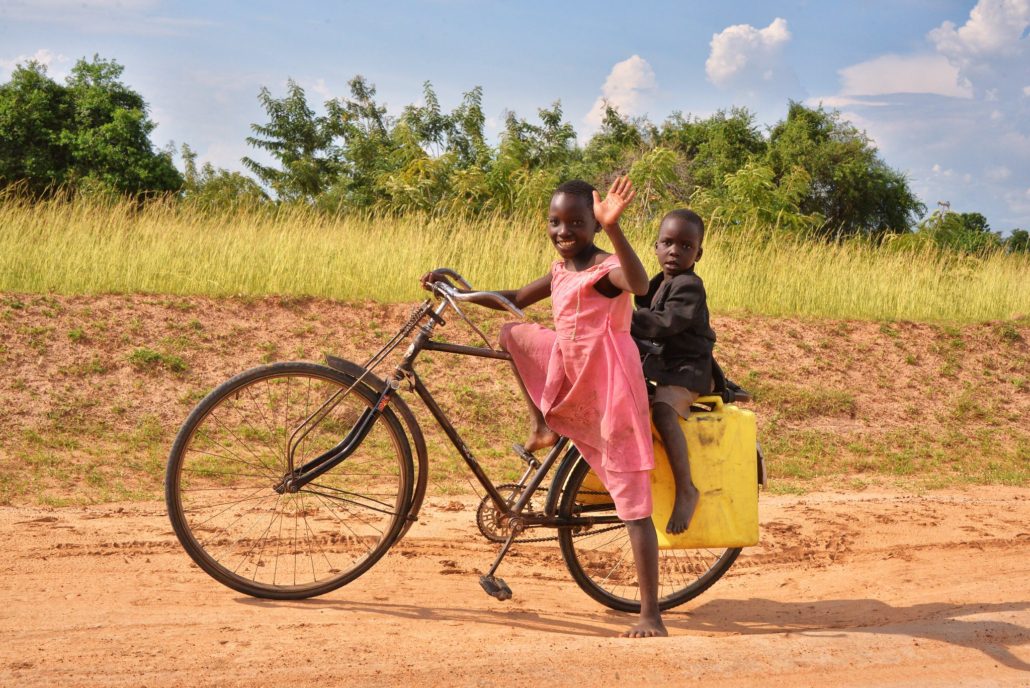
While the discussion of bicycles may elicit thoughts of expense or leisure, bicycles and poverty alleviation link together. Bicycles first came about in the 19th century as a means of transport in response to the dearth of horses. Transportation has continued to be the vital use of the bike. Additionally, people around the world have begun seeing the additional benefits of cycling, particularly in less wealthy areas.

People bike all over the world. This fact has held true since 1817 when German inventor Karl von Drais crafted what people widely accept as the first bicycle. Some cities and countries boast more bicycles than people. For instance, in the Netherlands, 22.5 million bicycles outnumber the 17 million person population. In less financially stable areas of the world, there might be fewer bicycles. However, the importance of bicycles to the livelihood and health of residents is just as strong.

Food Security

Food security is an area where the connection between bicycles and poverty alleviation is particularly prevalent. In addition, food security refers to a state of living in which nutritious and sufficient food is physically, socially and economically available to a person. When an area struggles with poverty, food security can be a constant source of stress for residents. In developing countries, small-scale rural farmers are often responsible for an area’s main food production. However, these farmers can face difficulty selling their crops when transport options to markets are not available. Additionally, when transport to markets or cities is available, the cost can present another barrier to those living in poverty.

On a small scale, a bicycle can help a farming family gain buyers for their crops. Also, it helps lift the community out of poverty. Moreover, when food is available for purchase, productivity increases and food distribution improves. This benefits the entire community. One nonprofit, Cycling out of Poverty (CooP), has created a program called Bike4Work, which provides farmers access to bicycles and trailers to haul their food. Bike4Work is an innovative contribution to some of the struggles that poverty has created in rural farming areas.

Access to Water

The method of sustainable transport can also help ease the burden of accessing safe and clean water. When water sources are not readily available in a town, residents must expend great physical effort and time in order to access this necessity. In addition, bicycles can help shorten the journey and lessen the amount of energy they need to obtain water.

Additionally, bicycles have cropped up in a more unusual manner in Kenya as a response to increased difficulties of farming and water access due to climate change. In Kenya, seasonal farmers rely on yearly rainy seasons to create a successful harvest. However, changes to the local climate have made water more scarce, creating issues with the irrigation of crops. CooP, the same charity that used bicycles to help ease food scarcity, has implemented an innovative bicycle-powered water pump in Kisumu, Kenya.

Kisumu is the third-largest city in Kenya. Climate change and lack of water for irrigation affected Kisumu. CooP partnered with organizations in Kenya and neighboring cities in Uganda to install this bicycle-powered pump at The Green Hub Shop, a local store in Kisumu. The water pump efficiently and inexpensively sucks water from local streams and rivers to provide irrigation for farmers across Kisumu.

Bicycles and Public Health

Bicycles and poverty alleviation efforts have combined in another seemingly unlikely manner in Kibibi, Uganda. Village health teams have begun using bicycles with adapted trailers as ambulances in emergency situations. This adaptation is crucial for Uganda because 77 of the 121 districts lack an ambulance service.

Bicycle ambulances are just one way that cycling has been improving public health in impoverished areas. Riding a bicycle also has undeniably beneficial health effects, both on the physical body and on the mind. Cycling is a form of exercise that can benefit the heart without having the same strain that activities such as running can bring.

Erik Wright, Program Director for Bike and Build, a U.S. charity that links bicycles and poverty alleviation through affordable housing, argues for the positive effect cycling has on mental health. Wright speaks of the “feeling of freedom” that having a bicycle can elicit, along with a sense of independence owning and riding a bike can bring. Psychiatric studies have proven the benefits that riding a bike has on mental health. In addition, when combined with increased ease of access to food, water and health care, the link between bicycles and poverty alleviation efforts strengthens.

Pedaling Onwards

Bicycles are not an all-encompassing solution to poverty by any means. Yet, the benefits that bicycles bring to impoverished areas are undeniable. Bicycles provide increased access to necessities while providing physical and mental health benefits, all at a cheaper cost than most transportation systems. In the fight against all the struggles that poverty brings, the link between bicycles and poverty alleviation proves beneficial on a personal, familial and regional scale.

– Elizabeth Baker
Photo: Flickr

March 8, 2020
https://borgenproject.org/wp-content/uploads/borgen-project-logo.svg 0 0 Lynsey Alexander https://borgenproject.org/wp-content/uploads/borgen-project-logo.svg Lynsey Alexander2020-03-08 01:30:282020-04-02 08:02:06Pedal Power: Bicycles and Poverty Alleviation
Global Poverty, Poverty Reduction

The Link Between Agriculture and Poverty Reduction

The Link Between Agriculture and Poverty Reduction
The link between agriculture and poverty reduction has significant documentation. Developing countries that have risen from high levels of extreme poverty have seen improvements in agriculture and an increase in farmers’ wages that cooccur with drops in the poverty rate. According to an OECD report, one can attribute 52 percent of poverty reduction to growth in agriculture incomes. In addition, for a measure of 1 percent GNI growth, agriculture contributed the most to poverty reduction. The policy that seemed to work the most was significantly increasing the protection of agriculture exports by reducing high taxes on exports and reducing overly inflated exchange rates. The greatest advantage of improving agriculture is that the poorest of society benefits the most. The lower the literacy rates, the stronger the poverty-reducing effect.

Vietnam

Changes in Vietnam over the decades exemplify the link between agriculture and poverty reduction. It lifted its people out of extreme poverty by focusing on improvements in its agriculture sector. The poverty rate was northward of 60 percent in 1990 and fell to just 20.7 percent in 2010. Vietnam lifted an estimated 30 million people out of poverty in total. During that time, the government incentivized farmers to invest in their land. Instead of food shortages, the country was able to export its commodities at a surplus. Multilateral trade agreements formed, and the country moved from a closed economy to one open to trade. In the 1980s, Vietnam had food shortages, and today it is a major exporter of rice to world markets.

Indonesia

Some developing countries did not focus on developing their agriculture sectors. In addition to this, those countries experienced the opposite trend. In contrast to Vietnam, Indonesia slowed in poverty reduction last decade. Overall growth in this sector has been weak with researchers making little progress. The poverty rate declined by only half a percentage point in each 2012 and 2013, which was the smallest declines in the last decade. One of the reasons might be a recent trend where small farmers experience eviction from their land in favor of large companies. These companies then use the land for palm oil and rubber. However, are signs that suggest that the agriculture sector may be rebounding. In 2017, there was an increase in both agriculture employment and production. Currently, 32 percent of Indonesians work in the sector. Additionally, rice production went up to 75.4 million tons and up from around 70 million tons in 2014.

Guinea

Guinea is another country that focuses on other sectors for its economic growth. Mining makes up 80 percent of Guinea’s exports, and agriculture makes up the rest. Despite mining being a lucrative industry, it only employs 2.5 percent of the working population. Based on simulations using the 2014 population census, the poverty rate increased to 57.7 percent. Surprisingly, experts often cite Ebola as one of the causes, but low agriculture productivity is an equally large problem.

There is plenty of room for growth in this sector, both in terms of technology and land area farmed. In addition, farmers use very little agricultural inputs such as fertilizer and mechanization. In contrast, there are signs that agriculture is becoming more of a focus. The country has decided to invest in agriculture. In 2018, Guinea allocated 12.5 percent of its budget to agriculture, up from the current level of 7.3 percent. Additionally, IFAD and the Guinean government reached an aid agreement that will raise wages for 65,000 rural farm families and aims to increase family farm production.

For the poorest nations, choosing the sector to focus on reducing poverty is important. Evidence suggests that the link between agriculture and poverty reduction is strong. Developing countries that invest in the agriculture sector and promote policies that benefit farmers tend to fare better in this respect than countries that focus on other sectors.

– Caleb Carr
Photo: Flickr

March 3, 2020
https://borgenproject.org/wp-content/uploads/borgen-project-logo.svg 0 0 Lynsey Alexander https://borgenproject.org/wp-content/uploads/borgen-project-logo.svg Lynsey Alexander2020-03-03 08:30:372024-05-29 23:15:19The Link Between Agriculture and Poverty Reduction
Global Poverty, Poverty Reduction

3 Sustainable Companies Reducing Poverty

Sustainable Companies Reducing Poverty
Since the 1970s scare, the state of the earth, specifically in regards to climate change, has been a hot topic of conversation in the scientific community. The degradation of farmlands, dangerous weather patterns and the gradual deconstruction of global ecosystems are becoming more apparent. With a growing cause for concern, scientists, corporations and individuals have come to understand that a change must occur.

On the other hand, alleviating global poverty is a pressing issue also. The world could dramatically reduce international poverty with longterm investment and adequate programming. Therefore, it can be challenging to determine where to allocate resources. Despite this conundrum, three companies have proven that resource allocation might not have to be a choice if they become sustainable companies reducing poverty. The Plastic Bank, Chr. Hansen and M-KOPA have dramatically improved the lives of impoverished and/or food insecure individuals while maintaining a corporate focus towards alleviating global sustainability issues.

3 Sustainable Companies Reducing Poverty

  1. Plastic Bank: The Plastic Bank is a Canadian company that started in 2013 with the goal of reducing plastic waste in the ocean. Impoverished and overpopulated areas with little to no waste management systems are primary sources of ocean plastic build-up. The organization works with local residents in Haiti, the Philippines, Indonesia and soon Brazil to mitigate plastic waste by mobilizing locals. It accomplishes this by imploring the citizens to collect and deposit plastic buildup in exchange for credits that they can use to buy necessities such as food, medicine and cleaning products. Not only does this reduce individual waste production, but it improves the lives of those who partake in the exchange and those around them. Plastic Bank has committed itself to the implementation of activities to educate these communities about ecological health and the science of sustainability in addition to trading labor for goods.
  2. Chr. Hansen: Chr. Hansen began in 1873 as a single pharmaceutical factory and has grown into a global force in food production and sustainability. In 2019, Corporate Knights acknowledged the Denmark-based company as the world’s most sustainable company. The organization continues to pursue these sustainability goals through the improvement of natural food longevity agents and reducing dairy waste. Further, the company floods investment into alleviating food insecurity with a primary focus on the second U.N. Sustainable Development goal. To accomplish such a goal, the company works with local agencies and/or other civil society organizations to support local, small-scale dairies in developing countries.  Chr. Hansen also devotes attention to the dairy market in Northern Africa where camels are more common than cows. Through this work, the company is investing in research about processing for preservation to decrease camel milk waste and giving local residents affordable access to these products.
  3. M-KOPA Solar: M-Kopa Solar is a Kenya-based company that has implemented solar power to over 750,000 homes and businesses in the region. Not only does the company provide clean energy, but these highly efficient systems also provide low-cost energy to the user. M-KOPA provides rural and off-grid individuals with the comfort of electricity that would otherwise be fiscally or physically inaccessible. Not only do the consumers benefit from the energy but there is also potential to profit from the sale of that power to others. Providing this energy permits consumers to focus less on how to afford power and gives them autonomy. M-Kopa is one of the few African-based sustainable companies reducing poverty within the residing country. This organization is working to expand its reach further through Kenya and into other regions.

These companies have proven that resource allocation is not a choice. These three sustainable companies reducing poverty have done so through corporate missions and societal impact initiatives.

– Kayla Brown
Photo: Unsplash

February 26, 2020
https://borgenproject.org/wp-content/uploads/borgen-project-logo.svg 0 0 Lynsey Alexander https://borgenproject.org/wp-content/uploads/borgen-project-logo.svg Lynsey Alexander2020-02-26 10:06:512020-03-18 11:35:333 Sustainable Companies Reducing Poverty
Global Poverty, Poverty Reduction

The Nobel Prize and Anti-Poverty Efforts

The Nobel Prize and Anti-Poverty Efforts
The Nobel Prize is an international award that many people recognize and shares its name with Alfred Nobel, innovator and inventor of dynamite, among other things. Somewhat ironically, the Peace Prize given in his name holds the most prestige of nearly any accolade an individual can receive in his or her lifetime, but only constitutes one of the fields in which the committee can award a Nobel Prize. The others, physics, chemistry, medicine, literature and economic sciences, celebrate specific advancements or landmarks in their respective disciplines. The Nobel Prize and anti-poverty efforts have more in common than one might think. The Nobel Memorial Prize in Economic Sciences emerged in 1968, making it the newest of the prizes, but nonetheless important. The 2019 edition went to a trio of Boston, Massachusetts-based economists, two from the Massachusetts Institute of Technology and one from Harvard University, two highly acclaimed and respected academic institutions with cutting edge research capabilities in multiple fields. Abhijit Banerjee, Esther Duflo and Michael Kremer deservingly received the Nobel Memorial Prize in Economic Sciences for their experimental approach in alleviating global poverty, closely tying the 2019 Nobel Prize and anti-poverty efforts. 

Groundbreaking Statistics

Banerjee, Duflo and Kremer form past and present leadership of the Abdul Latif Jameel Poverty Action Lab (J-PAL), a global research center with the goal of reducing poverty by advocating policy formation on the basis of scientific evidence. Beginning in 2003, J-PAL works with governments and non-government organizations to identify and carry out interventions where its data analysis deems them most effective. Using randomized control trials (RCTs) similar to ones used in medical fields as the core of its evaluation, its methods have become widely accepted by the global economic policy community. Over the course of the last 20 years, J-PAL linked 986 randomized evaluations across its affiliates in 83 countries to understand if interventions work or not and allow the numerous social sector organizations who use them to adjust policies and practices accordingly. These interventions focus on a wide variety of issues, such as education deficiency and child health. Its studies can have a profound impact, as over five million Indian children received tutoring as a result of one of the studies, the foundation of its Nobel Prize and anti-poverty efforts.

Economic Masterminds

The Royal Swedish Academy of Sciences attributes its efforts as integral to the evolution of development economics into a flourishing field. The academy, which annually awards each prize, notably made Duflo the youngest economic laureate in its history and only the second woman to receive the prize, making 2020’s Nobel Prize and anti-poverty efforts that much more significant. Just as a landmark, the committee deemed J-PAL’s focus on real-world solutions with economic applications extraordinary, whereas previous awards in the field of Economic Sciences boasted theoretical achievements. Rather than focusing on improving the developing world as a whole through economic theory or answers to macroeconomic questions, J-PAL addresses need at a localized level and introduces practical solutions to tangible problems. Beyond the tutoring in India example, J-PAL tested how eradicating parasitic worms affected school attendance among children, the placement of additional teachers in a classroom or monitoring teachers’ attendance with cameras, how access to bank or microfinance loans can improve living standards and even how voting behavior varies depending on specific appeals made by candidates in an election campaign.

J-PAL vs the World

However, despite objective advancements based on RCTs, people should not view them as unmitigated successes, argues Sanjay Reddy of Foreign Policy Magazine. He notes that these Randomized Control Trials promised to assess whether people benefitted from a change in circumstances simply because they had the motivation or better positioning to fare better from it. In reality, he says, one cannot tell whether these projects or initiatives worked because people took advantage of them or because they just work, though the link between these recipients of the 2019 Nobel Prize and anti-poverty efforts is undeniable.

Reddy’s analysis may seem like splitting hairs, especially against the background of the broader perspective J-PAL’s studies bring. Karla Hoff of the Brookings Institute praises the Nobel Prize and anti-poverty efforts that J-PAL has undertaken for a fundamental shift in the culture of development economics and economic as a whole. In addition to directly helping people most in need, the nonprofit challenged deep assumptions about individuals and the decisions they make, questioning the essence of economic development. It altered many things about the field, including the ways, places and kinds of people economists work with.

– Alex Myers
Photo: Flickr

February 24, 2020
https://borgenproject.org/wp-content/uploads/borgen-project-logo.svg 0 0 Jennifer Philipp https://borgenproject.org/wp-content/uploads/borgen-project-logo.svg Jennifer Philipp2020-02-24 06:30:292020-02-24 11:45:37The Nobel Prize and Anti-Poverty Efforts
Global Poverty, Poverty Reduction

The Poverty Reduction Strategy of Tanzania

Poverty Reduction Strategy of Tanzania
Recently, the World Bank released its list of nations that most successfully reduced domestic poverty from 2000-2015. The top five countries reduced poverty between 3.2 percent and 2.6 percent between 2000 and 2015, with Tanzania reducing the highest percentage. The top fifteen countries lifted 802.1 million individuals out of poverty. This article outlines the successful poverty reduction strategy of Tanzania and international support that caused the most drastic reductions in poverty around the world.

History of Tanzanian Poverty

Historically, Tanzania has been one of the most impoverished countries in the world. In 2000, 86 percent of Tanzanians were impoverished, but this number dropped to 28 percent in 2018.

Tanzania reduced poverty by 3.2 percent in 11 years, making it the country that reduced poverty the most in the last 15 years. The poverty reduction strategy of Tanzania is due to three elements: reducing income poverty, increasing access to basic necessities and improving government infrastructure.

Economic Growth

The first strategy focuses on sustainable economic growth, which includes decreasing inflation and focusing on growing parts of the economy that have the largest poor population. The employment and empowerment programs utilized in these strategies focus on agriculture, manufacturing, mining and tourism in addition to macroeconomic growth in exports and imports. Between 2000 and 2015, Tanzania’s export volume grew from 120 to 272, making it the world’s 130th largest exporter. This successfully increased Tanzania’s GDP from $13.3 billion to $47.3 billion.

Tanzania’s unemployment rate dropped from 12.9 percent in 2001 to 10.3 percent in 2014, because of the liquid capital that injected into Tanzania’s economy, a focus on job creation and an industrial transition that opened new jobs. The economic focus of the Tanzanian government lifted thousands of individuals out of poverty and made it the seventh-largest economy in Africa.

The Impoverished Individual

The second strategy focuses on the personal needs of those in poverty. Poverty reduction efforts seek to increase the quality of life and ensure that those in poverty have access to social welfare. Efforts concentrated on education, clean water, sanitation and health services. Because of these efforts, Tanzania increased the number of individuals who had access to clean water by 9 percent between 1990 and 2009. In the same period of time, Tanzania’s health care became more accessible. As a result, child mortality rates dropped from 162 to 108, infant mortality rates dropped from 99 to 68 and the rate of malaria contraction dropped from 40.9 percent to 40.1 percent.

Another poverty reduction strategy focused on education. Tanzania made education more accessible by increasing funding for education, bettering its transportation mechanisms (including roads) and emphasizing vocational education and education for girls. This focus on education increased school enrollment from 68.8 percent in 2000 to 84.6 percent in 2015.

Tanzania’s Commitment to its People

The third strategy is one of the governmental commitments to the impoverished Tanzanian people. This included ensuring the enforcement of the law, the accountability of the government for its people and the prioritizing of stability in order to avoid poverty. The IMF reported that Tanzania has become more accountable to its people, less corrupt and has increased citizen participation in governance, thus ensuring an effective political framework.

International Participation in Tanzania’s Poverty Reduction Strategies

The international community was critical to Tanzania’s successful poverty reduction. The United States, Tanzania’s largest source of aid, began giving Tanzania foreign aid in 2006. In that year, the U.S. gave $151.29 million. This number increased every year, with the U.S. giving Tanzania $633.5 million in aid in 2015. This aid has consistently gone towards the very areas in which Tanzania has seen the most improvement: humanitarian aid, governance, education, economic development and health.

While Tanzania still has a long way to go until it completely eliminates poverty, it has made significant progress since the beginning of the millennium. The poverty reduction strategies of Tanzania, including economic growth, investment in individuals and infrastructure and governance development, have been successful to a great extent. International aid has consistently been a contributing factor to Tanzania’s ability to reduce poverty and has successfully targeted the areas in which Tanzania required the most improvement.

–  Denise Sprimont
Photo: Flickr

February 18, 2020
https://borgenproject.org/wp-content/uploads/borgen-project-logo.svg 0 0 Lynsey Alexander https://borgenproject.org/wp-content/uploads/borgen-project-logo.svg Lynsey Alexander2020-02-18 07:30:412024-05-29 23:14:46The Poverty Reduction Strategy of Tanzania
Global Poverty, Poverty, Poverty Reduction

4 Professional Athletes Who Grew Up Impoverished

Professional Athletes Who Grew Up Impoverished
The world’s population of human beings is vast and immensely complex. Across the planet, thousands of different languages, religions and traditions contribute to the everyday lives of its people. However, nearly all civilizations have one thing in common: sports. Since the development of the most ancient civilizations, humans have created numerous ways to come together and pass the time with recreation. It continues to be a major aspect of society today, so much so that athletes such as Argentinian soccer player Lionel Messi receive as much as $127 million per year. It is no secret that professionals like Messi are some of the highest-paid individuals in the world, but many of them had extremely difficult upbringings. Here are four professional athletes who grew up impoverished and used their past as motivation for the improvement of their future.

4 Professional Athletes Who Grew Up Impoverished

  1. Pelé: Pelé, one of the greatest soccer players of all time, has helped his Brazilian team win three World Cups throughout his career. He was born in Três Corações, Brazil, in 1940. He lived in extreme poverty during his childhood and developed most of his early soccer skills by playing with a makeshift bundle of rags that hardly resembled a soccer ball. Pelé’s story is a prime example of how a common cultural element such as recreation has the power to propel someone into an entirely new way of life. In 2018, Pelé launched a self-named foundation “to help children of the world better their lives as people in [his] childhood helped [him] to better [his].” The Pelé Foundation has since partnered with Pencils of Promise and Charity: Water to fulfill its mission of helping the world’s impoverished youth.
  2. Bibiano Fernandes: Bibiano Fernandes, also known as “The Flash” for his ability to finish fights so early, is one of the most successful fighters in both Brazilian Jiu-Jitsu and mixed martial arts (MMA). He was born in Manaus, a city located near the Amazon rainforest. After his mother died and his father abandoned the family, 8-year-old Fernandes took to the jungle as a means of survival. He lived off of the land for approximately two years before returning to the city. Once he went back to Manaus, he worked as a window washer. During this seemingly hopeless point in his life, he met a group of men who practiced Brazilian Jiu-Jitsu. They accepted him into their training group and he grew into a champion. For a child who took to the forest to avoid starvation, the grappling sport was a lifeline, an opportunity for Fernandes to quite literally fight his way out of poverty. Today, he aims to reach retirement and continue to provide for his wife and children. He prides himself on having worked hard for his accomplishments and encourages his fans to pursue their goals regardless of how impossible they may seem.
  3. Yasiel Puig: Yasiel Puig has played for three major American baseball teams: the Los Angeles Dodgers, the Cincinnati Reds and now the Cleveland Indians. His nickname is “The Wild Horse” because of his unpredictable, exciting way of playing. Born into poor conditions in Cuba, Puig developed an interest in baseball at a very early age. His desire to escape his hometown and play for Mexico resulted in a journey that would change his life forever. At the age of 21, Puig snuck out of Cuba on a cigarette boat. What should have been a relatively smooth journey became complicated by the fact that the smugglers did not receive the pay they were to receive for transporting the baseball player. Restless and angry, they held him captive, occasionally threatening to cut off an arm or a finger so that he would never play baseball again. Several long, difficult weeks passed before Puig finally reached his destination. A staged kidnapping ambushed his captors and soon landed Puig at his audition to play for Mexico City. Puig proves that no matter how treacherous life’s ventures may be, the child inside remains alive and strong enough to push one forward towards their wildest dreams.
  4. Kassim Ouma: Kassim Ouma has one of the most unique stories among these professional athletes who grew up impoverished. He was born in Uganda and lived in extreme poverty until the age of 6 when his life abruptly flipped upside down. It was at this age that the National Resistance Army kidnapped Ouma, a militant force revolting against the Ugandan government. The resistance forced him to fight as a child soldier until the war ceased roughly three years later. Once he returned home, he began working to build a better future for him and his family. He took up boxing and trained his way to the Ugandan national boxing team, and later decided to stay in the U.S. after visiting for a tournament. Ouma serves as an example to all that even the darkest beginnings can lead to light at the end of the tunnel. He now uses his influence to advocate for change in Africa and runs a charity organization called Natabonic, which helps to fund education for his friends and family in his home village of Maga Maga.

These professional athletes who grew up impoverished serve as reminders that with hope and compassion, one can fight (and win) even the most impossible battles. Of course, not every starving child on the planet is going to become a world-renowned athlete and sports will not lead all participants out of poverty.  However sports can be a path to a better life and these stories emphasize that recreation brings people together, and where people come together, anything is possible.

– Harley Goebel
Photo: Flickr

February 2, 2020
https://borgenproject.org/wp-content/uploads/borgen-project-logo.svg 0 0 Jennifer Philipp https://borgenproject.org/wp-content/uploads/borgen-project-logo.svg Jennifer Philipp2020-02-02 07:30:432020-02-03 15:00:084 Professional Athletes Who Grew Up Impoverished
Global Poverty, NGOs, Poverty, Poverty Reduction

What is Poverty?

What is Poverty?
There are two types of poverty that affect millions of people worldwide: relative poverty and extreme poverty. Relative poverty refers to the levels of social poverty of a community, while extreme poverty defines the standard of living throughout the world. There is a global deficiency line set at $1.90 per day. The limitations of the poor determine the ability to pay for medical care, food, clothing and the essentials of daily life. The Sustainable Development Goals (SDG) have established goals and targets to help the poor have equal rights to economic resources, basic services, microfinance and land ownership. By teaching the poor about finance and resilience, there could be potential to build the community and slowly grow the economy of poor countries like Southeast Asia and Africa.

It is very important for a low economic class to obtain financial knowledge because although people are living in harsh conditions, learning ways to escape poverty will ultimately allow people to be able to support their families. Parents would be able to afford basic necessities for children and the materials needed to send each child to school and obtain an education.

Women’s Hygiene

Another issue that plagues the poor is the lack of hygienic products. Many women struggle from a lack of proper care for their menstrual needs. In the United States, there are millions of women who go without having adequate menstrual products. Is someone who is simply running low on funds in poverty? Or does poverty mean not having the means of providing for oneself at all? The difference is that while in one scenario the individual has a recurring income and may fall under relative poverty, the latter is when the individual does not have an income and is accustomed to finding other ways to take care of daily needs. There are organizations, such as Freedom4Girls, #HappyPeriod and Pads4Girls, that focus on providing areas, like Sub-Saharan Africa and Asia, with pads, tampons and any other form of hygienic products so that women can have sterile and clean forms of personal care.

Education to Reduce Poverty

High levels of poverty in communities affect developing countries the most. Many people, organizations and companies work together to eliminate radical conditions. Charities, like the Build Africa Organization, understand that returning education to children suffering from economic limitations could eradicate poverty because they would receive the basic knowledge necessary to succeed. The organization focuses on providing children and teens with core knowledge and works in countries in rural Africa to teach students the basics they require to lead a healthy life.

Agriculture and Poverty

An appropriate way to help those in need is to educate people on how to grow their own food through agriculture as well as promoting local farmers. As a result, farmers may be able to improve their financial standing by selling crops to supermarkets and local restaurants. Organizations, like the International Fund for Agriculture Development (IAFD), finance agricultural development projects worldwide. Some of the projects that the IAFD put into place include reducing vulnerability to climate change, food and nutrition security and making family farmers the forefront of the world’s agriculture transformation.

If older teens and adults could learn about farming as a trade, they might be able to grow crops for food as well as gain a form of income. Local farming would promote healthier lifestyles as well as feeding those who are malnourished. The fact that people would be eating healthier could help eliminate diseases and even deaths that starvation causes. The World Food Programme provides food for men, women and children during emergency situations in over 80 different countries.

Shelter

Furthermore, there are people in underdeveloped countries and developed communities that fail to meet the primary needs of their families, making it difficult to have a stable home. Fortunately, there are organizations like The Salvation Army that help people provide for those who do not have a place to live, food to eat or clothing to wear. The Salvation Army provides those in need with resources and avenues to get back on the right path to a successful life. Aside from shelter, The Salvation Army also provides counseling services, educational support and vocational services. Parents with young children also are able to use the shelter’s address to apply for jobs and to send children to school.

Although those in poverty may experience limited food, shelter or access to materials for hygiene, there are several organizations attempting to help. With the continued work of IAFD, The Salvation Army and The World Food Programme, hopefully, people will continue to rise out of poverty.

– Paola Quezada
Photo: Flickr


February 1, 2020
https://borgenproject.org/wp-content/uploads/borgen-project-logo.svg 0 0 Jennifer Philipp https://borgenproject.org/wp-content/uploads/borgen-project-logo.svg Jennifer Philipp2020-02-01 01:30:542024-05-29 23:14:35What is Poverty?
Page 29 of 63«‹2728293031›»

Get Smarter

  • Global Poverty 101
  • Global Poverty… The Good News
  • Global Poverty & U.S. Jobs
  • Global Poverty and National Security
  • Innovative Solutions to Poverty
  • Global Poverty & Aid FAQ’s
Search Search

Take Action

  • Call Congress
  • Email Congress
  • Donate
  • 30 Ways to Help
  • Volunteer Ops
  • Internships
  • Courses & Certificates
  • The Podcast
Borgen Project

“The Borgen Project is an incredible nonprofit organization that is addressing poverty and hunger and working towards ending them.”

-The Huffington Post

Inside The Borgen Project

  • Contact
  • About
  • Financials
  • President
  • Board of Directors
  • Board of Advisors

International Links

  • UK Email Parliament
  • UK Donate
  • Canada Email Parliament

Get Smarter

  • Global Poverty 101
  • Global Poverty… The Good News
  • Global Poverty & U.S. Jobs
  • Global Poverty and National Security
  • Innovative Solutions to Poverty
  • Global Poverty & Aid FAQ’s

Ways to Help

  • Call Congress
  • Email Congress
  • Donate
  • 30 Ways to Help
  • Volunteer Ops
  • Internships
  • Courses & Certificates
  • The Podcast
Scroll to top Scroll to top Scroll to top