• Link to X
  • Link to Facebook
  • Link to Instagram
  • Link to TikTok
  • Link to Youtube
  • About
    • About Us
      • President
      • Board of Directors
      • Board of Advisors
      • Financials
      • Our Methodology
      • Success Tracker
      • Contact
  • Act Now
    • 30 Ways to Help
      • Email Congress
      • Call Congress
      • Volunteer
      • Courses & Certificates
      • Be a Donor
    • Internships
      • In-Office Internships
      • Remote Internships
    • Legislation
      • Politics 101
  • The Blog
  • The Podcast
  • Magazine
  • Donate
  • Click to open the search input field Click to open the search input field Search
  • Menu Menu

Archive for category: Nonprofit Organizations and NGOs

Information and stories about nonprofit organizations and NGOs

Global Poverty, Nonprofit Organizations and NGOs, Volunteer

Volunteering and Big Data: the NGO Aid Map

Big_Data
Big Data matters. It has proven to be accurate in realizing trends, developing strategies, and noticing rising phenomena. It is a tool being used more frequently with each passing year that helps governments, scientists, educators, academics, and businesses operate in the most efficient ways possible.

Statistics and massive data are no longer being used solely by political pollsters and economists. Now, even philanthropy and global aid are reaping the benefits of big data. One example of this relatively new use of big data is the NGO Aid Map, which complies massive amounts of volunteer data into a useful and informative tool.

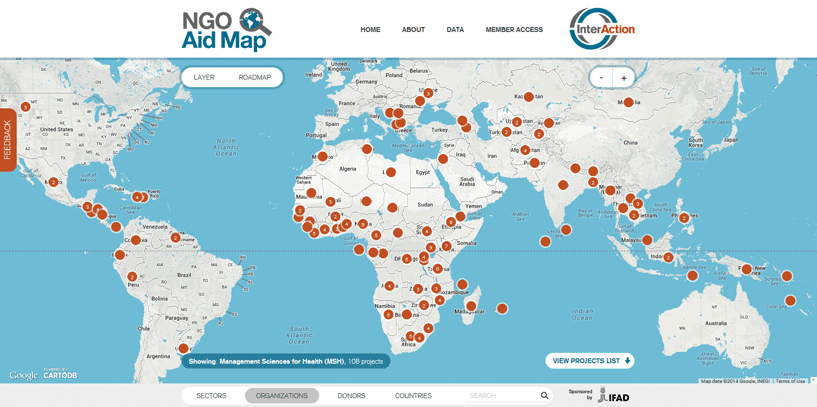
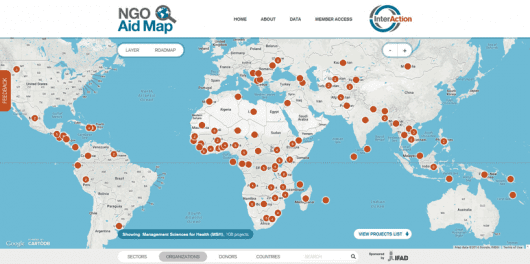
The NGO Aid Map is an interactive map designed by global aid advocacy group InterAction. The map shows a 2D image of Earth, akin to Google Maps, and features a series of numbered orange circles corresponding to individual countries. The number in the circle represents the number of Non-Governmental Organizations currently active in its respective nation.

Circles vary by size: the larger, the more projects. Users can click on the country that they are interested in. Upon clicking, the map zooms in to frame the specific country and then breaks the initial circle into smaller parts separated by city, town or region.

Clicking on a city or region circle brings users to a list of the ongoing projects in that area, each with an external link, a listing of the NGO conducting the project, and a short description of its mission.

The Aid Map is designed for optimal usability. Users can select from a number of filters to show where aid is needed most based on a series of metrics. These include poverty rate, malnutrition prevalence, agricultural share of GDP, and gross aid income (Official Development Assistance).

Clicking on any one filter will highlight countries based on their score. It is clear based on color contrasts which countries need more assistance in a given area. Some countries rank severely on multiple metrics.

Data for the map is compiled by volunteers on the ground who send their reports back to InterAction. The larger organization then compiles all that data and puts it into the map, where large amounts of numbers tell large amounts of stories. Users can empirically see the missions listed by “sectors.”

For example, InterAction reports that there are 1,679 medical missions, and 1,220 education projects ongoing. It also uses the data to list countries with the most, and alternatively least, amount of projects.

The map is a powerful tool that enables users to gain valuable insight into exactly what is being done around the globe to combat famine, poverty, and disease. InterAction, along with many others, hope that numbers and data will help make aid more efficient and effective in the near future.

– Joe Kitaj

Sources: NGO Aid Map, Interaction
Photo: Flickr
September 16, 2015
https://borgenproject.org/wp-content/uploads/borgen-project-logo.svg 0 0 Borgen Project https://borgenproject.org/wp-content/uploads/borgen-project-logo.svg Borgen Project2015-09-16 01:30:232024-12-13 18:04:36Volunteering and Big Data: the NGO Aid Map
Development, Global Poverty, Nonprofit Organizations and NGOs, Technology

NGOs are Becoming More Effective Thanks to ICT

NGOs
Information and Communications Technology, or ICT for short, is the way of the future for non-government organizations (NGOs). By effectively using new ICT, all types of NGOs are becoming more efficient in how they track and record data, as well as plan for future projects.

This new technology breaks down the complexity of information that NGOs handle on a daily basis and helps format it in a way that makes it simpler for these groups to utilize in their future endeavors.

Information and Communications Technology encompasses all sorts of specific fields. It covers things such as radio, television, cellular phones, and computer technology.

By using ICT, NGOs can spread their messages more efficiently through a wider array of platforms, develop better on-site technologies in third-world countries, and establish long-term methods to record information on poverty levels around the world.

An article by the Dhaka Tribune delved into the many benefits that ICT brings with it for non-government organizations. An excerpt from this article, published on July 31, 2015, reads, “Using ICT for social development helps NGOs to have accessible, timely, relevant, and updated information to make on-time decisions and improve social policy.”

The article goes on to pose a scenario in which an NGO makes monthly visits to an area to provide villagers with resources and other aid.

The scenario focuses on two children who received inadequate amounts of milk based on their growth in between visits from the NGO. When ICT is instituted into this scenario, the NGO workers can enter into their phones the exact height, weight, and age of the children each visit in order to chart growth and provide the necessary amount of food and aid.

Today’s society is all about maximizing efficiency. Technology has evolved faster in this period of time than at any other point in history. With this evolution comes the betterment of all mankind. By using technology as a means to maximize the eradication of poverty, people all over the world can begin to feel hopeful that their lives are about to change.

– Diego Catala

Sources: Dhaka Tribune, Tech Target
Photo: Dhaka Tribune

September 1, 2015
https://borgenproject.org/wp-content/uploads/borgen-project-logo.svg 0 0 Borgen Project https://borgenproject.org/wp-content/uploads/borgen-project-logo.svg Borgen Project2015-09-01 12:06:302020-07-01 12:12:05NGOs are Becoming More Effective Thanks to ICT
Development, Global Poverty, Nonprofit Organizations and NGOs

The What Took You So Long Foundation Solving Local Issues

The What Took You So Long Foundation Solving Local Issues
The What Took You So Long Foundation (WTYSL), founded on June 14, 2009, is a team of storytellers that uses multimedia outlets to tell the stories of farmers, nomads and entrepreneurs from around the world. They use these stories to inspire small communities to work together to solve issues with health, education and social justice. Through lectures, workshops and movies, the organization works with people living in rural villages in overcoming speed bumps preventing them from using their resources to create new markets.

The organization collaborates with NGOs, friends and institutions to develop projects in communities based on the issues they are facing. They document the process using videos and photographs, which in turn are used in future workshops or lectures in new communities. WTYSL uses guerrilla filmmaking, a form of filmmaking that works with a low budget, skeleton crews and simple props, to capture the situation, culture and people of different countries.

During the filmmaking process, the members of WTYSL live where they’re filming and build relationships with members of the community. They also follow local customs, use local transportation and encourage residents to participate in their project to gain a better understanding of their everyday life.

In total, WTYSL has filmed in over 60 countries, including Mauritania, Mongolia and Papua New Guinea. The members of WTYSL believe everyone, no matter what their age is, has an imagination and can use their imagination to help those in need. WTYSL will take on amateur filmmakers and train them on the job in creating quality films and working with underdeveloped communities. Working together, the team is able to motivate positive change in these communities.

The team of WTYSL consists of a variety of filmmakers, storytellers and photographers from various backgrounds. The team’s most recent project had them travelling to Rwanda to document the impact of solar energy on the community. Before Rwanda, WTYSL created films in Liberia to observe the quest for camel milk. The team continues to travel the world, documenting achievements, encouraging empathy and creating projects to make the world a better place.

– Julia Hettiger

Sources: What Took You So Long, Co.Exist, Afritorial
Photo: What Took You So Long

August 30, 2015
https://borgenproject.org/wp-content/uploads/borgen-project-logo.svg 0 0 Borgen Project https://borgenproject.org/wp-content/uploads/borgen-project-logo.svg Borgen Project2015-08-30 01:30:352024-12-13 18:04:47The What Took You So Long Foundation Solving Local Issues
Global Poverty, Nonprofit Organizations and NGOs, United Nations

Giving Directly to the Poor, No Strings Attached

Giving Directly to the Poor, No Strings Attached
What if we could give directly to the poor and let them decide what they most need to spend the money on? GiveDirectly does just that. It is the only nonprofit that gives cash transfer directly to the poor.

The New York-based nonprofit was created in 2008 by President and Co-founder, Paul Niehaus with the belief that people should spend their money how they wish. Niehaus says, “no one person has the same goal or aspiration.”

How does it work? People donate money through the organization’s website and extremely poor people in Kenya and Uganda receive cash transfer through their mobile phones. The recipient does not even need a mobile phone, just a SIM card so that they can use it on someone else’s mobile phone and receive the money.

The results of this method have been the distribution of $1,000, roughly a year’s income, to thousands of extremely poor families in Kenya and Uganda. GiveDirectly’s method not only cuts costs but also gets rid of opportunities for corruption by eliminating the middleman.

GiveDirectly is leading the way in transparency and data-driven decision making by streaming in realtime, key performance metrics on its website. The organization has also done randomized controlled trials on their programs, just like pharmaceutical companies to evaluate drugs. These tests are not usually done by charities because of their cost, difficulty and time consumption, despite being the best method for determining if programs are actually working.

The results of GiveDirectly’s methodology speak for themselves. After one year of receiving transfers, families had increased their earnings by 34 percent and increase their assets by 52 percent. There was also a decrease in those going to bed hungry by 36 percent and a decrease in the number of days kids went without food by 42 percent.

People improved their living situations by investing in their homes, their livelihoods and their savings, not on more alcohol or tobacco.

As a result, more organizations are following suit. The U.N.’s World Food Program with annual funding of $4 billion was only spending $10 million of it on cash and voucher programs, in 2009. In 2014, the cash and voucher programs expense increased to $1.25 billion across 87 programs in 56 countries.

GiveDirectly can serve as a test lab for the improvement of large institutional cash programs. It is running tests that will give the recipients more control of when they receive their money and another test on possible suggestions of how recipients can best spend their money. It is also giving advice on using cash relief after natural disasters.

As a result of its incredible effectiveness, GiveDirectly is receiving a major donation from Facebook co-founder, Dustin Moskovitz and his wife Cari Tuna. They are donating a bulk of their wealth, $25 million through their foundation Good Ventures, which is more than GiveDirectly’s 2014 budget.

Moskovitz and Tuna want to do the most good possible and have supported exhaustive research to conclude which organizations are the most effective and cost-efficient. Tuna believes if GiveDirectly could have some influence on changing institutional spending from not so cost-effective programs to cash transfers, it would be a great feat.

– Paula Acevedo

Sources: GiveDirectly, Huffington Post, Reason.com

Locker Dome

August 23, 2015
https://borgenproject.org/wp-content/uploads/borgen-project-logo.svg 0 0 Borgen Project https://borgenproject.org/wp-content/uploads/borgen-project-logo.svg Borgen Project2015-08-23 01:30:332020-04-24 14:18:03Giving Directly to the Poor, No Strings Attached
Advocacy, Global Poverty, Nonprofit Organizations and NGOs, United Nations

U.N. Accredits “Freedom Now” NGO

z1 Borgen Project
The United Nations recently accredited the nonprofit, Freedom Now, as an official Non-Governmental Organization, when only one month before, its application had been denied.

Freedom Now is an American nonprofit organization that works to help free those who have been imprisoned as a result of discrimination based on sex, race, gender and other criteria. This is an advocacy group, which not only provides legal advocacy to clients but also advocates in the public sphere to raise awareness of illegal detentions taking place around the world.

In the original vote, the application was denied by a United Nations committee, arguably because this organization seeks to undermine the country’s own system. One example of a country voting against Freedom Now to further its own agenda is China, which has a history of imprisoning people who disagree with the government. Currently, Freedom Now has a campaign to free a Chinese Nobel Peace Laureate Liu Xiaobo, who is currently serving an 11-year sentence that began in 2009 for “undermining the state authorities,” according to the Nobel Prize website.

While some countries like China and Russia strongly opposed the accreditation, the United States made the final accreditation possible. Following the rejection, the issue was brought to the U.N.’s Economic and Social Council, or ECOSOC, which had the power to vote again on July 20.

With its NGO status, Freedom Now can continue to grow its work as a nonprofit helping those imprisoned based on their identity, but this process has also sparked controversy in the international political sphere. Now, perhaps the United Nations will seek to reform its accreditation system, in which countries that have not always met the UN’s human rights standards are still part of the forces deciding whether or not to give an organization a title of “U.N. NGO.” Freedom Now is teaching us about illegal detentions, but this situation has helped bring public attention to the corruption that allows these detentions to take place.

– Rachelle Kredentser

Sources: India Times, Freedom Now, Nobel Prize, New York Times

August 15, 2015
https://borgenproject.org/wp-content/uploads/borgen-project-logo.svg 0 0 Borgen Project https://borgenproject.org/wp-content/uploads/borgen-project-logo.svg Borgen Project2015-08-15 01:30:072024-05-27 09:27:14U.N. Accredits “Freedom Now” NGO
Education, Global Poverty, Nonprofit Organizations and NGOs

Etta Projects Addresses Poverty in Bolivia

etta_projects
Etta Turner was 16 years old when she traveled to Bolivia as an International Rotary exchange student in 2002. Known for her compassion and commitment to social justice, the teen was prepared to provide for the less fortunate and help them change their lives. What was supposed to be a year away from her home and family in the States, however, turned into a lifetime when Turner was tragically killed in a bus accident.

The following year, in 2003, Turner’s friends and family founded Etta Projects, a nonprofit organization dedicated to the life and service of Turner. The organization works with the people of Montero, Bolivia, helping members of the community lead sustainable lives and achieve improved health conditions. Etta Projects supports projects that provide clean water, healthy food, quality education and stable income.

In the western hemisphere, Bolivia is the second poorest country after Haiti, with nearly 70 percent of its population living in poverty. About 23 percent of the population lives on less than $1 a day and 42 percent on less than $2 a day. Furthermore, about 90 percent of Bolivia’s children attend primary school, but only for a year or less: the average literacy rate of a 16-year-old Bolivian is at the third-grade level.

Etta Projects is dedicated to changing these statistics and helping the people of Bolivia. The organization is unique, however, in that it does not simply send money or resources to Bolivia. Rather, it connects with the Bolivian people to understand what they need and teaches them how to personally meet those needs.

To address and eliminate poverty in Bolivia, Etta Projects provides forums in which members of the community can identify their own problems and create plans to solve them. The organization forms strong, fundamental relationships with the communities it helps and the local governments that run them. They use their own resources and the available resources of the community to empower the communities to tackle their problems and issues.

The organization has five main projects: safe water and sanitation, health, nutrition, leadership and U.S. community outreach. Etta Projects is making a lasting difference in many Bolivian lives by listening to community needs, providing resources to meet those needs and leaving the community with valuable skills to lead sustainable lives. Miss Turner’s legacy of compassion and social justice absolutely lives on in the mission of Etta Projects.

– Sarah Sheppard

Sources: Etta 1, Etta 2, Etta 3
Photo: Doctors Without Borders

August 14, 2015
https://borgenproject.org/wp-content/uploads/borgen-project-logo.svg 0 0 Borgen Project https://borgenproject.org/wp-content/uploads/borgen-project-logo.svg Borgen Project2015-08-14 01:30:592024-05-27 09:27:24Etta Projects Addresses Poverty in Bolivia
Global Poverty, Nonprofit Organizations and NGOs, Sanitation

Talking to a Member of Engineers Without Borders

Engineers_without_BordersEngineers Without Borders (EWB) is an organization that works with communities to help them find an engineering solution that addresses their needs. Right now, there are about 15,000 volunteers working for EWB, and they work for long-term sustainability in developing areas. They travel to places where engineering projects are needed and institute solutions for the problems that people are facing.
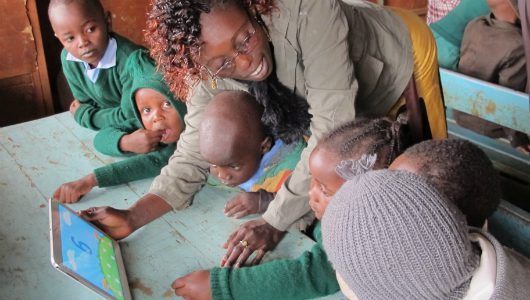

A year after the project is complete, volunteers evaluate the impact of the project on the community. Years after that, a final team travels to the community to learn from their successes and see how they can improve.

The members of EWB are varied, and their volunteers include everyone from first-year engineering students to professionals. In order to learn more about EWB, I interviewed Anushka Rau, the President Elect of the EWB chapter at the California Institute of Technology:

1. What is Engineers Without Borders?

“As the EWB mission statement says, Engineers without Borders USA is an organization whose main goal is to partner with communities around the world and enable them to meet their basic human needs, as well as equipping project leaders to solve the world’s most pressing challenges.”

2. What is the impact of Engineers Without Borders?

“They build sustainable projects in developing communities. Right now, there are about 600 Engineers Without Borders projects around the world.”

3. Where does Engineers Without Borders work?

“We work in more than 40 countries. Some of the countries where EWB is working include Peru, Moldova, Macedonia, India, Nepal, Senegal and Rwanda.”

4. What is your chapter of Engineers Without Borders currently working on?

“My chapter of Engineers Without Borders is about to go to Ilam, Nepal to implement our design for a spring source protection system. Infant mortality is a huge problem in the region, and it’s often due to diarrheal diseases caused by poor water quality and sanitation. We surveyed the region and took water quality samples to determine which spring to protect, then made a design and a set of governing principles for it, working closely with the community on the latter. All EWB chapters partner with an NGO in the area, which lets them complete projects that actually fulfill a community’s most pressing needs.”

5. Why do you think Engineers Without Borders is not as well-known as its counterpart, Doctors Without Borders?

“Medicine has a more obvious impact for humanitarian organizations—many people wouldn’t consider engineering to directly help communities, but it’s actually very important.”

6. What do the global poor need the most in terms of engineering?

“I think the global poor need to be listened to by the engineers helping them and they need a sustainable solution to problems associated with their most basic needs. One of the best things about EWB is the partnership with local NGOs—this ensures that chapters can communicate with the community and build a project that matters to them and will have impact for years after the engineers leave.”

7. How can we help with Engineers Without Borders?

“You can donate to the organization EWB on their website. Most chapters also take donations on their personal websites. If you’re a professional engineer, you could look for a college chapter in your area to mentor, or a professional one to join.”

– Ashrita Rau

Sources: Engineers without Borders, CalTech
Photo: Elsevier

August 1, 2015
https://borgenproject.org/wp-content/uploads/borgen-project-logo.svg 0 0 Borgen Project https://borgenproject.org/wp-content/uploads/borgen-project-logo.svg Borgen Project2015-08-01 07:23:312024-12-13 17:52:11Talking to a Member of Engineers Without Borders
Developing Countries, Global Poverty, Nonprofit Organizations and NGOs, Technology

Charity Puts Old Computers to Use in the Developing World

Old_Computers
Like The Borgen Project, Computer Aid International is a nonprofit that’s working to reduce and eliminate global poverty, but it goes about that task in a very different way. It’s what’s known as an ICT (Information Communications Technology) development charity, and it’s registered in the U.K.

Computer Aid International takes old computers, wipes their data, and cleans them up until they work like new. They then give those computers new jobs in the nonprofit sector of the developing world.

According to Optimist World, “Computer Aid International sends its PCs to schools, colleges, hospitals and charities in over 100 developing countries … [and] works with partner organizations in the countries it sends its PCs to, who provide the IT training and technical support.”

Meteorological offices depend on the computers sent by this organization, needing them in order to both inform agricultural workers when to sow and reap their crops and also let them know what kinds of seeds will produce maximum yield. Localized forecasts in Uganda, Mozambique and Zimbabwe have greatly assisted communities in protecting against extreme poverty and hunger.

Furthermore, the computers that Computer Aid International provides help children in developing countries with their educations.

“For these students, the opportunities provided through education and IT literacy offer a way out,” said an article in Optimist World. “In Nairobi, the job market is extremely competitive, and it is only with computer skills that young people can compete for professional or administrative jobs.”

By giving these younger generations the opportunity to compete in the job market, Computer Aid International also offers a better and more productive lifestyle for them and for their families. Also, this association gives schools the means to provide students with disabilities with specialized vocational training. Through their partnership with Sightsavers International, they are specially equipped to help the visually impaired through a uniquely adapted screen and synthesized speech output.

Computers and cameras as well as other technologies are also provided to doctors, and they bring new and improved healthcare to even the most remote areas. Since Computer Aid International has intervened, thousands of previously inconspicuous conditions have been accurately diagnosed and treated promptly.

To donate your unwanted computers to help a noble cause, go to https://www.computeraid.org/donate.html to learn more.

– Anna Brailow

Sources: Computer Aid, Optimist World
Photo: Book Aid

July 24, 2015
https://borgenproject.org/wp-content/uploads/borgen-project-logo.svg 0 0 Borgen Project https://borgenproject.org/wp-content/uploads/borgen-project-logo.svg Borgen Project2015-07-24 19:24:422020-07-06 12:39:07Charity Puts Old Computers to Use in the Developing World
Activism, Aid, Global Poverty, Nonprofit Organizations and NGOs

Man Runs Across the Country to Fight Global Poverty

global_poverty
Remember in “Forrest Gump” when Tom Hanks’ title character ran across the country? Everyone asked him why he did it and he said he just felt like running. So he ran.

Inspired by his favorite film, Barclay Oudersluys is currently on a run across the United States in an event he titled Project Gump. The 23-year-old began his trip in California and plans to end in Maine in less than 100 days, for a total of 3,200 miles.

But Oudersluys isn’t running simply for the sake of a good run; he is on a cross-country run to raise awareness and funds for the Hall Step Foundation, a nonprofit dedicated to ending global poverty. Founded in 2009 by professional runners Ryan and Sara Hall, the organization fights extreme poverty by improving health. During his 100-day run, Oudersluys would like to raise $10,000 for the organization.

The journey quite accurately follows that of Forrest Gump’s. It began at Santa Monica Pier and will end at the famous Marshall Point Lighthouse, just like in the movie. Running about 32 miles everyday in five to seven hours, Oudersluys has covered over 2,000 miles in 68 days.

Fortunately, Oudersluys has some seriously awesome friends that are driving cross-country in a van full of food, water and clothes as he runs. He typically rests in the back of the van or drives to a hotel each night.

Running across the country surely means seeing historical landmarks and meeting interesting people and Oudersluys has definitely seen some cool things, including another runner journeying across the country in the opposite direction.

Documenting his journey on Twitter and Instagram, Oudersluys hasn’t forgotten what his run is all about–lending his voice (or legs) to the fight against global poverty. Check out Project Gump’s mission and fundraising progress at their website, or follow Oudersluys on social media.

– Sarah Sheppard

Sources: Telegraph, 6abc, The Steps Foundation
Photo: Flickr

July 23, 2015
https://borgenproject.org/wp-content/uploads/borgen-project-logo.svg 0 0 Borgen Project https://borgenproject.org/wp-content/uploads/borgen-project-logo.svg Borgen Project2015-07-23 10:44:522020-07-07 14:33:32Man Runs Across the Country to Fight Global Poverty
Activism, Nonprofit Organizations and NGOs

Empact Northwest: Rapid Ready Response When Disaster Strikes

Empact Northwest: Rapid Ready Response to Disaster - TBP
On April 25, a massive earthquake of magnitude 7.8 rocked the tiny country of Nepal. Widespread devastation resulted and the aftermath left hundreds of people entombed in concrete graves. As the international relief effort mobilized, smaller teams of volunteers responded from all over the world using money from their own pockets. One of these teams was Empact Northwest.

Empact Northwest, a nonprofit volunteer organization, hails from Kitsap County, Washington. They specialize in dispatching technical rescue operations locally, regionally, nationally and internationally to communities in need. The group’s motto is “Empathy in action” and on April 27, empathy turned into action when they deployed as Disaster Team 1 to Nepal.

The epicenter of the earthquake that struck Nepal was located in the Lamjung District northwest of Katmandu, a part of Gandaki Zone and one of the seventy-five districts of Nepal, a landlocked country in South Asia. The district, with Besisahar as its headquarters, covers an area of 1,692 squared kilometeres and has a population of 167,724, as of 2011. Lamjung mainly consists of agricultural villages.

After establishing an operation base in Katmandu, Disaster Team 1 became USA-11 by the United Nations Disaster Assistance Center (UNDAC) and were then assigned to the village of Lanmang. The team drove and hiked over rough terrain and demolished roads before they reached the village, where they provided rescue operations and conveyed vital assessment information to the UNDAC. Later, USA-11 partnered with a rescue group from Burnaby, British Columbia in the town of Barabise, conducting K-9 search and rescue tactics.

Empact Northwest is certainly not a newcomer to the international aid scene. The organization is only about five years old, but since its formation, inspired by work done after an earthquake in Haiti, it has been involved in numerous life-saving missions around the world. Empact Northwest offers technical rope and urban search and rescue as well as emergency medical services to disaster-stricken communities. Not only providing rescue, they also offer preventative education to at-risk populations.

In addition to the recent Nepal disaster, since 2010 Empact Northwest has responded to situations in Haiti, Pakistan, Japan, Sierra Leone and the Philippines, providing relief and rescue in catastrophes ranging from earthquakes to tsunamis. It also provides medical relief, logistics and educational mission projects.

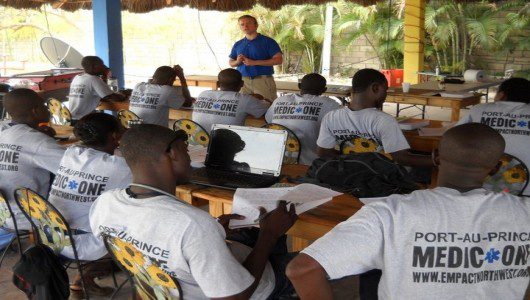
Between catastrophes, Empact Northwest is not sitting around idly. The organization is working to provide emergency medical technician training to hundreds of people in Haiti in an attempt to help Haitians sustain a skilled medical work force.

There seems to be no shortage of tragedies in the world, but it is thanks to organizations like Empact Northwest that people are able to cope with these hardships as best they can. In just five short years, Empact Northwest has made an incredible contribution to the globe’s developing countries by saving lives in communities where poverty and hardship are made painfully worse by natural disasters.

– Jason Zimmerman

Sources: Empact Northwest, UNOCHA, CBS
Photo: Empact Northwest

July 22, 2015
https://borgenproject.org/wp-content/uploads/borgen-project-logo.svg 0 0 Borgen Project https://borgenproject.org/wp-content/uploads/borgen-project-logo.svg Borgen Project2015-07-22 11:49:082020-07-08 13:52:52Empact Northwest: Rapid Ready Response When Disaster Strikes
Page 40 of 60«‹3839404142›»

Get Smarter

  • Global Poverty 101
  • Global Poverty… The Good News
  • Global Poverty & U.S. Jobs
  • Global Poverty and National Security
  • Innovative Solutions to Poverty
  • Global Poverty & Aid FAQ’s
Search Search

Take Action

  • Call Congress
  • Email Congress
  • Donate
  • 30 Ways to Help
  • Volunteer Ops
  • Internships
  • Courses & Certificates
  • The Podcast
Borgen Project

“The Borgen Project is an incredible nonprofit organization that is addressing poverty and hunger and working towards ending them.”

-The Huffington Post

Inside The Borgen Project

  • Contact
  • About
  • Financials
  • President
  • Board of Directors
  • Board of Advisors

International Links

  • UK Email Parliament
  • UK Donate
  • Canada Email Parliament

Get Smarter

  • Global Poverty 101
  • Global Poverty… The Good News
  • Global Poverty & U.S. Jobs
  • Global Poverty and National Security
  • Innovative Solutions to Poverty
  • Global Poverty & Aid FAQ’s

Ways to Help

  • Call Congress
  • Email Congress
  • Donate
  • 30 Ways to Help
  • Volunteer Ops
  • Internships
  • Courses & Certificates
  • The Podcast
Scroll to top Scroll to top Scroll to top