• Link to X
  • Link to Facebook
  • Link to Instagram
  • Link to TikTok
  • Link to Youtube
  • About
    • About Us
      • President
      • Board of Directors
      • Board of Advisors
      • Financials
      • Our Methodology
      • Success Tracker
      • Contact
  • Act Now
    • 30 Ways to Help
      • Email Congress
      • Call Congress
      • Volunteer
      • Courses & Certificates
      • Be a Donor
    • Internships
      • In-Office Internships
      • Remote Internships
    • Legislation
      • Politics 101
  • The Blog
  • The Podcast
  • Magazine
  • Donate
  • Click to open the search input field Click to open the search input field Search
  • Menu Menu

Archive for category: Nonprofit Organizations and NGOs

Information and stories about nonprofit organizations and NGOs

Global Poverty, Nonprofit Organizations and NGOs, United Nations

Careers in Humanitarian Aid

Careers in Humanitarian Aid
Humanitarian aid organizations provide various employment opportunities for any individual seeking to assist nations and communities that experience poverty, war, natural disasters and other conflicts.  However, once you figure out that you want to do something it can still be difficult to determine the right humanitarian job that matches your skillset.  We have put together some humanitarian careers to help you find your path.

  • Field Officer- The field officer is the first line of defense in an aid organization.  They work directly with aid beneficiaries to determine their needs, determine any developing trends in the response and gather data for statistics.
  • Information Officer (I.O.)- The I.O. shares the organization’s activities and achievements internally and with the outside world.  Other responsibilities can include preparing and disseminating press releases, appeals, documents and briefings.
  • Camp Manager- Managers coordinate the overall humanitarian activity within camps for refugees and internally displaced persons.  They also help create self-governance structures that make decisions on how the camps will be organized and prioritize humanitarian interventions.
  • Disaster Risk Reduction Specialist (DRRS)- DRRS’s help communities prepare for and reduce their vulnerability to natural disasters.  They help create early warning systems and risk reduction measures for vulnerable countries.  DRRS’s can be engineers, architects, geologists and social scientists.
  • Food Security Specialist- A food security specialist identifies populations that are at risk of food shortages, develop monitoring systems to track their progress, and help create channels for food distribution.  It helps to be knowledgeable of global food security issues, especially since this role may require coordination with government officials and affected populations.
  • Health Professional- Health professionals such as physicians, surgeons, nurses, midwives, anesthesiologists, nutritionists, lab technicians and others are all in great need during emergency situations.  Along with the Field Officer, health professionals are on the ground in the disaster or conflict area.
  • Logistician- a logistician delivers humanitarian supplies and services where and when they are needed during an organization’s response.  Various positions within this category can require the management of purchasing, importing, transferring, tracking and deployment of supplies.
  • Protection Officer (P.O.)-  P.O.’s are tasked with keeping affected populations safe from any human rights violations.  They intervene in areas of child protection, gender-based violence, housing, land and property issues as well as issues concerning access to justice systems.
  • Water, Sanitation, and Hygiene- These individuals are responsible for providing clean water, arranging for safe disposal of waste and educating affected populations about sanitation practices.  Roles related to this field generally require engineering degrees.
  • Program Director- The program director makes sure the organization’s priorities and mandates for work are adapted to local conditions and achieved.  This is the highest position within a humanitarian organization and requires several years of management experience.

Humanitarian aid offers a wide variety of career choices for those who want to use their skills in an impactful and positive way.  Within each field, there are several related job opportunities at all levels of skill.  It is important to identify your skills and interests before pursuing a particular organization.

– Sunny Bhatt

Sources: Inside Disaster, UN Careers
Photo: Borgen Project
January 24, 2016
https://borgenproject.org/wp-content/uploads/borgen-project-logo.svg 0 0 Borgen Project https://borgenproject.org/wp-content/uploads/borgen-project-logo.svg Borgen Project2016-01-24 13:35:432024-12-13 17:53:48Careers in Humanitarian Aid
Development, Nonprofit Organizations and NGOs

FINCA Boots Entrepreneurship in Underserved Countries

FINCA
FINCA International helps small business owners in more than 23 countries worldwide by providing the finances and resources they need to keep their businesses up and running.

The innovative nonprofit focuses on four core areas: financial assistance, social intermediation, enterprise development and social service impact.

FINCA International serves as a financial intermediary by providing developing business owners with loans, teaching them how to open savings accounts and helping them find insurance tailored to the products and services they offer. This helps new businesses blossom into full-running operations that help women and men provide for their families.

Their second facet, social intermediation, is also an important part of their business model. Because they are serving entrepreneurs in countries that may be lacking in gender equality, they have to serve as people who can help bring change to these communities. FINCA International provides this intermediation through education in financial literacy and Village Banking loan programs.

In addition to enterprise development, they also help developing communities through educational programs, nutrition services, and health training. These programs contribute to the success and growth of the villages and towns they serve.

FINCA International was launched in 1984 by former Peace Corps member Dr. John Hatch. Hatch started the organization as Village Banking, which operated in Bolivia and served as a financial intermediary for farmers struggling through tough economic times. The following year, Hatch started the organization.

In its early days, FINCA International operated primarily in Latin America, including Honduras, Mexico, and El Salvador, but by the early 1990s, its services had spread to Africa and Eurasia as well. Since its inauguration, FINCA International has lived up to its name and has provided services in countries all over the world.

Subsidiaries exist in countries in Africa, Western Europe, Latin America and Asia.

– Julia Hettiger

Sources: FINCA, Give, Philanthropedia, MicroCapital
Photo: Flickr

December 17, 2015
https://borgenproject.org/wp-content/uploads/borgen-project-logo.svg 0 0 Borgen Project https://borgenproject.org/wp-content/uploads/borgen-project-logo.svg Borgen Project2015-12-17 01:30:222024-06-05 02:36:35FINCA Boots Entrepreneurship in Underserved Countries
Family Planning and Contraception, Nonprofit Organizations and NGOs, Sustainable Development Goals, Women and Female Empowerment

Health Education for Women Improves in Southern Asia

health_education_for_women
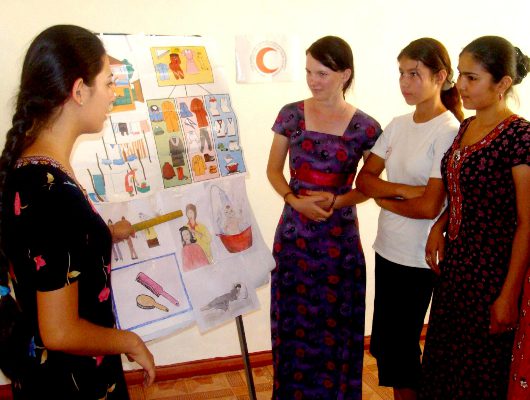
Non-governmental organizations (NGOs) across southern Asia have developed programs in line with the new United Nations Sustainable Development Goals (SDGs) on health education for women.

SDG #3 aims to ensure healthy lives and promote well-being for all ages, and SDG #5 aims to achieve gender equality and empower all women and girls.

In Bangalore, India, mDhil, an online medical resource center, has developed social media campaigns that provide important health education for women. The organization has created a variety of videos that inform women about topics such as menstruation, pregnancy and hormones. mDhil content reaches over 2.5 million people each month.

These videos are available in many local languages, are easily accessible and can be viewed in private. In a survey, mDhil found that 60 percent of women prefer watching videos about intimate health issues rather than visiting a doctor.

Because most doctors offering healthcare for women were male, most women did not feel comfortable discussing family planning or reproductive health with them.

mDhil is empowering girls and women by giving them the information to better understand their bodies and make choices to better their health.

In Bangladesh, the HERHealth project aims to educate female factory workers on their health. Women employed in large factories tend to come from low-income backgrounds and work in unsafe, unhealthy conditions.

Using peer educators, HERHealth raises awareness on common diseases such as anemia and reproductive tract infections. Their health education for women even includes family members and communities of the female factory workers. Reportedly, this has resulted in decreasing cases of cholera.

The quality of work from factories involved with HERHealth has improved because the female workers are less likely to miss work due to injury or sickness. The impact of HERHealth is also met with factory managers asking for the same program for male workers.

In Ho Chi Minh City, Vietnam, the first Human Milk Human Babies Bank opened, allowing mothers to share their extra milk. The milk bank provides mothers the opportunity to give milk to other mothers who do not have enough milk to feed their own babies.

The founder of the bank, Trinh Tuan, also started a Youtube channel called the Journey of Breastmilk to allow women to share maternal and childcare knowledge.

NGOs in the global south are working towards the SDGs, particularly health education for women, and are making a difference using peer training, technology and sharing strategies and knowledge.

– Marie Helene Ngom

Sources: URB, Huffington Post, UN
Photo: Google Images

November 26, 2015
https://borgenproject.org/wp-content/uploads/borgen-project-logo.svg 0 0 Borgen Project https://borgenproject.org/wp-content/uploads/borgen-project-logo.svg Borgen Project2015-11-26 01:30:572024-06-04 01:17:42Health Education for Women Improves in Southern Asia
Global Poverty, Nonprofit Organizations and NGOs, Sanitation, Water

FACE Africa Fights Poverty in Liberia through Education

FACE_africa

FACE Africa, a nonprofit created by Liberia native Saran Kaba Jones, works to end poverty by alleviating Liberia’s water crisis through educating future leaders.

The organization uses hands-on projects to implement water and sanitation facilities, as well as educate youth about proper health and hygiene rituals. Each year, 12,000 more people gain access to clean water, 25 communities are served and over 200,000 hours of productivity is saved.

Saran Kaba Jones left Liberia when she was eight years old to escape the civil war that killed thousands of people and left millions without a place to live. Jones returned to Liberia in 2008 with a plan to lift under-served communities out of poverty.

Originally, FACE stood for Fund a Child’s Education, but Jones and her colleagues soon realized that the lack of clean drinking water was the number one impediment to a child’s education.

Soon after, they switched gears and focused their efforts on increasing the amount of clean water and sanitation in Liberia and other countries in Sub-Saharan Africa.

FACE Africa uses local resources, materials and labor to come up with solutions for this global epidemic. Once these solutions have proven to be sustainable, FACE Africa transfers ownership of their solutions to locals in Liberia.

Some of their methods include building wells, creating systems to clean water and educating individuals on proper hygiene techniques.

FACE Africa differs from many nonprofits because they form lifelong partnerships with the communities they help. Their mission is to provide 100 percent water coverage to all of Sub-Saharan Africa.

This may require employees at FACE Africa to walk many miles to reach villages cut off from roads and to fetch sand and rocks to build sustainable wells, but the team still strives to incorporate better sanitation systems within remote villages.

Since 2009, FACE Africa has hosted the annual WASH (Water, Sanitation and Hygiene) Gala event. This year, the gala’s goal is to raise $300,000 in support of clean water in Africa.

The gala connects FACE Africa with people from around the world who pull together and combine their efforts to assist those facing challenges with water. FACE Africa continues to help Liberians gain access to clean water to this day.

Since its creation in 2010, FACE Africa has successfully launched multiple projects and has assisted many towns all across Liberia.

– Julia Hettiger

Sources: Face Africa, Black Enterprise, CNN
Photo: Pixabay

November 3, 2015
https://borgenproject.org/wp-content/uploads/borgen-project-logo.svg 0 0 Borgen Project https://borgenproject.org/wp-content/uploads/borgen-project-logo.svg Borgen Project2015-11-03 01:30:202024-12-13 18:05:19FACE Africa Fights Poverty in Liberia through Education
Developing Countries, Global Poverty, Nonprofit Organizations and NGOs

Bpeace Aids Entrepreneurs in Historically Violent Communities

bpeace
Bpeace, short for Business Council for Peace, is an organization comprised of business savvy individuals who have combined their efforts to aid business owners in areas who have suffered from violence and war.

Bpeace volunteers help decrease violence in conflict-ridden communities by accelerating job creation and, in turn, decreasing poverty. They have aided business owners in countries like Rwanda, Afghanistan, El Salvador, Guatemala and more.

Bpeace was founded in 2002 in New York City. Serving as a pro bono management consulting firm, Bpeace helps entrepreneurs scale their businesses, create significant employment for members of their communities and expand the economic power of women.

The founders of Bpeace believe the most efficient way to spread world peace is by creating jobs, and they apply this philosophy to all of their practices. Jobs have a big multiplier effect. This creates local purchasing power, which helps families become sustainable.

Since 2009, Bpeace has held an event called Pedal for Peace that brings together donors and bikers to raise money for local entrepreneurs in developing countries. Participants ride either a sixty-mile or 25-mile race while donating at least $500. Every dollar is donated to families in Afghanistan, El Salvador and Guatemala.

In 2015, Bpeace provided mentoring to over 65 entrepreneurs, with their efforts reaching 2,657 employees. In total, 12,000 families have been positively affected by Bpeace’s effort. Bpeace also assists business owners with finances to keep violence away from their businesses.

Karina Koper, a business owner in Guatemala, uses the financial assistance she receives from Bpeace to pay for her employees to take cabs to and from work to avoid being mugged or assaulted and to pay off gangs from messing with her shops.

Another example of this is Veronica Mejia Handal, a business owner in El Salvador, who received social media marketing training from Bpeace and used her newfound skills to market herself to potential customers around the world.

Today, Bpeace continues to help entrepreneurs, creates jobs and helps end gang violence by spreading employment to constituents of all backgrounds.

– Julia Hettiger

Sources: Fox Business, Bpeace 1, Bpeace 2, Indiegogo
Photo: Pause for Thought

October 24, 2015
https://borgenproject.org/wp-content/uploads/borgen-project-logo.svg 0 0 Borgen Project https://borgenproject.org/wp-content/uploads/borgen-project-logo.svg Borgen Project2015-10-24 01:30:522024-06-05 03:46:45Bpeace Aids Entrepreneurs in Historically Violent Communities
Activism, Global Health, Global Poverty, Health, Nonprofit Organizations and NGOs

Child Family Health International at a Glance

Child Family Health International (CFHI) at a Glance
There is a plethora of organizations working toward the betterment of our world and the people living in it, however, they often do not get the attention or credit they deserve. So let’s shine a little spotlight on one and take a minute to appreciate others’ hard work and the power of teamwork.

Child Family Health International (CFHI) is a nonprofit organization that is focused on global health education. They offer education programs for individuals interested in global health and related careers. Here are three ways CFHI is working towards improving global health.

Educate Future Global Health Crusaders

CFHI offers education programs for students or volunteers to gain experience with the clinical practices, public health and social services in developing nations. They work within Latin America, Africa and India.

Participants of community-based Global Health CFHI programs can gain the valuable experience needed to build their resumes or earn college credit. CFHI offers more than twenty different programs in seven countries that work within and with the local community on projects like providing healthcare for underserved communities in the Himalayas to training midwives in Oaxaca.

Integrates into the Local Health Care Community

CFHI recognizes that there are already health care professionals and experts residing in the community they are working in and have partnered with existing health care providers. By utilizing local community leaders and health workers, CFHI helps support the development of opportunities for their international partners.

They invest in the continuing of their educations by offering scholarships for higher degrees and including locals in conferences and workshops. CFHI holds that students can learn not only from CFHI staff but also from those living in the communities they are working with.

Invests in Host Community

Students who participate in a CFHI education program pay a fee, which is common amongst study abroad experiences. However, unlike many other programs, CFHI invests half of a student’s fee back into the community they will be working and learning in. The invested funds work to bolster the economy of the countries CFHI works with and compensate the communities for their time, expertise and hospitality.

– Brittney Dimond

Sources: Child Family Health International 1, Child Family Health International 2, GoAbroad.com
Photo: Flickr

October 3, 2015
https://borgenproject.org/wp-content/uploads/borgen-project-logo.svg 0 0 Borgen Project https://borgenproject.org/wp-content/uploads/borgen-project-logo.svg Borgen Project2015-10-03 09:53:402020-06-28 16:26:19Child Family Health International at a Glance
Development, Global Poverty, Nonprofit Organizations and NGOs, Technology

The Role of XPRIZE in Ending Poverty

Ending_Poverty
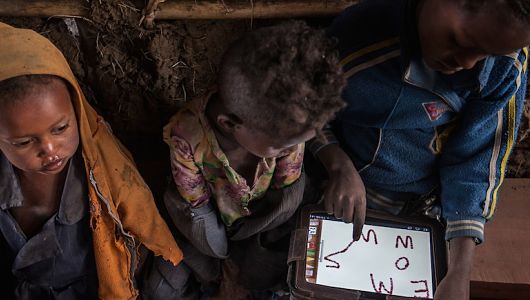
Lack of access to sanitation and agriculture; the inability to maintain infrastructure or attend school—these are just some of the issues addressed by non-profit organizations aiming to combat global poverty. XPRIZE, one such non-profit, comes at the problem from a different angle by focusing on what the organization believes to be a need for ending poverty and spurring development: competition.

According to the organization’s website, “an XPRIZE is a highly leveraged, incentivized prize competition that pushes the limits of what’s possible to change the world for the better.” This group believes that innovation can solve the world’s problems, and competition created by the website and sponsors will foster this innovation.

There are eleven highlighted prize competitions listed on the website: Adult Literacy, Global Learning, Qualcomm Tricorder, Google Lunar, Wendy Schmidt Ocean Health, Nokia Sensing XCHALLENGE, Ansari, Northrop Grumman Lunar Lander XCHALLENGE, Progressive Insurance Automotive, Archon Genomics and Wendy Schmidt Oil Cleanup XCHALLENGE.

Some of these have already had winners selected, some are just beginning and some have finalist teams chosen. These competitions each fall within one of the “grand challenge” categories, which are Energy and Environment, Exploration, Global Development and Learning and Life Sciences.

A number of competitions involve using technology to improve access to education or healthcare. The Ansari XPRIZE was the first competition in 1996 and was awarded in 2004 to Mojave Aerospace Ventures for the creation of an aircraft capable of private space flight.

This competition relies on public participation, as well. People around the world can go online to see the current competitions and the guidelines for each and can vote for which competitions they would like to see in the future. Furthermore, anyone can join or create a team, with the idea being to have experts and amateurs in fields working creatively to produce solutions to global issues.

Through this unique approach, according to its website, XPRIZE is “spurring innovation and accelerating the rate of positive change.” By creating competition, problems caused by poverty are being and continue to be solved and brought to public attention.

– Rachelle Kredentser

Sources: Forbes, Philanthropy, XPRIZE 1, XPRIZE 2, XPRIZE 3
Sources: Global Learning XPRIZE

October 2, 2015
https://borgenproject.org/wp-content/uploads/borgen-project-logo.svg 0 0 Borgen Project https://borgenproject.org/wp-content/uploads/borgen-project-logo.svg Borgen Project2015-10-02 08:18:262024-12-13 18:04:45The Role of XPRIZE in Ending Poverty
Global Poverty, Nonprofit Organizations and NGOs, Refugees and Displaced Persons

German Organization Connects Individuals with Refugees

Today in Germany hundreds of thousands of refugees arrive each year, looking for asylum and safety. Many are from primarily Islamic nations.

The massive influx of people has strained local officials— finding adequate housing for everyone is a challenge.

Many cities have put massive amounts of refugees in old schools or re-purposed shipping containers. Often, the refugees are not welcome in their new neighborhoods due to religious tension. According to National Public Radio, “The western German city of Schwerte even proposed placing 21 refugees in a barracks on the grounds of a Nazi-era concentration camp.”

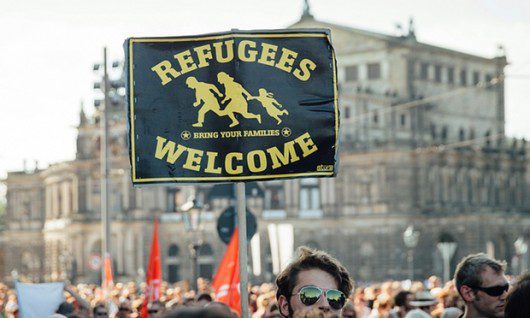
Berlin Residents Mareike Geiling and Jonas Kakoschke believe that refugees deserve a more humane treatment than mass, impersonal accommodations. This prompted them to create the organization Refugees Welcome— a website that matches refugees looking for asylum with people in Germany and Austria willing to open their homes to these people in need.

“We don’t like the idea of putting these people into one place where many, many people live,” explained Geiling to NPR.

“Many asylum-seekers have to stay there for years … doing nothing, because they are not allowed to do anything. They are not allowed to work, they are not allowed to have German classes sometimes and sometimes it’s not a city, it’s a village and there’s nothing to do and so you get depressed after years and stuff like this,” said Kakoschke.

Kakoschke and Geiling are a couple living in Berlin, and they were the first to open their doors to a refugee in need. The couple matched with a thirty-nine year old Muslim man from Mali, who had recently applied for asylum and is waiting for a working permit. For this reason, Kakoschke and Geiling raise money to cover their new roommates cost of rent and utilities.

NPR reports that the Malian man is afraid to give his name for safety reasons, but said “It surprised me a lot because … the people here don’t want to see people like us in their land.”

Before Kakoschke and Geiling opened their doors to him, the roommate was homeless. “Sometimes I’d take the bus from different sector to different sector at nighttime until, you know, 2:30” in the morning, he says. Then he’d “get out and sleep for 20 minutes and go back on the train again sometimes and go back in the mosque and pray there for 30 minutes and sleep there for one hour.”

Refugees Welcome has been very successful so far on a small scale. The website has matched 122 refugees to welcoming German and Austrian flatmates.

Refugees Welcome reports, “Through Refugees Welcome people have moved in to 80 homes in Augsburg, Berlin, Bonn, Darmstadt, Dortmund, Dresden, Frankfurt, Hamburg, Hanover, Konstanz, Leipzig, Marburg, Munich, Munster, Norderstedt, Offenburg and Wolfratshausen. Through Refugees Welcome Austria (our Austrian sister-organisation) people have moved in to 44 places in Eisenstadt, Knittelfeld, Salzburg and Vienna. The new flatmates are from Afghanistan, Algeria, Bangladesh, Burkina Faso, Cameroon, Gambia, Ghana, Kenya, Liberia, Mali, Niger, Nigeria, Iraq, Iran, Pakistan, Russia, Senegal, Somalia, Sri Lanka, Syria and Tunisia.”

– Aaron Andree

Sources: NPR, Refugees-Welcome
Photo: thegaurdian

September 29, 2015
https://borgenproject.org/wp-content/uploads/borgen-project-logo.svg 0 0 Borgen Project https://borgenproject.org/wp-content/uploads/borgen-project-logo.svg Borgen Project2015-09-29 11:04:592024-05-24 23:42:49German Organization Connects Individuals with Refugees
Aid, Global Poverty, Hunger, Nonprofit Organizations and NGOs

Bangladesh Nonprofit Wins World Food Prize

Bangladesh_Nonprofit
In early November of 1970 a category-3 tropical cyclone made landfall over what was then called Eastern Pakistan. It was the single deadliest tropical storm in human history with a death toll reaching over 500,000. The next year, in 1971, the region would fight a war to form the independent nation of Bangladesh.

Due to so much devastation in so little time, Bangladesh would go on to become the second poorest country on the planet. That’s where one man, Fazle Hasan Abed, felt something had to be done.

Abed formed BRAC, or the Bangladesh Rural Advancement Committee, in the early 1970s as a temporary organization dedicated to providing aid to individuals and their families who were affected by the catastrophes. But after providing immediate relief Abed realized the need for round the clock, global aid.

Since its creation, the Bangladesh nonprofit has evolved into one of the largest organizations fighting to end global poverty and hunger. As a result, Abed was announced as the recipient of the 2015 World Food Prize on September 2 in Des Moines, Iowa.

Estimates on the scope of BRAC’s now 40-year impact show that the organization has helped nearly 150 million people across Africa and Asia. The organization has plans to expand its reach into 10 additional countries.

The World Food Prize was created in 1986 to recognize individuals who contribute to the production, innovation and availability of global food supplies. The prize is a donation of $250,000. The award ceremony will take place in October.

Initially, Abed and BRAC worked to combat the incredibly high childhood mortality rates in Bangladesh before seeing the need to combat poverty on an even grander scale. In 2010, Abed was knighted by Queen Elizabeth II for his efforts to empower women through STEAM and agricultural education.

Most recently, BRAC has begun a self-sufficiency and financial training program in 9 different countries. The program gives participants a weekly stipend to discourage begging and menial labor.

A bank account is set up in their name so as to teach financial and practical skills. Participants may also receive a grant to buy a computer, a cow, or a chicken coop to begin their own business.

On the program Abed said, “In many countries, poor people are not seen as a solution to the problem but the problem. Poor people can be organized and become the solution to the poverty themselves…All we need to do is provide them opportunities and conditions and give them the tools.”

Sir Abed, who recently celebrated his 79th birthday, now has yet another trophy to add to his collection that shows his undying desire to end global poverty, suffering and hunger.

– Joe Kitaj

Sources: Fortune, Huffington Post, BRAC, Word Food Prize
Photo: Globalhand

September 20, 2015
https://borgenproject.org/wp-content/uploads/borgen-project-logo.svg 0 0 Borgen Project https://borgenproject.org/wp-content/uploads/borgen-project-logo.svg Borgen Project2015-09-20 01:30:342020-06-25 10:34:52Bangladesh Nonprofit Wins World Food Prize
Activism, Aid Effectiveness & Reform, Charity, Global Poverty, Nonprofit Organizations and NGOs

St. George’s Crypt Makes Progress to Help those in Need

St. George’s Crypt Makes Progress to Help those in Need
Founded in the 1930s, St. George’s Crypt became a charitable group that has helped local people for generations. In its beginnings, the small church began charitable functions and fundraising from local people, run by Reverend Percy Donald, known as the Don.

Throughout its existence the function of the organization has shifted to satisfy the needs of the people and the events occurring around the neighborhood, such as assistance for those affected by war, illness, and the impact of a devastating economic downturn.

As the group’s website states, one of the objectives of the organization is to assist in “the relief of poverty, hardship, sickness and distress among needy and destitute persons,” and recently St. George’s Crypt has taken their efforts to help people even further.

In 2011, The Crypt set up purchase shops that would benefit more people in the area. More recently, the organization has done even more as it has invested more money into building homes for struggling families in the area.

A development project recently gave the group £1.5 million to spend on infrastructure, and the building of 20 new homes for those in need. These properties will act as “halfway houses” to help individuals as well as families get back on their feet, and create more sustainable lifestyles, and smarter economic practices.

The outreach of support for those in need knows no limits, helping those that are homeless, ill, suffering the vulnerabilities of recent catastrophes, and even those suffering from addiction. One of these housing developments will include a hostel in Hyde Park, which will house a larger number of people at a time for a shorter period of time.

When small organizations such as these expand over the years, even over 85 years such as the St. George’s Crypt, it gives hope that there is potential for anyone to make a difference in their communities. To learn more about St. George’s Crypt and the work they continue to do for those in need in their community, go to their website.

– Alexandrea Jacinto

Sources: St. George’s Crypt, BBC
Photo: Flickr

September 18, 2015
https://borgenproject.org/wp-content/uploads/borgen-project-logo.svg 0 0 Borgen Project https://borgenproject.org/wp-content/uploads/borgen-project-logo.svg Borgen Project2015-09-18 01:30:402024-05-27 09:27:38St. George’s Crypt Makes Progress to Help those in Need
Page 39 of 60«‹3738394041›»

Get Smarter

  • Global Poverty 101
  • Global Poverty… The Good News
  • Global Poverty & U.S. Jobs
  • Global Poverty and National Security
  • Innovative Solutions to Poverty
  • Global Poverty & Aid FAQ’s
Search Search

Take Action

  • Call Congress
  • Email Congress
  • Donate
  • 30 Ways to Help
  • Volunteer Ops
  • Internships
  • Courses & Certificates
  • The Podcast
Borgen Project

“The Borgen Project is an incredible nonprofit organization that is addressing poverty and hunger and working towards ending them.”

-The Huffington Post

Inside The Borgen Project

  • Contact
  • About
  • Financials
  • President
  • Board of Directors
  • Board of Advisors

International Links

  • UK Email Parliament
  • UK Donate
  • Canada Email Parliament

Get Smarter

  • Global Poverty 101
  • Global Poverty… The Good News
  • Global Poverty & U.S. Jobs
  • Global Poverty and National Security
  • Innovative Solutions to Poverty
  • Global Poverty & Aid FAQ’s

Ways to Help

  • Call Congress
  • Email Congress
  • Donate
  • 30 Ways to Help
  • Volunteer Ops
  • Internships
  • Courses & Certificates
  • The Podcast
Scroll to top Scroll to top Scroll to top