Talking to a Member of Engineers Without Borders
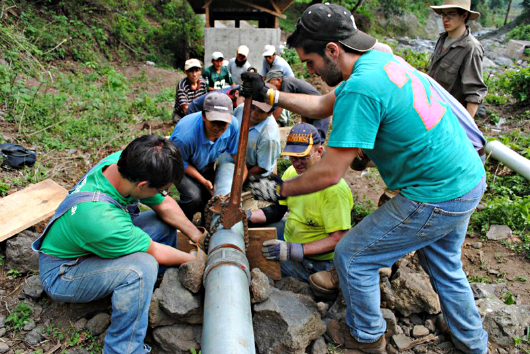 Engineers Without Borders (EWB) is an organization that works with communities to help them find an engineering solution that addresses their needs. Right now, there are about 15,000 volunteers working for EWB, and they work for long-term sustainability in developing areas. They travel to places where engineering projects are needed and institute solutions for the problems that people are facing.
A year after the project is complete, volunteers evaluate the impact of the project on the community. Years after that, a final team travels to the community to learn from their successes and see how they can improve.
The members of EWB are varied, and their volunteers include everyone from first-year engineering students to professionals. In order to learn more about EWB, I interviewed Anushka Rau, the President Elect of the EWB chapter at the California Institute of Technology:
1. What is Engineers Without Borders?
“As the EWB mission statement says, Engineers without Borders USA is an organization whose main goal is to partner with communities around the world and enable them to meet their basic human needs, as well as equipping project leaders to solve the world’s most pressing challenges.”
2. What is the impact of Engineers Without Borders?
“They build sustainable projects in developing communities. Right now, there are about 600 Engineers Without Borders projects around the world.”
3. Where does Engineers Without Borders work?
“We work in more than 40 countries. Some of the countries where EWB is working include Peru, Moldova, Macedonia, India, Nepal, Senegal and Rwanda.”
4. What is your chapter of Engineers Without Borders currently working on?
“My chapter of Engineers Without Borders is about to go to Ilam, Nepal to implement our design for a spring source protection system. Infant mortality is a huge problem in the region, and it’s often due to diarrheal diseases caused by poor water quality and sanitation. We surveyed the region and took water quality samples to determine which spring to protect, then made a design and a set of governing principles for it, working closely with the community on the latter. All EWB chapters partner with an NGO in the area, which lets them complete projects that actually fulfill a community’s most pressing needs.”
5. Why do you think Engineers Without Borders is not as well-known as its counterpart, Doctors Without Borders?
“Medicine has a more obvious impact for humanitarian organizations—many people wouldn’t consider engineering to directly help communities, but it’s actually very important.”
6. What do the global poor need the most in terms of engineering?
“I think the global poor need to be listened to by the engineers helping them and they need a sustainable solution to problems associated with their most basic needs. One of the best things about EWB is the partnership with local NGOs—this ensures that chapters can communicate with the community and build a project that matters to them and will have impact for years after the engineers leave.”
7. How can we help with Engineers Without Borders?
“You can donate to the organization EWB on their website. Most chapters also take donations on their personal websites. If you’re a professional engineer, you could look for a college chapter in your area to mentor, or a professional one to join.”
– Ashrita Rau
Sources: Engineers without Borders, CalTech
Photo: Elsevier
