• Link to X
  • Link to Facebook
  • Link to Instagram
  • Link to TikTok
  • Link to Youtube
  • About
    • About Us
      • President
      • Board of Directors
      • Board of Advisors
      • Financials
      • Our Methodology
      • Success Tracker
      • Contact
  • Act Now
    • 30 Ways to Help
      • Email Congress
      • Call Congress
      • Volunteer
      • Courses & Certificates
      • Be a Donor
    • Internships
      • In-Office Internships
      • Remote Internships
    • Legislation
      • Politics 101
  • The Blog
  • The Podcast
  • Magazine
  • Donate
  • Click to open the search input field Click to open the search input field Search
  • Menu Menu

Archive for category: Nonprofit Organizations and NGOs

Information and stories about nonprofit organizations and NGOs

Nonprofit Organizations and NGOs

How the ADRA Helps Brazil in Recovering From Disasters

ADRA Helps BrazilIn May 2017, a flood in northeastern Brazil left 35,000 residents homeless. As similar disasters have affected Brazilians before, the Adventist Relief and Development Agency (ADRA) is a nonprofit organization working to alleviate what has been a crucially difficult past for the country. How the ADRA helps Brazil is not through focusing on the negative impacts but instead on how they can aid Brazilians in times of disaster.

In January 2011, some of the heaviest rains in history caused major flooding and landslides in Brazil’s three major cities and in 80 smaller communities as well. The ADRA provided 4,500 victims with bed materials and hygiene kits, inviting others to donate. More than 1,000 households received aid as a result. The ADRA also received a $50,000 grant from the U.S. Embassy to support Brazilian families in urgent need.

In November 2015, a toxic mudslide containing arsenic, mercury and other poisons made Brazil’s water undrinkable for more than 250,000 residents. The ADRA distributed 53,000 gallons of water to 1,900 families in the city Governador Valadares, and 16,000 gallons of water were given to 570 families in the city Colatina. The ADRA also managed to help more than a quarter of a million people in Minas Gerais.

In March 2016, heavy rains flooded several Brazil cities. After the rains, the water was draining too slowly and increasing the risk of diseases. The ADRA distributed hygiene materials to counter risks of diseases. Disaster victims were also given food and material items and lived in school buildings after losing their homes.

The ADRA partners with other organizations to help Brazil’s street children and disadvantaged ethnic communities. In August 2016, the ADRA worked on a project with Stop Hunger Now to stimulate Brazil’s economy. The project involved sending 100,000 packaged meals to Rio de Janeiro.The ADRA also utilized some of the meals to support 5,000 students.

The ADRA helps Brazil in order to better the lives of the country’s people. By providing Brazil’s disaster victims with meals, hygiene kits and other resources, ADRA gives Brazilians the hope that they will never be alone in times of crisis. Through partnerships with other organizations, the ADRA may even receive further help in the future to alleviate Brazil’s problems.

– Rhondjé Singh Tanwar

Photo: Flickr

August 5, 2017
https://borgenproject.org/wp-content/uploads/borgen-project-logo.svg 0 0 Borgen Project https://borgenproject.org/wp-content/uploads/borgen-project-logo.svg Borgen Project2017-08-05 07:30:302024-06-07 05:07:42How the ADRA Helps Brazil in Recovering From Disasters
Global Poverty, Nonprofit Organizations and NGOs

The Thanapara Swallows Development Society


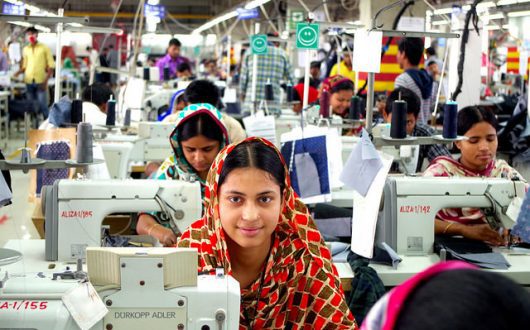
In the village of Thanapara in Bangladesh, the Thanapara Swallows Development Society is creating fair-trade products in an effort to better develop social and economic situations for the poor. In 1973, the society was founded as part of the Swedish organization The Swallows. It has been a fully operational and independent non-profit since 1999.

The Society oversees many empowering projects spanning different areas such as agriculture, education, fair-trade production, health care, human rights, micro-credits, training and sanitation. The goals of these projects are to improve self-sufficiency for people in the area.

Their handicraft program has been around since the Society began, and was globally recognized as a guaranteed fair-trade organization in the Star Business Report in February of 2016. The elements of fair-trade encompass, “creating opportunities for economically disadvantaged producers, transparency and accountability, no child labor, women’s economic empowerment, and freedom of association.”

The program uses local materials and employs around 250 people, both women and men. They have 168 permanent producers with additional temporary producers, totaling nearly 200. Processes of the handicraft program include dying, embroidery, sewing, weaving, and designing. All of the fabric is 100 percent organic cotton. Some of the products the Society creates for sale include fabrics, bedding, pillows, wall hanging, scarves, bags, and clothing. Creations produced by the Thanapara Swallows Development Society can be purchased at their showroom in the village but also through companies abroad.

The garments are predominately exported and sold in Japan and many countries across Europe. The Society has many well-known customers including People Tree, a U.K. “fair-trade pioneer” within the fashion industry featured in the 2015 documentary film True Cost, which shows the commonly unseen aspects of the fashion industry on people and environments around the world.

Through buying fair-trade items, consumers have the ability to fight global poverty through their regular purchases. Efforts, such as those of The Thanapara Swallows Development Society, allow consumers to gain the power to improve the lives of others.

– Shannon Elder

Photo: Flickr

March 22, 2017
https://borgenproject.org/wp-content/uploads/borgen-project-logo.svg 0 0 Borgen Project https://borgenproject.org/wp-content/uploads/borgen-project-logo.svg Borgen Project2017-03-22 10:18:492024-12-13 17:57:40The Thanapara Swallows Development Society
Global Poverty, Hunger, Nonprofit Organizations and NGOs

Three Nonprofits That Fight Hunger in Uganda


At least 1.3 million Ugandans face hunger following drought conditions and subsequent poor crop yields, according to a 2016 email statement from Christopher Kibazanga, Ugandan Minister of State for Agriculture. Among the harder hit were the citizens of the northeastern Karamoja region, with 65 percent of people having access to only half a meal or less per day.

Multiple nonprofits, however, have focused on eliminating Uganda food insecurity for decades and are still seeking long-term solutions to this crisis. Here are three nonprofit initiatives that are contributing to the fight against hunger in Uganda.

Hunger Project

Hunger Project has been working in Uganda since 1999, and utilizes an aid distribution method they refer to as an “epicenter strategy.” This method involves establishing community-built and community-facilitated mobilization centers that bring together multiple villages to share resources and address issues that affect all communities involved.

Over an eight-year timeframe, an epicenter addresses hunger and poverty while allowing communities to become sustainable and self-reliant, with the goal of being able to fund programs and activities without investor involvement.

Hunger Project has established 11 epicenters that serve 494 villages in total, reaching 287,807 people in all.

The World Food Programme

World Food Programme (WFP) is working with the Ugandan government, partners in the United Nations and nongovernment organizations to turn emergency responses to food insecurity into longer-term investments that seek to solve the root of the problems.

WFP supports approximately 70 percent of refugees in Uganda through monthly rations, cooked meals at transit centers and nutrition support for pregnant and nursing women and children aged between six months and five years.

This nonprofit program also organizes the distribution of 284 school meals to students in Karamoja. The meals include locally produced cereals, in hopes of facilitating local commerce.

Feed the Children

Since 2012, Feed the Children has provided health education to communities in northern Uganda. These services include school health programs that provide meals and vitamin supplements, as well as teaching teens about making good food choices, pregnancy and breastfeeding.

As of 2015, 274 children in early learning centers received meals through their schools, 118 children received vitamin A supplements and 302 children received deworming medicine.

Feed the Children also promotes community malnutrition detection education to increase the number of children that can access quality and timely treatment. This initiative advocates family health planning as a realistic and sustainable method to minimize hunger in Uganda.

– Casie Wilson

Photo: Flickr

March 16, 2017
https://borgenproject.org/wp-content/uploads/borgen-project-logo.svg 0 0 Borgen Project https://borgenproject.org/wp-content/uploads/borgen-project-logo.svg Borgen Project2017-03-16 01:30:242024-05-27 23:59:35Three Nonprofits That Fight Hunger in Uganda
Developing Countries, Global Poverty, Nonprofit Organizations and NGOs, Technology

Kopernik: Using Technology to Improve the Developing World

Kopernik: Using Technology to Improve the Developing World

Billions of people all over the world lack the technology allowing them access to light, fuel-friendly cooking and clean drinking water. This is why Kopernik, a nonprofit technology company, is working to distribute simple, life-improving technologies to the world’s poorest communities.

The company provides these communities with items such as water filters, solar power lights and cooking stoves. Nicolaus Copernicus is the organization’s namesake since Kopernik is meant to be a catalyst for change and new ways of seeing the world. Kopernik distributes the best technology for the developing world through sourcing, connecting and reinvesting.

Sourcing

Kopernik uses its website to spread awareness about its technology. In response, countries submit proposals for the items they need the most. Then Kopernik publishes projects on the website in order to raise funds.

Connecting

Once the projects are fully funded — usually by donors — Kopernik ships the technology to its local partners. People then buy that technology at an affordable price through those local partners.

Reinvesting

Next, the local partners repay the money from technology sales to Kopernik. This money is then reinvested into new technology. Kopernik also works with local partners to assess the technology’s impact and share feedback with technology producers.

Funding

Kopernik is a nonprofit organization with a for-profit arm. The for-profit part of the organization is a consulting firm that works with technology companies in product development. The profits from the consulting business are then channeled toward the nonprofit operations.

Kopernik receives funding from companies, government development programs and individuals. Its partners also provide in-kind support such as free or discounted services. This keeps the organization’s operating costs low.

Technology

Kopernik is helping women access clean birth supplies and information about safe birthing practices. For example, in the Chittagong district of Bangladesh as well as Laos, the nonprofit provides JANMA clean birth kits to women. These birth kits contain sterile tools to reduce the risk of infection during childbirth.

In Vietnam, the organization has also connected 90 families with hearing-impaired children with affordable hearing aid technology. This makes it possible for children to learn to speak and form a better bond with their families and communities.

Impact

So far, Kopernik has served 396,325 people and distributed 90,359 technologies. It has funded 170 projects and reached 26 countries, among them Japan, Vietnam, Indonesia, Ghana and Nigeria.

According to Patrick Vinck of the Harvard Humanitarian Initiative, “New applications of technologies to humanitarian action may be the most important factor influencing humanitarian effectiveness over the next decade.” In this regard, Kopernik’s emphasis on technology distribution represents great gains for the world’s anti-poverty organizations with only more progress to come.

– Liliana Rehorn

Photo: Flickr

January 31, 2017
https://borgenproject.org/wp-content/uploads/borgen-project-logo.svg 0 0 Borgen Project https://borgenproject.org/wp-content/uploads/borgen-project-logo.svg Borgen Project2017-01-31 01:30:052024-12-13 17:56:34Kopernik: Using Technology to Improve the Developing World
Developing Countries, Global Poverty, Nonprofit Organizations and NGOs

SunSaluter: Energy, Water and Jobs Rolled Into One

SunSaluter: Energy, Water and Jobs Rolled Into One
There are upwards of 780 million people in the world who do not have access to clean water. On top of this, an estimated 1.2 billion people lack access to electricity — that is nearly 17 percent of the world’s population. Individuals living under such circumstances suffer chronic exposure to waterborne illnesses, and hundreds of millions more must walk hours each day to collect potable water.

SunSaluter, a 501(c)(3) non-profit organization dedicated to improving energy and water access in the developing world, aims to remedy these issues in a simple and affordable way.

The goal of SunSaluter is to make energy and water more accessible through one simple device. The SunSaluter device itself uses gravity and water, rotating a solar panel throughout the day. The device generates 30 percent more electricity, is 30 times cheaper and is far more durable than motorized solar trackers.

The SunSaluter has been deployed in 16 countries and has impacted nearly 8,000 people worldwide. By boosting solar panel efficiency by 30 percent, fewer solar panels are needed and the overall system costs are reduced by 10-20 percent. This lowering of cost alone has helped the impoverished families eliminate the use of kerosene gas.

How does it work? The SunSaluter enables solar panels to produce energy more consistently through the day, beginning earlier in the morning and lasting later at night. This is critical for rural families who often wake early in the day. It helps decrease the need for batteries to store energy that is usually produced mostly around high noon.

The SunSaluter also contains a water purifier within its system. Each day the device is capable of producing four liters of clean drinking water. By combining both energy and water collection into one simple device, the SunSaluter kills two birds with one stone. It improves consistent usage of the purifier as well, which tends to be the biggest hurdle to overcome for clean water programs.

Consequently, SunSaluter is not just working to help with the lack of energy and water in the developing world. “Our goal is to provide entrepreneurial opportunities for individuals in underdeveloped countries,” Eden Full told Business Insider in a recent interview. “We give them guidance, mentorship, and some funding, and the idea is to spread this technology.”

Currently, the company’s core manufacturing operations are in India. It is looking to move into Malawi as well. SunSaluter and its impact on the developing world have only just begun!

– Keaton McCalla

Photo: Flickr

November 11, 2016
https://borgenproject.org/wp-content/uploads/borgen-project-logo.svg 0 0 Borgen Project https://borgenproject.org/wp-content/uploads/borgen-project-logo.svg Borgen Project2016-11-11 12:20:082024-12-13 17:56:00SunSaluter: Energy, Water and Jobs Rolled Into One
Nonprofit Organizations and NGOs

What is an NGO and What Do They Do?

What is an NGO
What is an NGO? The acronym NGO stands for non-governmental organization. With only slightly more specificity, an NGO is any organization, usually non-profit, that operates independently of a government.  Contrary to common usage, the NGO title does not necessarily imply the organization works abroad; NGOs can be local, national, or international.

But apart from these literal definitions, what unique roles do NGOs serve that government aid organizations and corporations do not?

The innumerable NGOs that are working on international humanitarian issues suggest that NGOs can adapt quickly and respond to changing needs faster than government organizations which require executive and electoral approval for action. The Global Journal published a list of the top 100 most influential and effective NGOs, acknowledging famous groups such as OxFam, PATH, and Medicins Sans Frontiers.

These groups’ acclaim comes from consistent and well-organized delivery of critically important services such as medical care, environmental education and advocacy, and human rights protection.

But all NGOs are different and some are met with intense criticism for lack of transparency in budgeting or effectual action. When donating money or looking for work in the NGO world, it is always important to do your research about how much of the group’s budget goes to administrative costs and how much goes directly to the cause you care about. The website Charity Navigator is a useful resource for this.

Another important critique of NGOs is that all too often organizations staffed with Americans and Europeans come into developing nations with action plans that don’t fit the local context and end up adversely affecting their target populations. This, however, is not an inherent flaw of NGOs but rather a symptom of failing to acknowledge the importance of local expertise within the NGO framework.

Because NGO funding commonly comes from developed nations, a particularly effective model for NGOs includes using local in-country staff to plan and implement programs on the ground while working with an international board focused on fundraising, outreach, and strategic group planning.

It would be untrue to claim that NGOs are immune to political influence simply because they are not directly connected to governments; NGOs’ funding and even daily operations are subject to political approval.

For example, NGOs working to bring amnesty to political refugees will often face intense political adversity, and even violence during their in-country work. But unlike government organizations, NGOs typically have more flexibility to defy a political status quo to pursue what they believe to be important social change.

– Shelly Grimaldi

Sources: Grant Space, Miratelinc
Photo: The Design Inspiration

October 23, 2016
https://borgenproject.org/wp-content/uploads/borgen-project-logo.svg 0 0 Borgen Project https://borgenproject.org/wp-content/uploads/borgen-project-logo.svg Borgen Project2016-10-23 14:47:072020-05-29 12:52:24What is an NGO and What Do They Do?
Nonprofit Organizations and NGOs

Rwanda’s New Town Library Goes Digital with WorldReader

Town Library
Rwinkwavu, a community of 30,000 people in Rwanda, is significantly economically disadvantaged. The town is mostly made up of farmers and lacks basic modern resources such as running water and power.

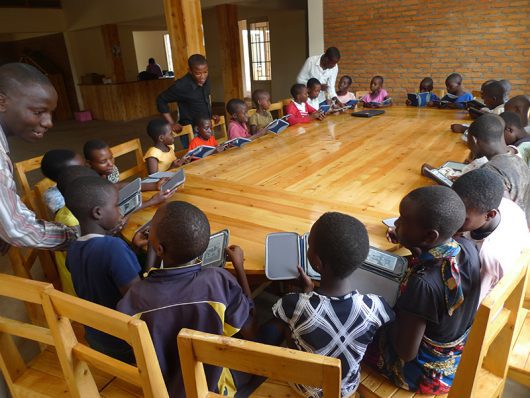
Despite these conditions, the non-profit Ready for Reading built a town library in 2012 that Worldreader, a Barcelona-based charity, then filled with e-readers, smartphones, Wi-Fi and a broad range of digital books for locals to explore.

Books not only provide entertainment, but their educational value is paramount. This access to knowledge helps to improve language skills and literacy while explaining new and different information in an enjoyable way. More specifically, reading has helped adults in Rwinkwavu master various skills including applying for new jobs, opening bank accounts and even running their own businesses.

Accessing knowledge through reading has also helped children develop interests in topics they most likely would not have explored otherwise. Each night, people of all ages now gather at Rwinkwavu’s town library to read after long days of laboring in their fields. As they continue to learn new information, new doors continue to open for them.

More than one in three adults in sub-Saharan Africa, a total of 182 million, are unable to read and write. In Rwanda, 48 million of the youths are illiterate. The population’s lack of education has led to 44 percent of people living below the international poverty line of $1.25 per day. However, new town libraries like the one in Rwinkwavu could potentially change the status quo.

Worldreader has already used its digital books to fill multiple schools and libraries across 14 different countries in sub-Saharan Africa, helping to educate over 100,000 children and adults. The charity hopes to continue its expansion, with plans to fill another two libraries by the end of the year.

“There is massive inequality in the world. Africa needs education at scale to start closing the gaps,” said Worldreader Co-Founder Colin McElwee.

– Alice Gottesman

Photo: Worldreader

September 17, 2016
https://borgenproject.org/wp-content/uploads/borgen-project-logo.svg 0 0 Borgen Project https://borgenproject.org/wp-content/uploads/borgen-project-logo.svg Borgen Project2016-09-17 01:30:222020-06-05 14:16:09Rwanda’s New Town Library Goes Digital with WorldReader
Education, Nonprofit Organizations and NGOs

New Global Education Fund Aims to Increase Schooling Projects

Global education fund
Sunny Varkey, an entrepreneur from India who lives in Dubai, launched the Varkey Foundation Challenge Fund in March 2016. The $200,000 global education fund was created to support education projects across the globe.

Varkey set up the Challenge Fund to help accomplish the goals of his non-profit, the Varkey Foundation, which works to ensure every child in the world has access to quality teachers.

The fund strives to provide good teachers and quality education to all children, no matter their circumstances.

“The Challenge Fund looks to support early-stage initiatives which build the capacity of teachers and to strengthen the status of the teaching profession,” Varkey said.

Countries in sub-Saharan Africa, the Arab States and South Asia are facing massive teacher shortages. This has put efforts to provide quality teachers and education for children at risk.

The United Nations Educational, Scientific and Cultural Organization (UNESCO) found that sub-Saharan Africa must raise its current stock of teachers by 68 percent in less than a decade to provide its students with enough teachers.

However, simply hiring teachers will not solve the problem. Educators will need adequate training and support in order to provide quality instruction.

The minimum qualification to become a teacher is approximately nine years of schooling. Unfortunately, 43 percent of teachers in the Congo and 55 percent of teachers in Lao People’s Democratic Republic do not meet this requirement.

The countries that need the most new teachers are also the countries with the least-qualified teachers — this issue is one the Varkey Foundation Challenge Fund hopes to fix.

Varkey’s first projects have already been chosen but non-profit organizations from any country may apply for a portion of the global education fund.

The company will start with organizations in China, Ghana, the Middle East and Ukraine according to The Economic Times. Partner organizations that offer innovative solutions that support the fund’s mission are also offered grants of up to $50,000.

– Alice Gottesman

Photo: Pixabay

September 8, 2016
https://borgenproject.org/wp-content/uploads/borgen-project-logo.svg 0 0 Borgen Project https://borgenproject.org/wp-content/uploads/borgen-project-logo.svg Borgen Project2016-09-08 01:30:432024-05-27 09:35:02New Global Education Fund Aims to Increase Schooling Projects
Global Poverty, Nonprofit Organizations and NGOs

Whole Planet Foundation: Benefits of Microfinance Institutions

Whole Planet Foundation

Whole Planet Foundation, the nonprofit organization founded by Whole Foods Market, seeks to alleviate poverty in communities around the world that supply Whole Foods stores. All of the Foundation’s overhead costs are covered by Whole Foods Market, meaning 100 percent of donations go straight to community micro-lending programs.

According to the Kiva organization, “microfinance is a general term to describe financial services to low-income individuals or to those who do not have access to typical banking services.”

Microfinance encompasses a wide array of services, such as credit, savings and small loans services. Whole Planet Foundation focuses on the credit component of microfinance by supporting microfinance institutions that provide small business loans.

To ensure the efficacy and intentions of Microfinance Institutions (MFIs), Whole Planet Foundation conducts careful research. Field teams in each country first identify potential partners. After reviewing relevant information, the list of potential partners is shortened.

Each institution is visited in person by Regional Directors. The field visit allows the Foundation “to see first-hand the approach and practices of an MFI”. Once approved, MFIs are eligible to receive grants from the Whole Planet Foundation to service their clients.

The field visit allows the Foundation “to see first-hand the approach and practices of an MFI”. Once approved, MFIs are eligible to receive grants from the Whole Planet Foundation to service their clients.

The Whole Planet Foundation does not work with government-run MFIs which they have found to be “poorly run and corrupt”. The Foundation states that it has found “great success by working with MFIs with no government affiliation”.

At the same time, the Foundation acknowledges that microcredit is not a “silver bullet” that can address all the factors that contribute to global poverty. As the website notes, one loan doesn’t immediately lift a family out of poverty.

However, MFIs, when run correctly, can help people without jobs start and maintain their own businesses. MFIs give people the opportunity to invest in their own potential and create opportunities for themselves and their families.

Whole Planet Foundation currently supports over 1.3 million micro-entrepreneurs in 70 countries around the world. Of note, 87 percent of those reached globally are women. This investment has been met with success, boasting a repayment rate of 97 percent.

One entrepreneur who is benefitting from the program is a woman named Yajaris from Nicaragua. According to the Foundation, she heard about her local MFI, Pro Mujer Nicaragua, from a neighbor several years ago. She used micro credit loans as a way to expand her kiosk business. Yajaris added a variety of vegetables, drinks and cleaning supplies to her inventory.

Microloans also helped Yajaris to purchase a refrigerator and shelves on which to display the new items. Within just three years, according to Whole Planet Foundation, her kiosk doubled in size. Yajaris used her savings and an additional housing loan from Pro Mujer to build a two-room home. She rents out that property and is currently using the rental income to save up for another floor.

According to Kiva, the benefits of MFIs have been proven to go far beyond supporting small businesses. By providing people with opportunities to become self-sufficient, household economic welfare stabilizes, allowing families to better cope with the challenges they face. The success of female-run businesses, in particular, contributes to the increase in gender equality. As households succeed, communities can grow to become more empowered and educated.

– Taylor Resteghini

Photo: Flickr

May 3, 2016
https://borgenproject.org/wp-content/uploads/borgen-project-logo.svg 0 0 Borgen Project https://borgenproject.org/wp-content/uploads/borgen-project-logo.svg Borgen Project2016-05-03 01:30:472024-12-13 17:54:22Whole Planet Foundation: Benefits of Microfinance Institutions
Global Poverty, Nonprofit Organizations and NGOs

10 Ways to Help the World’s Poor

Ways to Help the World's Poor

Ways to Help the World’s Poor

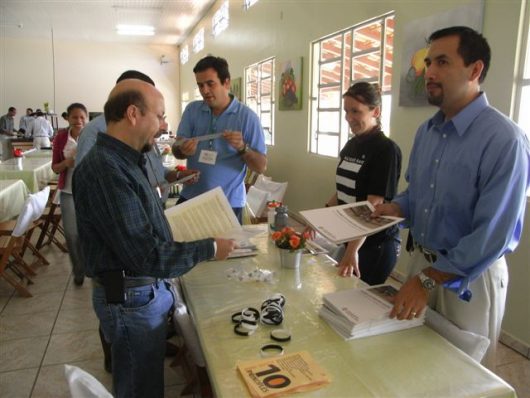
Do you want to know some easy ways to help the world’s poor? Well, here are 10 simple ways to help the world’s poor, which can often be done without even having to leave your home!


1. Donate

One of the quickest and most obvious ways to help the world’s poor is to donate to charity. Click here to donate to The Borgen Project.


2. Call Congress

This way to help the world’s poor is surprisingly simple. Every person in the United States has 3 representatives in Congress (2 Senators and 1 Representative in the House). By calling these 3 peoples’ offices each week, individuals can show the Congressmen the issues that they care about. Calling your Congressmen is a simple process. Generally, an intern will answer the phone, or you can leave a message after hours.

The message you need to say is simple: “My name is ___, I live in ___, and I want to raise the funding for helping the world’s poor,” or something similar. As few as 7 people calling in can make a Congressman change his mind on a bill: Congressmen want those they are serving in the U.S. to be happy so if you let them know what you want, they are more likely to listen. Go here for more detailed instructions.


3. Inform Yourself

This is one of the simplest ways to help the world’s poor, and also it helps you to do the other things more effectively. Basically, all you need to do is stay informed on the issues. Pay attention to what is happening in Congress and read up on current poverty-related events. It may surprise you to find out that poverty has made some great strides in the past few years. Indeed, in the past 20 years, the world’s undernourished has decreased by 50%. Life expectancy has also increased by 1/3.

(Browse The Borgen Project to find out more interesting facts about poverty).


4. Build Buzz/Raise Awareness

Now that you’ve done your research, you can use your new information as tools to build buzz or to raise the awareness of those around you. If you care about the world’s poor, you can be sure that other people do too, but may just be unaware of how they can help. You can share info on different poverty-fighting organizations with your colleagues, family, and friends (see 1. Donate for ideas). You can also call into radio shows, write to editors, speak locally about the cause, send ideas to the media, or anything else that may bring the idea of helping the world’s poor to the forefront of people’s vision and thoughts.


5. Social Media

Recently, social media has become one of the most fantastical ways a person can help the world’s poor (among other ventures). This is perhaps the easiest way to help, as well. Many Congressional leaders (your members of Congress) have Facebook pages, Twitters, or websites. All you need to do is either post on their pages to bring up the idea of helping the world’s poor, or post on your own about the various issues. Also, you can easily follow many different organizations, including The Borgen Project, and retweet them or post about them on Facebook or other websites. Overall, your voice will be heard. (The Social Media of Congress can be found here and here). (Also, follow us on Twitter!)


6. Get Political

Although you can call Congress or post on their Facebook pages, there are other ways to help the world’s poor and to “get political.” If you are willing, you can always arrange a meeting with Congressional staffers to tell them what issues (like reducing global poverty) you are interested in. You can also mobilize those around you; just one person calling into Congress will make a difference, but if multiple people in an area call Congress about the same issue and around the same time, there will be a bigger effect. Finally, you can “bird dog” Congress, which means to go to where a legislator is speaking, and ask them publicly about poverty (For example, “What are you doing to help poverty?” or “Will you support helping reduce global poverty?”, etc).


7. Fundraising

Another one of the ways to help the world’s poor is fundraising. Contact people about various organizations to donate to, or use sites like Crowd Rise to start a campaign. You can also run marathons or accomplish other feats as a way to raise money, as long as you ask people to be your sponsor. You can also ask for donations to different charities rather than receiving gifts for your birthdays, weddings, or other events.


8. Be a Consumer with a Cause

One of the surprising ways to help the world’s poor is simply by being a consumer, or something who buys things. This can be done by buying products from websites that donate a portion of their proceeds to charity, or from nonprofit organizations that sell shirts or other merchandise to help the cause. The Borgen Project even has a Visa Card that has no annual fee, and some unique card designs. Basically, when possible, buy from places that will help the cause.


9. Arrange Events

One of the harder ways to help the world’s poor is arranging events. Of course, this does not need to be too difficult: you could host parties (or movie/TV show marathons with your friends!) and have a $5 (suggested donation) to get in. This can be done by living your life as normal, but adding in charity donation so that everyone can get involved. On the other hand, you can also host poverty-based events or parties with the pure purpose of raising awareness on poverty and discussing its issues. Finally, you can have a “non-event” event, where instead of going out that night, everyone donates a certain amount and stays in.


10. Volunteer

Finally, one of the most difficult (but, arguably, most rewarding) ways to help the world’s poor is through volunteering. This can encompass many different things: volunteer for a political campaign, volunteer for a nonprofit organization, volunteer for a movement to fight poverty or grab an internship. Personally, I am an intern writing for The Borgen Project; I do not get paid, but it helps get the message out to the world. Overall, you can find volunteer opportunities online (for example, through Idealist), but there are also local opportunities that may be available if you ask around.

To see even more easy ways to help the world’s poor, look here.

– Corina Balsamo

Source: The Borgen Project
Photo: Flickr
February 12, 2016
https://borgenproject.org/wp-content/uploads/borgen-project-logo.svg 0 0 Borgen Project https://borgenproject.org/wp-content/uploads/borgen-project-logo.svg Borgen Project2016-02-12 12:25:512024-05-24 23:41:3610 Ways to Help the World’s Poor
Page 38 of 60«‹3637383940›»

Get Smarter

  • Global Poverty 101
  • Global Poverty… The Good News
  • Global Poverty & U.S. Jobs
  • Global Poverty and National Security
  • Innovative Solutions to Poverty
  • Global Poverty & Aid FAQ’s
Search Search

Take Action

  • Call Congress
  • Email Congress
  • Donate
  • 30 Ways to Help
  • Volunteer Ops
  • Internships
  • Courses & Certificates
  • The Podcast
Borgen Project

“The Borgen Project is an incredible nonprofit organization that is addressing poverty and hunger and working towards ending them.”

-The Huffington Post

Inside The Borgen Project

  • Contact
  • About
  • Financials
  • President
  • Board of Directors
  • Board of Advisors

International Links

  • UK Email Parliament
  • UK Donate
  • Canada Email Parliament

Get Smarter

  • Global Poverty 101
  • Global Poverty… The Good News
  • Global Poverty & U.S. Jobs
  • Global Poverty and National Security
  • Innovative Solutions to Poverty
  • Global Poverty & Aid FAQ’s

Ways to Help

  • Call Congress
  • Email Congress
  • Donate
  • 30 Ways to Help
  • Volunteer Ops
  • Internships
  • Courses & Certificates
  • The Podcast
Scroll to top Scroll to top Scroll to top