• Link to X
  • Link to Facebook
  • Link to Instagram
  • Link to TikTok
  • Link to Youtube
  • About
    • About Us
      • President
      • Board of Directors
      • Board of Advisors
      • Financials
      • Our Methodology
      • Success Tracker
      • Contact
  • Act Now
    • 30 Ways to Help
      • Email Congress
      • Call Congress
      • Volunteer
      • Courses & Certificates
      • Be a Donor
    • Internships
      • In-Office Internships
      • Remote Internships
    • Legislation
      • Politics 101
  • The Blog
  • The Podcast
  • Magazine
  • Donate
  • Click to open the search input field Click to open the search input field Search
  • Menu Menu

Archive for category: Nonprofit Organizations and NGOs

Information and stories about nonprofit organizations and NGOs

Charity, Nonprofit Organizations and NGOs

Ex Novo: A Charitable Brewery

Ex-Novo-Charitable-Brewery
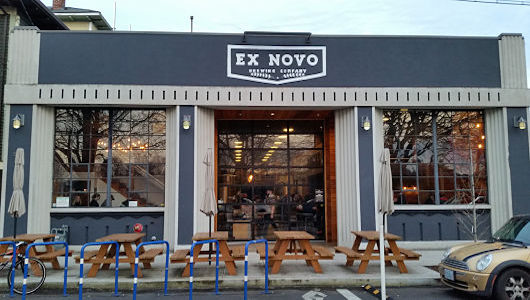
A company that unites good beer, good food and good causes seems too good to be true. But the Ex Novo Brewing Company in Portland, touting itself as “a 10-barrel non-profit brewery,” is making this dream a reality.

The charitable brewery was founded by former engineer Joel Gregory, who stated in an interview with Portland Monthly Magazine that he “felt compelled to help in any way.” And with the brewery’s charitable efforts supporting causes such as Mercy Corps’ work with Syrian refugees and the International Justice Mission, Mr. Gregory is helping.

The alcohol industry is not exactly known for its charitable efforts. By taking the growing craft beer craze and using it as an opportunity to do good, Ex Novo is bringing charity to the beer industry, and bringing change to the world.

And they’re doing it deliciously. Food items served at the brewery include bacon, cottage pie and a pork meatball banh mi. Beers include Irish Stouts, IPAs and a variety of Saison brews. In addition, the brewery serves homemade brownies and a stout milkshake.

The first non-profit brewery is receiving nothing but praise for these features. Customers on Yelp praise the non-profit nature of the establishment, along with the charitable brewery’s expansive food and drink menu. Though Ex Novo does not currently bottle or can its beer, it can be found on tap throughout the Portland area.

Opened in July 2014, it would appear that the one-year-old brewery is making a big splash in Portland. And with its delicious menu and good reputation, the organization can change both lives and tastes.

Only time will tell if Ex Novo’s conception of the not-for-profit brewery will have an impact in the beer industry. Through its support of Mercy Corps’ fight to end the cycle of refugee poverty and the International Justice Missions’ fight against global systems of exploitation, Ex Novo is a wonderful example of a local business making a global difference in the fight against poverty.

– Andrew Michaels

Sources: Portland Monthly Magazine, Ex Novo Brewing Company, Yelp, Eater, International Justice Mission, Mercy Corps
Photo: Koperski

June 24, 2015
https://borgenproject.org/wp-content/uploads/borgen-project-logo.svg 0 0 Borgen Project https://borgenproject.org/wp-content/uploads/borgen-project-logo.svg Borgen Project2015-06-24 00:45:472024-12-13 17:51:35Ex Novo: A Charitable Brewery
Aid, Humanitarian Aid, Nonprofit Organizations and NGOs, Philanthropy

Humanitarian Aid and How to Help

humanitarian_aid
With all that happens in today’s philanthropic world, definitions can get muddled. Humanitarian aid is material and logistic assistance to promote human welfare, often after natural or man-made disasters. The World Health Organization defines it as “aid that seeks to save lives and alleviate suffering of a crisis affected population.”

In essence, humanitarian aid is humans helping other humans.

There are countless examples of humanitarian aid, from large organizations to small-scale philanthropy events that benefit a larger cause. One of the goals of the United Nations is to provide humanitarian aid.

An example of a large humanitarian aid organization is Doctors Without Borders. Every year, Doctors Without Borders provides emergency medical care to millions in crisis after a disaster. It has operated in over 70 countries around the world over crisis such as armed conflict, epidemics, malnutrition and natural disasters. According to their website, every day over 30,000 people are helping others through Doctors Without Borders.

On a smaller scale, humanitarian aid can be found locally. A local fundraiser for a cause, such as a charity walk to raise money, can support a humanitarian aid organization. For example, nearly 1,000 GoFundMe campaigns were made to raise money after the earthquake in Nepal, raising a total of over $5 million.

There are plenty of ways to get involved in humanitarian aid! Keep it simple and think locally. How can your community help others in need? Here are 5 easy ideas for you to try:

1. Organize a dinner with your friends and ask each person to donate a little to the charity of your choice.

2. Attend a charity walk or ride. You’ll get some exercise while raising money and awareness for a greater cause.

3. Clean out your closet and donate your old clothes.

4. Join an organization like Habitat for Humanity and help build a home for those who have lost their own.

5. Help out at a local food pantry. Make a difference right in your own neighborhood.

Before getting involved with the humanitarian aid of your choice, make sure to do your homework. Understand the issue–the problem at hand, the potential solutions, the dilemmas–before launching yourself into the organization. That way you will understand the complexity of the problem and be able to get a lot out of your experience.

– Hannah Resnick

Sources: GoFundMe, World Health Organization
Photo: Flickr

June 16, 2015
https://borgenproject.org/wp-content/uploads/borgen-project-logo.svg 0 0 Borgen Project https://borgenproject.org/wp-content/uploads/borgen-project-logo.svg Borgen Project2015-06-16 14:52:432024-05-27 09:24:07Humanitarian Aid and How to Help
Development, Global Poverty, Nonprofit Organizations and NGOs, Water

Sand Dam Construction Brings Water to Driest Areas

sand_dam
Dryland ecosystems are classified as having long periods of drought with very short seasons of intense, heavy rainfall. They cover approximately 40 percent of the earth’s surface, particularly in developing countries, where 1/3 of the global population lives.

Drylands have extremely limited access to clean drinking water. However, there has been a recent surge in the construction of sand dams, currently the most cost-effective technology in water collection.

Sand dams combine ancient rainwater collecting techniques, everyday building materials and local manpower to collect clean water that would otherwise become runoff, carrying away fertile topsoil essential to subsistence farming. A moderately sized dam can supply over 1,000 people with a consistent supply of filtered water, even during the year’s driest seasons.

According to reporter and producer Russell Beard, “A sand dam is a reinforced concrete wall built across a seasonal riverbed. Over three or four rainy seasons, sand is washed downstream and deposited in the reservoir behind the dam wall, which stores up to 40 percent of its volume as water. The sand slows evaporation, filters the water, and protects it from contamination by livestock or disease-carrying mosquitoes.”

Timber, rocks, cement, sand and water are the only raw materials needed to build a sand dam, all of which are supplied by donor funding. Local community members work together to build the dam structures and the women and girls are usually deemed responsible for water collection.

Excellent Development, a UK based nonprofit organization, has devoted its entire efforts to distributing sand dam technology to dryland areas, in hopes of providing stable water security to poor, rural populations all over Africa.

Excellent Development published a report, Sand Dams: The World’s Most Cost-Effective Method of Conserving Rainwater, which outlines the desperate need for sand dam construction.

The report states, “Drylands cover approximately 40% of the world’s land area and support 80% of the world’s poorest people, mostly in the rural areas of Africa and Asia. Approximately 10% of drylands display symptoms of land degradation: Water scarcity, sparse vegetation, soil erosion and nutrient depletion; further diminishing the ability of ecosystems to absorb and store rainwater.”

Sand dam construction not only provides clean drinking water, but also replenishes local ecosystems, increases food security and promotes community cooperation.

Executive Director of Excellent Development Simon Maddrell said, “Sand dams are the most cost-effective method of rainwater harvesting known. They have the potential to provide communities living in dryland areas with a clean local water supply for life, even during periods of drought. We know how much this is needed, especially in dryland areas of the world – where 80% of the world’s poorest people live. We also know that access to water in these areas is likely to worsen: Climate change is already altering rain patterns, creating more droughts, more floods and shorter, more intense rains.”

To date, Excellent Development has pioneered the construction of 838 sand dams, planted 935,000 trees, dug 1.5 million meters of terraces, built 43 community seed banks, built 51 school water tanks and brought fresh, filtered water to nearly one million people.

– Hanna Darroll

Sources: UNDP, The Water Project, Excellent Development
Photo: Excellent Development

June 15, 2015
https://borgenproject.org/wp-content/uploads/borgen-project-logo.svg 0 0 Borgen Project https://borgenproject.org/wp-content/uploads/borgen-project-logo.svg Borgen Project2015-06-15 08:17:472024-06-04 01:08:10Sand Dam Construction Brings Water to Driest Areas
Nonprofit Organizations and NGOs

10 College Degrees for Nonprofit Jobs

nonprofit_jobs

Though for-profit businesses have taken a hit in years past, crippled by downsizing and high unemployment rates, the nonprofit sector continues to shine. As the third-largest workforce in the U.S., many aspiring college graduates are gravitating toward injustice-fighting and social change-fostering employment opportunities. For university students specifically wanting to join the international fight against poverty, consider these often neglected majors below.

  1. Philosophy: Despite its reputation for being “impractical” or “frou-frou,” studying anything from Plato to existentialism will refine some well-needed job skills. Employers continue to deem an analytic and creative mindset as crucial to a collaborative work environment. And who knows? Perhaps in that brain of yours, sitting right next to Karl Marx’s ideologies, you have an interesting solution to youth unemployment.
  1. History: Reading about Gilgamesh and pouring over original documents could earn you a kick-butt job kicking poverty’s butt. Learning the historical context of political discord, jihadist movements or religious traditions will foster cultural awareness. Plus, the old adage of history repeating itself if gone unlearned must have some truth to it.
  1. Sociology: Understanding contemporary social issues and having a sociological imagination will not only please C. Wright Mills but also prospective employers. That SOC 235 Social Problems course could prove helpful when discussing the general U.S. opinion on foreign aid policy. The communication and number crunching skills will also impress.
  1. English: This degree will raise some eyebrows in the College of Business; however, Longfellow can jumpstart a philanthropic career. Being able to communicate, both out loud and on paper, is something few prospective employees can do. Plus, any grant writing experience will be considered a godsend by the director of fundraising development.
  1. Sustainability Studies: If windmills and solar panels are your thing, consider an interdisciplinary major that combines ecology and the humanities. Though environmentally-conscious nonprofits are popping up like mad, your background knowledge may offer solutions to water sanitation problems or food deserts for poverty-driven organizations.
  1. Theatre: After suffering through family dinners talking about the “future” and long nights of play practice, a thespian could make the nonprofit sector their stage. Confidence and an engaging persona are key when lobbying or birddogging for the cause. Online broadcasting, whether it be in podcast or video form, is also a great way to spread awareness.
  1. Women and Gender Studies: Delving into the racial and ethnic nuances of the patriarchy could actually have life-changing implications in the nonprofit sector. Taking humanities courses in anything from sociology to political science will shed some light on the feminism of poverty. And with organizations such as U.N. Women dedicated to solving just that, you will definitely find a niche.
  1. Graphic Design: Sans-serifs and color swatches may prove useful when perusing for job openings. When it comes to beautifying a website or creating an eye-catching advertisement, few have the expertise. From collaborating with a nonprofit’s communications specialist to creating a monthly newsletter, all you artsy grads will come in handy.
  1. Journalism: In the wake of recent cutbacks, digital news sites for nonprofit organizations are exploding across the U.S. From Color Lines in New York to our own Borgen Magazine in Seattle, an increasing number of “do-good” groups are recognizing the power of media. If composing a piece about Syrians living in abject poverty sounds up your alley, jump on the journalism bandwagon.
  1. International Studies: Though not for the foreign language-avoiding liberal arts undergraduate, this interdisciplinary major allows students to adopt a global view. Political science courses, study abroad and lots of broken Spanish could translate into a foreign relations position. Many nonprofits, especially those with a worldwide focus, need a multilingual and culturally-aware employee.

While stemming away from STEM majors may cause for a few disgruntled parents or skeptical classmates, nonprofit jobs can offer recent graduates a satisfying career. From thespians turned lobbyers to history buffs turned fundraising directors, the possibilities are limitless.

– Lauren Stepp

Sources: NY Times, Urban Institute, Washington State University
Photo: Flickr

June 15, 2015
https://borgenproject.org/wp-content/uploads/borgen-project-logo.svg 0 0 Borgen Project https://borgenproject.org/wp-content/uploads/borgen-project-logo.svg Borgen Project2015-06-15 08:00:582024-12-13 17:51:2510 College Degrees for Nonprofit Jobs
Global Poverty, Health, Nonprofit Organizations and NGOs, Water

Ceramic Filters for a Cleaner Future

Ceramic_Filters_for_a_Cleaner_Future
Rural South Africa faces many challenges. The prevalence of HIV/AIDs is partnered with high rates of other diseases, both infectious and non-communicable.

Limpopo Province is among the poorest of South African communities, with a 34 percent poverty rate. In addition, Limpopo also has one of the lowest rates of accessible drinking water. Only 44 percent of the population has regular access to potable water. The Mukondeni Filter Factory located in Ha-Mashamba is addressing limited water access with a new kind of water filter that could be a game-changer for communities where access to clean water is a challenge.

Pure Madi is a nonprofit run by the University of Virginia in partnership with the University of Venda in Thohoyandou, South Africa. Pure Madi designed the ceramic water filter of the same name to provide a sustainable solution to the world’s growing water problems. Pure Madi, named after the Tshivenda word for water, is cheap to make, simple to use and long-lasting.

The ceramic filters are flowerpot-shaped clay pots that can treat between one and three litres of water in an hour. Local clay is mixed with sawdust and shaped into a pot, then fired in a kiln. As the ceramic hardens, the sawdust burns away, leaving a porous matrix that will filter particulates out of the water. It is then treated with a dilute solution of silver nanoparticles inside and out. These nanoparticles lodge in the pores of the filter and kill pathogens like Eschericia coli and Vibrio cholera.

The filters are designed to fit into five gallon buckets that rural families commonly use to haul water. By the time water has passed through the filter, a reported 99.9 percent of all pathogens have been killed and filtered out. The filters last for about five years and are inexpensive, as a result, there is almost no access barrier.

Access to clean water is crucial to the development of communities. Without clean water, hygiene and health are almost impossible to maintain and agriculture suffers from low yields and substandard product. One could say that development grows from the groundwater up. Without access to clean water, communities lack functional sanitation services, experience constant illness and unproductive farms. Such hindrances keep a population from exploring the business and education opportunities required for further development.

Every year, between three and four million people die from waterborne diseases easily preventable with modern technology. Cholera and E. coli, rare in the developed world, are a major threat in areas without water filtration services.

The Mukondeni Filter Factoy will eventually be able to produce over 500 filters a month. Pure Madi’s 10-year plan is to build sister factories all over rural South Africa and eventually other countries as well. Pure Madi has stated that its ultimate goal is to serve 500,000 people with new filters every year.

– Marina Middleton

Sources: How Stuff Works, Azo Materials, Tree Hugger, Gizmag, UVA Today
Photo: Flickr

April 19, 2015
https://borgenproject.org/wp-content/uploads/borgen-project-logo.svg 0 0 Borgen Project https://borgenproject.org/wp-content/uploads/borgen-project-logo.svg Borgen Project2015-04-19 04:00:262020-07-03 08:21:59Ceramic Filters for a Cleaner Future
Global Poverty, Health, Nonprofit Organizations and NGOs

VisionSpring Provides Eyeglasses for the Poor

visionspringWith all the issues around the globe, the world’s lack of eyeglasses probably does not occur to some people. However, around 703 million people have a vision problem that requires the use of glasses—and few of these 703 million people ever get them.

VisionSpring, an organization that provides glasses to the poor, realizes that more than 90 percent of these people live in a developing country. It also realizes that simply providing a worker with reading glasses for a mere $4 can improve his or her wage by up to $108 dollars per year. For citizens of developing countries, this amount could change the quality of someone’s life.

Founder and chairman of VisionSpring, Jordan Kassalow says that the organization’s operations rely on the motto “See to Learn, See to Work, and See For Safety.” Giving a pair of glasses to a student can equate to advancing his or her education up to a year, and glasses prevent injuries on the road and on the job.

Every dollar donated to VisionSprings adds up to an economic impact of $23 dollars. The organization sends out “vision entrepreneurs” to asses a community’s vision and spread the word about the opportunities available to that community. They travel around the world to the most impoverished places to advocate for this cause. This is nice because that means the help is coming to those who need it instead of vice versa—for example, in India someone could lose up to $10 dollars traveling to purchase a $4 dollar pair of glasses.

After performing vision tests for customers and providing them with glasses, a person can see his or her work productivity increase by 35 percent. VisionSpring also aims to consider the cultural differences between these various locations to best suit that community’s needs. For example, the organization has come up with a special pair of clear glasses for UV protection that can still shield eyes from the sun but are not the traditionally dark-shaded sunglasses the Western world is accustomed to.

“As I placed the glasses on the boy’s nose, I watched as the blank stare of a blind person transformed into an expression of unadulterated joy—I was witnessing someone seeing his world for the first time,” recounts Kassalow after giving one of his first pair of glasses to a seven-year-old boy in Mexico. VisionSprings considers a little-known issue that can bring big results—not only higher literacy and productivity rates but simply joy.

– Melissa Binns

Sources: The Christian Science Monitor, Forbes, VisionSpring
Photo: Boston Big Picture

April 5, 2015
https://borgenproject.org/wp-content/uploads/borgen-project-logo.svg 0 0 Borgen Project https://borgenproject.org/wp-content/uploads/borgen-project-logo.svg Borgen Project2015-04-05 04:00:472024-05-27 09:23:33VisionSpring Provides Eyeglasses for the Poor
Advocacy, Global Poverty, Nonprofit Organizations and NGOs

World Renew Tackles Global Poverty

From Asia to Uganda, World Renew, formerly known as The Christian Reformed World Relief Committee, is addressing the problems facing the most impoverished of communities all over the world. The name-change came in 2012 after the organization felt that that the work being done was growing larger and more significant. “The name better reflects who we are and what we are about as a trusted, established non-profit that is working to help eradicate the root causes of extreme global poverty through the renewal of relationships with God, neighbor, and the environment,” says World Renew’s Canadian director, Ida Mutoigo.

It is estimated that World Renew works with 1.86 million people who live in poverty in 35 different countries. This organization is known for its advocacy and quick responses to disasters like the 2011 earthquake in Japan or the conflict that currently exists in Syria. World Renew is also known for aiding with the systemic problems that affect the world’s poor. By focusing on things like AIDS, agriculture, literacy, health, the environment, sanitation and gender equality, the organization helps communities develop and thrive.

There are also unique programs where one can sponsor a refugee or “Free A Family,” where the charity works with a specific family with the help of a contributor’s donations and periodically gives the contributor updates on the family throughout the year. This program intends to provide a family with “nutritious food, clean water, improved health, and increased income.” Another interesting way World Renew helps is by providing materials for someone to throw his or her own “National Baby Shower,” an event where attendees can learn about child and maternal health.

World Renew also encourages individuals to create a campaign of their own by coming up with a “Passion Project.” In addition, there are 24 individual blogs on the World Renew website where volunteers focus posts updates on a specific country.

World Renew’s dedication to advocacy, disaster relief and community development has made change throughout the world. “Sometimes that change is as small as a baby chick, and sometimes it’s as big as community-wide peace-building and reconciliation between ethnic or religious groups,” says World Renew. Either way, its efforts have impacted the global poverty cause.

– Melissa Binns

Sources: Give.org,  The Rapidian, World Renew

March 25, 2015
https://borgenproject.org/wp-content/uploads/borgen-project-logo.svg 0 0 Borgen Project https://borgenproject.org/wp-content/uploads/borgen-project-logo.svg Borgen Project2015-03-25 08:00:192016-03-03 20:55:54World Renew Tackles Global Poverty
Activism, Global Health, Humanitarian Aid, Nonprofit Organizations and NGOs, Poverty Reduction

World Concern Makes an Impact

world concern
World Concern is a nonprofit organization devoted to transforming the lives of deeply impoverished people. Founded by pharmacist Jim McCoy and Doctor Wilbert Saunders in 1955, the organization was intended to provide resources to hospitals and clinics overseas.

In 1976, the functions of World Concern shifted dramatically when they realized that sending medicines and medical supplies was not enough to aid countries affected by a variety of crisis. They began sending passionate volunteers and expert to work on the ground with people living in the targeted community.

In addition to long-term support, they offer emergency relief support to countries that have experienced earth quakes and tsunamis among other situations. Their most recent contribution to relief was after the devastating earthquake.

World Concern is revolutionary because they work in some of the world’s most diseased and dangerous places. Some of these locations include Darfur, Myanmar, Somalia, Ethiopia and Rwanda. In some of the countries World Concern works, literacy rates are as low as 25 percent. A committed staff of approximately 900 people work on behalf of World Concern’s mission to aid poor communities.

In addition, 90 percent of the donations World Concern receives go to their programs abroad. They are transparent with their fiscal information to ensure that money is being maximized where it is most effective. Fundraising takes up only 5.2 percent of all expenses and promotions. 4.7 percent goes to management and general administrative duties.

World Concern is devoted to providing clean water to communities. Clean water is pertinent to maintaining the health of the people living in the community. They bring in wells and latrines to facilitate better hygiene and access to clean water.

Another service they provide is bettering children’s access to education. Many children in these poor communities have to walk for miles and the classes are usually held is sub standard conditions either outside or in very informal settings.

In poor communities of developing countries the way that most people earn a living is through farming. These forms of subsistence living are vulnerable to food insecurity; reliance on environmental conditions and floods and drought greatly affect the income stability.

World Concern is devoted to the long-term solutions to working out solutions in some of the world’s poorest communities. They foster a sense of hope through providing access to education and clean water.

– Maxine Gordon

Sources: CRISTA Ministries, World Concern
Photo: World Concern

February 26, 2015
https://borgenproject.org/wp-content/uploads/borgen-project-logo.svg 0 0 Borgen Project https://borgenproject.org/wp-content/uploads/borgen-project-logo.svg Borgen Project2015-02-26 04:00:362020-07-16 09:45:06World Concern Makes an Impact
Nonprofit Organizations and NGOs

Solidarity Center Stands Up For Workers’ Rights

solidarity
The Solidarity Center is dedicated to helping workers around the world build a shared prosperity in both their local and global economies.

Workers who struggle to find safe and healthy job sites as well as family-supporting wages have concerns that far too often go unheard.

This nonprofit aims to help these workers find their voice on the job, working with unions, worker associations and community groups worldwide to achieve equitable and sustainable development.

Since 1997, the Solidarity Center has made it their mission to stand up for international worker rights so that workers can gain the social protections they need to improve their working and living conditions.

With programs expanding across some 60 countries, the Solidarity Center provides workers a range of education and training that focus on the following: worker rights, union skills, occupational safety and health, economic literacy, human trafficking, women’s empowerment and bolstering workers in an informal economy.

In addition, they provide research, legal support and other resources that help build strong trade unions and more equitable societies.

More specifically, the Solidarity Center assists unions with strengthening internal structures, like gender parity, and helping workers recover stolen wages or benefits illegally denied to them. They also connect migrant workers to protective networks to decrease vulnerability. Most importantly, they boost advocacy efforts so that campaigns can go beyond borders.

These examples can be found in a short bullet-point list on the Solidarity Center’s website, where one can also find the annual reports they conduct for each country that they work in.

In addition, the Solidarity Center keeps their news and events up-to-date, a testament to how actively involved they are in their work.

Recently, the Solidarity Center received the biggest testament to their efforts when President Barack Obama spoke at the 2014 Clinton Global Initiative about the need to develop young civil society leaders.

The first person that he recognized as a contributor to the development of his community was Solidarity Center’s own Walid Ahmed Ali, a Kenyan social justice activist.

President Obama congratulated him on his work in creating jobs at the Kenya-Somali border for unemployed youth, telling him that he “strives not just for the idea of democracy,” but “to cement the practice of democracy.”

At the Solidarity Center, you’ll find people like Walid Ahmed Ali who do just that. Though not all can be recognized in the same manner, everyone is fully committed to helping working men and women to be a force for democracy and shared prosperity.

If you believe that all people who work should receive the rewards of their work – decent paychecks and befits, safe jobs, respect and fair treatment – then visit the Solidarity Center to learn how you can get involved in creating a more inclusive economic development.

– Chelsee Yee

Sources: Solidarity Center, ALFCIO
Photo: Bangor Daily News

February 4, 2015
https://borgenproject.org/wp-content/uploads/borgen-project-logo.svg 0 0 Borgen Project https://borgenproject.org/wp-content/uploads/borgen-project-logo.svg Borgen Project2015-02-04 04:00:262024-12-13 17:51:20Solidarity Center Stands Up For Workers’ Rights
Global Poverty, Nonprofit Organizations and NGOs, Politics and Political Attention

Seven Helpful Sites for Policy Jobs

So, you’ve got your education, you finally finished that internship during your undergrad, you have participated in a thousand mock interviews, and your resume has been polished at least 100 times. Now you just have to find that job you’ve been working toward your entire career. Here are seven websites to help you find policy jobs:

1. USAJOBS

USAJobs.gov is a helpful resource when it comes to finding a policy or federal job. According to USAJOBS, “The Pathways Programs offer clear paths to Federal internships for students from high school through post-graduate school and to careers for recent graduates, and provide meaningful training and career development opportunities for individuals who are at the beginning of their Federal service.” Programs include the Pathways Internship Program, Recent Graduates Program and the Presidential Management Fellows Program.

The site also has additional helpful resources that allow users to search federal occupations by college major, look through a comprehensive A-Z list of federal agencies, find an internship, or recent graduate job by a keyword, salary, pay grade, category, location, department or agency.

2. Going Global

Going Global is committed to providing “grassroots intelligence” through their team of in country researchers. They monitor and update the career information and resources that are delivered to users. GoinGlobal.com allows the user to easily find international jobs and policy jobs. Their website provides country specific career and employment information for 30 countries and its database search allows users to search by country, profession or topic.

3. International Organization Careers

According to International Organization Careers, “International Organization Careers is brought to you by the U.S. Department of State’s Bureau of International Organization Affairs (IO). IO is the U.S. government’s primary interlocutor with the United Nations and a host of other international agencies and organizations.”

IO Careers allows users to register for job alerts online, search international organization jobs database and filter the search by organizations, grades, professional fields, and locations, subscribe to jobs, assists students and young professionals, lists federal agencies, provides other employment possibilities.

4. Partnership for Public Service

According to their website, “The Partnership is a nonprofit, nonpartisan organization that believes good government starts with good people. By strengthening the civil service, and the systems that are supposed to support them, we help government serve the needs of all Americans.”

The Partnership goes above and beyond by actually getting involved and challenging policymakers and our government to have quality employees. Their website provides users with ample amounts of resources for programs and services for Federal Management, Federal HR, Political Appointees, Higher Education, Private Sector and Congress.

5. House of Representatives

The U.S. House of Representatives can be a great resource for those seeking policy jobs online. This website allows users to see how to apply for various positions within the House as well as employment positions with members and committees and positions with other House organizations. The site also provides information for new employees and information for former employees.

6. United States Senate

Like the House, the U.S. Senate holds various resources and information about employment and policy positions. According to senate.org, “The Placement Office assists Senators and Senate Committees with filling entry-level through professional staff vacancies by providing resumes of qualified candidates. The Office is nonpartisan and administered by the United States Senate Office of the Sergeant at Arms. Read the Placement Brochure and complete the required Applicant Referral Form to begin registration in the Resume Bank.”

The Senate Employment Bulletin is published as a service to Senate offices that choose to advertise staff vacancies. The listing is posted online and revised throughout the week.

7. State and Local Government on the Net

State employment websites include agencies that conduct studies, publish labor market statistics, and often enforce occupational safety regulations. These agencies process unemployment claims, administer workmen’s compensation programs, handle workplace discrimination complaints, and sometimes sponsor job fairs.

This site states that it is “The Official State, County, & City Government Website Locator.” All 50 states are listed on this page with various websites of departments, divisions, industries and employment opportunities, allowing users to skim through a variety of helpful links that correspond with the state of their choice.

– Eastin Shipman

Sources: USAJOBS, Going Global, International Organization Careers 1, International Organization Careers 2, Partnership for Public Service 1, Partnership for Public Service 2, U.S. House of Representatives, U.S. Senate 1, U.S. Senate 2, State and Local Government
Photo: Business Marketing Blog

January 24, 2015
https://borgenproject.org/wp-content/uploads/borgen-project-logo.svg 0 0 Borgen Project https://borgenproject.org/wp-content/uploads/borgen-project-logo.svg Borgen Project2015-01-24 12:00:262024-05-27 09:23:14Seven Helpful Sites for Policy Jobs
Page 42 of 60«‹4041424344›»

Get Smarter

  • Global Poverty 101
  • Global Poverty… The Good News
  • Global Poverty & U.S. Jobs
  • Global Poverty and National Security
  • Innovative Solutions to Poverty
  • Global Poverty & Aid FAQ’s
Search Search

Take Action

  • Call Congress
  • Email Congress
  • Donate
  • 30 Ways to Help
  • Volunteer Ops
  • Internships
  • Courses & Certificates
  • The Podcast
Borgen Project

“The Borgen Project is an incredible nonprofit organization that is addressing poverty and hunger and working towards ending them.”

-The Huffington Post

Inside The Borgen Project

  • Contact
  • About
  • Financials
  • President
  • Board of Directors
  • Board of Advisors

International Links

  • UK Email Parliament
  • UK Donate
  • Canada Email Parliament

Get Smarter

  • Global Poverty 101
  • Global Poverty… The Good News
  • Global Poverty & U.S. Jobs
  • Global Poverty and National Security
  • Innovative Solutions to Poverty
  • Global Poverty & Aid FAQ’s

Ways to Help

  • Call Congress
  • Email Congress
  • Donate
  • 30 Ways to Help
  • Volunteer Ops
  • Internships
  • Courses & Certificates
  • The Podcast
Scroll to top Scroll to top Scroll to top