• Link to X
  • Link to Facebook
  • Link to Instagram
  • Link to TikTok
  • Link to Youtube
  • About
    • About Us
      • President
      • Board of Directors
      • Board of Advisors
      • Financials
      • Our Methodology
      • Success Tracker
      • Contact
  • Act Now
    • 30 Ways to Help
      • Email Congress
      • Call Congress
      • Volunteer
      • Courses & Certificates
      • Be a Donor
    • Internships
      • In-Office Internships
      • Remote Internships
    • Legislation
      • Politics 101
  • The Blog
  • The Podcast
  • Magazine
  • Donate
  • Click to open the search input field Click to open the search input field Search
  • Menu Menu

Archive for category: Nonprofit Organizations and NGOs

Information and stories about nonprofit organizations and NGOs

Activism, Nonprofit Organizations and NGOs, Refugees and Displaced Persons

Dadaab Stories: By the People, For the People

Dadaab Stories: By the People, For the People
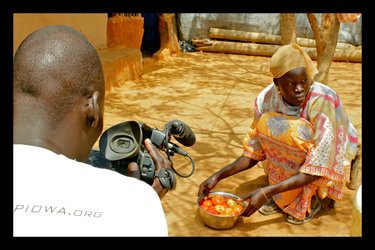
A story is best told by someone who was there. Whereas many documentaries as made by directors and producers passionate about the cause they are filming for, there is a difference between an outsider shooting their subjects, and the subjects shooting themselves.

The organization FilmAid had initially begun to screen videos and films at refugee camps. These films were mostly educational, providing those living in refugee camps with important safety and health information. They also showed films for purely entertainment purposes in order to help lighten the mood and spirit at the camps. In 2011, however, the organization’s branch in Dadaab, the world’s biggest refugee camp in Somalia, began a special project entitled “Dadaab Stories” where it began to train the refugees to work the cameras themselves and have the chance to tell their stories from their perspective.

Dadaab was built in the 1990s to house 90,000 refugees. Today, it is the home to over 500,000 refugees. Describing life in a refugee camp is difficult; insiders know more and have been around longer than an outside film crew.

Ryan Jones, an American videographer who joined FilmAid’s project in 2011, said that the part of the appeal of the program that it strays from the usual model of “an American film crew coming into a camp and spending a short period of time there and shooting some kind of 90-minute doc we hope to get into Sundance.”

Refugees have made various videos such as an emergency response video regarding a cholera outbreak, a safety video for rape awareness, the camp’s orientation film, a music video for the local group Dadaab All Stars, and documentation of actress Scarlett Johansson’s visit.

In October of 2011, however, a kidnapping incident involving Doctors Without Borders created intense restrictions and security issues which prevented the FilmAid team from coming back to Somalia. Since then, the refugees have been trying to manage posting videos and have begun to make their camp-wide newspaper The Refugee available online.

This project has not only taught the refugees a new and unique skill they would otherwise not have the chance to learn, but it gives them a creative outlet to truly show the world what life in a refugee camp is like. They may not be making feature length films or Sundance-worthy documentaries, but their progress and work are so valuable that it could never be put into a simple award category.

– Deena Dulgerian

Source: Co.EXIST

April 13, 2013
https://borgenproject.org/wp-content/uploads/borgen-project-logo.svg 0 0 Borgen Project https://borgenproject.org/wp-content/uploads/borgen-project-logo.svg Borgen Project2013-04-13 06:52:532024-12-13 17:53:44Dadaab Stories: By the People, For the People
Advocacy, Children, Human Rights, Nonprofit Organizations and NGOs

Child Marriage: A Promise of Poverty

Child Marriage: A Promise of Poverty

The average teenager worries about hanging out with friends, getting good grades, and fitting in with a group of people—not marrying a stranger and creating a home.

However, child marriage is a reality in the world’s 51 least-developed countries.  Half of all girls living in these countries are married before the age of 18, according to the United Nations. Parents arrange the marriage, and the groom can be more than twice the bride’s age.  Girls are ripped from their communities and forced into social isolation. These abrupt marriages sever a girl from her support network—a group of people necessary for helping the girl face the physical and emotional challenges of marriage.

Many cultures view girls as economic burdens, subservient individuals, or family mistakes. Marrying girls off as soon as possible alleviates the household expenses and restores the family’s reputation.

The UN Convention on the Rights of the Child (UNCRC) established that the minimum age of marriage is 18 years old. This is considered the upper limit of childhood, and the individual is fit to decide whether to be married.  Many countries continue to practice child marriage despite proven physical and psychological effects.

World Vision reported that child marriages are increasing due to the increase in global poverty crises. 14 million girls under the age of 18 are married each year.  Child marriages are most prevalent in rural, poor areas and are associated with areas of low education and healthcare.  Polygamy is common, and these marriages are bargaining chips between two parties.

South Asia (46%) and Central Africa (41%) are the top areas for child marriages.  These regions do not monitor the age of spouses carefully.  Girls who live in countries with humanitarian crises are most likely to be subjected to child marriages. Fear of rape, unwanted pre-marital pregnancies, family shame, and hunger are the main motivators for child marriage. Poverty, weak legislation, gender discrimination, and lack of alternative opportunities reinforce these motivations.

Anti-poverty organizations, such as CARE, are working in various countries to combat child marriage.  According to CARE, “As levels of education and economic opportunities increase, so does the average age of marriage.”  CARE mobilizes community organizers, parents, and tribal and religious leaders to lobby against the child marriage law in Ethiopia. Leaders are constructing savings and loans groups to empower families financially. Though child marriage still exists, this will eliminate one major cause of child marriage. Community forums now focus on the elimination of bride price, bride abduction, and child marriage.

– Whitney M. Wyszynski

Source: NBC News

April 10, 2013
https://borgenproject.org/wp-content/uploads/borgen-project-logo.svg 0 0 Borgen Project https://borgenproject.org/wp-content/uploads/borgen-project-logo.svg Borgen Project2013-04-10 10:00:092024-12-13 17:49:16Child Marriage: A Promise of Poverty
Nonprofit Organizations and NGOs

Cody Belew of The Voice Fights World Hunger

Cody Belew of The Voice Fights World Hunger
Cody Belew of The Voice released his single “Say Love” on April 1. Proceeds from the song will benefit the non-profit anti-hunger organization Heifer International.

Cody Belew was raised on his family’s farm in Arkansas, near the Heifer International headquarters in Little Rock. As an adult he realized that Heifer had a tangible solution for ending world hunger, and decided to use his voice to support its goals.

“Say Love” is written as a call to action for everyone to become involved in the fight against hunger. Belew recently traveled to Ecuador to meet project families, and has also visited Heifer beneficiaries in his home state of Arkansas.

Heifer International fights poverty and hunger through sustainable contributions to struggling families and communities. Heifer International empowers families to become self-reliant by providing agricultural training and donations of livestock. In exchange for livestock and training, families who receive assistance from Heifer then pass on the animal’s offspring to another family in need. This strategy, known as Passing on the Gift, is at the heart of Heifer International’s mission to spread peace and security.

For information about how to help end world poverty and hunger through Heifer International, visit the organization’s Get Involved page. Click here to watch the video for “Say Love” by Cody Belew.

– Kat Henrichs

Source: Broadway World
Photo: Heifer International

April 7, 2013
https://borgenproject.org/wp-content/uploads/borgen-project-logo.svg 0 0 Borgen Project https://borgenproject.org/wp-content/uploads/borgen-project-logo.svg Borgen Project2013-04-07 10:04:492024-12-13 17:53:43Cody Belew of The Voice Fights World Hunger
Advocacy, Nonprofit Organizations and NGOs

Mama Hope Says, ‘Partnership, Not Pity, for Africa’


A campaign called “Stop the Pity,” launched at the SXSW conference in Austin, Texas, is sending the message to stop stereotyping Africa as being poor, helpless, and ravaged by famine and poverty. The campaign was founded by a nonprofit called Mama Hope with the mission of re-humanizing Africa, celebrating positive change rather than focusing on inequality.

A series of videos have been released by Mama Hope tearing away the stereotype that depicts Africans as “one-dimensional victims” and in its place, highlights the traits that makes us all human. One video shows African women playing netball, a cross between basketball and ultimate Frisbee. Another shows men joking about how Hollywood tends to portray Africans as the typical villain, firing guns, loving violence and making scary faces. In yet another, a child tells the story of an Arnold Schwarzenegger movie.

Mama Hope works in four countries, managing 32 projects and starting up orphanages, improving sanitation, and reducing poverty. Founder and “chief visionary” of Mama Hope Nyla Rodgers emphasizes the need to empower rather than victimize Africans, using inspiration rather than guilt to get people to help. Reframing the way the rest of the world thinks of Africa, Rodgers hopes people will “stop the pity” and “unlock the potential.”

“We have to have partnership instead of pity,” said Rodgers. “Partnership doesn’t include pity. It includes seeing people as equals and being able to work with them on an equal partnership.”

– Rafael Panlilio

Sources: CNN, Mama Hope, Stop The Pity

March 15, 2013
https://borgenproject.org/wp-content/uploads/borgen-project-logo.svg 0 0 Borgen Project https://borgenproject.org/wp-content/uploads/borgen-project-logo.svg Borgen Project2013-03-15 19:37:412020-05-24 23:46:31Mama Hope Says, ‘Partnership, Not Pity, for Africa’
Nonprofit Organizations and NGOs, Philanthropy

Will Capping Charity Deductions Hurt?

Will Capping Charity Deductions Hurt?
Despite Congress’ efforts in January to increase the tax savings for charitable donations, Obama’s newest proposal will lower it from the current 39.6% to 28%.  A cap on itemized deductions basically means that when someone makes a charitable donation, the amount that they can claim on their itemized tax deduction is now about 10.8% less than before. For example, say a person who earns about $450,000 a year makes a donation of $1000 to UNICEF. Originally, they would be able to write off $396 but with the change in charity deductions, can only write off $280.

This change, however, will only affect those in the top 35% tax bracket (those who make more than $335,000). For Obama, this is a major source of money that he would use to help pay for the $447 billion job plan he introduced a few years ago. It is also a way to make sure that the rich are paying a higher share of taxes and eliminating the loophole of writing-off thousands and thousands of dollars.

But what does this mean for nonprofits? And aside from them, what does the fact that this is even an issue mean about society and giving in general? To tackle the first question, Philanthropy.com referred to a study by economists John Bakija and Bradley Heim that concludes that for every 1% decrease in savings (in this case, about 10.8%), there is an equal 1% decrease in the amount given. They do, however, mention that there are many other factors that affect how much donors give and that this change will affect each charity in a different way.

The second question seems to be the elephant in the room. It is not naive to assume that people choose to give from the heart. Yes, we live in a country that allows those who donate to receive some sort of benefit for doing so, but at a time where our passions for a cause should be the driving cause of our actions and charity, why would receiving only 11% less on a donation make the wealthy hesitate when giving to a cause?

Perhaps the charted out reductions in total donations is frightening to some charities. They should still remain hopeful that there are those in the 35% tax bracket who will continue to donate at the rates they have previously, regardless of this new change in policy. Obama’s intent to bridge the income gap and require the wealthy to pay more taxes is understandable; but so is the fear of many nonprofit organizations.

– Deena Dulgerian

Source: The Chronicle of Philanthropy
Photo: Times Union

March 5, 2013
https://borgenproject.org/wp-content/uploads/borgen-project-logo.svg 0 0 Borgen Project https://borgenproject.org/wp-content/uploads/borgen-project-logo.svg Borgen Project2013-03-05 11:30:282024-05-26 22:59:00Will Capping Charity Deductions Hurt?
Page 60 of 60«‹585960

Get Smarter

  • Global Poverty 101
  • Global Poverty… The Good News
  • Global Poverty & U.S. Jobs
  • Global Poverty and National Security
  • Innovative Solutions to Poverty
  • Global Poverty & Aid FAQ’s
Search Search

Take Action

  • Call Congress
  • Email Congress
  • Donate
  • 30 Ways to Help
  • Volunteer Ops
  • Internships
  • Courses & Certificates
  • The Podcast
Borgen Project

“The Borgen Project is an incredible nonprofit organization that is addressing poverty and hunger and working towards ending them.”

-The Huffington Post

Inside The Borgen Project

  • Contact
  • About
  • Financials
  • President
  • Board of Directors
  • Board of Advisors

International Links

  • UK Email Parliament
  • UK Donate
  • Canada Email Parliament

Get Smarter

  • Global Poverty 101
  • Global Poverty… The Good News
  • Global Poverty & U.S. Jobs
  • Global Poverty and National Security
  • Innovative Solutions to Poverty
  • Global Poverty & Aid FAQ’s

Ways to Help

  • Call Congress
  • Email Congress
  • Donate
  • 30 Ways to Help
  • Volunteer Ops
  • Internships
  • Courses & Certificates
  • The Podcast
Scroll to top Scroll to top Scroll to top