• Link to X
  • Link to Facebook
  • Link to Instagram
  • Link to TikTok
  • Link to Youtube
  • About
    • About Us
      • President
      • Board of Directors
      • Board of Advisors
      • Financials
      • Our Methodology
      • Success Tracker
      • Contact
  • Act Now
    • 30 Ways to Help
      • Email Congress
      • Call Congress
      • Volunteer
      • Courses & Certificates
      • Be a Donor
    • Internships
      • In-Office Internships
      • Remote Internships
    • Legislation
      • Politics 101
  • The Blog
  • The Podcast
  • Magazine
  • Donate
  • Click to open the search input field Click to open the search input field Search
  • Menu Menu

Archive for category: Nonprofit Organizations and NGOs

Information and stories about nonprofit organizations and NGOs

Children, Education, Nonprofit Organizations and NGOs

Liberty & Justice and Clothing for All

Liberty & Justice
Chid Liberty, an entrepreneur, created the clothing manufacturing company Liberty & Justice. Its purpose is to not only change the manufacturing industry for many but also to empower others to continue their education. Instead of just thinking about how the clothes would be made, Chid also thought about the way their formation could change a society, piece by piece.

Encouraging Education

Liberty & Justice manufactures clothing for brands while focusing on making political and economic change in Liberia. Its directors are largely female, with 90 percent of the workforce being women, and its factory is fair trade certified. With its UNIFORM brand, every purchase provides a uniform for a child in Liberia so they may attend school. For a student, a uniform is not only a confidence boost but also reduces absenteeism and improves test scores, according to an MIT study.

Liberty & Justice is headquartered in New York City, but its owner and workers originate from Liberia. Chid said his calling was to return to Africa and provide decent jobs empowering fellow Africans. Taking advantage of the Africa Growth and Opportunity Act, he began exporting to the U.S., creating interest in his products.

Setting an Example

What really began to spark interest was the treatment of Liberty & Justice workers. With the female workers being paid fair salaries and the collective workforce owning 49 percent of the shares in the company, Liberty & Justice set itself apart from companies exploiting the poor and taking advantage of necessity. Although the company owns 51 percent of the factory from which its clothing comes, Chid does not take a salary, instead focusing his earnings on his workers and incentivizing them to take pride in their business.

Liberty & Justice’s Goals

Liberty & Justice has a five-year social plan it intends to fulfill. It not only includes expanding the Liberian economy but also creating health clinics and providing scholarships for the same children it provides the uniforms. Chid himself was a privileged child, living in Europe and experiencing indulgences common in the Western world. Upon learning how people in his native country lived, he intended to provide as much as he could by giving back in the form of creating jobs.

Liberty & Justice is truly a corporation set on changing the Liberian story from one of poverty to one of growth and development. Chid created this goal with the intention of changing the story for the 70 percent of Liberians living in poverty and instead offering them a chance at a safe and fulfilling life.

– Kayleigh Mattoon
Photo: Flickr
June 23, 2018
https://borgenproject.org/wp-content/uploads/borgen-project-logo.svg 0 0 Borgen Project https://borgenproject.org/wp-content/uploads/borgen-project-logo.svg Borgen Project2018-06-23 01:30:282019-10-06 19:36:53Liberty & Justice and Clothing for All
Education, Global Poverty, Nonprofit Organizations and NGOs, Technology

SOLS 24/7 Promotes Technology and Education in Malaysia

SOLS 24/7
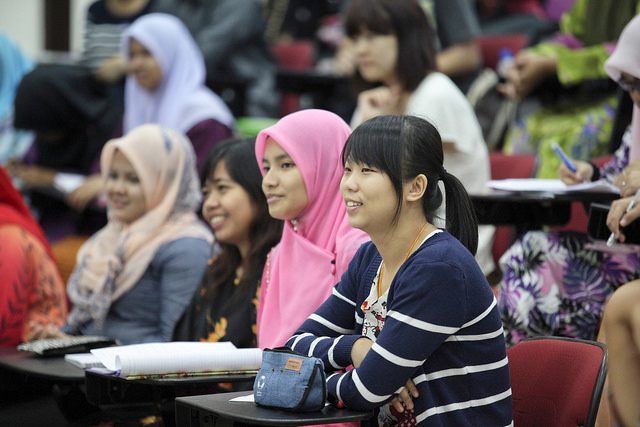
SOLS 24/7 is an international humanitarian organization dedicated to ending poverty in Malaysia. It aims to provide poor and underserved people with technology and education to which they otherwise would not have access. The nonprofit runs five social enterprises to help eradicate poverty in Malaysia.

Five Ways SOLS 24/7 Promotes Technology and Education

  1. SOLS Energy
    SOLS Energy believes that solar panels are the best way to alleviate poverty in Malaysia in a lasting, sustainable way. Malaysia is the world’s third-largest producer of solar panels; local production makes solar panels affordable and their purchase supports the domestic economy. Malaysian homes with solar panels get, on average, a 16.9 percent return on their investment annually from being able to sell excess solar power to the electric grid. In total, the solar panels distributed by SOLS Energy have prevented more than 162,000 pounds of CO2 emissions from electricity generated by fossil fuels. SOLS Energy also runs Solar Academy, which trains Malaysians in solar technology to create jobs and spread the knowledge of how to maintain, install and repair solar panels.
  2. SOLS Tech
    SOLS Tech has a twofold goal: eliminate e-waste and spread digital literacy in Malaysia. As a licensed electronics refurbisher, SOLS Tech collects, repurposes and distributes discarded electronic devices. In 2015 alone, Malaysians discarded 44 million electronic devices. Rather than let this waste sit in landfills and pollute the environment, SOLS Tech fixes discarded electronics and shares them with those in need. Approximately 10 million Malaysians do not have access to a computer. SOLS 24/7 believes that computer literacy skills and computer ownership will widen economic opportunities and help alleviate poverty.
  3. SOLS Smart
    SOLS Smart aims to provide high quality and affordable education to all Malaysians. It teaches English and computer literacy, two skills that SOLS 24/7 views as essential to thriving in the modern economy. SOLS Smart is a certified Cambridge English Language Assessment Centre, meanings its students can take the internationally recognized Cambridge English Exams. Learning English and passing these exams opens new opportunities in employment and further education. To date, English classes have reached more than 10,000 Malaysians, and another 5,000 have received training in computer skills. SOLS Smart is one of seven Google for Education partners in Asia. Students are taught to use Google software and products and, at the end of their training, can receive an official certification from Google.
  4. SOLS Scholars
    SOLS Scholars works to help promising students from underprivileged Malaysian communities pursue higher education. It has held more than 100 development workshops, at which students receive academic coaching, job preparation training and college counseling. It has provided more than 450 scholarships to universities across Malaysia for students who otherwise would not be able to afford higher education.
  5. SOLS Edu
    Combining SOLS 24/7’s interests in education and technology, SOLS Edu is a digital learning platform that can be accessed by app or online. The idea behind SOLS Edu is to offer Malaysians, newly equipped with technology through the SOLS Tech program, another way to receive an education. The digital platform is interactive; students learn in a variety of ways (games, videos, etc.) and teachers remotely track students’ progress. SOLS 24/7 believes that access to education and technology will give Malaysians living in poverty new economic opportunities and a brighter future.

Through its many social enterprises, SOLS 24/7 is working to alleviate poverty in Malaysia. Its focus on both education and technology is reflective of the highly globalized, highly electronic modern world of today. By offering classes, job training and education opportunities, as well as providing people access to electricity and electronic devices, SOLS 24/7 is helping millions of poor Malaysians shape a brighter future for themselves.

– Abigail Dunn
Photo: Flickr

June 16, 2018
https://borgenproject.org/wp-content/uploads/borgen-project-logo.svg 0 0 Borgen Project https://borgenproject.org/wp-content/uploads/borgen-project-logo.svg Borgen Project2018-06-16 01:30:212024-05-29 22:42:42SOLS 24/7 Promotes Technology and Education in Malaysia
Education, Global Poverty, Nonprofit Organizations and NGOs

The Nonprofits Working to Reform Education in Pakistan

education in Pakistan
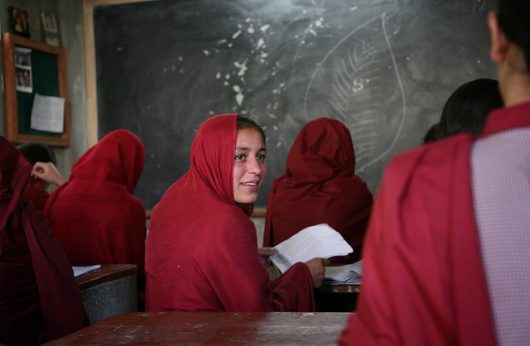
Pakistan has struggled for many years with the gender inequality of women achieving an education within their country. Pakistan is the sixth most populated country in the world, but with more than 40 percent of women never receiving an education, the nation has one of the lowest literacy rates on the continent.

While women do have the right to access education in Pakistan, there are several barriers that prevent them from doing so. In a patriarchal society, women find it difficult to access education and other opportunities because of the role a male-dominated culture plays in all of their lives.

Lack of Accessibility

One barrier that many women face in Pakistan is lack of accessibility. Many women living in the rural areas of the country are unable to attend school because they cannot afford the cost of transportation — for themselves or their children.

Although women and girls struggle to access the education in Pakistan that they so desperately need, there are many organizations working tirelessly to change these unfortunate circumstances.

The Citizen’s Foundation

One non-profit, The Citizens Foundation (TCF), has fought since 1995 to bring about positive changes in empowering women and making education more accessible to this population. The Citizens Foundation is now one of the most influential organizations in Pakistan when it comes to providing opportunities to the less fortunate.

The organization works to remove barriers that would otherwise prevent women from accessing education. TCF provides schools in rural environments which eliminates the need for transportation to more urban areas where more schools are located.

The Kashf Foundation

Working alongside The Citizens Foundation, The Kashf Foundation’s goal is the same. Established in 1999, the Kashf Foundation was created to help women from low-income areas build their entrepreneurship skills and complete their education.

The goal of this foundation is to help eliminate poverty by empowering women, which in turn provides better opportunities for their families.

The Central Asia Institute

The Central Asia Institute (CAI) is yet another non-profit working with the underprivileged women and children of Pakistan. Over the past twenty years, this organization has changed hundreds of lives by supporting women’s literacy.

With a wide variety of services — such as vocational centers, scholarships and even health centers — CAI is changing the educational system in the most impoverished areas of the country. The group provides services to both boys and girls but recognizes where the biggest change needs to happen — women’s education.

Progress for Education in Pakistan

In the past, achieving an education in Pakistan has been extremely difficult for women. But, like many countries, Pakistan wants to be able to provide its women with the same educational opportunities as its men. Unfortunately, that goal isn’t how situations always work out.

Pakistan has shown admirable effort in support of the education movement — many organizations have come together to redefine the way women receive schooling. Many people are starting to recognize that when women are educated, everyone benefits.

Women become empowered, and in turn, are able to lead happy and more successful lives. Pakistan has made many crucial changes in regard to gender equality and education, and is better as a nation because of it.

– Allisa Rumreich
Photo: Flickr

June 11, 2018
https://borgenproject.org/wp-content/uploads/borgen-project-logo.svg 0 0 Borgen Project https://borgenproject.org/wp-content/uploads/borgen-project-logo.svg Borgen Project2018-06-11 01:30:522019-10-13 17:42:16The Nonprofits Working to Reform Education in Pakistan
Global Health, Nonprofit Organizations and NGOs

COGRI: One Organization’s Impact on Children with HIV/AIDS in Kenya

HIVAIDS in Kenya
In 2016, the Joint United Nations Programme on HIV and AIDS (UNAIDS) calculated that there are approximately 120,000 children living with HIV in Kenya. Even more shocking is that around 840,000 children between ages 0-17 were orphaned due to AIDS. Amidst this pandemic, the Children of God Relief Institute (COGRI) provides a glimmer of hope for orphans and children affected by HIV/AIDS in Kenya.

About COGRI

COGRI is a nonprofit organization that provides care for orphans and vulnerable children (OVC) who are infected with, or affected by, HIV/AIDS; this group also aids the elderly and families impacted by this pandemic.

USAID supports this organization through funding received from the President’s Emergency Plan for AIDS Relief, or PEPFAR, and helps it deliver quality and impactful HIV care. This organization operates through four different programs based around some of Nairobi’s poorest settlements.

The first program is called Lea Toto and its purpose is to decrease the risk of HIV transmission through the use of home-based care packages and mitigate the impact of HIV/AIDS. The Nyumbani Home is where children are given outstanding medical, nutritional and academic care with the hopes of becoming graduates and members of Kenyan society.

The organization’s third program, the Nyumbani Village, is a bio-friendly and self-sustaining community that cares for the young and old who have lost family members as a result of the pandemic. And finally, the Nyumbani Lab was opened in 2011 and is an internationally accredited laboratory working to find effective treatments and diagnostics for people with HIV/AIDS in Kenya.

A Holistic Approach to HIV/AIDS

Part of COGRI’s success is due to its holistic approach to the problem. The OVC receive the most support and care including treatment, counseling and testing, education, nutrition, shelter, child protection, case management, psychosocial support and household economic strengthening. Caregivers and communities receive secondary support as these programs impact children and their future income levels.

Healthcare is a huge focus of this organization. To support these children, COGRI provides access to medical care and supplies antiretroviral drugs. Another important part of treatment and protection includes providing sufficient amounts of food and combating malnutrition.

Evidence shows that higher rates of malnutrition contribute to greater deaths in people with HIV/AIDS in Kenya, and this occurrence has caused food security to become a bigger focus within the organization. They would like to guarantee age-appropriate feeding, infant, young child and elderly nutrition and food security for all clients and patients. Beyond physical health, the organization provides services to help with grief and the challenges presented by HIV. 

Glimmers of Hope

The holistic approach combined with hope and advocacy make COGRI an effective organization. According to USAID, staff are passionate about advocating for children’s medical treatment and hope that in the future, no children in Kenya will get HIV in utero or during breastfeeding. Additionally, 73 percent of 377 children receiving HIV treatment at one of COGRI’s facilities achieved viral suppression due to correctly following a treatment regimen. This is relevant as Kenya’s overall viral suppression rate in children is only 65 percent.

USAID tells the story of a young man taken to Lea Toto who at age 12 was in poor health from untreated HIV. He received treatment immediately, and that combined with psychosocial support, helped him become a confident and healthier man. He is now 23 with a certificate in graphic and web design and has his own shoe business.

Examples like these show how COGRI’s holistic and passionate approach to the HIV/AIDS pandemic is changing the lives of children in Kenya and providing hope for a healthy future. 

– Alexandra Eppenauer

Photo: Flickr

June 1, 2018
https://borgenproject.org/wp-content/uploads/borgen-project-logo.svg 0 0 Borgen Project https://borgenproject.org/wp-content/uploads/borgen-project-logo.svg Borgen Project2018-06-01 01:30:552024-06-05 02:12:18COGRI: One Organization’s Impact on Children with HIV/AIDS in Kenya
Education, Nonprofit Organizations and NGOs

Life Changers: Keaton Lee and The Shoe That Grows

The Shoe That Grows
Sometimes, the simplest invention can change millions of lives. That’s the goal of The Shoe That Grows, a sandal invented by Kenton Lee. These shoes can adjust its size, allowing children in impoverished nations to grow up without having to go barefoot. The shoes, which come in catch-all Small and Large sizes, can grow five sizes and last at least 5 years.

The Power of a Pair of Shoes

According to The Shoe That Grows, “There are over 300 million children who do not have shoes. And countless more with shoes that do not fit.” Children without shoes are susceptible to injuries and parasites that infect humans through our feet. Rachel Garton of Buckner International Shoes for Orphan Souls says, “Just by putting a pair of shoes on a child, we can increase their health by 50 percent.”

From physical improvement to being able to participate in a society, shoes can improve:

  • Quality of life
  • Prevent injury of disease
  • Help with healing for those with chronic foot conditions
  • Offer support for inadequate arches or excess pronation
  • Express one’s self
  • Enable a person to work in hazardous conditions
  • Help land that coveted job.

Over 1.5 billion people suffer from soil-transmitted diseases worldwide. Most notable in the susceptibility are the impoverished children who simply cannot afford shoes. Without shoes, children are especially vulnerable to soil-transmitted diseases and parasites that can cause illness and even death.

Dangers of Bare Feet

Improper sanitization along with the lack of foot protection can lead to parasitic worms being able to bore itself into a foot in a corkscrew-like manner. Severe illness would then follow after a hookworm infection with anemia being the biggest health concern.

While the hookworm epidemic is no longer a concern in the U.S. today, the need for proper footwear is still critical as a way of reducing the risk of certain parasitic diseases and foot infections in third world countries.

According to the Global Partnership for Education, an estimated 69 million primary-school-age boys and girls are not in school. This is due to a varying range of variables from poverty to disease. These factors however go hand-in-hand when children do not have the financial capabilities to afford proper footwear to protect their feet from life-hindering diseases.

Children who get sick miss school, can’t help their families and ultimately, suffer needlessly. Moreover, many countries require school uniforms which definitely include shoes, and since children’s feet grow so quickly, they often outgrow donated shoes within a year, leaving them once again exposed to illness and disease.

Shoes and Foot Development

Shoes not only help our feet to heal but can also aid in support and stability of our foot. Not all feet are perfect, so properly fitting shoes can help align your feet, ankles, knees, hips and back to correct gait and improve posture. It is important to also note that poorly-fitted shoes can have a negative impact on your foot health, but accounting for the foot length and width can help prevent any foot development disorders.

Additionally, growth spurts in children are rapid so proper and regular foot measurements are important; replacement of worn-out shoes is necessary to maintain optimal foot conditions and protection for your feet.

In addition, without supportive shoes, unnecessary impact and stress on areas of the feet and knees not made for shock absorption/pressure can eventually lead to increased back, knee and foot pain.

Small to Large: Sizes and Impact

Through his innovation of The Shoe That Grows, Kenton Lee has seen how small things have the power to make a big impact. Since its beginning, The Shoe That Grows has distributed over 120,000 pairs in 91 countries.

Through its parent charity organization, Because International, The Shoe That Grows works with nonprofits, churches, individuals and organizations serving kids in need. The business covers the cost of the shoes through donations and fundraisers, and after shoes are then packed and sent to groups before they travel.

Lee now tells his story to audiences who are eager to make a difference at home, work, and in their local and global communities. He not only inspires others through his speeches, but he lives out practical compassion everyday through his full-time work with his nonprofit organization. Lee serves as a model and inspiration for us all.

– Richard Zarrilli, Jr.
Photo: Flickr

June 1, 2018
https://borgenproject.org/wp-content/uploads/borgen-project-logo.svg 0 0 Borgen Project https://borgenproject.org/wp-content/uploads/borgen-project-logo.svg Borgen Project2018-06-01 01:30:092024-05-29 22:42:29Life Changers: Keaton Lee and The Shoe That Grows
Charity, Global Poverty, Humanitarian Aid, Nonprofit Organizations and NGOs

Lesser-Known Humanitarian Organizations You Should Know About

Lesser
When thinking about the growing issue of poverty, classic humanitarian organizations come to mind like the Red Cross, UNICEF and Oxfam. However, there are many other deserving and impassioned groups who do not receive the same media time as these large organizations, but who should be noticed for their work and compassion. Here are five lesser-known humanitarian organizations working to reduce global poverty.

Hunger Plus, Inc.

Hunger Plus focuses its efforts on reducing global hunger and deaths caused by it. It is Hunger Plus’ goal to find a way to reduce global poverty by promoting access to a simple, yet very necessary thing: food. The organization also spends time and effort bringing medication to those in need to provide care against preventable and communicable diseases. Hunger Plus focuses its outreach both domestically and internationally and recently aided victims from Hurricane Harvey.

Save the Children

Save the Children is an aptly named organization as it focuses on just that – saving the children and bringing a future to every child born. The group works in 120 countries, providing access to education, food and safety from violence. The majority of donations within the organization go directly to children in need and Save the Children is quick to mobilize their funds. The organization works in times of crisis and in everyday life as a first responder to protecting children in harm’s way. During a crisis, Save the Children ensures children and their families are protected and have the resources necessary to survive the emergency.

Action Against Hunger

While Action Against Hunger works internationally, it is still one of the lesser-known humanitarian organizations. It works to reduce hunger by providing hands-on assistance and by shifting the focus from groups to individuals. Action Against Hunger believes that world hunger can be reduced by focusing efforts on mothers in developing countries. One of its goals is to educate women to accurately diagnose hunger needs and assist in reducing malnutrition. Action Against Hunger has won numerous awards and has been the leading force against hunger for approximately forty years.

Relief International

Relief International is an international organization that works in 19 countries to prevent human suffering. It is one of the lesser known humanitarian organizations and focuses on implementing the RI Way, a method used by the organization to encourage communities to discuss solutions for current situations. The group then assists in implementing the solutions. Its method is to deliver immediate access to basic resources like money, food, water and medication. Relief International also remains until a long-term solution has been established as a success. The aim is community-based, so individuals within the community are thinking of the best solutions for their group instead of accepting existing solutions that may not work.

Doctors Without Borders

Doctors Without Borders is a volunteer-based humanitarian organization that focuses on delivering medical care where necessary around the world. While it is a large organization, Doctors Without Borders is one of the lesser-known humanitarian organizations because it rarely uses the media as a means of promoting itself. The organization does not receive funding from the U.S. government in an effort to remain impartial and independent in times of crisis. Doctors Without Borders treats many medical issues from stitching up a cut to providing emergency services to treat HIV/AIDS, malaria, meningitis and more. The group also teaches medical education to ensure safety standards are maintained when it leaves.

There are many lesser-known humanitarian organizations outside the media’s influence that are worthy of donations and assistance. More widespread focus on certain issues and attacking the same problem from different angles may just be the way to reduce global poverty.

– Kayleigh Mattoon
Photo: Flickr
May 31, 2018
https://borgenproject.org/wp-content/uploads/borgen-project-logo.svg 0 0 Borgen Project https://borgenproject.org/wp-content/uploads/borgen-project-logo.svg Borgen Project2018-05-31 17:14:332024-12-13 17:58:47Lesser-Known Humanitarian Organizations You Should Know About
Nonprofit Organizations and NGOs, Water, Water Quality, Women and Female Empowerment

The Water Project: How Poor Water Quality Impacts Kenyan Girls

The Water Project
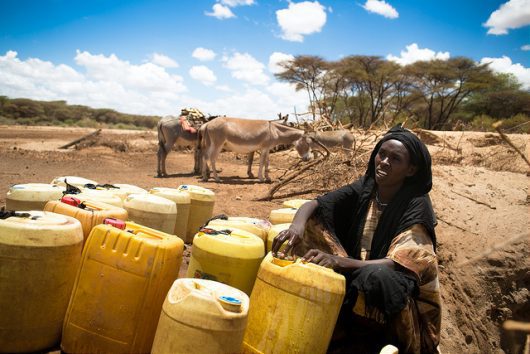
The average American family uses roughly 552 gallons of water each day, while the average African family uses about five gallons of water per day. Girls in the sub-Saharan country of Kenya are robbed of their right to receive an education due to water scarcity.

Education Delayed Due to Water Scarcity

The literacy rate of females over the age of 15 in Kenya was 74 percent in 2016. The Education Policy and Data Center reported that 88 percent of children between the ages of six and 13 attend primary school; however, the report notes that many of the children attending primary school are outside of the official age range, meaning they are not attending school often enough to stay on schedule with the curriculum.

Instead of attending school, many girls spend their time carrying a 40-pound water can full of dirty water from sources miles away from their homes. This exhausting task leaves many girls unable to receive a formal education. Even if a girl is not burdened by the responsibility of journeying for hours to fetch water for her family, if schools cannot provide water, they are unable to run their programs.

How Does The Water Project Make a Difference?

The Borgen Project spoke with Lisa Sullivan, the director of marketing and communications at The Water Project, who provided insight into just how monumental of a difference it makes when clean water is readily accessible to girls.

The Water Project is a nonprofit organization located in Concord, New Hampshire that provides reliable water projects to communities in sub-Saharan Africa. In western Kenya, The Water Project sponsors a community-led organization that is represented by a powerful, strong Kenyan woman named Catherine Chepkemoi. This woman works for empowerment in Kenya, specifically for younger girls, by teaching them about hygiene and water sanitation.

Sullivan stated, “These women are essentially cultivating future women leaders. When they are not gathering water, they are able to stay in class and compete with the boys.”

The organization spends time in western Kenya, addressing water quality by installing rain tanks at schools and protecting springs. Eastern Kenya is constantly in a drought; the region once had four rainy seasons a year, but is now down to one. With such limited rainfall, the organization provides water for people to use for bathing and sanitation.

Improvements in Water and Education Have Wide-Ranging Effects

The Water Project website reports that “for every 10 percent increase in women’s literacy, a country’s whole economy can grow by up to 0.3 percent.” Women can increase economic growth because they tend to invest in their own communities. Women will invest in their children’s education because they aspire to send them to schools and college.

Sullivan points out that “once you bring in water, now not only are they eating healthy, they are not spending their money on medical bills, which allows them to save their money and place it back into their communities.”

If a community in Kenya invests in an irrigation pump, it will allow them to sell more goods, generate more income and expand the opportunity for families to send their children to college–all because of access to clean water.

The Water Project is supporting an agent of change for Kenyan women and girls. It continues to reinforce female empowerment and furnish clean water. Kenyan girls now have a better chance to gain an education and participate in the development of their country.

– Angelina Gillispie

Photo: Flickr

May 19, 2018
https://borgenproject.org/wp-content/uploads/borgen-project-logo.svg 0 0 Borgen Project https://borgenproject.org/wp-content/uploads/borgen-project-logo.svg Borgen Project2018-05-19 01:30:242019-11-28 14:50:28The Water Project: How Poor Water Quality Impacts Kenyan Girls
Global Poverty, Hunger, Nonprofit Organizations and NGOs

Rise Against Hunger: An Organization Striving to Create an Impact

Rise Against Hunger: An Organization Striving to Create a Tangible Impact

With an alarming 805 million people in the world impacted by hunger, organizations such as Rise Against Hunger are striving to do their part in alleviating malnourished and hungry nations. Because poverty is largely caused by conflict and lack of resources, it is said to be the principal cause of hunger. Rise Against Hunger ignites the passion and drive to address this reality by doing its part in feeding millions and ending global hunger.

What Does Rise Against Hunger Do?

Established in 1998, Rise Against Hunger is an international hunger relief organization with aspirations to end hunger by 2030. Its daily task is to distribute food and aid to the world’s most vulnerable. The organization’s 2017 impact report shows that well over 1.4 million lives were impacted by this single organization in 36 different countries, sending out 76 million meals. A crucial factor in its success can be accredited to its four pillars toward ending world hunger:

  1. Grow movement
  2. Empower communities
  3. Nourish lives
  4. Emergency relief

An effective tool it uses for growing the movement is the volunteering events it hosts throughout different universities and other organizations. This allows people to come together as a community to take action with Rise Against Hunger by packaging meals for distribution to the world’s hungry.

The organization empowers communities by educating and advocating about topics such as sustainable agriculture and hosting clean water projects. Rise Against Hunger also nourishes lives by giving warm, sustainable meals to those who are in dire need by responding to disasters efficiently, therefore providing effective emergency relief with these prepackaged meals.

Who Does the Organization Help?

Tom Barbitta, the Rise Against Hunger Chief Marketing Director, emphasizes the importance of how education plays a vital role in global poverty and how this, as a result, affects the hunger scale of a nation. “A country has never been able to lift itself out of poverty without first hitting a 40 percent literacy rate,” he told The Borgen Project. “Because of this, around 40 percent of the meals distributed from Rise Against Hunger end up in school feeding programs.”

Children who are living in severe poverty have to spend their time begging for food, rather than receiving an education that will benefit them in the future. The organization keeps this in the forefront of its work and Baritta comments that “we hope to empower young minds to take control of their own community.”

Aspirations Become Reality

A 12-year-old child from Zambia, Aswali, who once did not have adequate access to food, now receives meals each day from Rise Against Hunger distributed by Family Legacy Missions. He is also able to provide food for his family while attending school, decreasing the global poverty rate.

Meals from Rise Against Hunger are also distributed to vocational training facilities. In places such as West Africa, when the people in these facilities have access to meals, they are able to focus on their skills which will, in turn, give them an income that allows them to allocate more food for their families and live life on their own terms.

Rise Against Hunger is an organization that makes valuable efforts toward putting an end to the widespread global hunger. Its impact remains prevalent, with thousands of volunteers joining each year creating an effective tool for growing the movement. Rise Against Hunger understands the importance of every individual being able to make a viable difference toward diminishing poverty.

– Angelina Gillispie

Photo: Flickr

May 1, 2018
https://borgenproject.org/wp-content/uploads/borgen-project-logo.svg 0 0 Borgen Project https://borgenproject.org/wp-content/uploads/borgen-project-logo.svg Borgen Project2018-05-01 01:30:442019-10-29 14:18:43Rise Against Hunger: An Organization Striving to Create an Impact
Global Poverty, Nonprofit Organizations and NGOs

How One Nonprofit is Helping to Reduce Child Mortality Rates in Mali

Child Mortality Rates in Mali
Mali, a West African country with one of the highest child mortality rates in the world, has developed a health outreach program that is drastically reducing child mortality rates. Muso, a nonprofit organization, is fighting child mortality rates in Mali, where 78 percent of the population is living in some form of poverty.

Muso trains local Malians to become community health workers, who then go door-to-door in both rural and urban areas of the country to seek out sick children and provide on-site treatment. The healthcare package that the organization provides includes treatment for malnutrition, malaria and diarrhea, as well as family planning information. For only $8 per year per person, this program is able to provide healthcare services to millions of Malians across the West African nation.

Most of the community healthcare workers are women, giving the organization its namesake. In Bambara, a lingua franca and the national language of Mali, “muso” means woman. A well-known Malian proverb reads, “If you educate a woman, you educate her family, her community and her entire country.”

The program has been operating since 2005 and has already shown very promising results. Scholars from the University of Harvard, University of Southern California San Francisco and the Malian Ministry of Health conducted a repeated cross-sectional survey of the intervention from 2008 to 2011. The study found that during the time period, there was a decline in child mortality rates in Mali (child defined here as those under five years old). The study also identified that malarial and febrile illness treatment had nearly doubled during the time of the study compared to the national rates prior to intervention.

It is important to note, however, that the study was not randomized, so researchers cannot definitively conclude that the outcomes are a direct result of the program.

“The leading causes of child death are curable, but they are exquisitely time sensitive”, says Muso founder Dr. Ari Johnson. The organization seeks to remove barriers, such as fiscal constraints, to allow easy access to healthcare in Mali and eliminate preventable deaths that are rooted in poverty.

This nonprofit is reducing child mortality rates in Mali through incredible public outreach. Since the program’s inauguration, Muso has completed 3.2 million home visits with 93 percent of patients being treated within 72 hours, providing comprehensive and rapid care.

Not only is Muso providing healthcare, but it is also working with government-run health services to improve their healthcare delivery. Government-run clinics have fees and lineups that often create delays in care. Muso eliminates these barriers by bringing the care to patients and freeing up space in government-based clinics for those who cannot be treated at home. In addition, Muso provides training, staff and infrastructure to the government clinics, allowing more Malians access to healthcare.

Muso is demonstrating how one nonprofit can aid in reducing child mortality rates in Mali through a unique model of healthcare delivery and is removing barriers to access for many Malians. It will be interesting to see how the organization continues to expand and improve their work in Mali.

– Katherine Kirker

Photo: Flickr

April 23, 2018
https://borgenproject.org/wp-content/uploads/borgen-project-logo.svg 0 0 Borgen Project https://borgenproject.org/wp-content/uploads/borgen-project-logo.svg Borgen Project2018-04-23 07:30:022024-05-29 22:42:12How One Nonprofit is Helping to Reduce Child Mortality Rates in Mali
Global Poverty, Nonprofit Organizations and NGOs

10 Facts About BRAC, the World’s Largest NGO

Facts About BRAC
The Bangladesh Rural Advancement Committee (BRAC) is a non-governmental organization founded in Bangladesh in 1972. It is surprisingly obscure despite its impacts. These are 10 facts about BRAC that are necessary to understand more about the organization.

10 Facts About BRAC

  1. BRAC is the largest non-governmental organization (NGO) in the world. The Economist described it as “the largest, fastest-growing non-governmental organization in the world–and one of the most businesslike.”
  2. BRAC’s mission is to alleviate poverty and encourage economic participation by empowering people through social and economic programs.
  3. Founder Fazle Hasan Abed created BRAC after becoming disillusioned with poverty in Bangladesh. Now, BRAC has a positive impact in the poorest Asian and African countries in the world, reaching an estimated 138 million people.
  4. BRAC is funded by the Omidyar Network, which invests in impactful NGOs to bring about social change. This allows BRAC’s programs to be very effective and far-reaching.
  5. In 2016, BRAC successfully put 400,000 young children in primary school, gave 90 percent of households in obscure locations healthcare and lifted 86,975 households in Bangladesh out of extreme poverty.
  6. BRAC uses its money wisely. It was awarded an AAA rating by the Credit Rating Agency of Bangladesh Ltd (CRAB). This is the highest rating that it could have received from CRAB.
  7. BRAC approaches poverty differently than other NGOs. Using a businesslike approach, BRAC understands that there are factors beyond economics that account for why people are impoverished. BRAC tackles social issues and inequality as well as using its funds to ensure its impacts are more sustainable.
  8. BRAC has four main projects, including social development, social enterprises, investments and a university.
  9. BRAC University is in Dhaka, Bangladesh and is modeled after the NGO. It fosters goodwill by encouraging students to work in careers involved with national development and progress post-graduation.
  10. BRAC enterprises allow individuals to break out of the chains of poverty by equipping them with the necessary tools needed to have a more profound participation in the economy. As a result, it has established many enterprises, one of which is BRAC Dairy, which has become Bangladesh’s top dairy producer and ensures fair prices and treatment for dairy workers. Another example of a BRAC enterprise is BRAC Sanitary Napkin and Delivery Kit, which produces feminine hygiene products to encourage women to stay in school, and home birth delivery kits to ensure that births are sanitary and safe.

These 10 facts about BRAC truly show how influential BRAC is as an NGO. Despite making such large strides already, BRAC does not foresee slowing down anytime soon. In 2021, it aims to empower 20 million individuals to get the services they need and help 110 million people in Bangladesh that are living in poverty.

– Mary McCarthy

Photo: Flickr

April 1, 2018
https://borgenproject.org/wp-content/uploads/borgen-project-logo.svg 0 0 Borgen Project https://borgenproject.org/wp-content/uploads/borgen-project-logo.svg Borgen Project2018-04-01 01:30:252024-05-29 22:40:0210 Facts About BRAC, the World’s Largest NGO
Page 34 of 60«‹3233343536›»

Get Smarter

  • Global Poverty 101
  • Global Poverty… The Good News
  • Global Poverty & U.S. Jobs
  • Global Poverty and National Security
  • Innovative Solutions to Poverty
  • Global Poverty & Aid FAQ’s
Search Search

Take Action

  • Call Congress
  • Email Congress
  • Donate
  • 30 Ways to Help
  • Volunteer Ops
  • Internships
  • Courses & Certificates
  • The Podcast
Borgen Project

“The Borgen Project is an incredible nonprofit organization that is addressing poverty and hunger and working towards ending them.”

-The Huffington Post

Inside The Borgen Project

  • Contact
  • About
  • Financials
  • President
  • Board of Directors
  • Board of Advisors

International Links

  • UK Email Parliament
  • UK Donate
  • Canada Email Parliament

Get Smarter

  • Global Poverty 101
  • Global Poverty… The Good News
  • Global Poverty & U.S. Jobs
  • Global Poverty and National Security
  • Innovative Solutions to Poverty
  • Global Poverty & Aid FAQ’s

Ways to Help

  • Call Congress
  • Email Congress
  • Donate
  • 30 Ways to Help
  • Volunteer Ops
  • Internships
  • Courses & Certificates
  • The Podcast
Scroll to top Scroll to top Scroll to top