• Link to X
  • Link to Facebook
  • Link to Instagram
  • Link to TikTok
  • Link to Youtube
  • About
    • About Us
      • President
      • Board of Directors
      • Board of Advisors
      • Financials
      • Our Methodology
      • Success Tracker
      • Contact
  • Act Now
    • 30 Ways to Help
      • Email Congress
      • Call Congress
      • Volunteer
      • Courses & Certificates
      • Be a Donor
    • Internships
      • In-Office Internships
      • Remote Internships
    • Legislation
      • Politics 101
  • The Blog
  • The Podcast
  • Magazine
  • Donate
  • Click to open the search input field Click to open the search input field Search
  • Menu Menu

Archive for category: Nonprofit Organizations and NGOs

Information and stories about nonprofit organizations and NGOs

Global Poverty, Nonprofit Organizations and NGOs

War on Want: Targeting the Root Causes of Global Poverty

Poverty
Many organizations that work towards ending global poverty focus on the effects that occur due to poverty, such as housing and food insecurity. However, the organization War on Want targets the causes of poverty such as human rights violations, conflict, and worker’s rights.

Defining The War on Want

The War on Want proclaims “We’re different!” and states, “We are a charity, but we aren’t an aid agency and we don’t impose solutions to poverty.” The organization fosters cooperation between its partners, long-term solutions and combatting the root of poverty: “wealthy elites…governments, wealthy corporations and others.”

This organization has three main objectives in making their goal possible:

  • Global partnerships to target the root causes of global poverty
  • Campaigns against causes of poverty
  • Efforts to raise public awareness about the causes and effects of poverty

Healing Political Turmoil

With War on Want’s multiple focus areas, the organization is constantly in the news for various actions relating to their organization. Staff for the organization writes news articles about grassroots campaigns taking place in the U.K., and the latest article written by War on Want’s executive director focused on the grassroots marches around the United Kingdom.

These marches — and the subsequent article — address xenophobia in the country, and how inequality and injustice need to be addressed because xenophobia and other political concerns “threaten us all.”

Such writings relate to War on Want’s mission of addressing the root causes of global poverty by focusing on political turmoil and human rights violations.

Fighting the Patriarchy

The War on Want’s press officer, Marienna Pope-Weidemann writes how “women are the hardest hit by poverty and human rights abuses.” She addresses how empowering women and noticing how women are taking the charge in social justice movements helps resolve poverty around the world.

By empowering women to take agency in their lives, even in very patriarchal societies, the globe can better work together on the root causes of poverty revolving around underrepresented groups of people.

Addressing Conflict

War on Want Militarism and Security Campaigns officer Ryvka Barnard wrote on Israel’s ban list and the organizations work for justice in Palestine. During the transition of the U.S. embassy to Jerusalem, there was upheaval, protests and violence.

Due to this, Israel created a ban list of organizations that are not allowed to enter the borders that revolve around human rights violations. As Barnard states, “Banning entry to those who stand up for human rights is a way Israel tries to isolate Palestinians and to keep others from supporting them.”

Combatting Poverty

Poverty has erupted in occupied territories as a result of these measures of Palestinian segregation. Conflict and land isolation led to food insecurity and loss of homes. Now, with this ban list, the Palestinians are even more separated and have little ability of support from charities and solidarity groups that support their needs for basic human rights.

Overall, the War on Want addresses the root causes of global poverty by fighting for the basic needs of the individual, and addressing politics, conflict, land issues, women rights and many other tactics to break down why poverty occurs.

– Jenna Walmer
Photo: Flickr
August 27, 2018
https://borgenproject.org/wp-content/uploads/borgen-project-logo.svg 0 0 Borgen Project https://borgenproject.org/wp-content/uploads/borgen-project-logo.svg Borgen Project2018-08-27 01:30:152024-05-29 22:52:54War on Want: Targeting the Root Causes of Global Poverty
Global Poverty, Nonprofit Organizations and NGOs, Poverty Reduction

How the Children’s Investment Fund Foundation Reduces Poverty

Children’s Investment Fund Foundation Reduces PovertyChildren account for nearly half of the world’s poor and arguably suffer the most because of it. Limited access to education, drinking water, food and opportunity are all symptoms of poverty that make it difficult for impoverished children to thrive. Unfortunately, only one-third of the world’s poorest children are covered by social protection from their governments. Therefore, it is essential for nongovernmental organizations and charities to help provide aid, investment and infrastructure that can help lift these children out of poverty. Several organizations have already helped uplift over one billion people out of poverty, many of these being children, in the last 20 years; one of these organizations is the Children’s Investment Fund Foundation (CIFF).

What Is the Children’s Investment Fund Foundation?

The Children’s Investment Fund Foundation is one of the largest charitable organizations in the world and incorporates a multi-faceted investment strategy to improve the environments in which impoverished children live. The Foundation diversifies its $4.7 billion worth of assets into investments to help improve climate, education, access to food and child survival in developing countries. CIFF was founded in 2002 by Jamie Cooper-Hohn and hedge fund manager Sir Chris Hohn and has grown from its headquarters in London to include offices in New Delhi India and Nairobi Kenya.

How Does CIFF Reduce Poverty?

As the fund has expanded its operations, it has provided lifesaving and poverty-reducing initiatives for poor children in developing countries. In 2013, CIFF pledged to donate $787 million over seven years to tackle global malnutrition. This was part of a total pledge of $4.1 billion toward reducing malnutrition announced at the Nutrition for Growth summit in London. A study by the Lancet medical journal found that malnutrition contributes to 3.1 million under-five child deaths yearly or 45 percent of all under-five deaths. Reducing malnutrition saves lives, improves health and accelerates development in countries by providing a future for millions of children.

The fund has coupled this tremendous effort, with more targeted approaches toward various crises that have devastated impoverished children in affected countries. In 2014, the Children’s Investment Fund Foundation gave $120 million to international health programs, increasing the number of children receiving antiretroviral therapy, funding deworming initiatives and combating the Ebola crisis in West Africa. These programs have helped save millions of lives.

Roundworms, hookworms and whipworms are common in tropical areas and specifically affect children in low-income areas who lack adequate access to sanitation. Worms contribute to the malnutrition of children in developing nations that kill millions each year. The $50 million donation to national deworming programs by CIFF will help establish the necessary healthcare and sanitation infrastructure that can help protect these vulnerable children. Furthermore, CIFF’s $50 million contribution to increasing access to antiretroviral therapy will help save the lives of the over 120,000 impoverished children who die from AIDS each year while its $20 million towards the Ebola outbreak in West Africa helped end the crisis.

CIFF continues to expand access to life-saving healthcare for poor children in developing nations. Recently, it has bolstered these efforts by supporting initiatives to protect children in developing nations from exploitation that bars them from access to an education that could lift them out of poverty. An estimated 25 percent of people trapped in slavery are children. CIFF has already pledged $18.3 million to protect children worldwide. This funding is going toward strengthing law enforcement systems, ensuring swift prosecutions of offenders, stopping the demand for products of child labor and campaigning to instill change.

These programs funded by the Children’s Investment Fund Foundation reduce poverty by freeing impoverished children from the bounds that keep them from rising out of poverty. Good health, human rights and access to education are now within reach for millions of children because of the Children’s Investment Fund Foundation.

– Anand Tayal
Photo: Flickr

August 13, 2018
https://borgenproject.org/wp-content/uploads/borgen-project-logo.svg 0 0 Borgen Project https://borgenproject.org/wp-content/uploads/borgen-project-logo.svg Borgen Project2018-08-13 13:30:332024-05-29 22:52:47How the Children’s Investment Fund Foundation Reduces Poverty
Nonprofit Organizations and NGOs, Refugees

Three Organizations Helping Burmese Refugees in Buffalo, New York

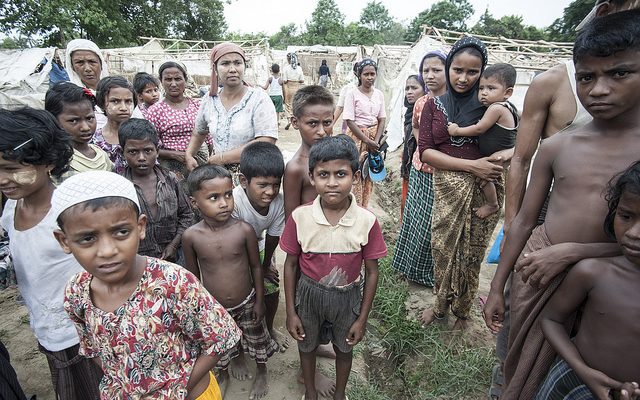
Burmese Refugees in BuffaloIn the past decade, Buffalo has become home for refugees from all around the globe, but more than 8.000 of these refugees come from Burma. These refugees started arriving over a decade ago when resettlement agencies invited them to become Buffalonians after the George W. Bush administration made a near-secret diplomatic deal with Burma. Throughout Buffalo, there are numerous organizations helping Burmese refugees as they come in.
Organizations Helping Burmese Refugees in Buffalo, New York

  1. Journey’s End Refugee Services –  This organization’s mission is to assist refugees in becoming “healthy, independent, contributing members of the community.” This year alone Journey’s End has resettled 418 refugees in Buffalo. Refugees have to go through numerous interviews and screenings before they are put into the hands of Journey’s End, but once they are, they are given anything they could possibly need. Refugees arriving have a variety of needs, some need a translator, someone to take them out to get food and clothes, someone to find them a job and a home, but some refugees only need to be pointed in the right direction with little help along the way. The staff at Journey’s End is trained to deal with either extreme, as well as everything in between. This organization has turned thousands of people from terrified Burmese refugees into Buffalonians. Journey’s End has made it possible for native Burmese people to make a community and a home in Buffalo. It is where home begins again.
  2. International Institute of Buffalo – This organization believes that refugees and immigrants are critical to the economic strength, population growth, workforce and business growth, home ownership and the expanding cultural richness of Western New York. Their services include welcoming refugees into Buffalo, employment and housing support. The International Institute also works very hard to foster connections between those working with refugees and ethnic community leaders and native-born residents in order to get refugees more involved and more comfortable in the community. This social services organization also monitors the ethnic community organizations, including the Burmese Community Support Center. There has also been work with city block clubs to connect with foreign-born neighbors, as well as the establishment of the Buffalo Region Immigrant and Refugee Roundtable. This organization has made it possible for refugees to get connections around Buffalo, as well as giving them the chance to talk about what they are going through, so they feel less alone and more at home. The International Institute of Buffalo has gone above and beyond in order to make Burmese refugees, as well as refugees from all around the world, feel at home in Buffalo.
  3. Burmese Community Services – This is another organization helping Burmese refugees get settled into Buffalo, providing any assistance they might need along the way. It is tailored specifically towards Burmese refugees. Their services include aiding the poor and distressed, eliminating prejudice and discrimination, promoting the social welfare and defending human and civil rights secured by law. They also collaborate with stakeholders in Buffalo to address the needs of the growing population of Burmese people in the area. This non-profit organization also aids with school registration, food stamps, Medicaid, home energy assistance and re-certification of The Department of Social Services. This allows refugees to get help whenever they need it, no questions asked. Burmese Community Services provides a place where help can always be given to those Burmese refugees in need of it as well as a place for people of the same nationality to come together as a community.

All three of these organizations helping Burmese refugees have made a huge difference in their lives. These refugees have somewhere to go if they need help with almost anything. They have gone from terrified refugees to an integral part of the Buffalo community. Because of these organizations, there is a community for Burmese people to help them integrate into Buffalo, a place that they can call home. But, even though some Burmese people have been able to flee, a lot of people remain in terror and devastation in Burma. They can be helped by refugee organizations once they are in the U.S, but foreign aid is the only way to help Burmese people who are still living in fear of being killed every day.

– Megan Maxwell
Photo: Flickr

August 13, 2018
https://borgenproject.org/wp-content/uploads/borgen-project-logo.svg 0 0 Borgen Project https://borgenproject.org/wp-content/uploads/borgen-project-logo.svg Borgen Project2018-08-13 01:30:112024-05-29 22:52:48Three Organizations Helping Burmese Refugees in Buffalo, New York
Global Poverty, Nonprofit Organizations and NGOs

Five Important Poverty Nonprofits to Pay Attention To

Important Poverty Nonprofits
The world is full of people trying to do good, some of whom are well known and acknowledged for the work they do. Many change-makers, however, fly under the radar and do not receive the recognition they deserve for the profound changes they have generated. Some important poverty nonprofits have been working to mitigate poverty and disease worldwide for years, and they are the ones who could benefit greatly from volunteers. The following are five groups whose efforts should not go unnoticed by the world.

Five Important Poverty Nonprofits

  1. Mothers2mothers – This group focuses on alleviating the HIV/AIDS epidemic in Africa while empowering women and mothers living with and/or around the disease. Africa is lacking heavily in healthcare workers. Mothers2mothers is an important poverty nonprofit that hires and trains HIV-positive women to fill these roles, thus providing them with the opportunity to gain financial security for their families and giving the community access to much-needed healthcare. Through this method, thousands of jobs have been created and hundreds of thousands of lives have been saved.
  2. Partners in Health (PIH) – Founded in 1987 by world-renowned doctor Paul Farmer, PIH has made great strides in eradicating life-threatening epidemics, such as multi-drug resistant tuberculosis, in third-world countries. PIH focuses on building lasting healthcare systems in countries that are severely lacking and providing this service to the poor, who would not typically be able to afford it. To do their incredible work, PIH relies heavily on donations.
  3. Kiva – Kiva is a nonprofit that provides low-income, entrepreneurial women and students with loans to start their own small businesses. They described their mission as “to connect people through lending to alleviate poverty.” Kiva has proven that even small loans can create lasting change in the lives of those who need it. Recipients of loans through Kiva have gone on to build small businesses that allow them to support their families and stimulate the economy of their communities.
  4. Charity: water – This is a nonprofit that works to provide clean drinking water to developing countries. Charity: water uses donations to build wells that would eliminate the need for people to walk miles away to get to a water source. They also provide sand filters and rainwater catchments that promote cleanliness in drinking water, which helps to lessen the spread of disease in impoverished communities.
  5. Concern Worldwide – This organization focuses on long-term solutions in third-world countries. Concern Worldwide responds to emergencies like environmental disasters and genocide. Their past projects have included providing food and nutrition to the starving after the 1973 Ethiopian famine. They are currently working with Syrian refugees in The Middle East.

These five are just a few of many important poverty nonprofits that work to make a positive change in the world, no matter how small. Contributions to groups like these have the ability to create a ripple effect in the lives and communities of those who truly need it. Getting involved can come in any form from promoting the causes online to volunteering time to help with projects. When it comes to making a change, there is no contribution too small.

– Amelia Merchant
Photo: Flickr

August 11, 2018
https://borgenproject.org/wp-content/uploads/borgen-project-logo.svg 0 0 Borgen Project https://borgenproject.org/wp-content/uploads/borgen-project-logo.svg Borgen Project2018-08-11 01:30:412019-09-02 16:32:52Five Important Poverty Nonprofits to Pay Attention To
Global Poverty, Nonprofit Organizations and NGOs, Poverty Reduction

How an Individual’s Impact on Poverty Reduction Can Make a Difference

How an Individual's Impact on Poverty Reduction Can Make a Difference
The Borgen Project was started with one person who wanted to make a difference. Clint Borgen started his endeavor to create The Borgen Project after seeing the poverty and conflict during the genocide in Kosovo. When he returned, he moved to Alaska to join a fishing expedition in order to make money to start his organization. The Borgen Project started with one person’s bold ideas and passionate heart setting to eradicate global poverty. There are many other ambitious individuals, like Clint Borgen, that have started organizations focusing on reducing poverty. The following organizations show how an individual’s impact on poverty reduction can generate a movement leading to organizations that work toward a world with less poverty.

  1. ONE is an international organization that focuses on action and campaigning to end extreme poverty and prevent diseases. The co-founders for ONE are Bono, the lead singer of U2 and Bobby Shriver, son of the founder of The Peace Corps. These two passionate men came together to start ONE, an international campaign and advocacy organization of more than nine million people around the world. This organization prioritizes social justice and equality in the world. ONE utilizes its advocacy power to encourage government programs to make lives better around the world. It is funded almost entirely through foundations and corporations.
  2. Concern Worldwide has focused on working with the world’s most vulnerable people for 50 years. This organization was founded by John and Kay O’Loughlin-Kennedy in response to the famine that occurred when the province of Biafra tried to secede from Nigeria. In 1968, this organization, then called Africa Concern, focused in Africa sending supplies to the people affected in Biafra. In 1970, Africa Concern turned into Concern Worldwide with volunteers encouraged to respond to natural disasters causing poverty in other communities as well. Today, Concern Worldwide focuses on emergencies, health, nutrition, education and livelihoods to reduce poverty. This organization operates on donations and utilizes 90 percent of its funds for relief and development.
  3. Trickle Up envisions a world where no one lives in extreme poverty or vulnerability. In 1979, Mildred Robbins Leet founded this organization with the goal to help people out of poverty. The group’s work aims to help women, people with disabilities, refugees and other economically and socially excluded people. Its goal is to continue lifting millions of people out of extreme poverty and to eradicate extreme poverty by 2030. Instead of giving individuals money, Trickle Up provides people with seed capital grants, skills training and the support to create small businesses in order to help individuals reach economic self-sufficiency. Trickle Up’s approach starts with stabilizing one’s family, planning and building a livelihood, connecting and saving in groups, investing and growing businesses and finding an individual voice to advocate when people need to speak up in their communities. This organization tracks its individual impact on poverty reduction by focusing on the changes people experience in their quality of life. They keep track of data on how the organization helps others combat hunger, build livelihoods, gain access to savings and credit and empower individuals for social involvement.

These organizations, founded by only one or two people, represent how an individual’s impact on poverty reduction by ordinary people can generate change in the world. Clint Borgen, Bono, Bobby Shriver, John and Kay O’Loughlin-Kennedy and Mildred Robbins Leet exemplify the possibility of how one person can make a huge impact. These individuals are a testament to grassroots movements and why each person should feel empowered to make a difference.

– Jenna Walmer
Photo: Flickr

August 9, 2018
https://borgenproject.org/wp-content/uploads/borgen-project-logo.svg 0 0 Borgen Project https://borgenproject.org/wp-content/uploads/borgen-project-logo.svg Borgen Project2018-08-09 01:30:292019-09-02 16:40:20How an Individual’s Impact on Poverty Reduction Can Make a Difference
Global Poverty, Nonprofit Organizations and NGOs, Refugees

TEDx Kakuma Breaks Down Barriers for Refugees

TEDx Kakuma
While the world sits in social turmoil determining how best to help refugees from countries such as Syria, TEDx is attempting to bring light where there is darkness. TED is a non-profit organization that works to share ideas with the masses, inspiring the individual to speak out and be heard.

TED has been prevalent in developed countries in North America and Europe since 1984; however, they have since expanded to include other nations from other continents. TEDx started in 2009 and is run independently. It reaches out to smaller communities around the world. While this expansion was sorely needed and widely welcomed, TEDx surpassed all former barriers by choosing to host TEDx Kakuma, a convention in a Kenyan refugee camp.

TEDx Kakuma

On June 9, 250 TEDx speakers spoke to a group of refugees that have found a temporary home in Kakuma, Kenya. The speakers presenting at the TEDx Kakuma conference included former refugees and scholars who have spent their life’s work studying developing countries, poverty and poverty reduction techniques.

By having these speakers physically come to the refugee camps, it not only provides the speakers with some firsthand experience and knowledge of the people and places they study but also provides the refugees with an opportunity to speak their truth and be heard. Collaboration and such a meeting of the minds is a strong and beneficial way to connect the world, showing us that whether we be the refugee or the TEDx Kakuma speaker, we work for betterment together.

Holding a TEDx within the refugee camp is essential to reminding refugees of something sorely and too often overlooked – their humanity. Speakers, such as athletes from The Refugee Olympic Team and others who grew up in refugee camps, provided the opportunity for hope to grow and for the refugees to be inspired.

Providing A Platform For Refugees

Many of the speakers at the TEDx Kakuma convention represented a program called the LuQuLuQu campaign, showing the strength of refugees all over the world. The program focuses on the displaced due to poverty, violence, war or oppression. The U.N. Refugee Agency, the founders of the campaign, work to protect the rights of those often ignored providing a voice when there often is none.

Providing this platform to refugees in the Kakuma camp allows hope to grow and to foster growth away from poverty and towards a better future. By introducing this campaign in a refugee camp instead of at a regular TED convention where only a few privileged individuals have access to it, TEDx Kakuma is working to end poverty and discrimination at the source rather than focusing on it from a distant perspective.

Refugee status cannot be solely attached to poverty within a nation; however, it can be linked as a common factor. When nations don’t work to provide protection for their citizens, more refugees are created and more poverty spreads into refugee camps. By providing TEDx in a refugee camp such as Kakuma, Kenya, TEDx is working to bring more minds into the poverty discussion. More importantly, TEDx is providing those who are struggling with the opportunity to be a part of the conversation, a factor sorely needed to end poverty.

– Kayleigh Mattoon
Photo: Flickr

August 5, 2018
https://borgenproject.org/wp-content/uploads/borgen-project-logo.svg 0 0 Borgen Project https://borgenproject.org/wp-content/uploads/borgen-project-logo.svg Borgen Project2018-08-05 15:16:312019-09-02 16:46:33TEDx Kakuma Breaks Down Barriers for Refugees
Global Poverty, Nonprofit Organizations and NGOs

Nonprofit Highlight: SAMBHAV in Nepal

Nepal
Poverty is a significant and growing concern in Nepal. The country’s Finance Ministry estimated that 21.6 percent of Nepal’s population, or 6 million Nepalis, are living under the poverty line. This makes Nepal one of the most impoverished countries in South Asia.

Poverty In Nepal

High poverty rates have numerous implications. Nepal has an extremely high infant mortality rate. Per 1,000 live births in Nepal, 34.5 children die before the age of 5. Poverty contributes to this significantly, as many of these lives likely could have been saved with greater hygiene standards and access to healthcare.

Over 50,000 children die every year in Nepal with malnutrition accounting for over 60 percent of the deaths. A total of half of the children in Nepal are underweight. Rates of disease and death in pregnant women are also high due to lack of access to healthcare and poor hygiene.

Considerable amounts of political unrest and conflict in Nepal have contributed to the poverty issue. Schools have been forced to close or teachers go on strike, which leads to a shortened school year for the Nepali children. Living in a conflict zone also makes it much more difficult for children to travel to and from school.

SAMBHAV

Thankfully, there are many non-profits out there that work to make a difference in the world of poverty. SAMBHAV in Nepal is one of them. This organization utilizes youth clubs and training programs to alleviate the burdens of poverty, specifically for teens and women. These initiatives lead to reforms in education and healthcare, to name a few.

Past projects have included a drinking water project in which SAMBHAV rebuilt the water systems in villages and schools after the earthquake in Nepal in 2015. This venture led to increased access to clean drinking water in impoverished communities leading to better hygiene and fewer diseases for those living in poverty.

SAMBHAV and Education

Providing quality education is also essential in alleviating poverty. SAMBHAV in Nepal has reconstructed schools and moved them to more convenient locations in order to increase attendance. For example, when Dharapani Secondary School first began, it only had 10 students. The school was destroyed by an earthquake in 1987 and was poorly rebuilt.

SAMBHAV brought attention to this project’s needs, and in 2010, it was rebuilt by The Japan International Cooperation Agency (JICA). Dharapani Secondary School was completely reconstructed with a new toilet facility installed. In addition, multiple teacher training programs were implemented to increase the quality of the school’s education system. Dharapani Secondary School now has around 400 students.

SAMBHAV has included the reconstruction of another school in its current projects in Nepal’s. The Bhairabi Primary School was also damaged after the earthquake and was in desperate need of reconstruction. Phase I of the project, which was finished in April of 2017, included three newly constructed classrooms in addition to three renovated old classrooms and three new toilets. Phase II is now underway and is set to consist of rebuilding a five-block classroom and adding three more toilets.  

Thanks to the efforts of SAMBHAV, children in Nepal have brighter futures in the face of poverty.

– Amelia Merchant
Photo: Flickr

August 5, 2018
https://borgenproject.org/wp-content/uploads/borgen-project-logo.svg 0 0 Borgen Project https://borgenproject.org/wp-content/uploads/borgen-project-logo.svg Borgen Project2018-08-05 14:38:012024-05-29 22:52:44Nonprofit Highlight: SAMBHAV in Nepal
Nonprofit Organizations and NGOs, Water, Water Quality

Safe Water Network & Innovative Clean Water Solutions

Safe Water Network
At the intersection of an assortment of key poverty-related issues lies the struggle for clean water. Roughly 80 percent of illnesses in developing nations are linked to limited access to clean water and proper sanitation. This spread of illnesses impacts child mortality rates, and reduces the competency of a nation’s workforce.

Children, particularly girls, are impacted disproportionately by reduced access to clean water. Girls under the age of 15 are twice as likely as boys to be responsible for fetching water in rural environments. This halves a population’s access to education, as the girls are too busy trekking for water to participate in school. Thus without clean water access, developing nations are hindered in multiple ways and pushed back to square one.  

The United Nations’ Aid Efforts

In 2015, the U.N. convened to reestablish a series of Sustainable Development Goals (SDGs). By design, these goals were created to be met by 2030. In response to the global clean water crisis, global access to clean water was established as a primary goal for this initiative.

The U.N.’s commitment to channeling resources and attention towards the global clean water crisis serves as a reminder that this issue remains at the forefront of humanitarian work. Clearly, the challenge of clean water access is not commitment, awareness or resources; rather, it is the effective implementation of filtration systems and stations.

How to Establish Clean Water Access

The mainstay approach to establishing clean water access, the deployment of filtration stations or wells, is rife with challenges. These stations are typically deployed in low-income areas, and are not supported by an effective contingency plan that extends past their build date. They are oftentimes left in unforgiving environments without technicians or significant financial support. Due to this, 30 percent to 60 percent of clean water stations fail within the first three years of existence.

Safe Water Network, a clean water focused NGO founded in 2006 by philanthropist Paul Newman, employs a unique model that responds to these challenges. Much like any clean water NGO, Safe Water Network deploys water stations across both India and Ghana with the aid of philanthropic capital. Rather than leaving these stations alone, though, the organization diverts funding into the community to train local technicians and operators. With the help of these technicians and operators, the station remains in good condition.

Station By Station

The station then produces affordably priced clean water that is typically much cheaper than the bottled water in the area. The majority of the stations penetrate 80 percent of the local populace, meaning that the revenue funnels back into the clean water station to ensure long-term, high-quality maintenance. By tapping into the local economic ecosystem, these stations become sewn into the community fabric of the respective regions.

In fact, Poonam Sewak, the Vice President of India programs for Safe Water Network, stated: “I would like to say whoever comes to work in clean water should come with a vision that it has to be sustainable. If you are not creating and leaving behind two things: technicians with access to spare parts, and second, training to the people to own and manage their own product then you have done a disservice to the money which you had.” 

Sewak also emphasized the program’s goal to instill autonomy, entrepreneurship and confidence in the communities in addition to providing essential & sustainable clean water access. 

Clean Water Toolkit

Global long-term cooperative efforts are another component of the organization’s strategy. Safe Water Network aims to build a database platform of their collective clean water knowledge derived from each of their stations. This database draws on digital monitoring systems installed at a majority of the sites. By monitoring water outputs and other technical details, Safe Water Network is better able to understand which approaches are most effective in conjunction with their market-based methodology.

In India, Safe Water Network has already provided this collective knowledge to the Ministry of Clean Water and the Ministry of Urban Planning so that they are better able to respond to the challenge of managing sanitation in urban environments. In the future, the organization hopes to expand this database so that it can be accessed by other initiatives and NGOs who aim to create their own sustainable safe water stations. Essentially, Safe Water Network is building a new clean water toolkit for the future.

Global Goals

While the challenge of creating global clean water access by 2030 per the U.N.’s SDGs still looms ahead, Safe Water Network serves as an example of the effectiveness of innovation in the face of adversity.

Safe Water Network has already reached 300 communities, providing long-term clean water access to about one million people. As their network of governments, charities and NGOs expands with the aid of the clean water toolkit, their positive impact will surely be multiplied.    

– Ian Greenwood
Photo: Flickr

July 30, 2018
https://borgenproject.org/wp-content/uploads/borgen-project-logo.svg 0 0 Borgen Project https://borgenproject.org/wp-content/uploads/borgen-project-logo.svg Borgen Project2018-07-30 01:30:342024-05-29 22:52:34Safe Water Network & Innovative Clean Water Solutions
Nonprofit Organizations and NGOs

Efforts Combating Negative Effects of the Rwandan Genocide

Negative Effects of the Rwandan Genocide
Rwanda has made great strides in combating poverty. The country boasts one of the fastest growing economies in Central Africa, with an average GDP growth of 8 percent per year between 2001 and 2014. However, 60 percent of the population still lives in extreme poverty — on less than $1.25 a day — as just one of the negative effects of the Rwandan genocide.

GDP per capita would most likely be about 25 to 30 percent higher if the 100-day civil war and genocide had not occurred from April to July of 1994. More than 800,000 civilians were killed, and current Rwandans still experience the negative effects of the Rwandan genocide via the country’s collective poverty and mental health statuses of individuals today.

What was the Rwandan Genocide?

The Rwandan genocide resulted from centuries of conflict between two ethnic groups in Rwanda — the Hutu and the Tutsi peoples. Hutu extremists systematically murdered Tutsi and moderate Hutu and targeted politicians in particular so as to form a political vacuum and an interim, extremist government.

Only extreme violence and brutality could lead to the murder of so many in only 100 days. Beyond murder, another tactic used to traumatize victims was the deliberate infection of many Tutsi women with HIV/AIDS through rape. These devastating methods are why Lauren Suitt so strongly believes in “raising up the local counselors to help alleviate the trauma that still exists from the genocide.”

The Africa Healing Exchange

Lauren Suitt is a recent University of North Carolina Asheville graduate who traveled to Rwanda this May for three weeks as part of her internship with Africa Healing Exchange (AHE). The AHE is an Asheville-based non-profit with the mission of helping people overcome trauma associated with the Rwandan genocide.

Sara Stender founded AHE after being transformed by her experiences with Rwandans in 2009. The nonprofit uses its own Restoring Resiliency Program to assist individuals and groups in both the U.S. and Rwanda in their attempts to overcome trauma by particularly focusing on Rwandan mothers and children.

Suitt emphasizes forming connections as an integral part of the nonprofit’s work, telling The Borgen Project: “It is AHE’s goal to help facilitate the growth of mutually beneficial relationships/ skills exchange between people in Rwanda and the United States.”

Scars of the Rwandan Genocide

The work Suitt did in her internship highlights the way AHE attempts to address two different negative effects of the Rwandan genocide. She focused her three weeks in the country on training local Rwandans as part of a workshop for local trauma counselors in Kigali and delivering business development workshops for women’s cooperatives in the rural districts of Rubavo and Rulindo.

She advocates that of the negative effects of the Rwandan genocide, trauma should be addressed first. Suitt says, “Since the genocide occurred in 1994, only 24 years ago, the majority Rwandans were directly affected. It was very eye-opening for me to realize that this occurred only a year before I was born and that most people only a year older than I am witnessed this tragedy first hand (I was born in 1995).”

Survivor Stories

The resilient Rwandans that Suitt met during her three-week stay deepened her awareness of the negative effects of the Rwandan genocide. She explained that she was overwhelmed by the people that referred to themselves as an “orphan” or “orphan of the genocide” because so many Rwandans lost close family members.

One day at her hotel, she met Emmanuel — a man who was eight years old during the genocide. He lost every immediate family member, and only survived because he was out playing in a banana field and was able to hide when extremists attacked his family.

She also met John, whose family remains intact because they fled Rwanda to the neighboring Democratic Republic of the Congo (DRC) when the genocide began. John’s story highlights another type of trauma that resulted from the genocide — that plights of a refugee and a returnee. As many as two million Rwandans fled during or after the genocide, mostly to the country now called the DRC, and the majority returned in 1996 or 1997. Fleeing for their lives and reintegrating to a ravaged country also created deep, emotional wounds.

Trauma, Healing and Beyond

However, Suitt does not believe the work needed in our post-Rwandan genocide world stops at addressing trauma. She believes that combating multiple negative effects of the Rwandan genocide at the same time is possible and beneficial. Teaching handicraft skills like sewing and putting quality goods in a global market to generate a fair wage will go far to alleviate poverty in Rwanda. In fact, Suitt believes that “lack of resources is the main cause of poverty in Rwanda and around the world.”

Foreign aid has been significant to Rwanda following the genocide, as 30 to 40 percent of government revenue comes from aid. Hopefully, this money and continued efforts like those of AHE will establish American markets for Rwandan goods and allow Rwanda’s economy to continue recovering. Such development would help the majority of the population currently living in extreme poverty, and pave the way to recovery.

– Charlotte Preston
Photo: Google

July 30, 2018
https://borgenproject.org/wp-content/uploads/borgen-project-logo.svg 0 0 Borgen Project https://borgenproject.org/wp-content/uploads/borgen-project-logo.svg Borgen Project2018-07-30 01:30:002024-05-29 22:52:33Efforts Combating Negative Effects of the Rwandan Genocide
Activism, Global Poverty, Nonprofit Organizations and NGOs

Beyonce, Jay-Z To Headline Global Citizen Mandela 100 Festival

Mandela 100 Festival
Singer Beyonce and her spouse, rapper Jay-Z, will be among several major artists to perform at Global Citizen’s Mandela 100 Festival in December 2018 in Johannesburg, South Africa. Other artists scheduled to perform are Ed Sheeran, Chris Martin, Pharrell Williams, D’banj, Femi Kuti, Sho Madjozi, Tiwa Savage and Wizkid. This latest concert campaign is said to be Global Citizen’s ”biggest campaign on the Global Goals to end extreme poverty ever.”

According to Global Citizen, the festival is to represent a celebration of Mandela’s legacy as an exemplary leader, his fight against apartheid, and his methods of non-violent protest that shaped the future of South Africa, setting an example worldwide. The Mandela 100 festival will be the first-ever musical event organized by Global Citizen in Africa

 A Global Initiative

As an organization that is composed of members worldwide, Global Citizen is a model example of a successful nongovernmental organization (NGO), a true grassroots movement. The organization has projected some major numbers for 2018: an estimated 2.25 billion people worldwide are expected to receive some form of poverty relief from Global Citizen, ranging from a year of free education for children to clean water for an entire community.

Global Citizen divides its goals into nine separate categories, each representing a broad set of issues that need to be resolved. They are:

  • Girls and Women
  • Health
  • Finance/Innovation
  • Education
  • Food and Hunger
  • Water and Sanitation
  • Environment
  • Citizenship

Global Citizen’s goal is to eliminate extreme poverty worldwide by 2030—just 12 years from now. And it seems that the organization may accomplish its goals, having secured a whopping $2.9 billion in funding from government organizations worldwide for 2018 alone.

How Everyone Can Help

But besides relying on funding from government bodies, Global Citizen asks that individuals take action as well, through twitter, email or petition. Global Citizen’s website offers a streamlined way for its constituents to influence representatives not only in their own country but in countries worldwide.

Some of the most recent and significant contributions to Global Citizen have come from the U.K., Norway and the E.U. These nations gave £225 million, Kr.2.07 billion and  €337.5 million to Global Citizen’s Global Partnership for Education project, respectively.

Mandela 100 Festival: A Festival For The People

The Mandela 100 Festival begins on December 2, 2018, and besides the proceeds going toward Global Citizen’s international fight against poverty, the other goal of the festival experience is to ignite a passion in young people to feel empowered to make changes in the world. Global Citizen wants to involve youth, on an international level, in the fight against extreme poverty.

Global Citizen’s website states it wishes to “galvanize young, passionate people across Africa to pressure their leaders to make important strides.” In fact, the motto for the festival is “Be The Generation.” Considering that Global Citizen is expecting to end abject poverty worldwide in little over a decade, millennials may just become the generation to tip the scales in the ongoing fight to elevate all members of our global community.

– Jason Crosby
Photo: Google

July 29, 2018
https://borgenproject.org/wp-content/uploads/borgen-project-logo.svg 0 0 Borgen Project https://borgenproject.org/wp-content/uploads/borgen-project-logo.svg Borgen Project2018-07-29 01:30:192019-09-08 21:09:31Beyonce, Jay-Z To Headline Global Citizen Mandela 100 Festival
Page 32 of 60«‹3031323334›»

Get Smarter

  • Global Poverty 101
  • Global Poverty… The Good News
  • Global Poverty & U.S. Jobs
  • Global Poverty and National Security
  • Innovative Solutions to Poverty
  • Global Poverty & Aid FAQ’s
Search Search

Take Action

  • Call Congress
  • Email Congress
  • Donate
  • 30 Ways to Help
  • Volunteer Ops
  • Internships
  • Courses & Certificates
  • The Podcast
Borgen Project

“The Borgen Project is an incredible nonprofit organization that is addressing poverty and hunger and working towards ending them.”

-The Huffington Post

Inside The Borgen Project

  • Contact
  • About
  • Financials
  • President
  • Board of Directors
  • Board of Advisors

International Links

  • UK Email Parliament
  • UK Donate
  • Canada Email Parliament

Get Smarter

  • Global Poverty 101
  • Global Poverty… The Good News
  • Global Poverty & U.S. Jobs
  • Global Poverty and National Security
  • Innovative Solutions to Poverty
  • Global Poverty & Aid FAQ’s

Ways to Help

  • Call Congress
  • Email Congress
  • Donate
  • 30 Ways to Help
  • Volunteer Ops
  • Internships
  • Courses & Certificates
  • The Podcast
Scroll to top Scroll to top Scroll to top