• Link to X
  • Link to Facebook
  • Link to Instagram
  • Link to TikTok
  • Link to Youtube
  • About
    • About Us
      • President
      • Board of Directors
      • Board of Advisors
      • Financials
      • Our Methodology
      • Success Tracker
      • Contact
  • Act Now
    • 30 Ways to Help
      • Email Congress
      • Call Congress
      • Volunteer
      • Courses & Certificates
      • Be a Donor
    • Internships
      • In-Office Internships
      • Remote Internships
    • Legislation
      • Politics 101
  • The Blog
  • The Podcast
  • Magazine
  • Donate
  • Click to open the search input field Click to open the search input field Search
  • Menu Menu

Archive for category: Nonprofit Organizations and NGOs

Information and stories about nonprofit organizations and NGOs

Global Poverty, Nonprofit Organizations and NGOs

Natural Disasters Add Obstacles to Recovery for Poor Nations

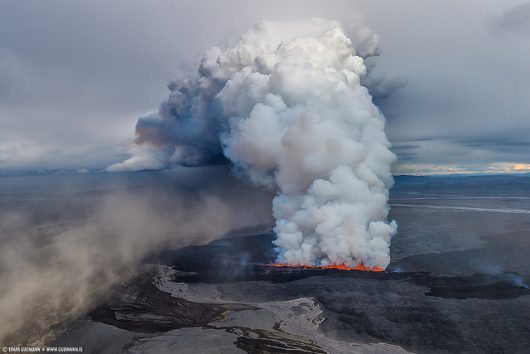
Natural disastersNatural disasters strike without prejudice. Whether rich or poor, developed or developing, all nations are at risk of some kind of destructive event that is simply out of their hands. However, poor and developing nations have a harder road to recovery after a devastating event. Simply put, nations with sufficient access to resources are more likely to both prevent natural disasters from turning into crises and recover from them when they do occur.

Practically, poor nations do not have the means to initiate preventative measures. They typically do not have early warning systems or sound infrastructure in place to withstand destructive elements. Due to the lack of warning and protection, the United Nations has noted that casualties are often much higher in developing countries. Additionally, natural disasters can cause setbacks to any potential for long-term economic and social growth in a nation, because they force what little funds are available away from development and towards relief efforts. Oftentimes these countries shift their focus to basic needs like acquiring safe water and providing sanitation services rather than developing their economies or social policies.

Haiti is a prime example of a poor nation that has suffered from the inevitable natural occurrences that stem from living in a hurricane-prone area that is also near tectonic plate boundaries. “If you want to put the worst-case scenario together in the Western hemisphere [for disasters], it’s Haiti,” said Richard Olson, a professor at Florida International University who directs the Disaster Risk Reduction in the Americas project.

Disaster experts speaking on Haiti say the cycle starts and ends with poverty. Between poverty lies unstable governments, natural disasters and environmental degradation. Every year, Haiti faces rounds of tropical storms, hurricanes and earthquakes. Many Haitians live in the capital city, Port-au-Prince. However, many of them are migrants from the countryside who live in shantytowns, which offer little protection from the environmental hazards they face.

Debarati Guha Sapir, director of the World Health Organization’s Centre for Research on the Epidemiology of Disasters, made the comment that vulnerability to natural disasters is almost a direct function of poverty. While a magnitude 7.0 earthquake is devastating anywhere, it causes more damage in places where building quality is poor. Poverty is often the root of that very quality. In comparison to Haiti, the neighboring Dominican Republic is richer and more politically stable, and its buildings withstand the same storms with a greater efficacy.

Due to the inability to prepare for and cope with disasters, developing countries like Haiti depend on relief agencies and governments. Fortunately, agencies like the Red Cross and the United Nations have been able to send relief teams to aid the processes.

By aligning with The Borgen Project’s mission to fight the global poverty crisis, the global community can be best served. When poverty is less of a problem for a nation, so then is recovery after a devastating natural occurrence. The earth is unlikely to stop moving, which means earthquakes and hurricanes are likely to continue to occur. In preparation for the future, reducing the effect that poverty has on susceptible nations must be a top priority.

– Taylor Elkins

Photo: Flickr
October 16, 2017
https://borgenproject.org/wp-content/uploads/borgen-project-logo.svg 0 0 Borgen Project https://borgenproject.org/wp-content/uploads/borgen-project-logo.svg Borgen Project2017-10-16 01:30:282018-06-19 11:26:42Natural Disasters Add Obstacles to Recovery for Poor Nations
Human Rights, Nonprofit Organizations and NGOs, Women's Rights

Global Women’s Rights Organizations Working to Improve Conditions

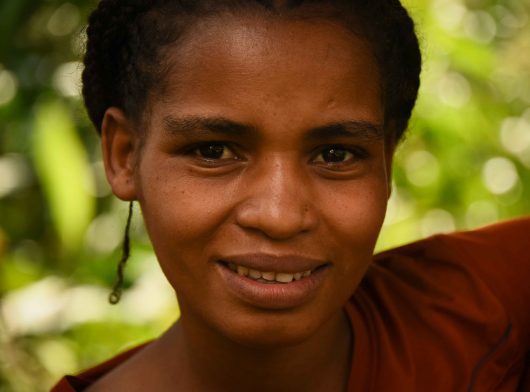
Global Women's Rights OrganizationsIn the fight for global poverty, we must also examine the fight for global women’s rights. In fact, giving women equality and empowering them to use it is a key to a world where global poverty is abolished. This is the case because as the amount of women in the workforce increases, so does overall productivity. It is also proven that when women have more say over the household spending, it can enhance a country’s growth prospects because women tend to spend money in a way that benefits children in their education. Lastly, empowering women to be leaders allows for more diversity among people who are creating social policy, which will allow different topics to be addressed, such as greater provision of public goods.
So while organizations that directly target ending global poverty are important, it is equally as important to recognize global women’s rights organizations for the world-altering work that they do. Here are five organizations that are taking part in the fight for global women’s rights and in turn helping to reduce global poverty.

Global Fund for Women
The Global Fund for Women is an organization founded in 1987 by Anne Firth Murray, Frances Kissling, Laura Lederer and Nita Barrow. They believed that women’s rights are the key to social, economic and political change. The Global Fund for Women finds and gives funding to women who are building social movements and challenging societal norms.

MADRE
MADRE is an organization that is “demanding rights, resources and results for women worldwide.” They partner with community-based women’s groups that are facing disaster and advocate for human rights. Some of their missions include ending violence against women, ending rape as a weapon of war, economic justice, women’s health and emergency relief.

Campaign for Female Education (Camfed)
Camfed is a non-profit that supports and empowers young girls in rural areas to go to school and even become leaders. Their efforts specifically focus on sub-Saharan Africa, and since 1993 the organization has helped 1,876,214 students to go to school.

The Association for Women’s Rights in Development (AWID)
AWID is a global feminist organization. The objective of AWID is to strengthen the collective voice of women to create global change. Their priority areas are women’s rights, challenging religious fundamentalists, promoting young feminist activism and economic justice.

International Women’s Health Coalition (IWHC)
The IWHC views women’s rights as a key component of social, environmental and economic reform. Their goal is to ensure that all women have equal access to resources to protect their health, make informed family planning decisions, and participate in society through leadership roles.

All of these organizations are doing important work to address specific goals on the path to global women’s rights. By improving the lives of women all over the world, they also play a major role in alleviating poverty as a whole.

– Téa Franco
Photo: Flickr

October 16, 2017
https://borgenproject.org/wp-content/uploads/borgen-project-logo.svg 0 0 Borgen Project https://borgenproject.org/wp-content/uploads/borgen-project-logo.svg Borgen Project2017-10-16 01:30:072024-12-13 17:51:56Global Women’s Rights Organizations Working to Improve Conditions
Nonprofit Organizations and NGOs, Refugees

Addressing the Violence Against Rohingya Refugees

Cycle of RefugeesThe Rohingya are the most persecuted people in the world. The population has lived in Myanmar for centuries, but the government continues to view the people as illegal immigrants. Across the border, Bangladesh believes the group is Burmese. Thus, the population is stateless.
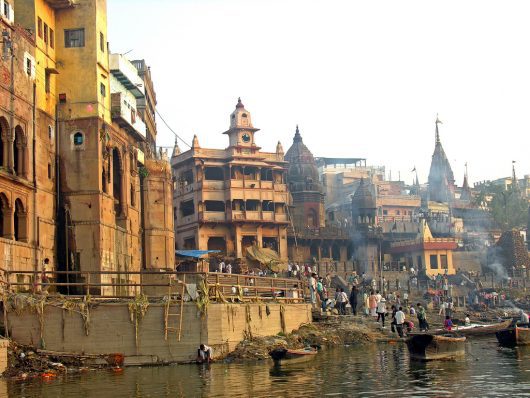
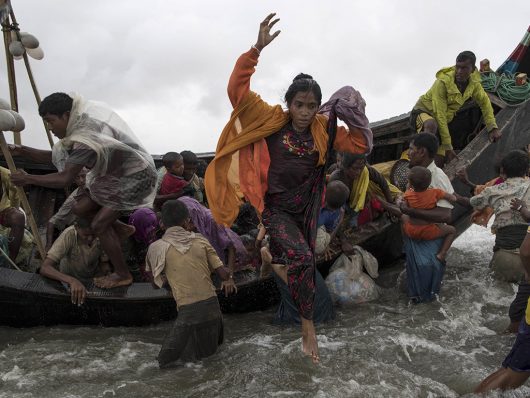
Since August of 2017, the Rohingya people have been forced to flee Myanmar to Bangladesh due to intense persecution and attempted ethnic cleansing. Human Rights Watch recently released new satellite imagery showing 62 villages in northern Rakhine suffering from arson attacks. The U.N. Human Rights Chief, Zeid Ra’ad Al Hussein, describes the violence as “crimes against humanity, systematic attacks and forcible deportation of civilians.”

What is the reason for so much anger and violence? According to MSN, the answer is “nationalism-fuelled racism.”

The majority of the Rohingya refugees arrive in Bangladesh on foot, crossing a border lined with landmines by the Myanmar army. The government denies reports of landmines despite numerous claims from NGOs, such as Amnesty International. Other refugees have used small boats to flee. However, some of the passengers have drowned or the boats have sunk. Accounts have been devastating for many of the refugees at sea.

These allegations made by the international community are horrific, and they paint a picture bordering on genocide. Myanmar’s government responded to these claims, stating its military was fighting a terrorist insurgency.

In July of 2017, Arakan Rohingya Salvation Army claimed responsibility for attacks with machetes and rifles in Myanmar. This single attack is believed to have triggered the mass violence and cleansing of the Rohingya population within Myanmar. The government of Myanmar has chosen to view the whole population as a terrorist organization, instead of locating the terrorists within the population.

The situation has become so extreme, the U.N. Security Council publicly rebuked the violence. The council acknowledged attacks on Myanmar security forces, but condemned the violence in response, urging for steps to end the violence.

The stateless people simply want a home, a land of their own. “We want to live peacefully in our native land. We don’t want to be on the strain of other countries,” Tun, a U.K. based activist, told MSN.

The international community wants to see urgent action to protect the welfare of the Rohingya refugees, as well as plan for the future. Formal recognition of the Rohingya as a minority in Myanmar is vital to prevent this cycle of violence. Provision of humanitarian aid and dispatch of U.N. peacekeepers are vital to the health and safety of the Rohingya refugees in Bangladesh.

– Danielle Preskitt

Photo: Flickr

October 8, 2017
https://borgenproject.org/wp-content/uploads/borgen-project-logo.svg 0 0 Borgen Project https://borgenproject.org/wp-content/uploads/borgen-project-logo.svg Borgen Project2017-10-08 07:30:262024-05-25 00:19:06Addressing the Violence Against Rohingya Refugees
Global Poverty, Nonprofit Organizations and NGOs

How to Help People in India

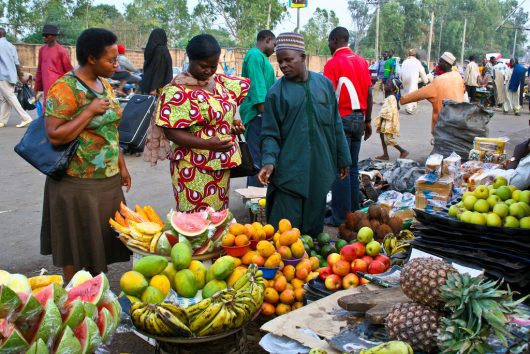
How to Help People in IndiaAs people in a wealthy, Western nation, we should feel the need to aid other countries that are less fortunate than us. India is a nation that can use all the help it can get, and there are a number of ways to help that do not require a financial contribution. More than 24.3 percent of India’s population lives below the poverty line, which is estimated to be around 267 million individuals. That is a massive number of people who have to survive on around a $1 a day. If you’re wondering how to help people in India, here are a few ways.
Fundraising
Fundraising is a great way to use social circles to raise money for a cause. Fundraising can be on a small scale, such as starting an online campaign to raise money for a nonprofit, or it can be more active, such as hosting a dinner party and charging guests $5 to attend. There are many different ways to fundraise, most of which do not require much initial financial investment. A bake sale, for example, would likely cost much less than it would raise in the long run. Similar ideas are a garage sale, plant sale, or offering to do yard work in exchange for a donation.

Volunteering
Many nonprofit organizations need all the help they can get, and they are doing great work to end poverty across the globe. These organizations often do not have much funding to hire staff members, so any volunteer work they can get is a big help. Examples of organizations that work in India but have offices in the United States are the Global Fund for Women and the American India Foundation. Both these organizations work to reduce poverty in India, either through aiding the economic advancement of women or just generally.

Donate
While volunteering and fundraising are extremely important and helpful ways to assist a cause, what it all comes down to is funding, and most of these causes are very underfunded. With 267 million people in poverty in India, it would be impossible to achieve goals of poverty reduction without donations from individuals. Many organizations give a clear picture of what your donation will be used for, and certain children’s organizations will allow you to sponsor a child through your donation as well. Children International works in India to improve sanitation conditions to improve the health of children and you can sponsor a child through them. Many other organizations, such as World Vision and Save the Children India, have similar programs.

Regardless of how you decide to contribute, it is important that you do. These organizations lack funding and are sometimes understaffed, and can always use the help. It is easy to feel like we cannot make an impact from so far away, but these are some ideas for how to help people in India. Whatever you do, you are making a difference.

– Liyanga De Silva

Photo: Flickr

October 8, 2017
https://borgenproject.org/wp-content/uploads/borgen-project-logo.svg 0 0 Borgen Project https://borgenproject.org/wp-content/uploads/borgen-project-logo.svg Borgen Project2017-10-08 01:30:572018-03-25 21:49:38How to Help People in India
Hunger, Nonprofit Organizations and NGOs, Technology

“Chowberry” App Reduces Food Waste

ChowberryChowberry is an app combating hunger and food waste in Nigeria. The app was invented by Nigerian software developer Oscar Ekponimo. According to the Nigerian Tribune, Ekponimo has partnered with the program Project FoodAccess to connect impoverished Nigerians and non-governmental organizations with cheap food.
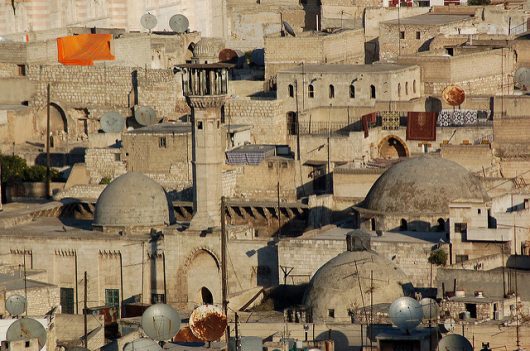
Chowberry works through several steps. The first step involves local grocery stores. As the store’s food products near their expiration dates, the stores begins reducing the food prices each day. The app alerts Nigerians and food organizations about the lowered food prices. Project FoodAccess specifically matches the food with families they register need it the most. These include families with young mothers and female breadwinners.

Chowberry helps to alleviate the problem of hunger, which affects Africa as a whole and Nigeria in particular. According to the United Nations Food and Agriculture Organization, 223 million people in sub-Saharan Africa were hungry or malnourished from 2014 to 2016. Nigeria itself has been declared unable to feed its entire population by the World Food Programme.

Ekponimo himself has a personal experience with hunger. After his father had a stroke and could not work, his family could not afford to feed themselves. Chowberry has given Ekponimo the opportunity to help others going through similar situations.

The app has had a significant impact within different areas in Nigeria. The three-month trial run has fed 200 families and 150 orphans. Many Nigerians have requested that the program expand to more communities.

Chowberry also has assisted the 20 participating grocery stores. Food that would have been thrown out before now gets sold to families in need at a profit to the store. The helpful software has gained international recognition as well, winning the Rolex Award of Enterprise in 2016.

Ekponimo hopes that he can expand Chowberry to feed the hungry in other African countries. With continued innovation from people like Ekponimo, technology like Chowberry could be used to help put an end to hunger in Africa and around the globe.

– Cortney Rowe

Photo: Flickr

October 7, 2017
https://borgenproject.org/wp-content/uploads/borgen-project-logo.svg 0 0 Borgen Project https://borgenproject.org/wp-content/uploads/borgen-project-logo.svg Borgen Project2017-10-07 01:30:132020-07-23 09:47:20“Chowberry” App Reduces Food Waste
Children, Nonprofit Organizations and NGOs, Refugees

Nonprofit Organizations Support and Educate Refugees

Nonprofit Organizations Support and Educate RefugeesThe International Rescue Committee and Sesame Workshop both provide support and education to refugees throughout Jordan, Lebanon, northern Iraq and Syria. Through care and education, these two nonprofit organizations plan to aid children who are dealing with any potential or existing trauma and neglect.
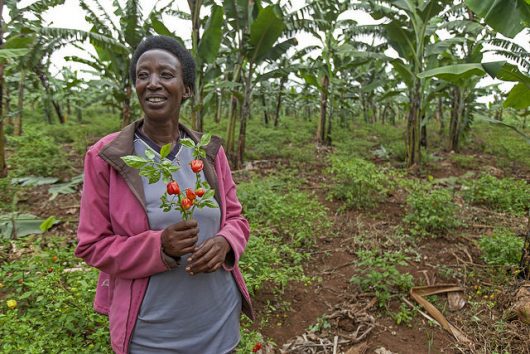
Refugee crises happening today often leave a lasting impact on the children involved. Children of refugees experience a great deal of trauma and sometimes torture. These children are exposed to war and violence, separation from their caregivers and malnutrition. Many of these factors lead to lasting negative effects on the children such as anxiety, insomnia, introversion, depression, behavioral issues, anorexia and many more.

The International Rescue Committee is a nonprofit organization which aims to help those who have been affected by war, conflict and natural disasters. The organization works in countries in which people lack the support they need in order to overcome a crisis; they do this by helping restore health, safety, education and economics. The International Rescue Committee also welcomes those refugees moving into the U.S. and helps them to resettle and thrive in their new home. This committee has responded to the world’s humanitarian crises for 83 years.

Sesame Workshop is the nonprofit organization that is behind Sesame Street, the popular children’s television show. This organization works to help children who have lost parents and caregivers, help families who are unemployed and provide education to children throughout the world. For 40 years, Sesame Workshop has reached millions of children in over 150 countries.

Together, International Rescue Committee and Sesame Workshop give support and provide education to refugees who are in desperate need for help and guidance through the rough environment they are living in.

“Our Partnership with Sesame Street will help transform children’s lives by making sure that their social-emotional needs are met so they are able to receive and education, contribute to their community and succeed as adults,” said David Miliband, President and CEO of the International Rescue Committee, on the committee’s webpage. With the efforts of these two organizations, hopefully there will be progress made in improving refugees’ lives, especially for children.

– Chloe Turner

Photo: Flickr

October 7, 2017
https://borgenproject.org/wp-content/uploads/borgen-project-logo.svg 0 0 Borgen Project https://borgenproject.org/wp-content/uploads/borgen-project-logo.svg Borgen Project2017-10-07 01:30:102020-07-23 09:49:13Nonprofit Organizations Support and Educate Refugees
Global Poverty, Nonprofit Organizations and NGOs, Sustainable Development Goals

Positive Planet: Lending to the Greater Good

Positive PlanetAccording to the World Bank, more than 2.5 billion people do not have a bank account and many of those people make up the world’s poor. So, it should not be surprising that just within the past decade, microfinance has become an increasingly popular form of business in many countries. Microfinance, or micro-lending, essentially refers to lending small amounts to individuals who do not have access to typical financial institutions.

Because this service goes to low-income individuals, it is popular among many nonprofits and private businesses to help people start enterprises around the world. Many microfinance institutions lend to women, young people and others who have been historically kept out of finance.

One organization, in particular, strives to alleviate poverty by empowering marginalized populations.

Since its founding in 1988, Positive Planet has set out to provide microloans to women who want to start their own businesses. The nonprofit aims to provide the chance to start a viable, sustainable business to women without resources. The organization also follows some of the intuition behind the Sustainable Development Goals, especially the goals of gender equality, decent work and economic growth.

The organization, based in France, manages projects through different locations that provide assistance to people in different countries. Positive Planet’s reach extends all over the world to 35 countries. Its projects span from helping refugee businesses in the Middle East to inspiring young people in West Africa.

Since its beginning, the organization has touched more than 40,000 people through nearly 40 projects. Just one of these projects helps microfinance groups provide women with financial education. The project aimed to help further develop the infrastructure in place for microfinance in China and also support women’s finance training. Through a partnership with Diageo and the Huimin Microcredit Company, the project was able to directly impact more than 7,000 people.

Another project assisted low-income women in Brazil with entering the labor market and learning the basics of entrepreneurship. The program attempted to benefit vulnerable women through individual support. By partnering with Gerando Vida, a local NGO, the program was able to directly impact the women and their families.

By helping vulnerable women around the world, this organization takes a staunch position against global poverty. This organization and its results demonstrate the importance of empowering women entrepreneurs.

– Selasi Amoani

Photo: Flickr

October 4, 2017
https://borgenproject.org/wp-content/uploads/borgen-project-logo.svg 0 0 Kim Thelwell https://borgenproject.org/wp-content/uploads/borgen-project-logo.svg Kim Thelwell2017-10-04 07:30:042024-05-29 22:27:10Positive Planet: Lending to the Greater Good
Global Poverty, Nonprofit Organizations and NGOs

How to Help People in Bhutan

How to Help People in Bhutan
Bhutan is a tiny, isolated, primarily Buddhist kingdom in the Himalayas that has only permitted television since 1998. In a country that measures development by Gross National Happiness in lieu in of Gross Domestic Product, does it make sense to ask how to help people in Bhutan? Given the often discriminatory treatment of journalists, non-Buddhists, the disabled, women and especially Nepali-speakers, the answer is yes—this question should still be asked.

Bhutan has had an extremely rapid transition from an absolute monarchy to a constitutional monarchy with the establishment of political parties in 2007 and held its first election in 2008. The Freedom House upgraded the country’s Freedom Status in 2009 from “not free” to “partly free,” citing the below reasons:

  • Journalists surveyed in 2012 expressed grave concerns about freedom and personal safety.
  • Nongovernmental organizations (NGOs) that work on issues relating to ethnic Nepalese are not allowed to operate in Bhutan.
  • In 2007, Bhutan moved to a rule of law. The civilian police operate within the law and the Judiciary is considered autonomous.
  • The Anti-Corruption Commission (ACC), in answer to corruption within the government, was given more leeway and power. The most recent Prime Minister, Togbay, does not tolerate corruption, and many prior powerful politicians are now being held accountable.

In the 2017 Trafficking in Persons Report, the State Department Office to Monitor and Combat Trafficking in Persons determined that the government of Bhutan did not fully meet minimum standards for the elimination of trafficking. The government did demonstrate increasing efforts compared to the previous reporting period. In an example of how to help people in Bhutan, the National Commission for Women and Children (NCWC) partnered with an international organization to conduct training on anti-trafficking toolkits and also to facilitate reports on Bhutan laws and policies on trafficking. Bhutan, over the last five years, has still remained a source and destination country for both forced labor and sex trafficking.

Bhutan has no formal relations with the five permanent members of the U.N. Security Council and accepts financial assistance from primarily India, leaving Bhutan isolated from much of the world. It has recently shown a willingness to move toward democratic ideals and is also seeking to increase tourism after a long history of shunning foreigners. Learning how to help people in Bhutan means working to ensure adequate funding for the NGOs and other agencies dedicated to assisting the Bhutanese officials. One must work to stay vigilant and continue to support organizations dedicated to combating violations of human rights in Bhutan.

– Michael Carmack

Photo: Flickr

October 2, 2017
https://borgenproject.org/wp-content/uploads/borgen-project-logo.svg 0 0 Kim Thelwell https://borgenproject.org/wp-content/uploads/borgen-project-logo.svg Kim Thelwell2017-10-02 07:30:402024-05-29 22:27:02How to Help People in Bhutan
Global Poverty, Nonprofit Organizations and NGOs, Poverty Reduction

How to Help People in Mexico: Four Influential Organizations

Help People in MexicoIn 2014, the Mexican government reported that poverty within the country rose to 46.2 percent —  nearly half the population living below the poverty line. For the country with a population of just over 123 million, the startling percentage is equivalent to over 55 million people living in poverty. These people are defined as living on less than 2,542 pesos or $157.70 per month.
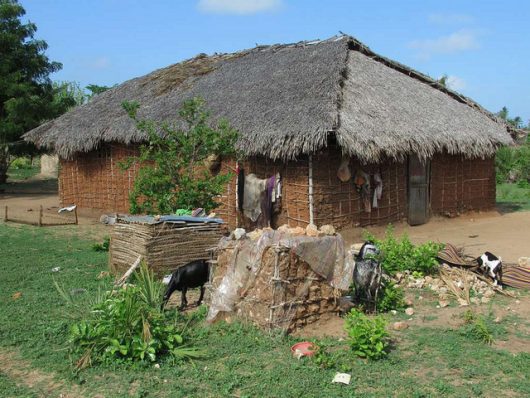
Despite nearly 80 percent of the population living in urban areas, mainly in or around the capital Mexico City, four percent of the population has unimproved drinking water and 15 percent has unimproved sanitation facilities.

Here are four nonprofits advocating, fundraising and working on the ground to help people in Mexico.

1. Children International

Working in ten countries around the world including Mexico, Children International is a nonprofit focused on helping kids living in poverty. With over 70 community centers and over 9,000 volunteers worldwide, Children International provides children living in poverty with assistance in health, education and employment through empowering programs and resources.

The long-term impacts aim to help break the cycle of poverty. Their website offers a number of ways to get involved including sponsoring a child by donating $32 a month, making a single donation or volunteering at one of their community centers.

2. Feed the Hungry

Relying on almost entirely private donations, Feed the Hungry delivers meals and nutrition education to children throughout San Miguel, Mexico. Through school meals, family education programs and community events, the nonprofit aims to alleviate poverty in the poorest communities. Feed the Hungry operates kitchens partnered with schools in 33 communities.

Most recently in 2017, they opened new kitchens in Moral de Puerto de Nieto, Los González, Puerto de Sosa and Nuevo Pantoja, feeding more than 400 additional children every day. You can help people in Mexico with Feed the Children by sponsoring a school kitchen, advocating throughout your community or volunteering on the ground.

3. PEACE

PEACE (Protection and Education: Animals, Culture, and Environment) is a nonprofit working in the Bay of Banderas, Mexico, to increase educational and economic opportunities in developing areas. To support improved quality of life, the nonprofit runs programs consisting of topics ranging from community education to Mexican culture preservation to environmental protection.

You can get involved by donating to the organization or volunteering for the company remotely or on the ground.

4. PVAngels

Focused on uplifting the communities in Puerto Vallarta, PVAngels combines activity-driven events with fundraising to create community awareness. The money raised goes to charities focusing on a variety of issues including environmental issues, health care, education, family assistance and recreation services.

You can help people in Mexico by donating to any one of PVAngels’ charities or volunteering as a “partner for change” assisting directly the communities in Puerto Vallarta.

By utilizing nonprofits as well as individual volunteers to help people in Mexico, Mexico’s future will hopefully be a flourishing one.

– Riley Bunch

Photo: Flickr

September 3, 2017
https://borgenproject.org/wp-content/uploads/borgen-project-logo.svg 0 0 Kim Thelwell https://borgenproject.org/wp-content/uploads/borgen-project-logo.svg Kim Thelwell2017-09-03 01:30:082024-05-28 00:16:19How to Help People in Mexico: Four Influential Organizations
Global Poverty, Nonprofit Organizations and NGOs

How to Help People in Tanzania

How to Help People in TanzaniaThere are many countries in need of foreign assistance. Among the highest recipients of foreign aid are Egypt, Syria, Turkey and Tanzania, to name a few. Some people may find themselves wondering how to help people in Tanzania, while others may have little interest in the issue at all.

When it comes to fighting global poverty, feeling sympathetic towards those in need is a slippery slope of uselessness. What makes sympathy dangerous is that it often goes hand-in-hand with marginalization. Feeling sorry for the world’s poor does nothing but invoke quiet judgment and a subsequent divide between the affluent and the impoverished. Social change is only possible when individuals have empathy.

A lack of empathy between groups of people is a primary cause of conflict worldwide. A lack of empathy is often a result of the absence of contact between two parties. Out of sight, out of mind, as the saying goes.

A recent study published in the PNAS journal found that empathy increases significantly between two parties after just two shared positive experiences. Nongovernmental organizations (NGOs) fighting global poverty have long used jarring images and language to provoke pity in potential donors; the “guilt-trip,” essentially. However, there are growing concerns that such traditional methods can have a reverse effect.

When news of global poverty is overwhelmingly negative, the cause can seem hopeless, donations useless. Organizations such as The Borgen Project recognize this paradox and seek to supply readers with the bad and good news. Neither should be ignored.

Hope and a sentiment of personal efficacy are critical to ensuring the fight against global poverty maintains its vigor. So, know this: the world is waging a successful war against global poverty. In fact, global poverty has been more than halved in the past 20 years. With that information in mind, know too that the fight is far from won.

Take up arms and fight. There are numerous countries on the precipice of development, but just as many on the precipice of decline. Both require foreign aid brought about by empathy and hope.

Tanzania is one such country steadily pulling itself out of an impoverished past. Sixty-eight percent of the population survives on less than $1.25 a day. With newfound hope in the global fight, you may find yourself wondering how to help people in Tanzania. The outlets are endless

If you are concerned with the fundamental human right to healthcare, Dodomo Tanzania Health Development (DTHD) may be the perfect place for you to donate to. According to their website, DTHD’s mission is “to ensure high-quality, compassionate, Tanzanian-led health care for the people of Central Tanzania.”

Another important organization working in Tanzania is Feed the Children. One donation to Feed the Children can change a child’s life. The foundation can multiply your donation five times with the continued support of its corporate sponsors. The donation goes towards nutritious food, clean water, school and supplies and maybe even a goat for their family.

A third organization to which you may want to consider donating is Solar Sister, an organization which is helping to end “rural Africa’s energy poverty by empowering women to become clean energy entrepreneurs and bring light, hope and opportunity to their families and communities.”

There are many more answers to the question of how to help people in Tanzania. In fact, there are copious amounts of resources to help every country in need. It only takes a few active engagements with those in need to nourish a long-term, valuable empathetic bond. Perhaps just one person’s involvement with humanitarian aid could start an influential chain reaction.

– Sophie Nunnally

Photo: Flickr

September 2, 2017
https://borgenproject.org/wp-content/uploads/borgen-project-logo.svg 0 0 Borgen Project https://borgenproject.org/wp-content/uploads/borgen-project-logo.svg Borgen Project2017-09-02 01:30:342024-06-05 04:52:31How to Help People in Tanzania
Page 36 of 60«‹3435363738›»

Get Smarter

  • Global Poverty 101
  • Global Poverty… The Good News
  • Global Poverty & U.S. Jobs
  • Global Poverty and National Security
  • Innovative Solutions to Poverty
  • Global Poverty & Aid FAQ’s
Search Search

Take Action

  • Call Congress
  • Email Congress
  • Donate
  • 30 Ways to Help
  • Volunteer Ops
  • Internships
  • Courses & Certificates
  • The Podcast
Borgen Project

“The Borgen Project is an incredible nonprofit organization that is addressing poverty and hunger and working towards ending them.”

-The Huffington Post

Inside The Borgen Project

  • Contact
  • About
  • Financials
  • President
  • Board of Directors
  • Board of Advisors

International Links

  • UK Email Parliament
  • UK Donate
  • Canada Email Parliament

Get Smarter

  • Global Poverty 101
  • Global Poverty… The Good News
  • Global Poverty & U.S. Jobs
  • Global Poverty and National Security
  • Innovative Solutions to Poverty
  • Global Poverty & Aid FAQ’s

Ways to Help

  • Call Congress
  • Email Congress
  • Donate
  • 30 Ways to Help
  • Volunteer Ops
  • Internships
  • Courses & Certificates
  • The Podcast
Scroll to top Scroll to top Scroll to top