• Link to X
  • Link to Facebook
  • Link to Instagram
  • Link to TikTok
  • Link to Youtube
  • About
    • About Us
      • President
      • Board of Directors
      • Board of Advisors
      • Financials
      • Our Methodology
      • Success Tracker
      • Contact
  • Act Now
    • 30 Ways to Help
      • Email Congress
      • Call Congress
      • Volunteer
      • Courses & Certificates
      • Be a Donor
    • Internships
      • In-Office Internships
      • Remote Internships
    • Legislation
      • Politics 101
  • The Blog
  • The Podcast
  • Magazine
  • Donate
  • Click to open the search input field Click to open the search input field Search
  • Menu Menu

Archive for category: Human Rights

Information and stories about human rights.

Foreign Aid, Global Poverty, Human Rights

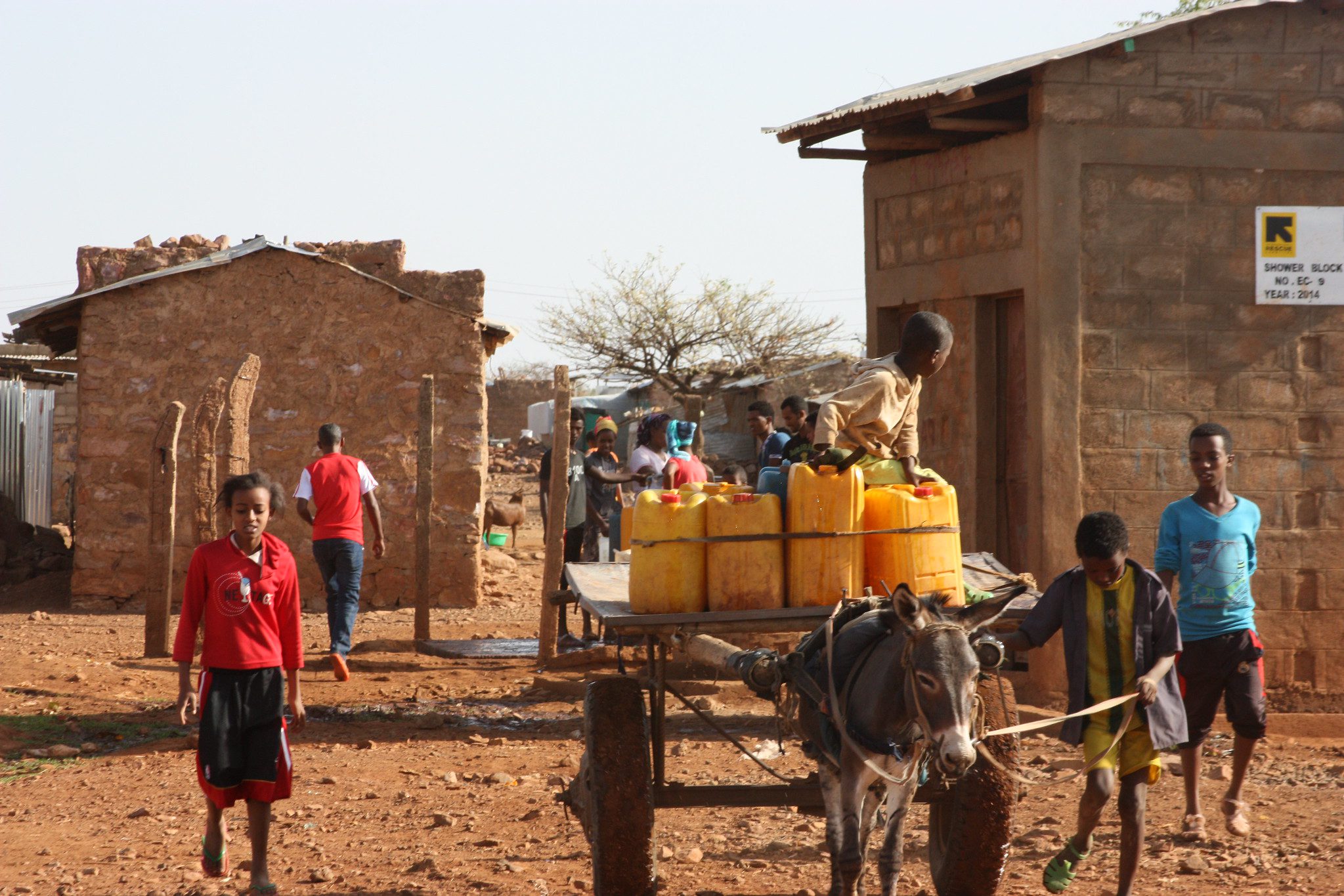
10 Facts About Eritrean Refugees: Effaced and Displaced

Eritrean RefugeesThere are approximately 321,000 Eritrean refugees living in Europe and thousands more reside in other areas around the world.

These refugees fled a country that operates on a system of invasive state control and extreme repression that consistently borders on human rights abuse. In a nation with few freedoms, it is not hard to understand why so many citizens have fled to other countries.

Here are 10 facts about Eritrean Refugees and the actions done to assist them:

  1. Eritrea is one of the world’s quickest-emptying nations with almost five thousand Eritreans leaving the country every month.
  2. There are approximately half a million Eritrean refugees residing in Ethiopia and Sudan, while Eritrea holds a population of only 6 million.
  3. The Eritrean refugees who have money are willing to pay up to $5,000 per person to flee the country according to The Guardian.
  4. Eritrean refugees are the third largest group that crosses the Mediterranean Sea by way of Libya to Italy.
  5. Many Eritreans settle in Ethiopia, a neighboring country that holds the largest number of refugees in Africa, according to Al Jazeera. Refugees in Ethiopia live in government-sanctioned camps that provide very little.
  6. There are over 40,000 Eritrean and Sudanese refugees living in Sweden and Norway, destinations many Eritrean refugees hope to reach, according to The Guardian.
  7. Some nations, including Israel, have deported Eritrean refugees to countries in Africa such as Rwanda, where their travel documents are confiscated and they are smuggled elsewhere.
  8. The conscription national service policy, where boys are required to serve in the national service at age 17 and can be required to stay for the majority of their lives, is a key reason citizens flee Eritrea according to The Guardian.
  9. Refugees are fleeing a country with no freedom of speech, religion, movement or political opposition. Citizens can be held in detention without charge or trial and many are tortured during their stay.
  10. The EU attempted to stop the flow of Eritrean refugees into Europe by giving development aid to Eritrea according to The Guardian; however, assisting those who have already escaped Eritrea and putting pressure on the Eritrean government to end abusive policies would be better use of the aid.

Reducing the number of Eritreans fleeing to the EU does not address the root of the cause. Refugees will continue to take unprecedented risks in their journey across the Mediterranean until political change occurs in Eritrea.

The above 10 facts about Eritrean Refugees are by no means exhaustive but provide insight to the current conditions of these displaced individuals.

The U.N. Commission of Inquiry on Human Rights calls Eritrea “an institution where slavery-like practices are routine,” exposing the corruption and abuses that cause so many refugees to be displaced. One can only hope that the Eritreans’ time as refugees will be limited and future change for their country is on the horizon.

– Amanda Panella
Photo: Flickr

September 4, 2016
https://borgenproject.org/wp-content/uploads/borgen-project-logo.svg 0 0 Borgen Project https://borgenproject.org/wp-content/uploads/borgen-project-logo.svg Borgen Project2016-09-04 01:30:472024-05-27 09:34:3110 Facts About Eritrean Refugees: Effaced and Displaced
Global Poverty, Human Rights, Humanitarian Aid

World Humanitarian Summit Commits to Shared Responsibility

Humanity

The world’s first-ever World Humanitarian Summit took place May 23–24, 2016 in Istanbul. U.N. Secretary-General Ban Ki-moon called for the summit in 2012 after recognizing the need to reaffirm global responsibility of our shared humanity.

Since the original announcement, the need for the summit has become increasingly urgent. 125 million people around the world are currently in need of humanitarian assistance, according to Ban Ki-moon’s report for the World Humanitarian Summit last year.

The World Humanitarian Summit included over 9,000 people–a mix of world leaders, non-governmental organizations, people affected by crises and partners in the private sector and civil society.

Packed with roundtable discussions and events, the aim of The World Humanitarian Summit is to change the way the world responds to global issues by committing to a unified goal to end suffering.

The Agenda for Humanity outlines the five core responsibilities that the summit centered on:

  1. “Global leadership to prevent and end conflict.” The first core responsibility proposes responding quickly to crises and investing in risk analysis, political unity, and peace building to prevent conflicts from occurring. Manmade conflict accounts for 80 percent of humanitarian aid that is sent, according to the WHS Executive Summary Report. Investing in conflict prevention would save billions of dollars and lives.
  2. “Uphold the norms that safeguard humanity.” The second core responsibility addresses the need to recommit to rules of war and speak out against violations. When bombs or explosives are used in populated areas, 90 percent of people that are killed or injured are civilians, according to the WHS Executive Summary Report. This responsibility presents the launch of a global campaign to stop violations of the human rights law while investing in ways to increase adherence and accountability.
  3. “Leave no one behind.” The third core responsibility is dedicated to reaching everyone affected by crises, risk and vulnerability. According to the WHS Report, 60 million people are forcibly displaced, and there is a severe lack of funding in humanitarian aid. This responsibility commits to empowering marginalized groups, addressing displacement and supporting migrants.
  4. “Changing people’s lives – from delivering aid to ending need.” The fourth core responsibility is centered on shifting the priority from delivering aid to ending the need for aid. Reinforcing the idea that support should be drawn from within, this commitment advises employing local solutions and empowering local systems that already work instead of replacing them with international aid.
  5. “Invest in humanity.” The fifth core responsibility commits to political, institutional and financial investments in stability and local systems. It proposes to decrease the funding gap and improve the efficiency of aid. The World Humanitarian Summit comes at a critical time in history – a time when the U.N. estimates that the number of people displaced has not been as high since World War II.

In his WHS Report, Ki-Moon deliberately references The Declaration of St. James’s Palace in London in 1941, the first act toward the formation of the United Nations. At St. James’s Palace in London, governments came together to pledge a unified commitment to work toward peace. Ban acknowledges that 75 years later, it is time to renew that commitment to humanity.

– Erica Rawles

Photo: Flickr

July 29, 2016
https://borgenproject.org/wp-content/uploads/borgen-project-logo.svg 0 0 Borgen Project https://borgenproject.org/wp-content/uploads/borgen-project-logo.svg Borgen Project2016-07-29 01:30:442024-12-13 17:54:42World Humanitarian Summit Commits to Shared Responsibility
Global Poverty, Human Rights

Five Nonprofits Fighting Poverty in Gaza

Poverty in Gaza

According to the World Bank, poverty in Gaza has risen to nearly 40 percent, twice as high as that in the West Bank. More than 65 percent of Gazans have inadequate access to water and sanitary services and unemployment rates are over 40 percent.

Despite the extreme hardships endured by the Gazan people, there are numerous nonprofit organizations across the globe helping to improve conditions in the Gaza Strip.

1. United Palestinian Appeal (UPA) – Washington D.C.

UPA’s mission statement is to alleviate the sufferings of Palestinians living in Gaza, the West Bank and refugee camps across the Middle East by providing direct aid through program and grants.

The Healing Through Feeling Program provides Gazan children, 50 percent of whom suffer from PTSD, with trauma counseling and community support.

Other programs include scholarship funding, medical care provisions, food security and small business education.

2. Al Mezan Center For Human Rights – Gaza City, Gaza Strip

Al Mezan’s mission is to promote the protection of human rights in Gaza through research, legal intervention and advocacy. Projects include gathering information on human rights violations, meeting with governmental bodies to discuss violations and spreading awareness.

Al Mezan also offers a variety of training courses, workshops and lectures to train lawyers and analysts on the necessary information for their professional programs.

3. Just Vision – Jerusalem, New York, Washington D.C.

Just Vision’s goal is to foster peace and build a future of freedom and equality for both Palestinians and Israelis by ending the occupation. As a team of advocates, filmmakers and journalists, Just Vision creates films about the under-documented stories of Palestinian and Israeli activists.

Award-winning films include Encounter Point, My Neighborhood, Budrus and The Wanted 18.

4. The Jerusalem Fund – Washington D.C.

The Jerusalem Fund aims to foster a greater awareness for the Palestinian cause and improve the livelihood of Palestinians living in the Gaza Strip, West Bank and diaspora.

The Jerusalem Fund works to accomplish these goals through three programs:

The Humanitarian Link, which provides direct aid and relief services to Palestinian communities; the Palestine Center, which functions as the educational branch, hosting regular lectures and redistributing published articles; and the Gallery Al-Quds, which features contemporary Arab-American and Arab artists whose work centers on issues of the Arab and Islamic world.

5. The Freedom Theater – Jenin Refugee Camp, Gaza Strip

The Freedom Theater inspires creativity and encourages theater arts to empower the youth and women living in Jenin to explore their own potential and use art as a catalyst for social change.

In 2008, the Freedom Theater launched a theater school that offers intensive three-year programs in various fields: acting, dance, movement, voice, acrobatics, improvisation, playwriting, dramaturgy, history of theatre, costume design, set design, production and stage management.

Whether it is by providing direct aid or spreading awareness, these five nonprofit organizations are saving lives, providing sustainability and making a difference in the fight against poverty in Gaza.

– Kristyn Rohrer

Photo: Pixabay

July 15, 2016
https://borgenproject.org/wp-content/uploads/borgen-project-logo.svg 0 0 Borgen Project https://borgenproject.org/wp-content/uploads/borgen-project-logo.svg Borgen Project2016-07-15 01:30:252024-12-13 17:54:46Five Nonprofits Fighting Poverty in Gaza
Global Poverty, Human Rights

Movies About Human Rights

Human_Right
Movies about human rights have the power to make the problems of distant countries personal to viewers. Whether it is a documentary or a fictional story, the impact of film can be extraordinary. These five movies are just a few of the films that highlight human rights issues throughout the world.

Hotel Rwanda (2004)

Hotel Rwanda depicts the atrocities of the 1994 Rwandan genocide. Following decades of power struggles between Hutus and Tutsis, the Hutu government sought to cleanse the country of Tutsis. This infamous movie about human rights is based on the true story of Paul Rusesabagina, who opened his hotel to Tutsi refugees during the conflict despite being a Hutu himself.

While the Rwandan genocide occurred over two decades ago, the country still faces crippling poverty. The film illustrates the effect of violence and civil war on already vulnerable nations.

Beasts of No Nation (2015)

Beasts of No Nation never reveals the country it is set in. However, the events within the film continue to happen in various regions. The main character, Agu, loses his family to the violence around him. He is eventually forced to become a child soldier and goes on to commit atrocious crimes.

Sierra Leone, Uganda and Sudan are among the various African regions where child soldiers are recruited. The film highlights the effects of poverty and conflict on children within war-torn nations.

India’s Daughter (2015)

India’s Daughter follows the aftermath of the brutal gang rape of Jyoti Singh in 2012. The event, which took place in an off duty bus, raised various concerns throughout the country about women’s safety. The documentary interviews a wide array of individuals including Singh’s parents, the parents of the accused and the bus driver.

The documentary brings India’s gender bias to the forefront as it depicts the various protests that emerged following the crime.

5 Broken Cameras (2011)

5 Broken Cameras is a documentary shot by Emad Burnat, a Palestinian farmer, in a West Bank village known as Bil’in. The film is also co-directed by Isreali filmmaker, Guy Davidi.

The documentary depicts life in the West Bank through footage of protests and Burnat’s own family. The film gives raw insight into the lives of those living within an unstable and impoverished region; it is one of the great movies about human rights.

When Elephants Fight (2015)

This film highlights the underbelly of consumerism and its implications in the Democratic Republic of Congo. Electronics companies desire minerals from this region to manufacture their products. However, this practice has led to an illegal mineral trade as well as the rise of warlords within the country.

The documentary calls for companies to hold themselves accountable for the war and poverty that plagues the nation.

Movies about human rights are important and informative as global communities work together to end abuses against the most vulnerable individuals and groups.

– Saroja Koneru

Photo: Flickr

June 20, 2016
https://borgenproject.org/wp-content/uploads/borgen-project-logo.svg 0 0 Borgen Project https://borgenproject.org/wp-content/uploads/borgen-project-logo.svg Borgen Project2016-06-20 01:30:452024-12-13 17:54:35Movies About Human Rights
Global Poverty, Human Rights, Refugees and Displaced Persons, Volunteer

How to Help Refugees and Displaced Populations

Help_Aid_Refugees
The surge of refugees fleeing conflict across the globe reached record numbers and drew widespread attention in 2015. The UNHCR reports that forcibly displaced populations are estimated to have reached nearly 60 million — up 15 million from 2012. Conflicts in Syria, Afghanistan and more than a dozen other regions have all contributed to the climbing numbers.

Forced displacement is rarely short-lived. In the same report, the UNHCR states that on average, refugees will remain displaced for 17 years. For some it will be shorter, others much longer, and for all it will be life-changing. Addressing what the UNHCR calls “A World At War” and what is repeatedly called a “refugee crisis” by the media will also not be short-lived.

Even as articles become dated and tales of flight and hardship are told and retold, the need for aid and compassion has not diminished. For those farther away from the conflict and displacement, here are five ways to help displaced populations and refugees:

1. Contribute to educational opportunities for refugees, displaced populations and populations affected by conflict.

  • Save the Children supports rebuilding and maintaining schools in Syria and neighboring countries. In addition to providing education and health services, the organization strives to create spaces for children to experience a sense of normalcy and achieve their full potential despite the conflict.
  • The Karam Foundation focuses on innovative education projects for Syrian children in Syria and Turkey. Dedicated to “help people help themselves,” the U.S.-based nonprofit allows donors to contribute to specific education projects through its website.

2. Support an organization that is providing aid on the ground.

  • Hand in Hand for Syria is working on the ground to provide emergency aid for Syria. The organization hopes this strategy will prevent people from fleeing and fill the void created by shattered infrastructure, especially health services.
  • The International Rescue Committee is responding to the climbing numbers of refugees on multiple fronts from the Middle East to the Mediterranean and even with resettlement programs in the United States.

3. Help to improve refugee living situations.

  • Shelter Box provides emergency shelter and essential supplies to help displaced populations. The organization is currently active in Syria, Lebanon and Iraqi Kurdistan to name a few.
  • Oxfam America provides clean water, sanitation and other vital supplies to combat poverty, hunger and social injustice. Active in Syria, Jordan and Lebanon, the organization also helps connect refugee families with medical and legal services.

4. Support medical services for displaced populations.

  • Medical Teams International sends teams of volunteer medical professionals and provides medical supplies to people in need. Long term, the organization supports health initiatives and collaborates to ensure its impact is sustainable.
  • Doctors Without Borders is a well-regarded organization that provides medical care to populations who need it most, including those fleeing their homes. Doctors Without Borders sets up hospitals for refugees and provides essential maternal and pediatric care for displaced populations.

5. Volunteer locally as part of a global effort.

  • You could become an online volunteer for UNHCR. The program connects volunteers online with organizations seeking to maximize the impact of their development work. Volunteers can connect with organizations based on their skills, preferred development topics or regions of interest.
  • Consider volunteering through an International Rescue Committee local office. The IRC operates 26 offices throughout the United States supported by volunteers who mentor refugees and assist them with their transition.

– Cara Kuhlman

Sources: Doctors Without Borders, Hand in Hand for Syria, The International Rescue Committee, Karam Foundation, Medical Teams International, NY Times 1, NY Times 2, Public Radio International (PRI), Save the Children, United Nations High Commissioner of Refugees (UNHCR), United Nations Volunteers (UNV)

Photo: Flickr

March 7, 2016
https://borgenproject.org/wp-content/uploads/borgen-project-logo.svg 0 0 Kim Thelwell https://borgenproject.org/wp-content/uploads/borgen-project-logo.svg Kim Thelwell2016-03-07 01:30:372024-12-13 18:05:41How to Help Refugees and Displaced Populations
Children, Global Poverty, Human Rights, United Nations

10 Ways the UNCRC Helps Children Around the World

children_around_the_world
The Convention on the Rights of the Child (UNCRC), passed in 1989, is the most widely accepted human rights treaty. This landmark piece is the first international treaty to ensure the civil, political, social, cultural and economic rights of all children under eighteen.

The treaty has 42 articles that are guided by four main principles. First, all children are equal and have the same rights. Second, every child has the right to have his or her basic needs fulfilled.

Third, every child has the right to protection from abuse and exploitation. Fourth, every child has the right to express his or her opinion and be respected.

All member states, except for the U.S. and South Sudan, have ratified the UNCRC. Here are ten ways in which the UNCRC supports children around the world:

10 Ways the UNCRC Helps Children Around the World

  1. It changed the way lawmakers and governments view children. Prior to the passing of the treaty, it was acceptable to view children as passive objects that were products of their parents. Through the UNCRC, children are viewed as distinct individuals with lives, needs and opinions separate from that of their parents.
  2. It gives power to international bodies to intervene to support children’s rights. The passage of the UNCRC gives aid agencies and relief operations more power, particularly with regards to children’s health, safety and well-being. Since 1998, for example, UNICEF has been able to rescue more than 100,000 child soldiers.
  3. It empowers international organizations into holding nations accountable. When nations are pressured or face sanctions for human rights violations, they are more likely to make efforts to fix things. Furthermore, it enables international bodies to create regulatory framework to ensure children’s rights are protected outside of their country, such as with refugees, immigrants, trafficking victims and asylum-seekers.
  4. It acknowledges that children exist and have the rights of citizens. Articles mandate that children have a right to documentation and their culture, even if it is not the culture supported by their country. This is especially important for children of marginalized ethnic groups and populations, such as the Rohingya in Myanmar and the Yadizis living under ISIS territory.
  5. It addresses children with disabilities. Children with disabilities worldwide are often excluded and marginalized, particularly when it comes to education. By saying that all children are entitled to the same rights, it empowers children whose voices are frequently silenced.
  6. It improves the quality of life for children around the world. By bringing children into the spotlight, it raises awareness for children’s rights. Working to improve the lives of children in developing countries is an indication that progress is being made. In the fight against global poverty, people are often fighting for the children. The UNCRC helped make impoverished children a more visible population for policymakers and governments to consider.
  7. It explicitly states that children have the right to go to school. As education becomes increasingly powerful as a means for empowerment, especially in developing countries, it is critical that everyone has the opportunity to go to school. Education leads to knowledge, employment and potential income, which benefits all families. By not excluding certain children from education (girls, special-needs children, children of marginalized ethnic groups), communities develop more power to fight global poverty at home and worldwide.
  8. It prohibits forced labor. Many articles mandate that children working is only acceptable if they are not exposed to hazardous conditions or violence and if the work does not interfere with their education. Most importantly, the children working must choose to; their parents cannot force them.
  9. It empowers children directly. Articles in the UNCRC state that children have the right to be heard. The old tenet that “children should be seen, not heard” is seen as an infringement against a child’s rights. A child knowing that they can stand up for themselves is a powerful thing.
  10. With it now comes the World’s Children’s Prize! Established in 2000, the World’s Children’s Prize (WCP) holds annual elections in which children vote on a children’s rights hero.

More than 36.5 million children have cast their votes in the WCP; more than 60,000 schools in 113 different countries take part in the opportunity to educate children about their rights and let them choose a hero for their cause. Past winners of the WCP include Nelson Mandela and Malala Yousafzai.

The UNCRC was a landmark human rights treaty that empowers children and those who help them. A quarter of a century later, progress still needs to be made, but much is to be celebrated.

More children receive access to health care, birth registration, nutrition and schooling, and reductions have been made in infant mortality, children trapped in forced labor, and children recruited into the armed forces.

Let’s hope that further support from policymakers, governments and international organizations continue to promote children’s rights worldwide.

– Priscilla McCelvey

Sources: Amnesty International, UNICEF, United Nations Human Rights, The World’s Children’s Prize
Photo: Flickr

September 16, 2015
https://borgenproject.org/wp-content/uploads/borgen-project-logo.svg 0 0 Borgen Project https://borgenproject.org/wp-content/uploads/borgen-project-logo.svg Borgen Project2015-09-16 01:30:562024-12-13 18:04:5310 Ways the UNCRC Helps Children Around the World
Education, Gender Equality, Global Poverty, Human Rights

The Basic Education Coalition: Education for All

education_for_all
Education plays a vital role in transforming a developing country into a fully developed nation. By educating the youth, countries are able to ensure a stronger future and promote innovation in their own communities, thus making them more globally competitive and increasing the overall quality of life.

The Basic Education Coalition is “an independent, non-profit organization working to ensure children around the world have access to quality basic education.” Working together with 17 other organizations, the Basic Education Coalition will be a key player in the development of the developing world and the bettering of children’s lives throughout the world.

In 2000, several global leaders founded the Basic Education Coalition with the established goal of Education for All (EFA), with the goal that “all children receive an education that enriches their lives, expands their opportunities, and empowers them to participate in society.” In order to set more distinct goals for themselves, the EFA developed six goals which were then endorsed by several member countries and their leaders.

One EFA goal is to expand and improve the comprehensive early childhood care and education, especially for disadvantaged children. The key aspect in this is the provision of both care and education. Often, children in extreme poverty are made to worry about where their next meal will come from, if their parents will come home and if they will be able to survive.

By providing care to these children, these troubles somewhat disappear and they are able to focus on their education, and on being children. Childhood is where a lot of a people’s personality is formed and if the global community raises kind and education-loving children, we are only creating a stronger future for ourselves.

Another key goal of EFA is “eliminating gender disparities in primary and secondary education by 2005, and achieving gender parity in education by 2015, with a focus on ensuring girls’ full and equal access to and achievement in basic education of good quality.”

In many developing countries with relatively accessible education platforms, there is a huge gender disparity with boys being much more educated than girls. In the future, this will only lead to increases in population growth, domestic violence and lower self-esteem and self-respect for many women in the developing world.

When young girls are provided with a strong education they are able to gain the confidence to run their own businesses, innovate, support their families and make decisions that benefit their futures.

This has become an increasing focus in the global community and many NGOs have been created solely to help women and girls in developing countries to gain the confidence and education to support themselves.

Some of the other EFA goals include a 50 percent improvement in levels of adult literacy levels by 2015, compulsory education for children, especially girls, and ensuring equitable access to appropriate learning and life skills programs.

By teaming up with global leaders and several different countries throughout the world, the Basic Education Coalition has created a buddy system in which every nation must make sure that their counterparts are doing well. By working together, the youth of the world will be able to grow up in a totally different, and much better, world than our own.

– Sumita Tellakat

Sources: Basic Ed, Interaction
Photo: Huffington Post

September 12, 2015
https://borgenproject.org/wp-content/uploads/borgen-project-logo.svg 0 0 Borgen Project https://borgenproject.org/wp-content/uploads/borgen-project-logo.svg Borgen Project2015-09-12 10:20:382024-05-27 09:26:35The Basic Education Coalition: Education for All
Children, Global Poverty, Human Rights, Human Trafficking

Use of Impoverished Children in Pornography


Pornography is a business globally worth $57 billion, with the United States accounting for over $11 billion. Pornography was first developed as a means to help individuals fulfill their sexual fantasies and serve as a criminal deterrent against violent crimes, but pornography has just made sex more violent. Just as the pornography industry began to flourish, a survey of U.S. college girls showed that 69.8 percent of them had been “verbally coerced” into having “unwanted sex.” And in the United Kingdom in 2006, 33 percent of all women say that they have been forced into sex. Pornography has been further exacerbated through the Internet and the emerging trend to use child victims. Statistics indicate​ that upon the legalization of pornography, emerging growth rates of failed marriages have occurred, as well as an increase in sex-related crimes.

In 2013, child pornography arrests grew by 2,500 percent. It is attributed to the demand and an impoverished supply. Families under economically desperate conditions utilize their children as vessels of income. Pornography pretends to offer economic gain to the vulnerable, many of whom are led by coercion, force or kidnapping. In general there is an issue with the way in which the poor are represented in media. The media’s use of impoverished people objectifies them, as does pornography.

Sex industry recruiters and sexual deviants alike choose from a pool of candidates who have experienced various levels of previous exploitation and remain economically desperate. In countries such as Kenya, children as young as the age of six are sold and used in child pornography. The documentary “ Working Lives” is about child sex tourism and pornography in Kenya’s coastal towns. It discusses how in Kenya, some parents send their children to have sex for foreigners for as little as one dollar.

Due to limited options, some parents choose to knowingly rent their children for pornographic or sex slave purposes. In “The Secret Child Sex Trade Hiding in Kenya’s Tropical Paradise,” viewers are introduced to a six-year-old girl suffering from signs of rape, sodomy and beatings, that occurred on film for pornographic purposes.

In the Philippines, there was a major case involving a made-to-order porn operation, with charges that include murder and torture. An Australian made a global business of using impoverished victims for sexual and violent performances based upon customer request. Here he monopolized on the poverty and was strategic when choosing the cities, local child recruiters and victims. Often, he would utilize the other poor local children to establish connections and lure in street children. The documentary “ Catching a Monster” covers methods of grooming and deviant practices to recruit the needy for pornographic use.

His youngest performer was an 18-month-old girl name Daisi, of whom he created a series of pornographic videos of her sexual abuse. All of the children used in these videos had parents that had been coerced by false promises and the opportunity to provide a better life for their children.

Many people are victims to poverty and more so generational poverty, that has passed down impoverishment from the previous generations. Many of those in vulnerable populations experience exploitation and are forced to become workers in the sex industry. For the extreme poor, many questionable work opportunities arise; pornography is one of them. Ending poverty can help to decrease victimized children in pornography.

– Erika Wright

Sources: Oh My News, Feed the Right Wolf, Huffington Post, The Crime Report,

August 21, 2015
https://borgenproject.org/wp-content/uploads/borgen-project-logo.svg 0 0 Borgen Project https://borgenproject.org/wp-content/uploads/borgen-project-logo.svg Borgen Project2015-08-21 08:48:382024-05-27 09:24:19Use of Impoverished Children in Pornography
Advocacy, Global Poverty, Human Rights, Human Trafficking

Stars Sign Open Letter to Amnesty International

Amnesty_International
More than 400 human rights advocates, including actors, directors, fashion designers and many more, signed an open letter to Amnesty International asking the organization to vote against the decriminalization of the sex industry.

The proposed policy that these advocates are referring to backs the legalization of brothels and pimping. The policy asks for the support of all acts of selling sex to be lawful, but for sex buying to remain illegal.

After learning about Amnesty International’s intention, hundreds of noticeable individuals joined an international public campaign. The campaigners urged the organization to re-evaluate their plans and to stand with those who are oppressed in the sex trade.

The letter declares that advocates agree that those who are prostituted must not be outlawed by law enforcement and that the legalization of selling sex contributes to poverty, homelessness, sexual abuse and discrimination.

Many young children who are forced into the sex trade will not earn an education and will likely contract sexually transmitted diseases. Without healthy and educated citizens, a developing area cannot improve economically.

The cycle of poverty continues because poverty contributes to the sex trade. According to Medical News Today, many families in impoverished areas sell their children into the trade. Sometimes, children and young adults will seek out the trade to earn wages for food and shelter.

Former Irish prostitute Mia de Faoite said that the policy proposal advocating these means of earnings is absolutely unacceptable.

“I can find no justification for those crimes, and I believe that no one is able to justify such human wickedness,” de Faoite said.

She also said this policy move contradicts the organization’s ideals for human rights.
“Amnesty would agree with me, I am sure, and would fight alongside me to find justice, if I asked,” de Faoite said. “This is confusing to me, and it makes no sense because, on the other hand, they are prepared to sanction the behavior that led to this crime.”

A Change.org petition that petitions a “non-profit industrial complex” by Amnesty International agrees with de Faoite. The petition states that with this new policy, the organization will ultimately be harming those who Amnesty International claims to help.

“With this proposal, Amnesty International is moving away from human rights advocacy,” the petition said.

About 500 members of the international human rights organization will meet in Ireland for Amnesty’s 32nd International Council Meeting, where they are projected to approve the decriminalization of sex work. The vicious cycle of poverty will be promoted by Amnesty International’s proposal if there is not a change similar to the one proposed in the open letter.

The letter was signed by celebrities such as author Hannah Pakula, poet Rose Styron, actress Meryl Streep, Pulitzer-Prize winning journalist Anna Quindlen, chef Alice Waters and 2008 Amnesty International Human Rights Award-winner, Lydia Cacho. Other celebrity signers include Emily Blunt, Lena Dunham, Anne Hathaway, Lisa Kudrow, Kate Winslet and Emma Thompson.

This level of support for the change has helped achieve such a grand presence in human rights that there is now a campaign on Change.org for the modification. The letter is still open for more signatures.

To sign the letter and learn more about Amnesty International’s policy, click here.

– Fallon Lineberger

Sources: Change.org, Look to the Stars, Medical News Today, Independent News Ireland
Photo: Vanity Fair

August 15, 2015
https://borgenproject.org/wp-content/uploads/borgen-project-logo.svg 0 0 Borgen Project https://borgenproject.org/wp-content/uploads/borgen-project-logo.svg Borgen Project2015-08-15 01:30:162020-03-27 13:23:30Stars Sign Open Letter to Amnesty International
Foreign Policy, Global Poverty, Human Rights

Global Magnitsky Human Rights Accountability Act

Global Magnitsky Human Rights Accountability Act
The Global Magnitsky Human Rights Act is a bill currently in the Foreign Relations Senate committee.

Sponsored by Senator Benjamin Cardin (D), the bill’s intent is to “impose sanctions with respect to foreign persons responsible for gross violations of internationally recognized human rights, and for other purposes.”

Having been introduced in January of 2014, and then reintroduced in January 2015, the bill has yet to reach the Senate floor. However, it has earned the sponsorship of Senators like Marco Rubio (R) and John McCain (R).

This bill would give the president the power to impose sanctions on any entity or government who abuses the rights of people. The definition of these abuses is in accordance with the “internationally recognized human rights.” These abuses include human trafficking and extrajudicial killings. The bill would not only serve to punish governments who are actively participating in the abuses but those who are providing financial assistance to the individual or entity wreaking havoc.

Earlier this month, the Human Rights Watch testified in front of the Senate Foreign Relations Committee, urging Congress to pass the bill.

In their testimony, they mentioned the fact that in many countries (especially those affected by Arab Spring), “conflict and repression” were unexpected consequences, affecting large quantities of people. During their testimony, they also spoke of how the U.S. and other Western democracies rarely speak harshly of the atrocities taking place.

Because of the lacking dialogue taking place in mainstream media, and in the interest of the people being affected by the negative choices made by people in high positions of power, the Human Rights Watch supported the passage of this bill so that it is “harder for authoritarian rulers, dictators and kleptocrats to recruit and maintain a coterie of supporters.”

– Erin Logan

Sources: Human Rights Watch, Congress
Photo: Sputnik

August 15, 2015
https://borgenproject.org/wp-content/uploads/borgen-project-logo.svg 0 0 Borgen Project https://borgenproject.org/wp-content/uploads/borgen-project-logo.svg Borgen Project2015-08-15 01:30:132024-12-13 17:52:07Global Magnitsky Human Rights Accountability Act
Page 29 of 45«‹2728293031›»

Get Smarter

  • Global Poverty 101
  • Global Poverty… The Good News
  • Global Poverty & U.S. Jobs
  • Global Poverty and National Security
  • Innovative Solutions to Poverty
  • Global Poverty & Aid FAQ’s
Search Search

Take Action

  • Call Congress
  • Email Congress
  • Donate
  • 30 Ways to Help
  • Volunteer Ops
  • Internships
  • Courses & Certificates
  • The Podcast
Borgen Project

“The Borgen Project is an incredible nonprofit organization that is addressing poverty and hunger and working towards ending them.”

-The Huffington Post

Inside The Borgen Project

  • Contact
  • About
  • Financials
  • President
  • Board of Directors
  • Board of Advisors

International Links

  • UK Email Parliament
  • UK Donate
  • Canada Email Parliament

Get Smarter

  • Global Poverty 101
  • Global Poverty… The Good News
  • Global Poverty & U.S. Jobs
  • Global Poverty and National Security
  • Innovative Solutions to Poverty
  • Global Poverty & Aid FAQ’s

Ways to Help

  • Call Congress
  • Email Congress
  • Donate
  • 30 Ways to Help
  • Volunteer Ops
  • Internships
  • Courses & Certificates
  • The Podcast
Scroll to top Scroll to top Scroll to top