• Link to X
  • Link to Facebook
  • Link to Instagram
  • Link to TikTok
  • Link to Youtube
  • About
    • About Us
      • President
      • Board of Directors
      • Board of Advisors
      • Financials
      • Our Methodology
      • Success Tracker
      • Contact
  • Act Now
    • 30 Ways to Help
      • Email Congress
      • Call Congress
      • Volunteer
      • Courses & Certificates
      • Be a Donor
    • Internships
      • In-Office Internships
      • Remote Internships
    • Legislation
      • Politics 101
  • The Blog
  • The Podcast
  • Magazine
  • Donate
  • Click to open the search input field Click to open the search input field Search
  • Menu Menu

Archive for category: Human Rights

Information and stories about human rights.

Human Rights

Do Sanctions Actually Make a Difference?

Sanctions
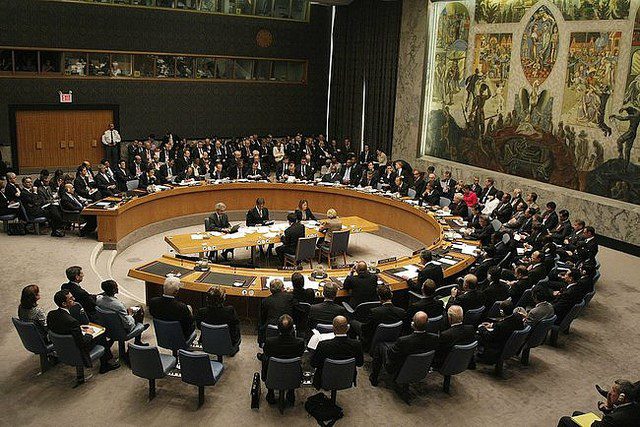
Sanctions. A frequently employed strategy to mollify human rights abuses has been marked, at best, as underwhelmingly ineffective.

In 1948, the U.N. General Assembly outlined a Universal Declaration of Human Rights, which “sets out basic rights and freedoms to which all women and men are entitled – among them the right to life, liberty, and nationality; to freedom of thought, conscience and religion, the right to work and to be educated; the right to food and housing; and the right to take part in the government.”

Unfortunately, the UDHR has been ineffective at upholding member-states to their obligations. Violent and nonviolent human rights abuses are common practice for unscrupulous governments.

According to information gathered by Amnesty International, out of the 160 countries in which data was collected, 119 countries arbitrarily restricted freedom of expression. During 2014, at least 18 countries committed war crimes or other violations of the “laws of war.”

In an effort to avoid draconian measures when correcting the irresponsible behavior of international actors, the global community has developed a pattern of implementing sanctions – the process suppressing or excluding economies from reaping the benefits of the global trade system.

Recently, however, the efficacy of sanctions has been questioned. Reports by the International Association for Political Science Students noted that sanctions disproportionately provide adverse consequences for the innocent population, but not the guilty leadership.

The now dismembered U.N. Sub-Commission on the Promotion and Protection of Human Rights issued a resolution in August 1997 where it condemned the use of sanctions as a tool of international diplomacy – further increasing skepticism on the efficacy.

Consequently, both selective and comprehensive sanctions discourage the promotion of human rights, and in fact, create counter-productive consequences – e.g. less distribution of wealth and the advent of black market business practices.

A recent example that undermines the efficacy of sanctions is the U.S. led sanctions on North Korea, which concentrated the remaining resources and wealth in Pyongyang (with the government). As a result, famished North Koreans resorted to cannibalism as an attempt to garner the necessary nutrients to survive.

Other long-standing recipients of U.S. sanctions are Iran and Cuba, which were marked as a pariah for their involvement in the sponsorship of terrorism and spread of communism, respectively. Fortunately, the U.S. has begun to normalize relations with Cuba and is likely to undergo a “fresh-start” without U.S. administered sanctions.

Some sanctions have remained intact for over 30 years without a change in behavior by the target country. At one point, the international community must begin to question the efficacy, as the primary objective to correct misguided international behavior is not achieved. Additionally, the international community must also wonder if the act of sanctioning itself is a violation of the UDHR, as the collateral damage of innocent civilians’ deaths continues to rise.

– Adam George

Photo: Flickr

December 1, 2016
https://borgenproject.org/wp-content/uploads/borgen-project-logo.svg 0 0 Borgen Project https://borgenproject.org/wp-content/uploads/borgen-project-logo.svg Borgen Project2016-12-01 08:53:592024-12-13 17:56:13Do Sanctions Actually Make a Difference?
Global Poverty, Human Rights, Hunger, War and Violence

Hunger in Yemen: Slowly Moving Imports

Hunger in Yemen
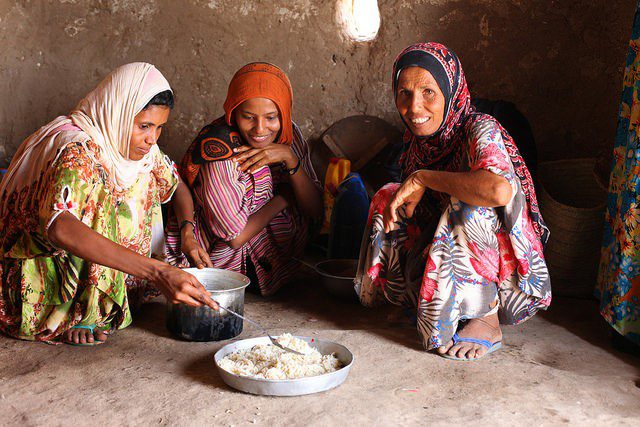
Last October, photos of an emaciated 18-year-old girl, Saida Ahmad Baghili, circulated the internet. A quick glance at this shocking photograph explains why the U.N. World Food Programme (WFP) is pleading for $258 million, which would fund food assistance for the hunger in Yemen problem until January 2017.

The WFP warns that Yemen is on the brink of famine. The 19-month civil war aggravated the inherent poverty in Yemen and worsened malnutrition for thousands of individuals including Baghili. Before the war, Yemen already had the Arab world’s lowest GDP per capita and 45 percent of its population were malnourished.

Slowly Moving Imports

Additionally, before the war, Yemen imported 90 percent of its food. Now, ships carrying food find it difficult to enter the country’s ports.

Online newspaper The Intercept explains that the Saudi-led coalition has enforced air and sea blockades on rebel-held parts of Yemen since March. The coalition allows only U.N. supervised flights and aid shipments to enter the country.

With conflict escalating and a shortage of food in local markets, prices of basic foods have increased. At one point in time, the WFP’s market analysis stated that the national average price of wheat flour was 55 percent higher compared to the pre-crisis period, which affects the hunger in Yemen problem a great deal.

The blockades also threaten  fuel needs for water pumps and generators in hospitals. Doctors Without Borders states that the restrictions on imports severely hinders medical workers’ ability to treat patients. Many Yemeni like Baghili are dying from basic diseases that are easily treatable.

The Saudi coalition denies the accusations and says it was implementing U.N. resolutions that aim to prevent weapons and ammunitions. They explained that the coalition gives aid ships immediate and regular permits to reach Yemeni ports, pointing to the opposition’s black market as the cause of their “humanitarian catastrophe.”

The Office for the Coordination of Humanitarian Affairs (OCHA) reported that in August 2016 significant delays were experienced. The report attributed the delays to reduced operational capacity. In Seleef’s port, two vessels waited for berth an average of 45 days. Since December 2015, average delays in ships entering ports have increased. This could be why the WFP estimates it takes four months from the time they receive funds for the food to reach families who need it.

A Community’s Response 

Alex Potter, a photojournalist based in Yemen, shares how the Yemeni community pours out support for each other: neighbors invite displaced people into their homes, wealthier Yemenis donate trucks of water and friends visit to help with daily tasks. She said, “In Yemen if you see your neighbor needs something, you always share.”

Yet the WFP issued an urgent statement that resources are running out. While they reached millions of people with emergency assistance in March and July, they were still forced to split rations between more families to meet the growing need throughout this problem of the hunger in Yemen.

Baghili’s photograph further highlights a shocking reality where a teenager’s parents lack the financial means to help their severely malnourished daughter. Baghili only received treatment when charitable people pooled their funds together so she could receive proper medical attention.

Many countries and people have answered WFP’s call.  Perhaps we too can become like the charitable people whose donations save the lives of those like Baghili.

– Andy Jung

Photo: Flickr

December 1, 2016
https://borgenproject.org/wp-content/uploads/borgen-project-logo.svg 0 0 Borgen Project https://borgenproject.org/wp-content/uploads/borgen-project-logo.svg Borgen Project2016-12-01 08:32:492024-12-13 17:56:11Hunger in Yemen: Slowly Moving Imports
Human Rights, War and Violence

Islamic State’s Use of Mustard Gas: Human Rights Abuses

Mustard Gas
The Islamic State has been using chemical weapons including the poison known as mustard gas on Iraqi and coalition forces, as well as on civilian targets. Human Rights Watch has called on the Iraqi government to respond by warning civilians in conflict zones about the use of chemical agents, isolating contaminated areas and providing treatment for victims of chemical weapon attacks. If the Iraqi government cannot do this, it should seek assistance from other Chemical Weapons Convention member countries.

According to the Pentagon, mustard gas has been stockpiled and used by the Islamic State in the past, and as the battle for Mosul continues, U.S. forces say that they expect to see it used again. The head of the Islamic State’s chemical weapons program has confirmed that the Islamic State has been stockpiling these weapons with the intention of using them in the battle for Mosul. In recent weeks, there have been several reports of chemical attacks in the areas surrounding Mosul.

Mustard gas was first and most famously used as a chemical warfare agent during World War I, and it has been used as a method of psychological warfare as well. Although exposure to mustard gas is rarely fatal, the chemical remains infamous for its invisibility, odorlessness and lack of immediate symptoms.

According to the Center for Disease Control, the effects of mustard gas depend on how much people are exposed to, the length of their exposure and the method of exposure. Exposure can occur through contact with the skin or eyes or by drinking contaminated water or eating the gas in liquid form.

Once exposed, it can take up to 24 hours for symptoms to appear. These symptoms usually include redness and itching of the skin, irritation of the eyes, respiratory tract problems such as shortness of breath, sneezing, a bloody nose, abdominal pain, fever, anemia and bone weakness.

The long-term effects of mustard gas can include second- and third-degree burns, chronic respiratory disease, blindness and cancer. Due to the severity of these symptoms, the use of mustard gas by the Islamic State is extremely concerning.

The World Post reported the story of a 4-year-old girl who was killed by mustard gas deployed by the Islamic State in Taza, Iraq. Her mother was standing beside her when she was killed and suffered severe burns from the gas.

Human Rights Watch has documented several other chemical weapon attacks in late September and early October. These attacks constitute war crimes under the Rome Statute of the International Criminal Court. For the safety of civilians and soldiers in Iraq, it is imperative that the government follow the guidelines set by Human Rights Watch and prevent chemical attacks by the Islamic State.

– Eva Kennedy

Photo: Flickr

November 30, 2016
https://borgenproject.org/wp-content/uploads/borgen-project-logo.svg 0 0 Borgen Project https://borgenproject.org/wp-content/uploads/borgen-project-logo.svg Borgen Project2016-11-30 01:30:332024-12-13 17:56:11Islamic State’s Use of Mustard Gas: Human Rights Abuses
Global Poverty, Human Rights, Refugees, Refugees and Displaced Persons

Ten Facts About Refugees in Kenya Forced to Return to Somalia

During the early 1990s, Kenya formed a repatriation program, the Dadaab refugee camp, for thousands of displaced Somalians escaping rebel attacks, drought, continuous violence and abuse.

  1. Islamic extremists displaced thousands of Kenyans housed in the Dadaab refugee camp. Now the country is requesting that more than 260,000 refugees in Kenya return to Somalia for concern of Somalia-based al-Shabab Islamic extremists launching attacks within the Kenyan camp. After numerous deadly attacks from 2011-2015, the government announced in May the closure of Dadaab for immediate national security interests.
  2. World leaders don’t agree with deporting refugees back to Somalia. Kenyan officials are tentatively closing Dadaab at the end of 2016. However, the Human Rights Watch says sending refugees back to Somalia doesn’t meet international standards of a voluntary return.
  3. They have Somalian blood, but are Kenyan-bred. On average, refugees are in exile for about 20 years, according to the U.N. refugee agency. In Northeastern Kenya, nestled in close proximity to Somalia’s border, the Dabaab camp has been home to residents for a quarter of a century. Some have never stepped foot on Somalian soil.
  4. Refugees are being lured with a cash advance to return. Many Somalian refugees were told they would be deprived of a $400 U.N. cash grant because of forced extradition, according to the Human Rights Watch. Dadaab refugees have been given inadequate information about potential dangers during their forced exit.
  5. Resources in Somalia don’t exist for the influx of Kenyan refugees to return. Some Somalian refugees who returned to their home country have fled back to Kenya again due to continuous violence and nonexistent resources and services. The deported refugees seeking asylum were unable to reestablish themselves in Somalia, and now they are denied access to refugee registration, or asylum procedures in Dadaab. This leaves a large percentage of displaced peoples without legal status or access to food.
  6. Force and coercion used on refugees are not tolerated by world leaders. While the Kenyan President Uhuru Kenyatta claims the process of repatriation will be voluntary and humane, countries internationally say they will reprimand evictions using force. However, many refugees inhabiting Kenya agree to the return for fear of coercion and force if they stay in Kenya, but they will face danger, persecution and hunger in Somalia.
  7. Refugees are involuntarily returning to insecure conditions and poverty. “The Kenyan authorities are not giving Somali refugees a real choice between staying and leaving, and the UN refugee agency isn’t giving people accurate information about security conditions in Somalia,” said Bill Frelick, refugee rights director at Human Rights Watch. “There is no way these returns can be considered voluntary.”
  8. Kenyan refugees have no choice but to leave. Dadaab’s refugees reported feeling trapped by the government’s decision to shut down the camp. Many are afraid of returning to Somalia, but simultaneously fear the handcuffs and deportation of staying in Dadaab until the end of the year.
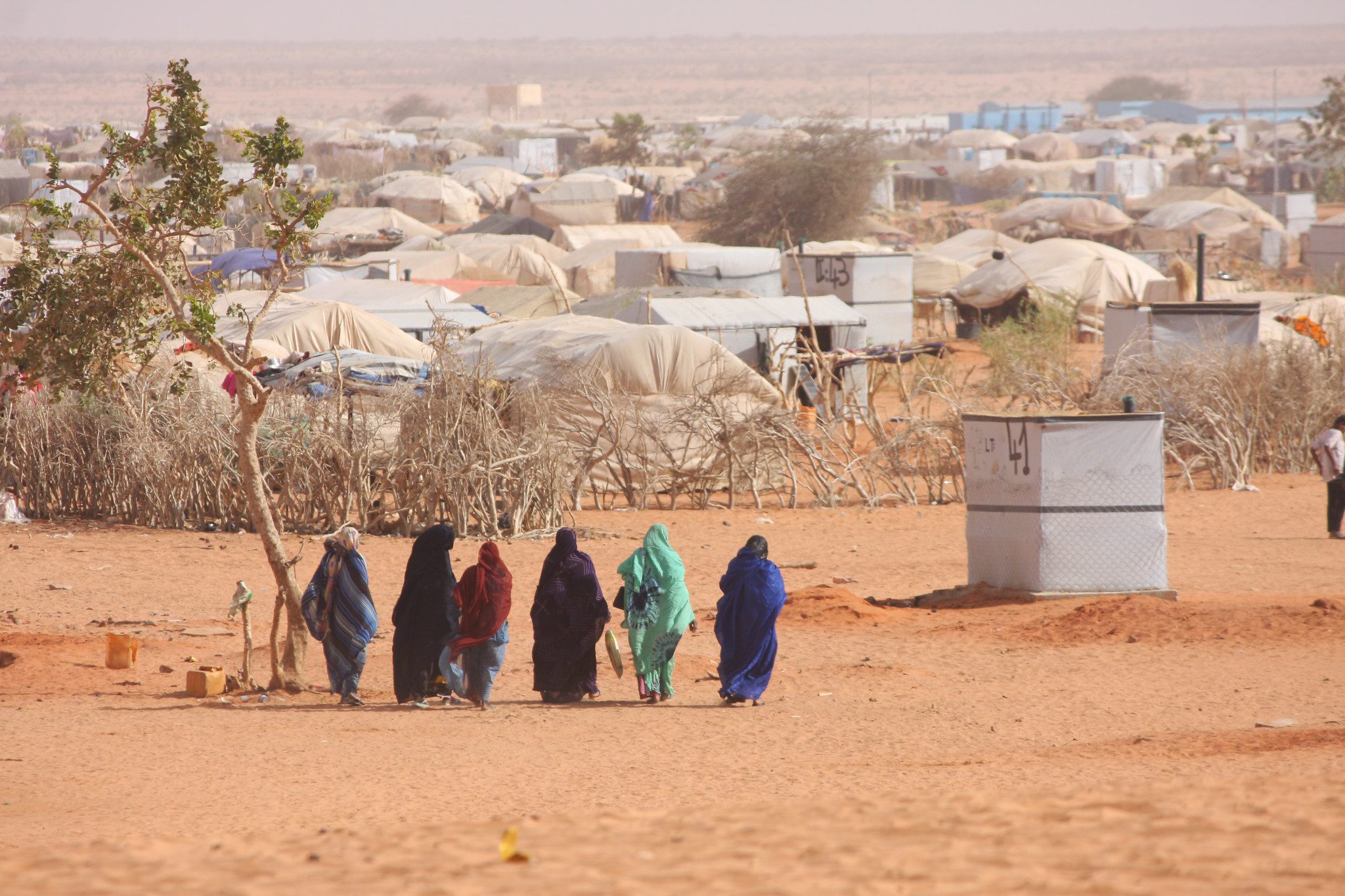
  9. The Dadaab refugee camp is a city full of resources and services. The refugee camp is the largest safe haven worldwide, and was initially created to host roughly 90,000 refugees searching for relief from rebels fighting the Somalian government in 1991. Now it spans five camps with makeshift cinemas, soccer leagues, bustling businesses, schools, hospitals and a graveyard.
  10. Refugees are forced into danger and left without community support. In mid-August, roughly 24,000 Somalian refugees had left Dadaab and gone back to their country of origin since the beginning of the repatriation process in December 2014. Kenya’s government reported to Human Rights Watch that in mid-August they were aiding the return of 1,000 refugees per day. Negotiations of repatriations are ongoing because refugees aren’t being sufficiently assisted upon their return to Somalia.

– Rachel Williams

Photo: Flickr

November 10, 2016
https://borgenproject.org/wp-content/uploads/borgen-project-logo.svg 0 0 Borgen Project https://borgenproject.org/wp-content/uploads/borgen-project-logo.svg Borgen Project2016-11-10 01:30:142024-05-27 23:53:59Ten Facts About Refugees in Kenya Forced to Return to Somalia
Global Poverty, Human Rights

The Interdependent Relationship Between Poverty and Human Rights

Poverty and Human Rights
Some individuals assume that issues, such as poverty and human rights violations, can be solved separately from one another. However, what many fail to realize is that poverty and the denial of human rights are problems that are interdependent issues. In other words, where there is poverty, there are human rights violations and vice-versa.

Poverty is more than just individuals lacking in quality employment and material goods; it also incorporates social and physical goods. Social and physical goods are characterized by the Universal Declaration of Human Rights as a right to cultural identity, right to equality, freedom to live with respect and dignity, freedom from violence and degrading treatment, freedom of political opinion, education, personal security and many other basic human rights.

According to Amnesty USA, “Gross economic and social inequality is an enduring reality in countries of all political ideologies, and all levels of development. In the midst of plenty, many are still unable to access even minimum levels of food, water, education, healthcare and housing. This is not only the result of a lack of resources, but also unwillingness, negligence and discrimination by governments and others. Many groups are specifically targeted because of who they are; those on the margins of society are often overlooked altogether.”

It is estimated that one-third of all human deaths occur because of poverty associated reasons. These poverty-related reasons are considered easily preventable such as access to clean water, nutrition and access to quality health care because they fall under basic human rights.

This relationship is further validated by statistics. The Human Rights Watch reports that those who live in dire poverty within low income or lower-middle income countries, also live in homes where the head of household is part of an ethnic minority group.

In recent years, the Office of the U.N.’s High Commissioner for Human Rights (OHCHR) in collaboration with other U.N. partners, has recognized this relationship between poverty and human rights violations. A few of the approaches that these organizations are utilizing are empowering the poor, providing international assistance and cooperation and strengthening human rights protection systems.

Currently, these organizations are collaborating with multiple governments in order to employ poverty reduction strategies as a way to ensure that vulnerable groups have access to their basic human rights.

– Shannon Warren

Photo: Flickr

November 1, 2016
https://borgenproject.org/wp-content/uploads/borgen-project-logo.svg 0 0 Borgen Project https://borgenproject.org/wp-content/uploads/borgen-project-logo.svg Borgen Project2016-11-01 09:19:082020-05-26 10:42:05The Interdependent Relationship Between Poverty and Human Rights
Global Poverty, Human Rights, Refugees

Citizens Fleeing Eritrea because of Poverty and Forced Labor

Fleeing EritreaSince 2012, one in every 50 Eritreans (nearly twice the ratio of Syrians fleeing from civil war) has sought asylum in Europe. According to the U.N., 5,000 Eritrean men and boys are leaving their families and fleeing Eritrea each month.

High Rates of Fleeing

The U.N. estimates that 400 thousand Eritreans, or nine percent of the population, have fled in recent years. According to the U.N. High Commissioner for Refugees (UNHCR), nearly one-quarter of the 132 thousand migrants arriving in Italy between January and September of 2015 were Eritreans.

Poverty in Eritrea is extreme. The CIA World Factbook reports the nation’s GDP purchasing power as $8.7 billion, ranking Eritrea 162nd in the world. Unemployment in the country is estimated at just 8.6%, but the poverty rate is estimated at 50%. More specific numbers are nearly impossible to acquire due to Eritrea’s secretive nature.

Reasons for Leaving

Why are people fleeing Eritrea? In June 2015, the UNHCR released a 500-page report detailing the systematic, widespread and gross human rights violations going on in Eritrea, violations that have created a climate of fear in which dissent is stifled. The report found that a large proportion of the population was being subjected to forced labor and imprisonment.

According to the report, the people of Eritrea are not ruled by law, but by fear. The Eritrean government denied repeated requests by the commission for information and access to the country. To gain insight into the situation, the commission conducted 550 confidential interviews with Eritrean witnesses in eight countries and received an additional 160 written submissions.

Conscription for 18 months is required of each Eritrean adult but is often extended indefinitely and carried out for years in harsh and inhumane conditions. Thousands of conscripts are subjected to forced labor that effectively abuses, exploits and enslaves them.

According to the UNHCR’s report, women conscripts are at extreme risk for sexual violence during national service. All sectors of the economy rely on forced service, and all Eritreans are likely to be subject to it at some point during their lives. The commission concluded that, “forced labor in this context is a practice similar to slavery in its effects and, as such, is prohibited under international human rights law.”

Mandatory conscription has not remedied poverty in Eretria. Instead, it has exacerbated it. Commission chair Sheila B. Keethrauth urged commitment from the international community to end the climate of fear in Eritrea.

“Rule by fear — fear of indefinite conscription, of arbitrary and incommunicado detention, of torture and other human rights violations — must end,” said Keethrauth.

– Aaron Parr

Photo: Flickr

November 1, 2016
https://borgenproject.org/wp-content/uploads/borgen-project-logo.svg 0 0 Borgen Project https://borgenproject.org/wp-content/uploads/borgen-project-logo.svg Borgen Project2016-11-01 01:30:582024-05-27 23:53:25Citizens Fleeing Eritrea because of Poverty and Forced Labor
Global Poverty, Human Rights

The Curse of Oil and its Effects on Poverty in Equatorial Guinea

The Curse of Oil and its Effects on Poverty in Equatorial Guinea
The discovery of crude oil in the Gulf of Guinea during the mid-1990s resulted in drastic increases in government revenue in Equatorial Guinea. Although the country is one of the wealthiest in Sub-Saharan Africa, two-thirds of citizens live on less than $1 per day, making the rate of poverty in Equatorial Guinea quite high.

President Teodoro Obiang Nguema Mbasogo is the longest to hold executive office in Africa since taking leadership after a military coup in 1979. Since then, Equatorial Guinea gained the status of the continent’s sixth-largest producer of oil. The country is home to Africa’s highest GDP per capita, while its 2014 rank on the U.N.’s Human Development Index landed at 144 out of 187 states.

Effects of government corruption extend far beyond the economic sector and continue to negatively impact education, child and infant mortality rates as well as access to sanitation. The Center for Economic and Social Rights (CESR) reports that only 41% of individuals in the most populated areas have access to clean drinking water. The CESR also notes that Equatorial Guinea has the third-highest number of deaths of children under 1 year of age in Sub-Saharan Africa. The rate of children in Equatorial Guinea to finish primary school is under 60%, while the rate of boys enrolled in secondary school is double that of girls, according to CESR findings.

Equatorial Guinea’s per capita income of $26,000 along with 76.8% of the country in poverty is exemplary of institutional inequalities that foster conditions for extreme poverty. High corruption, lack of natural resource revenue and support of regimes are vital contributors to poverty in Equatorial Guinea.

U.S. shift in energy policy during 2001 to focus on attaining oil from African countries without foresight for the future of local societies has been key in fostering the continuation of poverty.

Kenneth Roth, executive director of Human Rights Watch, condemned former Vice President Cheney’s energy plans due to the lack of attention paid to the strategy’s impact on developing nations. The report specifies the potential of U.S. utilization of West African oil as the region was “expected to be one of the fastest-growing sources of oil and gas for the American market.” The Cheney Report’s main aim was to eliminate hurdles to increase the attainment of foreign oil by the U.S., should they regard legal, economic, political or logistical obstacles.

In a study conducted by Elise Aiken, one-third of the planet’s civil wars are happening in countries where oil production dominates. Aiken attributes this to three main factors: “economic instability caused by fluctuating oil prices, support of insurgencies through black market sales or extortion and encouragement of separatism because of wealth imbalance.” She also notes that oil-rich countries are not guaranteed to have outbreaks of conflict and those governments that “limit corruption and put their windfalls to good use rarely face unrest.” African communities are more likely to face strife when oil production is prominent due to scarce educational backgrounds, unstable economies and in areas with minimal law enforcement and high corruption.

A report by Global Witness attributes the “curse of oil” to a lack of transparency of governments to enclose the amount of revenue from oil production. The report also recommends that the catalytic shift in increasing transparency would come from the implementation of U.S. legislation to enact corporate requirements to enclose revenue reports.

Tutu Alicante, native to the island of Annobon in Equatorial Guinea, is the founder of the first human rights advocacy and capacity-building initiative focused solely on the country called EG Justice. Alicante became passionate about taking action when the military came to his village on orders to eliminate young men in opposition to the regime.

The insurgents were arrested, tortured and publicly executed before the military burned down Alicante’s family home. Five months later, he went to the U.S. with a mission to end the violence through his education. After earning a J.D. from the University of Tennessee and an LLM from Columbia University Law School he now works to increase the transparency of income from natural resources and is a legal adviser for human rights organizations worldwide.

Strides made by activists like Alicante to secure human rights, while promoting natural resource revenue reform is vital to altering the infrastructure that fosters corruption and relieving extreme poverty in Equatorial Guinea.

– Amber Bailey

Photo: Flickr

October 28, 2016
https://borgenproject.org/wp-content/uploads/borgen-project-logo.svg 0 0 Borgen Project https://borgenproject.org/wp-content/uploads/borgen-project-logo.svg Borgen Project2016-10-28 01:30:582024-12-13 17:55:44The Curse of Oil and its Effects on Poverty in Equatorial Guinea
Global Poverty, Human Rights, Refugees, Refugees and Displaced Persons

German Companies Give Refugees in Germany a Chance

Refugees in GermanyGerman chancellor Angela Merkel has made refugees in Germany a priority. As the Syrian refugee crisis unfolded, the chancellor decided on an open-door policy, which allowed over one million refugees to resettle in Germany. Recently, Merkel urged German corporations to integrate refugees into companies more quickly, arguing that refugee employment will support the German economy. And there is no shortage of refugees in Germany who are ready to work; the latest reports provided by the Federal Employment Agency state that 346,000 people with asylum status sought employment in the month of August alone.

Large German companies are hesitant to hire refugees for a myriad of reasons. Companies argue that they do not want to risk their productivity by employing refugees who don’t currently possess the necessary skills. Companies may also have qualms about the fact that many refugees have yet to become fluent in German, and that 80 percent of asylum seekers do not possess a primary- or secondary-level education.

Legal issues still remain, such as incomplete paperwork for asylum approval and a lack of proper identification for background checks. Merkel and some German companies, however, are working to make it easier for refugees to land jobs that not only provide income but also the skills necessary to be qualified contenders in the job market.

Despite the trepidation of some German companies towards refugee employment, many are using the influx of people to their advantage. Germany’s national rail carrier, Deutsche Bahn, announced that over the next two years it will create room for an additional 150 refugees in its qualification program, which includes German language courses. Deutsche Post currently employs more than 100 refugees, and national internet service provider Deutsche Telekom plans to hire 75 refugees through an apprenticeship program as well. Companies such as Mercedes, Siemens and Daimler have even created pre-training programs to prepare refugees for apprenticeships.

With the support of German companies, refugees in Germany can build better lives.

– Mariana Camacho

Photo: Flickr

October 4, 2016
https://borgenproject.org/wp-content/uploads/borgen-project-logo.svg 0 0 Borgen Project https://borgenproject.org/wp-content/uploads/borgen-project-logo.svg Borgen Project2016-10-04 01:30:352020-06-05 10:51:53German Companies Give Refugees in Germany a Chance
Global Poverty, Human Rights

Bride Burning in India Becomes a Thing of the Past

Bride Burning_India
The human rights tragedy of bride burning occurs when individuals drench and burn a female bride using flammable liquid after she has not procured enough dowry money for the groom’s family. Although bride burning occurs in several countries like Pakistan and Bangladesh, the practice is most common in India and has been one of the country’s major issues for decades.

Bride Burning

In India, bride burning accounts for the death of at least one woman every hour. According to data from the National Crime Records Bureau, over 8,000 reported cases of dowry deaths occurred in 2010. This travesty is related to the ancient tradition of dowry and society’s effects of poverty. A dowry is an exaction of money or material goods given to the groom’s family as a wedding token. Most families who require a high dowry do so to advance their economic situations.

Bride burning occurs when the groom’s family believes they have not received enough money for their son at the time of the wedding. The family of the groom may be from a higher caste, publicly known, or just want more money.

Parental Control

Syed, a man from Chennai, India, blames his family’s high dowry as the reason why he is still unmarried at age 35. When he asked his mother why she demands such a high dowry from the bride, she says, “We have spent so much on you, for your education, for raising you and now we will marry you off and most of the money you earn will go to your wife. So she will benefit from all the money we spent on you. For that, they can pay an amount to have our son.”

This story is an example of the views of many Indian parents. Some males are opposed to dowries but in the end, their parents are the determining factor.

Dowry Prohibition Act

In 1961, India established the Dowry Prohibition Act. The law banned paying and receiving dowries and set penalties for violators. Some amendments have been proposed or added in reference to the Act over the years. Additionally, the Indian Penal Code tailored their law in 1983 to specifically tackle dowry-related issues. The Code also added penalties for harassment of a woman by her marital family.

In 2014, the National Commission for Women in India proposed several amendments to the Dowry Act. These amendments would redefine the word “dowry” and included penalties and provisions for misuse of the act. Although these amendments did not prove favorable, they were a step in the right direction in bringing forward legislation to protect women.

Several women’s rights organizations in India help provide victims with places to stay and counseling sessions. The government also started numerous grass-roots organizations to provide family counseling. The incentive is to promote, mediate, and strengthen family ties.

With the help of global awareness and proposed legislation, India will be able to tackle its patriarchic and misogynistic perspective towards women and the poor. One way to prevent bride burning can be through education, narrowly tailored laws and greater public awareness.

– Needum Lekia

Photo: Flickr

September 26, 2016
https://borgenproject.org/wp-content/uploads/borgen-project-logo.svg 0 0 Borgen Project https://borgenproject.org/wp-content/uploads/borgen-project-logo.svg Borgen Project2016-09-26 01:30:472020-06-10 12:19:47Bride Burning in India Becomes a Thing of the Past
Activism, Human Rights, Refugees, Refugees and Displaced Persons

Ten Facts About North Korean Refugees

d
The North Korean refugee situation is not one to be taken lightly. While the American media predominantly focuses on the recent refugee crises in Syria and other Middle Eastern countries, the totalitarian regime of North Korea impedes on the human rights of North Korean refugees everyday and such injustices cannot be ignored.

10 Facts about North Korean Refugees

  1. The people who live in North Korea are governed by Kim Jong-un under a completely totalitarian regime. Totalitarianism as a form of government theoretically prohibits individual freedom and expression; all aspects of an individual’s life are subject to the government’s authority. As such, media access and information about life outside of North Korea is extremely restricted.
  2. Most North Korean refugees defect to either China or South Korea. Refugees must usually travel through China to reach South Korea, as the border between North and South Korea is extremely regulated.
  3. South Korea’s media usually does not publicize individual defections, but large groups of North Koreans who defect all at once, such as the group of thirteen restaurant workers who left North Korea in April 2016, are more likely to be reported.
  4. The government of South Korea offers citizenship to all North Korean refugees who legitimately try to claim refugee status. The people seeking refuge are extensively interviewed to filter out any North Korean spies. As of May 2016, around 29,000 North Korean refugees live in South Korea.
  5. South Korea also offers reorientation classes for refugees from NK. These courses teach refugees basic life and job skills that don’t apply in North Korea, such as how to withdraw money from an ATM or shop in a Western-style supermarket.
  6. If any refugees from NK manage to escape to China, most face the fear of Chinese government discovery and the forcible repatriating that follows. Despite a signatory on the United Nations convention on refugees stating that China is not obligated to repatriate people seeking refuge, China still cooperates with the North Korean government and will even pay Chinese citizens to turn in undocumented refugees.
  7. Once they arrive back in North Korea, the refugees generally face torture, harsh physical labor and internment in political prisoner camps. It is therefore important to make sure people who want to leave North Korea can leave without fear of repatriation and punishment for leaving their country of birth.
  8. Organizations like Liberty for North Korea use donations to provide rescue and rehabilitation for North Korean refugees without any direct cost to the refugees themselves. It costs about $3,000 to fully rehabilitate one refugee. So far they have rehabilitated 505 refugees.
  9. As of May 2016, over 200,000 North Korean refugees live secretly in China. Most of them live in fear of repatriation and simply want to move on to South Korea or another country that will offer legal protection to refugees. However, tightly restricted travel between China and other countries’ borders often prevents such an opportunity.
  10. Many refugees from NK suffer from a host of mental health problems, including but not limited to depression and PTSD, even after they leave North Korea.

The cooperation of the Chinese with North Korea’s government makes the Chinese government complicit in the refugee injustices. North Korean refugees need help, and they’re looking to the rest of the world for aid.

– Bayley McComb

Photo: Liberty in North Korea

September 19, 2016
https://borgenproject.org/wp-content/uploads/borgen-project-logo.svg 0 0 Borgen Project https://borgenproject.org/wp-content/uploads/borgen-project-logo.svg Borgen Project2016-09-19 01:30:562020-06-25 23:20:04Ten Facts About North Korean Refugees
Page 28 of 45«‹2627282930›»

Get Smarter

  • Global Poverty 101
  • Global Poverty… The Good News
  • Global Poverty & U.S. Jobs
  • Global Poverty and National Security
  • Innovative Solutions to Poverty
  • Global Poverty & Aid FAQ’s
Search Search

Take Action

  • Call Congress
  • Email Congress
  • Donate
  • 30 Ways to Help
  • Volunteer Ops
  • Internships
  • Courses & Certificates
  • The Podcast
Borgen Project

“The Borgen Project is an incredible nonprofit organization that is addressing poverty and hunger and working towards ending them.”

-The Huffington Post

Inside The Borgen Project

  • Contact
  • About
  • Financials
  • President
  • Board of Directors
  • Board of Advisors

International Links

  • UK Email Parliament
  • UK Donate
  • Canada Email Parliament

Get Smarter

  • Global Poverty 101
  • Global Poverty… The Good News
  • Global Poverty & U.S. Jobs
  • Global Poverty and National Security
  • Innovative Solutions to Poverty
  • Global Poverty & Aid FAQ’s

Ways to Help

  • Call Congress
  • Email Congress
  • Donate
  • 30 Ways to Help
  • Volunteer Ops
  • Internships
  • Courses & Certificates
  • The Podcast
Scroll to top Scroll to top Scroll to top