• Link to X
  • Link to Facebook
  • Link to Instagram
  • Link to TikTok
  • Link to Youtube
  • About
    • About Us
      • President
      • Board of Directors
      • Board of Advisors
      • Financials
      • Our Methodology
      • Success Tracker
      • Contact
  • Act Now
    • 30 Ways to Help
      • Email Congress
      • Call Congress
      • Volunteer
      • Courses & Certificates
      • Be a Donor
    • Internships
      • In-Office Internships
      • Remote Internships
    • Legislation
      • Politics 101
  • The Blog
  • The Podcast
  • Magazine
  • Donate
  • Click to open the search input field Click to open the search input field Search
  • Menu Menu

Archive for category: Human Rights

Information and stories about human rights.

Global Poverty, Human Rights, Water

Water Privatization’s Biggest Offenders

Water Privatization’s Biggest Offenders-TBP
An estimated 783 million people worldwide lack access to clean drinking water. Despite the importance of expanding access to this basic building block of life, many companies instead view water as a commodity to be bottled and sold at the expense of the world’s poor and the environment.

Bottled water is incredibly wasteful. The bottle itself also leads to widespread environmental damage, with more than 85% of globally consumed bottles being thrown in the trash, as opposed to being recycled. Furthermore, 10% of all plastic reaches the ocean, leading to the deaths of an estimated one million birds and marine animals yearly.

Yet, if the environmental impact of bottled water is disgraceful, its impact on human rights is horrifying.

Fiji Water has nearly exclusive access to a 17 mile aquifer on the north coast of Fiji while many Fijians have lived with water shortages resulting in rations as low as 4 gallons of water per family per week. Coca-Cola’s extraction of water in India to produce Dasani, meanwhile, has resulted in water shortages for over 50 villages.

Water extraction has also led to a variety of health problems. The inadequate and unclean water supply in Fiji, for instance, has lead to typhoid outbreaks and parasitic infection. The pollution caused by Coca-Cola through its Indian bottling plants has included dangerous compounds such as lead.

Of course, the causation of health problems through privatization only brings to attention a broader issue in the bottling and privatization of water—the philosophical denial of the right to water. Nestle came under fire in 2013 after the emergence of a video of CEO Peter Brabeck stating that water is not a human right, but a commodity to be given a market value and sold. Nestle owns over 15 bottled water brands, including Poland Springs and San Pelligrino, and has been criticized for its sale of Nestle Pure Life water to the developing world at the expense of the development of clean-water infrastructure. The sale and purchase of bottled water on its own denies the right to water as an infrastructural need, and instead treats it as a commercial product through which the wealthy continue to benefit at the expense of the world’s poor.

Protecting the right to water, globally, is highly important. It is a right which must exist to protect the health, agriculture and infrastructure of the developing world. Water privatizations, and the actions of the companies that control significant portions of the world’s water supply, deny the important progress to be made on this front.

– Andrew Michaels

Sources: Food Is Power, Mother Jones, World Watch, The Guardian, UN Water, Huffington Post,
Photo: Food and Water Watch

July 17, 2015
https://borgenproject.org/wp-content/uploads/borgen-project-logo.svg 0 0 Borgen Project https://borgenproject.org/wp-content/uploads/borgen-project-logo.svg Borgen Project2015-07-17 09:12:392024-05-26 23:26:28Water Privatization’s Biggest Offenders
Global Poverty, Human Rights, Hunger

The Struggle of Immigrants at Sea in Southeast Asia

The Struggle of Immigrants at Sea in South-East Asia
Imagine living in a country which does not even consider you a citizen solely because of your religious beliefs, and now imagine trying to leave such a country, only to be turned away by several others, leaving you stranded in the ocean with dwindling food supplies and no clean water.

This horrible scenario has been a reality for around 11,000 Rohingya Muslims who are attempting to flee the country of Myanmar. The Rohingya and Bangladeshi peoples have been fleeing from Myanmar for many years as a result of religious persecution and in search of new jobs respectively.

Usually, immigrants have relied on normal passages to allow legal entry into their destinations, but this is being cracked down on. With increasing populations, countries such as Malaysia are being forced to make tough decisions when it comes to the plight of these immigrants’ lives.

In the past, the Rohingya people have paid human traffickers to smuggle them into neighboring countries such as Thailand, Indonesia, and Malaysia, but with populations rapidly increasing, Malaysia has blockaded the north-western border to prevent immigrants from entering Thailand. With more and more countries turning away immigrants, or “boat-people,” as the locals refer to them, many have taken to the sea, but with traffickers being highly persecuted, they are often left abandoned at sea.

Several ships have already sunk and many local fishermen have been attempting to rescue what passengers they can. However, no good deed goes unpunished. Fishermen have been instructed not to rescue any migrants unless their boat is sinking, and some have even had to watch people drown because entry via boat would deem an illegal migration into the country.

Luckily, 3000 individuals have been rescued from the abandoned boats, but hospitals in Malaysia do not have the means to treat all of the individuals suffering from starvation, dehydration and sickness.

The mayor of one of the coastal towns receiving “boat-people” has called for the necessity of aid from NGOs and the World Health Organization. These are small island towns which do not have the capacity to care for such a large number of people. Many surviving immigrants recount major fights over food on the boats.

Because people were stranded for such long periods of time, it is an absolute wonder that so many managed to survive. However, there are still 8,000 individuals stranded at sea. The U.N. has condemned the refusal of immigrants from Myanmar by these countries. Even with help on the way, there is growing concern that time is running out.

One survivor stated, “We were hoping that more ships would be found, and that more people would be rescued and allowed to come onto shore. Unfortunately, this did not seem to have happened.”

While fishermen continue to attempt to provide as much aid as they can to the individuals stranded at sea, it is high time the government intervened and rescued these ‘boat-people’. Regardless of an individual’s religious background or ethnic make-up, everyone deserves to be rescued. This is an atrocity which can soon turn into a tragedy, hopefully these people can find safe homes soon.

– Sumita Tellakat

Sources: BBC, IB Times,
Photo: Aljazeera

July 15, 2015
https://borgenproject.org/wp-content/uploads/borgen-project-logo.svg 0 0 Borgen Project https://borgenproject.org/wp-content/uploads/borgen-project-logo.svg Borgen Project2015-07-15 11:50:022024-06-04 01:08:10The Struggle of Immigrants at Sea in Southeast Asia
Gender Equality, Global Poverty, Human Rights

Human Rights and Gender Equality on the Rise in Central and West Africa

Human Rights and Gender Equality on the Rise in Africa-TBP
Recently in Dakar, Senegal, UNAIDS and the Alliance Nationale Contre le Sida, or ANCS, held a three-day capacity workshop. This workshop was designed to discuss the continued political, legal, cultural and social challenges that hinder efforts addressing the HIV epidemic in Africa.

So then, why are human rights and gender equality so important? According to UNICEF, “A lack of respect for human rights fuels the spread of HIV and exacerbates the impact of the epidemic … at the same time, HIV undermines progress in the realization of human rights and hampers the scale-up of high-impact interventions.” Without proper education of human rights and gender equality, atrocities like gender-based violence not only increase the vulnerability of the area, but also the likelihood of transmitting the HIV infection.

The discussions focused on the fact that human rights, gender equality and the involvement of people living with HIV were rarely factored into the national programs and planning aimed at reducing or preventing HIV. In the few instances where human rights, gender equality and the involvement of people living with HIV were included, they were not addressed at the cost and budgeting phase; with little ability to track progress, these programs were not evaluated or taken to scale.

Over fifty participants from ten countries across Western and Central Africa, including Burkina Faso, Cameroon and Chad, participated in the workshop.

Participants stressed the importance of different approaches and tools for ensuring the inclusion of programs to advance human rights and gender equality. Each country elaborated on individual national action plans with specific commitments to integrate these human rights and gender programs into their national HIV/AIDS response.

Leopold Zekeng, deputy director of the UNAIDS Regional Support Team for West and Central Africa, said, “Unless the legal and social environments are protective of the people living with and vulnerable to HIV, people will not be willing or able to come forward for HIV prevention and treatment. Human rights need to be at the core of our Fast-Track efforts towards ending the AIDS epidemic in the region.”

At the end of the meeting, the delegation concluded that human rights and full access to services for everyone in West and Central Africa should be the core of the “Fast-Track” declaration, now named the Dakar Declaration, which aims at scaling up the HIV response in West and Central Africa. With this new plan, one hopes to see positive and significant change—such as erasing AIDS from the region by 2030.

– Alysha Biemolt

Sources: UNICEF, UNAIDS, HRW

July 15, 2015
https://borgenproject.org/wp-content/uploads/borgen-project-logo.svg 0 0 Borgen Project https://borgenproject.org/wp-content/uploads/borgen-project-logo.svg Borgen Project2015-07-15 08:03:382024-05-27 09:25:42Human Rights and Gender Equality on the Rise in Central and West Africa
Advocacy, Global Poverty, Human Rights

Newly Formed “Sports & Rights Alliance” Advocacy Group

Newly Formed "Sports & Rights Alliance" Advocacy Group-TBP
The Sports & Rights Alliance (SRA) is a newly formed coalition of NGO’s focused around preserving human rights in relation to global sporting events. The list of issues the SRA advocates for includes, but is not limited to: ending citizen displacement from sport infrastructure, imprisoning protesters, exploitation of workers, unethical bidding practices and environmental destruction.

The SRA is composed of various international NGO’s such as Amnesty International, FIFPro – World Players’ Union, Football Supporters Europe, Human Rights Watch, the International Trade Union Confederation, Supporters Direct Europe, Greenpeace, Transparency International Germany and Terre des Hommes.

This past February, the SRA penned a letter to the President of the International Olympic Committee (IOC) stressing an adherence to the principles regarding the 2020 and 2024 games. The approved standards mandated by the International Labor Organization was a point of emphasis in addition to increased oversight and inspections for human rights conditions. For the bidding process, the letter requested robust efforts to maintain and enforce ethical business and anti-corruption in choosing a host city.

The IOC met this past February in Brazil to discuss “Agenda 2020,” the strategic outline for the future of the Olympics, which was passed by the committee in December of 2014. The closing of bid registration for the 2024 Olympic games is set for September of 2015 so the timing is most appropriate.

Many recent international games have come under intense scrutiny for similar violations. Free speech issues and poor treatment of their LGBT community has cast many questions and doubts regarding Russia’s selection as 2018 World Cup host. The 2008 Beijing Olympics and the 2014 Sochi Winter Olympics were tarnished due exploitation of workers, suppression of free speech and corruption. The SRA cites these as examples of a divergence from what international sport and competition should stand for and symbolize.

Additionally, the inaugural European Games are currently being held in Baku, Azerbaijan causing concern and objection throughout the continent. The country has a questionable human rights record and in recent months, government protesters, human rights advocates and international journalists have been detained and imprisoned on inflated charges. This causes great concern for the international community and for Europe in particular.

Another letter written to the President of the European Olympic Committee stressed the immediate and unconditional release of all current activists and journalists who are imprisoned. Furthermore, the letter called for an end to ongoing intimidations, detainments and persecutions of the aforementioned individuals.

FIFA’s selection of Qatar as the 2022 World Cup host has also been met with serious concern and criticism. In lieu of a pre-existing Football infrastructure, the country has relied upon migrant laborers to build multiple stadiums to host the Cup. This arrangement of labor is common throughout the Arabic Peninsula and known as the “kafala” system and is likened to modern day slavery.

FIFA has been inconsistent in their actions to condemn working conditions. The organization has stated their concern for the workers welfare, but also deny responsibility for their treatment. Referring to the government contractors, FIFA President Sepp Blatter, is quoted as saying “they are responsible for their workers.”

Before the FIFA Presidency election, the SRA wrote to President Sepp Blatter and his three opponents citing their grave concern for the condition of the workers. The letter included a questionnaire about their views on the current state of human rights in their sport. It also called for the victor in the election to take action to rectify any violations in the first 100 days of their presidency.

The SRA has proven to quickly become a powerful voice in international sports relations and gathered a following through their advocate efforts. Regarding the allegiance to human rights principles, the SRA have consistently ended their letters by saying, “All these standards should not be based on goodwill, but must be non-negotiable and absolutely binding for all stakeholders.”

– The Borgen Project

Sources: The Globe And Mail, Human Rights Watch 1, Human Rights Watch 2, The Guardian
Photo: The Guardian

July 13, 2015
https://borgenproject.org/wp-content/uploads/borgen-project-logo.svg 0 0 Borgen Project https://borgenproject.org/wp-content/uploads/borgen-project-logo.svg Borgen Project2015-07-13 14:01:082022-01-19 00:41:48Newly Formed “Sports & Rights Alliance” Advocacy Group
Global Poverty, Human Rights

Top 3 Countries With the Worst Human Rights Violations

Human-Rights-Violations
Of the 197 countries of the world, there are 20, including three territories, considered to be the most societally repressive. Burma, Equatorial Guinea, Eritrea, Libya, North Korea and Sudan are at the top of the global list for countries that are among the worst abusers of human rights. To be deemed an abuser of human rights, civil liberties and political rights are the violations assessed, and these particular countries mentioned above have concurrently been on such lists in the previous years.

In North Korea, human rights abuse is plentiful. Prisoners, mostly consisting of impoverished individuals locked up for committing petty crimes in their efforts to survive, are subject to horrific treatment. In 2011, 120,000 prisoners were held in gulags, starved and later publicly executed by firing squad. North Korea’s appalling human rights record is no secret throughout the world. The political figurehead, Kim Jong-Un, is more ruthless than his father: he regularly inflicts mass atrocities, publicly and purposefully, against his population. He ordered women to drown their own babies in buckets, for example, and also ordered the execution of his uncle and former girlfriend despite the fact that there was no tangible evidence of either of them ever having committed crimes.

In September 2012, a UN investigation that collected responses from a study of North Korean defectors compared life in North Korea to that of the German-run concentration camps in World War II. Firing squad executions occur at unprecedented levels. To date, there are still over 100,000 people awaiting their public execution in the gulags.

In South Sudan, bloody massacres occurred, claiming the lives of 100,000 refugees. Later, evidence of mass graves and violent attacks on U.N peacekeepers were unearthed. Despite the independence given to South Sudan in 2011, internal conflict in 2013 emerged with abundance, resulting in numerous human rights atrocities and the targeting of the poor for extrajudicial killings. Almost 100,000 people have been displaced as a result of the violence.

It is also said that countries such as Syria, Somalia, Turkmenistan, Libya, Cuba and Saudi Arabia are more places where people suffer from some of the most severe, systematic abuses of human rights. Countries consumed by overwhelming, audaciously rampant violence and sexual abuse against women are considered guilty of crimes against humanity — these actions display pervasive humanity.

In Saudi Arabia, political prisoners are held in detention, and democracy is silenced by threats of intimidation and arrests, all while women continue to face major oppression. It is said that 2013 was one of the worst years for human rights in Saudi Arabia. Females and the poor are considered to be at the bottom of the totem pole, often denied legal rights and knowingly oppressed by the country’s political entities. Women are not allowed to drive or vote, despite the fact that there is no express law making it illegal.

The way that the governments of global powers have responded to the atrocities is disappointing, illuminated by a lack of transparency and accountability and the acceptance of both blatant malevolence and a disregard for human life. Many countries have been criticized for failing to refer these matters to the International Criminal Courts to rectify human rights violations. The UN has deployed peacekeeping troops in such countries to bolster its efforts to protect civilians. Despite such efforts, UN compounds have been targeted and raided as recently as this year — an indication of the prolonged continuation of human rights violations.

– Erika Wright

Sources: Alternet, Huffington Post, VOA News
Photo: Occupy

July 6, 2015
https://borgenproject.org/wp-content/uploads/borgen-project-logo.svg 0 0 Borgen Project https://borgenproject.org/wp-content/uploads/borgen-project-logo.svg Borgen Project2015-07-06 15:17:192024-05-27 09:25:44Top 3 Countries With the Worst Human Rights Violations
Global Poverty, Human Rights

Democratization in Myanmar Catastrophic for the Rohingya

Democratization_in_Burma
Democratization in Burma, now Myanmar, seems to have opened up a can of worms. Freeing political prisoners, allowing freedom of speech, granting access to social media and tolerating freedom of assembly has allowed many Burmese people to express what had long be suppressed, albeit incompetently at times – a deep-seated hatred for the Rohingya Muslim minority.

The Rohingya make up five percent of Buddhist-majority Myanmar and have been discriminated against for centuries. They are denied citizenship and many basic rights because they are not seen as Burmese, even though their families were brought over from what was then Bengal many generations ago. But while the military junta was in power, it jailed anyone who incited violence against the Rohingya in the interest of keeping peace.

In 2011, the regime finally started opening up and passed a series of political, economic and social reforms. Among other developments, Myanmar freed opposing politician Aung San Suu Kyi after placing her under house arrest for fifteen years. It also gave general amnesty to hundreds of political prisoners, one of which was a monk named Ashin Wirathu.

Wirathu had been jailed for twenty-five years for inciting anti-Muslim hatred. Now free to resume his activities, Wirathu helped instigate a wave of resentment toward the Rohingya that cumulated in the deadly 2012 Rakhine State riots and the 2013 nationwide anti-Muslim riots. He now heads the fanatic 969 movement, which has a large following among the Buddhist population.

The movement calls on all Buddhists to refuse to do business with the Rohingya and demarcate their homes and businesses using the “969” sticker. They are already pervasive on many shop windows, cars and motorbikes across Myanmar. The economic boycott against Muslims is only one of the four propositions of 969; the others are to restrict marriage between Buddhists and Muslims, forbid religious conversions and prohibit polygamy.

The general intent of these laws, according to Wirathu, is to prevent a much-feared Muslim “population explosion.” He calls Muslims “African carp” that “breed quickly and eat their own kind.” The Rohingya, he claims, are a threat to Buddhism and the Burmese national identity.

The movement has already succeeded in getting a “population control” bill signed into law. The bill gives the government the power to stop mothers from having another child for 36 months. Human rights groups are certain that this law will only victimize Rohingya women.

These racist attitudes are not marginal, according to Richard Horsey, a political analyst from Yangon. In fact, these extremist views are mainstream. Matt Smith, executive director of Fortify Rights, said that people often get together in community meetings similar to American town hall meetings to discuss how to get rid of the “Bengali problem.” In Karen State, host to Myanmar’s capital Hpa-an, fliers exhort people to stop Muslims from leasing homes and farms, and some threaten Buddhists who act as their middlemen.

Facebook, which had long been suppressed under the junta regime, is now also being used as a means to spread hatred. Users encourage their friends and family members to support the 969 movement. Groups such as the “Kalar Beheading Gang” (“Kalar” is a highly derogatory word given to Muslims) have popped up.

Attacking the Rohingya has therefore become good politics in Myanmar, Jonathan Head, the BBC correspondent for Southeast Asia, asserts, and rhetoric is heating up as elections approach in November. Fear mongering has allowed new and rising politicians to curry favor with the Buddhist majority. Aung San Suu Kyi, once seen as the symbol of human rights in the country, and now head of the National League for Democracy Party, has been conspicuously silent.

The Rohingya were also recently stripped of their right to vote. Just before the end of military rule in 2008, the junta had allowed them to vote and even put up candidates for election. But in 2013, when the government said it would maintain the Rohingya’s right to vote in a constitutional referendum, Buddhists staged massive protests. Hoping to appease the population, the government made the Rohingya turn in their identity cards.

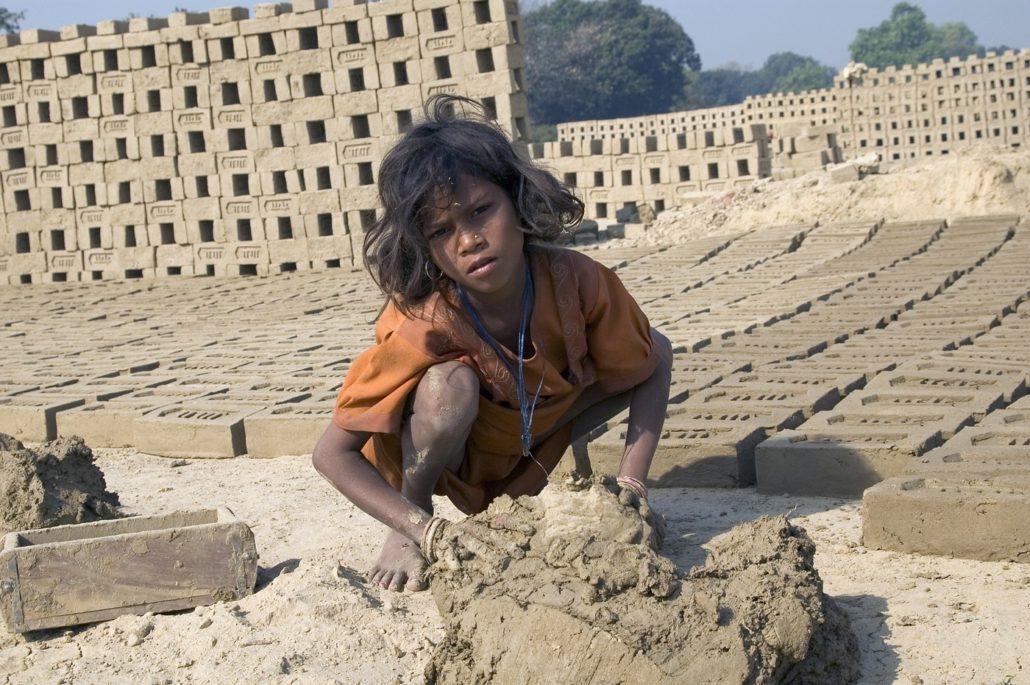
Many international organizations have said that the recent events amount to genocide. More than 170,000 Rohingya live in internally displaced persons camps throughout the country after their houses and villages were burned to the ground in riots. They are circled by hostile Buddhist populations that do not allow them to leave the camp. The camps rarely have medical facilities and the Rohingya often have to sell their meager food rations to obtain medicines for their children. Jonathan Head calls the conditions “ghetto-like.” The government has actively refused to count casualty rates.

During a recent international conference in Norway that aimed to address the Rohingya crisis, George Soros, a business magnate turned philanthropist, said that “In 1944, as a Jew in Budapest, I, too, was a Rohingya…Much like the Jewish ghettos set up by the Nazis in eastern Europe during World War II, Aung Mingalar has become the involuntary home of thousands of families who once had access to healthcare, education and employment. Now they are forced to remain segregated in a state of abject deprivation. The parallels to the Nazi genocide are alarming.”

More than 150,000 Rohingya have fled Myanmar in overstuffed and rickety boats within the last three and a half years of democratic reforms. Smugglers promise to take them to Malaysia or Indonesia, Muslim majority countries. Jonathan Head voiced concern over the appalling conditions of the boats, which he said “were akin to the 18th century slave trade.” People cannot stand or sit properly, and are beaten if they try to stretch their legs. They are given a cup of rice, a single chili and two cups of water a day until the food runs out, as it often does.

Many boats never reach their destination and are instead handed over to traffickers, usually in Thailand, where people are then held ransom for up to $2,000. This often means that relatives in Myanmar have to sell their remaining land and homes to get them out. If they cannot, the traffickers simply leave them to starve. Recently, mass graves were uncovered in Thailand and Malaysia.

Myanmar refuses to admit responsibility for the crisis. Major Zaw Htay, director of the President’s Office, said that the country would “not accept allegations by some that Myanmar is the source of the problem.”

 — Radhika Singh

Sources: Bangkok Post 1, Bangkok Post 2, Foreign Correspondants Club of Thailand, Bangkok Post 3, Al Jazeera, Asia Nikkei, Global Post 1, The Guardian, Global Post 2, BBC
Photo: Flickr
July 2, 2015
https://borgenproject.org/wp-content/uploads/borgen-project-logo.svg 0 0 Borgen Project https://borgenproject.org/wp-content/uploads/borgen-project-logo.svg Borgen Project2015-07-02 08:00:372024-05-27 09:25:11Democratization in Myanmar Catastrophic for the Rohingya
Global Poverty, Human Rights

Protecting People with Albinism in Tanzania

Albinism in Tanzania
Albinism, a rare congenital disorder that presents itself in the form of a partial or complete absence of melanin production, results in pigment-less eyes, hair and skin. An estimated 1 in every 17,000 to 20,000 people in North America and Europe live with albinism. However, cases of albinism in Tanzania and the African continent, with 1 in every 5,000 to 15,000 people, appear with more prevalence.

The majority of cases are seen in the East African country of Tanzania. Under the Same Sun (UTSS), an organization committed to assuring the rights of people with albinism, report a prevalence of 1 in 1,400 cases of albinism and 1 in 19 cases of carriers, meaning there are over 33,000 persons with albinism in Tanzania alone.

This population lives under constant threat, as people with albinism face slaughter and dismemberment. Their body parts, suspected to bring luck or riches, are used in witchcraft. A full “set” of body parts, four limbs, genitals, ears, tongue and nose, can bring the seller upwards of $75,000 in the black market.

There have been eight reported cases of mutilation in Tanzania since autumn 2015. More than 200 similar cases were reported to the United Nations from 2000 to 2013.

In a May 13, 2015 interview with The Guardian, Don Sawatzky, director of operations at UTSS, states that no one really knows the exact source of these killings. Since the documentation was not as historically prevalent in Africa. However, many still connect the rise in deaths to the 2015 elections, placing blame on politicians who allegedly seek out “seers” who use albino body parts to predict the future. Others point to the rise in food prices as the cause, leaving many desperate to make money with no regard for consequence.

Recent collaborative efforts between the Tanzanian government, civil society and nongovernmental organizations have proved beneficial. The community’s perception of people with albinism is slowly changing. Additionally, cases in which people with albinism were killed are now being taken seriously, and the government has begun to prosecute and convict those responsible.

At the community level, these changes will not come about easily, but with the international community’s backing and advocacy, this shift in perception has greater potential.

On June 13, 2013, the United Nations adopted the first resolution in its history on albinism, guaranteeing the rights and acknowledging the plight and discrimination of those who live with albinism. More recently, with the help of UTSS, the United Nations welcomed the observance of June 13 as International Albinism Awareness Day to be celebrated for the first time in 2015.

Many remain hopeful that violence against people with albinism will one day be nonexistent. Prince Zeid Ra’ad Al Hussein, the current United Nations High Commissioner for Human Rights, affirmed that “people with albinism are just as deserving of dignity as every other human being.” He adds, “They have the right to live free from discrimination, deprivation and fear.”

– Jaime Longoria

Sources: The Guardian, Washington Post
Photo: The Telegraph

June 29, 2015
https://borgenproject.org/wp-content/uploads/borgen-project-logo.svg 0 0 Borgen Project https://borgenproject.org/wp-content/uploads/borgen-project-logo.svg Borgen Project2015-06-29 08:00:422024-12-13 17:51:33Protecting People with Albinism in Tanzania
Global Poverty, Human Rights

The Case for Eleanor Roosevelt on the New $10 Bill

New_$10_Bill
This week, the US Treasury Department announced a woman will replace Alexander Hamilton on the $10 bill. While there are many deserving candidates to consider, here’s why Eleanor Roosevelt is most qualified to appear on the note.

Treasury Secretary Jack Lew announced the initiative on June 17. The new 10-piece will enter general circulation in 2020, the 100th anniversary of the women’s suffrage movement in the United States.

“We have only made changes to the faces on our currency a few times since bills were first put into circulation,” said Jacob Lew, Treasury secretary, in a press release, “I’m proud that the new $10 will be the first bill in more than a century to feature the portrait of a woman.”

The theme of the new $10 bill is Democracy in the United States. The Treasury Department is asking Americans for advice as to who might replace Alexander Hamilton. They’ve set up a website to collect ideas: thenew10.treasury.gov.

Former First Lady Eleanor Roosevelt should be considered an excellent candidate for the new $10 bill for her support of democracy and human rights, both in the United States and abroad.

Roosevelt’s contributions to American civil rights were remarkable. She frequently met with African American leaders and invited many to the White House—at a time when few blacks were welcome at the president’s residence. She controversially broke with her husband’s camp to propose greater racial equality in New Deal programs and to make lynching a federal crime. She was also a passionate advocate for the world’s poor and disenfranchised.

Following her husband’s death, Eleanor Roosevelt worked tirelessly with the nascent United Nations to protect human rights around the globe. She served as the first chairperson of the United Nations Commission on Human Rights, now known as the UN Human Rights Council.

Perhaps most importantly, she played an important role in drafting the Universal Declaration of Human Rights, a foundational document in international law.

The document famously declared, “[that] recognition of the inherent dignity and of the equal and inalienable rights of all members of the human family is the foundation of freedom, justice and peace in the world.” It protects several human rights related to global poverty, including fair pay, social security, education, healthcare and access to public services.

For her work on such an important document and for her dedication to human rights around the world, Eleanor Roosevelt should be considered the most qualified woman to replace Alexander Hamilton on the new $10 bill.

– Kevin McLaughlin

Sources: The New 10, United Nations, U.S. Department of the Treasury
Photo: Huffington Post

June 24, 2015
https://borgenproject.org/wp-content/uploads/borgen-project-logo.svg 0 0 Borgen Project https://borgenproject.org/wp-content/uploads/borgen-project-logo.svg Borgen Project2015-06-24 16:03:042020-07-15 11:45:08The Case for Eleanor Roosevelt on the New $10 Bill
Global Poverty, Human Rights

Over Half of Russian Population at Poverty Line

poverty_in_russia

According to a recent survey from the Moscow-based Financial University, more than half of the Russian population suffers from economic deprivation.

The study was not based on income. Rather, respondents were asked how far their earnings tend to go, on a scale from “just barely enough for food” to “enough for everything, including real estate.” Fifty-four percent of those surveyed said that they could not afford more than basic necessities.

According to the survey, which spanned 35 cities, the poorest respondents were concentrated in the central Volga region. Tolyatti, a city of 720,000 on the Volga River, was identified as the poorest of the 35 cities studied.

Tolyatti, home of Russia’s leading car maker AvtoVAZ, is a particularly interesting case because of its high proportion of ‘critically poor’ young men. The study argues that Tolyatti’s demographics puts the city at high risk for social upheavals, citing the link between unemployment in young men and uprisings in the Arab Spring.

Left reeling from nose-diving oil prices and combined U.S. and EU sanctions, Russia is heading into its biggest economic downturn since 2011, when economic contraction prompted the biggest protests of Putin’s 15-year-rule.

“The question of poverty has a major socio-political significance because of the risk of social unrest if citizens’ living standards decline,” said the report.

It is also important to note that while the survey identified cities in the central Volga region as the poorest of the 35 cities surveyed, Russia’s most impoverished people live predominately in small villages and towns that were not included in the study.

However, economic geographer and Moscow State University Professor Natalia Zubarevich believes that rural-dwelling Russians will be among the most resilient in the face of economic recession.

“People from villages and small towns survive on the land, so they will plant more potatoes and tomatoes,” Zubarevich said. “They will not have to change their way of life [as much].”

Conversely, Zubarevich believes that the rugged individualism of urban life will be conducive to social unrest in Russia’s major metropolises. “As a rule, people there [in big cities] always look individually for an exit strategy from their problems. They don’t tend to find cohesion the way that residents of smaller cities do,” explained Zubarevich.

– Parker Carroll

Sources: The Moscow Times,  Russia and India Report,  Toronto Star

Photo: Flickr

February 7, 2015
https://borgenproject.org/wp-content/uploads/borgen-project-logo.svg 0 0 Borgen Project https://borgenproject.org/wp-content/uploads/borgen-project-logo.svg Borgen Project2015-02-07 04:00:562024-06-05 01:58:24Over Half of Russian Population at Poverty Line
Activism, Advocacy, Human Rights, Humanitarian Aid

Episcopal Relief and Development Celebrates 75

Episcopal_relief_and_development
In 1938, in the midst of the Second World War, Episcopalians around the country raised money to help European refugees. In 1940, the Episcopal Church formally founded the Bishop’s Fund for World Relief. Throughout the 1940s and 1950s, the Bishop’s Fund continued to help with post-WWII efforts to rebuild. In 2000, the Fund was renamed to Episcopal Relief and Development. In 2002, it was incorporated as a 501(c)(3). In 2003 it shifted to long-term development projects, officially endorsing the Millennium Development Goals (MDGs).

The platform which Episcopal Relief and Development works from is based on partnership, both with church and other partners in host countries that are working in the same regions with the same goals.

Each year, Episcopal Relief and Development works in over 40 countries and reaches over three million people. Some of those countries are the most impoverished in the world, including Haiti, Burundi, Malawi and Nicaragua.

Episcopal Relief and Development’s four core programs are to alleviate hunger and improve food supply, create economic opportunities and strengthen communities, promote health and fight disease and respond to disasters and rebuild communities. Specific programs include fighting malaria, micro-finance, clean water and maternal and child health. All of their programs relate directly to the MDGs.

The official mission of Episcopal Relief and Development is “to bring together the generosity of Episcopalians and others with the needs of the world.” According to their financial statements, 84 percent of their 2013 budget went to programs. Ten percent went to fundraising and the remaining six percent went to administration. Episcopal Relief and Development is accredited by the Better Business Bureau, InterAction, Charity Navigator and GuideStar. They are based out of New York City.

– Caitlin Huber

Sources: Episcopal Relief, Charity Navigator
Photo: Episcopal Relief

December 8, 2014
https://borgenproject.org/wp-content/uploads/borgen-project-logo.svg 0 0 Borgen Project https://borgenproject.org/wp-content/uploads/borgen-project-logo.svg Borgen Project2014-12-08 12:00:022020-07-18 04:36:27Episcopal Relief and Development Celebrates 75
Page 31 of 45«‹2930313233›»

Get Smarter

  • Global Poverty 101
  • Global Poverty… The Good News
  • Global Poverty & U.S. Jobs
  • Global Poverty and National Security
  • Innovative Solutions to Poverty
  • Global Poverty & Aid FAQ’s
Search Search

Take Action

  • Call Congress
  • Email Congress
  • Donate
  • 30 Ways to Help
  • Volunteer Ops
  • Internships
  • Courses & Certificates
  • The Podcast
Borgen Project

“The Borgen Project is an incredible nonprofit organization that is addressing poverty and hunger and working towards ending them.”

-The Huffington Post

Inside The Borgen Project

  • Contact
  • About
  • Financials
  • President
  • Board of Directors
  • Board of Advisors

International Links

  • UK Email Parliament
  • UK Donate
  • Canada Email Parliament

Get Smarter

  • Global Poverty 101
  • Global Poverty… The Good News
  • Global Poverty & U.S. Jobs
  • Global Poverty and National Security
  • Innovative Solutions to Poverty
  • Global Poverty & Aid FAQ’s

Ways to Help

  • Call Congress
  • Email Congress
  • Donate
  • 30 Ways to Help
  • Volunteer Ops
  • Internships
  • Courses & Certificates
  • The Podcast
Scroll to top Scroll to top Scroll to top