• Link to X
  • Link to Facebook
  • Link to Instagram
  • Link to TikTok
  • Link to Youtube
  • About
    • About Us
      • President
      • Board of Directors
      • Board of Advisors
      • Financials
      • Our Methodology
      • Success Tracker
      • Contact
  • Act Now
    • 30 Ways to Help
      • Email Congress
      • Call Congress
      • Volunteer
      • Courses & Certificates
      • Be a Donor
    • Internships
      • In-Office Internships
      • Remote Internships
    • Legislation
      • Politics 101
  • The Blog
  • The Podcast
  • Magazine
  • Donate
  • Click to open the search input field Click to open the search input field Search
  • Menu Menu

Archive for category: Human Rights

Information and stories about human rights.

Global Poverty, Human Rights

Six Important Facts About Human Rights in Afghanistan

Human Rights in Afghanistan
Armed conflict continues between Taliban and government forces, leaving human rights in Afghanistan a ravaged victim to the ongoing violence. The crisis has escalated and become a significant recipient of foreign aid. From displacement, abuse and harsh punishments to humanitarian assistance and defenders of human rights, here are six important facts to know about human rights in Afghanistan.

  1. As of September 30, 2016, the U.N. had documented 8,397 civilian casualties as a result of the ongoing armed conflict. Terrorist groups in the region were responsible for 61% of these deaths, while both official and unofficial government forces were responsible for 23% of civilian casualties.
  2. There were 15 documented incidents of the compromisation of medical treatment facilities in the first half of 2016 alone. Government forces are known to conduct search operations in hospitals and clinics, delay or impede the provision of medical supplies and use health facilities for military purposes.
  3. As of August 2016, Afghan judiciaries had registered more than 3,700 cases of violence against women and girls. Under Shari’a law, the Taliban and other armed groups increased their public punishment of women for so-called “moral crimes.” Punishments included public lashings and executions.
  4. The U.N. Refugee Agency documented 2.6 million Afghan refugees living in the world as of 2016. Ninety-five percent of these refugees now live in Iran and Pakistan where they face discrimination, racial attacks, lack of basic amenities and mass deportation.
  5. Armed groups regularly target active defenders of human rights in Afghanistan. For example, in August 2016, unknown individuals kidnapped, tortured and killed the brother of a local women’s rights activist. They then used the brother’s phone to further threaten the sister into ceasing her human rights work.
  6. According to data from the U.N. Office for the Coordination of Humanitarian Affairs, humanitarian aid reached 1.3 million people in the first quarter of 2017.  The current Humanitarian Response Plan in Afghanistan calls for funding of $550.2 million. The program has received 27.2% of that funding so far.

Programs are in place to provide as many Afghan people as possible with the aid they require. However, while such foreign aid response systems are incredibly beneficial, the next crucial step is to take preventative measures against the recurring violations of human rights in Afghanistan.

– Sophie Nunnally

Photo: Flickr

July 12, 2017
https://borgenproject.org/wp-content/uploads/borgen-project-logo.svg 0 0 Borgen Project https://borgenproject.org/wp-content/uploads/borgen-project-logo.svg Borgen Project2017-07-12 07:30:452020-06-08 09:25:24Six Important Facts About Human Rights in Afghanistan
Developing Countries, Global Poverty, Human Rights, Slavery

How Walk Free Foundation is Helping Countries with the Most Slaves


The most recent update to the Global Slavery Index estimates that, in 2016, 45.8 million people were in some form of modern day slavery in the 167 countries surveyed. Of these countries, India, China, Pakistan, Bangladesh and Uzbekistan are the countries with the most slaves, holding 58 percent of the worldwide slave population. The Global Slavery Index is a program developed by the Walk Free Foundation, an organization seeking to end modern slavery with a multifaceted method.

The foundation’s strategy includes building an extensive knowledge base through research that can be used to inform action. The Global Slavery Index reports the number of people enslaved around the globe, but it also provides other important data such as the global distribution of slavery. This indicates countries with the most slaves, as well as those with the least, and specific actions governments are taking to respond to slavery within their own borders and abroad.


Walk Free Foundation believes that a combination of direct implementation, faith-based grassroots, businesses, academics, NGOs and governments all around the world is needed to eradicate modern slavery for good. By teaming up with this variety of groups and individuals, the foundation can fight at the legislative, commercial and private levels. Attacking the issue from all these angles creates a better chance for ending slavery rather than just relocating the problem.

In August 2017, Walk Free Foundation’s founder Andrew Forrest will attend the Bali Process Government and Business Forum, where CEOs and business leaders will advise government officials on how to prevent and combat modern slavery. Since the majority of modern slaves are held in the private sector working in areas such as manufacturing, construction and agriculture, Walk Free Foundation and Bali Process focus on educating businesses on how to terminate all forms of slavery from their supply chains. The forum in August aims to raise awareness of modern slavery and address ways of action. This will be crucial countries with the most slaves.

– Hannah Kaiser

Photo: Flickr

July 4, 2017
https://borgenproject.org/wp-content/uploads/borgen-project-logo.svg 0 0 Borgen Project https://borgenproject.org/wp-content/uploads/borgen-project-logo.svg Borgen Project2017-07-04 07:30:162024-12-13 17:58:16How Walk Free Foundation is Helping Countries with the Most Slaves
Developing Countries, Global Poverty, Human Rights, Slavery

Countries That Still Have Slavery

Countries That Still Have Slavery
Although modern slavery is not always easy to recognize, it continues to exist in nearly every country. In total, there are 167 countries that still have slavery and around 46 million slaves today, according to the 2016 Global Slavery Index.

The U.S. Department of State defines modern slavery as “the act of recruiting, harboring, transporting, providing, or obtaining a person for compelled labor or commercial sex acts through the use of force, fraud, or coercion.”

India, China, Pakistan, Bangladesh, Uzbekistan and North Korea are at the top of the list for countries that still have slavery. Here are some facts about what slavery is like in each of these countries.

The Highest Numbers: 6 Countries That Still Have Slavery

  1. India (18.4 Million) India has the highest number of slaves in the world. Like many other countries, modern slavery in India can take the shape of domestic service, forced begging, commercial sexual exploitation, forced marriage and forced recruitment for armed services. Because of India’s growing economy, many modern slaves work in factories that export goods to other countries. Consequently, men, women and children work long hours without proper compensation or even basic rights.
  2. China (3.4 Million) The Chinese government relies on exports of goods and raw materials even more than India. According to a CNN report, people in China are forced into labor across many different industries. The migration of poor families from rural to urban areas in search of jobs often leads to opportunities for traffickers. Although families travel together, many eventually split up. Individuals sell young boys to other families who lack sons, and girls often face sex slavery or forced marriage.
  3. Pakistan (2.1 Million) Modern slavery in Pakistan, like India, centers on debt bondage, or bonded labor. Brick-making employs around 10 million people in Pakistan. Children and families often work 10 hours each day in brick kilns and are denied basic rights or laws to protect them. Without this protection, workers face torture and sexual exploitation.
  4. Bangladesh (1.5 Million) Contemporary slavery in Bangladesh is accounted for through 80 percent forced labor and 20 percent forced marriage, according to the Global Slavery Index. Poverty, natural disasters and government corruption have made Bangladesh the 11th most vulnerable country to slavery within Asia.
  5. Uzbekistan (1.2 Million) The main cash crop of Uzbekistan is cotton. Each fall, when cotton crops are booming, the government forces millions of people out of their jobs to work in the cotton fields. International organizations monitor the process, however, the government still does not compensate these people. They also do not enforce proper safety precautions.
  6. North Korea (1.1 Million) The government of North Korea has done little to criminalize modern slavery. People of all ages are subject to forced labor while their government says they are “living in a socialist paradise.” One in twenty North Koreans is enslaved. Although the country does not have the highest total number of slaves, it does have the highest concentration of forced labor.

While many countries have taken steps toward banning and criminalizing slavery, there is still much to do. Countries that still have slavery are facing many problems that we all must address. “Improving the rights of 45.8 million human beings is both wise and urgent for all leaders of countries and organizations,” said Andrew Forrest, Founder and Chairman of the Walk Free Foundation. “Eradicating slavery makes sense; morally, politically, logically and economically.”

– Madeline Boeding

Photo: Flickr

July 4, 2017
https://borgenproject.org/wp-content/uploads/borgen-project-logo.svg 0 0 Borgen Project https://borgenproject.org/wp-content/uploads/borgen-project-logo.svg Borgen Project2017-07-04 07:30:122024-12-13 17:58:16Countries That Still Have Slavery
Global Poverty, Human Rights, Refugees

3 Organizations That Support North Korean Refugees

Support North Korean Refugees
North Korea’s government is one of the most restrictive in the world. Unpaid labor is forced upon North Korean civilians, independent press and media are banned and the borders are guarded and monitored closely by both North Korean and Chinese guards. Human Rights Watch reports that North Korea contains prison camps holding hundreds of thousands of North Korean citizens of all ages. Conditions there include torture, sexual abuse and, for those accused of serious crimes, public execution. Discussed below are organizations that support North Korean refugees.

Liberty in North Korea

This organization helps North Koreans escape using calculated courses through China and Southeast Asia. To accomplish this, Liberty in North Korea leverages on-ground relationships and donor funding. The organization also has very systematic resettlement programs available to support North Korean refugees including translation, healthcare, integration and counseling services. Additionally, Liberty in North Korea educates, mobilizes and encourages others to support North Korean refugees via events and fundraisers. The organization has a thorough breakdown of how funds are distributed throughout the escape and resettlement process, and it claims that $3,000 will save and resettle one North Korean refugee.

North Korean Freedom Coalition

This organization partners with political leaders to support North Korean victims of human rights violations. It also hosts the annual North Korean Freedom Week, which raises awareness of the North Korean atrocities and gains support for the freedom of North Korean prisoners being unjustly held. This is a collaboration of several public and private members, including several different independent charities.

Helping Hands Korea (HHK)

This is a non-denominational Christian organization that provides food and basic necessities to North Koreans based on the level of support each requires. HHK also assists with the transport of refugees through Asia to safety. Although the spread of Christianity is not the primary goal of HHK, the organization provides each refugee a Bible and a message of hope.

The level of human rights violations in North Korea has not received the amount of attention it deserves, and further education is necessary to address these issues in a rational and effective way. North Korea continues to develop its weapon systems and actively test nuclear weapons and missiles, in violation of U.N. agreements. The U.S. has hinted that it is willing to use force in dealing with North Korea, but a war would cause an astronomical number of casualties, especially in South Korea. While China has increased its pressure on North Korea to denuclearize, it must take a stronger role in abolishing the inhumane treatment of North Korean citizens and support North Korean refugees.

– Emma Tennyson

Photo: Flickr

July 1, 2017
https://borgenproject.org/wp-content/uploads/borgen-project-logo.svg 0 0 Borgen Project https://borgenproject.org/wp-content/uploads/borgen-project-logo.svg Borgen Project2017-07-01 07:30:282024-12-13 17:58:143 Organizations That Support North Korean Refugees
Developing Countries, Global Poverty, Human Rights, Women & Children, Women and Female Empowerment

The Facts on Breast Ironing

The Practice of Breast Ironing
The practice of breast ironing occurs when the breasts of young girls are pounded with heated objects such as spatulas, hammers and rocks. The aim of the tradition is to halt breast growth in order to slow puberty, and sometimes the practice is done in order to postpone girls’ first sexual relationships. The ritual is mainly carried out by female relatives of the victim. Approximately 3.8 million teenagers are affected by breast ironing worldwide, according to the U.N.

Breast ironing is very popular in the nation of Cameroon. Carole, a victim of the practice there, explains how her mother told her that it was necessary. She claimed it was to keep away men because “‘men mean pregnancy.'” The routine would consist of her mother pressing a hot rock onto each of her breasts several times. It has left Carole with the permanent disfigurement of her breasts, which she describes as “flabby.”

Physical defects are common consequences of this practice. Many maturing girls also face the possibility of breast cancer or difficulty breastfeeding. Mental trauma occurs as well, such as low-self esteem and feelings of betrayal or resentment.

Breast ironing affects about one in four girls in Cameroon, but it is by no means limited to this country in particular. The practice also occurs in the nations of Nigeria, Benin and Chad, according to Newsweek.

Recently, reports revealed that the practice was taking place in some African communities within the U.K. as well. The CAME Women and Girls Development Organisation, a charity campaigning on behalf of breast ironing victims, has claimed that over 1,000 girls in Britain have dealt with the practice.

Fortunately, a number of global charities have increased volunteer work within Cameroon. Sex education is now being stressed as a better means to ending the pregnancies of young girls. By spreading awareness and offering educational services, the practice of breast ironing is already on its way to being stopped.

– Gigi DeLorenzo

Photo: Flickr

June 19, 2017
https://borgenproject.org/wp-content/uploads/borgen-project-logo.svg 0 0 Borgen Project https://borgenproject.org/wp-content/uploads/borgen-project-logo.svg Borgen Project2017-06-19 01:30:002024-12-13 17:58:05The Facts on Breast Ironing
Human Rights, Politics and Political Attention, Refugees and Displaced Persons, Technology, War and Violence

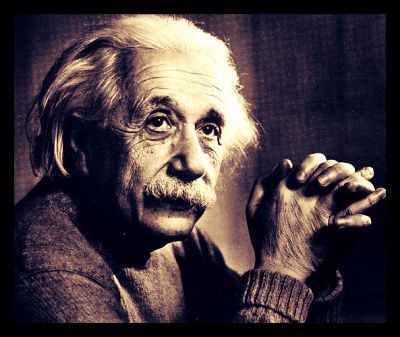
Albert Einstein: The Refugee

Albert_Einstein_refugee
As the author of the theory of special and general relativity, his name stands synonymous with the word “genius.” Changing fundamental ideas about the physical relationship between space, time, and gravitation, Albert Einstein radicalized how humans think about the building blocks of the physical world we live in. His theory of relativity was confirmed in 1919 from further research into solar eclipses. His popularization by the press gained him a quick rise to fame and in 1921, Einstein would receive the Nobel Prize for his related work.

Being himself a German Jew, Einstein cultivated an outspoken political personality and was well known for his pacifist ideals. His work, paired with his political persona triggered negative attention from extreme right-wing groups.

Anti-Semites were determined to publicize his discoveries as “un-German”. The rise of the Nazi party made it more and more difficult for Einstein to work in Germany, so in 1932 when offered a position at Princeton University, he accepted, retaining dual U.S. and Swiss citizenship.

While his theories were still widely taught, he was ultimately accused of treason in 1933 by the Nazi Third Reich; winning the party a partial victory when Einstein’s name could no longer be mentioned in academic circles. Although Einstein was not in Germany at the time, Nazi fanatics still had his property seized and his books were among those burned on the famous May 10, 1933, as a symbol of purging an “un-German” spirit.

He fled to the United States on October 17th of that year, using his fame and financial resources to work vigorously with his wife to obtain U.S. visas for other German Jew refugees. Einstein had haunting mixed feelings about his life in Princeton:


“I am privileged by fate to live here in Princeton…In this small university town the chaotic voices of human strife barely penetrate. I am almost ashamed to be living in such peace while all the rest struggle and suffer.”


Among many notable others, the legacy of Albert Einstein’s refugee status resulted in the founding of the German Academic Refugee Initiative Fund (DAFI), an organization whose primary objective is to promote self-reliance of refugees through providing professional qualifications for future employment. In addition, DAFI contributes to the development of critical human resources that may be needed in the potential restoration of refugees’ home countries. DAFI also offers a scholarship project; an effective instrument used to attain and maintain self-reliance of refugees when used in the right context. The funds given from the scholarship must be used to aid in the academic studies of eligible refugee recipients.

Thus, Albert Einstein left us not only with mind-blowing new theories in physics, but a key organization telling us that education paves the road out of socioeconomic poverty.

– Kali Faulwetter

Sources: Azer, UNHCR, Jewish Virtual Library, PPU, OFADEC
Photo: Native Pakistan


Donate to fight global poverty.


June 18, 2017
https://borgenproject.org/wp-content/uploads/borgen-project-logo.svg 0 0 Borgen Project https://borgenproject.org/wp-content/uploads/borgen-project-logo.svg Borgen Project2017-06-18 03:00:462024-06-10 03:24:05Albert Einstein: The Refugee
Global Poverty, Human Rights

Progress Towards Benefits and Rights for Bolivians With Disabilities


Since the election of Evo Morales in 2005, Bolivia has pledged to strive for social and economic reform. Despite aiming for a more inclusive society, poverty is still widespread and certain groups remain marginalized, including Bolivians with disabilities. Many continue to live in extreme poverty with little access to resources.

In the spring of 2016, a group Bolivians with disabilities marched more than 400 kilometers from Cochabamba to La Paz, protesting their lack of basic rights. The government previously stated that benefits would be awarded to those with extreme disabilities. To qualify, individuals need to receive special identification. The ID card can only be awarded following neurological exams that cost approximately 500 bolivianos ($70).

This cost is high for many in Bolivia with disabilities, as they often live in poverty and are unable to work due to their impairments. The purpose of the recent protests was to persuade the government to provide a monthly allowance of 500 bolivianos to those with severe disabilities, which would allow them to pay for physical therapy, healthcare and housing.

In February 2017, Morales submitted a proposal to Congress requesting that a monthly allowance of 250 bolivianos be provided to Bolivians with severe and serious disabilities. The Federation of Municipal Associations of Bolivia (FAM) also announced their support of the Morales’s bill. Mayors are responsible for making payments in each municipality. More than half of Bolivians with disabilities live in the large cities of La Paz, Cochabamba, and Santa Cruz, and these municipalities state that they have the financial resources necessary to provide qualifying individuals with benefits.

The current proposal only provides half of the monetary amount protesters asked for, and its success remains to be determined. Benefits will not be distributed until 2018. However, Bolivians with disabilities are also gaining rights through accesses to other resources. Handicap International and the Bolivian Ministry of Health are working together to build rehabilitation centers in various municipalities that provide necessary therapies. There currently is a network of 30 centers in Bolivia.

Additionally, these protests and attention have not only led to the provision of monetary benefits, but have also raised awareness of the struggles of Bolivians with disabilities, particularly the high proportion of them that live in extreme poverty. Moving forward, increased awareness and respect will be crucial in ensuring that those with disabilities receive necessary services that will allow them to be more engaged members of the community and avoid living in extreme poverty.

– Nicole Toomey

Photo: Flickr

June 1, 2017
https://borgenproject.org/wp-content/uploads/borgen-project-logo.svg 0 0 Borgen Project https://borgenproject.org/wp-content/uploads/borgen-project-logo.svg Borgen Project2017-06-01 01:30:022020-03-15 20:59:21Progress Towards Benefits and Rights for Bolivians With Disabilities
Global Poverty, Human Rights, Women and Female Empowerment

Three Organizations Working for Global Women’s Rights


The pursuit of global women’s rights and equality still has a long way to go. Millions of women across the world have their own unique problems and needs. Here are three organizations working for global women’s rights across the world.

Three Organizations Working for Global Women’s Rights

  1. Global Fund For Women: The Global Fund for Women is an organization that is fighting for women to have basic human rights, including the right to live free from violence, slavery and discrimination, the right to be educated, the right to own property, the right to vote and to earn a fair and equal wage. Not only focused on human rights, the Global Fund for Women also directs their attention towards rights for women’s equality. Through grant making and advocacy, the organization supports local groups that focus on women’s rights.
     
  2. WEDO – Women’s Environment and Development Organization: WEDO is a global advocacy organization based out of New York City that partners with women’s groups across the map. Looking specifically at the intersection of women and the environment, WEDO seeks to bring systemic changes and create sustainability for the future. The organization’s programs are constantly evolving with the importance of different issues. Their current programs include Mobilizing Women for Climate Change and Gender-Responsive Climate Policy and Women’s Leadership: The Women Delegates Fund. Each program includes advocates from local communities.
  3. International Alliance of Women: IAW is a nonprofit which brings together 41 different member organizations to fight for women’s rights and empowerment globally. IAW’s work looks at the connections between women and climate change, economics, human rights and reproductive health. IAW has been around since 1902 and has been recognized and accredited by the U.N.

Through a variety of goals and tactics, these three organizations working for global women’s rights are bringing change to the communities they serve around the world.

– Shannon Elder

Photo: Flickr

May 20, 2017
https://borgenproject.org/wp-content/uploads/borgen-project-logo.svg 0 0 Borgen Project https://borgenproject.org/wp-content/uploads/borgen-project-logo.svg Borgen Project2017-05-20 01:30:562024-12-13 17:57:59Three Organizations Working for Global Women’s Rights
Global Poverty, Human Rights, Women and Female Empowerment

MADRE: An Organization for Women Across the World

MADRE: An Organization for Women Across the World
MADRE is an organization fighting for the rights and empowerment of women worldwide that has been around for more than 30 years. It began when a group of U.S. women from a variety of backgrounds returned from Nicaragua in the ’80s in the midst of the Contra War.

Upon arrival back in the U.S., their mission was to spread awareness about issues facing Nicaraguan women and to improve domestic policies regarding women’s rights.

There are two different strategies that MADRE uses: partnering with local organizations that stand for human rights and advocating for the international law to be held accountable.

The New York-based organization has projects and partners around the globe, in Nicaragua, Guatemala, Haiti, Colombia, Kenya, Palestine, Syria and Iraq. The work MADRE is doing in each country differs, but it all comes down to the same goals of raising women up and helping them find lasting solutions to whatever issues they may face.

MADRE was recently featured in an article on the United Nations Women website for one of its projects in Nicaragua in which women use talk radio to discuss gender violence. MADRE received a grant from the United Nations for the project. The radio station has the sole focus of women’s rights and is the first of its kind in the region.

MADRE stands strong as an organization that is advocating on the behalf of women to end violence and rape, maintain gender and sexual minority rights and increase access to emergency aid.

According to the Women Human Rights Defenders International Coalition (WHRDIC ), “MADRE works towards a world in which all people enjoy the fullest range of individual and collective human rights; in which resources are shared equitably and sustainably; in which women participate effectively in all aspects of society; and in which people have a meaningful say in decisions that affect their lives.”

– Shannon Elder

Photo: Flickr

April 28, 2017
https://borgenproject.org/wp-content/uploads/borgen-project-logo.svg 0 0 Borgen Project https://borgenproject.org/wp-content/uploads/borgen-project-logo.svg Borgen Project2017-04-28 01:30:592024-05-28 00:00:11MADRE: An Organization for Women Across the World
Global Poverty, Human Rights

Congress and Hong Kong Human Rights and Democracy Act

Congress and Hong Kong Human Rights and Democracy Act
Florida’s Republican Senator and co-chair of the Congressional-Executive Commission on China, Marco Rubio and Republican Arizona Senator Tom Cotton introduced a revised version of the Hong Kong Human Rights and Democracy Act to congress. The revision comes as a response to the recent abductions of booksellers and the removal of Hong Kong pro-independence leaders from office.

The city of Hong Kong has been a special administrative region of China since 1997. The relationship between Hong Kong and China works under the principle “One Country, Two Systems.” Other than foreign affairs and defense, Hong Kong operates independently.

However, in the past year, there have been conflicts between the two entities. According to Rubio, the act will “renew the United States’ historical commitment to freedom and democracy in Hong Kong at a time when its autonomy is increasingly under assault.”

The Hong Kong Human Rights and Democracy Act reaffirms the principles of the United States-Hong Kong Policy Act of 1992. In addition to the U.S. support of democratic actions, freedom of expression and the upholding of human rights, it also warns against the government of the People’s Republic of China from obstructing Hong Kong’s independence.

The revised act will also require that Hong Kong issue an annual report, and the U.S. Secretary of State will determine if it is operating independently. Furthermore, the act calls to freeze the assets of individuals who violate the rights of Hong Kong citizens.

The act cites cases in which pro-democracy activists have been harassed. Some have had legal charges pressed against them, while others have faced travel restrictions. Members of the press have disappeared after publishing works criticizing Beijing. Journalists who have done the same have been physically attacked.

“China’s assault on democratic institutions and human rights is of central importance to the people of Hong Kong and of its status as a free market, economic powerhouse, and hub for international trade and investment,” Rubio said. “It is critical in the days ahead that the democratic aspirations of the people of Hong Kong be a vital U.S. interest and foreign policy priority.”

By introducing the new Hong Kong Human Rights and Democracy Act, it aims to draw attention to the increased reports of human rights violations in Hong Kong linked to China, as well as punish those who do not uphold democracy.

– Karla Umanzor

Photo: Flickr

December 10, 2016
https://borgenproject.org/wp-content/uploads/borgen-project-logo.svg 0 0 Borgen Project https://borgenproject.org/wp-content/uploads/borgen-project-logo.svg Borgen Project2016-12-10 08:41:492024-12-13 17:56:20Congress and Hong Kong Human Rights and Democracy Act
Page 27 of 45«‹2526272829›»

Get Smarter

  • Global Poverty 101
  • Global Poverty… The Good News
  • Global Poverty & U.S. Jobs
  • Global Poverty and National Security
  • Innovative Solutions to Poverty
  • Global Poverty & Aid FAQ’s
Search Search

Take Action

  • Call Congress
  • Email Congress
  • Donate
  • 30 Ways to Help
  • Volunteer Ops
  • Internships
  • Courses & Certificates
  • The Podcast
Borgen Project

“The Borgen Project is an incredible nonprofit organization that is addressing poverty and hunger and working towards ending them.”

-The Huffington Post

Inside The Borgen Project

  • Contact
  • About
  • Financials
  • President
  • Board of Directors
  • Board of Advisors

International Links

  • UK Email Parliament
  • UK Donate
  • Canada Email Parliament

Get Smarter

  • Global Poverty 101
  • Global Poverty… The Good News
  • Global Poverty & U.S. Jobs
  • Global Poverty and National Security
  • Innovative Solutions to Poverty
  • Global Poverty & Aid FAQ’s

Ways to Help

  • Call Congress
  • Email Congress
  • Donate
  • 30 Ways to Help
  • Volunteer Ops
  • Internships
  • Courses & Certificates
  • The Podcast
Scroll to top Scroll to top Scroll to top