• Link to X
  • Link to Facebook
  • Link to Instagram
  • Link to TikTok
  • Link to Youtube
  • About
    • About Us
      • President
      • Board of Directors
      • Board of Advisors
      • Financials
      • Our Methodology
      • Success Tracker
      • Contact
  • Act Now
    • 30 Ways to Help
      • Email Congress
      • Call Congress
      • Volunteer
      • Courses & Certificates
      • Be a Donor
    • Internships
      • In-Office Internships
      • Remote Internships
    • Legislation
      • Politics 101
  • The Blog
  • The Podcast
  • Magazine
  • Donate
  • Click to open the search input field Click to open the search input field Search
  • Menu Menu

Archive for category: Human Rights

Information and stories about human rights.

Advocacy, Global Poverty, Human Rights, Human Trafficking

The Modern Slavery Act and What It Means

modern_slavery_act
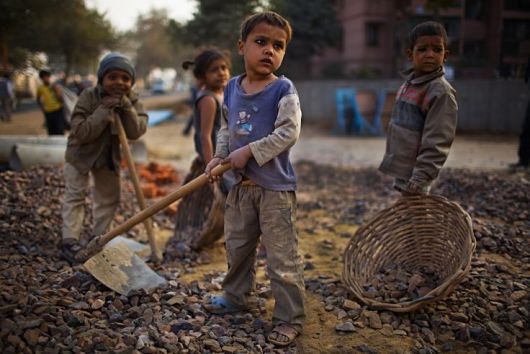
There are more slaves in the world now than any other period of time in human history. These slaves range from young children captured by warlords to do their bidding, to men and women captured to be used as sex slaves. For many years these individuals have been forced to live hidden lives, ashamed of past actions and often worried of facing prosecution for actions carried out while they were enslaved. The United Kingdom has taken the first step of providing solace to these victims with the passing of the Modern Slavery Act of 2015.

The United Kingdom is estimated to house between 10,000 to 13,000 slaves working as prostitutes, servants and workers who live on meager or no wages. These individuals live in constant fear of the traffickers who brought them to the UK and have witnessed atrocities beyond what most have endured. For several years, the laws have been unclear as to how to handle victims of trafficking and this has led to arrests and harsh treatments of several victims rather than their traffickers.

The Modern Slavery Act will effectively protect trafficking victims and prosecute perpetrators.

As the main supporter of the bill, Home Secretary Theresa May said, “This landmark legislation sends the strongest possible signal to criminals that if you are involved in this vile trade you will be arrested, you will be prosecuted and you will be locked up. And it says to victims, you are not alone – we are here to help you.”

This bill proposes increasing traffickers’ jail time from the current 14 years to a lifetime sentence instead. It also provides trafficked workers with overseas domestic work visas, protection and counseling for anything that might have occurred while they were enslaved. While legislation and increased presence from law enforcement may only be the start, it is a step in the right direction. The UK has become the first country to make strict laws and regulations regarding trafficking; for years, traffickers have been using loopholes in the system in order to keep their businesses alive.

Most of the people who are trafficked into the system come from poor families in developing nations who are in desperate need of money. Traffickers promise individuals jobs in outside countries that would allow them to support their families, and while they may get jobs none of the money they earn goes back to their families. If people instead were promised education in local areas, if they no longer had to worry about being stolen away in the night, imagine the innovation that would come with that peace of mind.

While there are a few issues with the bill, time and experience will determine if the bill will be successful.

The developing world needs all the help it can get in order to succeed in becoming a competitor in the global market. This act allows people to stay in their home countries, get the counseling and education they need in order to prosper and ensures that traffickers will be prosecuted to the best of the ability of the law.

– Sumita Tellakat

Sources: Gov.UK, BBC
Photo: IB Times

August 7, 2015
https://borgenproject.org/wp-content/uploads/borgen-project-logo.svg 0 0 Borgen Project https://borgenproject.org/wp-content/uploads/borgen-project-logo.svg Borgen Project2015-08-07 01:30:252020-02-28 08:39:58The Modern Slavery Act and What It Means
Global Poverty, Human Rights

Kyoto’s Homeless: Hidden or “Passing”


The streets of Kyoto are immaculate, decorated by vending machines every 100 feet or so. There are no trashcans, or at least the trashcans are incredibly hard to find. The majority of people walking along the road or biking all appear to be wearing clothes bought in the past year. When I grumbled about the lack of a trashcan while carrying around an empty bottle and a piece of paper that had once wrapped a steamed bun, my dad simply said that even at tea ceremonies, the Japanese are expected to take care of their own trash.

In all of this cleanliness, and apparent economic comfort, it appears that the poor do not exist. When in fact, the truth is that they are hidden.

Kyoto has no homeless shelters, or at least none that the homeless do not make themselves.

To find the homeless, one cannot simply walk on the streets, for in Kyoto they live under the bridges or in Internet cafés. Underneath the bridges of the Kamo River are small homes made of cardboard, plastic and cloth. Walking under these bridges is the only way that you would ever know that anyone in Kyoto is homeless.

The rest of Kyoto’s homeless is much more invisible. I talked to a boy in Kyoto who mentioned sleeping in an Internet café in passing, but I did not know what he meant at the time. Japan Talk comments, “there are a considerable number of Japanese youth who are living on the edge−sleeping in Internet cafés and working temporary or part-time jobs.”

The Internet cafés stay open 24 hours and sometimes offer rooms for $15 to $25 a night. They serve free drinks and are a good option for those who do not have much money. Alternatively, some of Japan’s poor live in the 6.5-by- 5 foot capsule hotels. According to Tofugu, even though the capsule hotels were meant for drunk salary men, when the hotel owners realized that people were living in the capsules, “they gave people discounts for paying for a month at a time, and the government even gave the okay to use these hotels as physical addresses, which helps the jobless living here land interviews.”

Because these cheap “housing” options exist, it is easy for Japan to present a much smaller homeless problem than it really has. Japan’s homeless are hidden in cafés and under bridges. The ones in the cafés almost pass as part of the middle class population, since they walk among them and are working some sort of job.

It is much harder to deal with a problem if it cannot be seen. Japan treats its homeless well in terms of human rights. According to Japan Talk, Japanese “courts ruled that homeless tents on public land can’t be arbitrarily dismantled by police. Police must follow the same due process as an eviction from a regular rental apartment.” On the other hand, the courts are not doing much to make fewer Japanese homeless in the first place.

A few small efforts are starting in Kyoto to help the homeless, like the X Café. In addition, the photojournalist Shiho Fukada is doing work to document the lives and existence of the homeless in Japan. Perhaps if journalists continue to give Japan’s poor a face, story, and acknowledgement, then more will be done to help them.

– Clare Holtzman

Sources: Christo Geoghegan, Flickr, Japan Talk, Kyoto Journal, Life in Kyoto, Ten Thousand Things
Photo: Japan Crush

August 3, 2015
https://borgenproject.org/wp-content/uploads/borgen-project-logo.svg 0 0 Borgen Project https://borgenproject.org/wp-content/uploads/borgen-project-logo.svg Borgen Project2015-08-03 09:22:302024-12-13 17:52:12Kyoto’s Homeless: Hidden or “Passing”
Global Poverty, Human Rights

Ending Child Marriage in Bangladesh

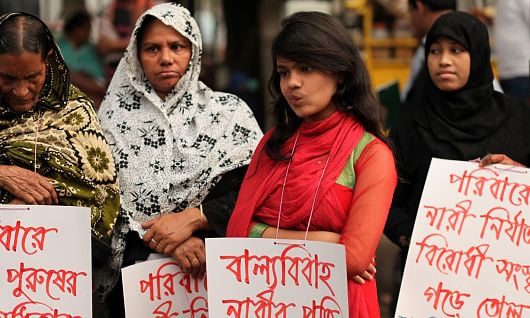
child_marriageIs it possible to end child marriage in Bangladesh, a country that has the highest rate of child marriage in the world? The Human Rights Watch (HRW) organization and other child and women activist groups are calling it an epidemic that can only be stopped with enforcement from the country’s government.

In October 2014, Bangladesh’s Prime Minister, Sheikh Hasina, pledged that she would bring an end to child marriage of children under age 15 by the year 2021. She also promised to decrease the number of brides age 15-18 by a third and eventually end all child marriages by 2041.

Bangladesh made child marriage illegal back in 1929 and set the minimum age for marriage for girls at 18 in the 1980s. Unfortunately, the government neglects to legally enforce it or handle the problems that cause girls to get married so young.

HRW asks that the government authorize a plan to stop child marriages that would include required marriage registration for religions, an increase in national birth registration and help for young girls recently married or adults that were married below the minimum age.

Despite the government’s promises to tackle the problem, they have not followed through. Instead, it did not reply to HRW’s demands and Hasina has mentioned revising the Child Marriage Restraint Act (CMRA) by lowering the age limit for girls to just 16. The Act was originally passed to give family courts the ability to cancel marriages if necessary and mandate a penalty of two years in prison and a fine of Tk50,000 (US$647).

HRW responded in frustration, “The Bangladesh government has said some of the right things, but its proposal to lower the age of marriage for girls sends the opposite message. The government should act before another generation of girls is lost.”

HRW is not the only one displeased. Plan International Bangladesh, Save the Children and Girls Not Brides have all insisted that minimum age be left unchanged. Girls Not Brides is an organization made up of 450 members from more than 70 countries. They look to create national and global policies to bar child marriage.

HRW published a report, “Marry Before Your House is Swept Away,” that details the struggles of 59 girls and young women who were married before age 18 since 2010. One girl was married at just 10 years old. The 124-page report reveals what contributes to child marriage and how it affects these young brides. It contains interviews with parents and community leaders that help draw a larger picture of the situation.

In 2011, UNICEF estimates that 65 percent of women in Bangladesh aged 20 to 24 were married by the time they were 18, 29 percent by age 15. According to Girls Not Brides, one-third of girls worldwide are married before age 18. That is 5 million girls every year— 28 girls each minute. Some are as young as 8 years old.

In developing countries, girls are viewed as burdens to their families. It is one more person to feed, clothe, school, etc. The dowry a family must raise can be less if the girl is young and uneducated. Bangladesh is troubled with more natural disasters and effects from climate change than most other countries. These manage to bring people into worse poverty and even steal away their home and land.

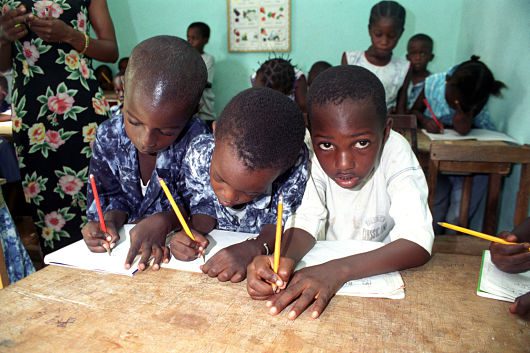
Besides governmental intervention, education is necessary in the fight to stop child marriage. Studies find that when girls attend school for seven years or more, she marries, on average, four years later. Education is a source for empowerment, important skills and networks of support — essential tools needed to lift her family out of poverty.

The U.N. approved a resolution in November 2014 that encouraged countries to adopt new laws and policies to stop child marriages. Hopefully, laws to eliminate child marriage will be a part of the new Sustainable Development Goals to be implemented by the U.N. in September 2015.

– Lillian Sickler

Sources: The Guardian, Girls Not Brides, Dhaka Tribune, HRW, Al Jazeera
Photo: The Guardian

July 29, 2015
https://borgenproject.org/wp-content/uploads/borgen-project-logo.svg 0 0 Borgen Project https://borgenproject.org/wp-content/uploads/borgen-project-logo.svg Borgen Project2015-07-29 09:08:252024-12-13 17:54:04Ending Child Marriage in Bangladesh
Development, Global Poverty, Human Rights

Lauren Conrad at The Little Market

little_market
The Little Market is making a big difference. A fair trade project based in Los Angeles, the online company works with artisans around the world, making handcrafted goods available to all and supplying a living wage to the artisans that create them.

Co-founded by fashion designer Lauren Conrad and Human Rights Watch member Hannah Skvarla in 2013, the Little Market “seeks to empower women artisans to rise above poverty and support their families”. The company is committed to building self-sufficient, economically independent women in impoverished countries around the world.

The Little Market sells a variety of handmade goods, from home décor and kitchen necessities to backpacks and bracelets. Conrad and Skvarla visit local markets in countries such as Kenya, Bolivia, India and Peru to gain inspiration, insight and appreciation for the talent, time and treasures provided by the artisans.

In order to benefit the artisans and themselves, the company searches for items with the potential to succeed in the U.S. market.

This month, The Little Market began selling olive wood products from Le Souk Olivique, an olive wood studio in Tunisia. Founded in 2013, Le Souk provides finely crafted wooden kitchen tools, including basic utensils, salad bowls and cutting boards.

The Tunisian company treats its artisans very well, setting payment above minimum wage and providing healthcare and social security payments. Le Souk will soon receive Tunisia’s Fair Trade certification.

The beautifully handcrafted kitchen tools sell at The Little Market for $12 to $44, depending on the type and size of the object. They are all made with olive wood.

Making olive wood products, however, is an intricate and time-consuming process. The raw wood must initially dry outside for a year before cutting and sanding the pieces to create a wood product fit for a kitchen.

Conrad and Skvarla expressed excitement about carrying this new line of products, available now on the company website. The Little Market has served as a catalyst in the sale of handmade goods from around the world, including those of Le Souk. As website sales increase, the demand for more products also increases, resulting in a need for more employees and thus creating more jobs for more artisans around the world, lifting many out of poverty.

– Sarah Sheppard

Sources: LA Times, The Little Market 1, The Little Market 2
Photo: Style News

July 27, 2015
https://borgenproject.org/wp-content/uploads/borgen-project-logo.svg 0 0 Borgen Project https://borgenproject.org/wp-content/uploads/borgen-project-logo.svg Borgen Project2015-07-27 08:53:292020-06-29 14:49:56Lauren Conrad at The Little Market
Development, Global Poverty, Human Rights, Human Trafficking

Safeway Becomes First US Supermarket to Offer Fair Trade Fish

Fair_Trade

Earlier this year, Safeway, in a partnership with the nonprofit organization Fair Trade USA, became the first U.S. supermarket to offer Fair Trade seafood. The initiative is part of a program aimed at expanding the social and environmental considerations of the Fair Trade movement into the world seafood market, which currently employs over 120 million people across the world.

The supermarket chain began its Fair Trade seafood program in March with the distribution of wild-capture tuna from small-scale fishing operations in Indonesia. Those products are being supplied by four Fair Trade associations representing 120 fishermen in Indonesia’s Maluku province.

In order for seafood to become Fair Trade certified, suppliers must source and trade in compliance with standards established by Fair Trade USA’s Capture Fisheries Program. Those criteria include standards for empowerment and community development, which prioritize the well-being of communities in trade activities; fundamental human rights, which protect workers from forced labor and ensure their right to organize; and wages, working conditions and access to services, which aim to improve wages and benefits as well as working hours.

The Capture Fisheries Program is especially significant given an Associated Press investigation conducted in March, which found that hundreds of men in the Indonesian island village of Benjina were being forced to catch seafood against their will. Most of those interviewed were found to have been Burmese immigrants who were taken to Indonesia and forced to fish. A number of workers were deemed by employers to be “flight risks,” and were consequently forced into cages to prevent their running away.

“All I did was tell my captain I couldn’t take it anymore, that I wanted to go home,” said Kyaw Naing to an Associated Press (AP) video camera snuck into the work site by a fellow worker. “The next time we docked, I was locked up.”

These labor conditions are not limited to the Indonesian market. Although the waters encompassing the Maluku province are Indonesian territory, it sees a large amount of illegal fishing activity, including from Thailand, one of the United States’ foremost seafood providers. While the United States purchases 20% of the country’s $7 billion in seafood exports, the State Department blacklisted Thailand for failing to address human trafficking and labor abuses.

The Indonesian supply-chain is such that tainted and ethically caught fish are generally processed side-by-side. AP found that the two products were mixed and very well could end up being sold in American supermarkets including Walmart, Safeway and Albertsons.

Though American and Indonesian officials have decried the labor conditions that define much of the region’s seafood industry, the most immediately effective method of combating this race to the bottom is to popularize Fair Trade initiatives like the Capture Fisheries Program. However, until supermarkets prioritize Fair Trade products and eliminate ethically tainted ones from the market, these human rights abuses will continue to have moral implications for both suppliers and consumers.

– Zach VeShancey

Sources: SFChronicle, Fair Trade USA, New York Times, Food Tank
Photo: Fair Trade USA

July 26, 2015
https://borgenproject.org/wp-content/uploads/borgen-project-logo.svg 0 0 Borgen Project https://borgenproject.org/wp-content/uploads/borgen-project-logo.svg Borgen Project2015-07-26 11:35:202020-07-03 15:22:11Safeway Becomes First US Supermarket to Offer Fair Trade Fish
Global Poverty, Human Rights, Technology

67 Minutes App Commemorates Nelson Mandela

Nelson_Mandela
Uber has been making waves in the transportation wave recently, bringing quick access to rides in cities across the globe. There is a new app that is being deemed the Uber for charity called 67 Minutes.

67 Minutes was released on what is Mandela Day in South Africa – July 18, the great leader’s birthday. The app “is dedicated to helping people do at least 67 minutes of charitable work per year.”

The United Nations (UN) made July 18 Mandela Day officially in November of 2009 after Mandela declared, “It is time for new hands to lift the burdens. It is in your hands now,” in a speech on his birthday in 2008. The UN stated that the day was to be commemorated to acknowledge his dedication to service and his values, as well as his contribution to the struggle toward democracy and a culture of peace around the world.

According to the Nelson Mandela Foundation, the day is a celebration aimed “to serve as a global call to action for people to ‘recognize their individual power to make an imprint and help change the world around them for the better.’” The day’s overall purpose is to cement and remember Mandela’s legacy in continued action towards his ideals, instead of statues and museums.

The idea of 67 Minutes is based on the 67 years Mandela spent striving to improve the human rights of all South Africans. Each minute spent volunteering is meant to remember each year Mandela spent striving towards his goal of equal human rights for all. The app’s goal is to connect those that want to do good with charities and other organizations that can help them do just that.

Ninety-one charities and other organizations have registered with the app, including Amnesty International SA, CHOC, Nkosi’s Haven and Blind SA, to name a few.

Charles Burman of MD Digital Publications, the company that developed and published 67 Minutes, explained it this way: “67Minutes has been developed in such a way, that should you have a type of event in mind, a specific budget, or if you’re simply searching for ideas of how you can help based on your location, you can quickly and easily discover them.”

The app is free to download and it is also free for NGOs and charities to advertise themselves on. There is no regulation on what kind of project that charities can post, although it is the preference of Burman that projects be based around people giving their time, services or goods as opposed to monetary contributions.

To participate, simply download the app and start looking for something to do, just as you would download Uber and look for a ride. Individuals can surf the projects on the app by category or location before choosing one by hitting ‘participate.’ All that is needed is the number and information of the people participating.

Time will tell if 67 Minutes is an effective way for charities to help spread Nelson Mandela’s ideals across the globe. As of now, most of the efforts are concentrated in South Africa. With the spread of the app around the world, it could be a true force for good.

– Gregory Baker

Sources: South Africa, Media Update
Photo: Flickr

July 24, 2015
https://borgenproject.org/wp-content/uploads/borgen-project-logo.svg 0 0 Borgen Project https://borgenproject.org/wp-content/uploads/borgen-project-logo.svg Borgen Project2015-07-24 19:21:332020-07-06 12:41:4667 Minutes App Commemorates Nelson Mandela
Foreign Aid, Global Poverty, Human Rights

US State Department Country Reports on Human Rights Practices

Country_Reports_on_Human-Rights
On June 24, the US State Department released the Country Reports on Human Rights. The Country Reports on Human Rights are mandated by Congress in the Foreign Assistance Act of 1961 and the Trade Act of 1974. These acts describe the performance of governments that receive U.S. foreign assistance and of all United Nations member states. The performance of a government is determined by how much a country conforms to the Universal Declaration of Human Rights that outline civil, political, individual and worker rights.

The Department of State prepares these reports using information from U.S. embassies, foreign government officials, nongovernmental organizations and published reports. U.S. diplomatic missions prepare the initial drafts of the individual country reports. The Bureau of Democracy, Human Rights, and Labor (DRL) and other Department of State offices work to document, evaluate and edit the reports.

In 2014, there were a few trends in regard to human rights abuses. While many governments repressed and harmed citizens, many non-state actors also committed horrible human rights atrocities. As observed before, there is a correlation between corruption, human rights abuses and repressive governance.

Many countries had many human rights abuses. The President of Syria, Bashar Asad, continues to attack innocent civilians in an ongoing civil war between the government and citizens who oppose the government’s leadership. ISIL emerged partly because of a non-inclusive government in Iraq. In the Middle East and Africa, ISIL has both killed people and sold girls into slavery. In Nigeria, Boko Haram attacked school children and captured young girls. Countries such as China, Egypt, Eritrea, Ethiopia, Iran, Russia and Saudi Arabia do not allow open media markets and imprison journalists.

Even though many countries still do not recognize certain human rights, or disregard human rights altogether, many countries have given more rights to citizens than ever. In Afghanistan, millions elected a new President. Similarly, India had one of the largest parliamentary elections in history in 2014. Indonesia elected a leader who challenged traditional centers of power. In addition, Tunisia held its first democratic election in 2014.

These reports, along with other reports on human rights from other countries, will help educate the public about international human rights. These reports will allow citizens to learn more about human rights abuses, but they can also help people learn about human rights successes. Education is a vital step to help foster human rights internationally.

– Ella Cady

Sources: Council on Foreign Relations, U.S. Department of State
Photo: Flickr

July 22, 2015
https://borgenproject.org/wp-content/uploads/borgen-project-logo.svg 0 0 Borgen Project https://borgenproject.org/wp-content/uploads/borgen-project-logo.svg Borgen Project2015-07-22 22:05:002020-07-08 13:45:13US State Department Country Reports on Human Rights Practices
Global Poverty, Human Rights, Human Trafficking, Violence Against Women, Women and Female Empowerment

Power to Victims: Human Trafficking

Human Trafficking
Human trafficking is a major concern especially for young people in underdeveloped and developing nations. However, there have been major efforts to save those taken into modern-day slavery, and victims of such atrocities are now fighting back.

Victims are fighting back with two different approaches: through advocacy programs, and through direct involvement in ending human trafficking and returning others who have fallen victim. These victims range in age, gender and nationalities, whether poor countries in Africa or citizens of the United States. Human trafficking a global issue that affects every nation directly.

The United Nations has founded that 70% of those taken into human trafficking are young women and children. When victims, especially women and children, are able to escape their traffickers, they often find themselves in need of help. For this reason, many shelters and organizations have begun to appear around the world—in order to shelter and protect these traumatized victims, as well as bring their violators to justice.

The Philippines have had several young people taken into human trafficking against their will, and, as the issue is given more attention, victims of the practice are now finding the strength to oppose their captors. Many of these victims are women and children, stolen from shelters—as many of them were already fleeing unsafe living circumstances.

There are shelters throughout the Philippines that are specifically established to house people who have fled their human trafficking captors, assist them in reintegrating into society and also give the legal assistance needed to take down their traffickers.

Human trafficking is also being combated by nonprofit organizations that are emerging all over the globe. A number of organizations have been created to spread awareness of the issue in an effort to end the terrible practice.

One group that was created for such a purpose is Polaris, a nonprofit organization that works with survivors of human trafficking and governments of different countries to apprehend human traffickers and bring back captives who have been taken against their will. One of the biggest efforts in ending the phenomena is through advocacy and spreading awareness of the issue, as is the case for many security concerns throughout the world.

– Alexandrea Jacinto

Sources: CNN, The Polaris Project, The United Nations Office of Drugs and Crime
Photo: FBI

July 22, 2015
https://borgenproject.org/wp-content/uploads/borgen-project-logo.svg 0 0 Borgen Project https://borgenproject.org/wp-content/uploads/borgen-project-logo.svg Borgen Project2015-07-22 13:28:532020-07-14 11:45:10Power to Victims: Human Trafficking
Activism, Global Poverty, Human Rights

Videre est Credere: London’s (Secret) Eye on Human Rights

videre_est_credere
Videre est Credere equips local activists with small, hidden video-capable technologies. The tools give oppressed communities the power to capture and distribute recorded evidence of human rights violations surrounding them.

The name literally means “to see is to believe” in Latin. CEO Oren Yakobovich and Board Chairman Uri Fruchtmann founded the project in 2008. The international charitable organization is based in London, and since its launch, it has trained more than 500 activists in how to effectively plan, create and deliver useful footage.

The methodology is simple. First, local activists receive training on how to safely document effective and convincing footage. Then, Videre collects, verifies, re-verifies and distributes the evidence free-of-charge to those who can turn it into actual change on the ground.

The video cameras and distribution equipment are provided through personal training in security, filming and verification. Videre’s security process is of the utmost importance as it is responsible for data storage, communication encryption, counter-surveillance and authenticity.

Videre works with numerous influential allies including international decision-makers, courts, lawyers, civil society, local communities and a global media network of over 100 media outlets, according to the Videre site. Prior, these distribution clients are agreed upon by Videre, its partner organizations and trusted advisers.

Videre then gathers and processes the footage itself. The organization’s local networks label points of interest so that the undercover recorders have an idea of what to capture. These plans consider what images Videre needs, where they will have the most impact, and what risks are involved, according to the Videre site. Further, the evidence is analyzed by a series of tests from forensic testing to special verification teams in the field. Videre archives all materials in the case of future court cases, briefings or the like.

Constant feedback is also available throughout Videre’s work.

Videre’s six central goals are to strengthen freedom of speech, enhance accountability and justice, protect human rights defenders, expose human rights violations, deter violence and political intimidation, and empower oppressed communities.

So far, the Videre team has enlisted hundreds of human rights activists in several countries around the world. Videre evidence has been used in court, decision-making, NGO advocacy and the media, surrounding issues like political intimidation, corruption, political manipulation of aid and female genital mutilation.

– Lin Sabones

Sources: Videre Est Credere, TED
Photo: Wired

July 22, 2015
https://borgenproject.org/wp-content/uploads/borgen-project-logo.svg 0 0 Borgen Project https://borgenproject.org/wp-content/uploads/borgen-project-logo.svg Borgen Project2015-07-22 09:10:392024-05-27 09:25:49Videre est Credere: London’s (Secret) Eye on Human Rights
Activism, Charity, Global Poverty, Human Rights, Volunteer

The Body Shop Foundation

Body Shop Foundation
Human rights, the environment and animal protection are all causes that The Body Shop Foundation advocates for.

This charitable company works closely with The Body Shop International, a company that sells beauty and makeup products, making many of The Body Shop products an option to donate to charity.

Since 1989, the foundation has been funding and giving money to different projects around the world that focus on working for a social and environmental change.

Besides The Body Shop beauty products, they create various fundraising activities that allow them to manage their three different grant programs: animal protection, environmental protection and human rights.

In the 2011 values report of The Body Shop International, BSI, the foundation’s money, during the years 2009 and 2010, was spent in Asia Pacific, Europe, the Americas and Africa Global.

For this foundation, the natural environment means everything, and fighting to preserve and protect the animals and the environment is an important aspect to conserve the planet. Some of the animal and environment protection organizations that The foundation has supported are PAMS, the World Cetacean Alliance, the Orangutan Foundation and Wateraid, among others.

In the human rights area, The foundation has the belief that all basic rights should be given to everyone. The foundation supports organizations that fight for these means and give a voice to those who do not have one. Some of the human rights organizations that the foundation has supported are Cybersmile, Kaibosh, Changing Faces, Compassionate Hearts and Children on the Edge.

According to the 2014 impact report of the foundation, wildlife conservation, animal welfare, climate change, domestic violence, disability, poverty, child protection, access to water, recycling, forest conservation and water conservation were some of the funded issues by the foundation.

As another option, the foundation also provides volunteer opportunities in the areas of London and Littlehampton as another charitable method to advocate for the humanitarian causes they support.

The Body Shop’s 2015 fundraising product is called “Soft Hands Kind Heart.” The product is a hand cream sold in every The Body Shop store worldwide, and every purchase becomes a donation to the foundation.

For every “Soft Hands Kind Heart” cream sold, The Shop will donate £1.50 (US$2.33) to the foundation, helping it with the creation and success of its charitable programs. This beauty and makeup company is making a difference that contributes with the betterment of the world through charitable activities and fundraising projects.

The BSI, working hand in hand with the foundation, is an example of a company that provides and sells quality products to its customers at the same time as it provides donations to the organization. In tandem, it is also able to support and advocate for their three focuses: human rights, environmental protection and animal protection.

– Diana Fernanda Leon

Sources: The Body Shop Foundation 1, The Body Shop Foundation 2, The Body Shop Foundation 3, The Body Shop Foundation 4, The Body Shop Foundation 5, The Body Shop USA
Photo: The Body Shop Foundation

July 19, 2015
https://borgenproject.org/wp-content/uploads/borgen-project-logo.svg 0 0 Borgen Project https://borgenproject.org/wp-content/uploads/borgen-project-logo.svg Borgen Project2015-07-19 14:34:002020-07-09 21:12:25The Body Shop Foundation
Page 30 of 45«‹2829303132›»

Get Smarter

  • Global Poverty 101
  • Global Poverty… The Good News
  • Global Poverty & U.S. Jobs
  • Global Poverty and National Security
  • Innovative Solutions to Poverty
  • Global Poverty & Aid FAQ’s
Search Search

Take Action

  • Call Congress
  • Email Congress
  • Donate
  • 30 Ways to Help
  • Volunteer Ops
  • Internships
  • Courses & Certificates
  • The Podcast
Borgen Project

“The Borgen Project is an incredible nonprofit organization that is addressing poverty and hunger and working towards ending them.”

-The Huffington Post

Inside The Borgen Project

  • Contact
  • About
  • Financials
  • President
  • Board of Directors
  • Board of Advisors

International Links

  • UK Email Parliament
  • UK Donate
  • Canada Email Parliament

Get Smarter

  • Global Poverty 101
  • Global Poverty… The Good News
  • Global Poverty & U.S. Jobs
  • Global Poverty and National Security
  • Innovative Solutions to Poverty
  • Global Poverty & Aid FAQ’s

Ways to Help

  • Call Congress
  • Email Congress
  • Donate
  • 30 Ways to Help
  • Volunteer Ops
  • Internships
  • Courses & Certificates
  • The Podcast
Scroll to top Scroll to top Scroll to top