• Link to X
  • Link to Facebook
  • Link to Instagram
  • Link to TikTok
  • Link to Youtube
  • About
    • About Us
      • President
      • Board of Directors
      • Board of Advisors
      • Financials
      • Our Methodology
      • Success Tracker
      • Contact
  • Act Now
    • 30 Ways to Help
      • Email Congress
      • Call Congress
      • Volunteer
      • Courses & Certificates
      • Be a Donor
    • Internships
      • In-Office Internships
      • Remote Internships
    • Legislation
      • Politics 101
  • The Blog
  • The Podcast
  • Magazine
  • Donate
  • Click to open the search input field Click to open the search input field Search
  • Menu Menu

Archive for category: Global Poverty

Key articles and information on global poverty.

Aid, Global Poverty

Canada Increases Aid Given to Combat Child Marriages

Child-Marriages
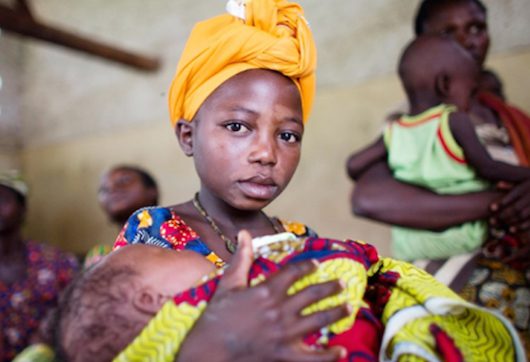
Every minute, 28 girls around the world who are under the age of 18 are forced into marriage. Child marriage is one of the most serious human rights violations of today. An average of 15 million girls are annually forced to marry before they are of legal marriageable age, and the consequences can be severe. Child brides are more likely to face domestic violence, HIV/AIDS and complications during pregnancy. Some brides are able to escape their marriage, but are then forced to return to an abusive home because they are not able to survive on their own.

Although there are laws that prohibit child marriage, these marriages still persist for many reasons, including poverty and cultural traditions. Parents who are poor tend to try to marry their children off at an earlier age in order to have one less mouth to feed. Also, some countries still practice dowry-giving (in which the bride’s family has to give a present to a groom at the time of marriage). Since dowries are lower for younger brides, many families who feel the need to give a dowry try to marry their daughters off at a young age.

Luckily, there are programs in place that work to reduce the amount of child marriages taking place throughout the world. One of the main ways to help is to increase the amount of access to education that girls receive. Girls who are able to complete their education are more likely to be able to support themselves, and therefore less likely to be forced into marriage in order to survive. Educating communities also plays a large part in decreasing the number of child marriages which occur.

Canada has been an important player in the fight against early and forced marriages. As Girls Not Brides states, in 2013, Canada and Zambia co-led a U.N. Resolution to combat child, early and forced marriages. They are working to pass a second resolution by mid-November of 2015. Canada has also give $20 million to UNICEF in order to fight child marriage in Bangladesh, Burkina Faso, Ethiopia, Gambia, Yemen and Zambia.

The Canadian Broadcasting Channel reports that on Wednesday, July 8, 2015, Canada’s Foreign Affairs Minister announced that the government would give $10 million to end child, early and forced marriages worldwide. $2.3 million of that money is to go towards promoting education and skills training for girls in the Commonwealth countries, and the rest of the money is meant for local community groups, governments and NGOs which work to end child marriages.

This increase in funding is part of the Canadian Government’s Muskoka Initiative, a $3.5 billion pledge which focuses on maternal, child and newborn health. Eleven Canadian NGOs are going to share $180 million in the next five years in order to help with projects which address nutrition, sanitation, hygiene and health worker training.
Increasing aid is an important step towards making certain foreign affairs issues a priority. By giving money to fight child marriage, Canada reinforces just how important it is to end the human rights violation of forced marriages once and for all.

– Ashrita Rau

Sources: Yahoo News, Girls Not Brides 1, Girls Not Brides 2, CBC, UNICEF
Photo: Punch
July 24, 2015
https://borgenproject.org/wp-content/uploads/borgen-project-logo.svg 0 0 Borgen Project https://borgenproject.org/wp-content/uploads/borgen-project-logo.svg Borgen Project2015-07-24 19:22:512024-05-27 09:26:05Canada Increases Aid Given to Combat Child Marriages
Global Poverty, Human Rights, Technology

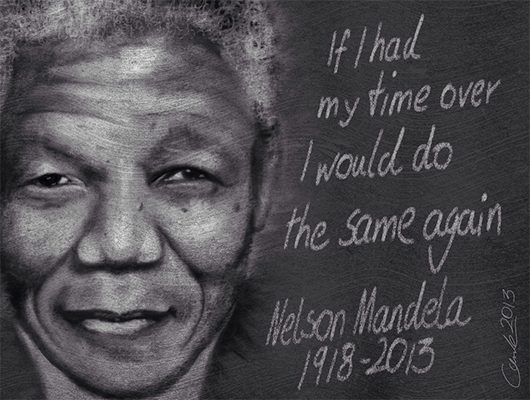
67 Minutes App Commemorates Nelson Mandela

Nelson_Mandela
Uber has been making waves in the transportation wave recently, bringing quick access to rides in cities across the globe. There is a new app that is being deemed the Uber for charity called 67 Minutes.

67 Minutes was released on what is Mandela Day in South Africa – July 18, the great leader’s birthday. The app “is dedicated to helping people do at least 67 minutes of charitable work per year.”

The United Nations (UN) made July 18 Mandela Day officially in November of 2009 after Mandela declared, “It is time for new hands to lift the burdens. It is in your hands now,” in a speech on his birthday in 2008. The UN stated that the day was to be commemorated to acknowledge his dedication to service and his values, as well as his contribution to the struggle toward democracy and a culture of peace around the world.

According to the Nelson Mandela Foundation, the day is a celebration aimed “to serve as a global call to action for people to ‘recognize their individual power to make an imprint and help change the world around them for the better.’” The day’s overall purpose is to cement and remember Mandela’s legacy in continued action towards his ideals, instead of statues and museums.

The idea of 67 Minutes is based on the 67 years Mandela spent striving to improve the human rights of all South Africans. Each minute spent volunteering is meant to remember each year Mandela spent striving towards his goal of equal human rights for all. The app’s goal is to connect those that want to do good with charities and other organizations that can help them do just that.

Ninety-one charities and other organizations have registered with the app, including Amnesty International SA, CHOC, Nkosi’s Haven and Blind SA, to name a few.

Charles Burman of MD Digital Publications, the company that developed and published 67 Minutes, explained it this way: “67Minutes has been developed in such a way, that should you have a type of event in mind, a specific budget, or if you’re simply searching for ideas of how you can help based on your location, you can quickly and easily discover them.”

The app is free to download and it is also free for NGOs and charities to advertise themselves on. There is no regulation on what kind of project that charities can post, although it is the preference of Burman that projects be based around people giving their time, services or goods as opposed to monetary contributions.

To participate, simply download the app and start looking for something to do, just as you would download Uber and look for a ride. Individuals can surf the projects on the app by category or location before choosing one by hitting ‘participate.’ All that is needed is the number and information of the people participating.

Time will tell if 67 Minutes is an effective way for charities to help spread Nelson Mandela’s ideals across the globe. As of now, most of the efforts are concentrated in South Africa. With the spread of the app around the world, it could be a true force for good.

– Gregory Baker

Sources: South Africa, Media Update
Photo: Flickr

July 24, 2015
https://borgenproject.org/wp-content/uploads/borgen-project-logo.svg 0 0 Borgen Project https://borgenproject.org/wp-content/uploads/borgen-project-logo.svg Borgen Project2015-07-24 19:21:332020-07-06 12:41:4667 Minutes App Commemorates Nelson Mandela
Global Poverty, Human Trafficking

Child Labor in Vietnam

Child-Labor-in-Vietnam
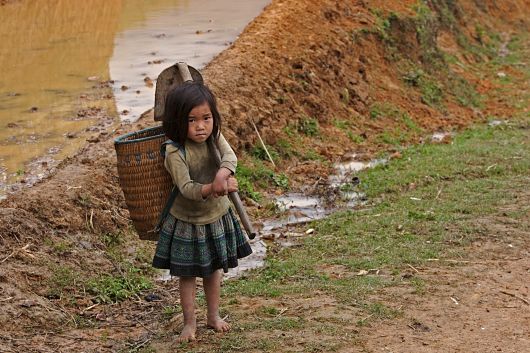
Over 1.75 million Vietnamese children, 9.6 percent of the population of people under 18 in the country, are laborers. Child Labor in Vietnam consists of children who are forced to work long hours, normally with little to no pay, in crowded factories or on agricultural farms. One third of the children work an average of 42 hours per week, and the majority are not able to attend school.

Labor trafficking — both domestically and internationally — is a major problem. As explained by a BBC report, trafficking gangs normally target rural villages, where they offer to take kids to cities in order to give them vocational training or technical skills. Parents normally agree because the people in these remote communities are not aware of the risks of human trafficking. Also, traffickers benefit from the “golden egg” culture of Vietnam, where children are sent to work abroad and send money back for the family.

Rather than receiving vocational training, the children taken from rural villages are forced to work, some in factories, some in domestic labor and others in agricultural labor. BBC discussed the case of Hieu (who declined to give his real name), an 18-year-old boy who was taken from the rural village of Dien Bien. Dien Bien is in the northwest, on the border of Vietnam and China. It is one of the poorest areas in the country.

Hieu was put into a small room, where he and the 11 other kids taken from his village were forced to work from 6 a.m. until midnight. They received no pay, and were beaten with a stick if they made a mistake. Hieu was finally able to escape when he and two other teenage boys jumped out the third story window at 1 a.m. Hieu has since been helped by the Blue Dragon Foundation, a Vietnamese-based charity that works to help child trafficking victims, and is now training to be a mechanic.

Groups like the Blue Dragon Foundation are making a difference. The foundation itself has rescued over 230 child trafficking victims since 2005. However, child trafficking continues to remain an issue in Vietnam, and Blue Dragon co-founder Michael Brosowski explained that it is likely getting worse because people are realizing how lucrative it can be.

Vietnam has been praised for its efforts to crack down on child trafficking internationally, since it has increased the number of prosecutions it holds to help end overseas gang activity. However, Vietnam’s control of child trafficking within the country itself needs to increase. Internal trafficking only became officially recognized in 2011, and traffickers are normally not given harsh punishments. The person who trafficked Hieu and the 11 other children from Dien Bien was fined $500 and his factory was closed down, but he did not go to court.

Part of the confusion over what sort of punishment must be given those who traffic internally in Vietnam stems from the fact that some child laborers are paid. While they are normally paid only a small amount, some argue that if a child who is poor, does not have enough to eat and had dropped out of school goes to a factory and gets paid, it is not necessarily a bad thing.

While there is still debate over trafficking within Vietnam, it has been more firmly established that trafficking Vietnamese children internationally needs to be stopped. As The Guardian said, one of the major destinations for traffickers who send Vietnamese children abroad to work is Britain, where over 3000 children are sent to work on cannabis farms, in nail bars, garment factories, brothels or in domestic labor. In order to combat this influx, in March of 2015, the UK passed a bill designed to increase the prosecution of traffickers and give more rights to those sent into modern slavery. However, some Vietnamese children who are sent to the UK and forced to work in cannabis cultivation are prosecuted for their actions, while their traffickers are not.

In recent years, a lot has been done in order to stop child labor within Vietnam and to stop the flow of Vietnamese children who are being trafficked into modern slavery around the world. However, in order to continue the fight against child labor and human trafficking, laws have to be more strictly enforced and clear conditions have to be set about how to punish those who traffic internally.

– Ashrita Rau

Sources: BBC, The Guardian 1, The Guardian 2, Stop Child Labor: The Child Labor Coalition, Vietnam: The US Embassy, International Labour Organization
Photo: Sapa Trek

July 24, 2015
https://borgenproject.org/wp-content/uploads/borgen-project-logo.svg 0 0 Borgen Project https://borgenproject.org/wp-content/uploads/borgen-project-logo.svg Borgen Project2015-07-24 19:20:362024-12-13 17:52:00Child Labor in Vietnam
Global Health, Global Poverty, Malaria

India on the Verge of Eliminating Malaria

India on the Verge of Eliminating Malaria
The population of India is over 1.2 billion. It is only second behind China in terms of population, but has some of the poorest living conditions of any country of the world. Open sewages are the perfect breeding ground for malaria carrying mosquitos throughout the country.

The center for disease control reports that malaria is located in all areas throughout the country including major metropolitan cities such as Mumbai and Delhi. According to the World Health Organization, 95 percent of the Indian population live in malaria endemic areas, and 75 percent of all cases of Malaria in South East Asia are reported in India.

Yet, despite the odds, India has been pushing to end malaria, and may be very close to realizing that goal.

According to WHO, India had over 883,00 cases of malaria in 2013. The number was 2 million in the previous years, thus halving the numbers that were recorded throughout the early 2000s. And that trend is continuing.

The Indian National Vector Borne Disease Control Programme (NVBDCP) has been leading the charge and have been utilizing efficient and successful tactics to combat the spread of malaria. The first and foremost is early case detection and prompt treatment.

Dr. A C Dhariwal, the Director of the NVBDCP, said how, “Through rapid diagnostic tests, artemisinin-based combination therapy, long lasting insecticidal nets and indoor residual spraying, we’ve been able to bring down the rates of malaria and reduce the number of deaths.”

The program also has four phases to end malaria: control, pre-elimination, elimination and prevention of reintroduction. Both treatment strategy and the phase strategy are results of the NVBDCP implementing all the tools the World Health Organization recommended to India to fight malaria.

The country is currently on phase two of pre-elimination and is targeting rural villages and communities where the population is at least 1000 citizens. In order to complete this phase, India has to achieve an annual parasite incident (AP) of less than 1 per 1000 in all districts within all states. Currently India is at 74 percent and steadily climbing.

Many of the people who are carrying out the effort are women. The Indian Ministry of Health and Family Welfare has deployed more than 900,000 female volunteers throughout the country. These women are chosen from their local communities and are trained in administrating early detection and treatment protocols.

If all goes well, India plans to reach the elimination phase by 2017 and completely eradicate malaria by 2030. This would be right on track with world goals of reducing malaria by 90 percent the same year globally. Experts say that to reach the target, all countries must contribute a total of $100 billion to organizations fighting malaria. Key contributors include WHO, the United States, the United Kingdom and The Bill and Melinda Gates Foundation.

The United States should allocate more aid towards aiding India fight Malaria. India is an ally and a strong economic partner to the U.S. A healthy India means more opportunities for U.S. goods to reach the world’s largest middle class population. That sounds like a healthy investment.

– Adnan Khalid

Sources: Center for Disease Control, National Vector Borne Disease Control Programme, United Nations, WHO 1, WHO 2
Photo: Columbia University Medical Center

July 24, 2015
https://borgenproject.org/wp-content/uploads/borgen-project-logo.svg 0 0 Borgen Project https://borgenproject.org/wp-content/uploads/borgen-project-logo.svg Borgen Project2015-07-24 19:19:462024-06-11 02:48:10India on the Verge of Eliminating Malaria
Global Poverty

How One Healthcare App is Changing Lives in Africa

Healthcare_App
Shimba Technologies, a mobile software developer based in Nairobi, is continuing to expand the reach and availability of its all-in-one healthcare app, MedAfrica, in an effort to expand access to online health services for all Africans.

Launched in November 2011, MedAfrica was recognized as a Top 10 mobile app in Demo.com’s app competition in Silicon Valley. The app had more than 70,000 users by March 2012, and currently sees more than one thousand downloads every day. Intended to provide access to health information among Africa’s most vulnerable people, MedAfrica provides access to consultation with certified medical practitioners, scheduling with local medical facilities, drug services, and symptoms monitoring.

“Our mission is to increase access to health related content and services to save lives and build a healthy population, our target being to reach every household in Africa”, said Jackline Cheruiyot, MedAfrica team leader at Shimba Technologies. “If the current pace of adoption in Kenya is any indication, such a target is no pipe dream.”

According to the World Health Organization, 37 percent of Africans currently reside in urban areas, meaning the majority of people live in rural areas lacking substantially developed social infrastructure. While the proportion of urban residents is expected to increase to 53 percent by 2030, the vast majority of city-dwellers in sub-Saharan Africa live in slums, where access to health services is lacking and the high population density increases the spread of communicable disease.

“A significant share of ill health in slums stems from poor access to sanitation and clean drinking water. In 2000, 30-50% of African urban dwellers lacked a safe water supply”, writes Brodie Ramin, a Professor of Health at the University of Ottowa. “Flooded areas and ditches, latrines and septic tanks are key reservoirs that perpetuate cholera, malaria, dengue and yellow fever in urban areas. Infectious disease outbreaks are also precipitated by the high population density found in these areas, with overcrowding triggering epidemic-prone infections like pertussis and influenza.”

As of 2009, per-capita spending on health services in Africa was $83, less than two percent of average spending in high-income countries. With health spending generally stagnant throughout the region, the availability of online health services will become more and more significant for Africans living in moderate to extreme poverty. Between 2000 and 2012, the number of Internet users throughout Africa grew more than 3,600 percent to 167 million. Self-diagnosis of noncommunicable disease (such as hypertension, heart disease, diabetes and stroke) will become increasingly possible as Internet access pervades urban populations.

“Affordable access [to Internet] is no longer a luxury”, said connectivity advocate Steve Song in an interview with Africa in Fact magazine. “It is a tide that raises all ships. It creates efficiencies at every level from the rural farmer to the large corporation…It can enable better healthcare, better education, better services all round. And perhaps most importantly, it opens the doors to innovation, to new ideas and new opportunities for everyone.”

Increased access to online healthcare products like MedAfrica can also remove the need for low-income people to physically attend medical facilities and pay for in-person consultation, activities which carry high opportunity costs with respect to time and wages. The more quickly and effectively a person can access medical advice or diagnoses, the more time and money they can invest in activities that generate income for themselves, their families, and their communities.

As access to services like MedAfrica becomes more ubiquitous, healthcare in Africa will continue to become increasingly efficient. Medical facilities will be better able to focus resources on non-preventable disease, and people in urban populations will be better equipped to confront the medical conditions that pervade their communities. The WHO estimates that improvements to healthcare access could increase the life expectancy of at-risk Africans up to ten years, a prerequisite for economic growth and an indicator of increasingly friendly conditions for private investment. These improvements are auspicious for potential American investment in African healthcare markets as well as at-risk African people as a whole.

– Zach VeShancey

Sources: African Business Review, MedAfrica, All Countries, WHO, UN, NCBI
Photo: Flickr

July 24, 2015
https://borgenproject.org/wp-content/uploads/borgen-project-logo.svg 0 0 Borgen Project https://borgenproject.org/wp-content/uploads/borgen-project-logo.svg Borgen Project2015-07-24 19:15:422024-06-04 01:08:12How One Healthcare App is Changing Lives in Africa
Global Poverty

Rwanda Calls to End Tied Aid from Donors

Rwanda Calls to End Tied Aid from Donors
In 2011, Rwanda led a coalition of African countries through negotiations that pushed for ending tied aid from donor countries. Tied aid can increase the cost of a development project 15 to 30 percent and often delays the time it takes to receive aid.

Since the Millennium Development Goals (MDGs) end at the end of 2015, Rwanda has reiterated their position to untie aid for the new set of 17 Sustainable Development Goals (SDGs) in order to take more effective action to achieve the new goals.

“We want to discuss how to finance SDGs but we want to change the way things are done because donors can promise us the money but you cannot use it because of the conditions and strings attached,” says Claver Gatete, Rwanda’s Finance and Economic Planning minister.

Rwanda has successfully achieved all of their MDGs except improving nutrition, making it one of five countries to do so in Africa. However, many of the issues surrounding tied aid in Rwanda deals with homosexual rights, which Rwanda argues is unfair to their culture.

The European Network on Debt and Development released a statement in 2013 that 20 percent of bilateral aid is tied. In return, the tied aid reduces spending power by 15 to 40 percent.

One way countries will tie aid is by controlling how a country spends the money, often forcing them to buy products such as food from the donor country. Therefore, instead of being able to purchase food from local markets in order to reach more of the population in a short time frame, the country may have to wait weeks or months to receive food items.

The World Bank and the IMF often tie their aid for Structural Adjustment Programs (SAPs) and the average loan comes with 67 conditions. SAPs can hurt a country economically because many of the conditions set force countries to lay off public workers and privatize more industries, resulting in a higher unemployment rate and public dissatisfaction.

By untying aid, it would increase its effectiveness and improve the rights of recipient countries to determine their own development course.

Goal 17 of the SDGs states, “Strengthen the means of implementation and revitalize the global partnership for sustainable development.” One way to improve implementation to achieve sustainable development is by allowing more autonomy for recipient countries to control their own development programs.

– Donald Gering

Sources: All Africa, The Guardian, OECD, UN, UNA
Photo: Pixabay

July 24, 2015
https://borgenproject.org/wp-content/uploads/borgen-project-logo.svg 0 0 Borgen Project https://borgenproject.org/wp-content/uploads/borgen-project-logo.svg Borgen Project2015-07-24 19:15:052024-12-13 17:52:02Rwanda Calls to End Tied Aid from Donors
Charity, Global Poverty, Technology

YouTubers Supporting Charity

YouTubers
YouTube has allowed millions of people to create content that will possibly reach an audience. For some YouTubers, creating content leads to an enormous amount of success, creating a massive following and giving them celebrity status. As a result, the past 10 years have seen a great increase in the number of online celebrities.

What these celebrities reveal is the power in social media. If top YouTuber PewDiePie, who posts comedy skits along with “Let’s Play” videos of games such as Grand Theft Auto V and The Witcher III, can have over 38 million subscribers to his channel, is YouTube not also a platform on which one can spread ideas to others?

PewDiePie thinks so. In 2013, the vlogger posted a video titled “10 MILLION BROS UNITE!-Charity: Water” on YouTube. In it, he challenged his subscribers (who at the time numbered 10 million) to support the efforts of nonprofit organization Charity: Water to promote access to clean water in the developing world. Along with launching an online campaign, PewDiePie agreed to donate one dollar to Charity: Water per every 500 views earned by the video. PewDiePie’s studio “Maker Studios” also agreed to donate one dollar per every 500 views on the video.

The campaign raised $446,462 for Charity: Water, becoming a huge success for the YouTuber. Perhaps even more great is the fact that PewDiePie is not the first YouTuber to promote making a difference.

For Lewis Brindley and Simon Lane, who form comedic gaming channel Yogscast, charity is part of what being entertainers is about. In December of each year, the team holds fundraising initiatives, streaming play-throughs of games and challenges to promote charity. Their most recent effort, titled “Jingle Jam,” raised over 1 million dollars for a variety of charities, including Oxfam International, Doctors Without Borders and End Polio Now.

Along with PewDiePie and Yogscast, YouTuber Connor Franta has taken advantage of the platform to promote social justice. Franta raised over $230,000 for The Thirst Project through crowdfunding platform Prizeo. To do this, Franta encouraged fans to enter a contest in which they donated to the charity, and the winner was given the opportunity to get coffee with Franta in Los Angeles.

The power of social media is the speed with which it allows us to spread ideas. For YouTube celebrities, using the platform that allowed them to achieve celebrity status to promote giving is perhaps the ultimate way to give back.

– Andrew Michaels

Sources: PC Games N, Reason Digital, Huffington Post , Youtube 1, Youtube, Charity: Water
Photo: Youtube

July 24, 2015
https://borgenproject.org/wp-content/uploads/borgen-project-logo.svg 0 0 Borgen Project https://borgenproject.org/wp-content/uploads/borgen-project-logo.svg Borgen Project2015-07-24 19:12:592024-12-13 17:54:03YouTubers Supporting Charity
Education, Global Poverty

Boko Haram’s Threat to Education in Nigeria

Boko_Haram’s_Threat
Nigeria has recently overtaken South Africa as the largest economy on its continent. In spite of its upward trajectory Nigeria still has much further to go. Boko Haram, an Islamist militant organization, has for years terrorized Nigerians by attacking officials, civilians and public institutions. Since 2009 Boko Haram has killed more than ten thousand people and displaced 1.5 million.

The organization was founded by Mohammed Yusef in 2002 in Maiduguri, in the northeastern state of Borno, to transform Nigeria into an Islamic state ruled through sharia law. Back then however, its goals did not include violent insurgency. Rather the group sought to galvanize Nigeria’s northern Muslim population against the alleged corruption in the southern government and to challenge the regional economic disparities between the Christian South and Muslim north.

When Boko Haram protested a motorbike helmet law in 2009 they became targets of armed police brutality which then sparked revolts in many of the Northern provinces. This led to military suppression of the protests, which killed 800 and led to the capture and eventual extrajudicial killing of Yusef and other sect leaders. From there, the violence began and the grouped splintered under its fragmented leadership.

Today, the elusive Abubaker Shekau leads Boko Haram’s insurgency against the Nigerian government in Borno. Shekau holds almost superhuman status; allegedly killed at least three times by the Nigerian military, videos of the enigmatic leader still continue to surface. According to The Council on Foreign Relations, “Nigerian officials and many experts are convinced that Shekau has become a brand adopted by leaders of different factions of Boko Haram, and that the men in the videos are actually look-alikes.”
Last year Shekau’s organization claimed responsibility for the kidnappings of 200 girls from a public secondary school in Chibok, Borno State, in north east Nigeria. Smaller attacks on other schools and universities preceded this tragedy and highlight one of Boko Haram’s most common targets: education. The name ‘Boko Haram’ roughly translates to ‘Western Education is Forbidden.’

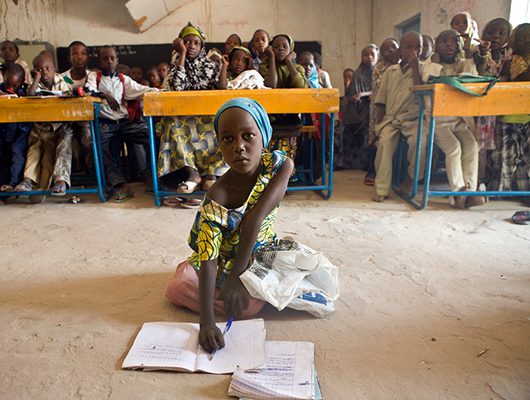
Through strong arm tactics, Boko Haram has made education in northeastern Nigeria all but impossible. In the wake of the kidnappings, most secondary schools in Borno have closed. This move is particularly advantageous for Boko Haram. Closing schools leaves boys more vulnerable to its recruitment methods and perpetuates poverty. Likewise, out of school girls are more likely to be married as teens. In total, 10 million children out of a population of 160 million are not attending school. This figure represents the largest number of out of school children in the world.

However, Boko Haram is not entirely responsible for the dismal state of education. The Nigerian government has done little to improve its country’s education system. Although it is the largest economy on the continent, Nigeria spends less on education than almost every other African country. Common practice dictates that government spending on education should represent 6 percent of a country’s GDP and 20 percent of its budget. In comparison, Nigeria spends only 1.5 percent of its GDP and 6 percent of its budget on education. Despite meager spending, Nigeria’s budget could allow for three times its investment in education.

With nearly a third of the population between the ages of 10 and 24, a stronger spending in education could radically improve life in Nigeria. However, with schools closing throughout the country, the Nigeria must also focus on rooting out Boko Haram and providing better security for its students. If done in tandem, Nigeria will experience the undeniable benefits of an widespread effective education system.

– Andrew Logan

Sources: Al Jazeera 1, Al Jazeera 2, The Brookings Institute, Council on Foreign Relations, The Economist, The Guardian
Photo: Flickr

July 24, 2015
https://borgenproject.org/wp-content/uploads/borgen-project-logo.svg 0 0 Borgen Project https://borgenproject.org/wp-content/uploads/borgen-project-logo.svg Borgen Project2015-07-24 19:11:362020-07-06 14:37:20Boko Haram’s Threat to Education in Nigeria
Developing Countries, Disease, Global Poverty, Health

Ascariasis: A Major Health Problem in the Developing World

Ascariasis

Throughout the developing world, one kind of disease remains more common than any other: worms. In fact, according to The Huffington Post, recent figures have suggested that nearly every person residing in a developing country has some form of worm infection, due to the abundance of worm larva in soil all over the world.

While there are a variety of these infections, one in particular called ascariasis, or ascaris, has become so widespread that, according to the Center for Disease Control, it “account[s] for a major burden of disease worldwide.” In total, 807 million to 1.2 billion people around the world are infected with this parasitic illness, which is also classified as a neglected tropical disease.

It is caused by the consumption of its eggs, which reside in contaminated soil. This happens when fingers that have touched contaminated soil are put in the mouth or if produce has not been properly washed, cooked and peeled.

After ingestion, the eggs make their way to the intestine, where they hatch into larva. The freshly spawned larvae then wait to develop into fully mature worms. An adult female worm can grow up to around 30 cm in length while in the intestine, all while producing eggs that will then return to the soil via the host’s feces.

Upon reaching maturity, these adult worms wiggle through the intestinal wall and make their way towards their host’s lungs through the blood stream. This is where things get even more disgusting. Once near the lungs, they reside by the back of the throat, where they once again lay their eggs and continue the cycle.

Sufferers often do not experience any symptoms, but some of the most common signs of the disease are abdominal pain, coughing, difficulty breathing and fever. In more severe cases, excessive worm growth can cause intestinal blockages. As the worms migrate to the lungs, they are also one of the most common causes of Asthma in the developing world.

Ascariasis can stunt the growth of young children and this age group is also its most common target. When children play in the soil they expose themselves to risk of infection when putting their fingers in their mouths afterward. While usually not lethal, ascaris takes the lives of 60,000 annually, most of which belong to children.

In order to combat this disease, the World Health Organization and many other international aid organizations have attempted mass de-worming efforts. Using the two drugs albendazole and mebendazole, these groups have made progress by treating whole communities.

Another effective way of preventing ascaris does not involve drugs at all and instead relies on health education. These campaigns teach those in afflicted areas how to keep a sanitary kitchen and how to consume food safely, without the risk of catching the disease.

While treatment efforts are ongoing, less than 40 percent of the world’s children in need of treatment have not actually received any. This accounts for more than 850 million children worldwide and stands as one of the largest public health issues in the world. In order to improve the lives of millions, deworming campaigns must carry on.

– Andrew Logan

Sources: The Center for Disease Control, The Deccan Herald, The Huffington Post, The New York Times, The World Health Organization
Photo: Flickr

July 24, 2015
https://borgenproject.org/wp-content/uploads/borgen-project-logo.svg 0 0 Borgen Project https://borgenproject.org/wp-content/uploads/borgen-project-logo.svg Borgen Project2015-07-24 19:02:342024-05-27 09:25:54Ascariasis: A Major Health Problem in the Developing World
Global Poverty

Large Solar Plant Coming to West Africa

Large-Solar-Plant-Coming-to-West-Africa
Mali has signed an agreement with Oslo-based renewable energy specialist Scatec Solar to build West Africa’s first industrial-scale solar plant. The plant will be built near the southwestern city of Segou and has a life expectancy of 25 years.

According to Scatec Solar’s website, the company is “an integrated independent power producer, aiming to make solar a sustainable and affordable source of energy worldwide. Scatec Solar develops, builds, owns and operates solar power plants and delivers power from 219 megawatts in the Czech Republic, South Africa and Rwanda.”

Mali’s energy minister, Mamadou Frankaly Keita, said, “This landmark agreement signals the government’s commitment to meet the nation’s growing energy demand and to provide clean, renewable and affordable energy to our people.”

In recent years, Mali has been plagued by chronic electricity outages. In 2013, the government reported that it was only able to supply 45 percent of its 16 million people with electricity.

But with the addition of this solar plant, the problem of electricity shortages will be solved. The plant is expected to produce enough electricity each year to power 60,000 family homes, while cutting annual carbon dioxide emissions by 46,000 tons.

It has been reported that Mali’s EDM-SA energy company, two thirds of which are owned by the states and one third of which is owned by the Aga Khan group, is in crisis. It is failing to ensure an adequate supply of electricity, despite state subsidies worth 87.7 million euros in 2013.

With this new solar plant, Scatec will own 50 percent of the Segou plant while the World Bank’s International Finance Corporation will hold 32.5 percent, leaving the remaining equity to local power partner Africa Power 1.

Scatec Solar will construct the plant and will also provide operation and maintenance services after the plant is connected to the electricity grid.

The chairman of Africa Power 1 SA and General Administrator of Scatec Solar West Africa SA, Dr. Ibrahim Togola, said, “Today’s event is historic because Mali now becomes the first country to install the largest solar grid connect power plant in the region. This high-profile joint venture, in which Malian citizens participate, will serve as a model to launch the solar era in West Africa.”

By tapping into the available sunlight, sunlight that is available almost all day, citizens in Mali will be able to use this clean and free energy. It will also have a positive impact on the air by reducing carbon dioxide emissions.

Although solar panels are expensive at the beginning, the reduction in electricity bills can be seen in about seven years after installation. With the large solar plant being built in Mali, homeowners do not need to pay the expense of private solar panels.

Hopefully, the solar plant in Mali is a test run for the effectiveness of solar electricity in West Africa and is something that will soon be present in the rest of Africa.

– Kerri Szulak

Sources: Africa Renewal Online , Phys.org, Scatec Solar
Photo: Aspire Africa

July 24, 2015
https://borgenproject.org/wp-content/uploads/borgen-project-logo.svg 0 0 Borgen Project https://borgenproject.org/wp-content/uploads/borgen-project-logo.svg Borgen Project2015-07-24 18:55:362024-06-05 01:28:27Large Solar Plant Coming to West Africa
Page 1915 of 2178«‹19131914191519161917›»

Get Smarter

  • Global Poverty 101
  • Global Poverty… The Good News
  • Global Poverty & U.S. Jobs
  • Global Poverty and National Security
  • Innovative Solutions to Poverty
  • Global Poverty & Aid FAQ’s
Search Search

Take Action

  • Call Congress
  • Email Congress
  • Donate
  • 30 Ways to Help
  • Volunteer Ops
  • Internships
  • Courses & Certificates
  • The Podcast
Borgen Project

“The Borgen Project is an incredible nonprofit organization that is addressing poverty and hunger and working towards ending them.”

-The Huffington Post

Inside The Borgen Project

  • Contact
  • About
  • Financials
  • President
  • Board of Directors
  • Board of Advisors

International Links

  • UK Email Parliament
  • UK Donate
  • Canada Email Parliament

Get Smarter

  • Global Poverty 101
  • Global Poverty… The Good News
  • Global Poverty & U.S. Jobs
  • Global Poverty and National Security
  • Innovative Solutions to Poverty
  • Global Poverty & Aid FAQ’s

Ways to Help

  • Call Congress
  • Email Congress
  • Donate
  • 30 Ways to Help
  • Volunteer Ops
  • Internships
  • Courses & Certificates
  • The Podcast
Scroll to top Scroll to top Scroll to top