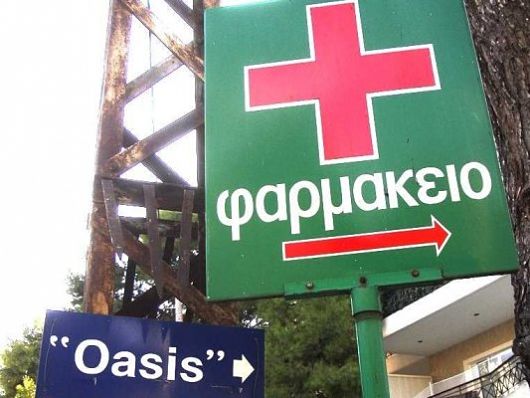
Eyes have centered on Athens in recent weeks as Greece has attempted to manage its overwhelming debt. This is the climax of a five year decay that has left Greece’s finances at a standstill and its healthcare system in critical condition. With banks limiting withdrawals to just 60 euros per day, it is hard to tell which has become scarcer, money or medicine.
Since 2010, Greece’s public healthcare system has decreased its spending on drugs by 32 percent and at the same time owes 1.2 billion dollars to international drug manufacturers. This reflects an overall declining trend; between the years of 2009 and 2012, government healthcare spending fell by 25 percent.
These reductions are visible throughout treatment centers in Greece. One of the largest hospitals in Athens, Gennimatas General Hospital, has faced shortages of antibiotics. It also lacks the budget to fix its damaged medical equipment which has resulted in week long waits for procedures such as CAT scans and MRIs.
Unfortunately, healthcare struggles such as these have become common to Greeks. Currently, 27 percent of people lack employment which has led to a significant loss of healthcare coverage. Many can no longer afford even government subsidized insurance while free health care eligibility has become much more stringent; 2.5 million people, essentially a quarter of all Greeks, lack health insurance.
Even though less people have coverage, the usage of Greece’s public healthcare system has spiked. As the crisis escalated in 2010, public inpatient and primary care services experienced six percent more usage. Just one year later, this figure had more than tripled to nearly a 22 percent increase in healthcare usage. With fewer funds but even more people to treat, the system is folding in on itself.
Years ago, before the recession triggered Greece’s current crisis, significant faults in Greece’s health care already existed and hinted at an eventual failure. During the first decade of the 21st century, its healthcare system experienced massive and untenable increases in expenditures.
According to a World Health Organization Report, from 2003 to 2009, “general government spending rose from 59.5 percent to 70.3 percent of total health spending.” Pharmaceutical spending also increased by 80 percent, from 293 euros per capita in 2003 to 528 euros per capita in 2010. In 2009, as Greece approached the end of the decade, it had accumulated a 50 billion euro healthcare deficit.
Inefficient management, ineffective distribution of medical resources and increasing government spending on hospital debts were the main culprits behind the healthcare bubble, and its inevitable bursting.
Today, average Greeks can feel the unpleasant consequences of years of mismanagement. Those who arrive at Greece’s underfunded hospitals for treatment can often expect underhanded tactics like informal doctoral payments, which are essentially bribes. In one instance, a women who given birth in a hospital was prohibited from receiving her baby until her payments were made.
While more prominent hospitals like Evangelisimos do not wield these dishonest methods, their conditions are still poor. Even as the largest hospital in Greece, Evangelisimos still lacks enough beds and recently has run at 10 to 20 percent beyond its capacity. A patient noted that her single room that was crammed with three beds yet only housed one other person. This was due to a ceiling collapse that had obstructed the third vacant bed. Without funds to repair the damage, the hospital was forced to continue using the room.
Problems are not just contained to hospitals and treatment centers; the decline in prosperity itself has led to health issues across the nation. Since the crisis, suicides have increased dramatically in Greece. Between the years of 2010 and 2012, they rose by 35 percent.
Nutrition and obesity have become another burgeoning health issues as families have struggled to afford healthy foods. Experts have noticed this increase in particular among Greece’s poor. Ironically, economic down turn has also caused many to eat more at home to save money, with the consumption of pizza and fast food having fallen by over 20 percent.
In order to revive the Greek healthcare system, the nation’s government, the ‘troika,’ consisting of the European Commission, the International Monetary Fund and the European Central Bank have planned a set of strategies.
For these groups seeking solutions, the name of the game is efficiency. They have planned to overhaul Greece’s healthcare administration, hospitals and districts in order to effectively distribute healthcare resources evenly throughout the country. In order to prevent unchecked spending like before they have advised greater financial oversight.
While the Troika faces the resistance of residual bad habits, they hope for Greece to emerge from its healthcare crisis with a well-planned and functional health care system. And it seems that it has that potential: among its European Union peers, Greece actually has the highest concentration of physicians. Now, the nation must work to develop a system through which both its doctors and patients can thrive.
– Andrew Logan
Sources: World Health Organization, The National Center for Biotechnology Information, CNN, The Washington Post, The Guardian
Photo: 99GetSmart