• Link to X
  • Link to Facebook
  • Link to Instagram
  • Link to TikTok
  • Link to Youtube
  • About
    • About Us
      • President
      • Board of Directors
      • Board of Advisors
      • Financials
      • Our Methodology
      • Success Tracker
      • Contact
  • Act Now
    • 30 Ways to Help
      • Email Congress
      • Call Congress
      • Volunteer
      • Courses & Certificates
      • Be a Donor
    • Internships
      • In-Office Internships
      • Remote Internships
    • Legislation
      • Politics 101
  • The Blog
  • The Podcast
  • Magazine
  • Donate
  • Click to open the search input field Click to open the search input field Search
  • Menu Menu

Archive for category: Global Poverty

Key articles and information on global poverty.

Global Poverty, Malaria, Technology

How an App to Treat Malaria is Working in Mozambique

App to Treat MalariaFor the people of Mozambique, malaria is a familiar and deadly part of life. As one of the world’s leading victims of the disease, Mozambique sees thousands of its citizens die as a result every year. Global initiatives have fought hard to treat and prevent malaria, including awareness campaigns and insecticide-treated nets. Since 2015, though, Mozambique has used an innovative resource: a smartphone app to treat malaria.

Mozambicans in rural areas often receive their health care from government-funded community health workers. These community health workers (agentes polivalente elementare, or APEs) are trained to diagnose and treat Mozambique’s most ubiquitous diseases, including malaria. Seeing a need to improve treatment, APEs in Mozambique have been provided with the CommCare app, created by the Malaria Consortium’s inSCALE research project and funded by the Bill & Melinda Gates Foundation.

The CommCare app allows APEs to better treat their patients through a number of means. It teaches better consultation methods through images and audio. It also creates better communication between APEs and their supervisors and functions, so medical records can be uploaded anywhere. App users in Mozambique have reported that it provides for clearer and more accurate treatment. New methods for recognizing and treating malaria are more easily transmitted to remote areas. The app to treat malaria has given community health workers better tools, communication and resources to assist in their vital work.

The entire population of Mozambique is at risk for malaria infection, typically spread by insects. The disease presents itself through flu-like symptoms and can be fatal if left untreated. Prior to 2010, there are no official figures for the number of deaths due to malaria. Since 2010, deaths to malaria have decreased and, in 2015, dipped to an all-time low.

On a morose but encouraging note, malarial confirmations have risen concurrently with the decreasing deaths. This suggests that malaria is being recognized, diagnosed and treated in Mozambique.  

Malaria is a relatively easy disease to treat. With early diagnosis, antimalarial medications can clear out the parasite and cure the patient. African countries are prone to malaria because of several factors: mosquitoes are rampant, medical clinics are scarce and preventative measures are often difficult to come by.

Because early diagnosis is so vital to a malaria victim’s odds of survival, Mozambique has taken steps to bridge the gap between rural areas and medical treatment. Aside from preventative measures, Mozambicans in remote areas rely on APEs to treat the country’s deadliest afflictions. The CommCare app gives APEs the resources to more accurately diagnose malaria and treat it appropriately.

Mozambique is seeing a positive trend in recent years. There are more diagnoses and fewer deaths. Eradication of the disease is still far off; however, using technology such as the CommCare app to treat malaria is guiding Mozambique in a positive direction. Countries around the world would be served well by adopting the same approach to the fight against malaria.

– Eric Paulsen

Photo: Flickr

November 14, 2017
https://borgenproject.org/wp-content/uploads/borgen-project-logo.svg 0 0 Borgen Project https://borgenproject.org/wp-content/uploads/borgen-project-logo.svg Borgen Project2017-11-14 01:30:392024-05-27 09:34:08How an App to Treat Malaria is Working in Mozambique
Aid, Global Poverty

Emergency Livestock Vaccination in Mosul

Livestock vaccination in MosulIt has been four months since Iraq’s successful recapture of their second-largest city, Mosul, from Islamic forces. After being under siege for three years, Iraq now has the opportunity to implement livestock vaccination in Mosul. Livestock is the second largest form of agricultural income for Mosul residents and approximately 12 million Iraqis depend on agriculture to live securely.

Since Mosul’s recapture in July 2017, thousands of families who had fled during the conflict returned to their homes to find their farms desecrated. Water supplies were contaminated, agricultural supplies destroyed and any surviving livestock had not been vaccinated since 2014. The lack of livestock vaccinations poses a threat of epidemic diseases that can spread to local residents and neighboring countries.

The United Nations and Iraq have come together to implement an emergency animal health campaign to vaccinate all livestock in the hopes it will end the fear and possibility of being exposed to an epidemic disease. Nearly one million sheep, goats, cattle and buffalo are said to be vaccinated. The Iraq Humanitarian Fund will provide the funds for the vaccinations in partnership with Iraq’s Ministry of Agriculture. In addition, around 60,000 animals will be provided with nutrient-dense food.

The destruction of agriculture will evidently put a delay in the rehabilitation process, as it will take both time and money to rebuild the land. The Food and Agriculture Organization of the United Nations (FAO) released a statement seeking $74.5 million to assist 1.39 million Iraqis. The costs will include agricultural rehabilitation, vaccination and feeding of livestock and expansion of income-generating work and activities for the Iraqi people.

“FAO is committed to ensuring that livelihoods are protected, to promote people’s self-reliance and dignity, and reduce dependence on food assistance,” says Iraq FAO representative Fadel El-Zubi.

With the success of infrastructure restoration and livestock vaccination in Mosul, residents will rely less on humanitarian aid and will have access to producing and selling their own food. By next year, 200,000 Iraqi people should be able to begin earning an income from their agriculture again.

– Brianna Summ

Photo: Flickr

November 14, 2017
https://borgenproject.org/wp-content/uploads/borgen-project-logo.svg 0 0 Borgen Project https://borgenproject.org/wp-content/uploads/borgen-project-logo.svg Borgen Project2017-11-14 01:30:392024-05-29 22:29:10Emergency Livestock Vaccination in Mosul
Global Poverty

Infrastructure in Panama: One of the Best in Latin America

Infrastructure in PanamaPanama’s infrastructure is one of the best systems in Latin America. Infrastructure in Panama includes a network of roads and highways, the Panama Railroad, over 100 international and domestic airports and, of course, the Panama Canal. In 2013, the government of Panama invested an additional $13.6 billion in improvements to trade, tourism and exports, which includes further improvements to infrastructure in Panama.

Roads & Highways

Panama’s roads are in good condition around Panama City and other urban areas, but are in need of improvements in more rural areas. The Pan-American Highway, the world’s “longest motorable road,” runs through the entire country. Panama is continuing to invest in improvements to its roads and other infrastructure through its Government Strategic Plan that is set to be implemented through 2019.

Railways

Construction of the Panama Railroad first began in 1850, and in 1855 the first train traveled from the Isthmus of Panama to the Pacific Ocean. In 1907, large portions of the railroad had to be moved to make room for the construction of the Panama Canal. Today, the New Panama Railroad takes passengers and freight between the country’s Atlantic and Pacific ports.

Airports

Panama has five international airports. The largest is Tocumen International Airport in Panama City. Tocumen has flights to over 90 cities. Panama has over 100 total airports and its location between North and South America helps it serve as an important hub for connecting flights between the continents.

Panama Canal & Waterways

Construction began on the Panama Canal in 1904 and it officially opened in 1914. The canal belonged to the U.S. until 1999, when ownership was transferred to Panama. It runs 80km along one of the narrowest parts of the country and connects the Atlantic and Pacific Oceans. The Panama Canal is open 24 hours a day, 365 days a year and employs 10,000 people. Panama also has 13 ports, including 5 major ports with container service.

Due to its geography, Panama plays a large role in trade and commerce. This has led to lots of investment being poured into the country’s infrastructure both from the government of Panama as well as from foreign governments and companies. Infrastructure in Panama plays an important role in connecting people throughout the Americas with its system of highways, trains, international airports and waterways.

– Aaron Childree

Photo: Flickr

November 14, 2017
https://borgenproject.org/wp-content/uploads/borgen-project-logo.svg 0 0 Borgen Project https://borgenproject.org/wp-content/uploads/borgen-project-logo.svg Borgen Project2017-11-14 01:30:312024-06-04 01:17:48Infrastructure in Panama: One of the Best in Latin America
Advocacy, Global Poverty

George Clooney and the Clooney Foundation for Justice

Clooney Foundation for JusticeFounded in 2016, by George and Amal Clooney, the Clooney Foundation for Justice seeks to “advance justice in courtrooms, classrooms and communities around the world.” The organization believes that justice requires advocating, through the court system, for the rights of those who are targeted by oppressive governments.

The foundation aims to fight for justice by advancing the principles of equality in susceptible and marginalized societies that are often targeted by hate. The fight also includes advocating for children who lack opportunities to learn and for refugees who are looking to create new lives for themselves abroad.

The Clooney Foundation for Justice has partnered with the Southern Poverty Law Center to help combat hate here in the United States. The foundation provided the center with one million dollars to assist them in their efforts to combat violence. The Southern Poverty Law Center is regarded as the most prominent institution when it comes to monitoring the activities of hate groups and extremists in the U.S. The reason for the donation from the Clooney Foundation for Justice was the violence that occurred after a white nationalist gathering took place in Charlottesville, Virginia in August of this year.

“We are proud to support the Southern Poverty Law Center in its efforts to prevent violent extremism in the United States,” said George and Amal Clooney in a joint statement.

In an effort to provide education to Syrian refugee children, the Clooney Foundation for Justice partnered with UNICEF and donated $3.25 million to enroll thousands of children in school. The Clooneys stated that their donation stemmed from their belief in the fundamental importance of having a formal education. Without an education, Syrian refugee children would be unable to become a productive part of society. Approximately 200,000 Syrian refugee children are without access to education and learning opportunities as their lives have been centered around violence.

The Clooney Foundation for Justice has also developed a program known as TrialWatch, which is a program that monitors and reports on court trials around the world that pertain to human rights issues. A trial observer is placed in the courtroom to monitor the trial and share fairness reports with international lawyers. The program is working to advance equality and human rights for all. Amal Clooney is actually a world-renowned human rights attorney, making her an expert on human rights violations.

The Clooney Foundation for Justice is currently sponsoring the migration of Syrian and Yazidi refugees who have been approved to enter the United States through the Refugee Resettlement program. The organization plans to continue its efforts in providing support to these refugees.

– Blake Chambers

Photo: Google

November 14, 2017
https://borgenproject.org/wp-content/uploads/borgen-project-logo.svg 0 0 Borgen Project https://borgenproject.org/wp-content/uploads/borgen-project-logo.svg Borgen Project2017-11-14 01:30:302024-05-29 22:29:10George Clooney and the Clooney Foundation for Justice
Global Poverty, Women and Female Empowerment, Women's Rights

Women’s Empowerment in Thailand

Women's empowerment in ThailandWomen play key roles in regards to economic wealth and their involvement in the economy leads to a better quality of life for families and communities. According to a new United Nations study, women are projected to make up a majority of the world’s urban dwellers and to lead an increasing number of households. Gender equality in employment, housing, health and education is vital in ensuring the prosperity of future countries.

The need for gender equality is especially prevalent in Thailand where, even though the poverty rate is decreasing, women and children are still at risk of sexual and domestic violence. Thanks to the many issues within Thailand, new human security threats are emerging. Issues include the prevalence of traditional attitudes and stereotypes which validate domestic violence and violence against women, low participation of women in politics and in positions of power, trafficking and exploitation. 

There are steps being taken to address these issues and empower women in Thailand. One of the main disadvantages for women is the inability to access better education, employment and health services. The Women’s Empowerment Fund was established to help women acquire just these things. The fund program, lead by Amporn Boontan, is based in the northern part of Thailand, in the city of Chiang Mai. 

Boontan believes that her new position as Thailand’s regional coordinating group (RCG) representative for JASS Southeast Asia, can help promote the role of women, protect women’s rights and advocate for more protective domestic violence laws. She also maintains involvement with civil society groups like the Thai Youth Action Program where she trains youth in topics like sexual health, youth violence and leadership skills.

The U.N. Women organization works with the government in Thailand and with other partners to carry out national and international goals relating to the empowerment of women. These goals will improve women’s empowerment in Thailand and continue to lower the poverty rates in the country.

– Lorial Roballo

Photo: Flickr


November 14, 2017
https://borgenproject.org/wp-content/uploads/borgen-project-logo.svg 0 0 Borgen Project https://borgenproject.org/wp-content/uploads/borgen-project-logo.svg Borgen Project2017-11-14 01:30:232024-05-29 22:29:17Women’s Empowerment in Thailand
Advocacy, Children, Developing Countries, Global Poverty, Human Rights

Ending Child Marriage Could Reduce Global Poverty

Global Partnership for EducationIn many developing countries it is common practice to marry off girls before the age of 18. Consequently, when girls are married at such a young age, they do not receive an education. This practice can cost countries billions of dollars, according to the World Bank. However, recent studies show that ending child marriage could reduce global poverty.

Child marriage, which primarily affects girls, has many consequences. It causes overpopulation, poor health for said child and it tends to lead to violence. Conversely, ending child marriage would have lasting social advantages and economic benefits, such as an increase in the girls’ earnings.

“Child marriage not only puts a stop to girls’ hopes and dreams. It also hampers efforts to end poverty and achieve economic growth and equity,” said Quentin Wodon, lead author of the World Bank’s report on the economic cost of child marriage. “Ending this practice is not only the morally right thing to do but also the economically smart thing to do.”

Ending child marriage would save countries a lot of money — by 2030, countries could save $327 million in education budgets alone. In Africa, seeing an end to child marriage could save up to $5 billion as a result of lower malnutrition, according to the Global Partnership for Education. It could also reduce fertility rates by 10 percent, which would reduce overpopulation and global poverty by extension.

So, what’s the best way to end child marriage? Simply keeping girls in school.

Education is the best way to end child marriage because it allows girls to be more independent and strong-minded. The longer a girl is in school, the less likely it is that she will be married young. Unfortunately, there are societies that deem education a luxury and a “waste of resources.” Such societies are also threatened by the independence a female would gain by being educated.

Failure to educate girls has its own negative implications. In the same manner that ending child marriage can increase a girl’s earnings in the future, so too can having an education. In fact, some countries lose out on an estimated $92 billion of economic growth for failing to properly educate their girls.

Pooja (not her real name), a girl from Nepal, knew education would have given her a better life. “If I had studied I would have been working. But my parents held my marriage and I couldn’t do anything after marriage. I now have children to look after,” she said.

Everything is connected. Seeing girls educated could potentially end child marriage which would potentially reduce global poverty.

– Dezanii Lewis

Photo: Flickr

November 14, 2017
https://borgenproject.org/wp-content/uploads/borgen-project-logo.svg 0 0 Borgen Project https://borgenproject.org/wp-content/uploads/borgen-project-logo.svg Borgen Project2017-11-14 01:30:202024-05-27 23:59:47Ending Child Marriage Could Reduce Global Poverty
Global Poverty, Hunger

Mitigating the Effects of Hunger in East Timor

Hunger in East TimorThe situation in Timor Leste (East Timor) has been characterized by war and oppression for decades. In 1975, after Portuguese colonialism finally abdicated control of the region, there began a brutal war between the people of Timor Leste and neighboring Indonesia.
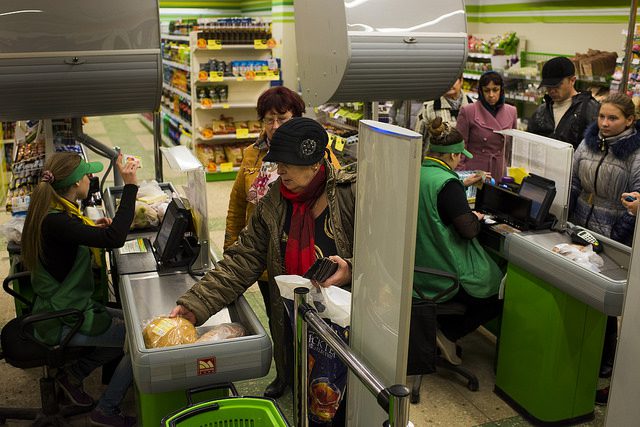
The war resulted in a 24-year Indonesian occupation of Timor Leste, and a cumulative death toll of 200,000 people – nearly one-quarter of the current population. Throughout the country’s occupation, there were guerilla movements working to remove Indonesia from power. However, the final decision to leave Timor Leste to its own devices came after a change of leadership occurred in Indonesia and U.N. intervention.

The Timorese voted for independence in 1999 – the result was a 78 percent majority. Unfortunately, the vote was far from respected. Those who did not wish to be independent of Indonesia instigated yet another insurgency against the majority of Timorese, necessitating more direct United Nations involvement. Finally, in 2002, after two years of U.N. Peacekeeping presence, full independence was attained.

However sweet this victory may have been, it did little to alleviate the problems of poverty, malnutrition and hunger in East Timor. Hunger is arguably the country’s most urgent problem. It affects nearly 100 percent of the population.

In 2010, 57.7 percent of children under the age five were classified as stunting, a term used to describe the condition of weighing too little for your height. Other indicators of malnutrition, such as wasting and generally being underweight, are prevalent, indicating that the situation is dire.

One of the many organizations working to mitigate the effects of hunger in East Timor is Oxfam Australia. The work they do is primarily aimed at educating the public, generally women and children, about the effects of malnutrition and specific ways to increase their family’s consumption of important nutrients.

In classes that they term “supplementary feeding courses,” they demonstrate how to cook nutritious meals, process fresh food so it lasts longer and which ingredients have the highest protein content.

This program, coupled with the organization’s efforts to work with local farmers on improving agricultural yields for their farming cooperatives, has been a formidable attempt to arm Timorese communities with life-saving nutritional and agricultural knowledge.

-Katarina Schrag

Photo: Flickr


November 14, 2017
https://borgenproject.org/wp-content/uploads/borgen-project-logo.svg 0 0 Borgen Project https://borgenproject.org/wp-content/uploads/borgen-project-logo.svg Borgen Project2017-11-14 01:30:182024-05-29 22:29:01Mitigating the Effects of Hunger in East Timor
Global Poverty, Hunger

Hunger in Ukraine: Corruption in the West, War in the East

Hunger in UkraineUkraine made global headlines just over three years ago, when weeks of protests culminated in the Maidan revolution that unseated President Viktor Yanukovych. Russia’s subsequent seizure of Crimea and the outbreak of war in the Russian-speaking east caused the country’s economy to collapse, plunging many Ukrainians into poverty and hunger.

Ukraine’s GDP decreased by 6.6 percent in 2014 and 9.8 percent in 2015, when fighting in the east escalated and devastated the once-rich industrial regions of Donetsk and Luhansk. According to the U.N.’s Food and Agriculture Organization (FAO), Ukraine is now home to one of the most violent conflicts on the planet.

Around 1.5 million Ukrainians suffered from hunger due to the conflict in eastern Ukraine after two years of fighting in 2016, with 300,000 in need of immediate help and food aid. The ongoing war led Ukraine to become the only European country to require assistance from the World Food Programme (WFP), which distributed rations and aid to Ukrainians in the east. The WFP has assisted over one million people in the country since it began operations there in August 2014.

Hunger is also a problem in western and central Ukraine, untouched by the conflict but still deeply affected by the country’s economic crisis. Corruption is still seen as a major problem after the 2014 revolution, and protests against the government of President Petro Poroshenko have erupted over concerns of rising poverty and corruption.

While the war has left over 2,500 civilians dead, the conflict has stalled and Ukraine is making progress in reducing poverty since the most violent periods of the war. According to the International Food Policy Research Institute’s 2017 Global Hunger Index, Ukraine sharply reduced its rate of hunger over the last several years and was one of the strongest performers after China since 2008.

– Giacomo Tognini
Photo: Flickr

November 14, 2017
https://borgenproject.org/wp-content/uploads/borgen-project-logo.svg 0 0 Borgen Project https://borgenproject.org/wp-content/uploads/borgen-project-logo.svg Borgen Project2017-11-14 01:30:152024-05-29 22:29:06Hunger in Ukraine: Corruption in the West, War in the East
Global Poverty, Women and Female Empowerment

Women’s Empowerment in Rwanda

Women's empowerment in RwandaWomen’s empowerment in Rwanda is a challenge known to women all too well. Following the end of the Rwandan Genocide in the spring of 1994, the country’s new leadership introduced a series of inclusionary acts that aimed to re-establish the position of women in their strongly patriarchal society.

The approach, though indeed revolutionary, has all the hang-ups usually associated with Top-Down solutions for social change. Namely, the government’s new policy, which requires 1:3 proportion of women to men in parliament, has done little to alter the reign of patriarchy in the general consciousness of the male population. Though the achievements it can claim are remarkable in comparison to many of its neighbor states, the fact remains that the women of Rwanda have yet to realize full empowerment.

Those who can claim empowerment are, interestingly, most often survivors of the genocide. In these cases, the basis of their empowerment stems from what they have made of their shared experience since 1994, not so much from the government’s policy shifts.

A popular example of women’s empowerment in Rwanda is the Widows Associations which formed in response to the massive loss of men during the genocide. Acting, at first, as a support network for newly widowed women, these associations gradually morphed into collations of women who found themselves in new roles as Rwanda’s primary breadwinners.

After 20 years of action, these networks have transitioned from the promotion of women’s issues in the late 1990s to supporting the survivors of genocide. More specifically, the focus is on supporting nearly 500,000 women who were raped in 1994. There is a 76 percent prevalence of HIV in survivors of rape and a 25-30 percent occurrence of PTSD symptoms in the whole of Rwanda’s female population alive in 1994.

In schools, in the home and in less internationally visible arenas, women and girls continue to face the expectations of traditional patriarchy. Even those who have attained seats in parliament have been found, according to a 2014 NPR story, to experience adverse situations at home. This includes marital rape and abuse, as well as general gendered expectations for marital roles, such as women doing the cleaning, cooking, etc.

Ultimately, the challenge women’s empowerment in Rwanda faces is the permeation of social norms. It is only once this has occurred that women at all levels of society will be provided the social support necessary for universal empowerment to occur.

– Katrina Schrag 

Photo: Flickr

November 14, 2017
https://borgenproject.org/wp-content/uploads/borgen-project-logo.svg 0 0 Borgen Project https://borgenproject.org/wp-content/uploads/borgen-project-logo.svg Borgen Project2017-11-14 01:30:032024-05-29 22:29:10Women’s Empowerment in Rwanda
Global Poverty

10 Facts About the Circassian Genocide

Circassian genocideThe facts of the Circassian genocide haunt the region today. Following the 101-year-long war, led by the Russians against the Circassians in the Caucasus, the Russian army finally succeeded in subduing the region. The result of this incredible period of resistance, however, was the development, in the Circassian social consciousness, of an undeniable hatred for the foreign invaders who sought total control of their homeland.

It was for this reason that the Russian army commenced a campaign, now seen by most of the world as a genocide, to oust the Circassians from the conquered region. The Circassian Genocide of 1864 is now remembered all over the world as one of the most gruesome genocides of the 19th century. The campaign utilized tactics, such as deportation, resource deprivation and mass murder. The idea was simple, conquer the land – extinguish the people. Prior to the Genocide, the region had roughly 1 million residents – by the end, all but 80,000 were either forcefully expelled or murdered.

Top 10 Circassian Genocide Facts

  1. Who are the Circassians? Since the fifteenth century, Circassians have adopted Islam as their religion, though most were Christian prior to then. They are a group native to the Caucasus.
  1. How long did the Russian campaign in Caucasia take? The Russians fought to take control of the Caucasus from the mid-eighteenth century until 1864. The genocide was perpetrated between March 6 and May 21, 1864.
  1. How did the Circassians hold the Russians back for so many years? The Circassians, unwilling to bow to the authority of a Christian foreign power, united with the forces of Chechnya and Dagestan. This alliance allowed for years of successful resistance, but it could not be maintained forever against the Russian Empire.
  1. Who decided to utilize this method of expulsion to conquer the Caucasus region?Count Dmitri Milyutin decided, after assuming his new role as Alexander II’s Minister of War in 1861, to implement a strategy presented in 1854.
  1. How many Circassians were killed? According to Russian government accounts of their final campaign in the Caucasus, more than 400,000 Circassians were murdered.
  1. How many Circassians were displaced? 497,000 were forced to leave the empire.
  1. Where were they sent? They were sent into the Ottoman Empire. Unfortunately, many perished of starvation and/or from drowning in the Black Sea, after leaving from the Port of Sochi.
  1. How many Circassians survive today? The diaspora populations are biggest in Turkey and Syria. Worldwide there are roughly 1.5 million ethnic Circassians.
  1. How does Russia view 1864? Russia officially denies the campaign as being a genocide. However, many citizens do recognize their nation’s actions as extremely devastating for the Circassian population.
  1. How do Circassians remember this day in their history? Ethnic Circassians observe a day of remembrance for their murdered ancestors each year, on the 21st of May.

Today, these events are classified, internationally, as a genocide. In this case, the qualifier was that the actions taken by the Russian army had the clear intent of extinguishing the presence of Circassians from the region, so as to ensure little resistance to their rule. This explanation is in line with the Convention on the Prevention and Punishment of the Crime of Genocide’s definition.

Despite the international recognition of the nature of these events, the Russian government refuses to do the same. What’s more, they continue to exercise autonomous control over the affairs of the region and have since divided it into five administrative districts with little regard to the ethnic divisions in the area.

The government’s primary reason for not recognizing the Circassian genocide is, of course, political in nature. If the Russian government were to officially recognize the Circassian genocide, it would likely result in a push by Circassian diaspora communities to return to the land their forefathers were forced to flee from. This could result in a massive shift in demographics, and power, in the Caucasus.

– Katarina Schrag
Photo: Flickr

November 14, 2017
https://borgenproject.org/wp-content/uploads/borgen-project-logo.svg 0 0 Borgen Project https://borgenproject.org/wp-content/uploads/borgen-project-logo.svg Borgen Project2017-11-14 01:30:022024-05-29 22:29:1010 Facts About the Circassian Genocide
Page 1521 of 2181«‹15191520152115221523›»

Get Smarter

  • Global Poverty 101
  • Global Poverty… The Good News
  • Global Poverty & U.S. Jobs
  • Global Poverty and National Security
  • Innovative Solutions to Poverty
  • Global Poverty & Aid FAQ’s
Search Search

Take Action

  • Call Congress
  • Email Congress
  • Donate
  • 30 Ways to Help
  • Volunteer Ops
  • Internships
  • Courses & Certificates
  • The Podcast
Borgen Project

“The Borgen Project is an incredible nonprofit organization that is addressing poverty and hunger and working towards ending them.”

-The Huffington Post

Inside The Borgen Project

  • Contact
  • About
  • Financials
  • President
  • Board of Directors
  • Board of Advisors

International Links

  • UK Email Parliament
  • UK Donate
  • Canada Email Parliament

Get Smarter

  • Global Poverty 101
  • Global Poverty… The Good News
  • Global Poverty & U.S. Jobs
  • Global Poverty and National Security
  • Innovative Solutions to Poverty
  • Global Poverty & Aid FAQ’s

Ways to Help

  • Call Congress
  • Email Congress
  • Donate
  • 30 Ways to Help
  • Volunteer Ops
  • Internships
  • Courses & Certificates
  • The Podcast
Scroll to top Scroll to top Scroll to top