Ten Facts About the Genocide of the Punic People
 Genocide is a term that defines deliberate violence against national, ethnical, racial or religious groups with the intent to eradicate the entire population. This term did not come into use until after WWII; however, it is possible to trace the earliest recorded genocide to 149 B.C. in the Punic Wars. Three Punic Wars were fought over almost a century between Rome and Carthage that resulted in the complete destruction of Carthage and the genocide of its people, known now as the genocide of the Punic people.
Below are 10 little-known facts about the genocide of the Punic people:
- The Punic Wars are thought to be the first-ever recorded genocide.
- The Punic Wars first began because of a conflict of territory and the expansion of Rome into Carthage; however, after the First Punic War, the conflict was more deep-rooted for Rome in their hatred of the Punic people.
- Marcus Porcius Cato, member of the Roman Senate, believed that Rome was superior to Carthage and he concluded each of his speeches with three hateful words, “Delenda est Carthaago,” which means, “Carthage must be destroyed.”
- Carthage was the dominant power at the start of the First Punic War. Rome quickly rose above Carthage, destabilizing it, seizing its territory and its people.
- The Third Punic War was extremely controversial. As a result of the First and Second Punic Wars, Carthage was virtually powerless. Yet, because of the efforts of Cato and other Roman Senators to persuade Romans that Carthage “must be destroyed,” the Romans began to initiate the Third Punic War.
- Rome demanded Carthaginians as hostages, among other difficult conditions. Carthage fulfilled all of the demands. Still, Rome ordered even further unreasonable demands.
- When Carthage refused to destroy its own city and rebuild elsewhere, the Roman Republic set fire to all of Carthage, devastating the city and killing many remaining Carthaginians. The flames took 17 days to die out.
- The very few surviving Carthaginians were sold into slavery.
- The Romans also destroyed five allied African cities of Punic culture. This speaks to the very nature of the genocide. It is clear that the Punic people were deliberately targeted with the intent to eradicate them.
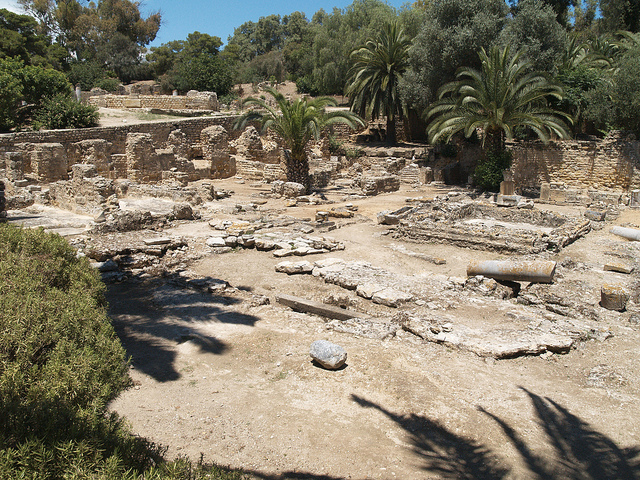
- The remains of ancient Carthage are few. Some Punic cemeteries, shrines and fortifications have been discovered, but a majority of the ruins that remain in the area were rebuilt in the Roman period after Carthage’s destruction.
There are several aspects of the genocide of the Punic people that differ greatly from modern genocide. There are also aspects of the tragedy that resemble the thinking in the Holocaust and other genocides such as in Cambodia and Rwanda. In all of these instances, leaders were preoccupied with militaristic expansionism, the idealization of cultivation, notions of social hierarchy and racial or cultural prejudices.
– Jamie Enright
Photo: Flickr
