• Link to X
  • Link to Facebook
  • Link to Instagram
  • Link to TikTok
  • Link to Youtube
  • About
    • About Us
      • President
      • Board of Directors
      • Board of Advisors
      • Financials
      • Our Methodology
      • Success Tracker
      • Contact
  • Act Now
    • 30 Ways to Help
      • Email Congress
      • Call Congress
      • Volunteer
      • Courses & Certificates
      • Be a Donor
    • Internships
      • In-Office Internships
      • Remote Internships
    • Legislation
      • Politics 101
  • The Blog
  • The Podcast
  • Magazine
  • Donate
  • Click to open the search input field Click to open the search input field Search
  • Menu Menu

Archive for category: Global Poverty

Key articles and information on global poverty.

Education, Global Poverty

What is the Relationship Between Poverty and Learning?


Poverty and learning are often talked about together, mostly because it is agreed upon that education is an avenue out of poverty. On an individual level, education can be the difference between a life below and a life above the poverty line. On a societal level, educating girls is seen as the closest thing to a silver bullet for eradicating poverty. Education can improve food security, improve health standards and improve gender equality. However, poverty impacts education just as much as education impacts poverty; poverty has a direct impact on a child’s ability to learn.

The Relationship Between Poverty and Learning

Poverty affects children on several levels, including physical, social-emotional and cognitive. According to the NIH, “the stresses of poverty lead to impaired learning ability in children from impoverished backgrounds.”

Physical

Children’s ability to concentrate is affected by poor nutrition and poor health. Additionally, prenatal drug use, environmental toxins and long-term exposure to stress and violence can impact physical health and cognitive ability before birth and are more common in low-income households.

Social-Emotional

Children living in poverty often see themselves as victims of a system, lacking their own autonomy or ability to make choices that actually affect their lives. This poor sense of agency affects their focus, initiative and engagement in the classroom.

Cognitive Development

Long-term exposure to stress hormones as a result of living in or near poverty, violence and trauma affects brain development. In particular, children living in poverty exhibit lower executive function (impulse control, emotional regulation, attention management, task prioritization, working memory, etc.) because their energy is focused on basic survival functions.

Limitations of Schools in Low-Income Areas

Schools located in lower-income areas have deficiencies that create their own barriers to learning for students. For example, even when tuition is free, there are other potentially prohibitive costs associated with attendance such as textbooks, school supplies, uniforms and transportation. Coupled with the loss of income from sending a child to school who could otherwise be working, there are distinct economic barriers to sending poorer children to school.

Schools in lower-income areas are also typically overcrowded and have limited resources and infrastructure. There are fewer books and computers to go around, and teachers may be unqualified to teach their subjects or may be burnt out from operating under prolonged resource strain.

Possible Solutions

There are many possible solutions for improving the relationship between poverty and learning. Incentives for qualified teachers to teach in low-income areas could be implemented. Disadvantaged schools could receive better resources and funding. More schools could be built in rural areas and better transportation to schools could be instituted. Funding and implementation for early-childhood programs for identified at-risk students could also go a long way toward improving learning outcomes for students living in poverty.

Education may be one of the keys to reducing and eradicating poverty, but only quality education, tailored to meet the unique needs of poor, malnourished and/or traumatized children will be truly effective in this and break the poverty/education cycle.

– Olivia Bradley

Photo: Flickr

November 27, 2017
https://borgenproject.org/wp-content/uploads/borgen-project-logo.svg 0 0 Borgen Project https://borgenproject.org/wp-content/uploads/borgen-project-logo.svg Borgen Project2017-11-27 01:30:042024-05-29 22:29:25What is the Relationship Between Poverty and Learning?
Global Poverty

Addressing Hunger in Puerto Rico

Hunger in Puerto Rico
The causes of hunger in Puerto Rico range from a number of significant and complex problems, but nothing is worsening the problem faster than its economic conditions and more recently, natural causes.

In 1898, the Spanish-American War brought an end to nearly four centuries of colonial rule. The United States acquired the island of Puerto Rico, now regarded as a U.S. territory. In 1917, Puerto Ricans gained U.S. citizenship, and similarly to inhabitants of states in the U.S., they hold democratic elections for local and state governments and have their own constitution.

In recent years, Puerto Ricans have dealt with deteriorating infrastructure, a 45 percent poverty rate, severe water pollution, lack of educational resources and a massive public debt crisis. A byproduct of most of these problems is the prevailing issue of hunger in Puerto Rico.

Economic Turmoil

Puerto Rico is more than $70 billion in debt and as of 2016, public debt accounted for 92.5 percent of their entire GDP. These circumstances are unique: understanding how they acquired such debt requires understanding the basic history of their economic policy as well as a few key events that have taken place over the last century. What has transpired can be compared to that of a domino effect.

The first “domino” to fall, by and large, was government overspending. Unlike states in the U.S. that are mandated to create and present balanced budgets, Puerto Rico is not. This resulted in overall spending significantly exceeding that of its tax-generated revenue.

Puerto Rico’s tax collection is one of the lowest in the world, deriving just 9.5 percent of its GDP from taxes in 2016. The CIA World Factbook report ranked the island 215 out of 220 countries in terms of taxation revenue, ranking only above Sudan, Yemen, Nigeria, Somalia and Syria.

Secondly, for decades, due to its lack of statehood, the island was able to serve as a tax shelter for U.S. businesses, particularly pharmaceutical companies. During this time, economic prosperity reached a peak for the island. However, as of 2006, Congress eliminated these tax breaks entirely, resulting in total economic devastation for the island after most businesses moved back to the mainland.

There is also a rapid rate of skilled professionals leaving the island for the U.S. Many estimates assert that almost one doctor per day leaves the island, sometimes as many as two or three.

The economy has contracted each year since and recovery is unlikely. The GDP real growth rate has become one of the slowest in the world, at 0 percent in 2015 and then falling to -1.8 percent in 2016.

The final, and perhaps largest, hurdle the island must resolve in regards to its debt is that unlike other U.S. states, Puerto Rico cannot legally file for Chapter Nine Bankruptcy. This means that they are not only, by all definitions of the word, bankrupt, but that they also have no safety net or alternative resolution.

Agriculture, Trade and Commerce

Historically, agriculture has only accounted for 0.8 percent of Puerto Rico’s GDP. However, following the devastation of Hurricane Maria in September 2017, it is estimated that it only took the storm a few hours to destroy $780 million worth of crops or about 80 percent of the island’s total supply. This prompted immediate food shortages and inflated food prices, causing poverty and hunger in Puerto Rico to instantly become a new reality for thousands of residents.

Trade and commerce, as well as the supply of aid, were affected in the aftermath of the storm, specifically in relation to the Jones Act of 1920. The act mandates that all goods shipped to and from the island (or between any two U.S. ports) must be on guard, U.S. vessels that are operated by Americans. As a result, foreign logistics companies wishing to do such business have to pay a special tariff.

When considering Puerto Rico’s poverty rate, this is devastating to those experiencing hunger in Puerto Rico. Inevitably, Puerto Ricans will continue to pay significantly more for consumer goods and services than those who live on the U.S. mainland.

Hurricane Maria’s Role in Puerto Rico Hunger

Hurricane Maria made landfall in Puerto Rico on September 20, 2017.  The death toll reached 48 as of October 14, 2017, with 117 individuals remaining unaccounted for. In addition, an estimated 85 percent of the island remains without power, about 1.2 million people are without access to clean drinking water and the preexisting issue of hunger in Puerto Rico is only becoming worse.

Since then, President Donald Trump and his administration have maintained that all relief efforts are being exhausted to the fullest extent possible. This narrative conflicts with many accounts from Puerto Rican government officials, who have said the response at the federal level has been slow-moving and inadequate.

Governor Ricardo Rossello has publicly stated on multiple occasions that the territory is in desperate need of further federal assistance, describing the situation as a “humanitarian crisis.” Carmen Yulin Cruz, the Mayor of San Juan, has also made headlines in the recent weeks following her televised plea to the federal government, saying “I am begging, begging anyone who can hear us to save us from dying … you are killing us with the inefficiency.”

Initially, Mr. Trump cited geographical concerns that present significant logistical problems to be the cause of this. “This is an island, surrounded by water, big water. Ocean water,” Trump said in a September 2017 speech in Washington, D.C.

However, during a press conference while visiting the island, he was quick to cite the island’s budget crisis, saying, “I hate to tell you Puerto Rico, but you have thrown our budget a little out of whack. We have spent a lot of money on Puerto Rico.”

Additionally, while the administration did temporarily exempt the territory from the Jones Act, this exemption expired on October 8, 2017.

In a recent survey conducted by the New York Times, just over half of the U.S. population is unaware that individuals born in Puerto Rico are U.S. citizens. Fortunately, many informed U.S. citizens support providing aid to Puerto Rico: among those who are aware that Puerto Ricans are U.S. citizens, 81 percent think aid should be provided.

– Hunter Mcferrin

Photo: Flickr

November 26, 2017
https://borgenproject.org/wp-content/uploads/borgen-project-logo.svg 0 0 Borgen Project https://borgenproject.org/wp-content/uploads/borgen-project-logo.svg Borgen Project2017-11-26 10:15:182024-12-13 17:58:30Addressing Hunger in Puerto Rico
Gender Equality, Global Poverty

Women’s Empowerment in Sudan

Women's Empowerment in Sudan
Located in North Africa, Sudan has a population of 47.5 million people. Omar Hassan al-Bashir, the country’s current president, came into power in 1989 and was first elected president in 1996. The country endured many years of conflict between its northern and southern regions before a vote in July 2011 split the country in two. Many of the issues between the two areas stemmed from a conflict over religion, the mainly Christian and Animist south disagreeing with being ruled by the Muslim north.

The population which was perhaps the most severely affected by the war was Sudanese women. USAID reported that Sudanese women were disproportionately impacted by the conflict, which took a negative toll on a myriad of factors, including their health, safety and economic opportunities.

Despite how severely they were affected, women had a large role in the reconciliation between communities and the overall peacebuilding in the country. This is why USAID worked to gain additional support for the problems Sudanese women face.

Many organizations, like USAID and the U.N. Fund for Gender Equality (FGE), work to provide programs for understanding women’s empowerment in Sudan, among other places. Their work aims to prevent women from being so harshly impacted by the political climate in Sudan. However, the conflict still caused a plethora of Sudanese women to become refugees or internally displaced.

Additionally, the war has forced many of the women to become the heads of their households. It is estimated that the women that were widowed by the war became the heads of 60 percent of households in Sudan.

However, Sudanese Women Empowerment for Peace (SuWEP), formed in the 1990s, has brought many women in Sudan together. Some of the group’s goals include providing women with conflict resolution training and advocating for the inclusion of women from all different backgrounds. The group’s overall aim centers around improving women’s empowerment in Sudan.

Though the group faces many obstacles, such as a lack of funding, international recognition and mobility due to the war, it remains active. SuWEP still works to raise awareness and share information. Some of the group’s partner organizations organized and implemented activities, which SuWEP currently runs. The work done by SuWEP to improve the lives of women affected by the war demonstrates the importance of improving women’s empowerment in Sudan.

Despite displacement and other negative effects experienced by Sudanese women as a result of the conflict, groups such as SuWEP are working with great effort to remedy these issues. The recent split between the two regions of Sudan presents additional problems for SuWEP but they will continue to work towards ensuring a peaceful transition.

– Haley Rogers

Photo: Flickr


November 26, 2017
https://borgenproject.org/wp-content/uploads/borgen-project-logo.svg 0 0 Borgen Project https://borgenproject.org/wp-content/uploads/borgen-project-logo.svg Borgen Project2017-11-26 01:30:592024-05-29 22:29:25Women’s Empowerment in Sudan
Global Poverty

Development Projects in Ecuador Boost Sustainability

Development Projects in EcuadorEcuador is a South American country bordering the Pacific Ocean. Its rich history, vibrant culture and diverse landscape make it a hotbed for tourism, agriculture and natural resources. Despite the broadness of Ecuador’s economy, its citizens have lived through inequality and poverty. However, development projects in Ecuador are strengthening its economy and expanding access to its people.

Healthcare

The overall health of Ecuadorians has improved dramatically in recent years. Deaths due to malaria, HIV/AIDS, tuberculosis and under-five mortality rates are all below the global baseline set by the World Health Organization. This can, in part, be attributed to programs such as the Peace Corps’ community health projects. These programs seek to improve access to maternity care and birth control and to prevent tropical diseases, among other things.

Infrastructure – Roads

Ecuador’s coastal roads were little more than dirt paths until an $800 million allotment in the late 1990s with an additional $5 billion planned. The last ten years alone have seen 700 miles of new roads built, roughly a tenth of Ecuador’s entire road network.

Infrastructure – Water

Along with Ecuador’s road system, improved sewage management is helping develop the country’s infrastructure. While there is an abundance of water in Ecuador, roughly 10 percent of drinking water is untreated. Sustainable water systems are Ecuador’s goal, of course, but the country has made tremendous strides in updating its sewage system over the last few years. One of the ways this is being accomplished is through a new wastewater treatment plant in the city of Santiago de Guayaquil, strategically placed between two major rivers.

Education

The First Social Development Project serves to modernize Ecuador’s education system. The World Bank is overseeing the development of this project and seeks to improve education through multiple means. These include improving classroom materials and teacher training, decentralizing management and offering assessment programs to ensure continued improvement across the board. Additionally, the program is increasing access to special education as well as adult and vocational education.

Economy

Until May 2017, Rafael Correa served as Ecuador’s president for a decade. His presidency mirrored a period of growth and sustainability. Ecuador’s gross domestic product and wages increased, while unemployment, inflation and poverty rates decreased. While no longer serving as Ecuador’s president, the country saw sustainability under his administration. While many development projects in Ecuador stemmed from President Correa’s management, perhaps the most important factor to an improved economy is the consistent management of its resources.

Development projects in Ecuador are making a difference. Access to quality water, education and healthcare, coupled with a strong economy and well-managed infrastructure creates a recipe for success to a developing country. These projects seem to be putting Ecuador on the right path.

– Eric Paulsen

Photo: Flickr

November 26, 2017
https://borgenproject.org/wp-content/uploads/borgen-project-logo.svg 0 0 Borgen Project https://borgenproject.org/wp-content/uploads/borgen-project-logo.svg Borgen Project2017-11-26 01:30:422024-06-05 23:55:34Development Projects in Ecuador Boost Sustainability
Global Poverty

10 Facts About Poverty in Bangladesh

Poverty in Bangladesh
Although Bangladesh has existed as an independent state for less than 50 years, the cultural and linguistic roots of the Bangla, or Bengali, people are believed to have been established in the seventh century. Despite this rich cultural history, 31.5 percent of the population lives below the poverty line in Bangladesh today. The following 10 facts about poverty in Bangladesh give further context to this nation’s economic struggles.

Poverty in Bangladesh Facts

  1. At 31.5 percent, Bangladesh has the highest percentage of its population living below the national poverty line in South Asia. Nepal, India, the Maldives, Bhutan and Sri Lanka all have poverty rates lower than 25 percent.
  2. Between 1947 and 1970, Bangladesh was a part of Pakistan and was referred to as East Pakistan. For various socio-cultural and political reasons, West Pakistan (which is just Pakistan today) practiced economic discrimination against East Pakistan. Between 1947 and 1970, East Pakistan received only 25 percent of the country’s industrial investments and 30 percent of its imports, despite producing 59 percent of the country’s exports.
  3. When a Bengali independence movement began to gather momentum in 1970, West Pakistani leaders initiated a massacre of Bengali people. Now acknowledged as genocide, this massacre has become known as Operation Searchlight. It is estimated that anywhere between 500,000 and 3 million Bangladeshi people were killed during the genocide.
  4. The oppression and tragic violence that heralded the nation’s inception made for a particularly tough economic starting place. Since 1996, however, the Bangladeshi economy has grown by roughly 6 percent every year despite such roadblocks as political instability, poor infrastructure and slow implementation of economic reforms.
  5. Almost half of Bangladeshis are employed in the agricultural sector, where rice is the most important product. Expert analysts at the World Bank asserts that a “shift in production from rice to higher-value crops will significantly reduce malnutrition, trigger more rapid growth in incomes and create more and better on-farm and non-farm jobs, especially for women and youth.”
  6. Garment exports are the backbone of the Bangladeshi industrial sector, accounting for over 80 percent of the country’s exports in 2016. The sector continues to grow, though the industry has been troubled by highly-publicized garment factory accidents that have claimed the lives of more than 1,000 workers in recent years.
  7. Although the official unemployment rate is listed as 4.1 percent, it is estimated that about 40 percent of the population is underemployed. Many individuals who only work a few hours a week for very low wages are officially considered employed, despite the highly insubstantial means available to them.
  8. The Bangladeshi economy is highly dependent on remittances. Remittances from Bangladeshis working overseas accounted for about $15 billion and 8 percent of GDP in 2015.
  9. Though the rates of poverty in Bangladesh are still far from ideal, steady progress towards its production has been shown. Between 2000 and 2010, poverty declined at a steady average of around 1.8 percent.
  10. The World Bank’s Bangladesh Poverty Assessment determined that the falling poverty rate could be attributed to growth in labor income and changing demographics, namely the decline in the birth rate. The resultant lower dependency rates meant increased average income per capita and poverty reduction.

Expert analysis of the Bangladesh Poverty Assessment indicates that poverty in Bangladesh will continue its slow but steady reductive trend with the implementation of several key economic reforms, which include investment in the skills development of its rapidly expanding workforce, coordinating multi-sector development and consolidating safety net programs to be better timed and tailored to the needs of the poor. Following through on these reforms will ensure that fewer people in Bangladesh are living in poverty in the future.

– Savannah Bequeaith

Photo: Flickr

November 26, 2017
https://borgenproject.org/wp-content/uploads/borgen-project-logo.svg 0 0 Borgen Project https://borgenproject.org/wp-content/uploads/borgen-project-logo.svg Borgen Project2017-11-26 01:30:012024-05-24 23:59:3910 Facts About Poverty in Bangladesh
Global Poverty

Recognizing Contributions of Humanitarian Aid to Myanmar

Humanitarian Aid to MyanmarOn August 24, 2017, Rohingya militants attacked more than 30 police posts in Myanmar. The government retaliated by burning Rohingya villages, killing Rohingya civilians and committing other atrocities against the country’s Muslim minority. The situation has increased the need for humanitarian aid to Myanmar.

As of October 19, 2017, almost 600,000 Rohingya have fled Myanmar into neighboring Bangladesh and the number is continuing to climb. The U.N. referred to the situation as “a textbook example of ethnic cleansing”. The government has denied many of the allegations and has taken control of aid operations, blocking many types of aid from reaching the country.

Yet even in such dark situations, inspiring examples of kindness and generosity can be found. In that spirit, here are some of the positive stories of humanitarian aid to Myanmar in the midst of a horrendous situation.

  1. The United States has pledged an additional $32 million of humanitarian aid to Myanmar and the surrounding regions that will go toward helping the Rohingya people. These additional funds bring total U.S. assistance to the area to nearly $95 million for the 2017 financial year.
  2. The Canadian government has promised to provide $2.5 million in aid to the Rohingya. This pledge is a part of Canada’s Feminist International Assistance Policy and will go to women and children displaced by the crisis. Canada has sent $6.6 million to Myanmar and Bangladesh so far in 2017.
  3. Norway made a pledge to provide an additional $3 million of aid to those affected by the conflict. Norway’s Minister of Foreign Affairs, Ms. Eriksen Søreide, also called on Myanmar’s government to give access to organizations providing humanitarian aid to Myanmar to the worst-affected areas of the country.
  4. The United Nations Refugee Agency has been working with the government of Bangladesh to meet the needs of the hundreds of thousands of Rohingya fleeing to Bangladesh. The Agency has opened medical centers to tend to the needs of the refugees.

These are only a few of the many governments, organizations and individuals that have assisted the Rohingya people in the midst of this horrendous crisis. Humanitarian aid to Myanmar and the surrounding area continues to be delivered in many different forms.

The humanitarian aid to Myanmar is a reminder that even in times of unspeakable tragedy, there are always individuals who are helping and making a difference. It is imperative to keep this in mind when thinking about the importance of humanitarian aid and foreign assistance.

– Aaron Childree

Photo: Flickr

November 25, 2017
https://borgenproject.org/wp-content/uploads/borgen-project-logo.svg 0 0 Borgen Project https://borgenproject.org/wp-content/uploads/borgen-project-logo.svg Borgen Project2017-11-25 01:30:292019-11-20 07:05:50Recognizing Contributions of Humanitarian Aid to Myanmar
Global Poverty

Steps in the Right Direction: Infrastructure in Sri Lanka

Infrastructure in Sri LankaBetween the years of 1983 and 2009, a massive civil war raged on in Sri Lanka. The war caused many issues for the small island nation, but it dealt major blows to its infrastructure, particularly in the northern part of the country. Infrastructure in Sri Lanka is still in need of many improvements, but the government has taken some steps towards improving it.

Sri Lanka has the highest road density of all South Asian countries and in 2004 it reached out to the World Bank for aiding its road sector. With funding from the World Bank, among other organizations, the country was able to carry through the Road Sector Assistance Project (RSAP) and reconstruct its rural and national roads. A main objective of the project was to create an efficient national road system and therefore lower transportation costs for its population.

Another positive step for Sri Lanka was the creation of the Road Maintenance Trust Fund, which efficiently allocated resources for road maintenance in a way that was transparent to the public. The trust fund also created a sense of social responsibility for contractors, as it made them obligated to repair and renovate roads and public buildings like schools and health clinics.

In 2005, Sri Lanka requested aid from the Asian Development Bank (ADB) in order to improve services such as water supply, drainage and solid waste management. The ADB evaluated the use of these funds and determined that Sri Lanka was successful in improving living conditions and reducing poverty through the updating of infrastructure services.

Additionally, the Asian Development Bank funded the National Highways Sector Project in Sri Lanka since 2016. This project focused on upgrading about 223 kilometers of major highways in the country and also implemented a more efficient maintenance system. These improvements to the road system in Sri Lanka has made transportation much easier for many farmers and merchants who would previously travel long days to sell their products.

These steps show Sri Lanka moving in the right direction in terms of infrastructure. In the future, the main issues the country may face are related to lack of funding for infrastructure. In order to maintain this growth, the government should prioritize internal development and continue to partner with organizations like the ADB and the World Bank.

With the improvements to infrastructure in Sri Lanka, there have also been improvements to other areas of development throughout the country, such as poverty levels and access to medical care. If Sri Lanka can continue this trend, it will be doing a service to its residents, its economy, and its overall development.

– Liyanga de Silva

Photo: Flickr

November 25, 2017
https://borgenproject.org/wp-content/uploads/borgen-project-logo.svg 0 0 Borgen Project https://borgenproject.org/wp-content/uploads/borgen-project-logo.svg Borgen Project2017-11-25 01:30:002019-11-20 07:06:02Steps in the Right Direction: Infrastructure in Sri Lanka
Global Poverty

Addressing Nine Important Facts about Poverty in Georgia

Addressing Nine Important Facts about Poverty in GeorgiaThe small and ancient nation of Georgia, home to the highest mountain range in Europe called the Caucasus Mountains, borders Russia and Armenia.  It was one of the first countries in the world to officially adopt Christianity and has a long, rich history intertwined with religion. Poverty in Georgia remains an ongoing concern.

Here are nine facts about poverty in Georgia.

  1. Many more Georgians report being unemployed than the official unemployment rate. The official unemployment rate in Georgia is 12 percent, but a whopping 68 percent of the population consider themselves unemployed.
  2. The separatist conflicts in Abkhazia and South Ossetia are a major cause of poverty in Georgia. Georgia officially recognizes both provinces as its territory, despite the states’ attempts to secede to Russia with the assistance of the Russian military. This follows an earlier armed conflict in these regions in 1992-1993.
  3. One in five Georgians lives below the poverty line. Officially, 20.1 percent of Georgians live below the relative poverty line.
  4. Despite being a largely agricultural nation, much of the produce in Georgia is imported. With the exception of potatoes and onions, many fruits and vegetables sold in Georgia’s markets come from Turkey, Greece or even Iran.
  5. Dependency is common. The dependency ratio in Georgia is 1:1.2, compared to the suggested level of one dependent per three people.
  6. One of the biggest contributors to poverty in Georgia is its failing pension system. Due to the aforementioned underemployment of citizens, many workers don’t pay taxes, leaving few funds for the pension system. To make matters worse, there are tens of thousands of likely nonexistent “ghost recipients” receiving government pensions.
  7. Poverty varies from region to region. Places like the mountainous, isolated Imereti and former Soviet industrial zones have suffered the worst, while more agricultural regions have fared better.
  8. Georgia now associates with the E.U. in various capacities, having signed an association agreement with the European Union that took effect in 2016. The E.U. has also loosened restrictions on the visas of Georgians working within its borders. This will hopefully have a positive effect on Georgia’s economy and lessen poverty in Georgia.
  9. Georgia has made some important political reforms. In particular, the success of various electoral and local government reforms was made clear in the parliamentary elections of 2012.

In order to combat the growing effects of poverty in Georgia, it is necessary that the country’s citizens receive help in the form of both domestic and foreign aid. With hope, Georgians can be lifted out of their joblessness and set out on a path to a brighter future.

– Andrew Revord

Photo: Flickr

November 24, 2017
https://borgenproject.org/wp-content/uploads/borgen-project-logo.svg 0 0 Borgen Project https://borgenproject.org/wp-content/uploads/borgen-project-logo.svg Borgen Project2017-11-24 01:30:592024-05-29 22:27:16Addressing Nine Important Facts about Poverty in Georgia
Global Poverty

Five Development Projects in Ethiopia

Development Projects in EthiopiaThe capital of Ethiopia is the base for multiple development efforts in the country. Ethiopia has become one of the fastest-growing economies in the world, with 11 percent average growth since 2005. The development projects in Ethiopia are a product of foreign aid, government goals and foreign direct investments.

Ethiopia is Africa’s second most populated and oldest independent country. Although it has the fastest growing economy in the region, it is also the third poorest country in the world with a Multidimensional Poverty Index (MPI) of 87.33 percent. To address the growing capacity issues related to the large population and poverty rate, the Ethiopian government has focused on advancing development.

These five development projects in Ethiopia are examined based on the organizations that implement them.

The Federal Democratic Republic of Ethiopia

The Ethiopian government is focused on addressing developmental concerns in multiple areas. Past development projects in Ethiopia include the Sustainable Development and Poverty Reduction Program and the Plan for Accelerated and Sustained Development to End Poverty. Now, Ethiopia is in its second of two, four-year Growth and Transformation Plans (GTP I, II). GTP I focused on advancing industrial development to relieve fiscal and capacity deficits in Urban Local Governments (ULG). The GTP II goals address specific challenges the GTP I goals met.

Within Ethiopia’s twin GTP’s, the country’s Agricultural Transformation Industry (ATI) and Industrial Park Development Corporation (IDPC) achieve specific goals. The corporation “nurtures manufacturing industries to accelerate economic transformation and attract both domestic and foreign investors.” IDPC is currently working on four major industrial parks, three of which are in the capital, Addis Ababa.

The ATI is focused on impacting the smallholder farmer level. In alignment with GTP I, the ATI focused on agricultural productivity, production, marketing, research and natural resource conservation. With GTP II, the ATI continues the GTP I pillars to enhance food security and adds additional pillars to address agri-business and implementation capacity.

Since the inception of the Sustainable Development and Poverty Reduction Program in 2001, Ethiopia’s GDP rose by close to $62 billion, the largest growth recorded in the country. In the past 15 years, Ethiopia’s population also rose by 64 million. Ethiopia has experienced immense growth since these programs were initiated and its ability to track and maintain the growth indicates the effect of these development projects in Ethiopia.

International Fund for Agricultural Development (IFAD)

The IFAD is a specialized agency of the U.N. that “finances agricultural development projects for food production in developing countries.” In 2010, the IFAD established a country office in Addis Ababa to further relations with Ethiopia and oversee the development and expansion of rural finance.

Agriculture is an important asset to Ethiopia’s economy, as a majority of their exports are agriculture commodities and agriculture consists of about 45 percent of Ethiopia’s GDP. The significance of the agriculture industry for Ethiopia’s economy is a large reason the IFAD has invested a total of $398 million in agriculture development programs in Ethiopia. The IFAD’s programs focus on improving poor rural people’s access to natural resources, agriculture and livestock production technologies.

World Bank

The World Bank is a strong supporter of Ethiopia’s development, primarily through its International Development Assistance (IDA), the World Bank’s fund for the poorest. The IDA is Ethiopia’s largest provider of official development assistance. Since 1991, the IDA has committed over $17 billion to Ethiopia’s development primarily to “protect basic services, productive safety nets and roads.”

The World Bank and IDA recently provided Ethiopia with $200 million to fund the expansion of access to energy and has committed $380 million to Ethiopia’s GTP II. The World Bank has implemented development projects in Ethiopia to address education, water and sanitation and road quality and is a large contributor to Ethiopia’s poverty rate reduction from 55.3 percent in 2000 to 33.5 percent in 2011.

United Nations Development Program (UNDP)

The UNDP Ethiopia works with the Ethiopian Government and funding partners to forward a “developed and democratic nation with empowered citizens.” The UNDP in Ethiopia strengthens the relationship between the U.N. and Ethiopia by advocating for Ethiopia’s development and poverty reduction on a global platform and providing support for locating funds.

The UNDP set up the Agricultural Transformation Agency (ATA) to provide innovative technological productivity solutions to the industry that constitutes 80 percent of the employment base in Ethiopia. The UNDP focuses additional efforts on elevating the transparency, accountability and responsiveness of the Ethiopian government. With the support of the UNDP, Ethiopia was able to formulate and adopt Grant Sharing Formula, addressing the balance of resource flow in various regions and bringing equitable development throughout the country.

China

Formal relations between The People’s Republic of China and Ethiopia began in 1970. Now, China is one of Ethiopia’s largest trading partners with the volume of trade estimated to be over $6.3 billion. The China Communications Construction Company is currently contracted to build two industrial parks in Addis Ababa in partnership with the IPDC. These newly built industrial parks will house factories such as the TAL apparel factory, a Chinese company providing new jobs in Ethiopia already.

China is Ethiopia’s key foreign investor, primarily in infrastructure. In 2014, China-funded a $475 million urban rail project in Addis Ababa. China has also invested heavily in dams and roads and even built Ethiopia’s African Union headquarters in the capital. The investments from China have advanced Ethiopia’s development and provided employment opportunities for Ethiopia’s estimated 450 million workforce.

Arkebe Oqubay, from the prime minister’s office driving the industrialization policy, says Ethiopia is “focused on economic performance… the ultimate goal of any nation aspiring to develop, aspiring to catch up, is to improve the livelihoods of the people.”

With support from the Ethiopian government, multiple partners have assisted in growing the economy through development projects in Ethiopia. Today, Ethiopia has surpassed Kenya’s economy and taken the title of “East Africa’s Economic Giant.”

Ethiopia has many challenges to surpass that are associated with growth, such as job creation and capacity, but their alliances across the globe and governmental backing are a strong indicator of Ethiopia’s developmental success.

– Eliza Gresh

Photo: Flickr

November 24, 2017
https://borgenproject.org/wp-content/uploads/borgen-project-logo.svg 0 0 Borgen Project https://borgenproject.org/wp-content/uploads/borgen-project-logo.svg Borgen Project2017-11-24 01:30:522024-05-29 22:29:24Five Development Projects in Ethiopia
Global Poverty

Infrastructure in Angola: Focusing on Landmines and Roadwork

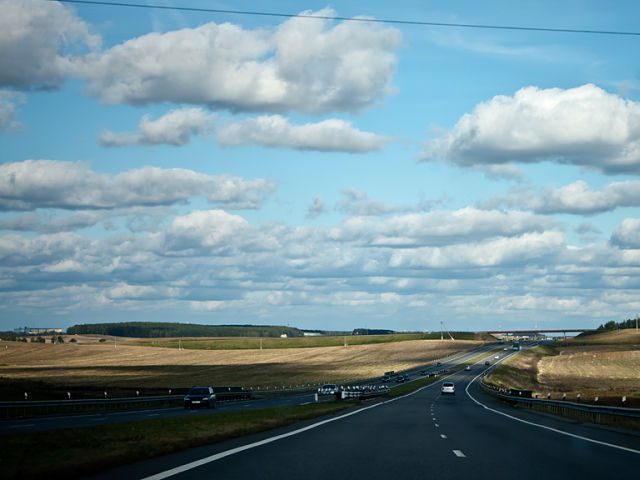
Angola is a country that has have suffered through wars for nearly 40 years. It is not surprising then, that infrastructure in Angola has taken a massive hit. Yet, things are looking to improve for Angola as they are beginning to rebuild its infrastructure throughout the country.

In 2014, infrastructure was examined and ranked among 148 different countries. Angola was ranked 148th. That means that out of all the countries that were evaluated, Angola was ranked the worst in infrastructure.

War is a major factor as to why infrastructure is so poor in Angola. During the war, millions of landmines were planted across the country. These landmines damaged roads and made it extremely dangerous, even fatal, to travel in the country. Even after the war ended, there were countless of unaccounted landmines that posed a grave threat to the citizens of Angola. There is currently a major effort to remove all the landmines in the country by 2040. With landmine extraction underway, infrastructure in Angola is looking to improve.

There are a number of projects that Angola is implementing to better their infrastructure. One of the biggest projects is the Laúca dam, that is near completion. The dam is the biggest in the country and will produce enough electricity to be able to provide eight million citizens electricity to their homes. This dam will also improve the economy, as businesses will increase within the region.

Roadwork is also underway in Angola. With the current situation of roads, they are not used to their potential capacity. To help fix this problem, 22.6 billion dollars will be put aside during 2013 to 2025 to help not only build new roads, but to repair older roads as well. As roads are built and repaired, people and goods will become more connected, increasing the flow of trade, and therefore money spent in the country.

The continuous wars caused the infrastructure in Angola to suffer. Now that the war has ceased, Angola can begin rebuilding its infrastructure. There are many promising projects that not only help to rebuild the infrastructure within the country, but bring in GDP for Angola.

– Daniel Borjas

Photo: Flickr

November 24, 2017
https://borgenproject.org/wp-content/uploads/borgen-project-logo.svg 0 0 Borgen Project https://borgenproject.org/wp-content/uploads/borgen-project-logo.svg Borgen Project2017-11-24 01:30:232019-11-20 07:11:25Infrastructure in Angola: Focusing on Landmines and Roadwork
Page 1497 of 2164«‹14951496149714981499›»

Get Smarter

  • Global Poverty 101
  • Global Poverty… The Good News
  • Global Poverty & U.S. Jobs
  • Global Poverty and National Security
  • Innovative Solutions to Poverty
  • Global Poverty & Aid FAQ’s
Search Search

Take Action

  • Call Congress
  • Email Congress
  • Donate
  • 30 Ways to Help
  • Volunteer Ops
  • Internships
  • Courses & Certificates
  • The Podcast
Borgen Project

“The Borgen Project is an incredible nonprofit organization that is addressing poverty and hunger and working towards ending them.”

-The Huffington Post

Inside The Borgen Project

  • Contact
  • About
  • Financials
  • President
  • Board of Directors
  • Board of Advisors

International Links

  • UK Email Parliament
  • UK Donate
  • Canada Email Parliament

Get Smarter

  • Global Poverty 101
  • Global Poverty… The Good News
  • Global Poverty & U.S. Jobs
  • Global Poverty and National Security
  • Innovative Solutions to Poverty
  • Global Poverty & Aid FAQ’s

Ways to Help

  • Call Congress
  • Email Congress
  • Donate
  • 30 Ways to Help
  • Volunteer Ops
  • Internships
  • Courses & Certificates
  • The Podcast
Scroll to top Scroll to top Scroll to top