• Link to X
  • Link to Facebook
  • Link to Instagram
  • Link to TikTok
  • Link to Youtube
  • About
    • About Us
      • President
      • Board of Directors
      • Board of Advisors
      • Financials
      • Our Methodology
      • Success Tracker
      • Contact
  • Act Now
    • 30 Ways to Help
      • Email Congress
      • Call Congress
      • Volunteer
      • Courses & Certificates
      • Be a Donor
    • Internships
      • In-Office Internships
      • Remote Internships
    • Legislation
      • Politics 101
  • The Blog
  • The Podcast
  • Magazine
  • Donate
  • Click to open the search input field Click to open the search input field Search
  • Menu Menu

Archive for category: Global Poverty

Key articles and information on global poverty.

Global Poverty

10 Facts About Poverty in India

Poverty in India
A young nation with a long history, India has the second-largest population in the world. India is also a regional power with a stable democratic government and an economy that is growing quickly. Despite this, poverty in India is high. This is often portrayed throughout history as “growing pains”. To mitigate these pains, the government is working to diminish poverty in India.


Top 10 Facts about Poverty in India


  1. In 1947, India gained independence from Great Britain. Its poverty rate at the time of British departure was at 70 percent.
  2. India is the country with the highest population living below the poverty line. Today, the poverty rate in India is 21.1 percent, which is an improvement from 31.1 percent in 2009. India’s estimated population in 2016 was 1.3 billion.
  3. Underdeveloped infrastructure and the medical sector hinders equal access to medical care. People living in developed urban areas have a higher chance of receiving medical attention and are at lower risk of becoming ill compared to people living in rural areas. Less than 20 percent of the rural population of India have access the clean water. Unsanitary water conditions increase the spread of both viral and bacterial infections.
  4. According to the Asian Development Bank (ADB), a strong supporter of development in Asia, India’s economy grew by 7.1 percent in 2016. The Asian Development Bank began assisting the Indian government with infrastructure and economic development in 1986.
  5. The following four facts highlight the 2016 successes from the joint projects undertaken by the ADB and India beginning in 2010. With the help of the Asian Development Bank, 344 million homes have either gained access or improved access to clean water thank to increased investment in irrigation, water treatment, and sanitation. In addition, 744,000 homes are no longer at risk due to flooding.
  6. To boost economic growth, India and the ADB have constructed or improved 26,909km of roads throughout the country, of which 20,064km are in rural areas, increasing the rural populations’ access to the economy and healthcare.
  7. Thanks to funding from the ADP, the Indian government has been able to build 606,174 units of affordable housing since 2010.
  8. To connect these new houses and improve older structures, 24,183km of power lines were hung or laid, while decreasing India’s carbon footprint by 992,573 tons of CO2.
  9. Independent of the ADB, the Indian government is considering testing a universal basic income program. Each person would receive 7620 Indian Rupees ($113) from the government to spend however they choose. A similar program is being tested by Finland. The aim is to fight poverty in India by relieving pressure on the poor. The cash handout would help to alleviate the pressure of any unforeseen expense. However, opponents fear that their banking systems would not be able to handle the sudden increase in cash flow and that food prices may drastically increase.
  10. To combat black-market corruption and increase tax compliance, the Indian government decided in 2016 to phase out the 500 Rupee and 1000 Rupee notes. All notes were to be deposited within the deadline, and remaining notes would not be considered legal tender.

Poverty in India is slowly but surely being diminished. Careful planning by the government will continue to benefit those stricken by poverty. Proof of this can be seen in the success of the government’s use of invested funds from the ADB. With a growing economy and responsible government, poverty in India will surely continue to decrease.

– Nick DeMarco

Photo: Flickr

November 24, 2017
https://borgenproject.org/wp-content/uploads/borgen-project-logo.svg 0 0 Borgen Project https://borgenproject.org/wp-content/uploads/borgen-project-logo.svg Borgen Project2017-11-24 01:30:102024-06-05 04:37:5210 Facts About Poverty in India
Global Poverty

Foreign Interest Sparks Growth of Infrastructure in Iran

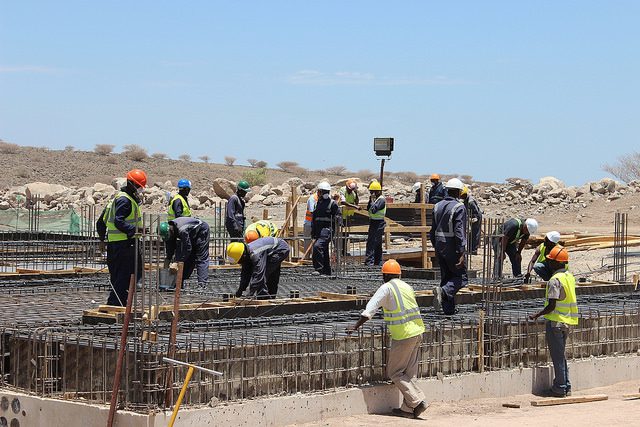
The Islamic Republic of Iran is a bit of a paradox. On the one hand, it is a theocratic state and a heavily sanctioned international pariah ruled by a supreme Ayatollah. On the other, it is the heart of the former Persian Empire, and has been a trading hub between the East and West for millennia. Because it is the second largest economy in the Middle East with growing ambitions, infrastructure in Iran has become a major point of focus for the country’s public and private sectors.

The 2015 nuclear deal that was reached between Iran, the U.S., and several European nations including Britain, France and Germany lifted crippling economic sanctions against Iran. In return, Iran has agreed to reduce its centrifuges and enriched uranium and render its nuclear program useless for producing weapons. The lifting of sanctions has sparked the interest of foreign investors and companies looking to do business in Iran. In turn, this has also presented new challenges and opportunities for infrastructure in Iran.

China, in particular, has designs on Iran. Chinese workers have been working in eastern Iran to build up its rail infrastructure, modernizing railroads and standardizing track gauges. This will connect Iran by rail to Turkmenistan and Afghanistan. To the west, Iran is doing the same thing to its railroads, which will be connected to Turkey, and ultimately Europe. China has also been busy building factories, mines, and highways in Iran as part of its increasing investment in the country.

The government of reformist president Hassan Rouhani has been just as involved in ramping up infrastructure in Iran. In addition to the rail projects linking Iran to its eastern and western neighbors, Iran is also in the process of building railways linking its five provincial capitals and its southern port cities to the national capital, Tehran. The Iranian private sector has spent 11 billion dollars in domestic development projects, while the government has spent 9.6 billion dollars on infrastructure in Iran since Rouhani took office in 2013.

Infrastructure in Iran will still need to be developed further to meet the increased foreign investment demands that have been brought on. Yet overall, things are looking bright for Iran, a country known as an ancient crossroads of trade.

– Andrew Revord

Photo: Flickr

November 24, 2017
https://borgenproject.org/wp-content/uploads/borgen-project-logo.svg 0 0 Borgen Project https://borgenproject.org/wp-content/uploads/borgen-project-logo.svg Borgen Project2017-11-24 01:30:062019-11-20 07:12:27Foreign Interest Sparks Growth of Infrastructure in Iran
Global Poverty

Infrastructure in Nauru is Insufficient But Improving

Infrastructure in Nauru

Infrastructure in Nauru is insufficient based on its citizen’s necessities. Isolated in the Pacific Ocean, Nauruans suffer water shortages and energy uncertainty, as power is supplied by diesel generators. New projects aim to reverse this situation, but antiquated facilities still remain.

The Island Ring is Nauru’s main road system. It circles the entire country, shaping the island’s form with 17 concrete kilometers. This is the principal ground transportation infrastructure in the world’s smallest republic.

Nauru has one international airport, built-in 1943 during the Japanese occupation in World War II. It operates with Naura Airlines, which has two air crafts and one all-cargo airplane. The airline flies to various Central and South Pacific islands.

Phosphate mine exploitation is the biggest economic activity on the island. In order to transport the mineral, a four kilometer railway was built in 1907. The train stopped operating in 2011, when the phosphate industry declined dramatically in Nauru. The government estimates that its phosphate deposits have a remaining life of about 30 years, according to BBC.

The energy infrastructure in Nauru is also not reliable. It has a limited capacity due to the nation’s reliance on diesel generators. However, the Asian Development Bank and the European Union have implemented the Nauru Electricity Supply Security and Sustainability Project which includes a new medium-speed 2.6-3.o megawatt diesel generator.

The Australian government also supports the island. With the Nauru Infrastructure and Essential Services Initiative, Australia has provided around $8.3 million in order to improve Nauru’s infrastructure. Thanks to this initiative, Nauru received the installation of a second power generator, and the Hospital Redevelopment Project was completed in February 2017.

Refugees who seek to get into Australia by boat are sent to Nauru’s asylum camp, an offshore retention settlement. Several news articles report that the situation in the camp is difficult since water supply is short and refugees do not have access to basic needs. The island does not have a reliable source of water, as it is surrounded by the Pacific Ocean and has no rivers or lakes.

The only current solutions to the lack of water are desalination plants, which are expensive, and rainwater storage systems. Even though four small plants operate on the island, the desalination process is insufficient and negatively affects Nauru’s environment. To resolve this problem, Nauru’s government, assisted by external investment, planned the installation of a solar PV system and a new desalination plant. This project is expected to produce up to 100 cubic meters of safe water per day.

Infrastructure in Nauru may be obsolete in certain sectors, but the government is working to improve it. Energy and water infrastructure is getting better thanks to the investment of international organizations. The next years will be crucial for the island as the first results from improvement projects begin to appear.

-Dario Ledesma

Photo: Flickr

November 23, 2017
https://borgenproject.org/wp-content/uploads/borgen-project-logo.svg 0 0 Borgen Project https://borgenproject.org/wp-content/uploads/borgen-project-logo.svg Borgen Project2017-11-23 01:30:452019-12-18 11:20:40Infrastructure in Nauru is Insufficient But Improving
Global Poverty, Humanitarian Aid

The Success of Australia’s Humanitarian Aid to Indonesia

As neighboring countries, Australia and Indonesia have forged a close working relationship, especially in recent years. In fact, Australia has become a vital source of humanitarian aid to Indonesia. The main goal of Australia’s aid to Indonesia is to provide “policy and technical advice that will improve the quality of Indonesia’s investments in infrastructure, economic governance, human development and social policy, including areas in law and justice.

In 1989, the Australia-Indonesia Institute (AII) was established. Australia works with Indonesia to help improve its economy and sustainability as well as increase the stability and security of the Southeast Asian region. As part of Australia’s Aid Investment Plan, which was initiated in 2015, Australia has been able to provide 673.4 million dollars in official development assistance (ODA) to Indonesia in the past two years. It is estimated that a total of 356.9 million dollars ODA will be provided to Indonesia in the coming 2017 to 2018 years.

In 2017 alone, Australia has aided the improvement of Indonesia’s economy by targeting household electricity issues, expanding financial services for residents not covered by major banks, and improving Indonesia’s governmental budgeting and spending. They have also assisted in increasing incomes for 44,000 small farming households and providing better migrant worker services. Human development is a large factor in the Aid Investment Plan. Through education in several fields, Indonesian residents can learn how to solve any problem they may face, whether it be economic or disease-related.

Overall, the plan hones in on economic growth. With education given to both the government and residents, it is projected that Indonesia’s poverty numbers will substantially decrease. Currently, 25 million Indonesians live below the poverty line, 13.8 percent of which are people living in rural areas where farming is their major source of income. One way poverty is being addressed is through the education of farmers in operating more sustainable farms.

Caritas Australia, a non-profit organization, works in Indonesia with aims to end poverty, promote justice, and uphold dignity. So far, Caritas has been able to assist Indonesian residents with disaster preparedness, environmental protection, sustainable development, and health and community empowerment. Their work in Indonesia has been incredibly helpful to the country’s success in recovering from natural disasters, overpopulation and its lagging economy.

Caritas has six working programs to bring humanitarian aid to Indonesia, each one with a specific goal at hand. One program Caritas has been implementing is teaching farming communities how to grow crops that are more sustainable. Food security is a major issue in Indonesia, especially as natural disasters such as tsunamis, earthquakes, volcanoes, or extreme wet or dry seasons continuously threaten plant growth.

Established in 2010 and in partnership with Yayasan Mitra Tani Mandiri (YMTM), the farming program focuses its attention on rural communities where natural disasters have the most destructive effect. The program includes educating farmers on the importance of soil fertility in terms of reducing erosion after the harvesting of crops. This way, farmers are able to reuse the same land that was previously harvested instead of moving on to new patches of land.

Caritas farming humanitarian aid to Indonesia has allowed residents to learn how to farm effectively in order to receive a more reliable and stable food supply and income. In addition, Caritas has provided health training, and connections among Indonesian communities to share what they have learned and have guided communities to the development of strategic plans for their future farming.

A farmer from West Timor spoke with Caritas after participating in their farming program, in which he said, “before the program, I was very anxious. But now I do not worry. There is always cassava, banana, and taro in the garden. We will not be hungry.”

The work of both the Australia-Indonesia Institute and Caritas Australia humanitarian aid to Indonesia has proven to be very beneficial for its communities. There is a more solid foundation for farmers to maintain their crops as well as solutions for how to improve the country’s economy. Each program put in place is a step closer to Indonesia’s liberation from poverty.

– Brianna Summ

Photo: Flickr


November 23, 2017
https://borgenproject.org/wp-content/uploads/borgen-project-logo.svg 0 0 Borgen Project https://borgenproject.org/wp-content/uploads/borgen-project-logo.svg Borgen Project2017-11-23 01:30:442024-05-29 22:29:26The Success of Australia’s Humanitarian Aid to Indonesia
Global Poverty, Humanitarian Aid

The Success of Humanitarian Aid to Belize

humanitarian aid to BelizeLocated on the eastern coast of Central America, surrounded by the Caribbean Sea and the rainforest, Belize is a diverse and small nation of 366,000 people. The success of humanitarian aid to Belize has been evident.

Belize is subject to chronic instability, due to its vulnerability from climate shocks and a longstanding public debt burden. Policymakers have done much in undertaking adjustments to bring Belize back to a sustainable development trajectory. However, some are still at risk of getting left behind, like the country’s children, who are most vulnerable and affected by these challenges.

Despite these difficulties, Belize has made considerable advances in meeting the Millennium Development Goals (MDGs) for 2015, performing satisfactorily in health-related investments and progressing on a positive track for child and maternal mortality rates, HIV/AIDS and the environment.

Much of the humanitarian aid to Belize comes from UNICEF, who has been committed to Belize dating back to 1954. UNICEF established an office in the country after Belize gained its independence in 1981. It provided aid in the form of environment health, vector control, school feeding and the provision of school textbooks and supplies. Currently, UNICEF is focused primarily on young child survival, education and development, disparity reduction through policy investment, participatory governance and the protection of children against violence.

Another form of successful humanitarian aid to Belize by UNICEF is their response to the Zika Virus outbreak in the region, providing fieldwork support and training at the national and local levels, with the Sustainable and Child Friendly Municipalities Initiative. So far, UNICEF has allocated over BZ$116,000 to Zika relief efforts.

UNICEF also provided humanitarian aid to Belize during the aftermath of Hurricane Earl, which struck Belize on August 4, 2016. They provided aid totaling over BZ$153,000 to help the most vulnerable families. This was done in partnership with the Ministry of Human Development, Social Transformation and Poverty Alleviation, the Ministry of Labor, Local Government and Rural Development, city mayors, NEMO, Immigration and several non-governmental organizations (NGOs). The aid provided included the distribution of hygiene kits, the provision of support to shelters and the cleansing of debris and dissemination of emergency messages.

Similarly, Brazil donated provisions to Belize after it was hit by Hurricane Arthur in 2008, which was the worst tropical storm to affect the country in the past four decades. It provided 1,370 boxes of food, containing rice, beans, sugar, powdered milk, soy oil and ham in each box. Brazil also donated provisions valuing approximately $50,000 to assist the victims of Hurricane Dean in 2007.

With the success of humanitarian aid to Belize that has already been provided, the future of the country is looking brighter than ever. Still, there is a need for more aid that will improve the quality of life drastically in Belize.

– Drew Fox

Photo: Flickr

November 23, 2017
https://borgenproject.org/wp-content/uploads/borgen-project-logo.svg 0 0 Borgen Project https://borgenproject.org/wp-content/uploads/borgen-project-logo.svg Borgen Project2017-11-23 01:30:372024-06-07 05:07:50The Success of Humanitarian Aid to Belize
Gender Equality, Global Poverty

Women’s Empowerment in Uganda

Women's Empowerment in UgandaUganda, a landlocked country in East Africa, has a population of 41.49 million as of 2017. The country’s capital is Kampala and its current president is Yoweri Museveni, who has ruled uninterrupted since he was first elected in 1986. Uganda is a member of the United Nations Development Programme (UNDP) and it strives to emphasize women’s empowerment in Uganda with its Sustainable Inclusive Economic Development (SIED) program. With the UNDP, Uganda partners with UN Women and supports the UN’s Sustainable Development Goals (SDGs), one of which works towards achieving gender equality and empowerment among women.

Although Uganda has worked extensively to empower women in the country, it still has progress to make, says Syda Bbumba, a very prominent female politician in Uganda. Bbumba is the first woman to serve as the Minister of Finance, Planning, and Economic Development in the country. Bbumba recognizes the important improvements that have been made for women’s empowerment in Uganda, but she also calls attention to the support that is still needed to aid women in entrepreneurship. Due to the fact that most property in Africa is owned by men, women lack sufficient access to capital, markets, and collateral, all of which are necessary in helping them grow their businesses. Bbumba recognizes this issue and highlights the need to fix it.

Another area in which the country can improve is through its education. Although the enrolment of girls that attend schools in Uganda is 60 percent (compared to 40 percent among boys), many girls still drop out to work at home due to issues regarding poverty. In other cases, girls drop out to enter into early marriages. The Universal Primary Education (UPE) is working to combat this issue, and has since seen a rise in enrolment rates in Uganda.

In regards to women in government in Uganda, the amount of women that made up the cabinet rose from 23 percent in 2006 to 28 percent in 2011. Similar progress was made among senior ministers, a group that experienced a four percent increase in the number of women who served in these positions. However, there is still progress to be made in the Executive branch, which as of 2011, had yet to reach its 30 percent quota of women serving in this department. An additional area that Bbumba calls attention to is the need for funding in order to help women grow their businesses.

Though there are still issues with women’s empowerment in Uganda, many people and organizations are striving to remedy these problems and have made considerable progress. Influential politicians and organizations alike, such at the Hunger Project, recognize that empowering women creates more resilient communities because when women are supported, health among families increases, as does incomes and the amount of children that attend school.

– Haley Rogers

Photo: Flickr

November 23, 2017
https://borgenproject.org/wp-content/uploads/borgen-project-logo.svg 0 0 Borgen Project https://borgenproject.org/wp-content/uploads/borgen-project-logo.svg Borgen Project2017-11-23 01:30:352019-11-20 07:19:37Women’s Empowerment in Uganda
Global Poverty, Women's Empowerment

Exploring Women’s Empowerment in Paraguay

women's empowerment in paraguayIn the year 2017, many countries still face a large difference in societal power between genders. One of these countries is Paraguay, which is located in central South America. Women’s empowerment in Paraguay is on the rise, specifically when it comes to women joining the workforce, enacting laws preventing violence against women and increasing access to sexual education.

Paraguayan President Horacio Cartes said in a speech to the U.N., “I make a firm commitment to strengthening the actions needed to speed up the advancement of real and effective equality between men and women in my country.” He supported the Public Policy Law for Rural Women, which aims to help women who live in remote areas gain employment despite scarce resources and few job opportunities. The policy will help provide women with agricultural training. Not only will this help feed families, but it will encourage women to become entrepreneurs. By the end of 2015, this policy had already reached 1,000 women.

Violence against women is an injustice that has been occurring for too many centuries. The president approved the Law for Comprehensive Protection for Women Against Any Kind of Violence in 2016. This law, as well as a commitment to coordinating efforts to fight violence against women and sex trafficking, will help foster women’s empowerment in Paraguay. The law will also help to better punish perpetrators and make sure they actually serve jail time or some other adequate punishment.

Teen pregnancy is a growing issue for women’s empowerment in Paraguay. Due to a lack of sex education, nearly one in 20 Paraguayan women have given birth by the age of 20. Becoming pregnant at a young age can complicate completing school and entering the job market. The Mbaracayú Education Center was opened in 2009 to provide the education that young women deserve. The education center is about more than sex ed: it also teaches job skills, including IT skills, textiles, tourism and environmental management. Movements like these show that there are many people dedicated to women’s empowerment in Paraguay.

– Scott Kesselring

Photo: Flickr

November 23, 2017
https://borgenproject.org/wp-content/uploads/borgen-project-logo.svg 0 0 Borgen Project https://borgenproject.org/wp-content/uploads/borgen-project-logo.svg Borgen Project2017-11-23 01:30:342019-12-23 08:01:27Exploring Women’s Empowerment in Paraguay
Global Poverty, Hunger

Child Hunger in Greenland

Hunger is a broad topic that touches on various aspects encompassing more than the physical lack of energy. According to Bread for the World, a Christian non-profit organization that aims to end hunger abroad and nationally, chronic hunger exists due to the lack of access and availability of resources to obtain it. In acknowledging this, there is no question that this leads to food insecurity and it is unspeakable that more than 800 million people in the world are suffering from chronic hunger. Two studies done focused specifically on the prevalence of child hunger in Greenland, which has brought to light the problem of hunger in the world’s largest island.

A national report on the food policy of Greenland was published by the Greenland Home Rule Government in 2004. This brought awareness to the prevalence of food insecurity that existed among Greenlandic children. From this report, it was found that 11 percent of children in the ages 11 to 16 reported “often hungry” or “always hungry” when they were going to school or going to bed. This hunger in Greenland, which exists among children especially, sheds light on the performance deficiencies regards to health, developmental, and academic performance. These performance deficiencies may then be associated with behavioural and psychosocial problems that continue to manifest into adulthood.

In 2010, a study was organized based on the Health Behavior in School-Aged Children where 2,254 Greenlandic students were surveyed, of which 40 percent were students in grades five to ten. In the study, the survey analyzed the occurrences of high percentages of child hunger existing in their homes. The results showed that food insecurity was related with neglect as the parents dealt with economic discrepancies and were often correlated with single-families, those living on welfare, immigrants, low educational levels and so on.

It is a beneficial first step for Greenland’s government to bring this grand concern to light. Solutions must then be made to assist these young children to receive the adequate nutrition required at such a blooming age. Children who live in poverty with low-income families, however they may be structured, need more intensive guidance from government policies and programs. Perhaps a solution to the hunger in Greenland would be to propose food drives, free school lunches, and adequate shelters as secondary arrangements to supplement the issues at home.

– Nicole Suárez

Photo: Flickr

November 23, 2017
https://borgenproject.org/wp-content/uploads/borgen-project-logo.svg 0 0 Borgen Project https://borgenproject.org/wp-content/uploads/borgen-project-logo.svg Borgen Project2017-11-23 01:30:072024-05-29 22:29:22Child Hunger in Greenland
Global Poverty

5 Development Projects in Haiti

Development Projects in HaitiIn the past seven years, Haiti has experienced extreme devastation due to natural disasters. In 2010, an earthquake displaced 1.5 million people and as efforts were forming to treat the damage caused by the earthquake, Hurricane Matthew hit in 2016. When a natural disaster hits Haiti, 90 percent of the population is at risk, making Haiti one of the most vulnerable countries in the world. This vulnerability results in immense damages, as can be seen in Hurricane Matthew causing damages equivalent to 32 percent of the GDP.  Now, Haiti is making immense strides to redevelop and prepare for future natural disasters with partnerships with various organizations and countries.

Here are five development projects in Haiti that aim to reestablish security for the population affected by natural disasters and secure sustainable goals for Haiti’s economy.

  1. Caracol Industrial Park: The Caracol Industrial Park is a 300 million dollar project primarily funded by the U.S. government. The industrial park was opened in Caracol, Haiti in 2012 and is the biggest investment Haiti has received since the earthquake in 2010. Caracol is a small town, six hours north of Haiti’s capital and far from the epicenter of the earthquake. The project aims to attract additional international investments to Haiti and was backed by the Clinton Foundation and Sae-A Trading Co., a Korean Textile manufacturer. Currently, approximately 9,000 employees work at the park. While the job growth provided by the project has been slow, it is estimated that once fully completed, the park will offer over 100,000 jobs.
  2. Port-au-Prince Municipal Renovation Project: This is a 4.7 billion dollar development project funded by China. The project focuses on infrastructure development in the capital of Haiti. There are currently proposals running to re-engineer 12 roads, install a new water purification and sanitation plant, as well as a new power station and to supply reliable cell service. The Haitian company, Bati Ayiti S.A., is the driving force behind securing the Chinese investment and propelling the project. If the project pulls through, Haiti will receive much-needed advancements in infrastructure.
  3. Organization for the Rehabilitation of the Environment (ORE): The ORE is a small, grassroots organization established in Haiti to improve the lives of the rural population. The ORE was established in Haiti in 1985 and now focuses on establishing stability in rural communities that were hit by the recent natural disasters. Unfortunately, it is said that Haiti is “so deforested that floods periodically drown thousands of people”. To combat deforestation and provide economic, environmental, and agricultural security to rural communities, ORE has implemented programs to plant high revenue trees, and provide non-GMO, non-hybrid seeds and start new marketing programs for farmers.
  4. Haiti Development Project (HDP): The HDP is a non-profit organization established in New York, focused on providing education to the most poverty-stricken, remote areas in northwest Haiti. In 2010, HDP launched the One Plus One Education Initiative, to annually fund the primary school enrollment of 100 students in the rural region of La Vallée. HDP now provides education to over 200 elementary school students in Lacorne. The northwest of Haiti is one of the most isolated, underdeveloped areas in the country and not much is known about the population there. HDP purposefully focused their efforts on improving the education quality in the northwest in order to develop more information about the population and bring opportunities for future generations to escape poverty.
  5. Timberland’s Reforestation Project: The reforestation project proposed by Timberland, an American shoe company, was planned for 2010 but the plans changed due to the massive earthquake that year. The fact that Timberland continued its mission to contribute to reducing the deforestation in Haiti after the earthquake, when aid was needed elsewhere, is a testament to the importance of revitalizing the land in Haiti. According to Brittanica, “Agriculture is the largest sector of the Haitian economy, accounting for about one-fourth of the GDP, but only one-fifth of the land is considered suitable for agriculture”. Timberland completed their one million dollar tree-planting program in 2015 and hopes to use Haiti as a sustainable supplier of cotton in the future.

Before 2010, nearly 80 percent of Haiti’s population lived below the poverty line. Haiti is still the poorest country in the western hemisphere but their poverty has decreased to 58.5 percent. Haiti is strongly dependent on international funding, with over 20 percent of its annual budget coming from foreign aid or direct budget support. These development projects in Haiti illustrate the variety of international investments in Haiti that are working to support poverty reduction and establish sustainable goals within the country.

– Eliza Gresh

Photo: Flickr

November 23, 2017
https://borgenproject.org/wp-content/uploads/borgen-project-logo.svg 0 0 Borgen Project https://borgenproject.org/wp-content/uploads/borgen-project-logo.svg Borgen Project2017-11-23 01:30:032024-05-29 22:29:245 Development Projects in Haiti
Global Poverty, Humanitarian Aid

The Success of Humanitarian Aid to Kosovo

humanitarian aid to Kosovo

In February 1998, the armed conflict between the Kosovo Liberation Army (KLA) and the Federal Republic of Yugoslavia (FRY) came to a head when Slobodan Milošević, the President of the FRY in the late 90s, responded to KLA guerilla operations with an increased intensity.

Following the FRY’s elimination of Kosovo’s semi-autonomous status, after they gained independence from the Soviet Federal Republic of Yugoslavia, the KLA instigated a guerilla movement against the Serbs in the hopes that doing so would call international attention to their plight. Unfortunately, despite a clear degradation of political relations between Serbia and Kosovo, the international community failed to intervene with the speed and authority necessitated by the impending disaster.

Eventually, it became obvious that the time for diplomatic action had passed unheeded. The result was catastrophic. On the heels of an already displaced 400 thousand Kosovar Albanians and an estimated killing of 1,000 civilians by FRY forces, NATO opted to instigate a campaign in Kosovo that was at once, illegal and legitimate. Illegal in the sense of it never being approved by the U.N. and legitimate in that it was the only option available for the prevention of further human rights abuses in Kosovo.

The result of the infamous NATO Air Campaign in Kosovo, lasting between March 24 and June 10, 1999, and effectively ousting Serbian forces from the region, was the abrupt displacement of nearly 1.5 million individuals within Kosovo and into neighboring Albania and Macedonia.

The issue then became how so many innocent civilians were going to survive. The solution is the question of this article: What was the success of humanitarian aid to Kosovo? The answer concerning aid during the immediate crisis is that despite the unprecedented amount of relief aid thrown at the conflict, its implementation was haphazardly managed and ultimately far less effective than it should have been.

Humanitarian aid to Kosovo during and following the NATO Campaign was marred by a lack of collaboration between aid organizations – of which there were over 250 operating in Kosovo and Albania alone. As well as a seeming lack of professionalism among even the most seasoned aid agencies (UNHCR). One report evaluating the failures of their response, sights appointment of inexperienced staff to positions of leadership as one of the many problems that plagued the humanitarian response.

Today, more than 18 years after the beginning of the crisis, Kosovo has yet to rid its borders of the aid organizations that came during the war. The greatest problem facing Kosovars is unemployment which had reached 35 percent in 2016.

One of the ways the issue of unemployment is being addressed is through social enterprises. In Kosovo, these take the form of small businesses established by locals to provide basic necessities to the community. These types of programs are what many aid workers are turning to as they search for alternatives to the continued presence of large aid organizations in Kosovo.

The success of humanitarian aid to Kosovo can, more or less, be regarded as a failure given the continued need for aid nearly 20 years after the end of the war.

– Katarina Schrag

Photo: Flickr


November 22, 2017
https://borgenproject.org/wp-content/uploads/borgen-project-logo.svg 0 0 Borgen Project https://borgenproject.org/wp-content/uploads/borgen-project-logo.svg Borgen Project2017-11-22 07:30:292024-05-29 22:29:22The Success of Humanitarian Aid to Kosovo
Page 1498 of 2164«‹14961497149814991500›»

Get Smarter

  • Global Poverty 101
  • Global Poverty… The Good News
  • Global Poverty & U.S. Jobs
  • Global Poverty and National Security
  • Innovative Solutions to Poverty
  • Global Poverty & Aid FAQ’s
Search Search

Take Action

  • Call Congress
  • Email Congress
  • Donate
  • 30 Ways to Help
  • Volunteer Ops
  • Internships
  • Courses & Certificates
  • The Podcast
Borgen Project

“The Borgen Project is an incredible nonprofit organization that is addressing poverty and hunger and working towards ending them.”

-The Huffington Post

Inside The Borgen Project

  • Contact
  • About
  • Financials
  • President
  • Board of Directors
  • Board of Advisors

International Links

  • UK Email Parliament
  • UK Donate
  • Canada Email Parliament

Get Smarter

  • Global Poverty 101
  • Global Poverty… The Good News
  • Global Poverty & U.S. Jobs
  • Global Poverty and National Security
  • Innovative Solutions to Poverty
  • Global Poverty & Aid FAQ’s

Ways to Help

  • Call Congress
  • Email Congress
  • Donate
  • 30 Ways to Help
  • Volunteer Ops
  • Internships
  • Courses & Certificates
  • The Podcast
Scroll to top Scroll to top Scroll to top