
The definition of human trafficking is the act of illegally transporting people from one country or area to another, typically for the purpose of forced labor or sexual exploitation. Human trafficking occurs all over the world. There are approximately 20 to 30 million slaves worldwide and around 800,000 people trafficked across international borders every year. Moreover, 80 percent of people trafficked yearly are female. Here are 10 facts about human trafficking in Europe.
10 Facts About Human Trafficking in Europe
- A study in 2012 assessed human trafficking in Europe. The study identified and reported 11,000 people as victims of human trafficking.
- Ninety-five percent of sexually exploited victims are women and girls. Seventy percent of victims trafficked for labor exploitation are men.
- However, these numbers only indicate reported victims. It is predicted that at any given time there are 140,000 people in Europe trapped in human trafficking.
- Thirty-two percent of victims in Europe originate from the Balkans, 19 percent of victims originate from former Soviet states, 13 percent are from South America, 7 percent are from Central Europe, 5 percent of victims are from Africa and 3 percent are from East Asia.
- Conviction rates are low for human trafficking. In fact, for every 100,000 people in Europe, less than one person receives a conviction of human trafficking annually.
- The conviction rate in Denmark for human trafficking is 3.14 per 100,000 inhabitants. However, in Hungary, the conviction rate is at 0.24 per 100,000 inhabitants.
- Unfortunately, there is no decrease in the number of human trafficking victims. On the other hand, from 2008 to 2010, convictions for human trafficking decreased by 13 percent. This indicates slow reactions by authorities regarding trafficking and low prioritization of human trafficking as a crime.
- Fortunately, several organizations are working to help end human trafficking in Europe. In 2003, the Organization for Security and Co-operation in Europe (OSCE) established a plan to work on implementing measures to decrease human trafficking. This action plan is titled Action Plan to Combat Trafficking in Human Beings.
- Moreover, this plan lays out measures to prevent human trafficking by building awareness and addressing issues at the cause. Additionally, the plan articulates plans for how to prosecute traffickers and work with international law enforcement. Finally, it works to protect victims’ lives through compensation and assistance. The OSCE expanded the plan in 2014 with the addition of partnerships, which emphasizes the importance of international coordination and organization.
- Finally, La Strada is an organization working to address human trafficking internationally and within European countries. It has establishments in eight European countries. The primary goal of La Strada is to increase nongovernmental organization participation and focus toward human trafficking, with the ultimate goal of putting an end to human trafficking. Notably, La Strada is the largest organization working to end human trafficking in Europe.
Human trafficking is an issue people often brush aside over due to low report rates and a lack of focus. However, as these 10 facts about human trafficking in Europe state, the rates of trapped and abused victims are only increasing in Europe. Ultimately, it is important to acknowledge the organizations working to end human trafficking in Europe, as organizations like OSCE and La Strada work tirelessly to achieve.
– Claire Bryan
Photo: Flickr
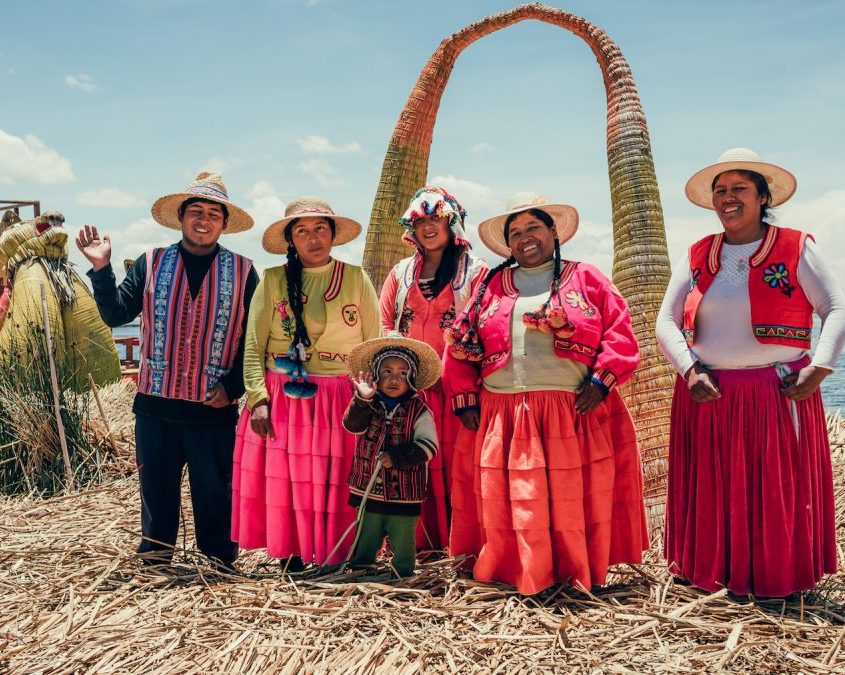 Women in Latin America face heavy gender inequality as a whole. Across multiple statistics, women are consistently disadvantaged in Latin American countries. For instance, a wage gap: in many countries, women are on average spending more time working per week without pay than men. In Mexico, women on average spend
  Project HOPE stands for Health Opportunities for People Everywhere. It is an international health and humanitarian relief organization. The organization works to strengthen and improve health systems around the globe. Founded in 1958, Project HOPE responds to health crises and disasters but often stays in areas long after a disaster has hit to address other neglected health issues. Project HOPE entered Sierra Leone in 2014 in response to the Ebola outbreak. After sending an emergency response team and shipments of medical supplies to help contain the outbreak, permanent Project HOPE health workers remained in Sierra Leone. Now, their biggest health concern is to improve maternal and neonatal health in Sierra Leone.
 As one of the most economically developed countries in the world, the U.K. plays a tremendous role in global prosperity. In 2017, the United Kingdom’s gross domestic product per capita was

 The Every Second Matters Uterine Balloon Tamponade (ESM-UBT), a device designed by Massachusetts General Hospital (MGH) to
  Since 2002, the Islamic militant group, Boko Haram, has killed
  These
These 
