Key articles and information on global poverty.

In 2018, Oxfam, a global organization that works to end the injustice of poverty, introduced a Blockchain technology for rice farmers in Cambodia called Blockchain for Livelihood from Organic Cambodian Rice or, more simply, BlocRice. This blockchain technology will connect rice farmers in the Cambodian village of Reaksmei, in the Preah Vihear province, with other people in the supply chain to ensure that poor farmers get a fair deal.
Rice in Cambodia
Rice is Cambodia’s major crop with roughly 80 percent of Cambodian farmers cultivating rice. Many small-scale rice farmers lack the necessary information to negotiate prices and conditions with middlemen and others in the supply chain. Oxfam is hopeful that this pilot project, which will include 50 organic rice farmers, will expand to other provinces and varieties of farming.
While rice farming accounts for 25 percent of Cambodia’s economy, the average monthly income for these farmers is only $108. It is particularly tough when farmers do not have return customers or vehicles to take the product to a market. With these small-scale farmers struggling, the application of BlocRice will hopefully enhance their bargaining powers and selling prices.
Implementing Blockchain
Bitcoin is digital money that is stored in the digital wallet app on any smart device. Blockchain, a public list, records each transaction to make it traceable. No government issues blockchain, nor are banks required to manage accounts. This makes BlocRice a cheaper payment system with a transparent recording of transactions.
This project will focus on introducing the blockchain technology to rice farmers. In doing so, it will register all participants in the rice chain with a unique identification code. These include agricultural cooperatives, export and import companies, retailers and consumers. A contract between these actors will ensure proper payment and transparency. This connection between actors allows for a better chance for farmers to alleviate themselves from poverty.
The farmer will sell their rice through the cooperative called Reaksmey Lekkompos Kaksekor who then forward the rice to AmruRice, the exporter. AmruRice will then sell and ship the rice to SanoRice, the importer in the Netherlands. SanoRice will then make rice crackers out of the rice and sell it to retailers. The BlocRice application will allow farmers to ensure they get correct payments, are paid on time and that the conditions of the contracts are kept. Consumers are also able to see this data through the same app. The app provides transparency and traceability, allowing consumers to make informed decisions regarding fair production standards and conditions. As a result, the app helps contribute to fighting global poverty.
The Need for Smartphones
While the BlocRice project has helped Cambodian farmers, there is a downside. Access to smartphones presents one obstacle in bringing blockchain technology to rice farmers. Most farmers do not own smartphones, which are needed to access the BlocRice application. However, agricultural cooperatives, such as Reaksmey Lekkompos Kaksekor, do own smartphones that can be used to assist farmers to access the application.
While this pilot project was implemented from April 2018 to March 2019, the success could allow BlocRice to be expanded to other provinces and used with other crops as well. Regardless of any minor setbacks, BlocRice could be an important step in helping rice farmers in Cambodia out of poverty.
– Andrea Rodriguez
Photo: Pixabay
 The northern region of Central America is currently one of the most dangerous places on Earth. So, it’s no surprise that refugees are fleeing Central America. This circumstance has caused high levels of migration as many refugees are fleeing for their lives. In countries such as Honduras, El Salvador and Guatemala, many people experience gang-related violence, human trafficking and extreme poverty. The brutality forcing refugees to leave their homes is constant and not improving.
Moreover, poverty in Central America is widespread. In some regions, half of the population lives below the poverty line. Consequently, the number of asylum-seekers is increasing in neighboring countries, such as Mexico and the U.S. In 2014, there were 2,000 asylum applications in Mexico. In 2017, applications escalated to more than 14,000. As this crisis continues, it is important to understand the reasons why refugees are fleeing Central America.
Gang Culture in Central America
In the 1980s, civil wars weakened countries in Central America, leaving a legacy of violence and fragile governments. Due to these civil wars and mass deportations from the U.S., organized crime groups flourished. These groups grew into the overwhelming gangs present today.
Over the last 15 years, gangs have taken over rural and urban areas within Central America. They target poor, and thus vulnerable, communities by imposing their own authority. They also recruit boys as young as 12 years old and living in poverty as they lack educational or economic opportunities. Because of gang violence, the Northern Triangle is considered one of the deadliest places in the world, outside a war zone. For example, between 2014 and 2017, almost 20,000 Salvadorans were killed due to gang-related violence.
Gang culture has deeply penetrated the social fabric of northern Central America. Their grip on society is so severe that many migrants fear that their deportation will result in death. For example, 82 percent of women reported they would most likely be tortured or killed if they were to return home. Despite decades of authorities trying to eliminate gang activity, these criminal groups remain defiant and seemingly unbreakable.
Extortion and Human Trafficking
Similarly, extortion-related crimes are common in this region. Gangs extort small businesses and local individuals by forcing them to pay protection payments. If these individuals cannot afford these amounts, the gangs will murder them. For example, it is estimated locals in Honduras pay $200 million in extortion fees every year. Extortion fees cost Salvadorans $756 million a year. This results in a significant financial loss for local businesses and endangers many lives.
Moreover, human trafficking is another common reason why refugees are fleeing Central America. Women and young girls are most vulnerable to sexual exploitation. Often, gangs target and traffick young children for the sex trade. In Guatemala alone, at least 15,000 children are victims of child sex trafficking networks.
Gangs also manipulate children. They subject children to forced labor, making them sell and transport drugs throughout El Salvador, Honduras and Guatemala. Though widespread, authorities prosecute an extremely low number of people accused of human trafficking. In Guatemala between 2009 and 2013, police detained 604 human traffickers. However, only 183 went to trial and only 33 were convicted.
Helping Central America
A huge reason why refugees are fleeing Central America is lack of opportunity. Of course, this is largely due to the rampant crime and violence in the region. While the reality is grim, there is a reason to be optimistic. Many organizations and volunteers help these migrants in any way they can. In particular, Doctors Without Borders has been providing medical relief and mental health care to refugees traveling along migration routes through Mexico since 2013. The organization reported they provided more than 33,000 consultations at mobile health clinics and other facilities. Many patients need mental health care, especially women who are victims of sexual abuse. In fact, 31 percent of women reported being sexually assaulted along their journey.
UNICEF also recognizes the humanitarian crisis happening in Central America. UNICEF has offices in Mexico, El Salvador, Guatemala and Honduras. In these countries, UNICEF is working directly with people to prevent violence and alleviate poverty. They also help reintegrate deported children into their home countries and support children in asylum countries, protecting them from discrimination and xenophobia. UNICEF’s work in Central America is necessary as it is bettering the lives of many vulnerable people.
Often times, the only ways for migrants to escape the persecution and violence plaguing their hometowns is to seek asylum in another country. No matter how bleak these circumstances may be, hope can be found through the compassion and understanding of volunteers around the world. By understanding why refugees are fleeing Central America, people and organizations can begin working to change the conditions in these countries.
– Marissa Pekular
Photo: Flickr

The Federal Democratic Republic of Nepal, or Nepal, is a landlocked South Asian country located mainly in the Himalayas and between China and India. Nepal is the third poorest country in Asia with a GDP per capita of $2,690. Around 21 percent of Nepal’s 29.3 million residents live below the poverty line which is the equivalent of 50 cents per day. Poverty has been a contributing factor to the nation’s long-standing issues securing clean drinking water and proper sanitation. However, Nepal has made tremendous progress increasing its population’s access to improved water sources to 91.6 percent in 2015 compared to 65.9 percent in 1990.
Background
Still, while more people have access to improved drinking water, the quality of the water remains alarming. In 2014, 81.2 percent of household drinking water from improved water sources and 89.6 percent from unimproved water sources tested positive for fecal contamination.
Thirty-seven percent of Nepal’s rural areas practice open defecation. This is a huge decline from 93 percent in 1990. Open defecation perpetuates a cycle of disease, poor sanitation and poverty. Exposure to human waste through open defecation and fecal contamination in drinking water leads to waterborne diseases such as diarrhea, cholera, typhoid and trachoma. Children under 5 are especially susceptible to increased health issues, stunting and even death due to these diseases. Since the end of 2017, 47 of Nepal’s 75 districts have eliminated open defecation which is great progress. Nepal aims to soon be entirely free of open defecation with universal sanitation and improved hygiene.
Sixty-two percent of households in Nepal use an improved sanitation facility compared to only six percent in 1990. This is substantial progress, but there is still more to do to secure improved sanitation in Nepal. Twenty percent of Nepal’s public schools lack improved water and sanitation facilities and 19 percent lack separate toilets for girls and menstrual hygiene management facilities.
Uncontrolled industry discharge, domestic waste and untreated sewage flowing into Nepal’s bodies of water have worsened the water and sanitation crises in Nepal. The 2015 earthquakes also destroyed many of Nepal’s clean water systems and networks.
Nepal’s National Water and Sanitation Goals
The Government of Nepal set the national goal of providing 100 percent of the population with basic water and sanitation services by 2017. Nepal created around 40,000 water schemes to achieve these goals. Its first priority project is the Melamchi Water Supply Project that transfers water from the Indrawati River Basin to the Bagmati River Basin to provide clean drinking water for the people of Kathmandu. The Bagmati Area Physical Infrastructure Project is another big project that aims to clean and save the Bagmati River and its Kathmandu tributaries to become a source of clean water.
Efforts to Improve Water and Sanitation in Nepal
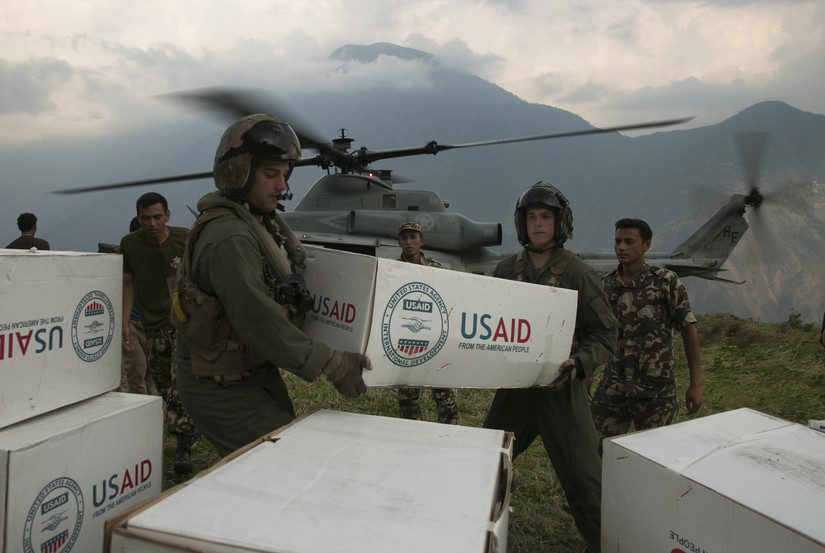
USAID’s Safaa Paani (WASH Recovery) project helps improve sustainable drinking water in the two districts where the 2015 earthquakes disrupted water systems the most—the Sindhupalchowk and Dolakha Districts. From 2015 to 2019, the Safaa Paani project is collaborating with Nepal’s Department of Water Supply and Sewage and other stakeholders to lead the reconstruction of water and sanitation infrastructure in Nepal. Its key outcomes are to renovate or construct water supply systems for 200 communities, map water sources, conduct microbial water quality tests, create water safety plans and create 10 public latrines in public areas.
UNICEF’s WASH intervention programs for Nepal are also multifaceted. These programs work to improve access to safe water at schools and health care facilities, strengthen water safety with regulations and plans, develop strategies to ensure clean water and sanitation to unreached areas and support the government to develop new WASH legislation. They emphasize gender equality by gender-friendly sanitation facilities and by promoting proper menstrual hygiene. UNICEF credits its programs successes to intersectoral collaboration.
The nonprofit Splash supports 101,149 kids daily to receive clean drinking water, sanitation and hygiene programs in Nepal through sites in the city of Kathmandu’s 500 public schools. It focuses on water filtration purification, improving sanitation with safe and secure toilets, hygiene education and behavioral change. Splash helps improve water and sanitation in urban areas of Nepal by leveraging existing markets.
Overall, Nepal and various nonprofits have made rapid strides to improve water and sanitation in Nepal. The country has made progress in increasing the access to clean water and sanitation facilities as well as eliminating open defecation in many areas. This momentum of progress must continue to address Nepal’s remaining water and sanitation issues. The intersectoral collaboration of NGOs, the Nepalis, the Government of Nepal and businesses will continue to address these issues and reach towards improvements in water and sanitation in Nepal.
– Camryn Lemke
Photo: Flickr

Online shopping is a quick, convenient way to buy almost everything these days. However, as more consumers become concerned with labor conditions and the ethics of the companies they are purchasing from, online shopping has become more complicated. In order to help users see which brands align most with their ethics and values, multiple platforms have become available to help take the guesswork out of ethical shopping. Using one or all of these ethical shopping websites allows consumers to vote with their dollars and take some of the guilt out of online shopping.
Good On You
Good On You is available both on the web and as an app. It ranks clothing brands on a zero to five scale based on their performance in three categories: people, planet and animals. The organization then uses the ratings of these categories to formulate the brand’s overall rating from one to five. Good On You provides links to where users can buy Good and Great brands (rated fours and fives, respectively) on its respective rating pages.
The people category focusses on workers’ rights across a brand’s supply chain. Factors taken into consideration include practices and policies related to child labor, worker safety, forced labor, the right to join a union and payment of a living wage. The planet category considers a brand’s impact on the environment. Specific metrics included in the evaluation are resource use and disposal, carbon emissions, energy use, water use and chemical use and disposal. The animal category is concerned with whether or not a company uses animal products, and if so, the sourcing of such products. Specific animal products Good On You notes include fur, down feathers, angora, karakul, shearling and the skin and hair of exotic animals. The company also considers if and how brands use wool, mulesing and leather.
For each of the three categories, Good On You also considers whether or not brands are taking positive steps toward becoming more ethical or showing industry leadership. Conversely, it also considers “negative citizenship” practices, such as lobbying against legislation to reduce harm or increase transparency.
The organization sources information used to determine brand ratings from independent certification schemes and rating projects like Fair Trade, OEKO-TEX and the Global Organic Textile Standard (GOTS). Where one of the rating projects does not cover an ethical issue, Good On You utilizes the brand’s public statements. However, Good On You only uses brand statements if they make specific and relevant claims. In most cases, if these claims are false, the company in question would be violating misleading advertising laws, and thus, people would not consider the claims reliable.
Ecoture
Ecoture is one of Australia’s only ethical shopping websites. It allows users to shop ethical clothing and beauty brands all in one place. Like Good On You, Ecoture allows users to see which brands align most with their values. Icons designate whether or not a brand is cruelty-free, natural, upcycled/recycled, ethically made, organic, vegan, handmade, sustainable or vegetarian.
Ecoture’s Impact
Ecoture also commits to alleviating labor abuses and the poverty that comes with them. Today, an estimated 40 million people are garment workers, and 85 percent of them are women. Ecoture has partnered with i=Change to help empower the girls and women working in the garment industry. The organization partners with multiple NGOs in order to support projects that directly impact the lives of women and girls worldwide.
With every purchase from Ecoture, consumers may choose an NGO fighting on behalf of women and girls in developing countries. Then, Ecoture donates $1 per sale to that customer’s organization through i=Change. Customers can then track the impact of Ecoture and i=Change supported projects, allowing them to see just how Ecoture is using their contributions.
Online shopping does not have to mean compromising on ethics or core values. With ethical shopping websites like Good On You and Ecoture, consumers are able to choose which brands, causes and values they should use their dollars to support and promote.
– Shania Kennedy
Photo: Pixabay
Every year Congress must approve the fiscal budget, which includes a request for foreign aid spending from the current Secretary of State. By examining the proposals for foreign aid spending through the United States Agency for International Development (USAID) from 2008 to 2020, it highlights the United States’ international goals and concerns. A common thread amongst all three budgets is a concern of national security and instability within foreign nations.
The 2008 Congressional Budget Justification – Secretary Condoleezza Rice
In the 2008 Congressional Budget Justification, Secretary of State Condoleezza Rice outlined the international concerns of the Bush Administration. As a whole, Secretary Rice requested $36.2 billion in funding from Congress for the 2008 fiscal year, as well as $6 billion in supplemental funding in 2007 for, as she details, additional expenses from the wars in Afghanistan and Iraq.
Secretary Rice stated that the overarching goal of this budget for foreign aid spending is to “mobilize our [the U.S.] democratic principles, our diplomacy, our development assistance and our compassion to win what will be a generational struggle.” As a result of this priority, much of the outlined spending in the report focused on the allocation of funds to programs that support democracy-building programs, peacekeeping, diplomacy and child-health programs. The United States, Secretary Rice details, ought to shift from a historically paternalistic relationship towards other nations in the world and, rather, act in partnership with foreign countries in the hope that it can establish positive and lasting change.
The 2016 Congressional Budget Justification – Secretary John Kerry
In the 2016 Congressional Budget Justification, Secretary of State John Kerry expressed concerns that were similar to those of Secretary Rice under the Bush Administration. In 2016, the international sphere continued to face uncertainty. He places emphasis on this by asking that Congress “begin by understanding what is at stake – by realizing that our overseas actions, the alliances and partnerships that we form, the cooperation we engender, and the investments we make have a direct bearing on the safety of our citizens and the quality of life enjoyed by our people.” The budget that Secretary Kerry requested $50.3 billion from Congress, a marked increase from the proposal of Secretary Rice in 2008.
Despite a change in the party — from Republican to Democrat — the concerns of each administration are the same. In the 2016 proposed budget for foreign aid spending, Secretary Kerry expresses concern on behalf of the Obama Administration for the stability of Afghanistan, Iraq and Pakistan, as well as for the health, education and safety of families around the world. Secretary Kerry asked for the allocation of $7 billion to Overseas Contingency Operations (OCO), which works to establish stable political environments in volatile regions in which the U.S. involves itself. Also included in this budget is $5.6 billion in humanitarian aid for Migration and Refugee Assistance, International Disaster Assistance and food assistance. On a similar note to the 2008 proposal, Secretary Kerry states that “the United States will continue to do its part to ease suffering and prepare the groundwork for recovery.”
The 2020 Congressional Budget Justification – Secretary Michael Pompeo
The 2020 Congressional Budget Justification from Secretary of State Michael Pompeo strikes a different note from the previous two administrations. While a concern towards international security remains, Secretary Pompeo focuses on foreign aid spending with a more exclusionary approach to international relations.
At the start of his proposal, Secretary Pompeo outlines the concerns for international security that lie in the denuclearization of North Korea as well as the “great-power competition against China and Russia.” Secretary Pompeo currently has requested $40 billion in foreign aid spending, a decrease from the amount requested in 2016. He states that the funds will be “to protect our diplomats and our borders, recruit and develop our workforce, and continue to modernize our IT infrastructure.” The funding for democracy strengthening programs as well as health and education in poor nations continues, but a tone of gradual withdrawal from direct involvement in global affairs persists in the language used by Secretary Pompeo throughout the proposal.
Funding to international organizations has faced cuts with a decrease of $141.46 billion to approximately $2.15 billion. Overseas programs have also faced cuts with a decrease of $69.33 billion to approximately $1.52 billion and requested funding for border security is $3.75 billion. To conclude his budget request, Secretary Pompeo states that “we must continue to put U.S. interests first and be a beacon of freedom to the world.”
Throughout all three administrations, a concern for the changing and uncertain status of the international sphere is present. Foreign aid spending peaked under the Obama administration, but both the Bush and Obama administrations focused on direct U.S. involvement in world affairs as a means of spreading peace and democracy, while the Trump administration appears to have turned its focus on protecting the U.S. from threats abroad.
– Anne Pietrow
Photo: Media Defense
 There is a distinct relationship between education and poverty. Countries with inadequate education lead to a greater number of people in poverty. The Borgen Project had the opportunity to speak with the International Affairs and Outreach Director at the University of Wisconsin-Milwaukee, A. Aneesh. Aneesh is also a sociology and global studies professor at UWM.
Data on the Relationship Between Education and Poverty
If every adult received two or more years of education or completed secondary school, it could alleviate 60 million people from poverty, according to a study conducted by UNESCO. If everyone in school left school at basic reading levels, 171 million people could rise out of poverty. Educated people earn 10 percent more for every year they attend school. If everyone received the same schooling, poverty would decrease by 39 percent and there would be less inequality in the world.
According to Aneesh, the main cause of low levels of education is predicated on how highly valued and prioritized education is in societies. For example, places in developing countries may value farming over getting an education. Their families rely on farming to provide money, so it is what they value the most. Consequently, it is more important for them and their children to be working instead of taking the time for education. This is just one example of the relationship between education and poverty.
The United Nations also believes education needs to be prioritized in vulnerable areas. For instance, one of its top sustainable development goals is to mobilize countries to make education a priority. Fortunately, the U.N. made progress on the goal in 2016 when the participation rate in primary education had risen up to 70 percent. However, there’s room for improvement. Only 34 percent of primary schools in the world’s least-developed countries had electricity in 2016.
Opportunities Stem from Education
Aneesh said in his interview that “the kids and the teachers can’t be blamed. The issue is something larger. Society is the issue.” When suffering from poverty, things like education cannot be prioritized. Unfortunately, those with a basic education are offered benefits that the under-educated simply do not have.
Highly-educated people are offered many benefits such as dual citizenship. Both education and capital create a new transnational form of citizenship. The people that move abroad for jobs after receiving adequate education often return to their home countries and invest back into them. These opportunities are not offered to impoverished people. They are unable to improve themselves or their countries.
The Danger of Overprioritization
The way society handles education is another problem in the relationship between education and poverty. “School is the pivotal institution for our society,” said Aneesh. “We’re at a point where there’s no value for people who have no education.” Ultimately, society is the root of the problem of the relationship between education and poverty. It’s a macro issue, not just a problem among certain communities or areas. Society as a whole needs to change in order to alleviate impoverished people from receiving inadequate or no education.
The pendulum swings both ways. For one example of how society can influence priorities in education, Aneesh explained that this can involve too much stress, competition and pressure. For example, in China, parents suffer from “education fever.” Families must choose to pay for their child’s education or other costly things, and they most often choose education. They make this choice even if something else may be a necessity such as medicine for an ill family member.
To improve this problem, society must convince families that education is a priority and must be held at value, but not to such an extreme degree. “Education isn’t only about intelligence,” said Aneesh. “Intelligence is overrated, discipline, not so much. It’s about dealing with the environment. Awareness through education is an important ingredient.” Putting too much priority on education can create an unhealthy environment.
To resolve this issue, societies need to work to instill the value of an education in its citizens. Certainly, it needs to be a priority. Education is a solution to poverty, but it can’t function properly with societal setbacks, which is why it is so important to understand the relationship between education and poverty.
-Jodie Filenius
Photo: Flickr

A report by the United Nations International Labor Organization (UNILO) reveals that about one in every five children partakes in child labor in South Africa. This contributes to the African continent’s reputation as the highest in numbers regarding child labor. Examples of explicit labor include, but are not limited to, working in agriculture for extremely low wages, working for factories in the black market or being forced into sex trafficking. The Child Labor Program of Action has defined child labor in South Africa as work by children under the age of 18 that is exploitative, hazardous or otherwise inappropriate for their age and detrimental to their schooling or social, mental, physical, spiritual or moral development. Here are 10 facts about child labor in South Africa.
10 Facts About Child Labor in South Africa
- Approximately 72.1 million African children engage in child labor, while 31 million are working hazardous jobs. These jobs include strenuous labor in agricultural work, mechanic work in unsanitary factories and selling their bodies.
- The 2016 Global Estimates of Child Labor indicates that one-fifth of all African children are child laborers. Nine percent of African children are working in hazardous jobs. Both figures are more than twice as high as any other region.
- In 2014, reports determined that 31,000 children of children absent from school or experiencing learning difficulties at school had suffered from work-related injuries. The number of reported injuries at work only dropped to 202,000 children in 2015.
- Inequality in the continent has led to high recordings of sex trafficking among female children between the ages of 8 and 16. Although people can also sell boys for the use of sex acts, records determine that people sell young girls the most. In these cases, families may sell them so they can pay off living expenses.
- More than 268,000 kids living in rural areas must work hard jobs in agriculture for ridiculously low wages and terrible working conditions. Earnings combined with their families’ incomes amount to less than $1.25 per day leading many families to fall below the poverty line.
- The unemployment rate amongst children who have completed school and those who have not is equal. This leads to fewer kids attending school and more seeking work so they can make money right away. A total of 80 percent of South African children will fail to complete high school due to the necessity of working in hazardous jobs to help their families pay off living expenses.
- The Survey of Activities of Young People stated that more than 120,000 children have already participated in economic affairs in 2010. Meanwhile, another 90,000 children have suffered an injury while working a job from 2011 to 2012.
- The International Labor Organization in 2002 launched World Day Against Child Labor. The goal is to draw attention to the practice of child labor globally and the event happens every year on June 12th. The ILO reflects on past accomplishments in minimizing child labor along with collaborating to find more solutions in compliance with the Alliance 8.7 organization.
- The Alliance 8.7 nonprofit organization is a global partnership to eradicate forced labor, modernized forms of slavery and human trafficking around the world. Its efforts have reduced the number of sex trafficking acts in South Africa along with working toward getting children out of hazardous working conditions.
- The International Labor Organization is continuing to grow the amount of Child Labor Units and National Steering Committee to eradicate child labor in South Africa by mobilizing globally and providing knowledge locally. The goal of these committees is to gain assistance from a global outreach in acquiring the right resources to eradicate child labor, provide knowledge of what child labor is, methods on how to reduce it and instigate action plans to disperse it.
These 10 facts about child labor in South Africa just scratch the surface of the dangerous realization of just how many young children child labor affects. Children are suffering life-threatening injuries, missing out on getting a proper education and working hazardous jobs for little wages. In 2017, South Africa made a significant advancement in efforts to eliminate the worst forms of child labor. The government passed a Child’s Protection Act prohibiting persons convicted of child trafficking from working with children. The adoption of Phase IV of the National Child Labor Program of Action for South Africa has increased funding for the Child Support Grant to provide monthly direct cash transfers to primary caregivers who have vulnerable children. While some changes are occurring to help improve child labor laws, the South African government requires more action to minimize the harm from this list of 10 facts about child labor in South Africa. With continued advancement, South Africa should continue to expect relief and improvement over the years.
– Aaron Templin
Photo: Flickr

Millions of voters marched to the polls on May 13, 2019, for the 2019 midterm election in the Philippines. More than 18,000 government positions were up for election, but all eyes were on the Senate race due to its influence on President Rodrigo Duterte’s authoritarian agenda.
All 12 Duterte-backed Senate candidates won by a landslide, demonstrating the popularity of President Duterte’s policies. Three candidates in the spotlight were former special assistant to President Bong Go, former police chief and the architect of Duterte’s drug war, Ronald “Bato” dela Rosa, and Imee Marcos, the daughter of the former dictator, Ferdinand Marcos.
The Consolidation of Power
The results indicate that the destructive drug war plaguing the Philippines is far from over. So far, the conflict has resulted in a total of 22,983 deaths since Duterte took office in 2016, according to the Philippine National Police. This statistic includes suspected drug users, drug pushers and civilians living in impoverished communities, all of whom the President and his police force see as collateral damage.
During Duterte’s war on drugs, not a single drug lord received apprehension. Further, the drug war has not effectively reduced drug use or decelerated the drug trade in the Philippines. On the contrary, the drug war has caused the prices of methamphetamines, or shabu, to lower by a third of the original price, increasing the accessibility and prevalence of the drug.
Additionally, Duterte’s policies include reinstating the death penalty and lowering the age of criminal liability from 15 to 9 years old. Before the midterm elections, a portion of the Senate did not approve of Duterte’s policies, resulting in political gridlock. Now, Duterte’s newly-consolidated legislative power gives him the upper hand in following through with these policies.
Duterte’s High Approval Rating
Despite Duterte’s undemocratic tactics, his approval rating remains high at 81 percent. Duterte has garnered support for his strongman leadership and his promises to keep the streets safe. His popularity reveals the nation’s fragility and puts into question the stability of the Philippines’ political structures.
The Opposition
The opposition still holds a stake in the political landscape despite the lack of congressional representation after the midterm election in the Philippines.
The opposition includes key figures such as former Senator Leila de Lima and Rappler journalist, Maria Ressa. Duterte has imprisoned both Lima and Ressa in order to silence their critiques against his administration, but human rights groups are dedicated to releasing them from prison, claiming that they received conviction without a fair trial. These human rights groups include the Human Rights Watch, Amnesty International and FORUM-ASIA, and they are determined to hold the Filipino government accountable for all human rights violations.
Efforts abroad are also looking to combat the Duterte administration, such as the Malaya Movement. The Malaya Movement is a U.S.-based organization that organizes events such as rallies and summits and mobilizes individuals to petition against the drug war and government corruption in the Philippines. Its mission is to broaden the opposition against Duterte’s policies and endorse freedom and democracy in the Philippines.
– Louise Macaraniag
Photo: Wikimedia Commons

Latin America’s abundance of natural resources has been the main source of income for its economies. Production of copper, oil, coffee, sugar and other valuable commodities have made countries in Latin America key players in the global marketplace. Yet, the region faces significant economic challenges and a large part of its population lives in extreme poverty today. Venezuela is a clear example of this. Even with some of the largest oil reserves in the world, its economy has suffered; as of 2018, inflation was at 130,060 percent and its economy shrunk by 22.5 percent since 2017. Infrastructure and public services have deteriorated, and health care has been one of the most affected sectors. The declining state of public health institutions affects the most underprivileged Venezuelan populations since they cannot have access to proper care and treatment. To fill the demand for accessible, reliable medical care, many non-governmental organizations have come to action to help patients in need across the country. In particular, the Jacinto Convit World Organization (JCWO) and Fundación Jacinto Convit (FJC) provide health care to the needy relating to diagnosing and developing treatments for cancer patients.
The Problem
According to the Economic Commission for Latin America and the Caribbean, rates of extreme poverty rose from 9.9 percent of the Latin American population to 10.2 percent. Access to proper health care is of the utmost importance to all populations, especially those in economic trouble. The survival rate for cancer is highest when those affected receive an early, precise diagnosis. Yet, in many countries in Latin America, the public health care system cannot provide this. This is where organizations like the Jacinto Convit World Organization come into play.
JCWO and FJC
Many organizations around the world, such as the Jacinto Convit World Organization in the United States and Fundación Jacinto Convit in Venezuela, are committed to creating scientific and health-centered programs that target the most underserved and underprivileged populations, mainly in developing countries. The sister organizations received their names from the late Dr. Jacinto Convit, a leading medical researcher and humanist who introduced vaccines and treatments that helped poverty-stricken communities.
In an interview with Ana Federica Convit, the president of JCWO and granddaughter of Dr. Convit, she described the need to promote scientific solutions and health assisting programs in poor developing countries where patients have limited access to health services. She notes that “JCWO and FJC work to improve the lives of underprivileged and underserved populations that lack access to adequate diagnostics and innovative or even conventional cancer treatments.” The Molecular Diagnostics Program has already reached, “eight of the main health centers in Venezuela,” and outreach continues to spread across the country and eventually to other nations of the region that can benefit from this program.
The Two Programs
JCWO and FJC provide health care to the needy by focussing on providing cancer patients with access to specialized tests through the Molecular Diagnostics Program (MDP) and personalized therapeutic options through the Cancer Immunotherapy Program (CIP). Currently, the MDP has performed 1,950 diagnoses for 390 pediatric and adult patients, indirectly benefiting 1,560 relatives of patients. For the CIP, stage IV breast cancer patients will receive a new therapeutic vaccine in upcoming clinical trials.
The MDP “provides free access to early, precise and personalized diagnosis in various types of cancer and infectious diseases such as HIV.” The program performs highly specialized tests like genetic alterations that medical professionals do not offer anywhere else in Latin America. To date, the program has treated more than 390 patients mainly in extreme poverty.
The CIP “works on advancing the development of a personalized breast cancer immunotherapy designed by Dr. Convit during his last years of life.” This treatment aims to use the patient’s immune system to attack tumors and prevent the disease from recurring. This treatment is currently in process to begin clinical trials. Ana Federica describes the importance of this therapeutic vaccine, saying that “it is a simple, low cost, and potentially safe and effective therapy that is targeted to underprivileged patients who many times cannot access other treatments due to their high costs.”
Non-governmental organizations (NGOs) play a crucial role in solving critical needs around the world, especially in developing countries with poorer conditions. JCWO and FJC provide health care to the needy and have committed to expanding their programs and uniting efforts with all sectors to continue to serve impoverished communities on both a local and international scale. With efforts like these, underserved and underprivileged communities can access the health care they need.
– Andrew Yang
Photo: Flickr
